Search

15 April 2015

CONFERENCE: Capital, Investment and Innovation in the Roman World (Free University of Brussels (VUB), 28-30 May 2015)

(image source: Wikimedia Commons)

The Research Network "Structural Determinants of Economic Performance in the Roman World" (Ghent/Leuven/VUB, funded by the Research Foundation Flanders (FWO)) organises a conference in Brussels (VUB) on 28-30 May 2015 around the theme "Capital, Investment and Innovation in the Roman World".

Presentation:
Capital may be defined to comprise all man-made resources available for production. These include (1) financial capital : all monetary wealth in whatever form (stocks of currency, bullion, transferable credit bonds, etc.) available to buy whatever is needed or used to realize production: supplies, tools, equipment, labor, licenses, information, etc.; as well as (2) real (or physical) capital: all material resources such as tools, workshops and factories, warehouses, etc. needed or used to realize production. Both forms of capital may be privately or publicly owned. In a wider sense the concept 'human capital' denotes the embodied stock of human competencies, intellectual and other, that allow a person to perform the tasks necessary to create 'labor'. In order to retain a clear focus for the project and monograph, however, we will limit ourselves for this project to these 'classical' definitions of capital. The concept 'social capital', while valuable in itself, would take us too far from what we consider the core issues of our project. We explicitly focus, furthermore, on investments and innovations, i.e. on the quantitative and qualitative changes that stocks of financial, real and human capital underwent in the Roman world. The objective is to produce a coherent and innovative study of capital, investment and innovation in the Roman world.

Capital and credit are important elements in the furthering or holding back of economic growth. The allocation of capital, labor and natural resources through market and non-market channels determines economic performance.

Hence, fundamental issues in understanding the functioning of the economy of the Roman world include: who had access to capital, to what extent, and in what form, and how they dealt with it. Various segments of society controlled capital to different extents and used it for diverse purposes.

Did the social and political elites of the Roman world treat the wealth they controlled fundamentally differently from the magnates of the capitalistic era, or do the different forms and instruments of the Roman business world no more than cloak an essentially identical mentality? To what extent did other segments of society have access to capital, and how did capital circulate through society?

Asking these questions implies that we should not limit our study to the formal instruments of banking and business, but also take into account the wider institutional framework, both the formal rules and the social networks and informal arrangements that eased or hampered the dissemination of capital. Recent approaches within NIE (North, Wallis & Weingast, Violence and Social Orders, 2009) urge us to look at political and social conditions that constrained the pre-modern economy. According to a pessimistic view, the predatory and exploitative inclinations of the state and of the politically leading rentier class, who extracted the surpluses produced by the peasantry and an underprivileged workforce, hampered the accumulation and productive investment of capital. In other views, it was not the shortage of capital, but the poor allocation of capital that restrained economic performance. The question, however, is whether this is a valid assessment of the situation in the Roman Empire.

Some questions that we will discuss are:
•Did the political and social elites perceive money as an economic asset?
•What part of their property and income consisted of disposable money? How easily and/or readily were assets such as land, buildings, workshops, or slaves transferred into financial capital through factor and commodity markets?
•To what extent did the political and social elites dominate ownership of capital goods (land, natural resources, raw materials, production facilities, tools)?
•What is the role of the state (on imperial and local levels) in the accumulation of capital? What was the property rights regime of publicly owned goods ? What is the role of war in the dissemination and destruction of (fixed) capital?
•What was the role of religious institutions, such as temples, in the creation of capital and in making it available? Were there subject to the same property rights regime as private persons?
•How well did the credit market function? What does the level of interest tell us about the value of capital? Which requirements and whose needs determined the development of formal and informal instruments of the credit market?
•What was the role of private voluntary collectives, such as collegia, in the creation of capital and in making it available ? Were there subject to the same property rights regime as private persons ?
•To what extent was credit necessary for production ? What form did this credit take ? To what extent was consumption credit provided for by commercially oriented financial institutions or entrepreneurs - i.e. by enterprises whose financial assets constituted working capital rather than reserves for future consumption ?
•How and by whom were capital goods besides land and natural resources (tools, machines, production facilities, work animals) produced and allocated?

Equally important is the question to which purposes capital was used: what scope for investment did the agricultural and non-agricultural sectors offer, and to what extent was capital invested in means of production that boosted productivity rather than in status-enhancing assets such as urban palaces, benefactions, and expensive cooks? While investments potentially created growth, market oriented capital investment is as much a response to an expanding market as it is an incentive for economic growth in itself. The increasing urbanization and market integration of the Roman world made productive capital investment an increasingly attractive option, as it widened the market and increased the stability of demand. At the same time, to what extent did landowners and businessmen actually respond to these changing conditions of the market? And how did their response to population decline and the shrinking of the urban markets aggravate the economic decline that seems to occur in many parts of the Roman world after the second century AD? The examples of capital investment in agriculture, transportation, and industry in our archaeological and written sources are undeniable, but what limits were there to the investment of capital in the economy ?

One form of investment that deserves particular interest and which operated at all levels of society is that in knowledge and expertise. As with other forms of investment, a costly and time-consuming effort in gaining specialized know-how and expertise was economically only viable in conditions of sufficient - and sufficiently stable - demand. The ways in which knowledge and expertise were disseminated in pre-modern societies has been used as a marker of the economic development of such societies. In concrete terms, how did servile and freeborn workers and artisans acquire the knowledge they needed? To what extent did this stimulate or constrain economic development? In which ways was professional education embedded in the social and domestic context of business, agriculture, and industry? How is education of labor related to the control of capital and other means of production? Who had what interest in the acquisition and dissemination of expertise and know-how among the free and servile population.

Some questions that we will discuss are:
•What forms of investment in agriculture and other sectors of the economy are visible in the archaeological and written sources?
•What conditions stimulated or constrained investments in the various economic sectors? To what extent did imperial and local taxation stimulate and restrain capital investment? To what extent did investment opportunities stimulate the development of financial institutions?
•What is the relation between capital investment and productivity? Is capital investment related to economies of scale?
•To what extent did investments in agriculture lead to an increase in available animal energy and higher labor productivity? To what extent did a fall in demand cause a reversal of this development?
•How was knowledge and expertise acquired and disseminated in various sectors? What is the relationship between the acquisition of specialized knowledge and capital investment in equipment and infrastructure?

As with investment, incentives to modernize methods of production in agriculture or other economic sectors can be seen as stemming from the rise in urban markets and the increase of rural industries as much as causing economic growth in the first place. In many societies, capital investment went hand in hand with innovation. The investment in expertise and know-how does not only concern the dissemination of existing knowledge, but also provides the starting point for the creation of new technologies and methods. Innovation in the Graeco-Roman world not only consisted of the introduction of new cash and fodder crops and new agricultural techniques, but also of the introduction of new forms of equipment and technologies, and of the application of existing methods on a vastly larger scale. A fundamental question concerns the goals of innovation, i.e. whether innovation was intended to overcome the constraints of production (as in irrigation in agriculture or the application of new technologies in industry), to introduce new sources of energy, or to reduce the input of labor. Available energy was a constraining factor in pre-industrial economies, which makes energy-enhancing innovations of vital importance for economic growth. Of equal importance for the allocation of production factors, however, is the extent to which such sources of energy could be concentrated or transported (such as coal was from the 18th century onwards).

Some questions that we will discuss are:
•What forms of innovation occurred in agriculture, transportation, and industry, and what caused these innovations? To what extent did the costs involved and the risks inherent in novelty cause an aversion to innovation?
•What is the relation between innovation and technological change? To what extent do we see investment in larger installations?
•To what extent is the model of the 'low equilibrium trap', which is seen as limiting the need or drive for innovation, a valid model for the Roman world?
•Which goals determined these innovations? What is the relation between the nature of the workforce and the production process?
•In what ways is investment and innovation related to the increase in the availability of new sources of energy?
Programme:
Koen Verboven & Paul Erdkamp, Introduction

Part 1. Capital
•K. Gunnar Persson, Capital, labour, and income estimates in the Roman world
•Wim Broekaert / Arjan Zuiderhoek, Capital goods in the Roman economy
•Norman Underwood, Laboring for God: The Clergy and Human Capital in the Later Roman Empire
•Leonardo Gregoratti, Temples and traders in Palmyra
•Koen Verboven, Credit institutions and financial capital in the Roman world
•Marguerite Ronin, Cooperative investment in rural communities of the Roman Empire

Part. 2. Investment
•Christiano Viglietti, Pecunia adpensa. Capital, investment, and  innovation in an uncoined-money economy: Rome c. 700-350 BCE
•Jean Andreau, Capital and investment in the Campanian tablets
•Sitta Von Reden, Credit and Investment in Roman Egypt
•G. Minaud, Chiffre d'affaires, bénéfice et capitalisation
•Mick Stringer, Impensae, operae and pastio uillatica. New venture investments in the Roman agricultural treatises.
•Annalisa Marzano, A story of land and water: Capital and Investment in large-scale fishing and fish-salting operations
•Tim Clerbaut, The Roman villae: new beacons of capital production, capital management and Romanization in the Roman North

Part. 3. Innovation
•Paul Erdkamp, Malthusian constraints on the Roman economy. A critique of the ‘low equilibrium trap’
•Helmuth Schneider, Technical innovations in the Roman world

•Robin Veal, Forest resources and technical innovation in the Roman economy
•Andrew Wilson, Concluding remarks
Abstracts can be found on the conference website.

PETITION: Save the Committee for Historical and Scientific Studies (France)

(image source: Wikimedia Commons)


The Committee for Historical and Scientific Studies, founded by François Guizot, issued a call for support to the scientific community. The CTHS's activities cover all epochs of human history, counts as a rallying point for scientific societies all over the country and develops wide-ranging, interdisciplinary activities. The committee publishes both on paper and online. Its annual competition, leading to publication of the best doctoral dissertation received, is well known.

Petition header:
Le Comité des travaux historiques et scientifiques (CTHS) est né en 1834 de la volonté politique du ministre de l’Instruction publique, François Guizot, qui déclarait : « Cette entreprise ne doit pas être un effort accidentel et passager ; ce sera un long hommage et pour ainsi dire, une institution durable en l’honneur des origines, des souvenirs et de la gloire de la France. » (Guizot - 1834)

Les missions historiques du CTHS visent à concourir aux recherches et aux publications portant sur les sciences humaines ; favoriser le développement des activités des sociétés savantes et de leurs fédérations ; assurer l’édition de textes, de répertoires, d’orientations de recherche… ; organiser annuellement le Congrès national des sociétés historiques et scientifiques. (cf. arrêté du 12/06/2007 – NOR: ESRS0755546A)

Le CTHS développe ses activités avec l’aide de 255 membres, chercheurs et universitaires qui favorisent les échanges entre la recherche publique et le monde associatif. Depuis plus de 150 ans, le CTHS publie des ouvrages de référence en sciences humaines. Il a compté parmi ses membres d’éminentes personnalités, telles que Hugo, Mérimée, Viollet-le-Duc, Pasteur, Champollion Figeac, Maspero, Durkheim, Aulard, Tarde…

Depuis 2007, le CTHS est un institut rattaché à l’École nationale des chartes. Sa tutelle remet en cause l’autonomie de gestion du CTHS tout en lui imposant des coupes budgétaires qui ne lui permettent plus d’assurer ses missions. Deux postes ont déjà été perdus et le maintien d’une partie non négligeable du personnel est sérieusement menacé. Sans le soutien actif de la communauté scientifique, de ses partenaires, de ses lecteurs, le CTHS est voué à disparaître.

Soutenez le Comité des travaux historiques et scientifiques en apposant votre signature et en diffusant cette pétition qui sera adressée à la ministre de l’Enseignement supérieur, de l’éducation nationale et de la recherche, Madame Najat Vallaud-Belkacem.

Le personnel du CTHS, son délégué général et son Président
The full petition is available on change.org.

14 April 2015

BOOK: Michael STOLLEIS, Public Law in Germany: an Introduction into its History, 16th-21st Century [Beck'sche Reihe, 6135] (Munich: C.H. Beck, 2014), 228 p. ISBN 9783406659430. € 16,95


Prof. em. dr. dr. h.c. mult. Michael Stolleis, honorary director of the Max Planck Institute for European Legal History, has published an introduction to the history of public law (in German).

Presentation:
Die „Geschichte des öffentlichen Rechts in Deutschland“ in vier Bänden von Michael Stolleis gehört zu den herausragenden Gesamtdarstellungen unserer Zeit. Auf mehr als 2000 Druckseiten entfaltet ihr Autor darin weit über den wissenschaftsgeschichtlichen Rahmen hinaus ein rechtshistorisches Panorama Deutschlands von der Frühen Neuzeit bis an die Schwelle der Gegenwart. Nun fasst Stolleis kaum weniger eindrucksvoll den gewaltigen Stoff noch einmal auf rund 240 Seiten zusammen. Der Leser dieser glänzenden Einführung gewinnt ein grundlegendes Wissen über das deutsche öffentliche Recht im Wandel der Zeiten. 

SEMINAR: "Théologie morale et dynamique des fors. La confessionnalisation catholique et les contradictions de la conscience moderne" (Paris, 15 April 2015)


WHAT Théologie morale et dynamique des fors.  La confessionnalisation catholique et les contradictions de la conscience moderne, seminar

WHEN 15 April 2015, 11:00-13:00

WHERE Ecole des Hautes Etudes en Sciences Sociales, EHESS, CENJ, salle 10 (105, bd Raspail) 

speaker

Jean-Pascal GAY (Université de Strasbourg)

CALL FOR ARTICLES: Colonial Legal History - Rechtskultur, European Journal of Legal History (Regensburg) - DEADLINE 31 JULY 2016

 
(image source: Rechtskultur)

The trilingual European Journal of Legal History Rechtskultur (Regensburg: Edition Rechtskultur) plans its fifth edition in 2016 on colonial legal history.

Call (source: HSoZKult):

2016 wird der fünfte Band der Zeitschrift "Rechtskultur - European Journal of Legal History - Journal européene d'histoire du droit" erscheinen. Themenschwerpunkt ist die Kolonialrechtsgeschichte.
Die Herausgeber laden Wissenschaftlerinnen und Wissenschaftler aller einschlägigen Fachdisziplinen zur Einreichung von Beiträgen für Rechtskultur 5 (2016) ein.
Die Beiträge sollen einen Umfang von 100.000 Zeichen nicht überschreiten und bis zum 31. Juli 2016 bei der Redaktion eingehen, die unter rechtskultur@ur.de erreichbar ist.
"Rechtskultur" steht Autoren aller einschlägigen Wissenschaftsdisziplinen ohne Ansehen des universitären Status offen. Kriterien sind allein Themenbezug und Qualität eines Aufsatzes. Alle eingehenden Aufsätze werden einer beiderseits anonymen Begutachtung unterzogen.
 "Rechtskultur" ist eine Zeitschrift mit europäischem Charakter. Das wird bereits durch die Dreisprachigkeit des Blattes deutlich. Die Zeitschrift bietet also ein Forum für eine wirklich europäisch verstandene Rechtsgeschichte genauso wie für die Vergleichende Rechtsgeschichte. Sie möchte die nationalen Wissenschaften weiter aus ihrer Beschränkung heraus-führen und dabei helfen, Anknüpfungspunkte für grenzüberschreitende Zusammenarbeit auszuloten.
"Rechtskultur" ist strikt themenbezogen. Jedes Heft ist einem Oberthema gewidmet und gibt auf diese Weise die Möglichkeit, verschiedene Forschungsansätze auf einem Feld kennenzulernen. Jedes Heft wird am Ende einen rapport de synthèse enthalten, den ein ausgewiesener Wissenschaftler liefern wird und der die Verbindungslinien zwischen den einzelnen Beiträgen herstellt.
"Rechtskultur" ist transdisziplinär ausgerichtet, sucht also bewußt den Kontakt zu Nachbarwissenschaften, die sich mit verwandten Fragestellungen befassen oder identischen Quellenbeständen arbeiten. Jedes Themenheft enthält deshalb Beiträge von Wissenschaftlern verschiedener Disziplinen.

Contact:
Prof. dr. Martin Löhnig
Universität Regensburg, D-93040 Regensburg
martin.loehnig@jura.uni-regensburg.de

ARTICLES: Legal Realism and Natural Law, Logic for Legal Historians, Buddhism and the Law (Law and Humanities Blog)

(image source: Law and Humanities Blog)

 The Law and Humanities blog signalled some interesting new scholarship:
  • Daniel Prey (York), "Legal Realism and Natural Law", in: Maksymilian Del Mar & Michael Lobban (ed.), Law, Theory and History: New Essays on a Neglected Topic (2015) (click here)
The possibility of any meaningful relationship between the legal realists and natural law looks at first rather far-fetched. When it first appeared on the jurisprudential scene, legal realism was savagely attacked by proponents of natural law theory. To this day legal realism is depicted as a modernist, critical, at times almost nihilist approach to law, the polar opposite of the ancient natural law theory that traces its roots to Greek and Roman philosophy, and insists on unchanging objective values. And yet, two of the most famous legal realists, Karl Llewellyn and Jerome Frank, expressed in some of their writings more than a passing endorsement of natural law theory. The purpose of this essay is to try and explain this seemingly odd aspect of their work and in this way help in reassessing their work. We do so by explaining how they understood natural law and how they incorporated it in their work. Though they did not understand the term in precisely the same way, for both of them natural law was connected to the values of the community, which both of them thought were central to understanding law, for explaining how it could remain relatively certain, and ultimately, how it derived its authority.
  •  Ilan Wurman (Winston & Strawn, LLP), "Law Historians' Fallacies", North Dakota Law Review (click here)
A common line of attack against originalists is that lawyers just aren’t good at doing history. But in his famous book Historians’ Fallacies, David Hackett Fischer noted that many historians aren’t good at doing history either: They often fall into one or more of numerous fallacies that he catalogued in his celebrated and often devastating three-hundred page book. This Article points out the many ways in which originalists and other legal historians fall into, but also how they may avoid, some of the same fallacies committed by the historians whose works made their way into Fischer’s book. It will then point to corresponding lessons that lawyers-turned-historians ought to employ to write better history. The belief is that lawyers, judges, and legal academics can become good — or at least better — historians.

Part I confronts two general attacks on the use of history, both of which challenge the possibility of obtaining relevant and objective historical knowledge. Part II establishes the importance of investigative questions and describes fallacies of question-framing that lead originalists astray. Part III explores fallacies of factual verification that stem from reliance on flawed types of evidence. Part IV addresses one fallacy of factual significance — which we shall call the originalist’s fallacy — that leads some originalists to misunderstand the significance of certain evidence. Part V illustrates fallacies of narration, including fallacies of anachronism and presentism, that too often create fruitless investigations and provide ahistorical answers. Part VI, although recognizing the importance of generalization, demonstrates how originalists (and other legal historians) often generalize improperly. 
  • Rebecca French (SUNY Buffalo), "What is Buddhist Law ?", SUNY Buffalo Legal Studies Research Papers (click here)
This Law Review article, and ones that follow, are an introduction to Buddhist Law and its influence in Asia and the rest of the world. While the legal traditions of all major religious traditions have been extensively studied and written about, there are very few scholars of, and little written in any language on, the legal concepts in the Buddhist tradition. There is basically nothing in the legal academic literature in the U.S. nor are translations of the actual legal texts available for general use when working to understand this form of thinking, or in making comparisons to other religious laws. This series of articles will examine the reasons for this gap, outline the contextual setting, explore the actual rules that were established, note how they influenced social systems in Asia and address other general aspects of Buddhist Law.

This article will have two types of writing: (1) in regular script, the legal discussion and description common to a Law Review and (2) in italics, translations of actual Buddhist law code texts, particularly the Vinaya, or canonical law code. The second type of writing is presented to familiarize non-Asian lawyers with the style of the text and some of the concepts and ideas that underlie Buddhism and Buddhist Law. Besides the intrinsic interest of a wholly unknown legal system, this material is useful for comparative lawyers, international lawyers, scholars of public policy and anyone doing law in a former or current Buddhist country.

13 April 2015

JOB: Post-doctoral recruitments at EHESS for 2015-2016 (Paris) (DEADLINE 11 May 2015)

(image source: Wikimedia Commons)

The EHESS (Paris) recruits 10 postdocs for the coming academic year, for one year (2015-2016).

More information:

Recrutement de 10 post-doctorants à l'EHESS en 2015

Dix emplois de chercheurs post-doctorants sont ouverts à l'EHESS à compter du 1er septembre 2015 pour une durée d'un an.
Ces emplois concernent les différents domaines des sciences humaines et sociales.
Ils sont proposés aux jeunes chercheurs ayant soutenu entre le 01 janvier 2012 et le 07 avril 2015, une thèse de doctorat dans un autre établissement que l'EHESS, en France ou à l'étranger.
Les candidats ne doivent jamais avoir été bénéficiaires d'un contrat de travail géré par l'EHESS.
Dans le cadre d’un partenariat avec le Musée des civilisations de l’Europe et de la Méditerranée (MuCEM), une candidature sélectionnée s’inscrivant dans le champ d’activité de cet établissement (les dynamiques des sociétés contemporaines du bassin méditerranéen) pourra être soumise au MuCEM pour un co-financement éventuel et une intégration du candidat au département recherche et enseignement du MuCEM.
Chaque candidat indiquera (jusqu'à 3 maximum) le(s) laboratoire(s) ou centre(s) de recherche de l'EHESS (ou auquel l'EHESS est associée) au sein desquels il souhaiterait être accueilli pour y inscrire son projet de recherche dans l'un des programmes d'activités du laboratoire/centre.
(la liste des centres est consultable sur le site de l'EHESS : http://www.ehess.fr/fr/recherche/centres/
La sélection favorisera les dossiers comportant une forte dimension interdisciplinaire, une ouverture internationale et une capacité de dialogue avec plusieurs laboratoires ou domaines de l'EHESS.
                                         
                                               CANDIDATER
              
Pour candidater, les candidats doivent impérativement remplir le formulaire en ligne  du mardi 7 avril 2015 à midi jusqu'au lundi 11 mai 2015 midi et y insérer les documents suivants au format pdf:
  • un curriculum vitae avec la liste des publications
  • la copie du diplôme de doctorat ou attestation faisant foi
  • le rapport de soutenance de la thèse de doctorat le cas échéant
  • une lettre de candidature, adressée à l'attention du président de l'EHESS
  • le(s) nom(s) du/des laboratoire(s) ou centre(s) de recherche de l'EHESS
  • un projet de recherche et d'activités post-doctorales maximum(en cinq pages maximum) rédigé dans le cadre d'une année et s'insérant précisément dans le programme du/des laboratoire(s) ou centre(s) de recherche de l'EHESS ou lié(s) à l'EHESS, à Paris, Marseille, Toulouse ou Lyon

La rédaction du projet de recherche et d'activités post-doctorales en anglais est autorisée. Toutefois, un bon niveau de compréhension et d'expression orale en français est requis.

Les candidatures se font uniquement en ligne et devront être validées en cliquant sur le bouton du formulaire « Candidater », à partir du mardi 07 avril 2015 midi et au plus tard le lundi 11 mai 2015 à midi (heure locale de Paris)
Une confirmation de réception du formulaire, sous réserve de recevabilité de la candidature à un emploi de post-doctorant à l'EHESS, sera envoyée automatiquement par mail à l'adresse email inscrite dans le formulaire par le candidat.
Les formulaires reçus en ligne passé ce délai, incomplets ou non conformes ne pourront être pris en considération.

Les résultats seront disponibles à partir du mercredi 10 juin 2015 sur le site de l'EHESS - rubrique "Recrutements/chercheurs"
Pour toute information complémentaire, merci de nous contacter, exclusivement par mail, à l'adresse: bureau-contractuels@ehess.fr
(source: ehess website)

11 April 2015

SEMINAR: "Rationalité et consentement dans la perspective du féminisme juridique" (Paris, 15 April 2015)


WHAT Rationalité et consentement dans la perspective du féminisme juridique, seminar

WHEN 15 April 2015, 15:00-17:00

WHERE Ecole des Hautes Etudes en Sciences Sociales, EHESS, salle 2 (105, bd Raspail) 

Speaker
Maria Rosaria Marella (University of Perugia)


SEMINAR: "Succès et revers des interprétations juridictionnelles surprenantes. Retour sur „Lüth" (Paris, 14 April 2015)


WHAT Succès et revers des interprétations juridictionnelles surprenantes. Retour sur „Lüth, (Cour constitutionnelle fédérale allemande 15 January 1958 ) et „Circoncision“ (Landgericht Cologne 7 mai 2012), Séance du séminaire de Emanuele Conte, Public-privé : une frontière floue entre la force de l'état et l'autonomie des individus

WHEN 14 April 2015, 18:00-21:00

WHERE  Ecole des Hautes Etudes en Sciences Sociales, EHESS, salle 1 (105, bd Raspail) 

À l’âge de l’État libéral la systématique juridique avait bâti des frontières apparemment bien établies pour séparer l’espace de compétence du pouvoir souverain de la sphère d’action des sujets privés. Aboli tout corps intermédiaire, exaltée l’efficacité de la volonté du sujet privé, l’État avait marqué les chemins par lesquels il pouvait exercer sa toute-puissance.
Ébranlé déjà par les crises du XXe siècle, cette démarcation idéale est désormais presque partout négligée. Sur ce thème, des juristes français et étranger présenteront des cas exemplaires tirés soit de l’actualité nationale et internationale soit de l’expérience historique.

ROUNDTABLE: "Biens communs. Stratégies juridiques pour des perspectives européennes" (Paris, 13 April 2015)


WHAT Biens communs. Stratégies juridiques pour des perspectives européennes, International Roundtable

WHEN Monday 13 April 2015, 9:00- 19:00

WHERE Ecole des Hautes Etudes en Sciences Sociales, EHESS, salle Lombard (96, bd Raspail) and salle 11 (105, bd Raspail)

Le CENJ « Yan Thomas » de l’Institut Marcel Mauss a animé pendant deux ans le séminaire interdisciplinaire « Le bien commun, les biens communs, les choses communes, la collectivisation des intérêts » qui a fait appel au monde de chercheurs et de praticiens experts pour examiner l’émergence de la thématique des commons et les interactions entre expériences et recherche autour des relations entre biens communs et droit, les usages de stratégie juridique par les divers acteurs sociaux, les formes de law making élaborées par les bas, les expériences d’interaction entres différents acteurs dans des arènes hybrides.
En considérant l’importance que la notion de « biens publics » a prise dans le débat en économie, celle de « biens communs » dans la réflexion en philosophie et sciences politiques, et le développement de travaux dans le domaine de la « propriété intellectuelle », il nous a semblé utile de faire le point sur les définitions des notions juridiques qui se trouvent au cœur de ces recherches. Traditionnellement, les choses communes sont en effet des choses inappropriables, que ce soit de manière privative ou par une entité publique. Leur nature est de « n’appartenir à personne ». En revanche, les biens sont des choses appropriables, de manière privative ou collective. Elles peuvent également être, dans certains systèmes juridiques, uniquement affectées à un usage particulier, sans faire l’objet pour autant d’une appropriation.

07 April 2015

VIDEO: Prof. Dick Howard (UVA) and Tom McSweeney (William&Mary) on Magna Charta (25 March 2015)

The Legal History Blog drew our attention to a video-discussion between Prof. Dick Howard (UVA) and Tom McSweeney (William & Mary) on the 800th anniversary of Magna Charta. The video can be watched below:


WORKSHOP: New Histories of Human Rights (Princeton, 25 April 2015)

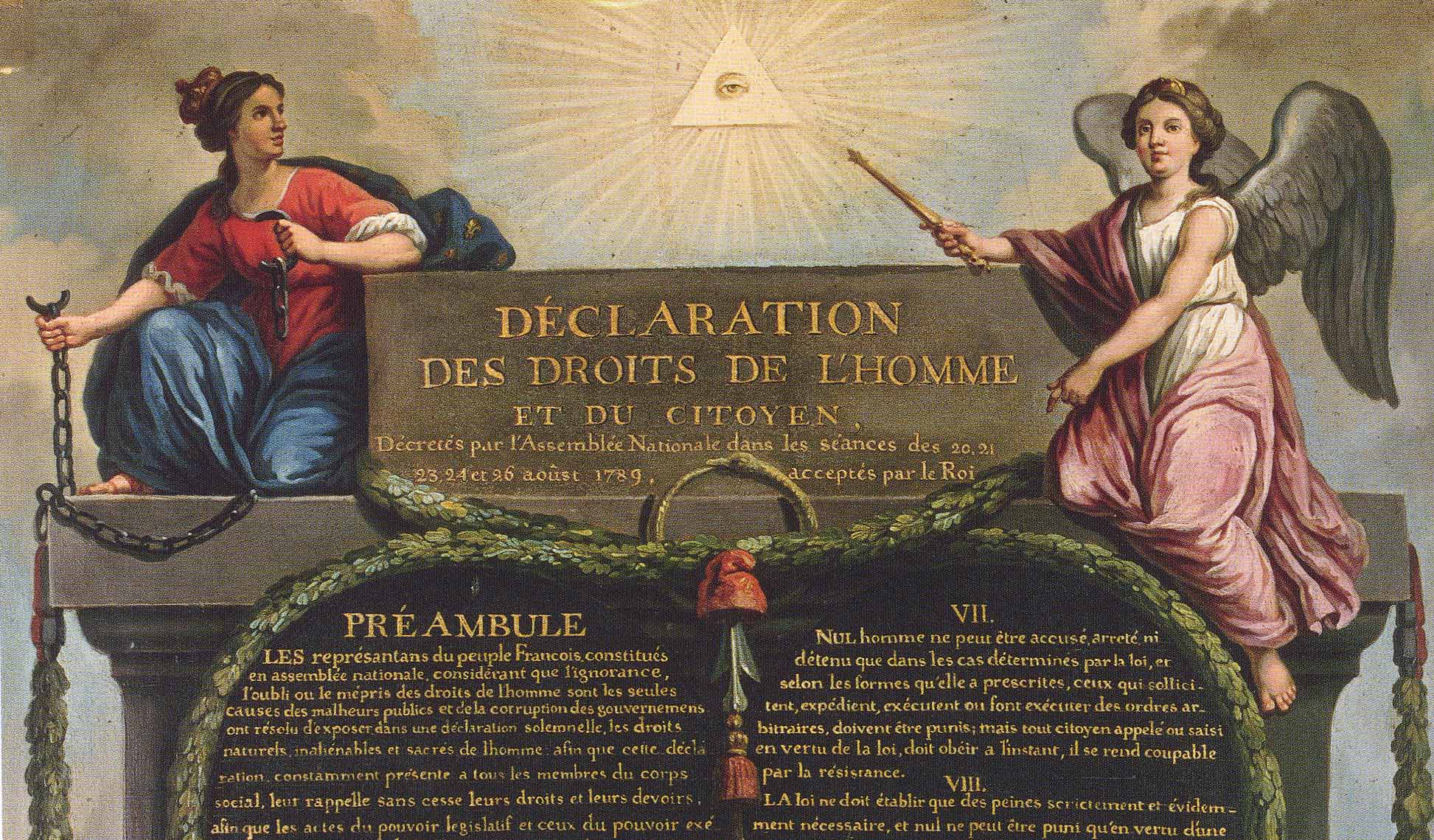
(image: Universal Declaration of Human Rights, 1789, source: Patrimoine maçonnique)

International Law Reporter announced a workshop on the history of Human Rights at Princeton. Summary:

The field of human rights history has become much more crowded – and much more controversial -- over the past decade. New historical accounts are often deeply provocative and at odds with each other; they have also influenced debates about the goals and general value of human rights activism. In this colloquium, we will hear from some of the new historians of human rights, both to reflect on the historiographical stakes in this field, and on the relation between history and policy. What is the proper chronological scope of human rights history? What relation, if any, do older ideas about natural rights have with current notions of human rights? What role, if any, can history play in the crafting (or the criticism) of theoretical/normative arguments about human rights?
Program:

9:30am Welcome:


Jan-Werner Müller and Dan Edelstein

9:45am - 12:00pm Panel 1: Enlightment and Revolution


Chair:  Jan-Werner Müller
Vincenzo Ferrone - Enlightenment and the Rights of Man: Building the Political Language of Modernity.
Eric Slauter
Keith Baker
Dan Edelstein - Mind the Gap: Between the Early Modern and Modern Histories of Human Rights

1:00pm - 3:00pm Panel 2: Nations and Nationalisms


Chair:  Philip Nord
Amy Dru Stanley
Mira Siegelberg
Samuel Moyn - Theses on the Philosophy of Human Rights History

4:00am - 6:00pm Panel 3: Global Rights


Chair:  Charles Beitz
Turku Isiksel
Stephen Angle - China-Inspired Reflections on the History, Methodology, and Contents of Human Rights
Steven Jensen
 More information at Princeton's Center for Human Values.

JOURNAL: Special Issue of the Revue du Nord on Bastardy and Illegitimate Offspring

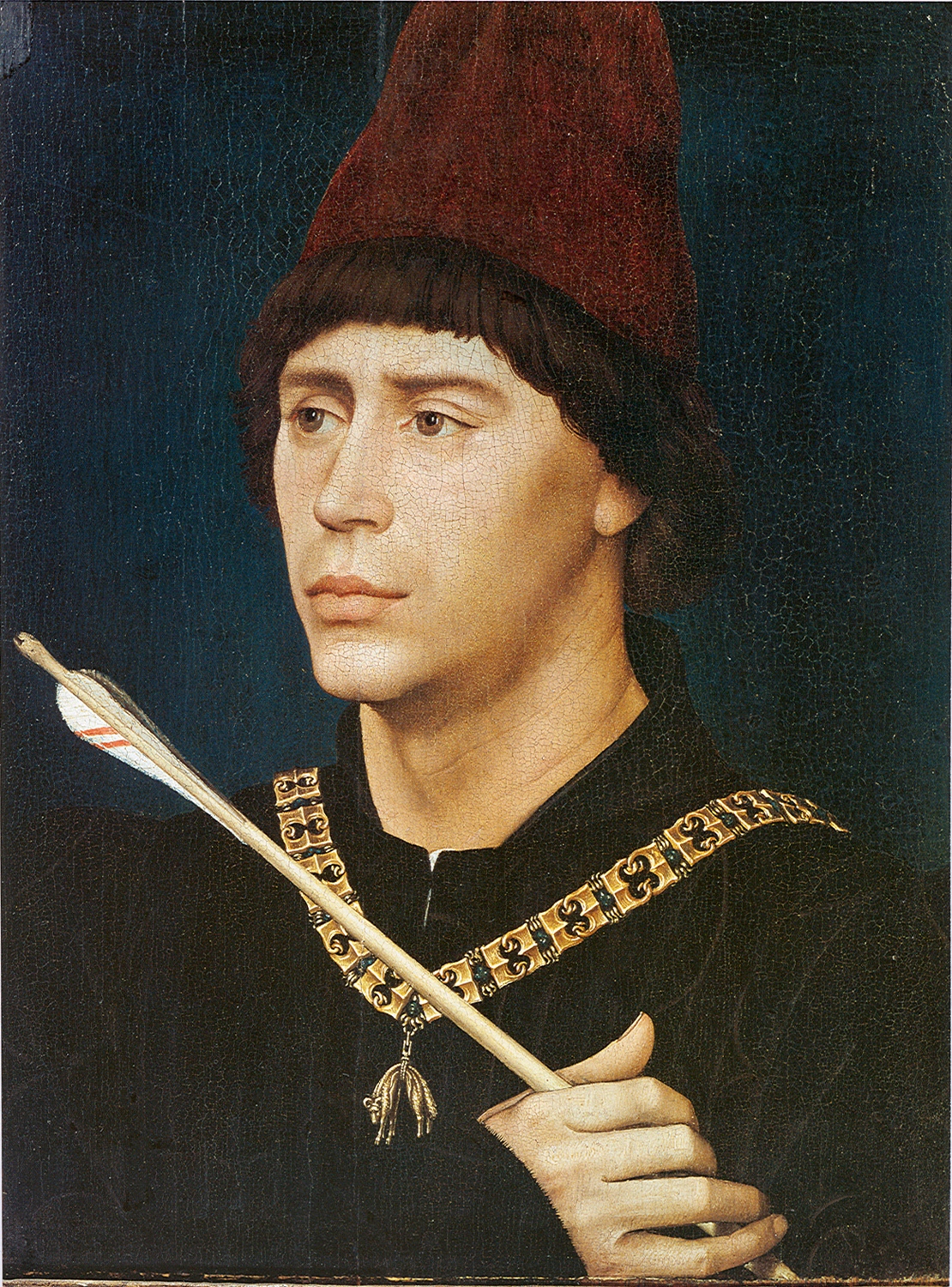
(image: Antony, the "Bastard of Burgundy", source: Wikimedia Commons)

Nomôdos reports the publication of a special issue of the respected journal Revue du Nord, dedicated to bastardy and illegitimate offspring, an initiative of the CRHIDI (centre for Legal and Institutional History at the Saint-Louis University (Brussels)

Summary and table of contents:
Présentation
Dans un article fameux paru en 1975, le regretté Michael Harsgor, a forgé le concept de «bâtardocratie» pour désigner un phénomène qu’il observa dans la France de la fin du Moyen Âge et qu’il décrivit comme «un puissant essor social et politique des enfants naturels engendrés par des pères appartenant à la noblesse». Il mettait ainsi l’accent sur les rapports entre bâtardise et pouvoir et sur le rôle, souvent important, que les enfants illégitimes, liés non pas seulement à la noblesse mais aux élites en général, ont pu jouer au cœur des institutions ecclésiastiques, politiques, militaires et administratives, dans un contexte – tant moral que démographique – qui leur était momentanément favorable.
Cette réalité, d’autres chercheurs, avant M. Harsgor et après lui, l’ont également étudiée et mise en lumière, mais elle n’avait jamais encore fait l’objet d’un travail collectif permettant la confrontation de sources, de cas – individuels ou non – et de situations provenant d’aires géo- graphiques diverses et fournissant les matériaux à une approche comparative. C’est cette lacune historiographique que les concepteurs et les auteurs du présent volume ont voulu contribuer à combler.
Les dix-neuf études contenues dans ce recueil couvrent un champ chronologique allant du 13e au 16e siècle et un espace géopolitique englobant les royaumes de France, de Navarre, d’Angleterre et d’Écosse, les principautés des anciens Pays-Bas, le duché de Lorraine, les sei- gneuries de la Maison de Savoie et le marquisat de Ferrare. Dans ce cadre, la relation entre naissance illégitime et exercice du pouvoir est envisagée sous différents aspects et selon les grands thèmes que sont le statut politique et juridique, la quête de la légitimation, les destins, les carrières, le mécénat, la bibliophilie, l’héraldique. Grâce à cet apport à la fois riche et varié se dessine une image plus nette d’un phénomène historique qui a sans doute atteint son apogée au xVe siècle pour s’affaiblir au seuil de l’Époque moderne, quand se modifièrent la situation démographique, les conditions sociales et les exigences de la morale.
Table des matières
  • Bertrand Schnerb, Introduction. Bâtards et pouvoir: un thème de recherche
  • Monique Maillard-Luypaert, Jean de Bourgogne, bâtard de Jean sans Peur, évêque de Cambrai de 1439 à 1480
  • Alain Marchandisse, Corneille, bâtard de Bourgogne (ca 1426-1452)
  • Bertrand Schnerb, Des bâtards nobles au service du prince: l’exemple de la cour de Bourgogne (fin 14e-début 15e siècle)
  • Jean-Baptiste Santamaria, Les bâtards à la Chambre des comptes de Lille: autour du cas de Denis de Pacy
  • Alice Duda, Les lettres de légitimation des ducs de Bourgogne (1384-1477)
  • Céline Berry, La bâtardise au sein du lignage de Luxembourg
  • Godfried Croenen, Bâtards et pouvoir dans le duché de Brabant (12e-14e siècles)
  • Michel Nassiet, Les bâtards dans l’Ouest au 15e et au début du 16e siècle
  • Christophe Rivière, Les bâtards en Lorraine: emblèmes d’une culture politique ou trublions d’une société nobiliaire?
  • Emmanuel Johans, Les bâtards d’Argmanac (14e-16e siècles)
  • Claire Dechamps, Un couple de bibliophiles dans le milieu royal: Louis, bâtard de Bourbon, et son épouse, Jeanne, bâtarde de France
  • Philippe Contamine, Jean, comte de Dunois et de Longueville (1403?-1468), ou l’honneur d’être bâtard
  • Alexander Grant, Royal and Magnate Bastards in the Later Middle Ages: The View from Scotland
  • Michael Hicks, The Royal Bastards of Late Medieval England
  • Luisa Clotilde Gentile, Les bâtards princiers piémontais et savoyards
  • Giovanni Ricci, Les dangers de la bâtardise. Les péripéties de l’Etat seigneurial des Este entre 15e et 16e siècles
  • María Narbona Cárceles, Les bâtards royaux et la nouvelle noblesse de sang en Navarre (fin 14e siècle-début 15e siècle)
  • Laurent Hablot, L’emblématique des bâtards princiers au 15e siècle. Outil d’un nouveau pouvoir?
  • Simona Slanicka, L’art d’être bâtard. La bâtardise et la legitimation artistique à la Renaissance (Maisons de Bourgogne et d’Este, vers 1450)
  • Eric Bousmar, Les bâtards et l’exercice du pouvoir: modalités spécifiques ou fenêtre étroite d’opportunité? 

CALL FOR ARTICLES: Congo at War(s). Journal of Belgian History (ed. N. Tousignant); DEADLINE 1 MAY 2015

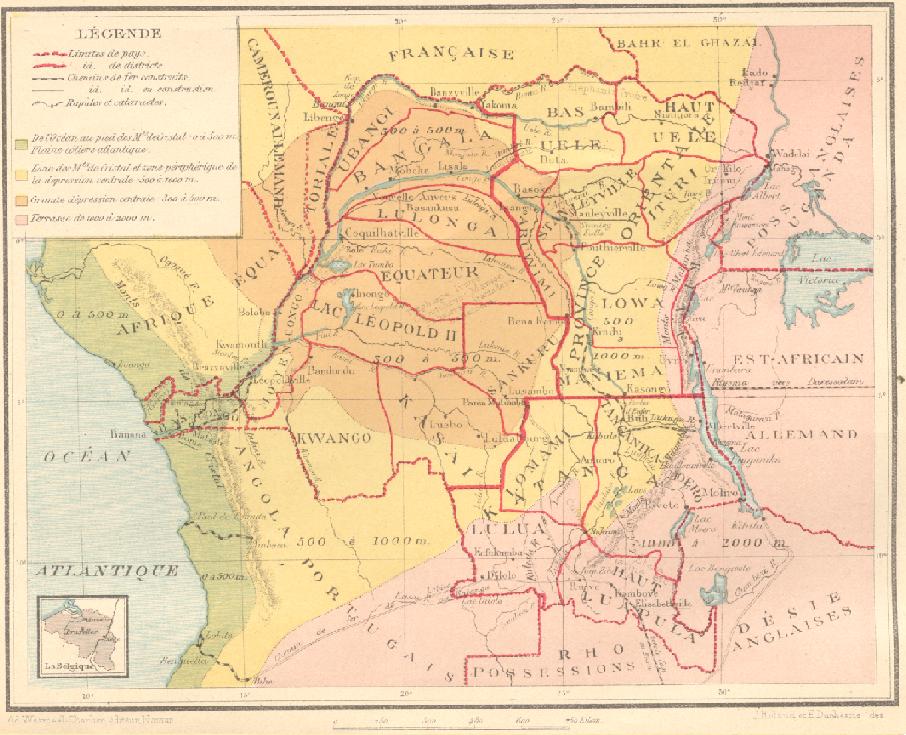
(image: Congo in 1914, source: Wikimedia Commons)

The Journal of Belgian History (Web of Science, ISSN 0035-0869) issued a call for papers for a theme issue on "Congo at War(s)" (ed. Prof. N. Tousignant, Université Saint-Louis/UCLouvain).

More information:
As the centenary of the Great War has been offering its amount of manifestations, publications or exhibitions in Belgium and in neighbouring European countries, it must be underlined that the global dimension, included in the qualification of this four-year period as a ‘World War’, has been largely underrepresented, when not absent or ignored, in Belgium. The diagnostic might sound too categorical, but it reveals the difficulty to imagine the war experience outside specific historical canons. It could be explained by the tradition largely developed in the 1920s (the ‘trench experience’) and the broader inscription into the memory management under the leadership of the Commonwealth War Graves Commission, into the diplomatic negotiations results and conflicting chronological frames. Since 2013, it has been established that most of what we know of what happened in Congo, what were Congo contributions and what were the consequences of the war on Congo future remain largely dated either to 1980s historical research on archives and oral sources available at that moment, or to the 1920s and 1930s printed material produced by the witnesses of the events. On the same token, the access to new archival series and the development of new research questions beyond military history ask for a recalibrated comparative understanding of the African dimension. This issue wants to bring into perspective unpublished contributions to document both wars experiences in Belgian Congo (to be extended to Rwanda and Burundi, if needed). It shall address questions such as neutrality, colonial governance, police activities and socio-demographical consequences of recruitment, forced/coerced labour, resistances and revolts, geopolitics in Sub-Saharan Africa. It excludes the discussion of remembrance and commemoration, as the hard facts need to be known and reinterpreted into a frame of analysis that breaks the exceptionality of the Congo & Belgium experience.
Manifestation of interest:             May 1st, 2015.
A 2500-sign proposal, related to the issues mentioned above must be sent to the editor. Unpublished contributions requested.
Selected papers would be notified by May 15th 2015.
Final version:                             December 15th, 2015.
In English, with a proposal of minimum four illustrations.
 (source: Belgian Association for Contemporary History)   

SEMINAR: Institute for Constitutional History: the Pre- and Post-1865 Constitution (Washington DC, Sep-Oct 2015)

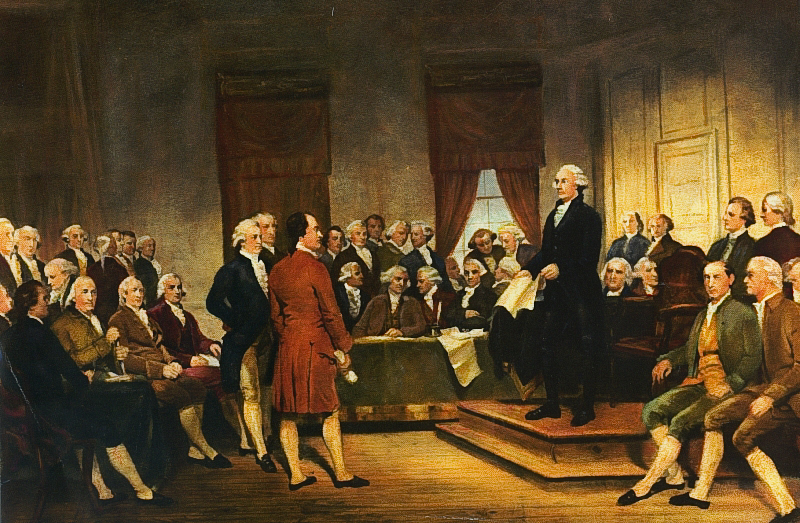
(The U.S. Constitutional Convention, 1787; source: Wikimedia Commons)

The Institute for Constitutional History in Washington DC hosts a seminar on the 19th Century US Constitution. This event could be of interest to comparative constitutional historians.

(source: H-Law)

The Institute for Constitutional History is pleased to announce another seminar for advanced graduate students and junior faculty:
THE PRE AND POST-1865 CONSTITUTION
INSTRUCTOR:
Mark A. Graber is a Professor of Law at the University of Maryland Francis King Carey School of Law. He is the author of Transforming Free Speech; Rethinking Abortion; Dred Scott and the Problem of Constitutional Evil; A New Introduction to American Constitutionalism; nearly a hundred articles on constitutional law, history, development and theory; and an editor of the American Constitutionalism series.
PROGRAM CONTENT:
This course explores the extent to which the post-Civil War Amendments made fundamental changes in the American constitutional order. Abraham Lincoln in 1863 promised “a new birth of freedom.” Many contemporary scholars believed the post-Civil War Constitution was designed to achieve that new birth of freedom by radically changing the basic design and commitments of the American constitutional order.
Conservatives in 1865, however, spoke of that “Constitution as it was,” minus slavery. The Supreme Court championed this view in The Slaughter-House Cases (1873). The debate is hardly academic. As the opinions in Shelby County v. Holder (2013) demonstrate, basic contemporary regime commitments depend to a fair degree on the extent of constitutional change during the Civil War and Reconstruction.
We will explore this issue by examining primary and secondary sources. The first third of the course will explore the basic commitments of the constitutional regime established in 1787 through a close reading of crucial Federalist Papers and major selections from other Federalist and anti-Federalist writings. The second third of the course will examine the basic commitments of the constitutional regime Republicans hoped to establish in 1865 through a close reading of the debates over the Thirteenth and Fourteenth Amendments, as well as such measures as the Civil Rights Act of 1866 and the Second Freedman’s Bureau Act. The last third of the course will look at some prominent claims that the constitutional regime was fundamentally altered during the Civil War and Reconstruction.
LOGISTICS:
Monday evenings, 6:00–8:00 p.m., September 21, 28, October 5, 12, 19, and 26, 2015. The seminar will meet at The George Washington University Law School, 2000 H Street NW, Washington, DC 20052.
APPLICATION PROCESS:
The seminar is designed for graduate students and junior faculty in history, political science, law, and related disciplines. All participants will be expected to complete the assigned readings and participate in seminar discussions. Although the Institute cannot offer academic credit directly for the seminar, students may be able to earn graduate credit through their home departments by completing an independent research project in conjunction with the seminar. Please consult with your advisor and/or director of graduate studies about these possibilities. Space is limited, so applicants should send a copy of their c.v. and a short statement on how this seminar will be useful to them in their research, teaching, or professional development. Materials will be accepted only by email at MMarcus@nyhistory.org until May 22, 2015. Successful applicants will be notified soon thereafter. For further information, please contact Maeva Marcus at (202) 994-6562 or send an email to MMarcus@nyhistory.org.
ADDITIONAL INFORMATION:
There is no tuition or other charge for this seminar, though participants will be expected to acquire the assigned books on their own.
ABOUT ICH:
The Institute for Constitutional History (ICH) is the nation’s premier institute dedicated to ensuring that future generations of Americans understand the substance and historical development of the U.S. Constitution. Located at the New York Historical Society and the George Washington University Law School, the Institute is co-sponsored by the American Historical Association, the Organization of American Historians, and the American Political Science Association. The Association of American Law Schools is a cooperating entity. ICH prepares junior scholars and college instructors to convey to their readers and students the important role the Constitution has played in shaping American society. ICH also provides a national forum for the preparation and dissemination of humanistic, interdisciplinary scholarship on American constitutional history.

02 April 2015

CONFERENCE: 14th International Congress for Eighteenth-Century Studies, "Opening Markets" (Rotterdam, Erasmus University, 27-31 July 2015)

(image source: isecs2015.wordpress.com)

 The quadriannual world Congress for Eighteenth Century Studies takes place in the Netherlands (Rotterdam), around the theme "Opening Markets".

Countless panels address a wide variety of issues across disciplines in the humanities. Interested legal historians will find several papers on the relationship between law and society, law and diplomacy, law and trade, law and philosophy...

A full conference program is available here.

CONFERENCE: "The Transmission of Monarchical Power, from the Middle Ages to the Present" (Brussels, St Louis University, 21-22 May 2015)


(image source: Université St Louis)

Nomôdos announced the program of a conference dedicated to the "Transmission of Monarchical Power", hosted by the Research Centre for Institutional and Legal History (CRHIDI).


Summary:
L’année 2015 est l’occasion de fêter le 500e anniversaire de l’émancipation de Charles Quint et du début de son gouvernement personnel. De même, l’abdication du roi Albert II en faveur de son fils, Philippe, est encore un souvenir vif. Ces deux événements, en écho l’un avec l’autre, semblent l’occasion de mener et de développer une interrogation sur les processus de succession, de formation et de préparation d’héritiers dans des systèmes monarchiques et ce dans la longue durée.
La succession d’un monarque ne se présente jamais simplement; elle ne peut généralement pas être appréhendée de façon univoque. Elle revêt toujours plus ou moins de fantasmes et de mise en scène du pouvoir. C’est en ces instants que le rituel du pouvoir tente de transcender les particularités et de gommer les différences afin de prôner l’union, l’unité, la fusion, etc., des composantes sociales soumises au gouvernement de l’ancien et du nouveau dirigeant. Mais comment penser la succession? Quels fondements doit-on lui fournir? Quelles bases juridiques, sociales, etc., donner à la succession ou à l’abdication?
La succession est aussi un moment où les rênes du pouvoir semblent à certains instants évanescents. Qui gouverne réellement dans cet entre-deux de pouvoir(s)? Quelle prégnance garde l’ancien monarque? Quelle autonomie est laissée au nouveau dépositaire du pouvoir? Il est ici nécessaire d’étudier la logique des luttes internes du pouvoir à côté du rayonnement effectif de l’ancien ou du nouveau gouvernant.
La succession du prince peut néanmoins devenir tragique et être annonciatrice d’une période de troubles et de déstabilisation. Pour prévenir ou expliquer de telles périodes, les questions suivantes méritent encore l’attention. Comment le souverain envisage-t-il sa succession, et de quelle façon met-il en œuvre sa décision? L’héritier/héritière est-il/elle formé(e) convenablement? Doit-on le préparer ou bien laisser «la fonction faire l’homme»? Peut-il/elle s’appuyer sur l’expérience de son prédécesseur? Doit-il/elle s’en distancier sans autre forme de procès? Quelles sont les premières décisions du nouveau gouvernant? Doit-il/elle inscrire ses pas dans les «vestiges» de son prédécesseur ou adopter une position de rupture radicale?
Le thème est riche et doit permettre une approche doublement éclatée. Primo, elle doit être une invitation à penser de façon diachronique afin de confronter des expériences éloignées dans le temps, du moyen âge au XXIe siècle. Secundo, cette thématique est une invitation à traverser les frontières disciplinaires. Les points de vue de l’historien, du juriste (constitutionnaliste), voire de l’anthropologue vont pouvoir se confronter et permettre de canaliser ces approches multiples.

Scientific committee:
  • Pierre-Olivier de Broux (Université Saint-Louis – Bruxelles)
  • Jean-Marie Cauchies (Université Saint-Louis – Bruxelles, Académie Royale de Belgique)
  • Philippe Desmette (Université Saint-Louis – Bruxelles)
  • Sophie Glansdorff (Université libre de Bruxelles – Centre national d’histoire des sciences)
  • Gustaaf Janssens (KU Leuven, Commission royale d’histoire)
  • Françoise Van Haeperen (Université catholique de Louvain)
 Organising committee:
  • Pierre-Olivier de Broux (Université Saint-Louis – Bruxelles)
  • Philippe Desmette (Université Saint-Louis – Bruxelles)
  • Sophie Glansdorff (Université libre de Bruxelles – Centre national d’histoire des sciences)
  • Bérengère Piret (Université Saint-Louis – Bruxelles)
  • Nicolas Simon (FNRS/Université Saint-Louis – Bruxelles)
  • Françoise Van Haeperen (Université catholique de Louvain)
 Program;
1re journée: jeudi 21 mai 2015
8h30: Accueil 
  • 9h: Mot d’accueil
  • 9h15: Gustaaf Janssens (Katholieke Universiteit Leuven – Commission royale d’histoire), Introduction générale
  • 9h45: Pierre-Joseph Laurent (Université catholique de Louvain – Académie royale de Belgique), Statut de l'individu et transmission du pouvoir dans les royautés mossi (Burkina Faso)
10h15: Discussion 
10h45: Pause
  • 11h15: Bruno Dumézil (Université Paris Ouest Nanterre La Défense), La transmission du pouvoir dans les royaumes romano-barbares
  • 11h40: Florence Close (Université de Liège), Transmettre un patrimoine et/ou sauvegarder l’Empire? Retour sur les projets de partage du pouvoir de Charlemagne (806-813)
12h: Discussion 
12h30: Déjeuner
  • 14h: Sophie Glansdorff (Université libre de Bruxelles – Centre National d’Histoire des Sciences), Le temps des traités et des serments: les successions dans l'Empire carolingien après le traité de Verdun (843- 900)
  • 14h25: Frédérique Lachaud (Université de Lorraine), La succession royale en Angleterre (milieu 12e-début du 14e siècle)
14h50: Discussion 
15h20: Pause
  • 15h50: Eric Bousmar (Université Saint-Louis – Bruxelles), La transmission du pouvoir dans un régime monarchique non souverain. Le cas des ducs Valois de Bourgogne, 14e - 15e siècle
  • 16h15: Cédric Michon (Université du Maine, Institut Universitaire de France), Comparaison entre la succession de Louis XII en France et celle d'Henri VII en Angleterre (fin 15e – début 16e siècle)
16h40: Discussion 
17h10: Fin de la première journée
 
2e journée: vendredi 22 mai 2015
8h30: Accueil 
  • 9h: Nicolas Simon (FNRS – Université Saint-Louis – Bruxelles), Appréhender le retour des anciens Pays-Bas dans le giron espagnol après 1621
  • 9h25: Frederik Dhondt (FWO/Universiteit Gent), La «transformation» de Philippe V d'Espagne
  • 9h50: Klaas Van Gelder (FWO/Universiteit Gent), Succession et stratégies de légitimation de l'empereur Charles VI dans les Pays-Bas méridionaux
10h15: Discussion 
10h45: Pause
  • 11h15: Pierre-Olivier de Broux (Université Saint-Louis – Bruxelles), Les successions de Léopold I et de Léopold II
  • 11h40: Vincent Dujardin (Université catholique de Louvain), Les successions monarchiques belges au 20e siècle
  • 12h05: Mathias El Berhoumi (Université Saint-Louis – Bruxelles), Les droits et les devoirs de l’héritier du trône de Belgique
12h30: Discussion 
  • 13h: Jean-Marie Cauchies (Université Saint-Louis – Bruxelles, Académie royale de Belgique), Conclusions
13h30: Déjeuner

 Venue
Université Saint-Louis – Bruxelles, 43, Boulevard du Jardin Botanique, 1000 Bruxelles, Salle des examens
Registration
Inscription obligatoire par courriel avant le 10 mai 2015, à l’adresse crhidi@gmail.com (ou via le site internet du CRHiDI, page «Activités»)
 More information here.

CONFERENCE: British Legal History Conference, 8-11 July 2015: Law, Challenges to Authority and Recognition of Rights


(image source: University of Reading)


The British Legal History Conference, this year connected to the 800th anniversary of Magna Charta, will take place at the University of Reading. A detailed program has been uploaded on the University of Reading's blog devoted to the Conference (click here for the pdf).

Outline of the conference program:

  • PGR/ECR Session: 9:30 – 13:00 on 8th July at Cedars Conference Centre
  • Early Registration: 12:00 – 13:00 on 8th July at the School of Law, Foxhill House
  • Runnymede Tea Cruise and Talk by Professor Sir John Baker: afternoon of 8th July – board coaches to Runnymede at 13:00 and arrive back at the School of Law at 16:45
  • Main Registration: 17:00 – 19:00 on 8th July at the School of Law, Foxhill House
  • Welcome BBQ: from 19:00 on 8th July in the Meadow Suite
  • Drinks Reception and Conference Dinner: from 19:00 on the 10th July at the Old Town Hall in Reading


Registrations are accepted until Wednesday 8 July 2015.

Practical information:
The Whiteknights Campus is located two miles from Reading Railway Station, Britain’s largest interchange station outside of London, providing good transport links to all parts of the UK.  There is a regular and accessible bus service between the campus and the station.  You can find information on train and bus travel to the campus at the following link:  http://www.reading.ac.uk/about/find/about-findrail.aspx.
Delegates coming from overseas can travel to Reading from both Heathrow and Gatwick Airports using direct public transport links.  For information on airport links see: http://www.reading.ac.uk/about/find/about-findairport.aspx
For those not wishing to use public transport there is a plentiful supply of taxis in Reading.  There is a taxi rank at Reading Station, or minicabs can be booked by calling Yell Cars on 0118 9666 555 or 0118 9660 660.
Delegates are strongly advised not to travel to the campus by car as graduation ceremonies are being held on campus in the week of the conference and parking, which is by permit only, is extremely limited.

30 March 2015

PHD/POSTDOC POSITION: "Discourses of Weakness and Resource Regimes" (July 1, 2015)


WHAT: Discourses of Weakness and Resource Regimes, PHD/POST DOC POSITION in the field of late medieval /early modern history, legal history, or ecclesiastical history

WHEN: starting July 1, 2015 (3-year contracts)

WHERE: MPI, Max-Planck Institut fur europaische Rechtsgeschichte

The Max-Planck-Institute for European Legal History and the Goethe University Frankfurt am Main are partner institutions of the Collaborative Research Centre 1095 ‘Discourses of Weakness and Resource Regimes’. In this framework, the Max-Planck-Institute for European Legal History offers
Two PhD / Post-doctoral Positions in the field of late medieval / early modern history, legal history or ecclesiastical history (starting July 1, 2015, or later; 3-year contracts)

Research project

A Collaborative Research Centre / CRC (‘Sonderforschungsbereich’ / ‘SFB’ in German) is an institution established at German universities for a period of up to twelve years that enables researchers to pursue an outstanding research programme, crossing the boundaries of disciplines, institutes and faculties. Financed by the Deutsche Forschungsgemeinschaft (DFG), it facilitates scientifically ambitious, complex, long-term research by concentrating and coordinating the resources available at a university.
The CRC 1095 ‘Discourses of Weakness and Resource Regimes’ at the Goethe University, Frankfurt am Main, employs a transepochal and comparative approach in order to deal with the question of how discourses of weakness had an impact on the use of resources. These discourses can be observed in the history of all cultures at all times. Changes in the use of both material and immaterial resources constitute a special and important aspect of processes of historical transformation which will be addressed by historians, historians of science, anthropologists, philosophers, sinologists and legal historians within the framework of the new CRC 1095.
CRC sub-project C 01 ‘Knowledge of the pragmatici. Presence and significance of pragmatic normative literature in Ibero-America in the late 16th and early 17th century’, led by Prof. Dr. Thomas Duve, reflects upon the significance of normative texts which addressed themselves primarily to practitioners – especially those who would nowadays be seen as part of moral theology or confessional literature. The respective texts were ‘weak’ insofar as they lacked theoretical complexity compared to erudite treatises; they were ‘strong’, however, in terms of pragmatic usefulness because they offered the reader adaptable bases of normative knowledge. There are some indications that these resources helped to establish, even minimally, conceptions of normative order in early modern empires such as the Spanish one. It is the objective of the sub-project to bring to light not only the practical significance but also the intellectual weight of a literary genre which has received little attention for a long time. Characteristic of this genre are condensation processes which might constitute a considerable achievement in abstraction.

29 March 2015

CFP: "Using the past: Romanists, totalitarianism and its legacy" (Rome, October 22-23, 2015)


WHAT: Using the past: Romanists, totalitarianism and its legacy, Call for Papers

WHEN: October, 22-23 2015
WHERE: Rome, Villa Lante al Gianicolo, Institutum Romanum Finlandiae
Deadline, May 2, 2015


The purpose of the project “Reinventing the foundations of European Legal Culture 1934-1964” (foundlaw.org) is to trace the genealogy of the idea of a common European legal past, its creation, influence and implications of the theory as an ideological project.
After the two previous events, the first one in Helsinki, in May 2014, and the second one in Frankfurt am Main, in June 2015, the research group is organizing a workshop in Rome on the problematic relationship between history of law and, in particular, Roman law scholars, and the dictatorial or totalitarian regimes, especially with regard to the Italian and German ones. We therefore invite papers that explore the approach of Romanists towards the regime and the influence it had on their studies. If and to what extent the works of scholars may be considered as a reaction against the dictatorial power, or means to support it. The papers may analyze the repercussions that the study of Roman Law under the regimes had on the Law in force at the time and the influence it exercised on the later scholars, also with regard to the foundation of a new idea of European common legal culture.