Rechtsgeschichte – Legal History 34 (2026) out now
Journal of the Max Planck Institute for Legal History and Legal Theory
Last year saw the publication of two significant new books on Rudolf von Jhering, one of the most original legal scholars of the 19th century. In the Research section of this year’s issue of our Institute journal, the books’ authors present their findings for discussion. While Michael Kunze traces Jhering’s life-long quest for a secular foundation of law as an invisible normative order, Mathias Reimann finds both brilliant insights and chaotic tendencies in Jhering’s writings.
Dave De ruysscher’s article on the history of bills of exchange in Western Europe argues that their regulatory framework remained relatively indeterminate between c. 1450 and 1680. Only gradually did a synthesis of Genoese and Dutch methodologies establish itself as the dominant approach. Beate Althammer explores the history of pardoning practices as a part of 19th-century criminal justice reforms. Her analysis of petitions for royal mercy in England and Prussia leads her to question the narrative of a linear change of legal order and pardoning practices. Triin Tark offers a Baltic perspective on the translation of legal texts during the interwar period. She demonstrates how the consistent terminology for ethnic minorities used in the Estonian Law on Cultural Autonomy (1925) was replaced with an eclectic mix of vocabulary by the League of Nations’ translators.
The Research section is completed by Erk Volkmar Heyen taking a closer look at the iconography of the courtroom table from the joint perspective of art and legal history. His analysis of 19th-century French and Belgian satirical images of the judiciary focuses on the relationship between religion and the state.
Art and creativity are also the subjects of this year‘s Forum section. Its 15 short contributions explore the possibilities opened up by creative methods in legal history from a global perspective – with examples from the Americas, Africa and India.
This issue‘s Critique section offers 33 reviews of recent publications relevant to the study of legal history from late antiquity to the 21st century. Under Comptes rendus, we briefly present some key publications by researchers at our Institute.
Thorsten Keiser‘s Marginalia contribution deals with a key characteristic of the Venetian Republic’s constitution from the late Middle Ages to the 18th century: the anonymous denunciation (denuncia segreta). The print issue‘s series of images is also devoted to Venice; the various selected views of the lagoon city all stem from the extensive collections of Frankfurt’s Städel Museum.
Rechtsgeschichte — Legal History 34 is now available in print from the publishers Vittorio Klostermann and online in Open Access via the journal's website.
Search
18 September 2026
JOURNAL: Rechtsgeschichte – Legal History, Journal of the Max Planck Institute for Legal History and Legal Theory, Rg 34 (2026)
17 September 2026
JOURNAL: Genere, giustizia, guerra – Ebrei in politica nel Rinascimento – Varia (Mélanges de l'École française de Rome 137-1 (2025)) [OPEN ACCESS]

(image source: Openedition)
Genere, giustizia, guerra (eds. Fabrice Virgili, Paolo Fonzo, Fabien Lostec, Cecilia Nubola & Toni Rovatti)
Introduction (Fabrice Virgili, Paolo Fonzi, Fabien Lostec, Cecilia Nubola et Toni Rovatti)
Ree, vittime: donne greche nei documenti dei tribunali militari italiani nella Grecia occupata (1941-1943) (Paolo Fonzi)
DOI 10.4000/15hok
Abstract:
During the Second World War the Italian army established military tribunals in occupied Greece. As these tribunals prosecuted not only Italian soldiers but also Greek civilians for offences against the Italian military authorities, women often figure in their records. This article examines some of the instances in which women were involved in the trials as perpetrators or victims. Based on these sources the article aims to answer two main questions. The first is to what extent occupation unleashed major shifts in gender relations, challenging given patriarchal structures and thus providing the ground for new forms of female social behaviour. The second is how the Italian military authorities dealt with these new forms of social behaviour. A purely manly organism, the Italian military tribunals premised their judgments upon a conception of «paternalist protection» towards women, a protection exercised only towards certain subjects. Those women who challenged the social taxonomies of the judges were systematically denied such a protection. Therefore the records reveal the «common sense», to use Ann Stoler’s category, of the occupation authorities.
Recels de couverture et paroles de ménagère devant le tribunal militaire (Sardaigne 1943-1944) (Fabrici Virgili)
DOI 10.4000/15hol
Abstract:
An analysis of the testimony given by 28 women questioned before the Military Tribunal of the 7th Army Corps sitting in Sassari (Sardinia) during the period 1943-1944 sheds light on women’s voices in the face of military justice. These case files, which concern several cases of theft and receiving stolen goods, provide insight into the ambivalent relationships that developed between young men, soldiers and non-islanders on the one hand, and Sardinian women, housewives and women of their mothers’ age on the other, with both parties confronted by an institution that had no intention of allowing its blankets and other textile goods to be stolen. This article explores the gendered boundary between civilian and military life, combining material culture and military justice based on previously unpublished archives. It highlights the often lesser-known and more ambivalent margins of the conflict, whether geopolitical (Sardinia), social (a few housewives) or military (a few textile goods).
Les collaboratrices face à une justice militaire d’exception Le cas des cours martiales de la République en France à la Libération (Fabien Lostec)
DOI 10.4000/15hom
Abstract:
This article brings together two realities of the purge in France that are still little known: on the one hand, women tried for acts of collaboration and, on the other, the courts martial of the Republic. In a number of French regions, the Republic’s courts martial were the first legal purge tribunals. They handed down their judgements in September 1944, in a climate of great tension marked by the explosion of sentiment characteristic of the Liberation. Studying these tribunals not only sheds light on the judicial archipelago of purges, it also provides an opportunity to offer a social and gendered history of collaboration and purges. To be precise, two questions will be examined in turn, based on a previously unpublished corpus of around 1,000 judgements and around a hundred procedural files from the 38 courts martial of the Republic that France had at the time. The first question is that of the place of women in the courts, which requires us to reflect not only on the severity of their judgements but also on the notion of “épuration sauvage”, used by some to describe the activity of these courts martial. The second question is that of the acts of which the women were accused, which, although they were at the crossroads of legality and morality, could not be summed up simply as sentimental collaboration. In the face of these accusations, the accused are also given the floor to examine their arguments in their defence, which are largely based on gender stereotypes.
Parlare tacere tradire Collaborazioniste e partigiane nei processi del secondo dopoguerra (Cecilia Nubola)
DOI 10.4000/15hon
Abstract:
Starting with the sentences of the Special Tribunals established after WWII in Italy and the examination of a certain number of significant case studies, this paper/essay investigates some aspects of the activities and choices made by women and girls during the civil war (1943-1945). The investigation focusses on the lives of women who–in order to survive the war–had betrayed and denounced people on either side, siding–as they found it necessary–with the RSI or the Resistance. The testimonies given during the trials make it possible to shed new light on the female contribution to the «Civil Resistance» and to recognize its role and importance. The aim is to overcome the dichotomy between women as either «victims» or «heroines» and to highlight their awareness and acceptance of the risks, the choices, as well as the ideal and political motivations that supported their partisan struggles, which were often not recognized in the post-war period.
Segnare la colpa Donne e dovere di testimonianza sulle violenze di guerra nei processi del lungo dopoguerra italiano (1944-2013) (Toni Rovatti)
DOI 10.4000/15hoo
Abstract:
This essay explores the role of women in Italian trials for war crimes and collaboration spanning the “long period” from 1944 to 2013, focusing on their participation as victims, accusers, and observers. Drawing on judicial records and trial reporting, the study underscores the vital contribution of women to the reconstruction of historical truth within transitional justice frameworks—contexts often marked by forms of summary justice. Between 1944 and 1950, women played a central role in grassroots denunciations and demands for accountability. In the later trials from the 1990s onward, female testimonies became increasingly centered on memory and moral reparation, frequently voiced by the daughters and granddaughters of victims. The essay concludes by addressing persistent gender asymmetries within the judiciary and the ongoing tension between recognition and the stereotyping of women’s voices in judicial settings.
Read these articles and the rest of the journal in open access on openedition.
28 August 2026
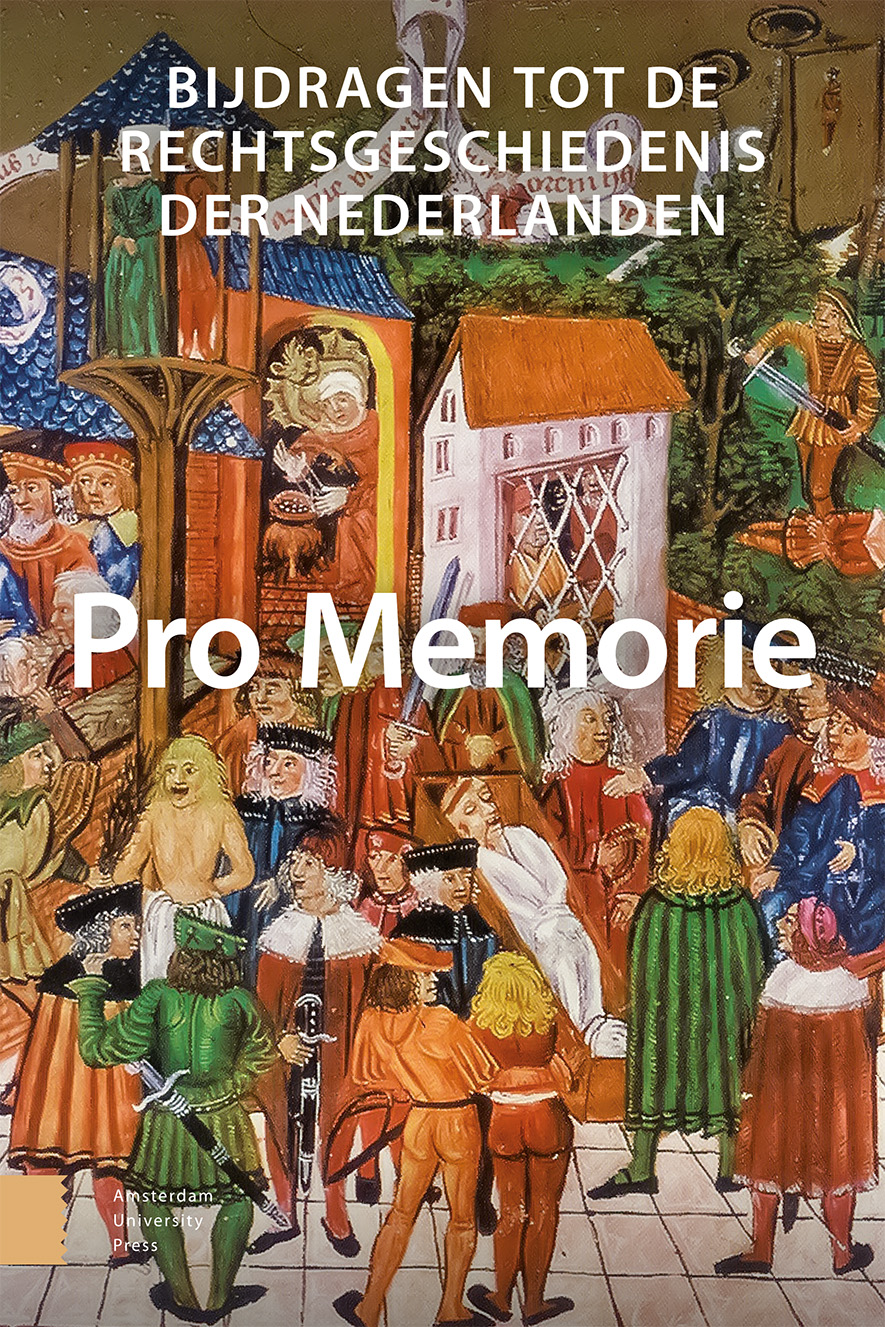
JOURNAL: Pro Memorie. Bijdragen tot de Rechtsgeschiedenis der Nederlanden XXVIII (2026), nr. 1
DOI 10.5117/PM2026.1.001.REDA
DOI 10.5117/PM2026.1.002.HERR
Abstract:
As trust is essential for maintaining successful commercial relations, groups of traders relied on methods of exclusion to ensure that everyone carried out their agreed tasks. The Dutch West India Company (WIC), being a heterogeneous commercial organisation, therefore, could not function properly without employing formal methods of exclusion, both internally and in the territories it governed, of which taking recourse to courts was the most important. However, historians have failed to include the WIC in current debates on the principal-agent problem in early modern trade. As such, we know very little about the actual functioning of the judicial system in its overseas territories in general, and in its most important colony, Dutch Brazil, in particular. This article tries to address this problem by using a case study focused on a lawsuit against several Company officials to investigate the workings of the legal system of Dutch Brazil.
De civiele rechtspraak van de schepenbank van Thorn. De zaak Christina Halermans versus Dirk Brouns (1685-1688) (Bram Van Hofstraeten)
DOI 10.5117/PM2026.1.003.HOFS
Abstract:
This study examines the civil jurisdiction of the bench of aldermen of Thorn in the early modern period, focusing on its procedural practices, social accessibility, and the influence of learned legal traditions. Contrary to the notion of a general ‘Great Litigation Decline’ in eighteenth-century Europe, Thorn experienced a relatively low but steady rate of civil litigation, with a notable peak in the late seventeenth century. During the eighteenth century the court increasingly relied upon external impartial legal scholars in order to formulate a verdict which may have contributed to a reduced confidence in the local justice system. A detailed case study of Christina Halermans vs. Dirk Brouns (1685–1688) illustrates the court’s procedural complexity, the tactical – and not always equally careful – use of legal citations, and the increasing influence of legal arguments rooted in Roman law and the ius commune. This shift reflects a growing disjunction between local customary law and the academic legal discourse dominating civil litigation, which may have discouraged litigants from turning to the local court. The study suggests that the court’s procedural stagnation during the eighteenth century was less due to internal disorganization and more to the inability of local magistrates to navigate increasingly sophisticated legal reasoning. In addition, the study demonstrates that lawyers (instead of judges) played a crucial role in the reception of Roman law in early modern Europe.
Les immunités des ecclésiastiques ont leurs bornes Een moordende theologant en de vorstelijke rechtsbedeling in de Oostenrijkse Nederlanden (1749-1750) (Dirk Leyder)
DOI 10.5117/PM2026.1.004.LEYD
Abstract:
In december 1749, Martin van Meir, a 23-year-old theologian, commits two gruesome murders in the archiepiscopal seminary of Mechelen. The president of that institution decides to immediately cover up the case. The Privy Council, however, quickly uncovers the murders and obliges the Fiscal Office of the Great Council of the Netherlands in Mechelen to pursue both the murderer and his superior. The legal experts of the central government consider that the clerical immunities used as a defense by some, do not apply to either culprit. Written interventions by the archbishop of Mechelen, Thomas Philippe d’Alsace, in aid of his president (and to a lesser extent, of his homicidal student), put the regalists in Brussels on their heels, but do seem to affect the governor and the empress. Maria-Theresia eventually lets the case rest. But henceforth discussions about the immunity of clergymen will rather be settled in favor of the State.
Hunebedden en het Romeinse recht Over de privaatrechtelijke status van hunebedden en het Romeinse recht in Drenthe (Jelle Jansen)
DOI 10.5117/PM2026.1.005.JANS
Abstract:
The article begins with a sometimes fiery debate on the status of dolmens (Dutch: hunebedden), found mainly in the Dutch province of Drenthe. Lucas Oldenhuis Gratama, a.o. a lawyer, a legal historian and a member of House of parliament, stated that these dolmens were state property. With the introduction of civil codes in the Netherlands goods without an owner became stat-property and dolmens did not have an owner in the pre-codified era since they were nullius according to Roman law and not privately owned under Germanic law. Oldenhuis’ thesis was met with heavy criticism, it was generally assumed that the dolmens were part of private ownership of the land. The debate is nonetheless interesting since it raises questions on the role of Roman law in Drenthe. Scholars inspired by the anti Roman-law Groningen professor of Natural Law Van der Marck around 1800 again and again stated that Roman law played no role in rural Drenthe. This idea was already met with heavy criticism in Van der Marcks days. An examination of Drenthe’s laws as written down during the 17th and 18th century shows that Roman law played a substantial role in Drenthe’s private law, as it did in the surrounding provinces.
Action de la loi. Juridische draagpenningen in de kledijvoorschriften van de Franse Revolutie (Alexis Vejdani)
DOI 10.5117/PM2026.1.006.VEJD
Abstract:
A lasting legacy of the French Revolution and its legal reforms in France (and by extension in the various territories it occupied during this period) is the clothing prescribed for the magistrates and lawyers to be worn in court. Under the old regime the sovereign was the source of the law, therefore his magistrates wore regal robes when in session. The revolutionaries, having firmly denied this principle, designated the general will of the people as the sole source of law and therefore found inspiration with the representatives of third estate to clothe the members of the new judiciary. Along with their sombre black robes came revolutionary insignia like the cockades, ribbons in the three colours of the nation and above all medals in various forms, bearing legends such as La Loi and Action de la loi to signify the triumph of law over the tyranny of men.
Buiten de koninklijke hand? De taaldimensie van de Belgisch-Nederlandse codificatie-opdracht (1816-1830) (Robin Navez)
DOI 10.5117/PM2026.1.007.NAVE
Abstract:
The Belgian-Dutch civil code was the principle legislative project that occupied parliamentarians during the common years of Belgium and Netherlands. Since the union of these territories in 1815, the codification project had to deal with the coexistence of two main languages and the consequences of this new bilingual dimension for the drafting of the civil code to come. After a first unsuccessful attempt, a code was finally prepared by the Parliament between 1821 and 1826 under a commission led by the Belgian judge Nicolaï. A bilingual civil code was eventually promulgated in July 1830, but due to the Belgian secession, the code was considered too ‘Belgian’ and criticized for its similarity to the French one. Focussing on the issue of the drafting in two main languages, this contribution investigates the methodology used by the commission and its consequences on the project, including regarding the political issues.
Book reviews
- Surinaamse rechtspraak in vogelvlucht, 1651-2024 R. Abhelakh, onder eindredactie van A. Kuipers, 155 Jaar. Gedenkboek Hof van Justitie Suriname. Hof van Justitie, Paramaribo, 2024. 279 pagina’s. ISBN 978-99914-7-568-4. In Nederland verkrijgbaar in de webwinkel van Sampreshan, €49. (Peter van den Berg)
03 July 2026
JOURNAL: Tijdschrift voor Rechtsgeschiedenis / Revue d'histoire du droit / The Legal History Review XCIV (2026), nr. 1-2
Artikelen / Articles / Articles
Consensus and contract: Land lease in Ptolemaic Egypt (Éva Jakab)
DOI 10.1163/15718190-20260106
Abstract:
In the present paper the question is raised whether ancient Greek law did know the concept of a ‘consensual contract’. Indeed, it was controversial for a long time, and opinions remained divided on it. Actually, legal historians have to struggle with the problem of the sources: the legal institutions, as understood by the actors, have to be reconstructed upon documentary sources, mirroring everyday practice. For decades, the contract theory of H.J. Wolff, the ‘Zweckverfügung’, dominated legal historian papers. Wolff attempted to develop a new terminology and structure, independent of Roman law. However, in recent publications, ‘neo-Pandektistik’ ideas can be observed. My essay focuses on lease agreements because Wolff studied this type of contract to develop his new ideas. The question of whether Wolff’s thesis holds up in every respect is also being considered.
A discussion of the concept of lex from the Twelve Tables to the Regnum (Carlos Amunátegui Perelló)
DOI: 10.1163/15718190-20260107
Abstract:
The notion that public legislation existed during the obscure period preceding the Twelve Tables is a subject of intense debate in Roman legal and historical scholarship. This paper seeks to explore the existence of public statutes during the fifth and sixth centuries bce. It does not aim to examine the individual, often enigmatic, figures of Rome’s early kings or the specific laws attributed to them, but rather the general concept and plausibility of written legislation predating the Twelve Tables.
D. 9,2,51 and the role of dialectic in Julian’s interpretation of chapter one lex Aquilia (Peter Candy)
DOI: 10.1163/15718190-20260108
Abstract:
D. 9,2,51 Iul. 86 dig. is one of the best known texts in Justinian’s Digest, appearing near to the end of title 9,2 on the lex Aquilia concerning damage to property. In it, the jurist Julian poses a hypothetical case in which two assailants each mortally wound a slave in separate incidents, culminating in the slave’s death. The question arises concerning the attackers’ liability under chapter one of the lex Aquilia for wrongful killing (‘occidere’). Julian’s ruling is that both should be liable to the direct statutory action. At the end of the text, he goes on to state that many solutions have been accepted by the civil law, contrary to dialectical argumentation (‘contra rationem disputandi’) for the common good (‘pro utilitate communi’). This contribution situates Julian’s approach to this problem in the context of Hellenistic philosophy, especially the branch of philosophy called dialectic that covered the field of formal logic and contained within it specific problems concerning the truth value of statements. My general thesis is that the positions taken by Julian in D. 9,2,51 and related texts are internally consistent if understood through the lens of dialectic, particularly the ancient theories concerning the truth value of statements.
Superficies solo cedit in the Roman province of Egypt (João Costa-Neto, Henrique Porto de Castro, João G. Sarmento)
DOI: 10.1163/15718190-20260109
Abstract:
This research critically examines the assumed universality of the Roman legal rule superficies solo cedit by examining its application – or lack thereof – in Roman Egypt. Drawing on papyrological evidence, we argue that local traditions permitted the separate ownership of land and buildings, encompassing divided ownership within a single structure. These practices persisted after the Roman annexation and were recognised by Roman authorities. Thus, this study considers Egypt as a case of legal pluralism within the Empire, illustrating how Roman legal traditions coexisted with local norms rather than fully replacing them.
Did Arcadius legislate on episcopalis audientia? And was that legislation included in the Theodosian Code? (Gideon de Jong)
DOI: 10.1163/15718190-20260109
Abstract:
It is generally assumed the text of CJ 1,4,7, a law on episcopal adjudication, was issued by Arcadius as part of a larger legislative action on the 27th of July AD 398 at Mnizus. Paul Krüger’s critical edition of Justinian’s Code is primarily responsible for this assumption gaining traction. Through an exploration of the (lacking) manuscript evidence and earlier humanist editions of the Code, notably that of Gregorius Haloander, this article stresses both the place Mnizus and promulgation by Arcadius are in fact assumptions. Similarly, Krüger’s claim that CJ 1,4,7 was also part of the Theodosian Code lacks direct evidence. With an investigation of the sources the article seeks to highlight the as of yet unresolved textual problems and strengthen the basis for further legal analysis.
The fideicommissum ‘si sine liberis decesserit’: Interpretating childlessness in the learned legal practice of the early modern Southern Netherlands (1550–1650) (Vincent Van den Eynde)
DOI 10.1163/15718190-20260111
Abstract:
This article examines the interpretation of the testamentary clause si sine liberis decesserit (‘if he dies without children’) within the learned legal practice of the Southern Netherlands. Frequently attached to fideicommissary substitutions, this clause aimed to preserve family property but generated complex disputes about the meaning of ‘childlessness’. Drawing on printed consilia and decisiones, the study explores how jurists addressed issues such as posthumous children, legitimation, adoption, and monastic entry, while navigating between the clause’s literal wording and the presumed will of the testator. Analysis shows that early modern jurists interpreted liberi in a strict, biological and legitimate sense: only children born within a lawful marriage were recognized for the purpose of the clause. Illegitimate, legitimized, adopted, or fictive ‘children’ such as monasteries typically did not qualify. Because such children fell outside the scope of the clause, jurists frequently concluded that no ‘true’ children existed, and the fideicommissary condition was therefore fulfilled. Thus, in these cases the expressly designated substitute often prevailed, not because substitutes were favored as such, but because a strict, text-bound reading of liberi was deemed the safer and more faithful way to honor the testator’s will, rather than speculating about broader notions of ‘children’. As a result, the findings highlight the interplay between ius commune doctrine, local practice, and socio-economic strategies, illustrating how jurists navigated tensions between testamentary autonomy, familial patrimonial continuity, and canonical values.
The mutual duties of parents and their children: Evidence from post-Tridentine Liège (Marie-Sophie Silan)
DOI: 10.1163/15718190-20260112
Abstract:
During the Early Modern period, the family was regarded as a ‘domestic economy’, with the husband and father at its head. Although familial relationships were primarily vertical – the family was a hierarchy – they were also governed by reciprocal obligations. This was notably the case in the relationship between parents and children. Drawing on the Fourth Commandment (Ex. 20:12), children were expected to show respect, love, obedience, and to assist their parents in times of need. In turn, parents were responsible for their children’s material support and, crucially, their spiritual education. In many respects, the mutual duties binding parents and children in this period prefigure modern legal notions of maintenance obligations, which today fall squarely within the domain of law. In the context of the Reformation and Counter-Reformation, increasing emphasis was placed on the parents’ duty to give their children a strictly Catholic upbringing, as children had to be protected from any ‘heretical’ influence from an early age. Consequently, a substantial body of prescriptive literature, including manuals for confessors and treatises on domestic economy aimed at an educated lay readership, emerged to give parents advice on how to best conform to Christian ideals. Focusing on post-Tridentine Liège (c. 1563–1700) as a case study, this paper examines how these biblically grounded, reciprocal duties were disseminated among the population and articulated in local legal literature. It then compares these normative sources with evidence drawn from wills and marriage contracts preserved in notarial records. These documents offer concrete insights into how parents sought to reinforce filial duties and moral expectations through private legal instruments, thereby shedding light on the interaction between law, religion and morality within the Early Modern family.
In the shadow of Paris: Origins and consequences of Belgian contrefaçon industry of French literary works (Katarzyna Latek)
DOI: 10.1163/15718190-20260113
Abstract:
In the shadow of Paris, Belgian publishers built a remarkable industry: the mass reprinting of French literary and legal works. This article examines the phenomenon of Belgian contrefaçon – the systematic reprinting of French works between 1815 and 1854. In the absence of international copyright conventions, Belgian publishers lawfully reproduced French texts, selling them at a fraction of Parisian prices across Europe and the Americas. The article distinguishes reprinting (réimpression) from counterfeiting in the criminal sense, demonstrating that Belgian practice operated within the legal framework of the era. Drawing on the works of Dopp, Hen, Hellemans, and Verbeke, the study analyses the industry’s institutional structure, its patronage by Belgium’s political and judicial elite, and its suppression through the bilateral convention of 22 August 1852. The article identifies a significant gap in existing scholarship: the extent to which Belgian editorial modifications to reprinted French legal treatises may have influenced the transnational reception of French legal thought.
From ‘form’ to
‘will’: The political origins of Jhering’s ‘Damaskuserlebnis’ (Wei Xiao)
DOI: 10.1163/15718190-202601144
Abstract:
Jhering’s intellectual transformation from formalism to realism – manifested as a methodological transition from his early adherence to ‘conceptual jurisprudence’ to his later advocacy of ‘teleological jurisprudence’ – constitutes a profound response to the political and social upheavals of nineteenth-century Germany. In his early thought, Jhering maintained that legal formalism could effectively resist political arbitrariness and safeguard individual liberty, thereby providing the foundation for a lawful liberal state. He sought to replace the absence of constitutional governance with a systematic and autonomous science of private law that would secure a ‘system of freedom’. However, amid the unification wars and Bismarck’s Realpolitik, Jhering came to recognize that rigid legal forms often proved inadequate to address the complexities of social and political reality. Consequently, he began to emphasize the role of ‘powerful personalities’ and political decision-making, contending that in states of emergency, necessary acts of will could compensate for the limitations of legal form. Nevertheless, Jhering did not abandon his earlier ideals; he remained acutely wary of unchecked political power and insisted that such decisions must be justified and strictly constrained. Throughout his oeuvre, Jhering sought to reconcile form and will by advocating the institutionalization of political decision-making within a normative legal order. He underscored that freedom must be realized through the law and called upon political actors to embody classical virtues to ensure the legitimacy and moral integrity of their decisions.
Book reviews
- P. Scheibelreiter, Der ‘ungetreue’ Verwahrer, Eine Studie zur Haftungsbegründung im griechischen und frühen römischen Depositenrecht. [Münchener Beiträge zur Papyrusforschung und Antiken Rechtsgeschichte, 119]. C.H. Beck, München 2020. 318 S. (Gerhard Thür)
- R. Jacob, Les formes premières du droit en Occident, ii : Le sacré et le juridique. puf, [Paris 2024]. 480 p. (Yann Berthelet)
- M. Schermaier (ed.), The position of Roman slaves: Social realities and legal differences. [Dependency and slavery studies, 6]. De Gruyter, [Berlin – Boston 2023]. vii + 310 p. (Christoph Haar)
- D. De Concilio, The Perpendiculum: Presumptions and legal arguments in the 12th century. [Medieval law and its practice, 43]. Brill, Leiden – Boston 2025. xvi + 460 S. (Jan Hallebeek)
- F. Di Chiara, La Praxis inquisitionum, Uno strumento di lavoro nella biblioteca di un erudito siciliano fra XVII e XVIII secolo. Palermo University Press, Palermo 2019. 175 p. (Leen Spruit)
- B. Kannowski, Geschichte der Menschenrechte. [Wege zur Rechtsgeschichte, utb 6399]. Böhlau, Köln 2025. 476 p. (A.J.B. Sirks)
JOURNAL: Special Issue Quand la propriété prive. Concentration, conflictualités, alternatives (eds. Maud YAÏCHE, Benjamin CASTELLANI & Charles DELPORTE) (Regards croisés sur l'économie XXXVII (2025), nr. 2)
Éditorial. Pourquoi penser et repenser la propriété ? (Maud Yaïche, Benjamin Castelanelli & Charles Delporte)
DOI 10.3917/rce.037.0007
First paragraph:
Entre 1897 et 1903, la politique coloniale dite du « grand cantonnement » opérée en Nouvelle-Calédonie scella une dépossession d’ampleur : les Kanak, populations autochtones de l’île, furent contraint·es de se replier au sein de moins d’un huitième de la Grande Terre [1]. Les terres spoliées furent alors réaffectées aux ancien·nes bagnard·es venu·es de métropole ou d’Algérie, dans le cadre d’un projet colonial visant à implanter une économie capitaliste sur la société traditionnelle. La perte fut double. Matérielle, d’abord, puisqu’elle impliqua la réduction brutale des espaces cultivables au détriment des Kanak. Symbolique et politique, ensuite, car l’imposition d’un régime foncier occidental, fondé sur la propriété privée, remplaça un régime collectif de la terre partagée au sein d’une tribu. Le droit coutumier Kanak s’opposait alors à une conception individualisée, exclusive et hiérarchisée de la propriété diffusée par l’État colonial. Cette histoire de la dépossession des Kanak est à l’origine des inégalités qui structurent encore aujourd’hui le territoire puisque ces dernier·ères représentent près de 40 % de la population [2], mais détiennent moins de 20 % des surfaces agricoles. Cette inégale répartition du foncier se double d’une inégalité de revenus, de patrimoine et d’accès aux ressources, dans un territoire où les Kanak connaissent un taux de pauvreté de 33 %, contre 9 % pour les autres Calédonien·nes [3].
La propriété privée, institution matricielle de nos sociétés capitalistes
L’idéologie propriétaire et sa contestation : une approche historique (Yannick Bosc)
DOI 10.3917/rce.037.0019
Abstract:
The idea of exclusive property, as enshrined in the Civil Code of 1804, was not self-evident: it was the outcome of a long and conflictual process that culminated during the French Revolution. Contrary to a naturalized view of property as an individual and absolute right, this article traces the diversity of property forms in use before the nineteenth century and the debates surrounding their legitimacy, their social function, and their regulation. It shows that the republican principle was, for the popular movement and the Montagnards, incompatible with the unlimited freedom of the property owner, which was deemed an infringement on the right to existence. Through an analysis of several revolutionary controversies, the article highlights how property lay at the heart of a political struggle between collective emancipation and economic domination. Finally, by acknowledging the contemporary resurgence of shared property practices, it invites us to rethink property as a social relation and a common good, rather than a relationship between an individual and a thing.
La propriété privée comme idéologie politique (Éric Fabri)
DOI 10.3917/rce.037.0030
Abstract:
Private property is one of those seemingly self-evident conceptual foundations of Western societies, so deeply embedded that its historical and contingent character is often forgotten. Yet it represents only one of many possible ways of relating to things. If it has come to appear “natural”, it is largely because the propertarian ideology has, since the dawn of modernity, operated to justify its existence. This article examines the specificity of private property and the history of this distinctly modern right, before turning to three of the main argumentative justifications for private property. Such an examination brings to light its fundamentally political dimension and provides the basis for a critical perspective on it.
De la nature au marché : les chemins heurtés de propriété dans la pensée économique (Arnaud Orain, Simon Brigode, Benjamin Castelanelli & Charles Delporte)
DOI 10.3917/rce.037.0040
Abstract:
This interview with Arnaud Orain highlights that, although property and its foundations occupy a central place in social organization, it was only late in the history of mainstream economic thought that it came to be framed within a genuine theoretical framework. In the eighteenth century, two conceptions stood in opposition: one grounded in the idea of absolute natural right (the Physiocrats), and another based on shared customary rights. The nineteenth century sanctified absolute private property without, however, analyzing it as a true economic object. It was only in the twentieth century, with the economic theory of property rights (the Chicago school) and later the Bloomington school (notably represented by Elinor Ostrom), that property became a workable theoretical framework, particularly in relation to ecological challenges and debt crises.
Entreprise, propriété et pouvoir (Jean-Philippe Robé)
DOI 10.3917/rce.037.0059
Abstract:
Private property plays a central role in structuring the firm. It determines who holds power within the firm. When the firm prospers and concentrates significant amounts of property rights, it is the source of corporate power. Finally, the notion of private property leads to significant conflicts over who holds power over the firm and how it should be exercised.
La surenchère des brevets d’invention comme signe du nouveau capitalisme intellectuel (Christian Bessy)
DOI 10.3917/rce.037.0069
Abstract:
Criticism of the intellectual property system has failed to halt the growth in the number of patents, which now apply to objects that were previously considered inappropriate. The text begins by outlining the factors behind this unbelievable extension, focusing on the role played by legal intermediaries in this field. Secondly, it characterizes the emergence of a new intellectual capitalism based on the asymmetry of legal resources. In conclusion, we link the rise of this regime of intangible capital accumulation to new forms of wealth expropriation.
« C’est à moi ! » : les premières socialisations à la propriété chez les jeunes enfants (Sophie Levrard)
DOI 10.3917/rce.037.0080
Abstract:
This article examines the early forms of socialization to private property among young children, drawing on ethnographic observations in preschool and elementary school settings. By analyzing linguistic and interactional practices surrounding the appropriation of spaces and objects, it highlights the early learning of social norms governed by power relations. This socialization to property, situated at the crossroads of the political and the pedagogical, shapes differentiated perceptions of ownership from childhood onward.
L’utilisation de droits de propriété pour la mise en œuvre de politiques d’atténuation des changements climatiques (Alain Karsenty)
DOI 10.3917/rce.037.0091
Abstract:
Greenhouse gas emission allowances constitute property rights, in the legal sense of the right to undertake certain actions within a regulated framework, insofar as they are emission permits issued in limited quantity by a regulator. They therefore differ from carbon credits originating from projects and intended for the voluntary carbon market, which are primarily communication tools for companies seeking to align themselves with “carbon neutrality,” even though they can also serve as vehicles for speculation, like any other financial asset. Carbon credits only become property rights when a regulator authorizes their use for offsetting emissions within a cap-and-trade system. The question of ownership of carbon credits—particularly in the forestry sector—has become a political issue in several developing countries, which are seeking to obtain a greater share of the revenues from the sale of these assets generated by private projects.
La concentration de la propriété privée: explications et conséquences
De la « pierre » au « papier » : quand l’immobilier devient un actif financier (Marine Duros)
DOI 10.3917/rce.037.0104
Abstract:
The article analyzes the financialization of real estate, characterized by the transformation of real estate into a "financial asset" managed by specialized companies: real estate investment funds. In France, this process, which began about thirty years ago, is based on a complex institutional framework – a set of regulations, organizational forms, and professional standards. The article demonstrates how this transformation of property ownership has led to real estate development increasingly disconnected from residents’ needs, notably resulting in an overproduction of office space at the expense of housing.
La propriété immobilière, un privilège ? Fiscalité et marché au cœur des inégalités (Rémi Lei)
DOI 10.3917/rce.037.0116
Abstract:
Housing ownership is becoming increasingly concentrated within the French population. While transitioning to homeownership represents the first step in accumulating wealth, accessing homeownership is becoming increasingly difficult. Both housing and rent values have been increasing steadily since 2000, driving up the transition cost and reducing the savings rate of renters. Financial assistance from family has become an important channel for transitioning to homeownership, leading to stability in tenure status between generations. The fiscal system is unable to mitigate this concentration. On the one hand, the property tax is regressive because the tax base was assessed in 1970. On the other hand, the tax scheme for intergenerational transmissions offers opportunities for the wealthiest individuals, who have higher levels of financial literacy and access to advice, to reduce tax burdens. Hence, the current tax system appears inefficient in mitigating the concentration of housing ownership.
Comment la propriété occupante nourrit les inégalités (Fanny Bugeja-Bloch)
DOI 10.3917/rce.037.0125
Abstract:
Access to real estate homeownership is shaped by institutional factors. Owner-occupied housing is reserved for households with stable and sufficient income. As a result, young people, single-earner or inactive households, and single-parent families are effectively excluded from it.
Du rêve de la propriété privée à la précarité résidentielle. Le cas du camping résidentiel en France (Gaspard Lion)
DOI 10.3917/rce.037.0135
Abstract:
This article examines the development of residential camping as a form of homeownership for a segment of the French working classes. While presented as a step up in the housing trajectory and a way to recover some of the attributes of single-family homes, it in fact confines residents to a form of “semi-ownership” that is legally fragile, economically depreciated, and socially stigmatized. Through this lens, the article highlights both the ambivalence of contemporary homeownership and the growing wealth inequalities that structure French society.
Marx et Proudhon : deux penseurs socialistes face à la propriété privée (Antoine Favier & Camille Lemonde)
DOI 10.3917/rce.037.0147
Abstract:
Marx and Proudhon, two socialist authors acknowledged Europe-wide, allocated a large part of their writings to the criticism of private property and of it bourgeoise justification. This article aims to explain the basis of those criticisms and the difference between both thinkers.
Défendre la cause des propriétaires : le cas des expulsions locatives (Camille François, Marius Besnier & Arnaud Niedbalec)
DOI 10.3917/rce.037.0155
Abstract:
In this interview, which expands on ideas developed in his book (François, 2023), Camille François discusses the recent rise in rental evictions in France. He highlights how changes within the state have contributed to this increase. By looking at how and why the actors involved in eviction procedures come to align themselves with the interests of landlords, he shows that the crisis of capital reproduction caused by unpaid rents is ultimately managed by the state through the use of coercion and force.
De la propriété à l’appropriation sociale des animaux : une perspective féministe matérialiste (Joséphine Guichard)
DOI 10.3917/rce.037.0166
Abstract:
This article proposes a materialist feminist analysis of the social appropriation of animals, going beyond their mere classification as legal properties. The appropriation of animals concerns their bodies, conceived as reservoirs of labour, energy and reproduction. The right of ownership over animals thus functions as an extension of the mechanisms of social appropriation of animals, considered to be appropriable “by nature”. The analysis distinguishes between individual and collective forms of appropriation and identifies the various agents involved in this dynamic of appropriation.
Comment les droits de propriété contribuent-ils aux inégalités ? Le pouvoir du codage juridique (Katharina Pistor, Benjamin Castelanelli, Charles Delporte et Maud Yaïche)
DOI 10.3917/rce.037.0196
Abstract:
Katharina Pistor explains how capital is not a natural category but a legal construct, made possible through the “coding” of assets by law. This legal coding is largely endorsed by private actors and often reinforces inequalities, limits accountability, and bypasses democratic processes. The state plays a key role by granting authority and enforcement to private arrangements. Rethinking property rights and their legal foundations is essential to restore democratic legitimacy and social equity.
Penser des alternatives au modèle de propriété privée exclusive
De la gestion efficace et durable des communs (Élise Olivier & Luca Cocco
DOI 10.3917/rce.037.0210
Abstract:
This text examines the different economic conceptualizations of common goods over time. These goods have long been considered uninteresting or even problematic for society, following Garret Hardin’s theory of the "tragedy of the commons". However, more recent empirical and multidisciplinary work shows that another conception can be established, emphasizing that an effective and sustainable management of the commons is possible.
De l’usage coutumier à la reconnaissance juridique : penser la propriété chez les amérindiens Navajos (Marine Bobin)
DOI 10.3917/rce.037.0216
Abstract:
The Navajo do not consider land to be alienable private property, but rather a space for collective use, transmitted and recognised by the community. The article highlights the role of the concept of private property as an instrument of colonial enterprise. It also shows how Navajo jurisprudence subsequently established a coherent set of customary rules based on usage, lineage and community recognition.
L’institution des communs à l’épreuve du système juridique contemporain (Claire Annereau)
DOI 10.3917/rce.037.0226
Abstract:
The law seems inhospitable to the institution of the commons. On the one hand, these practices of community-based resource management run counter to the modern property relation, which shapes our link to goods, and the summa divisio between private law and public law, which structures our legal system. In the search for a legal space conducive to the commons, this article sets out the various paths opened by French legal doctrine for grasping and setting the practices of the commons in law.
Les Scop : une forme alternative de propriété du capital et un rééquilibrage du pouvoir économique ? (Anne Catherine Wagner)
DOI 10.3917/rce.037.0235
Abstract:
French worker cooperatives, or Scop (Sociétés coopératives et participatives), embody an alternative model of ownership grounded in use, collective control, and worker participation. Unlike conventional capitalist firms, ownership is non-speculative, locally anchored, and democratically managed. By subordinating capital to labor, Scop promote equitable profit-sharing and a strong collective ethos.
La propriété sociale, une utopie réalisée ? Penser la protection sociale avec Robert Castel (Arhur Jatteau)
DOI 10.3917/rce.037.0245
Abstract:
Until the 18th century, in a predominantly rural France, community-based solidarities existed, which the Industrial Revolution would shatter. A working class emerged, precarious and exposed to life’s uncertainties. Gradually, workers secured a set of social rights to protect themselves: this is what Robert Castel calls social property. However, since the 1980’s, mass unemployment, precariousness, and neoliberal policies have weakened this system. The realized utopia of social property remains alive, yet constantly under threat.
Des communs pour, des communs contre le capital (Maud Simonet, Charles Delporte & Maud Yaïche)
DOI 10.3917/rce.037.0256
Abstract:
In this interview, Maud Simonet examines the complex relationships between certain “commons” or collective goods and the logics of commodification characteristic of contemporary capitalism. Drawing on the sociology of associative labor, she shows how spaces praised for their inclusivity and lack of financial interest can nonetheless resemble the economic organization of private enterprises and the social relations they involve. Based on extensive fieldwork, whether regarding the lawsuit of Huffington Post bloggers or volunteer engagement during the 2024 Paris Olympic Games, and in dialogue with other studies such as those on the digital economy, she argues that the “commons” should not be considered inherently separate from capitalist organization, but rather as embedded in a relationship of “entanglement” and “hybridization” with it. At the same time, this analysis does not imply a systematic co-optation of the commons by capitalism; it highlights that the commons can also unfold within the framework of collective struggles.
Read the full issue here.
26 June 2026
CLH ARTICLE: Thảo Anh HOANG, Early conflict-of-laws rules: Vietnam’s Lê Code (1483) in East Asian and global contexts (Comparative Legal History, XIV (2026), nr. 1, pp. 29-54)
Abstract:
This article examines one of the earliest codified conflict-of-laws rules in East Asia and its overlooked reception in Vietnam. While systematic codifications of conflict rules in Europe developed much later, the Tang Code of China (652 CE) had already incorporated a provision regulating disputes involving foreigners within its territory. This rule was subsequently received in the legal systems of several Sino-sphere countries, including Vietnam. Vietnam’s Lê Code, in force from the fifteenth to the eighteenth century, preserved this conflict rule even after its removal from later Chinese codes beginning in the thirteenth century. This renders the Lê Code the only known continuation of the Tang conflict-of-laws provision.
Long mistranslated as a criminal clause concerning ‘minority ethnic groups’, the relevant provision in the Lê Code is re-evaluated here as a conflict-of-laws rule applicable to both civil and criminal matters. This reinterpretation is situated within the context of East Asian legal culture with a functional equivalence approach. The study shows that Vietnamese law should not be viewed only as a marginal recipient of Chinese legal influence, but rather as a key site where an early conflict-of-laws rule was preserved, adapted, and given historical significance within the development of conflict-of-laws regulations across different jurisdictions. The paper also offers a comparative analysis with other legal traditions of the same period as Tang law, including those of early medieval Europe and the Islamic world.
To read the article, please click here. Online access is free for members of the European Society for Comparative Legal History.
DOI: 10.1080/2049677X.2026.2671593
22 June 2026
JOURNAL: European Journal of International Law XXXVI (2025), nr. 4 (Nov)
Koskenniemi’s Lauterpacht: A ‘Gentle Civilizer’? (Robert Schütze)
DOI 10.1093/ejil/chaf069
Abstract:
Hersch Lauterpacht’s normative project has been subject to a number of excellent studies in the past – most notably by Martti Koskenniemi. The central image of the latter’s ‘Lauterpacht’ is, famously, that of a backward-looking thinker: Lauterpacht is portrayed as a ‘natural lawyer’ who nostalgically looks back into the 19th century as the last representative of a ‘Victorian tradition’ in international law. This article wishes to critique and challenge this influential intellectual portrait. In order to do this, it revisits Lauterpacht’s rich academic oeuvre in three sections. Section 2 begins with a reconstruction of Lauterpacht’s understanding of the judicial function – a function on which much of Koskenniemi’s Lauterpacht hinges. Section 3 explores the legislative function within Lauterpacht’s international legal order, while section 4, subsequently, investigates the ‘function’ given to natural law in Lauterpacht’s normative project. Section 5, finally, offers a critical challenge to Koskenniemi’s ‘Lauterpacht’ and re-evaluates the place that he should be given within the history of 20th-century international law. A conclusion contends that Lauterpacht is best characterized as a utopian international federalist, whose supranational legacy has largely remained unredeemed.
A History of the Hague Academy’s First Century: Computational Insights from the Recueil des cours (Damien Charlotin & Michael Waibel) [OPEN ACCESS]
DOI 10.1093/ejil/chaf058
Abstract:
The Hague Academy’s flagship publication, the Collected Courses / Recueil des cours, sheds light on the evolution of international law over the last century. Our computational analysis reveals a dynamic field that expanded into new domains even as other fields receded into the background. Headquartered in the Netherlands and established with US funding, the Hague Academy was, from the outset, a Western institution. Its Collected Courses and their authors underscore this legacy. We tested two hypotheses through computational analysis: first, that the Academy has thus far under-delivered on its aspiration of being representative of all regions and legal traditions and, second, that the characteristics of the Collected Courses, such as length, language and topics, have changed over the Academy’s first century in light of political developments and shifting policy priorities. Our findings confirm both hypotheses. Empirically mapping the characteristics of the courses and the lecturers over the past 100 years affords a ‘bird’s eye’ view of the Hague Academy that allows for a better understanding of its evolution. The findings of our data analysis provide the groundwork for deeper scholarly inquiry into how they might interconnect and relate to the construction of international expertise and authority.
International Environmental Law after Half a Century (Jorge E. Viñuales)
DOI 10.1093/ejil/chaf065
Abstract:
This symposium assesses the evolution – or, more neutrally, the trajectory – of international law as it relates to the environment in the last half-century. In the decades since the 1972 Stockholm Conference on the Human Environment and until 2025, a watershed for climate litigation (but for little else), the development-environment equation that haunts every environmental negotiation, every instrument and much of the case-law became only more polarized. In this introductory article, I discuss three main aspects of this assessment, as they arise from the contributions to this symposium: (i) the case for reconsidering the overall retrospective narrative of international environmental law; (ii) the possible reasons explaining its inability to address humanity’s geological impact; and (iii) the role of international law in relation to the balancing of the terms of the development-environment equation. The purpose is not descriptive; it is analytical, and sometimes critical. It is an effort to provide the context that is most relevant for an understanding of these contributions.
Reflections on the Structure of International Environmental Law after Half a Century (Edith Brown Weiss & Lydia Slobodian)
DOI 10.1093/ejil/chaf056
Abstract:
We inhabit a new geological epoch – the Anthropocene – in which humans are the major force affecting the Earth System, with potentially catastrophic results. We also live in a kaleidoscopic world with many actors, in addition to states, many different legal instruments and abrupt, rapid changes in issues and coalitions. Increasingly, we face problems of commons and public goods at multiple geographical levels. This is the reality that international environmental law now must govern. While this body of law has had certain successes in the last half-century, progress in many areas has been incremental. As this article argues, international environmental law must undergo transformational change that takes account of these critical changes in the global context, reconsiders the adequacy of legacy legal structures and treats the Earth as a holistic system with humanity as an integral part. Specifically, it needs to overcome five disconnects: (i) between the narrow anthropocentric scope of legal frameworks and the integrated character of the Earth System; (ii) between the siloed and ad hoc approach to individual environmental problems and their integrated connection in the Earth System; (iii) between the legal need for certainty and the inherent uncertainties and changes in the relevant science; (iv) between the legal prioritization of the present generation and the needs of future generations; and (v) between the theoretical recognition of the rights of marginalized and vulnerable communities and indigenous peoples in sustainable development and their practical exclusion from participation and justice.
The Rise of International Environmental Law, 1946–1993: Narrow Limits and Extensive Tasks (Outi Penttilä & Martti Koskenniemi) [OPEN ACCESS]
DOI 10.1093/ejil/chaf060
Abstract:
Environmental lawyers have devoted little attention to their discipline’s past, and when they have done so, they have often narrated the past as showing that the field is becoming progressively more self-aware and sophisticated so as to reach its present stage of maturity. In this article, we trace a somewhat different course. We follow the emergence of the field from the 1950s to its eventual collapse into ‘sustainable development’. To do this, we examine the processes that created and shaped its boundaries in such a way that it gradually came to see itself as a specific type of professional project with a blueprint for international legal reform. We examine the way in which topics became included in and excluded from the field. And we focus especially on the diplomatic, professional and academic tensions that shaped the field and eventually led it from its early environmentalist orientation to its present-day efforts to engage with wider issues of social development and international justice.
International Environmental Law: A Law of Side Effects ? (Jorge E Viñuales)
DOI 10.1093/ejil/chaf057
Abstract:
A reader examining a contemporary account of international environmental law 20, 30 or 50 years from now may be interested not only in its accuracy but also in what the account conveys of our own generational perception of our past. By then, several features will have become evident to that reader, which our generation missed or under-estimated. One above all is likely to connect our and their perception of what international environmental law had to face: humanity, through its production and consumption processes, is changing not only human history but also the dynamics of the entire Earth System in what some see as a new geological epoch defined by humans, the ‘Anthropocene’. This major fact is and will remain with us, and the extent to which it can be addressed depends on whether we see it and integrate it in our policies. This article argues that such is not the case of the social practice we call international environmental law, and this is, above all, for a very specific reason: international environmental law is built around an asymmetry between the legal organization of production and consumption processes – the ‘transaction’ – and the regulation of their side effects or ‘negative externalities’. At the core of international environmental law lies a deliberate effort to preserve legal space for the transaction – the very processes that led us into the Anthropocene – while aiming to minimize its negative side effects for the global environment. It is an odd mismatch, akin to a legal requirement to keep the dam gates open while also requiring that the flooded areas be kept as dry as possible. International environmental law is faced with impacts affecting the geological timescale, but it is structured to preserve the cause of the problem and focus on side effects unfolding in a human timescale.
Book reviews
- Natasha Wheatley, The Life and Death of States: Central Europe and the Transformation of Modern Sovereignty (Ville Kari)
- An International Anomaly. Colonial Accession to the League of Nations, by Thomas Gidney (Felix Lange)
- Paulo Borba Casella. International Law, History and Culture (Michel Erpelding)
Read the journal here.
19 June 2026
CLH ARTICLE: Ralf MICHAELS, Comparative law today – tomes, themes, trends (Comparative Legal History, XIV (2026), nr. 1: June) [OPEN ACCESS]
This essay surveys recent themes and trends in comparative law scholarship, with a particular eye towards the connections between comparative law and legal history. The author observes a significant movement towards encyclopaedisation, marked by a proliferation of handbooks and encyclopaedias that attempt to systematise knowledge, though these works often struggle with comprehensiveness and persistent Eurocentrism. While traditional treatises continue to show fealty to established functionalist models, there is an observable shift away from the historical dominance of private law towards holistic, post-doctrinal, and interdisciplinary approaches. A primary concern raised is the ‘turn to method’, where the discipline has become increasingly self-absorbed with methodological pluralism and theory, sometimes resulting in ‘method without comparison’. Furthermore, the survey highlights the vital emergence of decolonial and postcolonial scholarship originating from the Global South, facilitating South-South comparison and challenging the field's colonial and Eurocentric foundations. Finally, the author examines the uneasy relationship between comparative law and legal history, questioning whether the discipline can move beyond viewing legal systems as separate entities towards a more integrated world law approach.
12 June 2026
JOURNAL: Comparative Legal History XIV (2026), nr. 1 (Jun)
05 June 2026
CLH ARTICLE: William PARTLETT, Constitutional nationalism and remembered history: the post-Soviet example (Comparative Legal History, XIII (2025), nr. 2 (December), pp. 277-305)
Abstract:
This article will argue that national history can further the project of constitutional self-government even in formerly authoritarian countries. Examining the former Soviet republics, it will describe how remembering forgotten or suppressed democratic constitutional ideas and arguments from national history can help support the project of constitutional self-government. This form of ‘constitutional nationalism’ counters arguments that constitutional self-government is a project of convergence with western best practices. It instead links it to long-standing national struggles to adapt the balanced constitution of constitutional self-government to the national context. ‘Constitutional nationalism’ therefore relies on a different approach to history. Rather than understanding national history in countries with a long history of authoritarianism as something to ignore or overcome, it views this history as a potential source of (often suppressed) ideas and inspiration for helping the project of constitutional self-government today.
To read the article, please click here. Online access is free for members of the European Society for Comparative Legal History.
DOI: 10.1080/2049677X.2025.2579474
15 May 2026
CLH ARTICLE: Mohammad FADEL, Doctrinal change in Mālikī law: the case of judicial divorce on account of harm (Ḍarar) (Comparative Legal History, XIII (2025), nr. 2 (December), pp. 190-221)
This article explores doctrinal change in Mālikī law. Using the example of the distinctly Mālikī doctrine of a wife’s right to judicial divorce based on harm (ḍarar), it explores how this rule became the basic position of the school by no later than the eighth/fourteenth century, when Khalīl b Isḥāq included it in his authoritative Restatement of Mālikī law. The earliest sources of Mālikī law from the second/eighth century used the law of battery and principles of property law to protect a wife who suffered harm at the hands of her husband but did not provide her a right of divorce. Mālik, idiosyncratically, deemed the decision of the Quranic-mandated marital arbitrators to be binding. The combination of Mālikī commitments to a wife’s property rights, her right to bodily integrity and the broad powers they assigned to judges, beginning with marital arbitrators, along with the widespread inclusion in marriage contracts of covenants of good treatment that granted wives the right to divorce themselves if their husbands abused them, eventually led to the recognition of judicial divorce based on harm.
08 May 2026
JOURNAL: Journal of the History of International Law/Revue d'histoire du droit international XXVIII (2026), nr. 1 (May)
Localising Civil Wars International Law, the Spanish Civil War, and the Institutionalisation of ‘Non-Intervention’ (Rémi Fuhrmann)
DOI 10.1163/15718050-12340234
Abstract:
The non-intervention policy adopted by European Powers during the Spanish Civil War is often relegated as a matter of realpolitik in which international law, if relevant at all, was only disregarded. This article posits that the non-intervention agreement (NIA) and its institutionalisation were an attempt to redefine the relationship between international law and civil war. However, the so-called non-intervention system and its underlying discourse of localisation, developed in the context of the Spanish civil war, were as much a legal innovation as they were a reactionary project subordinated to the interests and will of the powerful states. Through an ostensibly neutral international legal language which put the insurgents and the established government on the same a-legal footing in order to ‘localise’ the Spanish civil war, the discourse of localisation eventually failed in providing European powers a legal and technical escape out of the politics on the interwar period. Far from illustrating any inherent deficiency of the work of legal creativity in the context of collective security mechanisms, the exploration of the NIA rather points towards the banal and continuous problem of the monopolisation by a few states of the ability and authority to imagine and implement legal innovation.
On Creating a Space Power The United States, International Law, and the Shaping of Outer Space in the 1950s and 1960s (Eleni Ilia)
DOI: 10.1163/15718050-12340233
Abstract:
This article critically examines the early development of space law during the formative 1950s and 1960s, revealing how legal, diplomatic, and political forces converged to shape both the international governance of outer space and the emergence of the United States as the dominant space power. Moving beyond conventional narratives that celebrate space law as a triumph of multilateral cooperation, the article argues that early space law functioned as a strategic ‘world-making’ tool that constructed myths, narratives, and imaginaries that framed outer space not merely as a new physical domain but as a geopolitical canvas embodying Cold War power dynamics. Central to this process was the United Nations Committee on the Peaceful Uses of Outer Space (COPUOS), alongside key US lawyer-diplomats, who crafted legal principles that advanced American diplomatic and strategic interests while shaping global perceptions of space as the final frontier. By analysing archival records, diplomatic exchanges, and legal texts, the article reveals how competing worldviews and interests influenced early space law’s content and institutional design. It highlights the interplay between bilateral negotiations among superpowers and multilateral deliberations, exposing how unresolved legal questions were strategically postponed or reframed to maintain US influence. Ultimately, the article contends that space law’s origins were neither neutral nor inevitable but were actively produced by powerful actors weaving ideological projects into the fabric of international law. This legacy continues to inform contemporary debates on space governance, underscoring the enduring significance of early Cold War legal and political imaginaries.
The Beginnings of International Nature Conservation Law with the Svalbard (Spitsbergen) Treaty of 1920 A Transnational Initiative of European Natural and Legal Scientists (Julian Lubini)
DOI: 10.1163/15718050-bja10143
Abstract:
This article describes the genesis of Article 2 of the Svalbard Treaty of 1920. This convention, which came into force 100 years ago on 14 August 1925, not only subjects this Arctic Archipelago to the sovereignty of Norway, but also contains an agreement on nature conservation that, for the first time, is truly international, multilateral and global in protecting nature for its own sake. This article examines this special aspect of the history of international law using contemporary literature and archival sources. Particular attention is paid to previous initiatives by experts from various disciplines and national origins to protect Arctic nature. The project can be seen as a milestone in international nature conservation law, which was originally driven by efforts in Germany and Sweden in particular and was then enforced by Norway and the United States after the First World War. It is also regarded as paradigmatic for the formation of new international regimes, a feature that came to typify modern international law in its capacity to regulate specific interests and challenges.
Book reviews
- Relations internationales et droit(s). Acteurs, institutions et législations comparées (1815–1914), edited by Raphaël Cahen, Sara L. Kimble, Pierre Allorant, Walter Badier and P. Sean Morris (Eliana Augusti)
- The Holy Alliance. Liberalism and the Politics of Federation, written by Isaac Nakhimovsky (Raphaël Cahen)