Search

Showing posts with label Criminal justice. Show all posts

17 September 2026

JOURNAL: Genere, giustizia, guerra – Ebrei in politica nel Rinascimento – Varia (Mélanges de l'École française de Rome 137-1 (2025)) [OPEN ACCESS]

(image source: Openedition)

Genere, giustizia, guerra (eds. Fabrice Virgili, Paolo Fonzo, Fabien Lostec, Cecilia Nubola & Toni Rovatti)

Introduction (Fabrice Virgili, Paolo Fonzi, Fabien Lostec, Cecilia Nubola et Toni Rovatti)

Ree, vittime: donne greche nei documenti dei tribunali militari italiani nella Grecia occupata (1941-1943) (Paolo Fonzi)
DOI 10.4000/15hok
Abstract:

During the Second World War the Italian army established military tribunals in occupied Greece. As these tribunals prosecuted not only Italian soldiers but also Greek civilians for offences against the Italian military authorities, women often figure in their records. This article examines some of the instances in which women were involved in the trials as perpetrators or victims. Based on these sources the article aims to answer two main questions. The first is to what extent occupation unleashed major shifts in gender relations, challenging given patriarchal structures and thus providing the ground for new forms of female social behaviour. The second is how the Italian military authorities dealt with these new forms of social behaviour. A purely manly organism, the Italian military tribunals premised their judgments upon a conception of «paternalist protection» towards women, a protection exercised only towards certain subjects. Those women who challenged the social taxonomies of the judges were systematically denied such a protection. Therefore the records reveal the «common sense», to use Ann Stoler’s category, of the occupation authorities.

Recels de couverture et paroles de ménagère devant le tribunal militaire (Sardaigne 1943-1944) (Fabrici Virgili)
DOI 10.4000/15hol
Abstract:

An analysis of the testimony given by 28 women questioned before the Military Tribunal of the 7th Army Corps sitting in Sassari (Sardinia) during the period 1943-1944 sheds light on women’s voices in the face of military justice. These case files, which concern several cases of theft and receiving stolen goods, provide insight into the ambivalent relationships that developed between young men, soldiers and non-islanders on the one hand, and Sardinian women, housewives and women of their mothers’ age on the other, with both parties confronted by an institution that had no intention of allowing its blankets and other textile goods to be stolen. This article explores the gendered boundary between civilian and military life, combining material culture and military justice based on previously unpublished archives. It highlights the often lesser-known and more ambivalent margins of the conflict, whether geopolitical (Sardinia), social (a few housewives) or military (a few textile goods).

Les collaboratrices face à une justice militaire d’exception Le cas des cours martiales de la République en France à la Libération (Fabien Lostec)
DOI 10.4000/15hom
Abstract:

This article brings together two realities of the purge in France that are still little known: on the one hand, women tried for acts of collaboration and, on the other, the courts martial of the Republic. In a number of French regions, the Republic’s courts martial were the first legal purge tribunals. They handed down their judgements in September 1944, in a climate of great tension marked by the explosion of sentiment characteristic of the Liberation. Studying these tribunals not only sheds light on the judicial archipelago of purges, it also provides an opportunity to offer a social and gendered history of collaboration and purges. To be precise, two questions will be examined in turn, based on a previously unpublished corpus of around 1,000 judgements and around a hundred procedural files from the 38 courts martial of the Republic that France had at the time. The first question is that of the place of women in the courts, which requires us to reflect not only on the severity of their judgements but also on the notion of “épuration sauvage”, used by some to describe the activity of these courts martial. The second question is that of the acts of which the women were accused, which, although they were at the crossroads of legality and morality, could not be summed up simply as sentimental collaboration. In the face of these accusations, the accused are also given the floor to examine their arguments in their defence, which are largely based on gender stereotypes.

Parlare tacere tradire Collaborazioniste e partigiane nei processi del secondo dopoguerra (Cecilia Nubola) 
DOI 10.4000/15hon
Abstract:

Starting with the sentences of the Special Tribunals established after WWII in Italy and the examination of a certain number of significant case studies, this paper/essay investigates some aspects of the activities and choices made by women and girls during the civil war (1943-1945). The investigation focusses on the lives of women who–in order to survive the war–had betrayed and denounced people on either side, siding–as they found it necessary–with the RSI or the Resistance. The testimonies given during the trials make it possible to shed new light on the female contribution to the «Civil Resistance» and to recognize its role and importance. The aim is to overcome the dichotomy between women as either «victims» or «heroines» and to highlight their awareness and acceptance of the risks, the choices, as well as the ideal and political motivations that supported their partisan struggles, which were often not recognized in the post-war period.

Segnare la colpa Donne e dovere di testimonianza sulle violenze di guerra nei processi del lungo dopoguerra italiano (1944-2013) (Toni Rovatti)
DOI 10.4000/15hoo
Abstract:

This essay explores the role of women in Italian trials for war crimes and collaboration spanning the “long period” from 1944 to 2013, focusing on their participation as victims, accusers, and observers. Drawing on judicial records and trial reporting, the study underscores the vital contribution of women to the reconstruction of historical truth within transitional justice frameworks—contexts often marked by forms of summary justice. Between 1944 and 1950, women played a central role in grassroots denunciations and demands for accountability. In the later trials from the 1990s onward, female testimonies became increasingly centered on memory and moral reparation, frequently voiced by the daughters and granddaughters of victims. The essay concludes by addressing persistent gender asymmetries within the judiciary and the ongoing tension between recognition and the stereotyping of women’s voices in judicial settings.

Read these articles and the rest of the journal in open access on openedition. 


23 March 2023

BOOK: Margarent MCGLYNN, The King's Felons: Church, State and Criminal Confinement in Early Tudor England (Oxford: Oxford University Press, 2023), 400 pp., ISBN 9780192887689, £110


(image courtesy: Oxford University Press)

Book description: 
The King's Felons examines the subtle but intentional development of criminal confinement as an alternative to capital punishment in early Tudor England. As the judicial establishment looked for ways to enhance law and order without provoking political opposition, they increasingly turned to two traditional mitigations of criminal punishment: benefit of clergy and sanctuary.

Often reviled as corrupt clerical rights which served to undermine secular authority and the rule of law, benefit of clergy and sanctuary in fact provided the justices with room to manoeuvre, allowing them to punish a larger number of felons less harshly while avoiding political scrutiny. The King's Felons explores the evolution of this approach over a period of sixty years, allowing us to see not only the internal development of both law and process, but the ways in which the judicial system responded to external pressures.

The dissolution of the monasteries between 1536 and 1540, together with the steady erosion of the wealth and power of the bishops, meant that the institutional and financial foundations on which the justices built this system began to crumble as it was reaching fruition. Over the next two decades they scrambled, with limited success, to secure some small vestiges of the system they had built. The epilogue connects the state of the system in the aftermath of this collapse to our existing understanding of the system in the later part of the century.

Providing the first detailed study of criminal justice in the early Tudor period, The King's Felons highlights the role of the Church in the administration of criminal justice and reframes our understanding of many significant acts of the Reformation parliament. This book is a must-read for students and scholars of Tudor history, legal historians and those interested in the role of the church with regard to politics, law, and crime.
Table of contents: 
Introduction
Part One: The Foundations
1:Benefit of Clergy: Common Learning
2:Sanctuary: Common Learning
3:Processes and Records at the End of the Fifteenth Century
Part Two: Building a Bureaucracy
4:Benefit of Clergy in the Reign of Henry VII
5:Sanctuary in the Reign of Henry VII
6:Benefit of Clergy 1509-1529
7:Sanctuary 1509-1529
Part Three: The Limits of a Quiet Evolution
8:Sanctuary and Benefit of Clergy 1529-39
9:Sanctuary and Benefit of Clergy after 1540
Epilogue
About the author: 
Margaret McGlynn is Professor of History and the Vice-Provost of Academic Planning, Policy and Faculty at Western University. Her research and administrative work both focus on the ways in which policy and regulation intersect with cultural norms during periods of rapid change, as well as the ways in which the adaptation of old policies can support or modify the introduction of new ones.
More information can be found here. 

04 May 2022

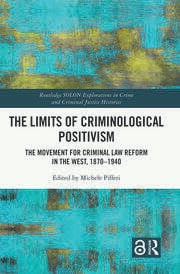
BOOK: Michele PIFFERI (Ed.), The Limits of Criminological Positivism. The Movement for Criminal Law Reform in the West, 1870-1940 (London: Routledge, 2022). ISBN: 9780367340599, pp. 202, £96.00

ABOUT THE BOOK

The Limits of Criminological Positivism: The Movement for Criminal Law Reform in the West, 1870-1940 presents the first major study of the limits of criminological positivism in the West and establishes the subject as a field of interest.

The volume will explore those limits and bring to life the resulting doctrinal, procedural, and institutional compromises of the early twentieth century that might be said to have defined modern criminal justice administration. The book examines the topic not only in North America and western Europe, with essays on Italy, Germany, France, Spain, the United Kingdom, Belgium, and Finland but also the reception and implementation of positivist ideas in Brazil. In doing so, it explores three comparative elements: (1) the differing national experiences within the civil law world; (2) differences and similarities between civil law and common law regimes; and (3) some differences between the two leading common-law countries. It interrogates many key aspects of current penal systems, such as the impact of extra-legal scientific knowledge on criminal law, preventive detention, the ‘dual-track’ system with both traditional punishment and novel measures of security, the assessment of offenders’ dangerousness, juvenile justice, and the indeterminate sentence. As a result, this study contributes to a critical understanding of some inherent contradictions characterizing criminal justice in contemporary western societies. Written in a straight-forward and direct manner, this volume will be of great interest to academics and students researching historical criminology, philosophy, political science, and legal history.

ABOUT THE EDITOR

Michele Pifferi is Professor of Legal History at the University of Ferrara, Law Department. He has been Visiting Researcher at the Max-Planck-Institute for Legal History and Legal Theory in Frankfurt am Main; Emil Noël Fellow at NYU School of Law; Robbins Fellow at Berkeley UC—School of Law; Academic Visitor at the Oxford Centre for Criminology; and Alexander von Humboldt Research Fellow at the University of Hamburg, Faculty of Law. He is currently Alexander von Humboldt Research Fellow at the Humboldt Universität zu Berlin, Faculty of Law as well Principal Investigator of a research project on Legal History and Mass Migration: Integration, Exclusion, and Criminalization of Migrants in the 19th and 20th Century. Member of the Editorial Board of the series Rechtsgeschichte und Rechtsgeschehen —Italien (LIT Verlag), and of Quaderni fiorentini per la storia del pensiero giuridico moderno. His research interests focus on history of late medieval to late modern criminal justice, history of criminology, and history of migration law.

TABLE OF CONTENTS

Introduction. An Historiographical Reassessment of Criminological Positivism

Michele Pifferi


Scientist Utopia and Reactionary Nostalgia: Criminal Procedure and the Early Positivist School

Marco Nicola Miletti


Penal Reform in Imperial Germany: Conflict and Compromise

Richard F. Wetzell


The French Judicial and Political Origins of Raymond Saleilles’ Individualization of Punishment

James M. Donovan


The Influence of Positivism in Belgium: An Eclectic Compromise Between Adhesion and Resistance

Yves Cartuyvels


The Limits of Positivism: Finnish Criminal Law Scholarship and the European Context at the Turn of the Twentieth Century

Heikki Pihlajamäki


From the Sacred Springtime of Criminal Law to the Limits of Criminological Positivism in Spain

Enrique Roldán Cañizares


Fascist Italy’s Juvenile Courts in Their Infancy: First Impressions

Paul Garfinkel


Responding to the Problem of Crime: English Criminal Law and the Limits of Positivism, 1870-1940

Lindsay Farmer


Positivism’s Humbugs: Criminology and its Cranks in Progressive America

Susanna Blumenthal


Limits and displacements in the adoption of criminological positivism in Brazil (1890-1940)

Ana Lucia Sabadell and Dimitri Dimoulis


From Responsibility to Dangerousness? The Failed Promise of Penal Positivism

Michele Pifferi


Index


More information with the publisher.

03 August 2020

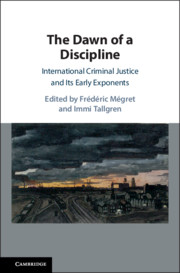
BOOK: Frédéric MÉGRET and Immi TALLGREN, eds., The Dawn of a Discipline International Criminal Justice and Its Early Exponents (Cambridge, 2020). ISBN 9781108488181, £ 110.00


(Source: CUP)

Cambridge University Press is publishing a new edited collection on key figures in the early history of international criminal justice.

ABOUT THE BOOK

The history of international criminal justice is often recounted as a series of institutional innovations. But international criminal justice is also the product of intellectual developments made in its infancy. This book examines the contributions of a dozen key figures in the early phase of international criminal justice, focusing principally on the inter-war years up to Nuremberg. Where did these figures come from, what did they have in common, and what is left of their legacy? What did they leave out? How was international criminal justice framed by the concerns of their epoch and what intuitions have passed the test of time? What does it mean to reimagine international criminal justice as emanating from individual intellectual narratives? In interrogating this past in all its complexity one does not only do justice to it; one can recover a sense of the manifold trajectories that international criminal justice could have taken.

ABOUT THE EDITORS

Frédéric Mégret, McGill University, Montréal

Frédéric Mégret is a Professor and Dawson Scholar at the Faculty of Law, McGill University. From 2006 to 2016 he held the Canada Research Chair on the Law of Human Rights and Legal Pluralism. His research focuses on the theory and history of international criminal justice.
Immi Tallgren, University of Helsinki

Immi Tallgren is a Docent (Adjunct Professor) of International Law, University of Helsinki and a Senior Researcher at the Erik Castrén Institute. She has worked as a diplomat, legal advisor in international organisations, and researcher, e.g., at the MPI Luxembourg and LSE. She currently studies the history of international law and gender, international criminal justice, law and cinema.

TABLE OF CONTENTS

Foreword Martti Koskenniemi
1. Introduction Frédéric Mégret and Immi Tallgren
2. Hugh Bellot Daniel Segesser
3. Vespasian V. Pella Andrei Mamolea
4. Emil Rappaport Patrycja Grzebyk
5. Quintiliano Saldaña Ignacio de la Rasilla del Moral
6. Henri Donnedieu de Vabres Frédéric Mégret
7. Hans Kelsen Monica Garcia-Salmones Rovira
8. Bert Röling Jan Klabbers
9. Radhabinod Pal Rohini Sen and Rashmi Raman
10. Aron Trainin Gleb Bogush
11. Raphael Lemkin Vesselin Popovski
12. Stefan Glaser Karolina Wierczyńska and Grzegorz Wierczynski
13. Yokota Kisaburo Matthias Zachmann
14. Jean Graven Damien Scalia
15. Absent or invisible? 'Women' intellectuals and professionals at the dawn of a discipline Immi Tallgren.

More info here

25 February 2019

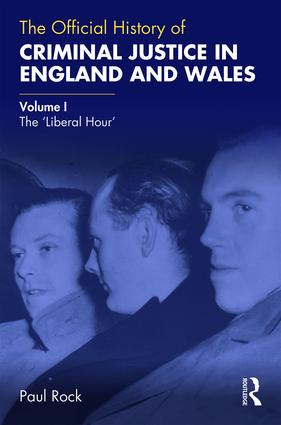
BOOK: Paul ROCK, The Official History of Criminal Justice in England and Wales, Volume I - The ‘“Liberal Hour”’ (London: Routledge, 2019). ISBN 9781138601673, £80.00


(Source: Routledge)

Routledge has published the 1st volume of a new series on the history of criminal justice in England and Wales.

ABOUT THE BOOK

Volume I of The Official History of Criminal Justice in England and Wales frames what was known about crime and criminal justice in the 1960s, before describing the liberalising legislation of the decade.

Commissioned by the Cabinet Office and using interviews, British Government records, and papers housed in private, and institutional collections, this is the first of a collaboratively written series of official histories that analyse the evolution of criminal justice between 1959 and 1997. It opens with an account of the inception of the series, before describing what was known about crime and criminal justice at the time. It then outlines the genesis of three key criminal justice Acts that not only redefined the relations between the State and citizen, but also shaped what some believed to be the spirit of the age: the abolition of capital punishment, and the reform of the laws on abortion, and homosexuality. The Acts were taken to be so contentious morally and politically that Governments of different stripes were hesitant about promoting them formally. The onus was instead passed to backbenchers, who were supported by interlocking groups of reformers, with a pooled knowledge about how to effectively organise a rhetoric that drew on the language of utilitarianism, and the clarity and authority of a Church of England. This came to play an increasingly consequential and largely unacknowledged part in resolving what were often confusing moral questions.

This book will be of much interest to students of criminology and British history, politics and law.

ABOUT THE AUTHOR

Paul Rock is an Emeritus Professor of Sociology at the London School of Economics. His published work has focused chiefly on the evolution of criminal justice policies in Canada and England and Wales, particularly for victims of crime, and on developments in criminological theory.

TABLE OF CONTENTS

1. Crime in the late 1950s and 1960s: A Preamble
2. The Liberal Hour I – Prologue: The Homicide Act 1957
3. The Liberal Hour I: The Murder (Abolition of Death Penalty) Act 1965 c.71; Consummation
4. The Liberal Hour II – The Abortion Act 1967 c. 87: Foundations
5. The Liberal Hour II – The Abortion Act 1967 c. 87: Culmination
6. The Liberal Hour III – The Sexual Offences Act 1967 c. 60: Prologue
7. The Liberal Hour III – The Sexual Offences Act 1967 c. 60: Consummation

More information here