Search

Showing posts with label history of criminal law. Show all posts

08 October 2026

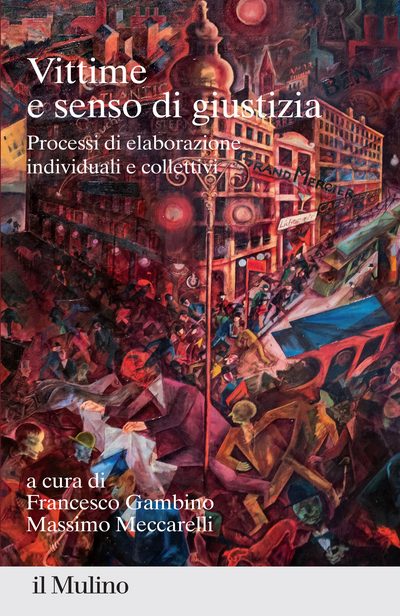
BOOK: Francesco GAMBINO & Massimo MECCARELLI (eds.), Vittime e senso di giustizia. Processi di elaborazione individuali e collettivi (Bologna: il Mulino, 2026), ISBN 9788815395986, € 26


(image source: il Mulino)

Abstract:
Nello scenario attuale, dove i rapporti di forza tra individui, poteri e corpi sociali subiscono in vario modo energiche e repentine distorsioni, irrompendo nelle vite dei singoli, è più che mai necessario riflettere sul tema delle vittime. Questo volume presenta gli esiti di una ricerca interdisciplinare che ha coinvolto giuristi, storici, sociologi e studiosi di letteratura, con lo scopo di distinguere le diverse dimensioni del fenomeno: soggettiva, sociale e istituzionale, storica, filosofica, giuridica e processuale, rappresentativa. Si affacciano molte domande: sul rapporto tra paradigma vittimario e società, sulle forme di riparazione, sulla distorsione dell’immagine della vittima nel processo, sul ruolo delle vittime nella memoria collettiva, sull’oblio, e non da ultima sulla psicologia delle vittime. L’obiettivo è intercettare, dietro la diffusa domanda di giustizia, nuove forme di coesione sociale.
Editors:
Francesco Gambino è professore ordinario di Diritto civile nell’Università di Macerata. Finalista del premio Viareggio Rèpaci, sezione saggistica, con «In sala con il diritto» (La nave di Teseo, 2023). Massimo Meccarelli è professore ordinario di Storia del diritto medievale e moderno nell’Università di Macerata. È condirettore di «LawArt. Rivista di Diritto, Arte, Storia».

Read more here. 


17 September 2026

JOURNAL: Genere, giustizia, guerra – Ebrei in politica nel Rinascimento – Varia (Mélanges de l'École française de Rome 137-1 (2025)) [OPEN ACCESS]

(image source: Openedition)

Genere, giustizia, guerra (eds. Fabrice Virgili, Paolo Fonzo, Fabien Lostec, Cecilia Nubola & Toni Rovatti)

Introduction (Fabrice Virgili, Paolo Fonzi, Fabien Lostec, Cecilia Nubola et Toni Rovatti)

Ree, vittime: donne greche nei documenti dei tribunali militari italiani nella Grecia occupata (1941-1943) (Paolo Fonzi)
DOI 10.4000/15hok
Abstract:

During the Second World War the Italian army established military tribunals in occupied Greece. As these tribunals prosecuted not only Italian soldiers but also Greek civilians for offences against the Italian military authorities, women often figure in their records. This article examines some of the instances in which women were involved in the trials as perpetrators or victims. Based on these sources the article aims to answer two main questions. The first is to what extent occupation unleashed major shifts in gender relations, challenging given patriarchal structures and thus providing the ground for new forms of female social behaviour. The second is how the Italian military authorities dealt with these new forms of social behaviour. A purely manly organism, the Italian military tribunals premised their judgments upon a conception of «paternalist protection» towards women, a protection exercised only towards certain subjects. Those women who challenged the social taxonomies of the judges were systematically denied such a protection. Therefore the records reveal the «common sense», to use Ann Stoler’s category, of the occupation authorities.

Recels de couverture et paroles de ménagère devant le tribunal militaire (Sardaigne 1943-1944) (Fabrici Virgili)
DOI 10.4000/15hol
Abstract:

An analysis of the testimony given by 28 women questioned before the Military Tribunal of the 7th Army Corps sitting in Sassari (Sardinia) during the period 1943-1944 sheds light on women’s voices in the face of military justice. These case files, which concern several cases of theft and receiving stolen goods, provide insight into the ambivalent relationships that developed between young men, soldiers and non-islanders on the one hand, and Sardinian women, housewives and women of their mothers’ age on the other, with both parties confronted by an institution that had no intention of allowing its blankets and other textile goods to be stolen. This article explores the gendered boundary between civilian and military life, combining material culture and military justice based on previously unpublished archives. It highlights the often lesser-known and more ambivalent margins of the conflict, whether geopolitical (Sardinia), social (a few housewives) or military (a few textile goods).

Les collaboratrices face à une justice militaire d’exception Le cas des cours martiales de la République en France à la Libération (Fabien Lostec)
DOI 10.4000/15hom
Abstract:

This article brings together two realities of the purge in France that are still little known: on the one hand, women tried for acts of collaboration and, on the other, the courts martial of the Republic. In a number of French regions, the Republic’s courts martial were the first legal purge tribunals. They handed down their judgements in September 1944, in a climate of great tension marked by the explosion of sentiment characteristic of the Liberation. Studying these tribunals not only sheds light on the judicial archipelago of purges, it also provides an opportunity to offer a social and gendered history of collaboration and purges. To be precise, two questions will be examined in turn, based on a previously unpublished corpus of around 1,000 judgements and around a hundred procedural files from the 38 courts martial of the Republic that France had at the time. The first question is that of the place of women in the courts, which requires us to reflect not only on the severity of their judgements but also on the notion of “épuration sauvage”, used by some to describe the activity of these courts martial. The second question is that of the acts of which the women were accused, which, although they were at the crossroads of legality and morality, could not be summed up simply as sentimental collaboration. In the face of these accusations, the accused are also given the floor to examine their arguments in their defence, which are largely based on gender stereotypes.

Parlare tacere tradire Collaborazioniste e partigiane nei processi del secondo dopoguerra (Cecilia Nubola) 
DOI 10.4000/15hon
Abstract:

Starting with the sentences of the Special Tribunals established after WWII in Italy and the examination of a certain number of significant case studies, this paper/essay investigates some aspects of the activities and choices made by women and girls during the civil war (1943-1945). The investigation focusses on the lives of women who–in order to survive the war–had betrayed and denounced people on either side, siding–as they found it necessary–with the RSI or the Resistance. The testimonies given during the trials make it possible to shed new light on the female contribution to the «Civil Resistance» and to recognize its role and importance. The aim is to overcome the dichotomy between women as either «victims» or «heroines» and to highlight their awareness and acceptance of the risks, the choices, as well as the ideal and political motivations that supported their partisan struggles, which were often not recognized in the post-war period.

Segnare la colpa Donne e dovere di testimonianza sulle violenze di guerra nei processi del lungo dopoguerra italiano (1944-2013) (Toni Rovatti)
DOI 10.4000/15hoo
Abstract:

This essay explores the role of women in Italian trials for war crimes and collaboration spanning the “long period” from 1944 to 2013, focusing on their participation as victims, accusers, and observers. Drawing on judicial records and trial reporting, the study underscores the vital contribution of women to the reconstruction of historical truth within transitional justice frameworks—contexts often marked by forms of summary justice. Between 1944 and 1950, women played a central role in grassroots denunciations and demands for accountability. In the later trials from the 1990s onward, female testimonies became increasingly centered on memory and moral reparation, frequently voiced by the daughters and granddaughters of victims. The essay concludes by addressing persistent gender asymmetries within the judiciary and the ongoing tension between recognition and the stereotyping of women’s voices in judicial settings.

Read these articles and the rest of the journal in open access on openedition. 


17 June 2026

SYMPOSIUM: Ancient Criminal Law: A Global Perspective (Youtube, crimlrev.net, 24 JUN 2026)

(iamge source: MCRL)


Join us for an international workshop featuring contributors to our forthcoming Modern Criminal Law Review Special Issue on “Ancient Criminal Law: A Global Perspective,” guest edited by Clifford Ando (University of Chicago).

Participants include:

  • Clifford Ando, University of Chicago (moderator)
  • Beth Berkowitz, Columbia University
  • Ari Bryen, Vanderbilt University
  • Ernest Caldwell, St. Mary’s, London
  • Benjamin Gallant, Harvard University
  • Adriaan Lanni, Harvard University
  • Mark Letteney, University of Washington
  • Seth Richardson, University of Chicago
  • Andrew Wolpert, University of Florida

June 24, 2026 @ 12pm (ET)

► To join us for this free online event, please register here. Registration is encouraged, but not required; if you prefer to join the event directly, head over to the MCLR+ YouTube channel at the time of the event (please note the time zone). All attendees will have the opportunity to post questions and comments via YouTube live chat.

► To stay informed about upcoming MCLR+ events, publications, and projects, please sign up for the MCLR+ mailing list and check the MCLR+ website; to receive notifications about upcoming livestreams, subscribe to our YouTube channel.


(source: Legal History Blog)

26 May 2026

BOOK: Dominika UCKIEWICZ, Accountability for War Crimes in the Policy of the Polish Government-in-Exile. A Legal and Historical Analysis (Leiden/Boston: Martinus Nijhoff/Brill, 2026), ISBN 9789004759015, OPEN ACCESS


(image source: Brill)

Abstract:

This book excavates the often neglected role of the Polish government-in-exile within the Allied war crimes trial programme and post-1945 international law. Drawing on newly examined archival sources and biographies of key émigré lawyers, it reveals how Polish and other Eastern European jurists helped define the concept of accountability for wartime atrocities long before the Allies convened at Nuremberg. Combining legal and historical approaches, this book traces the Central and Eastern European influence on the UN War Crimes Commission and Allied policy, showing how their ideas about justice, responsibility, victim’s perspective, and law continue to resonate in modern interpretations of the legacy of Nuremberg.

Read more here: DOI 10.1163/9789004759015.

24 March 2026

CONFERENCE: Le Code pénal belge. Regards historiques et comparatifs (XVIe-XXIe siècles) /The Belgian Penal Code. Historical and Comparative Perspectives (XVIth-XXIth centuries) (Brussels: Academy Palace, 18 MAY 2026)


To mark the entry into force of the new Belgian Penal Code, originally scheduled for 8 April but ultimately postponed until 1 September 2026, Jérôme de Brouwer, Professor at the Université libre de Bruxelles, François Pierrard, F.R.S.-FNRS Postdoctoral Researcher at UCLouvain, and Édouard Delrée, PhD student at the ULB, are organising a conference on 18 May entitled ‘Le Code pénal belge. Regards historiques et comparatifs (XVIe-XXIe siècles)’ / ‘The Belgian Penal Code. Historical and Comparative Perspectives (16th–21st centuries)’. The aim of this conference is to offer a historical and comparative perspective on Belgian criminal codification. It will seek to situate the gradual development of the concept of the Penal Code within the European and then colonial context, from the Spanish Netherlands to contemporary Belgium. The conference will take place on 18 May 2026, from 9am to 6pm, at the Palace of Academies, Rue Ducale 1, 1000 Brussels. Admission is free, but registration is compulsory (contact: pierrard.francois@uclouvain.be).

À l'occasion de l'entrée en vigueur du nouveau Code pénal belge initialement prévue le 8 avril mais finalement reportée au 1er septembre 2026, François Pierrard, chargé de recherches F.R.S.-FNRS à l'UCLouvain sous la direction de Wim Decock, organise avec Jérôme de Brouwer, professeur à l'Université libre de Bruxelles, un colloque intitulé "Le Code pénal belge. Regards historiques et comparatifs (XVIe-XXIe siècles)" / "The Belgian Penal Code. Historical and Comparative Perspectives (XVIth-XXIth centuries)". Ce colloque a pour but d'offrir une perspective historique et comparative à la codification pénale belge. Il s'agira de replacer l'élaboration progressive du concept de code pénal dans le contexte européen et puis colonial des Pays-Bas espagnols à la Belgique contemporaine. Le colloque se tiendra le 18 mai 2026, de 9h à 18h, au Palais des Académies, Rue Ducale 1, 1000 Bruxelles. L'entrée est libre, mais l'inscription est obligatoire (contact : pierrard.francois@uclouvain.be).


Le Code pénal belge. Regards historiques et comparatifs           (XVIe-XXIe siècles)

The Belgian Penal Code. Historical and Comparative Perspectives (XVIth-XXIth centuries)


Palais des Académies,

Rue Ducale 1, Bruxelles

18.05.2026

A)       L’élaboration du concept de code pénal                                                            The development of the concept of a criminal code

I)                    De l’uniformisation à la codification                                                                                          From standardisation to codification

Président de séance / Chairperson : Jean-Marc Hausman (UCLouvain, Katholieke Universiteit Leuven)

9:00 : Introduction

Jérôme de Brouwer (ULB), François Pierrard (FNRS, UCLouvain) et Édouard Delrée (ULB)

9:30 : Le plus difficile : définir le concept

Dirk Heirbaut (Universiteit Gent) 

10:00 : The myths of criminal law codes

Aniceto Masferrer (Universitat de València) 


Pause-café / Coffee break


II)                  La séparation du droit pénal substantiel et procédural                                                The separation of substantive and procedural criminal law

Président de séance / Chairperson : Wim Decock (UCLouvain, Université de Liège)


11:00 : Les premières tentatives de codification. Des Ordonnances criminelles de Philippe II au Règlement provisionnel pour la procédure criminelle de Joseph II (1570-1787)

François Pierrard (FNRS, UCLouvain) 

11:30 : From the old to the new criminal law. Innovative aspects of the codification of criminal law of Joseph II (1787) compared with the Constitutio Criminalis Theresiana                         Thomas Simon (Universität Wien) 

12:00 : L’expérience française de la codification pénale (1791-1810)

Liêm Tuttle (Université Panthéon-Sorbonne)

Buffet froid / Cold buffet

B)       Le changement de paradigme de la codification pénale                 The paradigm shift in criminal codification

I)                    Les aléas de l’élaboration d’un code national                                                                                                 The challenges of developing a national code  

Président de séance / Chairperson : Nicolas Simon (Académie royale de Belgique)


14:00 : à la recherche d’un code pénal pour le royaume des Pays-Bas (1815-1830). Une divergence entre le nord et le sud ?

Fred Stevens (Katholieke Universiteit Leuven)

14:30 : Observation, expérimentation : les sciences au service de la codification pénale en Belgique au 19e siècle

Jérôme de Brouwer (ULB) 

15:00 : Le Code pénal belge de 1867 lu par la doctrine française

Tanguy Le Marc’hadour (Université d’Artois) 

Pause-café / Coffee break


II)                  L’influence et le devenir du premier Code pénal belge                                 The The influence and future of the first Belgian Penal Code    

Présidente de séance / Chairperson : Marie-Aude Beernaert (UCLouvain)

16:00 : Du Code pénal de 1867 aux lois de défense sociale en Belgique. Deux logiques antagonistes et complémentaires pour lutter contre le crime                                                                Yves Cartuyvels (UCLouvain Saint-Louis Bruxelles) 

16:30 (sur Teams) :  L’influence du droit belge sur le Code pénal congolais de 1940 à nos jours                                                                                                                                                                           Pacifique Magadju (Université Catholique de Bukavu)

17:00 : Des codifications jumelles aux destins opposés : trajectoires croisées des codes pénaux et du Code d’instruction criminelle en Belgique de 1831 à nos jours                                            Édouard Delrée (ULB)

Conclusion


17:30 : D’un code à l’autre                                                                                                                                         Jérôme de Brouwer (ULB), François Pierrard (FNRS, UCLouvain) et Édouard Delrée (ULB)


Contact : pierrard.francois@uclouvain.be


Fonds de la recherche scientifique — Wikipédia


11 February 2026

JOURNAL: Special Issue Actes du colloque Les écritures judiciaires. Formes et légitimités des décisions de justice depuis le Moyen Âge (dir. Martine CHARAGEAT & Mathieu SOULA) (Criminocorpus 29 (2025)) [OPEN ACCESS]


(image source: criminocorpus)

Powers and functions of judicial documents (Martine Charageat & Mathieu Soula) [English translation]
DOI 10.4000/15dmp
First paragraph:

In the renewal of analyses concerning the history of justice, judicial practice and the application of penalties from the Middle Ages to the present day are often the focus of attention1 . The focus on the desired effects of this justice (pacification, the imposition of a state legal order) leads to an emphasis on judicial ritual, criminal ritual, amicable or negotiated modes of conflict resolution, as well as avoidance and resistance to justice2 . In a way, it is as if the actual work of justice were limited to procedure, punishment and the strategies of those subject to justice, the latter field having benefited from gender analysis, particularly in terms of agency3 . However, the work of shaping court decisions remains in the shadows, i.e. the means deployed by the institution to make its verdicts visible and assertive, to express them and make them acceptable; in short, to legitimise the brute force of its decisions through a process of formalisation4 . Putting them in writing was part of the documentary revolution that began in the 12th century and was in line with a shift towards a different relationship with the written word, the spoken word and the written word5 . However, it cannot be reduced to a simple operation of storage and memory construction, even though this dual dimension remains intrinsic to the production of these acts, beyond their vocality6 .

 I. Mettre en formes : enjeux de rédaction et stratégies discursives

L’élaboration de la décision judiciaire d’après les Year Books des xiiie-xve siècles (Christophe Archan)
DOI 10.4000/15dmq
Abstract:

The Year Books of the 13th-15th centuries contain recordings of the hearings of the English high royal courts, in the form of dialogues in French (law French). Written primarily for educational purposes, they inform the reader of the exchanges that took place between the different actors in the trial. They are therefore very valuable to us in understanding how a legal decision was taken. We indeed see judges who seek to ensure a certain legal continuity and who also demonstrate pedagogy to justify their judgment.

L’imagerie du Vieux coustumier de Poictou, témoin de la validation des formes de justice à la fin du Moyen Âge (Pierre Prétou)
DOI 10.4000/15dn9
Abstract:

The Vieux Coustumier de Poictou, a painted book from the second half of the 15th century [Médiathèque Niort, Res MSF] features an exceptional iconography that illustrates the validation of legal and judicial forms. In addition to the procedural texts previously studied by René Filhol, consigned to an era of consecutive writing of the ordinances of Charles VII, the painters emphasize the scriptural forms in the context of their production. As a result, this archive enhances our anthropological understanding about the materials shapes drawn up, sealed, exhibited, produced, or delivered by the judges and their court officers. Despite the modern context and the rise of writings, the place of real traditions, of witnesses receiving and validating, or sergeants delivering the charter, remind us of the strength and resilience of orality and living testimony in the process of validating the acts of justice.

Les registres des officialités champenoises : dire et écrire le droit (Véronique Beaulande-Barraud)
DOI 10.4000/15dmr
Abstract:

In 1350, the cathedral chapter of Cambrai excommunicate Jean de Bourlon and pronounce an « aggravation » of the sentence. The document presented here is a translation of the chapter's mandement asking all priests in the diocese to enforce the sentence. If Jean’s crime remains unknown, the document is an efficient source for understanding the content of the excommunication, the forms of its aggravation and the means of its application. Excommunication is a canonical censure wich deprives from all sacraments and social relationships, as recalled by the litany of forbidden actions contained in the document, but also as expressed in the ritual of the anathema. Whoever disobeys excommunication is ipso facto also excommunicated. This mandate to publicize Jean de Bourlon’s excommunication reveals the form and use of the most serious sanction that the Church in the Middle Ages.

Justice et argent public. La mise en forme des condamnations du juge ad sindacatum de la commune de Bologne en 1315 (Marco Conti)
DOI 10.4000/15dms
Abstract:

Medieval judicial sources from Italian municipalities are among the most important documentary collections in terms of quantity and variety, and enable us to study institutions. In Bologna, as in most Italian communes at the end of the 13th century, the administration of justice was entrusted to two foreign officers: the podestà and the captain of the Popolo. These two officers arrived in the city with their collaborators. Among these people, a judge was responsible for investigating the work of all the city officers who managed public funds. In this article, we will examine the work of this officer and his tools at the beginning of the 14th century. After a brief overview of the administration of justice and the work of the officers responsible for controlling municipal finances, we will study the codicological aspects of a register of convictions and acquittals from 1315. This will enable us to understand how this document was used within the municipal administration.

La mise en forme des sentences judiciaires à Dijon. Entre gestion administrative et judiciaire et défense des droits de juridiction de la mairie (Rudi Beaulant)
DOI 10.4000/15dmt
Abstract:

The formatting of judicial sentences is of particular importance in a town such as Dijon, where the town hall had the right of high justice. Firstly, it is important to show the diversity of sources in which high justice sentences were recorded by municipal officers, in order to highlight the issues and purposes of these documents. The second part of the study focuses on the Papier Rouge register, which, although it is intended to contain high justice sentences, is not exhaustive and is linked to other judicial records that still record some of these sentences. Finally, an overview of the urban sources shows the importance of the formatting of judicial sentences, which were particularly useful in the event of a jurisdictional conflict between the commune and the officers of the Duke of Burgundy in the 15th century, and then of the King of France in the early 16th century.

Juger et sanctionner les délits relatifs aux eaux et forêts (domaine du roi, apanages d’Orléans et de Provence, xve- xviiie siècles) (Isabelle Bretthauer & Maïa Pirat)
DOI 10.4000/15dmu
Abstract:

Starting in the late Middle Ages, the French monarchy established a specific administration for managing forests and waterways, which evolved through the early modern period. Although often studied from an environmental perspective, this administration also had a genuine judicial role, with complex procedures and specialized jurisdictions. A series of royal ordinances—notably those from 1346, 1389, 1402, and especially the major 1669 ordinance under Colbert—gradually structured this system. The Eaux et Forêts courts, operating both in the royal domain and in princely apanages like Orléans and Provence, handled forest-related offenses, carried out large-scale inspections (réformations), and produced extensive judicial documentation. Despite being scattered, the surviving archives allow historians to study these practices and reveal a long-term effort toward administrative centralization and standardization.

Des arrêts en millefeuille. Strates de rédaction d’arrêts criminels et gestion de l’information au parlement de Paris (xvie-xviiie siècle) (Aurélien Peter)
DOI 10.4000/15dmv
Abstract:

The criminal arrests of the Parliament of Paris in the 16th to 18th centuries constitute judicial decisions. Far from being simple judgements, they are the result of a long process of writing and formatting involving multiple layers of documentation. Clerks and secretaries played a central role in this process. Writing practices evolved over time, moving from lively, annotated writing to mechanical, standardised copying in the 18th century. Royal reforms, notably the ordinances of 1667 and 1670, streamlined these practices. The production of judgments thus appeared to be a collective and hierarchical process, revealing a strong administrative power. Internal rivalries existed between registry officials, each seeking to control the drafting and dissemination of these acts. The judgment thus became an instrument of justice, a tool of memory and a symbol of royal authority.

La rédaction, la présentation et la publication des jugements du Tribunal de cassation, (1799-1799) (Jordan Hain)
DOI 10.4000/15dmw
Abstract:

During the French Revolution, the law of August 16–24, 1790 reformed the judiciary and required a uniform structure for judgments to limit judicial power. The Court of Cassation, governed by the law of December 1790, followed specific rules without providing reasoning for its decisions. Rejection judgments are rare and poorly preserved, while cassation judgments, better documented, evolved over time: initially very formal, they became increasingly reasoned after 1793, marking the beginnings of judicial decision-making justification.

II. Fonctions et usages de l'écrit

En quête de fama. L’écrit, le droit et la procédure dans les registres d’un évêque italien (v. 1290-1300) (Arnaud Fossier)
DOI 10.4000/15dmx
Abstract:

Four registers containing the records of approximately ninety trials have come down to us from the court of the bishop of Pistoia, Tommaso Andrei (1285-1303). In theory, each of these four volumes should have included the indictments or denunciations, the plaintiffs’ libels, the defendant’s litis contestatio, the oaths of both parties, the witness’ statements, and even the interlocutory or final sentences, at least when the trial went all the way to sentencing. In practice, however, this is not the case, as it is mainly witness’ statements that have been written down and preserved. The aim of this article is to understand why. Was it to keep and preserve in writing what was volatile (that is the “public voice”)? Whereas the orality of the sentence might be enough for it to be effective, the written word enabled rumor - a labile and elusive object - to be transformed into a fama that could thereafter serve for the judge as evidence and support for a verdict.

Les faillites à Florence : quelques éléments sur l’écriture et l’organisation des sentences devant le tribunal de la Mercanzia (années 1330) (Cédric Quertier) 
DOI 10.4000/15dn3
Abstract:

The famous serial bankruptcies of Florentine companies during the 1340s had a major impact on Europe's leading economic metropolis, yet their judicial settlement remains little-known. We have undertaken a long-term investigation to put these bankruptcies into series and perspective. The aim is to examine some twenty bankruptcy sentences pronounced by the Florentine Mercanzia court in 1329 and 1330, to determine how the court's bankruptcy sentences were archived and how they were drafted in order to achieve maximum legal efficiency in a court that judged in equity and relied above all on written evidence. Next, we'll look at the internal structure of sentences. Finally, although jurists advise against justifying them, they do not forbid it; this is why the opening (petition) and conclusion (sentence) of bankruptcy proceedings regularly insist on compliance with the Mercanzia statute.

De la plume du greffier à l’imprimé. La fabrique et le devenir de la sentence pénale des tribunaux supérieurs castillans au XVIIe siècle (Olivier Caporossi)
DOI 10.4000/15dmy
Abstract:

The writing of criminal sentences by the Castilian higher courts (Chancelleries of Valladolid and Granada, Alcades de Cour, audiences, Council of Castile) by the clerks of the court underwent a formalization and specialization (1560-1700). For this reason, it is necessary to retrace the course of the judicial writing of criminal sentences, from the clerk's pen to the public cry of its execution and to the printed word in order to grasp the stakes of this evolution inside the judicial machine as well as outside with the public opinion of the elites.

Entre oralité et écriture, entre acquiescements, silences, grondements ou éruptions. L'écriture des sentences criminelles de la cour des capitouls au xviiie siècle et leur réception par les accusés et condamnés toulousains (Géraud de Lavedan)
DOI 10.4000/15dmz
Abstract:

The case of Jean Auriol, sentenced in 1756 to ten years in the galleys and protesting his verdict, serves as a lens to explore the judicial workings of Toulouse’s capitouls in the 18th century. Archival records reveal the tension between official written form and courtroom orality, where clerks, judges, and defendants show individual traits. Each trial follows a set ritual: the prosecutor’s conclusions, a largely formal last interrogation, deliberation, and the drafting of the sentence. Verdicts stem from debated opinions before being written by the clerk, who is far from neutral, reformulating and translating the accused’s words. Finally, the sentence is read publicly, reflecting a justice both codified and deeply human in its imperfections.

La justice militaire après l’armistice de 1940, un enjeu de légitimité. Regards croisés entre Vichy, Londres et les colonies françaises (Robin Leconte) 
DOI 10.4000/15dn0
Abstract:

Valuable insights into the establishment of the political legitimacy of Vichy and Free France are provided by the 1940-1945 military justice archives. By means of an analysis of the materiality of the acts in question, historians can measure the crucial issues at stake in the judicial writings after the brutal defeat of May-June 1940. This article examines the contrast between the Free French military justice quest for legitimacy and the Vichy regime's efforts to demonstrate the severity of its justice, despite its geographical and political impotence, in a context dominated by the colonial dimension of the French army. We then examine how court records transcribe the words of colonial soldiers. Then we look at Vichy's attempt to rewrite the code of military justice to deal with the issue of prisoners of war. Or how severity gives way to pragmatism.

Juger et dire l’histoire : vrai judiciaire et vrai historique dans les arrêts de la Haute cours de justice contre Philippe Pétain et Pierre Laval (Mathieu Soula)
DOI 10.4000/15dn1
Abstract:

"A trial for history." The expression has now become a commonplace in analyses of "major trials," those that are thought to reorder, reestablish, or repair a collective trauma. Making history or remembering is a function in its own right of the justice system that came with the belated trials for crimes against humanity. The months following the end of the fighting are filled with historical trials or trials for history, because the point is, then, to repair history, to reestablish the chain of time by imposing a common retrospective representation of a recent past that has disrupted established orders and certainties. Imposing a common vision of this past to inscribe the present within a framework of historical legitimacy. In this contribution, we would like to analyze the historical function of the Pétain and Laval trials by questioning the role of justice in the writing or rewriting of history.

Une brève histoire des écritures des parties depuis le Moyen Âge (Cédric Meurant)
DOI 10.4000/15dn2
Abstract:

In the French procedural tradition, the contentious writings by the parties constitute the heart of the trial. Indeed, the essence of the judge's mission consists of resolving the dispute by responding to the parties’ submissions. But this procedural tradition which gives an important place to the parties is in reality very old: it has been in development since at least the High Middle Ages. If the various trials were then mainly oral and accusatory, the gradual rise of the written word reinforced the essential role of the parties who were responsible for writing judicial briefs. Their analysis reveals that these contentious writings have undergone two major developments: first, the picky formalism which initially surrounded the validity of these writings has gradually and fortunately faded away. Then, if many of the writings written by the parties were public in society before 1789, post-revolutionary society, although deemed more transparent, concealed them under thick secrecy. This reminds us that historical developments are sometimes surprising.

Read all articles here in open acces.