Search

Showing posts with label open access. Show all posts

30 September 2026

BOOK REVIEW: Jan MARKERT on Eckart CONZE, Friedlos. Die Deutschen zwischen Kriegsgewalt und Friedenssuche von 1648 bis heute (München: Deutscher Taschenbuch Verlag, 2026) (H/Soz/Kult)


(image source: H/Soz/Kult)

First paragraph:
Die Frage nach der Aktualität historischer Publikationen ist nicht immer leicht zu beantworten. Der wissenschaftliche Blick in die Vergangenheit grenzt jede Gegenwartsbezogenheit meist auf strukturabstrakte Kontinuitätsdebatten oder Forschungskontroversen ein. Nur selten gewinnen Bücher und Studien a posteriori durch tagesaktuelle Entwicklungen explizit den Charakter eines Kommentars des Zeitgeschehens. Einer dieser Ausnahmefälle liegt jedoch mit Eckart Conzes umfassender Darstellung der deutschen Kriegs- und Friedensgeschichte vor. Das Nachwort datiert den Abschluss der Manuskriptarbeiten auf den Januar 2026 (S. 510). Nur einen Monat später wurde auch Deutschland durch den Beginn des Irankrieges vor neue sicherheitspolitische Herausforderungen gestellt. Dieser neue globale Konflikt verleiht dem Buch des Marburger Historikers geradezu ungewollt Tagesaktualität, weshalb es nicht nur für ein geschichtsinteressiertes Publikum von Interesse sein dürfte.

Read more here. 


24 September 2026

ARTICLE: Arno DAL RI Jr., "François Laurent in Brazil. The defense of the Principle of Nationalities that crossed the Atlantic (1899-1978)" Sartoniana XXXVIII (2025), 53-84 [OPEN ACCESS]


(image source: UGent)

On the journal:

Sartoniana is a yearly publication that publishes the lectures delivered as part of the Sarton Chair of History of Science at Ghent University. All articles are published in open access, as of volume 40 with a CC-BY licence, which permits unrestricted use, distribution, and reproduction in any medium, provided the original author and source are credited.

Read more here: DOI 10.21825/sartoniana.101334.

21 September 2026

BOOK: Michael WERNER, Diesseits und jenseits der Nation : Deutsch-französische Verflechtungen 1815-1870 [Deutsch-Französische Geschichte, vol. 6] (Heidelberg: Heidelberg University Publishing, 2025) [OPEN ACCESS]


(source: HeiUP)

On the series:

Inspired by the »histoire croisée«, the eleven-volume handbook series Deutsch-Französische Geschichte sheds light on the complex history of relations between Germany and France from the 9th century to the present day. The peer review of the volumes was ensured by the GHIP’s international scientific advisory board which acted as a review committee. The German-language volumes are published by the Wissenschaftliche Buchgesellschaft (WBG) Darmstadt and Heidelberg University Press, while the French-language volumes are published by the Presses universitaires du Septentrion (PUS) Villeneuve d'Ascq.

Abstract:

Das 19. Jahrhundert gilt als Zeitalter der Verwandlung. In Deutschland und Frankreich ist der Zeitraum von 1815 bis 1870 von vielfältigen politischen, sozialen und kulturellen Entwicklungen bestimmt, die mit dem Prozess der Nationsbildung zu tun haben. Der Fokus des Bandes liegt jedoch nicht auf nationalen Entwicklungspfaden. Vielmehr beleuchtet er, im Sinne einer histoire croisée, transnationale Verflechtungen, die Frankreich und Deutschland wechselseitig geprägt haben. Dabei wird gezeigt, wie sich die Prozesse auf vielfältigen Ebenen entfalteten: von Politik und Wirtschaft über Bildung und Forschung bis hin zu Medien, Vereinen und den Künsten. Auch prä- und postnationale Entwicklungen werden in den Blick genommen. So entsteht ein vielschichtiges Bild, das die bisherigen Vorstellungen einer „Erfindung der Nation“ zugleich erweitert und relativiert.

See here for a full list of volumes. 

Read the full book in open access: DOI 10.17885/heiup.1519. 

16 July 2026

OPEN ACCESS: Sébastien DUBOIS, Bruno DEMOULIN, & Jean-Louis KUPPER (Eds.). Les institutions publiques de la principauté de Liège (980-1794). [Studia, 133] (Brussels: State Archives of Belgium, 2012), 2 vol.

(image: Joseph Clement of Bavaria, Prince-Bishop of Liège; source: Wikimedia Commons)

 Abstract:

Bonne nouvelle ! Le guide 𝘓𝘦𝘴 𝘪𝘯𝘴𝘵𝘪𝘵𝘶𝘵𝘪𝘰𝘯𝘴 𝘱𝘶𝘣𝘭𝘪𝘲𝘶𝘦𝘴 𝘥𝘦 𝘭𝘢 𝘱𝘳𝘪𝘯𝘤𝘪𝘱𝘢𝘶𝘵é 𝘥𝘦 𝘓𝘪è𝘨𝘦 (980-1794) est désormais consultable en ligne et téléchargeable gratuitement ! Les Archives de l’État à Liège conservent de riches fonds d’archives de la principauté de Liège, mais pour y accéder, il faut connaître l’histoire, l’organisation, les compétences et les activités des institutions de l’un des États les plus singuliers de l’Europe d’Ancien Régime. L’organisation politique et administrative liégeoise (où pouvoirs temporel et spirituel s’entrecroisent) est complexe et différente des autres états d’Ancien Régime et, bien sûr, des institutions contemporaines. L’ouvrage offre une synthèse complète et structurée des institutions liégeoises -administratives, judiciaires, financières et militaires ; tant centrales (Conseil privé, États, Chambre des comptes, Cour allodiale, Cour féodale, etc.) que régionales (duché de Bouillon, comté de Looz, condominium de Maastricht, etc.) et locales (villes, métiers, échevinages, etc.). Chaque ville fait l’objet d’une notice spécifique. Chaque notice suit un cadre clair : histoire, organisation, compétences, activités, principaux textes normatifs, listes de fonctionnaires, sources archivistiques et éditions, bibliographie.

Read more here. 

(source: Celida [Centre liégeois de documentation archivistique)

10 July 2026

CLH ARTICLE: Lukasz Jan KORPOROWICZ, The Polish Blackstone: an examination of nineteenth-century Polish scholars’ interpretations of Blackstone and his Commentaries (Comparative Legal History, XIV (2026), nr. 1, pp. 73-96) [OPEN ACCESS]

(Image source: Taylor&Francis)

Abstract:
The principal goal of this article is to address the reception of William Blackstone's legal thought and the awareness of his contributions within the context of nineteenth-century Polish legal scholarship. Despite the considerable differences between English and Polish legal traditions, the limited proficiency in the English language within Poland, and the relatively gradual evolution of Polish legal thought, Blackstone's works were acknowledged by academic circles in Poland in the nineteenth century. Over time, this awareness manifested in direct engagement with certain aspects of Blackstone's perspectives. Nonetheless, the temporal disparity between Blackstone's period of influence and the evolution of legal scholarship in partitioned Poland significantly limited the practical opportunities for the integration and application of Blackstonian jurisprudence.

To read the article, please click here. The article is available in open access; the full issue is freely accessible online to members of the European Society for Comparative Legal History.

DOI: /10.1080/2049677X.2026.2671597


09 July 2026

BOOK: Xavier PRÉVOST, Rafael RAMIS BARCELÒ, Luigi Alberto SANCHI (eds.), Qu’est-ce que l’humanisme juridique? - Che cos’è l’umanesimo giuridico? - ¿Qué es el humanismo jurídico? (Madrid: Dykinson, 2026). ISBN: 979-13-7047-310-5, 202 p. [OPEN ACCESS]


(Source: uc3m)

Abstract:

El presente libro tiene como objetivo responder a una pregunta fundamental: ¿Qué es el humanismo jurídico? Tras la introducción de Xavier Prévost y Luigi Alberto Sanchi, se recogen las reflexiones de Patrick Arabeyre, Mario Ascheri, Diego Quaglioni, Italo Birocchi, Wouter Druwé y Rafael Ramis Barceló, quienes abordan las cuestiones esenciales desde una amplia perspectiva europea. A continuación, se presentan, como estudios de caso, dos traducciones al francés —realizadas por Philippe Cocatre Zilgien y Théo Crea— de obras de dos célebres humanistas: François Douaren y Eguiner Baron. The present book seeks to answer a fundamental question: What is legal humanism? Following the introduction by Xavier Prévost and Luigi Alberto Sanchi, the volume brings together contributions by Patrick Arabeyre, Mario Ascheri, Diego Quaglioni, Italo Birocchi, Wouter Druwé and Rafael Ramis Barceló, who address the essential issues from a broad European perspective. The book then offers, as case studies, two French translations—prepared by Philippe Cocatre Zilgien and Théo Crea—of works by two renowned humanists: François Douaren and Eguiner Baron.

Table of contents:

Introduction / Xavier Prévost, Luigi Alberto Sanchi (pp. 9-18). -- De quoi le bartolisme est-il le nom? / Patrick Arabeyre (pp. 19-40). -- Umanesimo giuridico e crisi del diritto comune / Mario Ascheri (pp. 41-50). -- Umanesimo giuridico e senso della tradizione / Diego Quaglioni, Saxum Sysyphi (pp. 51-62). -- Il problema della definizione dell’umanesimo giuridico: uno specchio per lo storico del diritto / Italo Birocchi (pp. 63-82). -- L’humanisme juridique dans le contexte des Pays-Bas méridionaux / Wouter Druwé (pp. 83-98). -- El humanismo jurídico: definición, etapas y categorías para su estudio / Rafael Ramis-Barceló (pp. 99-134). -- François Douaren, De docendi discendique iuris ratione (1544) : proposition de traduction / Philippe Cocatre-Zilgien (pp. 135-194). -- La préface De ratione docendi discendique iuris civilis, ad iuventutem écrite par Eguiner Baron / Théo Crea (pp. 195-202)

More information and open access PDF available here. 

23 June 2026

SSRN PAPER: Michael BIRNHACK, "Colonial Patents: Industrial Property Law and Nationality in Mandate Palestine" (The Journal of Legal History) [OPEN ACCESS]

(image source: SSRN)

Abstract:
This Article offers the first historical analysis of patent law in British Mandate Palestine (1917-1948), examining 4,395 patent applications through a reconstructed registry and archival sources. It develops Colonial Patents as a framework for analysing legal transplantation in colonial contexts. The analysis reveals Britain's hybrid imperial patent policy: rejecting empire-wide unification while creating preferential procedures for British patents. Palestine's 1924 Patent Ordinance emerged from London-Jerusalem negotiations, including London's rejected proposal to abolish local patents. The registry shows profound participation asymmetries: while foreign and local inventors each filed approximately half of applications, Jewish inventors comprised nearly all local applicants, with scant Arab Palestinians filings. Archival sources confirm British engagement with Jewish patent agents but no Arab involvement. This disparity reflects patent law's ideological foundations in Enlightenment progress and industrial capitalism, which resonated with European-educated Jewish immigrants but remained peripheral to Arab Palestinian society, demonstrating how nominally neutral colonial institutions operated differentially.

Read the article here: DOI 10.2139/ssrn.6383879.

(source: Legal History Blog)


18 June 2026

BOOK: Daniel ALLEMANN, Empires of Slavery: Rights and Power in the Early Modern Iberian World [Max Planck Studies in Global Legal History of the Iberian Worlds, ed. Thomas DUVE; 7] (Leiden/Boston: Martinus Nijhoff/Brill, 2026), [OPEN ACCESS]


(image source: Brill)

Abstract:
Enslavement was central to the early modern Iberian empires. No one at the time seriously questioned its legality, yet widespread reports of violent practices of captivity and human trafficking contrasted sharply with the Christian ideal of charity. This volume explores how Spanish and Portuguese theologians, jurists, and missionaries grappled with this moral dilemma. These thinkers developed ideological tools to protect the souls of those who appeared to be in a state of mortal damnation. Slavery prompted Iberian intellectuals to rethink the boundaries between property and person, law and religion, and household and commonwealth. By reconstructing these debates, this volume offers a new narrative about the relationship between individual rights and political power in the early modern Iberian world.

On the author:

Daniel Allemann, Ph.D. (2020), University of Cambridge, is Scientific Collaborator at the University of Geneva. A historian of the late medieval and early modern periods, he studies how intellectual traditions shaped ideas of empire, rights, and religion. He co-edited Conceptions of Space in Intellectual History (2018). 

Read more here: DOI  10.1163/9789004760592.


15 June 2026

ADVANCE ARTICLE: Maya MARK, "Civil Disobedience in Defense of Democracy: Menachem Begin’s Struggle Against Emergency Laws in Israel, 1948–1954" (Law and History Review) [OPEN ACCESS]

(image source: CUP)

 Abstract:

This study uncovers a previously overlooked chapter in the historiography of civil disobedience: Menachem Begin’s resistance to Israeli emergency legislation between 1948 and 1954, which he argued undermined foundational democratic principles. It presents the first scholarly analysis of Begin’s resistance, contending that it constitutes a clear instance of civil disobedience, embodying its core tenets. At the heart of this historical case study lies a paradigmatic question: how can laws that erode foundational—yet abstract—democratic principles, such as the separation of powers, be effectively resisted, and can such resistance be accommodated within traditional frameworks of civil disobedience? Begin’s struggle brings these questions into sharp relief, illuminating longstanding critiques of the framework’s overly restrictive boundaries and underscoring the tension between theoretical frameworks and political reality. More broadly, the article engages central debates at the intersection of law, politics, and democratic thought. By examining the democratic convictions of a prominent right-wing leader, it contributes to historical scholarship on the role of conservative and right-wing movements in shaping democratic ideologies, while also providing a historical reference point for subsequent ideological transformations and radicalization processes within these movements. Finally, by illuminating the complexities inherent in opposing laws that erode core-yet abstract-democratic principles, this study resonates with contemporary debates on democratic backsliding, offering a historical lens through which civil disobedience has served as a principled response to such challenges.

Read more here: DOI 10.1017/S0738248026101539

11 June 2026

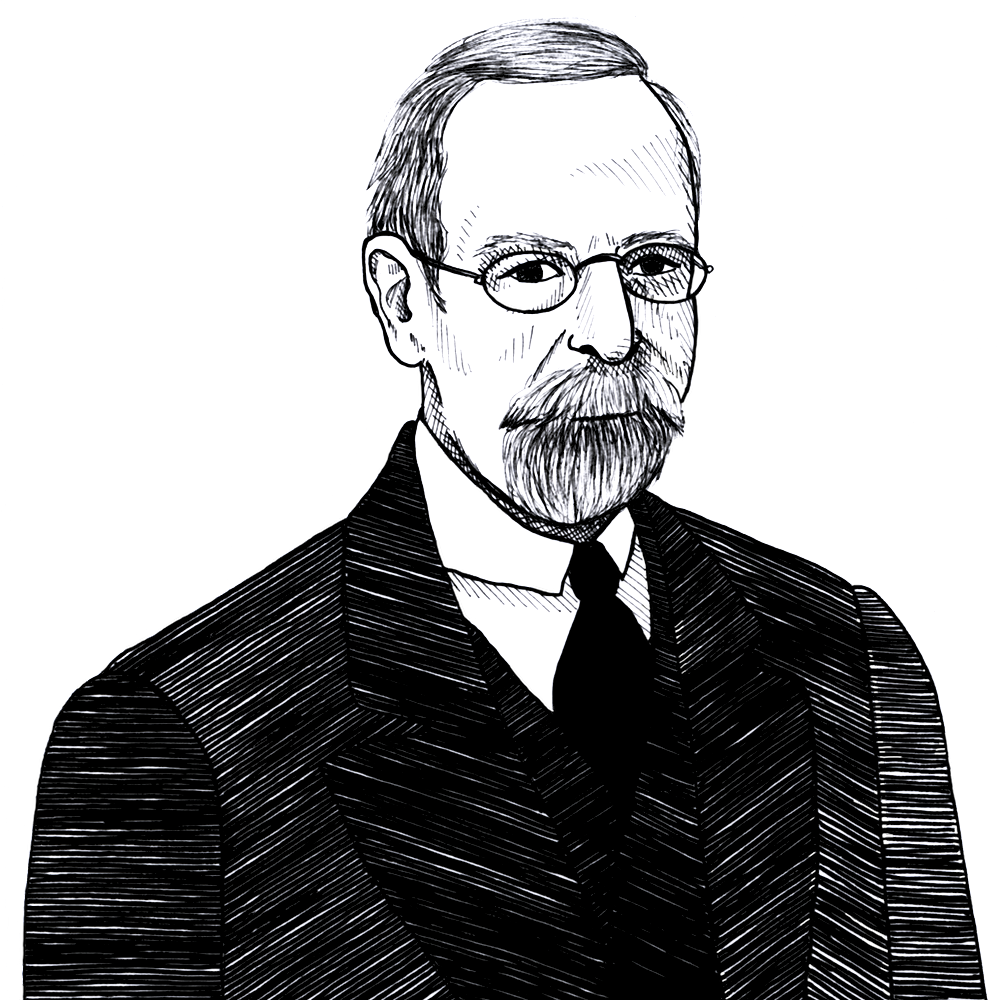
SSRN PAPER: Ross E. DAVIES, "A Wig Without a Home: The Comedic Wisdom of Sir Frederick Pollock" Green Bag 2s XXIX (2025)

(image source: Liberty Fund)


Abstract:

Frederick Pollock (1845-1937) was the Green Bag’s kind of scholar. The first half of this paper consists of a sketch of his career and character, followed by a closer look at his sense of humor and the roles it played in his work. The second half of the paper is in two sections. First, there is a full republication of the text of a tiny book — a short story by Pollock titled “Queen Titania’s Chancellor”— that for nearly a century sat unnoticed on a bookshelf in the library of the Queen’s Dolls’ at Windsor Castle, until Elizabeth Clark Ashby (Curator of Books and Manuscripts in the Royal Library at Windsor Castle) gave Pollock’s miniature masterpiece some long-overdue and well-deserved attention in her 2024 book (full-sized), “The Miniature Library of Queen Mary’s Dolls’ House.” Second, there is a close (but incomplete) reading and analysis of that tiny text. If there are any lessons to be drawn from this paper, perhaps they are that greatness need not always be cloaked in dignity, and that Jack Point was not the only wit who could “teach you with a quip, if I’ve a mind” or “trick you into learning with a laugh.”

Read more here: DOI  10.2139/ssrn.6222058.

(source: Law & Humanities Blog) 

09 June 2026

SSRN PAPER: Alli ORR LARSEN & Thomas MCSWEENEY, "Medieval Treatises and the Judicial Search for a Useable Past" (Willam & Mary Law School Research Paper nr. 09-514)


(image source: SSRN)

Abstract:

The Supreme Court’s recent turn to history and tradition has prompted a renewed interest in the far distant past – the laws and customs of the Middle Ages. But medieval treatises are full of traps for the unwary. This article – a joint enterprise between a medieval legal historian and a Supreme Court scholar – carefully explores what makes these treatises uniquely complicated and easy to get wrong. To start, they are written in Latin and, sometimes, Old French. In many instances, the underlying medieval decisions they reference are destroyed and gone forever. Because there was no photocopier or even printing press back then, treatises often come in competing versions reflecting not only multiple authors but also successive copyists who made substantive changes. And legal texts were just different in the thirteenth century. Treatises were used for purposes as diverse as passing on cultural values, advising rulers on how to govern, and even teaching people the ideals of friendship. Put simply: medieval law is hard to find, hard to read, and even harder to put into context. For the American judge or law clerk who is strapped for time but wants to make a point about a long tradition, the understandable temptation is to reach for an authority like a medieval treatise that feels familiar. After all, modern legal treatises (think Wright and Miller) are recognized as trustworthy authorities to cite. And today translated versions of medieval treatises are easy to find digitally. But that ease of access and familiarity of authority are illusory. Often the very things that make these medieval texts feel familiar to modern readers would have made them idiosyncratic to thirteenth century audiences. Our goal in this article is to raise the caution flag for judicial consumption of medieval treatises: a user-friendly useable past can lead modern lawyers and jurists astray and should not be consumed without scrutiny and care.

Read more here: DOI 10.2139/ssrn.6276360.

(source: Law & Humanities Blog)

04 June 2026

BOOK SERIES: History, law & legal history (Palermo: Palermo University Press) [OPEN ACCESS]


(image source: unipapress)


The University of Palermo Press showcases its open access book series History, law and legal history. Several titles are available:

  • Raimondo SANTORO, Per la storia dell’obligatio
  • Mario VARVARO (ed.), L’eredità di Salvatore Riccobono
  • Antonio LINDINER, Credito immobiliare ai consumatori e obblighi di condotta degli intermediari
  • Ulrico AGNATI & Mario VARVARO (eds.), Religion, Ideology, Politics, and Law. A Multidisciplinary Approach in the Frame of European History
  • Anna Maria GIOMARO & Maria Luisa BICCARI, Sulle regulae iuris fra I e III secolo: Paolo commenta Plauzio
  • Ornella SPATARO, Sindacato di legittimità costituzionale e legalità penale
Read further here.

01 June 2026

ADVANCE ARTICLE: Roxana BANU, "Constructing Imperial Authority: The Intersection of British Imperial Constitutional Law and Private International Law" (Oxford Journal of Legal Studies) [OPEN ACCESS]


(image source: OUP)

Abstract:

Historians and constitutional law scholars are starting to uncover the imperial dimensions of the British constitution. But our accounts of the nature of authority in the British imperial context remain incomplete without an engagement with private international law, which played a significant role in conceptualising imperial authority. This article focuses on the forgotten interplay between imperial constitutional law and private international law. It shows how key doctrinal principles of private international law were referenced either as alternatives to or counterparts of key imperial constitutional law principles. Imperial actors would appeal to one or another image of imperial authority constructed by either imperial constitutional law or private international law to gain more autonomy or to tighten control. Far from being a relic of the past, the significance of this history can be traced in contemporary cases and debates about the nature of authority in the UK and its overseas territories.

Read the article here: DOI 10.1093/ojls/gqag012.

28 May 2026

CHAPTER: Lieven D'HULST, "Oeuvrer à la gloire nationale de la Belgique au 19e siècle. Traductions interlinguales et intralinguales des anciennes lois flamandes", in: Hilla KARAS & Hava BAT-ZEEV SHYLDKROT (eds.), Intralingual Translation. Beyond language and text (Amsterdam: Johns Benjamins, 2026), pp. 31-48 [OPEN ACCESS]


(image source: Benjamins)

Abstract:

Les politiques culturelles des nations européennes ont, au long du 19e siècle, encouragé et facilité l’accès aux sources écrites de leur histoire, moyennant des éditions savantes et populaires, ainsi que des transpositions en langue moderne. La Belgique, nation plurilingue née en 1830, possède un immense patrimoine en plusieurs langues et en plusieurs genres: des chansons populaires, des romans en vers, des légendes, ainsi que des lois et ordonnances rédigées en latin, en français et en flamand. Ces dernières forment un legs historique parallèlement nanti d’une valeur d’actualité: de nombreuses lois de l’Ancien régime comblent des lacunes juridiques du droit belge entièrement redevable au droit français. Or, ces lois sont souvent composées en flamand, une langue alors privée du statut de langue officielle réservé au français. Comment gérer ce legs à la fois historique et contemporain? Cette question fait débat au milieu du siècle; elle suscite un ensemble de réflexions d’une richesse insoupçonnée sur les enjeux de la traduction intralinguale et interlinguale: faut-il procurer des éditions des textes originaux composés en flamand historique et assortis de résumés ou commentaires en français contemporain, ou plutôt des traductions interlinguales en français historique, ou encore des traductions intralinguales en flamand contemporain? Bref, comment œuvrer à la gloire nationale sans perturber les subtils équilibres linguistiques en Belgique?

On the author, Lieven D'hulst (KULeuven): ORCID.

Read the chapter in open access here: DOI 10.1075/btl.168.02dhu.

26 May 2026

BOOK: Dominika UCKIEWICZ, Accountability for War Crimes in the Policy of the Polish Government-in-Exile. A Legal and Historical Analysis (Leiden/Boston: Martinus Nijhoff/Brill, 2026), ISBN 9789004759015, OPEN ACCESS


(image source: Brill)

Abstract:

This book excavates the often neglected role of the Polish government-in-exile within the Allied war crimes trial programme and post-1945 international law. Drawing on newly examined archival sources and biographies of key émigré lawyers, it reveals how Polish and other Eastern European jurists helped define the concept of accountability for wartime atrocities long before the Allies convened at Nuremberg. Combining legal and historical approaches, this book traces the Central and Eastern European influence on the UN War Crimes Commission and Allied policy, showing how their ideas about justice, responsibility, victim’s perspective, and law continue to resonate in modern interpretations of the legacy of Nuremberg.

Read more here: DOI 10.1163/9789004759015.

15 May 2026

ADVANCE ARTICLE: Benjamin STRAUMANN, "From Individual virtue to the just state: Cicero and the legal nature of Roman political thought" (The Journal of Roman Studies) [OPEN ACCESS]


(image source: CUP)

Abstract:

Scholarship on Roman political thought and its legacy, especially anglophone, has rapidly expanded over the last decade. The main drivers of this renewed attention to Roman political ideas and institutions are an historical interest in the collapse of the Roman republic; a philosophical interest in republicanism; and a growing sensitivity to the originality of Roman thinkers, especially Cicero, in contrast to the older view that they were simply derivative of the Greeks. In this essay I will discuss recent publications on Cicero and Roman political ideas. After offering an overview of key themes in this new scholarship, I seek to suggest promising directions for future research and encourage the growing interest in Roman political thought and Cicero in particular. Cicero provides a fascinating link between ideas, institutions and action on the ground and he is therefore with good reason at the centre of much of the rapidly expanding literature on Roman political thought. In addition, given his interest in developing a theory of justice as the foundation of the state (res publica), a focus on Cicero will help explore the legacy of republicanism from the angle of his ideas about justice while paying attention to scholarship placing these ideas into their historical and institutional context.

Read more here: DOI  10.1017/S0075435825100634.

11 May 2026

BOOK: Christiaan ENGBERTS, Decentering Leuven University. A Transnational History (Leuven: Leuven University Press, 2026), 328 p. ISBN 9789462705081 [OPEN ACCESS]


(image source: Leuven University Press)

Abstract:

First longue durée transnational history of a university, surveying its cross-border ties and offering a new model for writing university history. Since its foundation in 1425, Leuven University has always been a transnational institution. Decentering Leuven University explores how this transnational character has shaped the university across six centuries, with cross-border ties emerging as a recurring theme throughout its history from the Middle Ages to the present day. However, these ties are more than just a recurring theme: they provide an innovative approach to writing university history. Taking the myriad cross-border ties as a methodological starting point makes it possible to view the history of the university from a new perspective. The rich variety of these ties highlights the complexity and diversity within the university. The author discusses, among other things, Leuven’s role as a center of European humanism in the 15th century, the significance of its Irish and Dutch mission colleges during the Counter-Reformation, the university’s more recent involvement in the Belgian colonial project, and the emergence of research institutes as hubs of transnational collaboration in the 20th century. Emphasizing these transnational ties leads to two forms of decentering the university’s history: it underscores the university’s embeddedness in a variety of cross-border networks, and it highlights the role of individual scholars, students, colleges, and research institutes in creating and maintaining these ties.

Table of contents: 

Introduction
Universities, jubilees, and transnational ties
Introduction
The first university jubilees
Writing university history
Histories of Leuven University
The university in a transnational landscape
Leuven University from 1425 to 2025

Chapter 1
The transnational character of the early university
Introduction
Medieval universities before 1500
University, religion, and politics
The foundation of Leuven University
The recruitment of professors
Determining the geographical background of the early staff
The geographical background of professors in church law
The geographical background of professors in civil law
The geographical background of professors in medicine
The geographical background of professors in theology
The geographical background of professors in the arts
Determining the educational background of the early staff
The educational background of professors in church law
The educational background of professors in civil law
The educational background of professors in medicine
The educational background of professors in theology
The educational background of professors in the arts
A life after Leuven?
Conclusion: becoming self-sufficient
 Chapter 2
Humanist entanglements
Introduction
Vives and Erasmus: Leuven’s early humanist luminaries
The networks of Vives and Erasmus
Humanism in Leuven before 1517
The foundation of the Collegium Trilingue
The (trans)national teaching staff of the Trilingue
A typical humanist: the research-minded traveler Campensis
A typical humanist: the printing endeavors of Rutgerus Rescius
A typical humanist: Petrus Nannius’s correspondence network
European students at the Trilingue
Trilingue students in Europe: the linguist Clenardus
Trilingue students in Europe: the diplomat Busbequius
Trilingue students in Europe: the anatomist Vesalius
An example worth following
Conclusion: a merging of university and humanist networks

Chapter 3
On the frontlines of faith
Introduction
Counter-Reformation and higher education in the seventeenth century
Leuven and the Irish college network
Irish history from Leuven
Irish Catholicism in Leuven
The precarious position of Catholicism in the northern Low Countries
Jesuits vs. Dutch secular clergy
Jesuits and the Leuven Augustinian tradition
Jesuits and Jansenists
St. Anthony’s, Pulcheria, and Alticollense
Toward the founding of an American College
The accomplishments of the American College
Leuven as an example of Catholicism and scholarship
Latin America in Leuven
Over four centuries of mission colleges

Chapter 4
Collections as transnational spaces
Leuven’s first central library
Catholic patristics and ecumenical medicine?
Collections, teaching, and research in the nineteenth century
The university collections in the mid-nineteenth century
The roots of the botanical garden
The botanical garden’s transnational branches
The birth of the zoological collection
Van Beneden’s transnational paleontological networks
The genesis of the Biblical Museum
A network of scholarly clergymen
The destruction of the library
International collaboration toward a new library
Reassembling the lost collection
The construction of a brand-new library
University collections and transnational networks

Chapter 5
The colonial involvement of Leuven University
Universities and colonialism
The first colonial programs at Belgian universities
A Catholic colonial student movement
Collecting the colony
After the First World War
First steps into the colony
The early expansion of FOMULAC: 1926-1931
The rapid expansion of FOMULAC: 1931-1945
Agricultural education in the Congo
Toward a university: University Centre Lovanium
The founding of a full university: Lovanium Kimwenza
Lovanium and Leuven University after Congolese independence
Leuven and Congo: a retrospective

Chapter 6
Research institutes as transnational hubs
The rise of research institutes
The Higher Institute of Philosophy
The laboratory for experimental psychology
The founding of the Husserl Archives
The growth of the Husserl Archives
Penicillin and the prelude to the Rega Institute
Polio vaccines and the founding of the Rega Institute
Developing viral treatments at the Rega Institute
Bananas come to Belgium
Banana research, conservation, and distribution in Leuven
The KU Leuven Institutes of the twenty-first century
Conclusion: research institutes between 1938 and 2025

Epilogue
Uniqueness and typicality
Change and continuity
Recent transnational developments
The merits and promise of transnational university histories
Notes

On the author:

Christiaan Engberts studied philosophy and history at Leiden University. Until recently he was affiliated with the Research Group Cultural History since 1750 at KU Leuven.

Read more here: DOI  10.11116/9789461667274.

08 April 2026

SSRN PAPER: Alessandro VOLPI, "Legal and Political Constitutionalism from Schmitt and Kelsen to Contemporary Debates: Notes on Constitutional Guardianship and Democracy" [OPEN ACCESS]


(image: Hanse Kelsen; Source: Wikimedia Commons)

Abstract:

This paper situates the Carl Schmitt-Hans Kelsen dispute on constitutional guardianship within the now-standard categories of political and legal constitutionalism. It examines the conflict between political and legal understandings of the constitution and of constitutional adjudication, alongside divergent conceptions of democracy that strain this institution (notably, the countermajoritarian difficulty). It begins with a close reconstruction of the Weimar-era debate-its legal and political details-covering competing views of adjudication, the constitution as a set of norms or a political decision, and alternative models of guarantees. Through comparative analysis, the paper then traces lines of continuity and discontinuity between those positions and contemporary discussions of constitutional guardianship within debates over legal versus political constitutionalism. What emerges is the enduring persistence of theoretical alternatives that deeply structure the idea of constitutional guardianship in a democratic system. At the same time, we find differences in interpretation and in proposals for legal politics concerning substantive versus procedural conceptions of the constitution, as well as divergent understandings of democratic conflict and pluralism and their implications for constitutional stability. The paper concludes by showing how certain theoretical contradictions at the heart of constitutional guardianship resist easy resolution and must be inhabited, rather than definitively overcome.

On the author:

 Max Planck Institute for the Study of Crime, Security and Law

Read more here: DOI 10.2139/ssrn.6143326.

27 March 2026

JOURNAL: Law and History Review XLIV (2026), No. 1 [OPEN ACCESS]


(image source: CUP)

Articles

Bringing the Law and the Local Back In to the Revolution (Sarah Barringer Gordon)
DOI 10.1017/S0738248026101540
Abstract:

The study of legal change at local levels in this forum opens new windows onto the legal landscape, especially because they explore ground-level legal change that reveals far more innovative and incremental shifts in law and legal understanding than is visible at higher altitudes.

The Tension between Religious Liberty and Religious Establishment in Revolutionary New England (Mark Valeri)
DOI 10.1017/S0738248025101466
Abstract:

Revolutionary-era state constitutions reflected an unsettling tension in the history of American liberty. This article captures how revolutionary-era Americans accommodated moral liberty with religious establishment. Their notions of liberty were paradoxical, but it is possible to track their moral reasoning.

“They Are Their Citizens and Must Submit to Their Government”: Citizenship and the Creation of the Federal Government, 1776–1787 (Jessica Choppin Roney)
DOI: 10.1017/S0738248025101314
Abstract:

The American War for Independence scrambled the concept of political allegiance and belonging. In James H. Kettner’s apt phrase, “subjects became citizens.” Where British law denied the possibility that a subject could renounce the obedience owed to their sovereign, Americans asserted through force of arms “the right to choose their allegiance.”1 Influenced by a contractual notion of political compact and by the mayhem of a violent civil war, people shuffled and sometimes reshuffled into camps of revolutionaries, loyalists, and neutrals

Popular Government and the Limits of the Law at the Outset of the American Revolution (Donald F. Johnson)
DOI: 10.1017/S0738248025101351
Abstract:

The outbreak of the American Revolution thrust would-be revolutionaries into a paradoxical relationship with the law. As they overthrew colonial governments from New Hampshire to Georgia during the summer and fall of 1775, leaders of the resistance to Great Britain found themselves in the awkward position of having to justify rebellion against British authority while still professing to be law-abiding Britons. The revolutionaries’ mandate to govern rested on protecting rights to property and representation that many colonists believed had been violated by agents of the Empire, but the practicalities of war demanded extra-legal measures. The popular governments that replaced colonial administrations had to find a way to balance upholding many of the laws of the old regime while simultaneously organizing an armed insurrection against it. Much of this burden fell on revolutionary committees at the town and local level. As the Continental Congress and provincial elites vacillated between rebellion and reconciliation and struggled to assert control over the fast-growing revolutionary coalition, ad hoc governments comprised of ordinary citizens took on the tasks of governing their regions and organizing for armed struggle. For much of 1775 and early 1776, these popular regimes precariously balanced the need for extra-legal expediencies with the need to maintain at least a semblance of law to maintain their legitimacy.

Legislation, Regulation, and Administration in the American Revolution (William J. Novak)
DOI 10.1017/S0738248025101235
Abstract:

This article continues a long-term investigation into the nature of legislation, regulation, and administration across United States history. In contrast to persistent myths about an original American legal and political inheritance dedicated primarily to private rights, limited government, and laissez-faire economics, this article explores the earliest roots of American public rights, popular lawmaking, and regulatory policymaking. In the very first activities of revolutionary Provincial Congresses and Committees of Safety, this article locates a surprisingly robust template for the future development of American state police power, public provisioning, general-welfare legislation, and socio-economic regulation.

Review essay

Something Else: History, Legal Imagination, and the American Revolution (Matthew Crow)
DOI 10.1017/S0738248026101503

Read the whole issue in open access here.


16 March 2026

BOOK SERIES: Publications of the PHEDRA Network in the Collection "Études d'histoire du droit et des idées politiques" [OPEN ACCESS]


(image source: CTHDIP)

The publications emerging from the PHEDRA network in the peer reviewed series Études d'histoire du droit et des idées politiques (Toulouse) have been grouped in a single page:

  • vol. 27, Pour une histoire européenne du droit des affaires : comparaisons méthodologiques et bilans historiographiques, sous la direction de Luisa Brunori, Olivier Descamps et Xavier Prévost, DOI 10.4000/books.putc.13884
  • vol. 28, Les fondements historiques du droit européen des affaires, sous la direction d'Alexis Mages, DOI 10.4000/books.putc.15145
  • vol. 33, La dynamique juridique des réseaux marchands : Hanses, nations, agences, filiales et comptoirs, ouvrage dirigé par Luisa Brunori, DOI 10.4000/122cs
  • vol. 38, Des restrictions de concurrence à la libéralisation des marchés. Contribution à l’histoire européenne du droit des affaires, ouvrage dirigé par Olivier Serra
  • vol. 39, Merchants, Arts, Luxury and Beauty, ouvrage dirigé par Luisa Brunori et Albrecht Cordes

Volumes in these series are published on openedition.org and thus available in open access, with a gentle delay.