Search

Showing posts with label chapter. Show all posts

28 May 2026

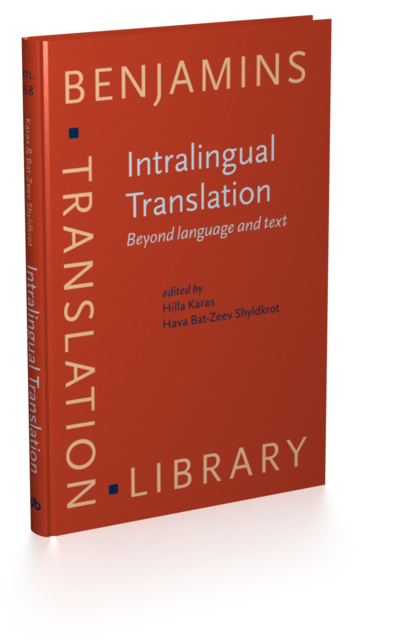
CHAPTER: Lieven D'HULST, "Oeuvrer à la gloire nationale de la Belgique au 19e siècle. Traductions interlinguales et intralinguales des anciennes lois flamandes", in: Hilla KARAS & Hava BAT-ZEEV SHYLDKROT (eds.), Intralingual Translation. Beyond language and text (Amsterdam: Johns Benjamins, 2026), pp. 31-48 [OPEN ACCESS]


(image source: Benjamins)

Abstract:

Les politiques culturelles des nations européennes ont, au long du 19e siècle, encouragé et facilité l’accès aux sources écrites de leur histoire, moyennant des éditions savantes et populaires, ainsi que des transpositions en langue moderne. La Belgique, nation plurilingue née en 1830, possède un immense patrimoine en plusieurs langues et en plusieurs genres: des chansons populaires, des romans en vers, des légendes, ainsi que des lois et ordonnances rédigées en latin, en français et en flamand. Ces dernières forment un legs historique parallèlement nanti d’une valeur d’actualité: de nombreuses lois de l’Ancien régime comblent des lacunes juridiques du droit belge entièrement redevable au droit français. Or, ces lois sont souvent composées en flamand, une langue alors privée du statut de langue officielle réservé au français. Comment gérer ce legs à la fois historique et contemporain? Cette question fait débat au milieu du siècle; elle suscite un ensemble de réflexions d’une richesse insoupçonnée sur les enjeux de la traduction intralinguale et interlinguale: faut-il procurer des éditions des textes originaux composés en flamand historique et assortis de résumés ou commentaires en français contemporain, ou plutôt des traductions interlinguales en français historique, ou encore des traductions intralinguales en flamand contemporain? Bref, comment œuvrer à la gloire nationale sans perturber les subtils équilibres linguistiques en Belgique?

On the author, Lieven D'hulst (KULeuven): ORCID.

Read the chapter in open access here: DOI 10.1075/btl.168.02dhu.

02 April 2026

CHAPTER: Vanessa DAZA CASTILLO, María Daniela DÍAZ-VILLAMIL & Luis ESLAVA, "Colombia: A Material Legal Consciousness History of International Law", in: Liliana OBREGÓN-TARAZONA, Laura BETANCUR-RESTREPO, Juan Manuel AMAYA CASTRO & Daniel Ricardo QUIROGA-VILLAMARÍN (eds.), The Oxford Handbook of International Law and the Americas (Oxford: OUP, online)

(image: Universidad de Antioquia (izquierda), Medellín, Colombia. Plazuela San Ignacio. Detalle realizado antes de la gran reforma arquitectónica, dibujo hecho por los estudiantes de la Escuela de Minas en el siglo XIX; source: Wikimedia Commons)
 

Abstract:

This chapter traces the long-standing relationship between the international legal order and socio-legal, economic, and political arrangements in Colombia, from the colonial to the Republican period, to the present day. Grounded on Legal Consciousness Theory (LCT) and a material approach to history, the chapter demonstrates that international law—or more specifically, the international legal project—has never been foreign or alien to the country’s everyday life. International normative ideas on civility, diplomatic relations, borders, or rights have been mutually constituted with local developments and imaginaries in Colombia, across issues ranging from competing paradigms of state-building to access to contraception and legal abortion. The vibrancy of present international legal scholarship in Colombia reflects this dynamic and complex relationship between the international and the domestic, which the 1991 Constitution further brought to the surface.

Read the chapter here: DOI  10.1093/oxfordhb/9780197661062.013.39

10 May 2019

CHAPTER: Ignacio DE LA RASILLA DEL MORAL, "Grotian Revivals in the Theory and History of International Law", in: Randall LESAFFER & Janne NIJMAN (eds.), The Cambridge Companion to Hugo Grotius (Cambridge: CUP, forthcoming)

(image source: Wikimedia Commons)

Abstract:
This chapter examines how the title of founder of the law of nations was bestowed upon Grotius and how the liberal internationalist interpretation of the existence of a Grotian tradition in international law came into being. It also reviews the extent to which both historical constructs have been challenged by new historical research and contemporary re-interpretations of Grotius’ works and figure. The chapter is divided into three parts. The first part accompanies the reception of Grotius by international lawyers from the time of the discovery of his De Jure Praedae in 1864 to the establishment of the Grotius Society in England during the First World War. The second part examines the revivals of Grotius among international lawyers in the aftermaths of both world wars and considers a number of Grotius-related historiographical developments during the Cold War period. The third part examines how, in recent decades, on the one hand Grotius has become more mainstreamed and further institutionalised as a global symbol of international law while on the other hand his reputation has suffered from him being labelled a handmaiden of European colonialism and exploitation. The concluding section reflects on the lasting fame of the ‘miracle of Holland’ among international lawyers and suggests that the history of international law as a research field should now take a break from Hugo Grotius.
Read the fulltext on SSRN.
(source: ESILHIL Blog)