Search

19 July 2022

BOOK: Alessandro DI BARI, I «recomandati di San Marco». La pratica delle relazioni politiche (Repubblica di Venezia, secoli XIV-XVI) (Roma: Aracne, 2022). ISBN: 8825537298, pp. 184, € 20.00


(Source: Aracne)

ABOUT THE BOOK

Benché gli studi sulla Terraferma siano numerosi, il tema del rapporto fra la Repubblica di Venezia e i suoi “raccomandati” e “aderenti” — quei soggetti politici “minori”, cioè, consociati ma non assoggettati ai Veneziani, ai quali prestavano aiuto in cambio di protezione — è sempre rimasto sottotraccia. Il libro, la prima monografia sul tema dell’aderenza in Ancien Régime, indaga questa forma di consociazione nel periodo della costruzione del dominio veneziano di Terraferma e della sua stabilizzazione, adottando un approccio incentrato sulla dimensione pragmatica delle relazioni politiche e del potere.

ABOUT THE AUTHOR

Alessandro Di Bari ha conseguito il dottorato di ricerca in “Storia delle società, delle istituzioni e del pensiero. Dal Medioevo all’Età Contemporanea” presso l’Università degli Studi di Udine e l’Università degli Studi di Trieste. Svolge ricerche prevalentemente sulla storia politico-istituzionale della Repubblica di Venezia fra medioevo ed età moderna, con particolare attenzione al dominio di Terraferma.


More information with the publisher.

ARTICLE: Felix WALDMANN, "Natural Law and the Chair of Ethics in the University of Naples, 1703-1769" (Modern Intellectual History XIX (2022), No. 1, 54-80) (OPEN ACCESS)


(image source: Cambridge Core)
Abstract:
This articles focuses on a significant change to the curriculum in “ethics” (moral philosophy) in the University of Naples, superintended by Celestino Galiani, the rector of the university (1732–53), and Antonio Genovesi, Galiani's protégé and the university's professor of ethics (1746–54). The article contends that Galiani's and Genovesi's sympathies lay with the form of “modern natural law” pioneered by Hugo Grotius and his followers in Northern Europe. The transformation of curricular ethics in Protestant contexts had stemmed from an anxiety about its relevance in the face of moral skepticism. The article shows how this anxiety affected a Catholic context, and it responds to John Robertson's contention that Giambattista Vico's use of “sacred history” in his Scienza nuova (1725, revised 1730, 1744) typified a search among Catholics for an alternative to “scholastic natural law,” when the latter was found insufficiently to explain the sources of human sociability.

Read the article here: DOI  10.1017/S1479244320000360.

18 July 2022

PODCAST: Arnaud-Dominique HOUTE, XIXe siècle : la propriété et le vol (France Culture: Concordance des temps, 9 JUL 2022)


(Image source: France Culture)

Jean-Noël Jeanneney interviewed Arnaud-Dominique Houte on crime, property and theft in 19thC France. 

Abstract:

Chacun se souvient de la formule fameuse de Proudhon : « La propriété, c’est le vol ». Des humoristes ont souvent joué à la parodier : « L’énergie, c’est la paresse », « le courage, c’est l’effroi », « la beauté, c’est la laideur », et ainsi de suite. Mais on aurait bien tort de s’en tenir à cette ironie. Non pas tellement parce que Proudhon lui-même s’est employé à apporter bien des nuances à son propos abrupt que parce que celui-ci rappelle une évidence, à savoir que la propriété et le vol sont liés l’une à l’autre comme l’avers et le revers d’une médaille.  Ce vol que le code pénal, au début du XIXe siècle, définissait, en son article 311, comme « la soustraction frauduleuse de la chose d’autrui » - la chose possédée par autrui. Et c’est bien ce qu’explicitent le titre du beau livre sur lequel nous allons fonder cette émission, La propriété défendue, et son sous-titre, La société française à l’épreuve du vol.
Listen to the podcast here. 

JOURNAL: Special Issue Parliaments, Elections and Constitutions in Qing and Russian Imperial Transformations, 1860s-1920s, eds. Ivan SABLIN & Egas MONIZ BANDEIRA (Parliaments, Estates and Representation XLII (2022), nr. 1)


 (image source: Routledge)

Introduction (Ivan Sablin & Egas Moniz Bandeira) (DOI 10.1080/02606755.2022.2049097) (OPEN ACCESS)

Abstract:

This special issue explores concepts and practices related to parliamentarism in the imperial and post-imperial transformations of the Qing and Russian Empires, as well as their successor states. It demonstrates that representative institutions were a crucial factor in the establishment of modernized empires or post-imperial states. In particular, the issue explores how the ‘mining’ of own imperial past and present for concepts and practices was used in combination with the globally circulating forms of representation in the development of parliamentary institutions, how particular interest groups defined through ethnicity, region, religion, or class were represented, and, ultimately, how the parliamentary developments informed the formation of single-party regimes in the post-imperial settings.

Elections as recommendations: a historical analogy in China’s early discourse on democracy, 1860s-1910 (Joshua Hill) (DOI 10.1080/02606755.2022.2039456)

Abstract:

At the end of the nineteenth century, the first generation of Chinese intellectuals to advocate parliamentarianism re-appropriated terms and concepts from China’s own lengthy history of debates about political selection. The terms that they chose—the phrase ‘local recommendation’ in particular—brought with them their own associations and implications about the nature of parliamentary elections. This article traces the intellectual lineage of Chinese discourse on ‘local recommendation’ during the dynastic era and argues that the conflation of this classical practice with voting for parliamentary representatives created a series of misaligned expectations for elections in China and thus contributed to the failure of experiments with competitive elections during the first years of the twentieth century.

Parliamentary options for a multi-ethnic state: sovereignty, frontier governance, and representation in early twentieth-century China (Egas Moniz Bandeira)  (DOI 10.1080/02606755.2022.2039454) (OPEN ACCESS)

Abstract:

This article reconstructs two modes of parliamentary representation of (post-)imperial diversity in early twentieth-century China. One model foresaw a differentiated representation of the borderlands in the nascent parliamentary institutions, using upper house seats to garner loyalty from the nobility at the same time as it denied electoral participation. The second model stipulated electoral equality between the borderland regions and the inner provinces. While the first model parliamentarized imperial forms of governance, it was also informed by and partially conformed to global models of governance. The second was informed by notions of undivided national sovereignty. In the late Qing Empire, the government decided against the second model, for it was deemed to presuppose a degree of national integration not given in the Empire. The challenges posed by the proclamation of the Republic of China, in particular the declarations of independence of Mongolia and Tibet, led to a strong emphasis on the newly-founded state’s unity and the swift adoption of the second model. This choice, however, was neither uncontested nor was its implementation complete.

The State Conference in Moscow, 1917: class, nationality, and the building of a post-imperial community (Ivan Sablin) (DOI 10.1080/02606755.2022.2039455)

Abstract:

The State Conference in Moscow, a one-time quasi-parliamentary assembly of over 2,500 delegates, was intended to help the Provisional Government resolve the military, political, and economic crises of the First World War and the Russian Revolution by building a broad public consensus. Due to the inadequate representation at the conference, its duration and procedure, and the radically divergent platforms of major political forces, the assembly functioned as a political rally rather than a parliament. The attempt to resolve the crises by (re)constituting a Russian political community failed due to the conflicts formulated in terms of class and nationality and the contradictions between coercive discipline and self-organization as the principles of state- and nation-building. Even though the idea of the Russian nation prevailed at the conference, its participants did not agree if a post-imperial political community was to be homogeneous or composite, inclusive or exclusive, and if it was to be organized in a top-down or bottom-up manner.

The Anfu Parliament in Republican China. The life and death of a failed single-party state, 1918–20 (YanQ Quan & Ernest Ming-tak Leung) (DOI 10.1080/02606755.2022.2039458)

Abstract:

The Anfu Club, which governed China in 1918–20, has often been seen as a factionalist grouping of corrupt and incompetent politicians handpicked by the military and kept afloat by Japanese loans and state subsidies. The fact that they had achieved domination in parliament through vote-rigging was often seen as sufficient to write off their achievements. This article argues that Anfu, which was East Asia's first single-party state, oversaw one of the most accomplished periods in the legislative history of the Republic of China. It was a highly efficient legislature which passed much-needed laws, thanks to rigorous inner-party discipline. It had an internationalist diplomatic line and it hoped to participate in planning for the post-war international order. Due to a lack of consensus in the military over how a single-party state should be run, however, Anfu found itself abused and scapegoated frequently and fought back using constitutional means, impeaching officials including the Premier, slashing the military budget by 20 per cent, and demanding cabinet appointments appropriate to its status as the parliamentary majority. Eventually this caused a rupture between it and its rival forces in the military, leading to the 1920 civil war that precipitated Anfu's collapse.

Parliamentarism in one party: the trade union debate of 1921 in the Bolshevik party as a semi-parliamentary practice (Timofey Rakov) (DOI  10.1080/02606755.2022.2039457)

Abstract:

The Bolshevik trade union debate of 1921 could be seen as a semi-parliamentary practice both in its form and content. Various groups and platforms participated in this discussion, using it as a tribune for spreading their views among the members of the party. This article examines the course of the discussion in the Petrograd party organization: especially, its form, representation, and the conflicts that it produced. Petrograd Bolsheviks saw the discussion not only as a space for a free circulation of opinions but also as a place for propaganda and political conflict. During debates, both of the rival platforms in the city (the supporters of Vladimir Lenin and the supporters of Lev Trotskii) tried to impugn the actions of each other. The party press also acted not as an impartial observer of the controversy but actively formatted a vision of the domination of Lenin’s adherents in the discussion. Such a process brought discussions in the Bolshevik party close to the practice of a parliamentary debate, and produced a situation that I term ‘semi-parliamentarism in one party’.

 Read the issue on T&F Online.

BOOK: Till VAN RAHDEN & Michael STOLLEIS (eds.), Emanzipation und Recht. Zur Geschichte der Rechtswissenschaft und der jüdischen Gleichberechtigung [Studien zur europäischen Rechtsgeschichte; 329] (Frankfurt am Main: Vittorio Klostermann, 2021), VIII + 314 p. ISBN 9783456045359, € 69


(image source: Vittorio Klostermann)

Abstract:

In the course of Jewish emancipation in Germany from the 18th century to World War I, many Jewish students chose to study law. The subject offered access to diverse fields of activity, and it contained a liberal promise of equality. However, this promise was fulfilled only slowly until 1914 and was broken by National Socialist Germany. But as long as the prospect of emancipation still seemed realistic, some branches of jurisprudence proved particularly attractive, such as Roman legal history, legal theory and comparative law, commercial and international business law, and, not least, the new labor and social law. The contributions in this volume, the result of a conference at the Forschungskolleg Humanwissenschaften in Bad Homburg in May 2019, attempt to explore the reasons for these preferences.

Read more with the publisher. 

BOOK: Susan WATSON, The Making of the Modern Company (Oxford: Hart Publishing, 2022). ISBN: 9781509923625, pp. 336, £85.00 (DISCOUNT CODE available)

(Source: Bloomsbury)

ABOUT THE BOOK

This book adopts a historical perspective to highlight, and bring back into focus, the key features of the modern company. A central argument in the book is that legal personhood attaching to an entity containing a corporate fund seeded by shareholders is a direct and inevitable consequence of limited liability and the company's status as a separate legal entity from its shareholders. Management by a board subject to legal duties to the company as an entity that can exist in perpetuity facilitates a long term perspective by the board that can accommodate both shareholder and stakeholder interests. These defining characteristics differentiate the modern company from other business forms.

The Making of the Modern Company applies a 21st-century lens to the corporation through its history to identify turning points in its development. It sets out how key features emerged in the course of two separate developmental cycles in English corporate law: first with the English East India Company in the 17th century, and then with general incorporation statutes in the 2nd half of the 19th century. The book's historical perspective highlights that the key features are part of the 'secret sauce' of modern companies. Each cycle coincided with unparalleled periods of economic success associated with corporate activity

This book will be of interest to corporate law and governance academics, theorists and practitioners, those who study the company from related disciplines, and anyone who questions why uncertainty still exists about the structure of a legal form that has been described as 'amongst mankind's greatest inventions'.


ABOUT THE AUTHOR

Susan Watson is Dean of the Business School and holds joint chairs in the Faculty of Law and Faculty of Business and Economics, at the University of Auckland, New Zealand.

TABLE OF CONTENTS

1. Introduction
I. Introduction
II. Key Features
III. Property versus Social Entity
IV. The Agency Problem
V. The Making of the Modern Company

PART ONE
DEVELOPMENT OF THE MODERN COMPANY
2. Persona Ficta and Joint Stock
I. Two Kinds of Legal Organisation
II. Early Corporate Enterprises
III. Early Funds
IV. Contractual Joint Stock Companies
V. Business Corporations
VI. Separate Legal Entity
VII. Persona Ficta
VIII. Conclusion

3. The Transition to Permanent Capital in the English East India Company
I. Introduction
II. The First Twenty Years
III. The Second Twenty Years
IV. The Third Twenty Years
V. The 1657 Charter

4. Corporate Governance in the English East India Company
I. Introduction
II. Development of Governance Structures in Early Business Corporations
III. Shareholder Activism in the English East India Company
IV. Maurice Thomson and the Emergence of Directors' Duties

5. The Rise and Fall of the English East India Company
I. The English East India Company with Permanent Capital
II. The Impact of the Legal Structure
III. Private Trade in the English East India Company
IV. The Fall of the English East India Company
V. Conclusion – The English East India Company in Context

6. The Early Emergence of Directors' Duties
I. Introduction
II. Emerging Obligations of the Governing Body of the English East India Company
III. Role of the Oath in the Obligations of Governing Bodies
IV. Charitable Corporation v Sutton
V. Development of Duties Around Conflict of Interest

7. Liability of Shareholders of Business Corporations
I. Introduction
II. Liability of Shareholders to Third-Party Creditors
III. Could Shareholders be Compelled to Contribute Capital to the Company?
IV. Shift in Focus to the Contractual Joint Stock Company

8. The Significance of the Deed of Settlement Company
I. Introduction
II. The Bubble Act
III. The Deed of Settlement Company
IV. The Efficacy of the Deed of Settlement Company
V. The Business Corporation in the Eighteenth Century
VI. The Relative Adoption of the Two Corporate Forms
VII. Corporate Governance in Deed of Settlement Companies
VIII. Conclusion

9. General Incorporation Statutes
I. Introduction
II. The Joint Stock Companies Act 1844
III. The Joint Stock Companies Act 1856
IV. Limited Liability
V. Was the Modern Company a Partnership or a Corporation?
VI. Salomon v Salomon & Co Ltd

10. Key Milestones in the Development of the Modern Company
I. Introduction
II. Double-Entry Bookkeeping
III. The Floating Charge
IV. Company Law
V. The Significance of Salomon
VI. Conclusion

PART TWO
CONSEQUENCES OF THE MODERN COMPANY
11. England Compared with Other Jurisdictions
I. Introduction
II. United States and Germany Compared with England
III. 'Quaker' Companies
IV. The Early US Corporation
V. Germany
VI. Conclusion

12. The Transition to the Modern Company in England
I. Introduction
II. Slow Adoption of the Corporate Form
III. Financing Structure
IV. Financing after the General Incorporation Statutes
V. Contemporaneous Commentary on English Financing of Companies
VI. The Private Company
VII. Founders and Families Retaining Control
VIII. Delays in Management Power Shifting from Shareholders to the Board
IX. Conclusion

13. Conceptions of the Components and Characteristics of the Company
I. The Corporate Fund and Entity Shielding
II. The Corporate Fund in History
III. The Corporate Fund and Creditors
IV. The Corporate Fund as a Concept
V. Understanding the Corporate Fund through the Floating Charge
VI. Property Rights in the Company
VII. Conceptions of the Company
VIII. The Nature of Legal Personhood
IX. The Modern Company as a Legal Fiction
X. The Persona Ficta Modified
XI. The Significance of the Persona Ficta
XII. Separate Legal Entity and Legal Personhood
XIII. Conclusion

14. The Modern Company as an Entity
I. Introduction
II. The Role of Real Entity Theory
III. The Contribution of Real Entity Theory to the Understanding of the Modern Company
IV. The Modern Company as a Real Entity
V. The Persona of the Corporate Entity
VI. The Modern Company as a Firm
VII. The Modern Company as an Organisation
VIII. The Modern Company as an Entity
IX. The Accounting Entity

15. Corporate Governance
I. Introduction
II. Are Directors the Legal Agents of Shareholders?
III. Are Directors the Economic Agents of Shareholders?
IV. Berle and Means
V. Entity Primacy
VI. Should Companies Maximise Wealth for Shareholders?
VII. Obligations of Directors
VIII. Operationalising Entity Primacy
IX. Conclusion

16. The Modern Company: Perils and Potential
I. Corporate Morality
II. Sustainability Realised
III. Personal Capitalism
IV. The Modern Company

Discount Price: £68 / $92

Order online at www.bloomsbury.com  – use the code GLR T5TUK for UK orders and GLR T5TUS for US orders to get 20% off!


More information with the publisher.
 

15 July 2022

REVIEW ARTICLE: Adam HORSLEY & Jonathan PATTERSON, “ Law and Literature in French Studies” (French Studies LXXVI (2022), nr. 3 (Jul), 436-352 (OPEN ACCESS)


(Image source: OUP)

First sentence:


Since its emergence in the late twentieth century, the law and literature movement has been enriched by contributions from the field of French studies.

Read more here:  DOI 10.1093/fs/knac131.


ARTICLE: Amy CHANDRAN, "Hobbes in France, Gallican Histories, and Leviathan's Supreme Pastor" (Modern Intellectual History First View) (OPEN ACCESS)


(image source: Cambridge Core)

Abstract:

Few of the recent treatments exploring Leviathan's dramatic expansion of ecclesiological considerations have delved into the political circumstances that furnished Hobbes's immediate Parisian surroundings, as he penned the work during the 1640s. This paper examines French ecclesial debates that were triggered by the publication of a polemical collection of texts narrating the “rights and liberties of the Gallican church.” Many of the tracts included had been written during the accession crisis of the late sixteenth century, and advocated a sacralized view of kingship in order to exclude papal jurisdictional claims in France. This paper argues that innovations in Leviathan's sacred history mirror tropes employed by Gallican writers, so that Hobbes can be seen as adopting a parallel strategy in establishing Leviathan's Supreme Pastor. This explication suggests that Hobbes composed Leviathan to appropriate, rather than eliminate, claims associated with “spiritual” power for the civil sovereign, as critical to the exercise of sovereignty.

Read the full article here: DOI 10.1017/S1479244322000099. 

BOOK: Benoît AUROY & Constance LEHMAN (dir.), Le droit et les péchés capitaux [Collection des Presses Universitaires de Sceaux] (Paris: Mare & Martin, 2022), 224p. ISBN 9782849346228, €29


(image source: Mare & Martin)

Abstract:

Le 3 octobre 2019, le CERDI organisait sa première journée d’étude jeunes chercheurs. Le thème peut surprendre, tant droit canonique et droit séculier sont désormais bien distingués. Interdits religieux fondamentaux, les péchés capitaux reçoivent toutefois une traduction juridique : en certaines occasions, ils sont sanctionnés par le droit, telles la colère ou la luxure. À l’inverse, le droit enfreint parfois l’interdit religieux et tombe dans l’envie, la paresse ou autre. C’est cette ambivalence des rapports entre droit et péchés capitaux que la journée d’étude a cherché à mettre en lumière.

On the editor and contributors:

Benoît Auroy est membre du CERDI et docteur en droit privé et sciences criminelles. Constance Lehman est également membre du CERDI et doctorante en droit privé et sciences criminelles à l’université Paris-Saclay. Contributions de Clémentine Antoine, Loup Bommier, Cyrielle Chamot, Maxime Charité, Elias Chebaye, Eustache Da Allada, Benjamin Fiorini, Quentin Le Pluard, Quentin Ricardel, Gauthier Soufflard, Marine Virapin, Théo Vuarnet. 

(see publisher's website) 

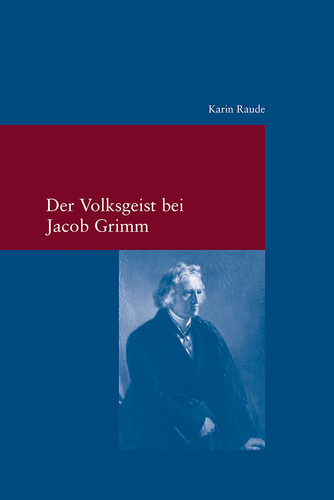
BOOK: Karin RAUDE, Der Volksgeist bei Jacob Grimm [Studien zur europäischen Rechtsgeschichte; 331] (Frankfurt am Main: Vittorio Klostermann, 2022), XIV + 400 p. ISBN 9783456044277, € 89


(image source: Vittorio Klostermann)

Abstract:

The idea of the Volksgeist (national spirit) was an integral part of the theory of legal sources in the early 19th century, primarily associated with Friedrich Carl von Savigny. However, the idea of a creative Volksgeist is not only to be found in Savigny's works. Throughout his life, the avowed Savigny disciple Jacob Grimm was preoccupied with the question of the "origin", be it of language, of culture, but also of law. The idea of a genuine national spirit was an integral part of his scientific conception early on and had a decisive influence on his entire work. At the same time, Grimm's concept of Volksgeist was a very individual one, differing significantly from the concepts of his models and contemporaries and influencing legal German studies well into the 20th century.

More information with the publisher. 

NEW ASSOCIATION: "Associazione degli Storici del Diritto Medievale e Moderno" - Assemblea inaugurale Roma, 16 settembre 2022


14 July 2022

ARTICLE: Péter TECHET, "Kultur- und Rechtskampf um das Wiener Krematorium (1922-1924)" (Forum Historiae Iuris, 24 MAY 2022) (OPEN ACCESS)


(image source: forum historiae iuris)

Abstract:

Zwischen 1922 und 1924 versuchte die österreichische Bundesregierung, das neu eröffnete Krematorium im »roten« Wien zu verbieten. Der sozialdemokratische Bürgermeister von Wien weigerte sich jedoch, den Anweisungen des christlich-sozialen Bundesministers Folge zu leisten. Da die Zuständigkeitsregeln der republikanischen, neuen Verfassung (B-VG) damals noch nicht in Kraft traten, kam es zwischen der Bundesregierung und Wien (als Land) zu einem Rechtsstreit. Der Streit wurde schließlich vom Verfassungsgerichtshof (VfGH) zugunsten von Wien entschieden. Die Bundesregierung versuchte jedoch mit zwei weiteren Anträgen (wegen eines angeblichen Kompetenzkonflikts zwischen der Bundesregierung und Wien sowie wegen der angeblichen Verfassungswidrigkeit der Wiener Landesverfassung) das Krematorium zu verhindern. Auch in diesen Fällen entschied aber der Verfassungsgerichtshof zugunsten von Wien, ohne jedoch die Hauptfrage zu beantworten, ob die Feuerbestattung in Österreich legal ist. Neben der konkreten Rechtslage stellte der Fall auch ein wichtiges Kapitel des damaligen »Kulturkampfes« dar, der allerdings verfassungsrechtlich ausgefochten wurde. In dem Beitrag werden sowohl die öffentlichen Debatten als auch die Rechtslage und die Verfahren vor dem Verfassungsgerichtshof dargestellt und anhand von Primärquellen analysiert. Der berühmte Rechtstheoretiker Hans Kelsen war in allen drei Verfahren als Referent am Verfassungsgerichtshof tätig. Daher wird auch die Frage erörtert, ob die Entscheidungen der »Reinen Rechtslehre« von Kelsen ent- oder widersprachen, und ob die »zurückhaltende« Rechtsprechung des Verfassungsgerichtshofes im Sinne der Kelsenschen Rechtslehre und des historischen Kontextes der damaligen Zeit als »aktivistisch« anzusehen ist.

Read the article: DOI  10.26032/fhi-2022-005.

BOOK: Jean-Pol MASSON, Le droit dans la littérature française [Petites fugues] (Bruxelles: Larcier, 2022), 742 p. ISBN 9782807932906, € 40


(images source: furet)

Abstract:

L'auteur a été frappé depuis longtemps par l'importance des allusions au droit chez maints écrivains de langue française. Il a eu dès lors envie de réaliser sur cette question une oeuvre de synthèse, forcément incomplète, eu égard à la masse que représente la littérature française, mais se fondant néanmoins sur la lecture de suffisamment d'ouvrages pour donner un échantillon significatif de ce que les auteurs pensent du droit. Son étude porte successivement sur les acteurs du monde juridique (magistrats, avocats, notaires, etc.), sur la scène où l'on pratique le droit (la justice, la procédure, etc.), enfin sur le répertoire mis à la disposition des acteurs (le droit, la loi, le langage juridique, etc.). Se voulant accessible aux personnes n'ayant pas de formation juridique, l'ouvrage comporte de nombreuses explications sur les termes techniques utilisés, soit dans le corps du texte, soit dans un index figurant en fin de volume.

Read more here. 

BOOK: Emmanuelle TOURME JOUANNET, Le droit international le capitalisme et la terre. Histoire des accaparements de terres d'hier à aujourd'hui [Collection de droit international] (Bruxelles: Bruylant, 2021), ISBN 9782802769996, 412 p.

(image source: Larcier)


Abstract:

Le présent ouvrage étudie les liens historiques qui se sont noués entre le droit international et le capitalisme à travers le statut conféré à la terre. Il s’agit en fait de prolonger sous un angle nouveau notre réflexion sur les finalités du droit international et les critères empiriques de la justice sociale au plan international.

L’objet de ce livre est bien d’écrire une histoire portant sur le triptyque constitué par le droit international, le capitalisme et la terre, cette dernière servant à la fois de moteur originaire et de révélateur a posteriori des liens intrinsèques qui se sont noués à travers le temps et l’espace entre les deux premiers. En témoigne le phénomène contemporain de l’accaparement des terres. Depuis au moins deux décennies il se produit une véritable « ruée mondiale vers les terres » de la part de certains États et surtout des grands acteurs économiques privés pratiquant l’agro-business et l’agro-carburant.

Or l’ensemble des règles du droit international économique et du droit transnational des investissements a contribué à l’augmentation continue de ces accaparements et au fait que la terre fasse aujourd’hui l’objet d’une financiarisation à outrance qui va jusqu’à la dématérialiser. La terre devient un asset, une valeur refuge en bourse pour les investisseurs/accapareurs. De milieu tangible le plus concret, le plus immuable et matériel qui soit, la terre est passée à l’état d’un produit financier qui est par principe volatile, immatériel et impalpable. Ce faisant elle fait l’objet d’une exploitation intensive poussée à son extrême afin d’obtenir le plus de rendements possibles et donc de bénéfices.

Qu’est-ce que donc alors que la terre selon le droit international ? Est-ce un milieu, un espace ou un bien détenu en pleine propriété par l’être humain ? Est-ce le substrat de l’identité des êtres humains ou est-ce une marchandise ? D’où vient le besoin incessant de nouvelles terres qui a jalonné toute l’histoire humaine et que le droit international a licité tout au long des siècles ? Pourquoi tant de guerres et de contentieux pour des territoires ou la délimitation de frontières ? Pourquoi tant d’accaparements et de dépossessions de terres ou vivaient et où vivent encore des peuples autochtones ou des populations rurales démunies? Mais aussi quel est le rapport des questions liées à la terre avec la Nature et avec la Terre considérées comme un tout ?

Ce livre est une invitation à réfléchir à ces questions en cheminant à travers le temps.

Summary:

Introduction

Chapitre 1 – Origines conceptuelles du discours juridique européen sur l’appropriation et l’exploitation de la terre – Le droit des gens moderne

Chapitre 2 – Moment colonial de l’accaparement des terres − Le droit international des nations civilisées

Chapitre 3 – Marché mondial des terres − Droit international de la société globale

Conclusion

More details on the publisher's website.

(source: ESIL IGHIL Blog)

13 July 2022

BOOK: Robert CARVAIS & Jean-Louis HALPÉRIN (dir.), L'Histoire de l'édition juridique (XVIe-XXIe siècle). Un état des lieux [Contexes. Culture du droit, dir. Anne-Sophie CHAMBOST] (Paris: LGDJ, 2021), 420 p. ISBN 9782275074856, € 46


(image source: LGDJ)

Abstract:

L’édition du droit (qu’il ne faut pas confondre avec l’édiction du droit), ou l’usage de l’imprimé pour composer un savoir juridique et le diffuser largement à travers le réseau des librairies, des bibliothèques et un public, se révèle un secteur de cette industrie qui n’a que très peu retenu l’attention des chercheurs et à plus forte raison des juristes. Alors que l’histoire de l’édition est depuis longtemps un champ reconnu de la recherche historique avec ses repères, ses grandes figures d’autorité, ses textes fondateurs, la discipline juridique ne s’y est pour ainsi dire pas intéressée, malgré le regain d’intérêt pour l’histoire de l’enseignement du droit et du livre juridique. Pourtant que serait le droit sans la présence de l’imprimé ? Ce secteur possède des caractéristiques tout à fait uniques : les coutumes n’ont-elles pas dû être imprimées pour prendre corps ? Les textes législatifs et réglementaires, au rythme de leur création permanente, n’imposent-ils pas une diffusion égalitaire auprès de tous les citoyens, surtout dans un État de droit, républicain et démocratique ? L’usage des bonnes références n’oblige-il pas à une mise à jour permanente des règles et des normes ? Les décisions des tribunaux et cours de justice n’ont-elles pas besoin d’être publiées et annotées pour constituer la jurisprudence ? Analysant de nombreuses formes et genres de l’imprimé juridique, le présent livre remet en cause des idées reçues sur le style juridique supposé austère, sur la présentation peu amène du livre de droit, sur sa double finalité (produit commercial et outils intellectuels critiques), comme sur la nature hybride des acteurs de ce secteur (professionnels du droit et de l’édition). Il ouvre également de nouvelles perspectives sur les publics des impressions juridiques, comme la circulation de celles-ci, tant sous l’angle linguistique (traduction) que spatiale (diffusion). Si les historiens de l’édition devraient être intéressés par le contenu et les résultats de cet ouvrage, les juristes et historiens du droit le seront tout autant. Gageons que ces derniers y façonnent un nouvel axe de recherches.

On the editors:

Sous la direction de Robert Carvais, directeur de recherche émérite en sociologie de l’Université Paris X Nanterre, et Jean-Louis Halpérin, professeur à l’École normale supérieure.

Contributors:

Robert Carvais, Jean-Louis Halpérin, Xavier Prévost, Laura Beck Varela, Viera Rebolledo-Dhuin, Antoine Pélicand, Sebastiaan Vandenbogaerde, Fatiha Cherfoin-Baïch, Pierre-Nicolas Barenot, Carlos Miguel Herrera, Anne-Sophie Chambost, Martine Lakuszynski, Valérie Hayaert, Quentin Epron, Marie Houllemare, Guillaume Richard, Sébastian Evrard, Annamaria Monti and John W. Cairns. 

Read more with the publisher. 

BOOK: Zhaoyang ZHANG, A History of Civil Law in Early China: Cases, Statutes, Concepts and Beyond [Legal History Library, eds. C.H. (Remco) VAN RHEE, Dirk HEIRBAUT & Mathew C. MIROW; 60] (Leiden/Boston: Martinus Nijhoff/Brill, 2022), ISBN 9789004513907, € 118


(image source: Brill)


On the book:

How did people solve their disputes over debt, compensation, inheritance and other civil matters in early China? Did they go to court? How did the authorities view those problems? Using recently excavated early Chinese legal materials, Zhang Zhaoyang makes the compelling argument that civil law was not only developed, but also acquired a certain degree of sophistication during the Qin and Han dynasties. The state promulgated detailed regulations to deal with economic and personal relationships between individuals. The authorities formed an integral part of the formal justice system, and heard civil cases on a regular basis.

On the author:

Zhaoyang Zhang, Ph.D. (2010), University of California at Berkeley, is Professor of History at the School of Humanities, Shanghai Jiao Tong University. He has published monographs and many articles on China, including Zhongguo zaoqi minfa de jiangou (Zhongguo zhengfa daxue, 2014).

Read more on Brill's website. 

JOURNAL: Special Issue Image et Droit. Les manuscrits juridiques enluminés (eds. Maria Alessandra BILOTTA & Serge DAUCHY) (Clio@Thémis. Revue électronique d'histoire du droit) 21 (2021) (OPEN ACCESS)


(image source: Clio@thémis)

Image et Droit. Les manuscrits juridiques enluminés (Martie Alessandra Bilotta & Serge Dauchy)

Illuminated English Law Books (Anthony Musson)

Abstract:

Illuminated books of the English legal tradition follow distinct iconographic patterns depending on the nature of the legal material included. The article explores correlations and dissonance between image and text as well as the symbolism associated with the imagery (in both initials and the margins) and its connection to political, legal and social discourses. It evaluates what the images reveal about key concepts of medieval law and justice, including kingship and good governance, the role of parliament and the church in endorsing these, as well as how these aspects might be undermined (or paradoxically confirmed) by medieval society’s penchant for role reversal, transgression and misrule.

Per gli esordi della decorazione del Digesto in epoca medievale : le iniziali miniate del ms. 941 della Biblioteca Universitaria di Padova (Gianluca del Monaco)

Abstract:

The Digestum vetus 941 of the Biblioteca Universitaria di Padova, dating back to the first half of the twelfth century, is well known to the studies among the witnesses of the earliest manuscript tradition of the work. However, the fine penwork initials adorning the manuscript have not been equally investigated, except for a few recent insights. The article explores the uncommon iconographies of some initials and analyses the style of the miniatures, advancing possible connections with the contemporary book illumination close to the milieu of Matilda of Canossa.

L’acquisizione del dominio tramite occupazione. Il rapporto testo-immagine nelle illustrazioni del libro 41, tit. 1 del Digesto e del libro 2, tit. 1 delle Istituzioni di Giustiniano nei manoscritti della BnF (xiii-xiv secolo) (Viviana Persi)

Abstract:

In this paper, I will analyse the legal aspect of the miniatures that illustrate book 41.1 of the Digest and the second book of Justinian's Institutions as a group of manuscripts dating from the thirteenth and fourteenth century and currently kept in the Bibliothèque nationale de France. These two Books are closely related to each other and present similar iconographies : the acquisition of ownership “naturali ratione” through the occupation of the res nullius, where wildlife and aquatic fauna – ferae bestiae, volucres et pisces – constituted an important example of res nullius in Roman and Justinian law. Hunting and fishing determined the acquisition of these assets and it is precisely these activities that illustrate books 41.1 of the Digest and 2.1 of the Institutions. Naturally, these activities have undergone changes over time, both of a technical and normative nature. I will try to show how these images depict, reflect and clarify the changes in the acquisition of the res nullius.

El poder a través de la imagen. La representación de los reyes de la Corona de Aragón en el Libro de privilegios de la villa de Alzira (Valencia) c. 1380-1391 (Nuria Ramón-Marqués)

Abstract:

This study intends to delve into the use of the image that the monarchy will use in the Kingdom of Valencia as an enhancing element of the accompanying text. For this, after the bibliographic review, a detailed analysis of the miniatures that appear in the Book of Privileges of the city of Alzira is carried out, considering it as the first manuscript made in a Valencian miniature workshop. From the study of artistic techniques and procedures, we will formulate stylistic connections that allow us to see the intervention of various illuminators working in Valencia in this period.

La imagen regia como símbolo legitimador: el Libro de los Privilegios de Toledo y la miniatura castellana a principios del siglo xiv (Jaime Moraleda Moraleda)

Abstract:

The illuminated decoration of the Hispanic medieval codex allows the study of the connection between materiality and use. The rich production during the alfonsí period in Castile maintained the characteristics of the French tradition from the end of the 13th century, without forgetting the aesthetic permeability from other variants of Italian influence. The Book of Privileges of Toledo, from the early 14th century, as a compilation legal document, collects the royal image represented in its vignettes and confirms the importance of royal iconography as a legitimizing symbol, an essential value in the origin of the codex.

Justice in the miniatures of Brunetto Latini's art of rhetoric: Columbia Library, Plimpton MS 281 (Tina Montenegro)

Abstract:

This article presents the miniatures in the art of rhetoric of a fifteenth-century French manuscript, Plimpton MS 281 (Columbia University, Rare Book and Manuscript Library). The text is Brunetto Latini’s Tresor, a thirteenth-century compilation written in Old French on the art of government. The iconography of Plimpton MS 281 seems to be new with regard to the art of rhetoric and to be intended for a legal milieu. By studying the images from the point of view of the history of the text, the aim is to understand what might have caused a change in the iconography of the art of rhetoric.

Les manuscrits juridiques bolonais parmi les transferts artistiques au Trecento : de l’iconographie des ermites de saint Augustin au Bon gouvernement d’Ambrogio Lorenzetti (Bertrand Cosnet)

Abstract:

The challenge of this contribution is to identify the role played by the legal manuscripts illuminated in 14th century Italian art. The decorative programmes of these manuscripts, too often underestimated, are doubly interesting because they allow, on the one hand, to identify the dynamics of the processes of circulation and iconographic transfer, particularly fertile in Trecento, and, on the other hand, to reconstruct the richness of the visual culture of Italian lawyers in the 14th century. The article focuses mainly on the iconography of virtues, which experienced considerable growth in the 14th century in the context of communal regimes and mendicant orders, of which several legal manuscripts provide decisive clues to the process of invention and circulation. Particular attention is paid to three manuscripts produced in Bologna, namely the Digestum vetus preserved at the Bibliothèque nationale de France in Paris (Ms. Lat. 14339), the Novella sive commentarius in decretales epistolas Gregorii IX located at the Biblioteca Ambrosiana in Milan (Ms. B 42 inf), and the Digestum novum preserved at the Biblioteca Nacional de España in Madrid (Ms. M 197).

Un manoscritto giuridico miniato tra la Badia Fiorentina ed il Portogallo del xv secolo: il codice Conventi Soppressi A 4 2554 della Biblioteca Nazionale Centrale di Firenze  (Sofia Orsino)

Abstract:

A fifteenth-century Latin manuscript, kept at the Biblioteca Nazionale Centrale in Florence and coming from the Benedictine monastery of Santa Maria (also known as Badia Fiorentina), contains the Repertorium iuris by Giovanni Nicola de Milis and seems to be the result of influences and contacts between Italy and Portugal. This article questions the enigmatic relationship between text and decoration; also, on the basis of an analysis of the illumination, combined with a codicological and palaeographical study, it reconstructs the context of production and the arrival of the codex in the Florentine monastery.

Varia

Foreign Law Without Borders in the Early Vast America. Spanish Legal Literature in 19th Century North America (Angela Ballone)

Abstract:

By studying some case studies, this article shows how the works of some Spanish jurists from the 17th and 18th centuries were used in the 19th century, both in Britain and also overseas in the British Atlantic (from Washington to California, passing through Florida), to solve judicial conflicts about land and exploitation. The reader will see to what extent some unexpected sources of law were intertwined into the daily practice of North American courts. Such entanglements are at the very heart of the comparative analysis of the field of legal history.

Read the full issue here. 

BOOK REVIEW: Christof ROLKER on Atria Ann Larson, Master of Penance: Gratian and the Development of Penitential Thought and Law in the Twelfth Century (Forum Historiae Iuris, 25 MAY 2022) (OPEN ACCESS)


(image source: Google Books)

Prof. dr. Christof Rolker (Uni Bamberg) reviewed dr. Atria A. Larson (St Louis University)'s work on Gratian's Tractatus de Penitentia for Forum Historiae Iuris. 

Read the review here: DOI 10.26032/fhi-2022-006.

JOURNAL: Revue historique de droit français et étranger 2021/4


(image source: Dalloz)

La rencontre du Japon et des institutions délibératives occidentales dans les dernières années de l'époque d'Edo (1603-1868) (Éric Seizelet) (453)

La socialisation des services juridiques et les "vampires judiciaires". L'expérience de la Commune de 1871 (Martin Gallié) (483)

De quoi Bourbon est-il le nom ? (Jean-Marie Le Gall) (507)

Note sur l'hermaphrodite dans le ius commune (XIIIe-XIVe siècle) (Marta Madero) (547)

Comptes rendus (see website)

Revues

Nouvelles diverses
  • Im memoriam Jean-Louis Ferrary (1948-2020)
  • Programme de la SHD 2021-2022
  • Programme de l'Institute de droit romain 2022
Ouvrages envoyés à la Direction de la Revue
Tables de l'année 2021

(read more here)


12 July 2022

JOURNAL: The Journal of Legal History XLIII (2022), No. 1


(image source: Routledge)


Contracts ‘Not for the Public Good’ and the Classical Law of Contract (Warren Swain) (DOI 10.1080/01440365.2022.2043408)
Abstract:

During the nineteenth century, legal writers began to put the law of contract into a more rationale and ordered framework. This approach reached its apotheosis in the classical law of contract, which retains some influence in modern times. At its core was the belief that contracts were formed by a meeting of wills – that is, contracts were based on consent. Historically, however, there are instances where the law refused to enforce a contract even if the parties had seemingly freely consented to it. Two major examples were contracts that were against morality or public policy. Both of these categories evolved in the nineteenth century. They came to be seen as increasingly anomalous and restricted. They did not, however, disappear altogether.

Aggravation in Tort Before 1763 (Nicholas Sinanis) (DOI 10.1080/01440365.2022.2043398)
Abstract:

According to a well-settled narrative, modern exemplary (or punitive) damages were first awarded in 1763 in two famous tort cases that arose from the publication of the controversial forty-fifth issue of the North Briton newspaper. Before these cases were decided, English juries only ever increased damages in aggravated tort cases to further compensate plaintiffs for various intangible injuries. This article presents a challenge to this narrative. It seeks to do so by systematically accounting for the place of ‘aggravation’ in the practice of litigating tort actions from the turn of the seventeenth century to the North Briton decisions. It shows that remedial judgments about how to respond to matters of aggravation in tort were fundamentally conceived as belonging to the jury’s adjudicative province, and in which judges increasingly hesitated to interfere. Ultimately, this article contends there is sufficient evidence upon which to conclude that – within this province – pre-1763 juries increased the financial liability of aggravated tortfeasors according to diverse principles, not all of which purported to repair the full extent of a plaintiff’s suffering. In select cases, juries may have applied punitive and exemplary principles.

Law and Commerce: The Fortunate Crisis of the Eighteenth Century (Aleksi Ollikainen-Read) (DOI 10.1080/01440365.2022.2043373) (OPEN ACCESS)

Abstract:

This article refines a common narrative about eighteenth-century commercial law and its relationship to economic development. It looks at a specific doctrinal strand of English common law–promissory notes–and argues that their recognition by statute without regard to common law’s requirements led to a serious destabilization and a crisis for the legal community. This crisis coincided with the South Sea crash and its aftermath, when promissory notes were most needed by the population at large. However, a fortunate effect of this crisis was that promissory notes went essentially unregulated by the courts, and their use was thereby allowed to proliferate. When Lord Mansfield effected his reforms, this brought mercantile cases back to common law courts and brought certainty to the law (albeit at the cost of common law processes). With these commercial instruments in common use and on certain legal foundation, the financial instruments and networks were in place to allow the process of economic development that eventually became modern capitalism. Therefore, instead of the narrative of the steady development of English institutions to pave the way for industrial and financial capitalism, the story of common law’s development is of institutional failures that happened to be fruitful.

 Scottish Legal History Group Report 2021

Migrations of Manuscripts 2021 (sir John Baker)

Book reviews:

  • Art and Modern Copyright: The Contested Image by Elena Cooper, Cambridge, Cambridge University Press, 2018, 304 pp., £85 (hardback), ISBN: 9781107179721 (by Stavroula Karapapa)
  • The Foundations of Anglo-American Corporate Fiduciary Law by David Kershaw, Cambridge, Cambridge University Press, 2018, xxix + 517 pp. (including index), £110 (hardback), ISBN 978-1-107-09233-4 (by Victoria Barnes)
Read more here.