Search

Showing posts with label legal pluralism. Show all posts

02 July 2026

BOOK: Julia HÜTTEN, German Identity, Intermarriage, and Divorce in Samoa (1900–1914) [Global Perspectives on Legal History, vol. 27, eds. Marietta AUER, Thomas DUVE & Stefan VOGENAUER] (Frankfurt am Main: Max Planck Institute for Legal History and Legal Theory, 2025),192 p., ISBN 978-3-944773-52-0, € 18,21

(image source: MPILHLT)

Abstract:

Germany’s colonial past is again at the center of public debate. This book offers a focused contribution: a study of how the German administration in Samoa (1900–1914) used family law as a tool of colonial governance. Examining marriage, divorce, citizenship, legitimacy, and maintenance, Julia Hütten shows how rules on the most intimate matters became instruments of colonial power and a mirror for ideas of ‘Germanness’.

Interethnic families were already part of Samoan society when the imperial flag was raised in Apia in 1900. The new government tried to sort residents into two personal jurisdictions, ‘foreigner’ and ‘native’, yet people of mixed descent rarely fit neatly into either. The German Civil Code (BGB), which had only recently been enacted, granted citizenship to foreign wives of German husbands, but many long-standing unions in Samoa had never been registered as civil marriages. Officials responded by planning to prohibit future interethnic marriages and by compiling a register of so-called ‘half-castes’ born to unregistered unions, thereby expanding the reach of foreign jurisdiction. The formal ban on mixed marriages arrived in 1912, tightening these boundaries still further.

Fault-based divorce procedures, unfamiliar in Samoan practice, also unsettled households by compelling spouses to assign blame and expose private life to official judgment. These interventions did not simply transplant metropolitan law; they interacted with Samoan custom, missionary influence, and local knowledge, producing outcomes negotiated by officials, petitioners, and communities.

By tracing cases and policies across these 14 years, the book illuminates how colonial law marked racial boundaries, structured belonging, and reordered daily life in Samoan-German households. It also opens a window onto the German Empire itself: its anxieties about race and respectability, its administrative improvisation at the edge of empire, and the contested meanings of citizenship within a plural legal order.

On the author:

Julia Hütten is a legal historian whose research traces family law and identity in the German colonial Pacific. She holds a doctorate in law, having academic backgrounds in anthropology and information science. She held research positions at the Max Planck Institute for Legal History and Legal Theory.

Table of contents:

Foreword

List of Charts, Tables and Images

Introduction

Chapter 1: Samoa, Pearl of the South Sea

1.1 Morality and the Samoan climate

1.2 European contact and the matai political system

Chapter 2: German Identity and Colonialism

2.1 Samoan courtship ans marriage

2.2 Taupou, abstinence, and women’s sexuality

2.3 Marriage of Samoans in the Western manner

2.4 Marriage under German law

2.5 Marriages between Samoans and Chinese

Chapter 3: Breaking Up Families: The Ban on Interethnic Marriage

3.1 Changing views on race and ethnicity

3.2 Citizenship law and Deutschtum

3.3 The example set by German Southwest Africa

3.4 Defining the legal classification »native« in the German colonies

3.5 The Mischehenverbot in Samoa

3.6 Planning the Mischehenverbot

Chapter 4: Divorce and Matters of Family Law in the German Courts of Samoa

4.1 New policies in the regulation of divorce in the German empire

4.2 Application of family law from the BGB in Samoa

4.3 Grounds for divorce under the BGB

4.4 Divorces among the faʻa papālagi

4.5 Divorces among Samoans in the German courts

4.6 Women’s testimony in divorce

4.7 A change of stance of Governor Solf in 1907?

4.8 Maintenance

4.9 Maintenance of illegitimate children

4.10 Maintenance after the 1912 Mischehenverbot

4.11 Samoan divorce cases (a selection)

4.12 The case of Blanche Reid and the "Lifestyle Test"

4.13 Why the "Lifestyle Test ?"

4.14 The German interracial marriage debate (Mischehendebatte) in May 1912

Conclusion

Appendix I: Samoan terms

Appendix II: Translation of Dr. Wilhelm Solf’s opening statement to the German parliament (May 2, 1912)

Bibliography

Find more on: MPILHLT & epubli.

12 June 2026

BOOK: Thomas DUVE & Tamar HERZOG (eds.), Historia del Derecho de América Latina en Perspectiva Global [Historia del Derecho en América Latina, 1ª Edición] (México: Tirant lo Blanch, 2026), 680 p., ISBN 9788410959361

(image source: Tirant)

Abstract:

Este libro es el resultado de un esfuerzo colectivo de investigadores de América Latina, Europa y los Estados Unidos que se propusieron escribir una historia del Derecho centrada en las experiencias compartidas de las sociedades latinoamericanas a lo largo de un extenso período histórico, iniciado antes de la invasión europea del continente y que se prolonga hasta nuestros días. Su propósito era construir un relato capaz de identificar tendencias comunes, dar cuenta de las profundas transformaciones ocurridas a lo largo de este recorrido e integrar dichos procesos en una perspectiva más amplia. Esta historia «pan-latinoamericana», abordada desde una perspectiva global, muestra cómo América Latina se enfrentó a desafíos similares a los de otras regiones del mundo y cómo los debates surgidos en la región estuvieron con frecuencia vinculados a discusiones que tenían lugar en otros contextos. Los actores latinoamericanos contribuyeron activamente a estas discusiones y de ellas recibieron influencias, inspiración y nuevos marcos de reflexión.

Desde el punto de vista metodológico, los autores privilegian las preguntas sobre las respuestas, los procesos sobre los resultados y los contextos sobre las meras descripciones de soluciones jurídicas. La obra explora dónde, cómo y por qué se materializa el Derecho, quiénes son sus protagonistas y cuáles son los principales escenarios en los que actúa. Asimismo, pone de relieve los múltiples niveles en que opera el fenómeno jurídico y su profunda interrelación con los procesos sociales, políticos, culturales y económicos.

On the author:

Thomas Duve es director del Instituto Max Planck de Historia y Teoría del Derecho, y catedrático en la Facultad de Derecho de la Universidad Goethe de Fráncfort. Es especialista en historia del derecho y sus relaciones con la religión en los imperios ibérico.

Tamar Herzog ocupa la cátedra Monroe Gutman en la Universidad de Harvard. Su principal área de interés es la historia jurídica y social de la península ibérica y sus territorios de ultramar.

Table of contents:

Introducción       
Thomas Duve
Tamar Herzog
1. ¿En qué consiste la Historia del Derecho de América Latina en perspectiva global?
1.1. ¿Cómo se escribió y se escribe la Historia del Derecho de América Latina?        
Carlos Petit
1.2 ¿Qué es la Historia del Derecho y cómo se relaciona con otras Historias?       
Tamar Herzog
1.3. ¿Cómo se produce el Derecho?        
Thomas Duve
1.4. ¿Qué es la Historia del Derecho global y cómo puede llevarse a cabo?        
Mariana Dias Paes
2. ¿Cómo aproximarse al Derecho indígena?
2. ¿Cómo aproximarse al Derecho indígena?        
Caroline Cunill
3. ¿Cómo abordar el Derecho colonial?
3.1. Un Derecho civil para una sociedad religiosa        
Tamar Herzog
3.2. Normatividad religiosa para imperios coloniales        
Thomas Duve
3.3. La esfera doméstica        
Romina Zamora
4. Independencia(s): ¿Qué es un Derecho revolucionario?
4. Independencia(s): ¿Qué es un Derecho revolucionario?        
Tamar Herzog
5. ¿El advenimiento de los Estados? El siglo XIX
5.1. Constituciones        
José María Portillo
5.2. Codificaciones        
Agustín Parise
5.3. Contestaciones y exclusiones        
Monica Dantas
Roberto Saba
6. ¿La omnipresencia del Estado? El siglo XX
6.1. Hacia el Estado Administrativo        
Eduardo Zimmermann
6.2. Dictaduras       
Cristiano Paixão
6.3. Justicia transicional y derechos humanos        
Ruti Teitel
Valeria Vegh Weis
7. Más allá del Estado: ¿Puede sobrevivir el Derecho estatal en el siglo XXI?
7. Más allá del Estado: ¿Puede sobrevivir el Derecho estatal en el siglo XXI?        
Daniel Bonilla Maldonado

Find more on: Tirant. 

18 March 2026

PROJECT: CONDUIT, comparing French and Italian colonial law (Institut Universitaire de France, Prof. Monica CARDILLO/Nantes Université)


(image source: IUF)

Project abstract:

Ce projet porte sur l’analyse et la comparaison des administrations coloniales françaises et italiennes, à partir des ressources archivistiques, afin de comprendre comment s’est construit le droit colonial en Afrique. Plus précisément, à travers l’étude de l’activité de terrain des administrateurs des cercles, ce projet s’attache à comprendre l’évolution des normes traditionnelles du fait du contact colonial, et du processus de « disqualification » et « requalification » de la logique juridique locale. Conduit suivant une approche interdisciplinaire, il vise à mettre en œuvre une méthodologie critique de l’archive coloniale. Inscrit dans les sciences juridiques émergentes, ce projet cible la concrétisation d’actions pédagogiques, scientifiques, de sauvegarde d’archives par la numérisation.

(read more here) 

29 October 2024

BOOK: Marietta AUER & Ralf SEINECKE (eds.), Eugen Ehrlich. Kontexte und Rezeptionen [Theoriemosaike] (Tübingen: Mohr Siebeck, 2024), 575 p., ISBN 978-3-16-162173-4

 Cover von 'undefined'

ABOUT THE BOOK:
 
2022 jährte sich Eugen Ehrlichs Todestag zum 100. Mal. Der Schöpfer des »lebenden Rechts« gilt heute als Begründer der Rechtssoziologie und als Vorvater des Rechtspluralismus. Zu Lebzeiten war er als führender Freirechtler verschrien. Seine Heimat, die Bukowina in der heutigen Westukraine und im damaligen östlichsten Winkel des Habsburger Reiches, ist ebenfalls sagenumwoben. Dieser Band widmet sich dem Leben und der Rechtswissenschaft Eugen Ehrlichs. Er beleuchtet seine frühe Zeit als Romanist und seine Auseinandersetzung mit der Historischen Rechtsschule, sein Verhältnis zu Hermann Kantorowicz und zur Soziologie des frühen 20. Jahrhunderts genauso wie zu seinen Rezeptionen im amerikanischen Rechtsrealismus, in der Rechtssoziologie und im Rechtspluralismus. Schließlich fragt der Band nach seiner Relevanz für die heutige Rechtsdogmatik und bietet eine Edition von sieben wiederentdeckten Aufsätzen Ehrlichs.
 
TABLE OF CONTENTS:
 
Eugen Ehrlich
Ralf Seinecke: Der Ehrlicheffekt - Sergiy Nezhurbida: Lebensspuren Eugen Ehrlichs

Kontexte
Hans-Peter Haferkamp: Eugen Ehrlich und die Historische Rechtsschule - Inge Hanewinkel/NikolausLinder: Romanistische Dissidenz: Die Geburt der Rechtssoziologie aus dem römischen Recht bei Eugen Ehrlich - Katharina Isabel Schmidt: "Ich bin nicht Gnaeus Flavius“: Eugen Ehrlichs Freirechtsbeitrag im Spiegel zeitgenössischer Kritik - Nils Jansen: Recht ohne Staat bei Eugen Ehrlich und Hermann Kantorowicz - Johannes Liebrecht: Das schwache Echo. Eugen Ehrlichs Rechtssoziologie und die Wende zur Wirklichkeit in der deutschsprachigen Rechtswissenschaft - Doris Schweitzer: Eugen Ehrlich und die (Rechts-)Soziologie im frühen 20. Jahrhundert - Jan Schröder: Eugen Ehrlichs methodologische Spätschriften von 1917/18

Rezeptionen
Stefan Vogl: Die scheinbare Rezeption Eugen Ehrlichs in der sociological jurisprudence Roscoe Pounds - Christian Boulanger: Ehrlich-Rezeption in der Rechtssoziologie der 1970er und 1980er Jahre: Eine digitale Spurensuche - Lena Foljanty: Unter ferner liefen. Zur schwachen Rezeption von Eugen Ehrlichs Lehre vom "lebenden Recht" in der Debatte um den Rechtspluralismus (1960er-1980er Jahre) - StefanMachura: Eugen Ehrlich und die heutige Rechtssoziologie - 10 Thesen - Thilo Kuntz: Eugen Ehrlichs Methodenkritik und die heutige Jurisprudenz

Edition
Vorbemerkung
Eugen Ehrlich: Ueber Facturenbeisätze, 1887 - Eugen Ehrlich: Die Zukunft des Römischen Rechtsunterrichts in Oesterreich, 1906 - Eugen Ehrlich: Die Bedeckung der Altersrente, 1911 - Eugen Ehrlich: Die Freirechtsbewegung, 1911 - Eugen Ehrlich: Das Schweizer Zivilgesetzbuch und das lebende Recht, 1920 - Eugen Ehrlich: Die letzten Europäer, 1920 - Eugen Ehrlich: Die Schweizer Währung, 1921
 
Read more here.

18 July 2023

CONFERENCE: “Modes of Standardization” – 2nd Annual Conference of the Käte Hamburger Kolleg "Legal Unity and Pluralism" - 25-27 September 2023


The second annual conference of the Käte Hamburger Kolleg “Legal Unity and Pluralism” is devoted to the question of how law has been standardized in different epochs and societies. Alongside prominent examples such as the late antique Corpus Iuris Civilis or the modern project of human rights, the lectures present lesser-known cases such as the handling of difference in Spanish colonial law or the customary law of indigenous groups in Ethiopia. The three conference sections “Legislation”, “Courts” and “Scholarship” mark the range of factors standardizing law.


Venue:

LWL-Museum für Kunst und Kultur

Auditorium

Domplatz 10

48143 Münster/Germany

Organisation: Ulrike Ludwig (Münster) & Peter Oestmann (Münster)


Registration: https://go.wwu.de/evir2023


Programme

Monday, 25 September 2023

12.00–14.00

Lunch

14.00–14.30

Ulrike Ludwig & Peter Oestmann (Münster)

Welcome and introduction

Section 1: Gesetzgebung / Legislation

Chair: Olaf Zenker (Halle/Münster)

14.30–15.30

Elsemieke Daalder (Münster)

Legal Unity and Roman Law: Justinian‘s Corpus Iuris Civilis

15.30–16.00

Coffee break

16.00–17.00

Sarah Albiez-Wieck (Münster)

Soziale und rechtliche Differenz: Steuerkategorien im spanischen Kolonialreich

17.00–18.00

Andrea Nicolas (Berlin/Münster)

On the Rim of Codification: ‚Customary Law‘ and the Ethnic Federation (Oromo/Ethiopia)

18.00–18.15

Break

18.15–18.45

Overarching discussion of the section contributions

19.00

Joint conference dinner


Tuesday, 26 September 2023

Section 2: Gerichte / Courts

Chair: André Krischer (Freiburg)

9.00–10.00

Marco Cavarzere (Venedig)

Standardization through Jurisdiction? The Case of Early Modern Papal Courts

10.00–11.00

João Figueiredo (Lissabon/Münster)

A Patchwork of Different Cloths: The Board of Justice, Learned Judges, Oral Justice, and ‘in-

between’ Judicatures in Angola (c. 1800)

11.00–11.30

Coffee break

11.30–12.30

Nora Markard (Münster)

Dialekte der Menschenrechte?

12.30–13.00

Overarching discussion of the section contributions

13.00–14.30

Lunch break

Section 3: Wissenschaft / Scholarship

Chair: Norbert Oberauer (Münster)

14.30–15.30

Stephan Dusil (Tübingen)

Auf dem Weg zur Vereinheitlichung? Das Beispiel des mittelalterlichen Kirchenrechts

15.30–16.30

Marju Luts-Sootak (Tartu)

Wissenschaft, Gesetzgebung und Gerichtsbarkeit als Faktoren der Rechtsvereinheitlichung am

Beispiel der Privatrechtsentwicklungen der baltischen Ostseeprovinzen und deren

Nachfolgestaaten Estland und Lettland (19.–20. Jh.)

16.30–17.00

Coffee break

17.00–18.00

Kenichi Moriya (Osaka)

Gemeinsamer Rahmen als Mittel zur Rechtsvereinheitlichung? Einige experimentelle

Überlegungen über die japanische Rechtsmodernisierung

18.00–18.30

Overarching discussion of the section contributions

19.00

Joint conference dinner


Wednesday, 27 September 2023

10.00–11.30

Overarching conference discussion

11.30–12.00

Coffee break

12.00–13.00

Final plenary discussion

13.00

Departure


Contact:

Käte Hamburger Kolleg

"Legal Unity and Pluralism"

Servatiiplatz 9, 48143 Münster

Tel: +49 251 83-25085

Email: info.evir@uni-muenster.de

Web: www.evir-muenster.de

26 June 2023

BOOK: Paolo CAPPELLINI; Giovanni CAZZETTA (Orgs). Pluralismo giuridico. Itinerari contemporanei, atti dell'incontro di studi, Firenze, 20-21 ottobre 2022. (Milano, Giuffrè, 2023). ISBN 9788828853404 37,05€

(Source:https://www.quadernifiorentini.eu/biblioteca/134/)

Il volume raccoglie gli Atti dell’Incontro internazionale di studi tenutosi a Firenze nell’ottobre del 2022 in occasione dei cinquant’anni dalla fondazione dei Quaderni fiorentini e del Centro di studi per la storia del pensiero giuridico moderno. Calato com’è nei pilastri fondativi dell’ordine giuridico e nei suoi processi di trasformazione, il tema del Pluralismo giuridico incrocia perfettamente i caratteri qualificanti iscritti sin dalle origini nel progetto della Rivista e nelle attività del Centro, intitolato a Paolo Grossi proprio a partire dall’Incontro di ottobre. Il volume  organizza in tre sezioni – Paradigmi, Esperienze, Prospettive – il ricco e vivace confronto tra storici, filosofi del diritto e giuristi di diritto positivo, e contiene altresì gli interventi della Cerimonia di intitolazione a Paolo Grossi del Centro di studi.


Table of Contents

Itinerari contemporanei del pluralismo giuridico. Le ragioni di un Incontro (P. Cappellini, G. Cazzetta, B. Sordi, I. Stolzi)


Paradigmi

 TOMMASO GRECO, Il problema (della scienza) del diritto e le vie del pluralismo

MICHELE GRAZIADEI, Frontiere, legal transplants, comparazioni: le vie del diritto e l’incontro con il pluralismo

CARLA FARALLI, Pluralismo e teoria generale del diritto

FABIO DEI, Razionalità e relativismo nell’antropologia giuridica


Esperienze: il caso della colonizzazione portoghese

CRISTIANO PAIXA˜ O, Pluralismo in gioco: le dispute sulla democrazia costituzionale brasiliana

RICARDO SONTAG, Ordine domestico e ordine statale nel Brasile del XIX secolo: la disciplina degli schiavi

CRISTINA NOGUEIRA DA SILVA, Colonial Justice in Mozambique (1915-1954): Preserving and Changing Indigenous Customary Law

MASSIMO MECCARELLI, Pluralismo giuridico e spazio eccedente. Il laboratorio storiografico brasiliano visto dall’Europa


Prospettive

MASSIMO LUCIANI, La Costituzione e il pluralismo

ENZO CANNIZZARO, Consuetudine e pluralismo normativo nel diritto internazionale

THORSTEN KEISER, Pluralismo e diritto del lavoro

NICOLO` LIPARI, Gli approdi pluralistici del diritto civile


Cerimonia di intitolazione a Paolo Grossi del Centro di studi per la storia del pensiero giuridico moderno

PAOLO CAPPELLINI, Paolo Grossi: una dedica, una presenza

ALESSANDRA PETRUCCI, Saluto

GIUSEPPE BETORI, Saluto

SILVANA SCIARRA, Per Paolo Grossi

PIETRO COSTA, Paolo Grossi: il sapere come istituzione

08 November 2022

BOOK: Frans CAMPHUIJSEN, Scripting Justice in Late Medieval Europe. Legal Practice and Communication in the Law Courts of Utrecht, York and Paris (Amsterdam: Amsterdam University Press, 2022), ISBN: 9789463723473

(Image source: Amsterdam University Press)


ABOUT THE BOOK

Late medieval societies witnessed the emergence of a particular form of socio-legal practice and logic, focused on the law court and its legal process. In a context of legal pluralism, courts tried to carve out their own position by influencing people’s conception of what justice was and how one was supposed to achieve it. These “scripts of justice” took shape through a range of media, including texts, speech, embodied activities and the spaces used to perform all these. Looking beyond traditional historiographical narratives of state building or the professionalization of law, this book argues that the development of law courts was grounded in changing forms of multimedial interaction between those who sought justice and those who claimed to provide it. Through a comparative study of three markedly different types of courts, it involves both local contexts and broader developments in tracing the communication strategies of these late medieval claimants to socio-legal authority.


ABOUT THE AUTHOR

Frans Camphuijsen is a socio-cultural historian of late medieval cities and their institutions. Working comparatively with French, English and Dutch sources, his interests range from law courts to histories of performance and materiality. He obtained his PhD in 2017 from the University of Amsterdam, where he currently teaches Medieval History.


TABLE OF CONTENTS

Introduction
1. Profiles: Three late medieval law courts
2. Legal space
3. The rituality of court practice
4. Legal text and social context
5. Court and society: the production and consumption of justice
General conclusion
Appendix 1: Utrecht
Appendix 2: York
Appendix 3: Paris


More information can be found here.


14 April 2022

CONFERENCE: "Avant l’État. Droit international et pluralisme politico-juridique en Europe, XIIe -XVIIe siècle" - 18-19 May 2022, Lille & Kortrijk


(Source: KU Leuven)

Alors que l’État national souverain a longtemps été considéré comme l’acteur exclusif des relations internationales, ce projet a l’ambition de nouer un dialogue entre historiens et historiens du droit pour s’interroger sur le droit international conçu comme le cadre multi-normatif qui régit les relations entre une grande variété d’acteurs. Cette notion nous paraît mieux s’adapter aux traits spécifiques de la constellation politique médiévale et pré-moderne, qui était caractérisée par l’entrelacement de différentes juridictions, fondées sur des liens de dépendance personnelle et sur des relations de sujétion territoriale, par la coexistence d’une pluralité de centres de pouvoir au statut variable et par la répartition de l’autorité politique à différents niveaux. Les thèmes abordés dans les deux rencontres (la première à Rome le 20 septembre 2021 et la deuxième à Lille et Courtrai les 18-19 mai 2022) incluent la guerre, les représailles, la diplomatie, les relations féodales, le droit de la mer, le commerce ou encore les relations avec les juifs et les « infidèles », notre ambition générale étant de faire porter la réflexion sur trois questions transversales : celle des acteurs du droit international ; celle des sources du droit international, qui ne constituait pas à l’époque prémoderne une branche autonome de la science juridique ; celle enfin de la gestion des conflits, en particulier à travers la négociation, la médiation et l’arbitrage.


Duration of each presentation: 20 minutes

The programme is available here.

Those who wish to follow the event remotely are invited to write to dante.fedele@univ-lille.fr
Illustration: Paul Klee, “Polyphon gefasstes Weiss”, 1930


15 March 2022

LECTURE: Legal Pluralism: From History to Theory and Back – Otto von Gierke, Santi Romano, & Francesco Calasso on Medieval Institutions with Emanuele Conte (Law and History Workshop, 1 March 2022, ONLINE)


We learned that the next seminar of the Law and History Workshop organized by the Stanford Center for Law and History will be held on Tuesday, March 29, from 12:45-2:00 PM (Pacific) in Room 320D, Stanford Law School, and via Zoom. 

Emanuele Conte, Roma Tre University, will present, “Legal Pluralism: From History to Theory and Back – Otto von Gierke, Santi Romano, & Francesco Calasso on Medieval Institutions.”

The workshop will be a hybrid event held in-person (Room 320D) and via Zoom. As a reminder, we ask that you RSVP in advance so that we can circulate the paper, provide the Zoom link to the event, and for food ordering purposes for those of you who wish to join us in-person. Please read the paper in advance.

To RSVP, click here. Those who confirm their attendance will receive a separate email containing the paper and link to the event.


ABSTRACT

Three lectures delivered in three different languages in 1909 offer the starting point of this journey though European legal historiography and the connections between historical narratives about medieval Europe and Santi Romano’s legal doctrines of legal pluralism. Romano was manifestly influenced by the work of Otto von Gierke, a prominent historian of German law and an influential jurist who connected his historical narratives to his political vision. Romano did the same in his influential book, The Legal Order, first published in 1918, which has continued to be reprinted and translated until the present.

Santi Romano’s corporatist doctrines influenced in turn the historical reconstruction promoted by Francesco Calasso, although the two were on opposite political sides (Romano had embraced Fascism, while Calasso was an anti-fascist).

Calasso went on to draw his picture of a “common legal past” for Europe as a prototype of a working legal pluralism, in which learned law and legal practices cooperated to form a well-balanced pluralist system of autonomous communities.


More information can be found here.


23 July 2021

BOOK: Brian Z. TAMANAHA, Legal Pluralism Explained. History, Theory, Consequences (Oxford: University Press, 2021). ISBN: 9780190861568, pp. 232, $29.95


(Source: OUP)

ABOUT THE BOOK

Legal pluralism involves the coexistence of multiple forms of law. This involves state law, international law, transnational law, customary law, religious law, indigenous law, and the law of distinct ethnic or cultural communities. Legal pluralism is a subject of discussion today in legal anthropology, legal sociology, legal history, postcolonial legal studies, women's rights and human rights, comparative law, international law, transnational law, European Union law, jurisprudence, and law and development scholarship.

A great deal of confusion and theoretical disagreement surrounds discussions of legal pluralism—which this book aims to clarify and help resolve. Drawing on historical and contemporary studies—including the Medieval period, the Ottoman Empire, postcolonial societies, Native peoples, Jewish and Islamic law, Western state legal systems, transnational law, as well as others—it shows that the dominant image of the state with a unified legal system exercising a monopoly over law is, and has always been, false and misleading. State legal systems are internally pluralistic in various ways and multiple manifestations of law coexist in every society. This book explains the underlying reasons for and sources of legal pluralism, identifies its various consequences, uncovers its conceptual and normative implications, and resolves current theoretical disputes in ways that are useful for social scientists, theorists, jurists, and law and development scholars and practitioners.

ABOUT THE AUTHOR

Brian Z. Tamanaha is a jurisprudence and law and society scholar, and the author of nine books and over fifty articles and book chapters. His books have received six awards, including the 2019 IVR Book Prize for best book in legal philosophy, the 2006 Dennis Leslie Mahoney Prize in Legal Theory, and the 2002 Herbert Jacob Book Prize in Law and Society. Altogether his publications have been translated into eleven languages. He has delivered eight named lectures around the globe, including the Kobe Memorial Lecture in Tokyo and the Julius Stone Address in Sydney. He spent a year in residence as Member of the Institute for Advanced Study in Princeton. His work has been the subject of four published symposia, and his books have been reviewed in many venues, including the Harvard Law Review, Michigan Law Review, Cambridge Law Journal, Law and Society Review, and Law and History Review. He is the John S, Lehmann University Professor at Washington University School of Law.

TABLE OF CONTENTS

Introduction: Three Themes
Chapter One: Legal Pluralism in Historical Context
Chapter Two: Postcolonial Legal Pluralism
Chapter Three: Legal Pluralism in the West
Chapter Four: National to Transnational Legal Pluralism
Chapter Five: Abstract Versus Folk Legal Pluralism
Conclusion: Legal Pluralism Explained


More information with the publisher.

20 April 2021

CALL FOR APPLICATIONS: Käte-Hamburger Kolleg Münster “Legal Unity and Pluralism” (DEADLINE: 30 April 2021)

(Source: EVIR)


We learned of a call for applications for fellowships at the Käte Hamburger Kolleg Münster. More info can be found on the Centre’s website.

The Käte Hamburger Kolleg „Einheit und Vielfalt im Recht“ (EViR, ‘Legal Unity and Pluralism‘) at the Westfälische Wilhelms-Universität Münster is inviting applications for fellowships (6-12 months).

We invite (legal) historians, scholars of applied law, ethnology, sociology, theology, literary studies as well as Jewish and Islamic studies. The fellows’ projects should exhibit clear relevance for both the general aims of the Käte Hamburger Kolleg as well as the respective annual themes. These themes are:

2021/22: Exceptions and Plurality.

2022/23: Modes of Standardisation.

2023/24: Causes of Plurality.

2024/25: Dynamism and Stability.

Your Time at the Kolleg:

During your time as a fellow you are expected to be an active participant in the activities and events hosted by the Kolleg. You will be given the opportunity to present your project in a Fellow-Lecture at the beginning of your fellowship. At the end of your tenure, your research findings should be presented in another paper and published as a journal article or a comparable publication.

In Münster, we offer an inspiring research atmosphere in an interdisciplinary and international setting with many opportunities for collaboration and intellectual exchange with scholars at the Kolleg. You are also encouraged to contribute to the events programme of the Kolleg by proposing a workshop that can be organised in cooperation with our team either during or after your fellowship. However, the central aim of the fellowship is to give you sufficient time to focus on your research topic.

Duration:

We encourage applications for 6-12 month fellowships. The commencement as well as the actual duration of the fellowship will be discussed with the successful applicant. Please state when you plan to stay in Münster in your application. We will repeat the call for applications every six months but we are able to accept applications for fellowships up to 2025.

STIPEND

The stipend is competitive and offers the possibility for a buy-out. The Kolleg covers travel costs to and from Münster. We will provide a fully furnished office and organisational help with visa applications and finding accommodation.

How to Apply

Prospective fellows must have completed their doctoral studies and possess exceptional expertise in the research field of the Kolleg.

Please email your application including the following documents as a .pdf to info.evir@uni-muenster.de until 30.04.2021.

Further Fellowships will be advertised every six months.

Your application must include the following documents:

Project Proposal – c. 1000 words

The proposal should outline the proposed research project and demonstrate the relevance to the Käte Hamburger Kolleg ‘Legal Unity and Pluralism‘ as well as the respective annual theme. It should also show the project’s relevance and contribution to current academic debates and identify the intended aims of the successful fellowship.

Work Schedule  – C. 500 Words

The work schedule should convey a rough idea of how the fellow intends to organise their time at the Kolleg.

Curriculum Vitae

A CV of no more than four pages

Contact:

Please contact us with further queries at info.evir@uni-muenster.de.

26 February 2020

CONFERENCE: Legal Diversity and Regional Encounters: Plural Understandings of Law in Localised Contexts (19-20 October 2020, Helsinki) (DEADLINE: 15 April 2020)


We learned of a call for papers for an international conference in Helsinki on “Legal Diversity and Regional Encounters: Plural Understandings of Law in Localised Contexts”. Here the call:

The Faculty of Law in cooperation with Aleksanteri Institute of the University of Helsinki is pleased to announce the annual conference under the Development of Russian Law research project, which will take place in Helsinki on October 19-20, 2020. This conference continues the series of workshops, seminars, and conferences originated in legal scholarship on Russian law, organized by the Faculty of Law since 2008.

Current debates around legal pluralism focus on a variety of legal issues. The nexus of international, transnational, regional, domestic, or local levels of legal regulation questions the clearly defined spaces of law. The conception of domestic law or international law as a single realm has long been challenged in legal and transdisciplinary scholarship due to multiple and constantly incoming and outcoming influences. Law becomes a mixture of many things; it becomes a fluid institution that counter-intuitively changes as it is being practiced and rarely remains set in stone.

Legal diversity refers to the idea that in any one space of law there is more than one regulation or even more than just one legal system. The conference will explore legal pluralism by discussing factors that lead to legal diversity and plural sites of norm-production. It follows in the lengthy tradition of law/society relation and reconceptualization and examines several aspects of legal diversity focusing on the relationship between the empirical facts of pluralism and its conceptual foundations. Furthermore, we plan to define how international comparative experiences are relevant to legal-societal analysis and discuss in detail the multiple possible connections among different sites of law-making, practice, and experience.

A point of departure for this conference is its previous focus on Russia and the Russian law. As we intend to broaden the scope of the conference, we look at geographical location as one possible way to approach diversity. How does space define law? How does international community “view” certain spaces? What are the venues of legal diversity when we concentrate our attention on a geographical location? How does the very notion of space is also re-defined by diverse practices of law? In these endeavours we open the debates about legal pluralism beyond geopolitical space of Russia and invite scholars who work in other regions across the Globe from South and Eastern Europe to the Americas, from South-East Asia to Africa.

Legal systems are constantly interacting with each another, and in so doing, re-defining each other. Various schools of thought on legal diversity have studied such interactions under the banner of legal anthropology, systems theory, global legal pluralism, and others. Their commonality is the identification of legal practice as a procedure shaped through interactions among multiple legal orders. In the current moment of increased populist tendencies and re-emergent nationalisms, it is even more salient to re-visit the question of legal diversity.

We encourage submissions of individual papers and full panels in the following themes and beyond:

·         legal diversity as representing a multitude of differences that exists at the micro and macro levels to make social, cultural and legal models heterogeneous;
·         political and legal geographies;
·         postcolonial/colonial spaces;
·         topics that focus on and encompass different characteristics such as race, age, creed, national origin, religion, ethnicity, sexual orientation and so on;
·         plurality of legal ontologies and resulting traditions/cultures;
·         comparative legal practice, legal transplants or legal ‘borrowing’ and hybrids;
·         comparative studies of law in diverse societies;
·         plural legal systems in same localities;
·         studies of resistance to international human rights norms;
·         mobilisation against equality;
·         local traditions vs legal norms;
·         queering law / queering legal studies;
·         legal pluralism and marriage equality;
·         asylum process and legal diversity;
·         race, ethnicity and law.

We welcome legal researchers from across disciplines to join our discussions of current issues in legal studies and law. We especially encourage younger scholars and graduate students to apply.
The working language of the conference is English. All presentations and discussions are held in this language.

The proposals shall be submitted by 15 April 2020 via online submission system: https://elomake.helsinki.fi/lomakkeet/103572/lomake.html

If you have any questions, please contact Dr. Elena Cirkovic (elena.cirkovic@helsinki.fi) or Prof. Marianna Muravyeva  (marianna.muravyeva@helsinki.fi).

12 November 2019

CONFERENCE: Pluralistische Rechtsverständnisse? (Pluralistic Concepts of Law?) Diskussionen um den Rechtsbegriff in den juristischen Disziplinen an der Wende vom 19. zum 20. Jahrhundert (Frankfurt, 14-15 November 2019)


We learned that the MPI for European Legal History is organizing a conference on pluralistic concepts of law later this week. Here the program:

Since the end of the 19th century, one can observe a differentiation within German jurisprudence. New sub-disciplines emerged which had their own university chairs, textbooks, institutes and journals. The various sub-disciplines - old and new - were connected with different sets of problems, target groups and intellectual traditions. The conference 'Pluralistic Concepts of Law?' will examine whether different conceptions of law developed out of this.

14 November

9.30-10.00 Peter Collin, Leonard Wolckenhaar Begrüßung und Einführung 10.00-10.45 Milan Kuhli Strafrecht 10.45-11.15 Kaffeepause 11.15-12.45 Johannes W. Flume Handelsrecht Peter Collin Wirtschaftsrecht 12.45-13.45 Mittagessen 13.45-15.15 Michael Droege Steuerrecht Martin Otto Evangelisches Kirchenrecht 15.15-16.00 Kaffeepause 16.00-17.30 Leonard Wolckenhaar Verwaltungsrecht Stefan Stegner Sozialrecht 17.30-18.30 Abendessen 18.30-19.30 Gerd Bender Arbeitsrecht

15. November

9.30-11.00 Carsten Kremer Staatsrecht Stefan Kroll Völkerrecht 11.00-11.30 Kaffeepause 11.30-13.00 Christoph-Eric Mecke Privatrecht Margrit Seckelmann Recht des geistigen Eigentums 13.00-14.00 Mittagessen 14.00-15.30 Andreas Funke Rechtstheorie Werner Gephart Rechtssoziologie 15.30-16.00 Kaffeepause 16.00-16.30 Abschlussdisku


25 March 2019

PhD Fellowships: “Global History of Empires”, University of Turin – Higher School of Economics (DEADLINE: 17 April 2019)


(Source: HSozKult)


We learned of 7 PhD fellowships at the University of Turin/Higher School of Economics (Moscow and St. Petersburg) on the Global History of Empires. One of the thematic foci is “legal pluralism in comparative perspective”.

“The Program in Global History of Empires announces the call for applications for admission in 2019. The program is implemented by the University of Turin (Italy) and the Higher School of Economics (Moscow and St. Petersburg, Russia). The program is for three years, enrolled students pursue their dissertation research in the international environment and enjoy international academic supervision. Scholarships are allocated at the University of Turin (4 scholarships) and Higher Schools of Economics (3 scholarships) […]”

More info can be found on Hsozkult

26 July 2013

BOOK: Benton and Ross on Legal Pluralism and Empires, 1500-1850

Lauren Benton and Richard J Ross (eds), Legal Pluralism and Empires, 1500-1850 has just been published by NYU Press. 

The book, a comparative and historical study of legal complexity:

advances our understanding of law and empire in the early modern world. Distinguished contributors expose new dimensions of legal pluralism in the British, French, Spanish, Portuguese, and Ottoman empires. In-depth analyses probe such topics as the shifting legal privileges of corporations, the intertwining of religious and legal thought, and the effects of clashing legal authorities on sovereignty and subjecthood. Case studies show how a variety of individuals engage with the law and shape the contours of imperial rule.

The volume reaches from Peru to New Zealand to Europe to capture the varieties and continuities of legal pluralism and to probe the analytic power of the concept of legal pluralism in the comparative study of empires. For legal scholars, social scientists, and historians, Legal Pluralism and Empires, 1500-1850 maps new approaches to the study of empires and the global history of law.

The introduction is available here and the table of contents here.


VERY HIGHLY RECOMMENDED! - SPD

22 February 2013

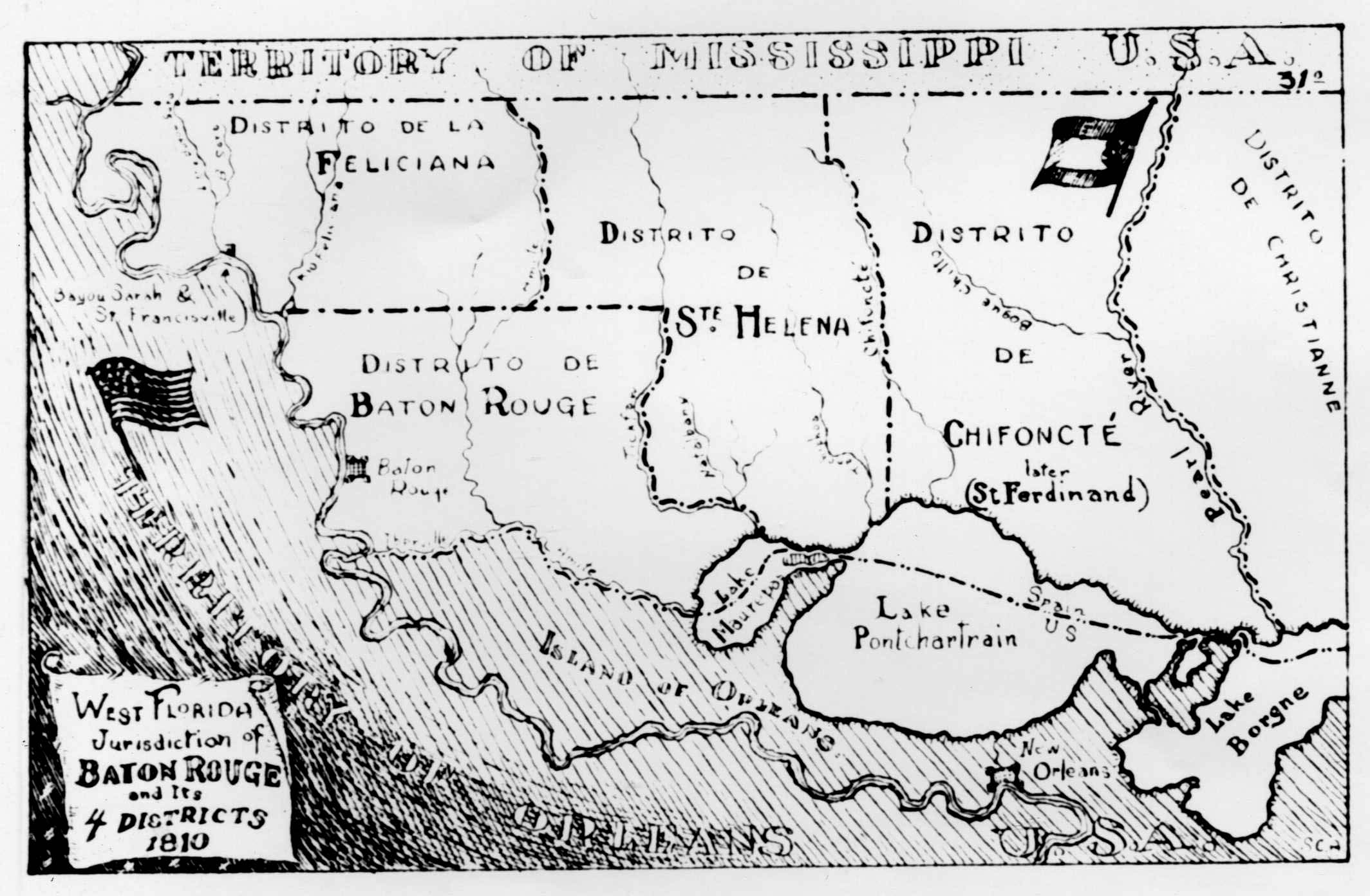
SHAMELESS SELF-PROMOTION: Donlan on Spanish West Florida and the American Territory of Orleans, 1803-1810

A draft of my 'Entangled up in Red, White, and Blue: Spanish West Florida and the American Territory of Orleans, 1803-1810' is available here and will soon be available here.  


The piece has been accepted for Thomas Duve (ed.), Entanglements in Legal History: Conceptual Approaches to Legal History, Global Perspective on Legal History vol. 1, Max Planck Institute for European Legal History Open Access Publication, 2013.

The abstract reads:


This article is a preliminary case study of legal and normative entanglement in Spanish West Florida—which stretched across the Gulf Coast of present-day Louisiana, Mississippi, Alabama, and Florida—between 1803-1810. Between the time of the Louisiana Purchase (1803) and the annexation of Westernmost part of West Florida by the United States (1810), the laws and norms of the Territory criss-crossed in various ways those of Spain and the United States. Indeed, the territory was, in turn, French, British, and Spanish before being annexed, in part, by the Americans. For the period under study here, and decades before, its settlers were largely Anglophone, while its laws were a variant of the Spanish colonial ius commune. West Florida had an especially close relationship with the area that would become the new American Territory of Orleans (1805), especially the city of New Orleans. Carved out of the vast Louisiana Territory purchased from France, the Territory of Orleans had its own complex history. Its population was still largely Francophone. In its first decade, its laws were already a gumbo of continental and Anglo-American ingredients. Together, the two territories sat at the precipice of the modern nation-state, of nationalism and popular sovereignty, of legal positivism and legal formalism. In both territories, the diffusion—direct and indirect, formal and informal, ongoing and sporadic—of the various laws and norms of natives and newcomers created intricate legal and normative hybrids.   

I'd welcome your thoughts and corrections.