Search

Showing posts with label early modern Europe. Show all posts

09 July 2026

BOOK: Xavier PRÉVOST, Rafael RAMIS BARCELÒ, Luigi Alberto SANCHI (eds.), Qu’est-ce que l’humanisme juridique? - Che cos’è l’umanesimo giuridico? - ¿Qué es el humanismo jurídico? (Madrid: Dykinson, 2026). ISBN: 979-13-7047-310-5, 202 p. [OPEN ACCESS]


(Source: uc3m)

Abstract:

El presente libro tiene como objetivo responder a una pregunta fundamental: ¿Qué es el humanismo jurídico? Tras la introducción de Xavier Prévost y Luigi Alberto Sanchi, se recogen las reflexiones de Patrick Arabeyre, Mario Ascheri, Diego Quaglioni, Italo Birocchi, Wouter Druwé y Rafael Ramis Barceló, quienes abordan las cuestiones esenciales desde una amplia perspectiva europea. A continuación, se presentan, como estudios de caso, dos traducciones al francés —realizadas por Philippe Cocatre Zilgien y Théo Crea— de obras de dos célebres humanistas: François Douaren y Eguiner Baron. The present book seeks to answer a fundamental question: What is legal humanism? Following the introduction by Xavier Prévost and Luigi Alberto Sanchi, the volume brings together contributions by Patrick Arabeyre, Mario Ascheri, Diego Quaglioni, Italo Birocchi, Wouter Druwé and Rafael Ramis Barceló, who address the essential issues from a broad European perspective. The book then offers, as case studies, two French translations—prepared by Philippe Cocatre Zilgien and Théo Crea—of works by two renowned humanists: François Douaren and Eguiner Baron.

Table of contents:

Introduction / Xavier Prévost, Luigi Alberto Sanchi (pp. 9-18). -- De quoi le bartolisme est-il le nom? / Patrick Arabeyre (pp. 19-40). -- Umanesimo giuridico e crisi del diritto comune / Mario Ascheri (pp. 41-50). -- Umanesimo giuridico e senso della tradizione / Diego Quaglioni, Saxum Sysyphi (pp. 51-62). -- Il problema della definizione dell’umanesimo giuridico: uno specchio per lo storico del diritto / Italo Birocchi (pp. 63-82). -- L’humanisme juridique dans le contexte des Pays-Bas méridionaux / Wouter Druwé (pp. 83-98). -- El humanismo jurídico: definición, etapas y categorías para su estudio / Rafael Ramis-Barceló (pp. 99-134). -- François Douaren, De docendi discendique iuris ratione (1544) : proposition de traduction / Philippe Cocatre-Zilgien (pp. 135-194). -- La préface De ratione docendi discendique iuris civilis, ad iuventutem écrite par Eguiner Baron / Théo Crea (pp. 195-202)

More information and open access PDF available here. 

12 May 2025

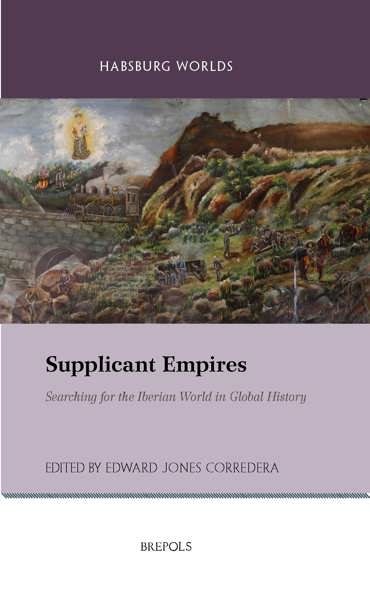
BOOK: Edward JONES CORREDERA (ed.), Supplicant Empires. Searching for the Iberian World in Global History [Habsburg Worlds] (Turnhout: Brepols, 2025), 250 p. ISBN 9782503611211


(image source: Brepols)

On the editor:

Is a Senior Research Fellow at the Max Planck Institute for Comparative Public Law and International Law (Heidelberg) and a Lecturer at the UNED (Madrid).

Table of contents:

Edward Jones Corredera (Max Planck Institute, Heidelberg, and UNED, Madrid)
Introduction: Who Prayed for the Iberian World? Incomparable Empires & Global History

Tamar Herzog (Harvard University)
Is Spain Exceptional? Reflections on Thirty Years of Research and Writing

Pedro Cardim (Universidade Nova de Lisboa)
Corporations, normative pluralism, and jurisdictions in early modern Iberia: The potential and the limitations of an interpretive framework

Marcos Reguera (Universidad del País Vasco)
From Manifest Destiny to “destino manifiesto”: the Hispanic Reception and Formulations of Manifest Destiny

Bethany Aram (Universidad Pablo de Olavide)
Comparative approaches to gender, ethnicity and empires: Britain & Spain

Marta Manzanares (Universidad Autónoma de Madrid)
Rethinking the Place of Sugar in Eighteenth-Century Spain

Fabien Montcher (University of St. Louis)
Imperial Blind Spots: Indeterminacy and Thickness across the Iberian Monarchies

David Martín Marcos (UNED)
Rustics and Barbarians: Otherness and Counter-hegemony in the Early Modern Iberian World

Interviews:

Bartolomé Yun-Casalilla (Universidad Pablo de Olavide), Amanda Scott (Pennsilvania State University), Juan Pimentel (CSIC), José Maria Portillo (Universidad del País Vasco), Maria Gago (European University Institute), Javier Rodríguez (Universidad Autónoma de Madrid), and Thiago Krause (Wayne State University)

 Read more here.

18 March 2025

BOOK: Randal LESAFFER (ed.), The Cambridge History of International Law. Volume 6. International Law in Early Modern Europe [Part of The Cambridge History of International Law] (Cambridge: Cambridge University Press, 2025), 800 p., ISBN 9781108485616; £120


 (image source: Cambridge University Press)

Abstract:

Volume VI of The Cambridge History of International Law offers a survey of the law of nations in early modern Europe through a balanced treatment of legal theory and diplomatic practice. Bringing together a wide range of scholars, this volume builds on recent historiographical insights from different disciplines, including legal history, diplomatic history, and the history of political thought. It considers all major themes ranging from the allocation of jurisdiction over land and sea, war- and peace- making, trade and navigation to diplomacy and dispute settlement. A unique overall synthesis of early modern law across nations in Europe.


Table of contents:

Part I. International Law in Renaissance Europe (1492–1660)

1. The law of nations in Renaissance Europe Randall Lesaffer

2. Territory and jurisdiction in Renaissance Europe Tamar Herzog

3. Beyond the free sea. The law of the sea in Renaissance Europe Louis Sicking

4. War and the use of force in Renaissance Europe Anuschka Tischer

5. Warfare on land in Renaissance Europe Valentina Vadi

6. The law of maritime warfare during the transition between medieval and early modern Europe Alain Wijffels

7. Peace-making in Renaissance Europe Randall Lesaffer

8. Trade and navigation in Renaissance Europe Dave De Ruysscher

9. Diplomacy in Renaissance Europe Dante Fedele

10. Dispute settlement in Renaissance Europe Guido Braun

11. The Ottoman encounter and the law of nations in the Renaissance Maurits H. van den Boogert

Part II. International Law in Old Regime Europe (1660–1775) 12. The law of nations in Old Regime Europe Randall Lesaffer

13. Territory and jurisdiction in Old Regime Europe Frederik Dhondt

14. The law of the sea in Old Regime Europe Kinji Akashi

15. War and the use of force in Old Regime Europe Randall Lesaffer

16. Warfare on land in Old Regime Europe Stefano Cattelan and Raymond Kubben

17. Maritime warfare in Old Regime Europe Stefano Cattelan

18. Peace-making in Old Regime Europe Randall Lesaffer

19. Trade in Old Regime Europe Dave De Ruysscher

20. Diplomacy in Old Regime Europe Linda S. Frey and Marsha Frey

21. Dispute settlement in Old Regime Europe Christoph Kampmann

22. The Ottoman encounter and the law of nations in the Old Regime Maurits H. van den Boogert.

Read more here.

29 August 2024

SYMPOSIUM: XXI Giornata Gentiliana ( San Ginesio: Auditorium Sant'Agostino, 13-14 SEPT 2024)

(Source: Sidi)

Alberico Gentili e Ugo Grozio: i “momenti” del diritto internazionale e il contributo degli internazionalisti alla costruzione e allo sviluppo della disciplina.

13-14 settembre 2024, Auditorium Sant’Agostino, San Ginesio.

Evento organizzato dal Centro Internazionale di Studi Gentiliani (CISG) e patrocinato dalla Società Italiana di Diritto Internazionale e di Diritto dell’Unione Europea SIDI.


15 January 2024

VACANCY: Two fully-funded PhD-positions: Communicating the Law in Europe, 1500-1750 (St Andrews: University of St Andrews/ERC, DEADLINE 15 MARCH 2024)

(image source: Wikimedia Commons)


Two fully funded PhD studentships are available at the University of St Andrews to work as part of the ERC-selected/UKRI-funded project ‘Communicating the Law in Europe, 1500-1750’, under the supervision of the Principal Investigator, Dr Arthur der Weduwen. The project investigates how law was communicated in early modern Europe (c. 1500-1750), and what impact this had on European society.

The PhD studentships will begin in September 2024, will be based in the School of History at the University of St Andrews (with significant periods to be spent on research abroad), and will last for four years. 

These PhD studentships offer the successful applicants the exciting prospect of combining the pursuit of an independently researched thesis exploring a particular dimension of legal and political communication in early modern Europe with the opportunity to work collaboratively within a research team and to contribute to co-authored publications and the organisation of scholarly conferences.

The ‘Communicating the Law in Europe, 1500-1750’ project has been awarded a grant of €1.4 million by the European Research Council and is funded as part of the UKRI’s Frontier Research Guarantee scheme.  It will run for five years, from 1 January 2024 to 31 December 2028, and is led by the Principal Investigator, Dr Arthur der Weduwen.

The COMLAWEU project is the first to investigate comparatively how law was communicated to citizens and subjects by the authorities in early modern Europe (1500-1750). It pursues an original comparative study of the publication and circulation of municipal, regional and national law, encompassing oral communication, ceremonial proclamations and the employment of criers, as well as the affixing, distribution and sale of law texts, in manuscript and printed form.

Based on extensive archival research, this project will seek to establish for the first time to what extent the increasing body of law that was issued in early modern Europe was made publicly available, and in what forms.

The project seeks to add a new and much-needed perspective to the study of European politics in a critical era of state formation, framing the communication of law as an essential stabilising factor in an era of highly participatory but undemocratic politics.

This project will offer multiple comparative frameworks through which the communication of law will be studied, including Protestant and Catholic states, urban and rural areas, and empires, national kingdoms and city-states.

With the aid of such a comparative lens, it is an overarching aim of the project to analyse how the public dissemination of law shaped early modern civic society and influenced political participation and accountability.

The project team, led by the PI and comprising two postdoctoral research assistants and two PhD students, will work collaboratively, using a series of comparative case studies based on European regions to explore and reveal the complex ways in which European authorities communicated with their citizens and subjects.

Further details about this opportunity can be found on the School of History postgraduate funding page.

07 December 2023

CONFERENCE: 'Figures politiques de la modernité (XVe-XVII siècles, Europe) (Brussels, Académie royale de Belgique, 7 December 2023)


Présidences et modération

Marie Kervyn de Meerendré, Université Libre de Bruxelles.
Agnès Guiderdoni, Université catholique de Louvain, Académie royale.
Frederik Dhondt, Vrije Universiteit Brussel.
Monique Weis, Université du Luxembourg.

Programme

Introduction (10h-10h30).

  • Jean Sénié (Université de Tours/CESR), Jérémie Ferrer-Bartomeu (UCLouvain & ULiège/FNRS) : Retours critiques sur l'« Homme de la Renaissance ». De l'approche civilisationnelle à l'histoire sociale et culturelle du politique.

Première session : Figures politiques au prisme du genre dans la première modernité.

  • Lison Vercammen (UCLouvain / U. Luxembourg), Jules Dejonckheere (UCLouvain) (10h30-11h) : La gouvernante générale au XVIe siècle : une représentante habile, stoïque et dévouée.
  • Nina Lamal (Huygens Institute) (11h-11h30) : Ambassadresses in early modern diplomacy.
  • Sylvie Le Clech (Direction des Archives diplomatiques) (11h30-12h) : Savoir finir une guerre : une sagesse de dirigeantes pragmatiques ?

Deuxième session : L’humanisme aux prises avec une modernité politique ?

  • Laure Fagnart (Uliège / FNRS) (14h-14h30) : Léonard de Vinci, « omo sanza lettere » vs « omo universal ».
  • Renaud Adam (ULiège) (14h30-15h) : Imprimer au cœur des conflits confessionnels : Christophe Plantin et l’Officina Plantiniana.
  • Christian Martens (Université de Genève / University of Warwick), Didier Martens (Université Libre de Bruxelles / Académie royale d'archéologie de Belgique) (15h-15h30) : À la recherche du visage de François Hotman. Les portraits d’un humaniste célèbre aux XVIIe et XVIIIe siècles.

Pause : 15h30-15h45.

Troisième session : Figures politiques et divisions confessionnelles.

  • Julien Régibeau (ULiège / La Sapienza, Università di Roma) (15h45-16h15) : Le nonce apostolique. Diplomatie ecclésiastique et carrière curiale.
  • Alexandre Goderniaux (ULiège) (16h15-16h45) : Le jeu d’acteur d’Henri III aux États généraux de Blois (16-18 octobre 1588).

Conclusions 16h45-17h30.

Organisation

Jérémie Ferrer-Bartomeu, Université catholique de Louvain, Centre d'Analyse Culturelle de la Première Modernité (GEMCA), Université de Liège, unité de recherches Transitions sur le Moyen Âge et la première Modernité, F.R.S.-FNRS.


Jean Sénié, Université de Tours, Centre d’études supérieures de la Renaissance (CESR).
Nicolas Simon, Académie royale des sciences, des lettres et des beaux-arts de Belgique.


PROGRAMME (PDF)

30 October 2023

PUBLICATION: René VERMEIR (éd.), Recueil des ordonnances des Pays-Bas, deuxième série : Règne de Philippe IV (1621-1665) (Bruxelles: Commission royale pour la publication des anciennes lois et ordonnances de Belgique/AGR, 2023), 4 vol., ISBN 9789463913980 (OPEN ACCESS)


Le professeur René Vermeir (Département d'Histoire, Université de Gand) vient de publier quatre volumes contenant une édition savante des ordonnances de Philippe IV, El Rey Planeta (1605-1665), comme souverain des Pays-Bas "Espagnols":

  • Volume I: 14 juillet 1621 au 8 novembre 1633 (669 p.)
  • Volume II: 11 janvier 1634 au 6 avril 1647 (431 p.)
  • Volume III: 6 juin 1647 au 8 avril 1656 (361 p.)
  • Volume IV: 19 mai 1656 au 19 août 1665 (395 p.)

Cette oeuvre majeure complète l'auguste Recueil des ordonnances des Pays-Bas, dont les volumes numérisés pour les Pays-Bas Bourguignons (Philippe le Hardi et Marguerite de Male, Jean sans Peur, Philippe le Bon), Espagnols (Charles Quint, Philippe II, Albert et Isabelle) et Autrichiens (Charles VI, Marie-Thérèse, Joseph II, Léopold II) peuvent être consultés sur le site rechtsreeks.be (KULeuven).

Les quatre volumes sont disponibles en libre accès, à la fois pour la consultation et le téléchargement, grâce aux services de la bibliothèque universitaire gantoise (permalien ici). La version imprimée de cet ouvrage, édité en partenariat entre la Commission Royale et les Archives Générales du Royaume (volume 172 dans la collection Studia) est en vente à la boutique en ligne des Archives Générales du Royaume, au prix de € 100 (ici). 

(source: KCOWV/CRALO)

21 June 2023

JOURNAL: Les juristes dans la République des lettres (eds. Géraldine CAZALS, Stéphan GEONGET, Violaine GIACOMOTTO-CHARRA & Xavier PRÉVOST) (Clio@Thémis 24 (2023)) [OPEN ACCESS]


(image source: openedition)

« Pro communi utilitate » : où sont les juristes dans la République des lettres ? (Géraldine Cazals,Stéphan Geonget, Violaine Giacomotto-Charra et Xavier Prévost)
DOI 10.4000/cliothemis.3506

La bataille de Guillaume Budé, princeps de la République des Lettres, contre la barbarie des gens de justice (Shingo Akimoto)
DOI 10.4000/cliothemis.3195
Abstract:
This article focuses on the battle that Guillaume Budé waged against the barbarity of the magistrates of the French sovereign court, who, despising the study of letters and prone to the pursuit of gain, relied solely on the Bartolist science of law. I argue that, at the court of Francis I, Budé, already recognised as princeps of the Republic of Letters, assumed the political role of “advocate of the Philologists’ nation” and proposed, based on his idea of encyclopaedia, the ideal of the orator-philosopher able to achieve justice.

La faute de Narcisse et la leçon du droit : la philautie selon André Alciat, entre allégorie et discours juridique (Thomas Penguilly)
DOI 10.4000/cliothemis.3119
Abstract:
The jurist and humanist Andrea Alciato went down in history as the creator of the literary genre of the emblem, bound to a great fortune in the Renaissance and in the Classical period. However, his poetic work, put at the service of his conception of the teaching of law, also reflects the views of its author in the legal field. Indeed, in his emblem Philautia (1546), Alciato offers a true manifesto in favor of legal humanism through a very personal reading of the myth of Narcissus, dismissing back-to-back his opponents, jurists as well as philologists.

Prendre exemple sur le droit ? La formation du raisonnement politique dans le prologue des Discours de Machiavel (Laurent Gerbier)
DOI 10.4000/cliothemis.3260
Abstract:

The prologue to the Discourses on the First Decade of Livy defines the methodological conditions of political science using a specific analogy between law, medicine and politics. The aim here is to examine this analogy by trying to understand its stakes and origins. By relating it to the disputa delle arti, which has opposed medicine and law since the 14th century, as well as relating it to the emergence of legal humanism, which seeks to apply the scholarly methods of philology to law, the article aims to explain the meaning of this analogy and to show that the political science that Machiavelli intends to found is in fact a science of crises.

A Matter of Jurisdiction: “Guelfs” and “Ghibellines” in the French Wars of Religion (George Hoffmann)
DOI 10.4000/cliothemis.3150
Abstract:
Gallicans like Montaigne construed the confessional struggle as a problem of jurisdiction between the Crown and the Pope. When he quipped “to the Ghibelline I was a Guelph, to the Guelph a Ghibelline”, he was thus not intimating that he appeared “Protestant” to the Catholic side and “Catholic” to the Protestant one. Instead, he used these terms in their historical sense, designating a division between citramontane supporters of the king and ultramontane supporters of the pope. Between anti-tolerant and anti-pacifist Leaguers and tolerant-pacifist Politiques lay a third option, that of anti-tolerant but pacifist Gallicans.

Les juristes en épistoliers - Étude de la correspondance passive de Joseph-Juste Scaliger (1540-1609) (Xavier Prévost)
DOI 10.4000/cliothemis.3296
Abstract:
The study of two hundred and eighty-three letters addressed to Joseph-Juste Scaliger shows the extent of the humanist’s legal network and the active contribution of forty-nine jurists to the Republic of Letters. This encyclopedic contribution is based on philology as a central knowledge, in line with Scaliger’s interests. As for law, its place – without being negligible – remains peripheral in this correspondence, while varying according to the regularity of the legal practice of each letter writer.

Portrait du jurisconsulte en épistolier « particulier ». À propos de quelques développements sur le droit romain dans les Lettres (1619) d’Étienne Pasquier (XIX, 12 à XIX, 14) (Benoît Autiquet)
DOI 10.4000/cliothemis.3320
Abstract:
This article deals with three texts that Étienne Pasquier devoted to Roman law in the second edition of his collection of Lettres (1619), one to the authority of jurisconsults, the other two to the origins of the “légitime”. We propose to read in these little explored texts a redefinition of the authority of the jurisconsult, in French law as well as in Roman law, starting from the initial refusal of the idea that the jurist’s "opinions" have the force of law. In contrast to this idea, a figure embodied by the author himself appears : a "private" jurisconsult, who has all the more authority as he relates without personal ambition to the public good.

Étienne Pasquier, un avocat à l’éloquence herculéenne dans la République des Lettres (Baptiste Robaglia) 
DOI 10.4000/cliothemis.3379
Abstract:
This article deals with the identification of Étienne Pasquier with the civilizing eloquence of the Gallic Hercules. In the troubled context of the 16th century, the jurist-humanist identified himself with this eloquence that he implemented with the aim of participating in the civilization undertaken by the Republic of Letters. Pasquier thus took care to disseminate his knowledge, but also to civilize royal acts by confronting them with an ideal of justice. Behind this double meaning of eloquence then emerges the features of the Gallic hero described by Lucien de Samosate.

Jérôme Bignon (1589-1656), un juriste érudit et dévot dans la République des lettres à l’âge  confessionnel (Jean-Benoît Poulle)
DOI  10.4000/cliothemis.3410
Abstract:
Advocate General in the Parliament of Paris, Jérôme Bignon is remembered in history both as one of the great names of parliamentary eloquence, and as a highly respected scholar of the Republic of Letters for his erudition. With the help of his Vie published in 1747 by the Abbé Pérau, this article tries to better identify the links between the legal culture of a high-ranking officer, his public career, and his scholarly research, in which religious controversies occupy a central part. This also leads us to take into consideration the very great place he gives to Catholic devotion.

Varia:
What is a good book? Epistemic virtues and the role of originality in Brazilian public law scholarship (1820s - 1889) (Arthur Barrêtto de Almeida Costa)
DOI 10.4000/cliothemis.3460
Abstract:
Which virtues and vices 19th century Brazilian public opinion used to evaluate legal books and scholars? The paper analyzed the texts published in Brazilian newspapers commenting on books of public law, which are called “evaluation literature”, to answer this question. Major virtues were: utility, clarity, method, moderation; minor ones were: originality, experience, abnegation etc. This chart of values can be derived from the objectives of Brazilian legal scholarship of the time: not an academic discipline defined by research, but a technical discourse aimed at professional instruction and public intervention.

Read all articles here. 


18 May 2023

ARTICLE: Rafael RAMIS BARCELÓ, "Egresados hispanos en el Colegio de Doctores de Nápoles (1584-1699)" (Memoria y civilización XXVI (2023/1), 147-180) (OPEN ACCESS)


(image source: Memoria y Civilizacion)

Abstract:

This paper studies the presence of Spaniards in the Doctoral Colleges of Naples, from its erection in 1584 to 1699. The characteristics of the Colleges and the sociology of the doctors are explained and the graduates who declared themselves as Spaniard and those who were originally from Spain are studied. This provides a more accurate profile of the presence of Spaniard Doctors in Naples and allows new prosopographical studies.

Read the whole article in open access on the journal's website (DOI 10.15581/001.26.004)

LECTURE: Roman law and Scandinavia in early modernity: Reading Arthur Duck, De usu et Authoritate Iuris Civilis II, 13-14 - Padova 19 maggio 2023


(Source: Storia del diritto)

04 May 2023

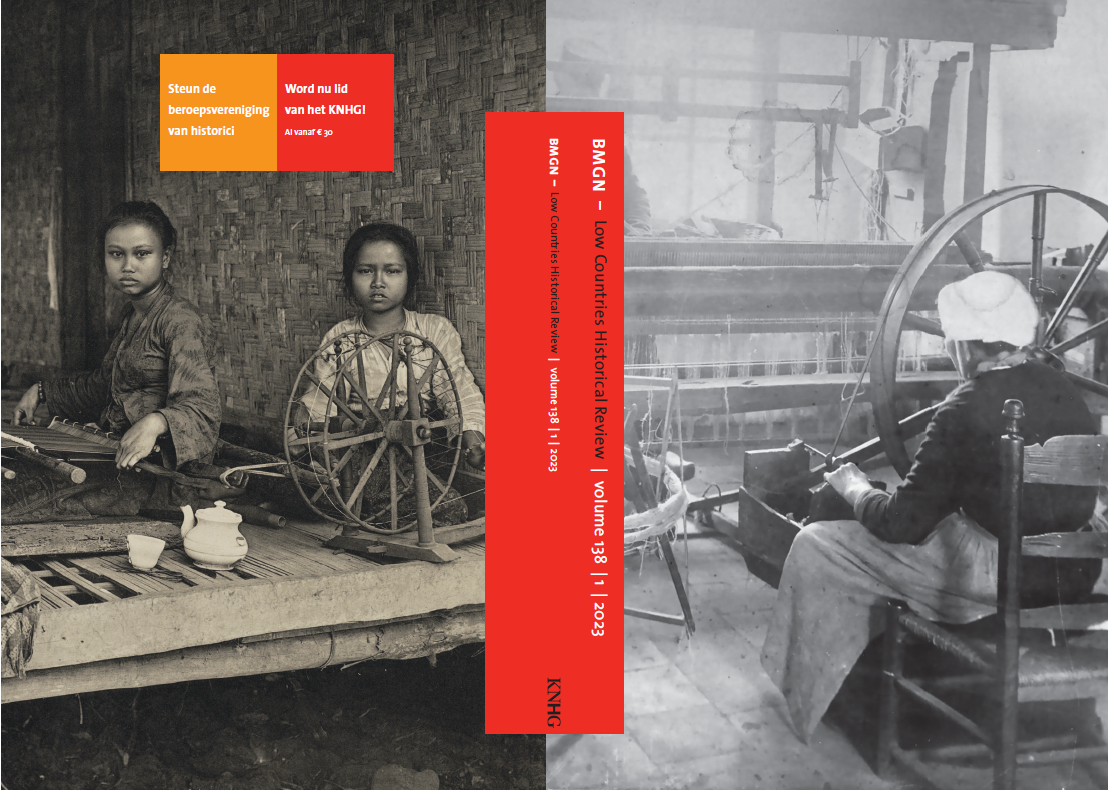
ARTICLE: Klaas VAN GELDER, "Local Lordship and Joyous Entries in the Burgundian and Habsburg Netherlands" (BMGN - Low Countries Historical Review CXXXVIII (2023)/1, 31-70


(image source: BMGN)

Abstract:

Ever since the cultural turn and the understanding of ritual and ceremony as forms of communication and symbolic negotiation, medieval and early modern princely coronations, inaugurations, and joyous entries have received incessant scholarly attention. That was much less the case for seigneurial joyous entries that took place in villages and small towns. The Burgundian and Habsburg Netherlands, and the Duchy of Brabant in particular, had a remarkably strong tradition in this respect. Local lords and ladies held entries in their seigneuries, issued liberty charters, and swore to uphold local rights and privileges. These entries gave occasion to high masses and Te Deums, banquets with local dignitaries, and festivities for the other inhabitants. This article analyses a set of 88 seigneurial entries, ranging from the early fifteenth until the late eighteenth century. It argues that these solemnities were structural components of the seigneurial landscape, carrying legal, social, and political meaning. They are also gauges for the power relations between the lord or lady, local office holders, and villagers or townspeople at a given moment, and can therefore help us to better understand who stood to gain most from the seigneurial system.

Read the full article here (open access): DOI 10.51769/bmgn-lchr.9921.

BOOK: John D. FORD, The Emergence of Privateering (Leiden: Brill, 2023). ISBN: 978-90-04-54140-5, € 148.40

(Source: Brill)

ABOUT THE BOOK

Privateering was legal whereas piracy was illegal. That much everyone knows. But what exactly was privateering? Answering this question turns out to depend not so much on the relationship between privateering and piracy as on the relationship between privateering and other forms of maritime raiding that had been considered legal long before the word ‘privateering’, or the practice it denoted, came into existence. This book clarifies all these relationships and explains how privateering emerged as a new legal category in the late sixteenth and early seventeenth centuries. The subject is approached from a British perspective, in the light of developments elsewhere, including the movement towards a new understanding of the law regulating relations between nations.

ABOUT THE AUTHOR

J. D. Ford is Professor of Civil Law at the University of Aberdeen. His edition of Alexander King’s Treatise on Maritime Law was published by the Stair Society in 2018.

TABLE OF CONTENTS

Preface

Introduction

1 Seizures of Ships and Goods at Sea before Privateering
 1 Seizures of Ships and Goods at Sea as Plunder

 2 Acquisition of Prizes in Sixteenth-Century Scotland

 3 Seizures of Ships and Goods at Sea as Reprisal

 4 Authorisation of Reprisals in Sixteenth-Century Scotland

 5 Seizures of Ships and Goods at Sea as Piracy

 6 Apprehension of Pirates in Sixteenth-Century Scotland


2 From Licit Plunder towards Licensed Privateering
 1 Regulation of Maritime Warfare in England

 2 Innovation during the Reign of Elizabeth

 3 Justification in Terms of the Practice of Nations

 4 Justification in Terms of the Law of God

 5 Justification in Terms of the Law of Policy

 6 Condemnation of Pirates as Common Enemies


3 Privateering in Theory and Practice avant la lettre
 1 Licensed Raiding in Jacobean Scotland

 2 Licensed Raiding in Jacobean England

 3 Towards a New Theory of Prize Acquisition

 4 Towards a New Theory of International Law

 5 Prize Litigation in Caroline England

 6 Prize Litigation in Caroline Scotland


Conclusion

Bibliography

Index

14 April 2023

CONFERENCE: 'Natural Law and Domestic Government' - KU Leuven, 27-28 April 2023 - Speakers’ conference programme


KU Leuven will host a two-day conference on the interaction between natural law-thinking and domestic government in early modern Europe on 27 and 28 April, where academics both junior and senior will be presenting their research. Anyone interested in attending one or more sessions is kindly requested to register their attendance by sending an e-mail to naturallawconference@kuleuven.be.

Speakers’ conference programme


[All conference talks will take place in the Irish College – Iers College, Janseniusstraat 1, 3000 Leuven]

This conference is organised by the KU Leuven Research Unit Roman Law and Legal History (Faculty of Law and Criminology). It is co-funded by the Research Foundation – Flanders (FWO), project nr. G0C4421N.

Thursday 27 April 2023

9u Reception with coffee in the Irish College.
9u30 Opening session.
- 9u30: Word of welcome by the conference organisers.
- 9u45: Keynote speech by prof. dr. Annabel Brett (University of Cambridge) on “Natural law and human difference: The possibility condition in later scholastic thought.”
11u Coffee break. 
11u15
- 11u15: Ms. Rosalind Acland (University of Cambridge) on “Edward Coke’s Ciceronian Common Law (1552-1634).”
- 11u45: Dr. Signy Gutnick Allen (University of Zurich) on “Locke’s Theory of Economic Citizenship: Natural Law, Property and Charity.” 
- 12u15: discussion.
13u Lunch.
14u  
- 14u: Mr. Geert Sluijs (KU Leuven) on “Stewardship and statesmanship. Justus Lipsius and Diodorus Tuldenus on the natural law of government in the Early Modern Low Countries.”
- 14u30: Dr. Paolo Astorri and prof. dr. Lars Nørgaard (University of Copenhagen) on “The notion of potestas in the works of Henning Arnisaeus (1570-1636).”
- 15u: discussion.
15u45 Coffee break.
16u  
- 16u: Ms. Sarah Papa (Goethe University Frankfurt) on “Between the People and the Priest: a case of expropriation of land for the ‘common good’ in eighteenth- century Portuguese America.”
- 16u30: Mr. Rafael Mateus (Federal University of Ceará, Fortaleza) on “Mutability of Lex et Ius Naturale in Domingo de Soto’s De Iustitia et Iure.” 
- 17u00: discussion.
18u Conclusion of the day’s sessions.


Friday 28 April 2023

9u Coffee in the Irish College.
9u15 Keynote speech by prof. dr. Marie Seong-Hak Kim (St. Cloud State University) on “Bodin, Natural Law, and the Crisis of the French Renaissance Monarchy.”
10u30 Coffee break.
11u  
- 11u: Dr. Ki-Won Hong (Yonsei University) on “Leibniz’s Critique of Pufendorf’s Concepts of Sovereignty and German Federation.”
- 11u30: Mr. Carlos Eduardo Perez Crespo (University of Hamburg) on “Emer de Vattel’s Monarchical Theory of Constituent Power.”
- 12u: discussion.
12u45 Lunch. 
13u45  
- 13u45: Mr. Pedro Ricardo da Silva Santos (KU Leuven) on “Fides and the nature of Feudum in the legal thought of Petrus Gudelinus (1550-1619).”
- 14u15: Dr. Jeffrey Dymond (University of Zurich) on “Association and Corporation in Humanist Jurisprudence.”
- 14u45 discussion.
15u30 Closing remarks by prof. dr. Alain Wijffels (KU Leuven).
16u Conference end. 

16 January 2023

BOOK: Maria FUSARO, Andrea ADDOBBATI & Luisa PICCINNO (eds.), General Average and Risk Management in Medieval and Early Modern Maritime Business (London: Palgrave, 2023), ISBN 978-3-031-04118-1 (OPEN ACCESS)

(image source: Palgrave)

About the book:
This book is open access, which means that you have free and unlimited access Explores risk management in medieval and early modern Europe, focusing on 'General Average' Investigates how stakeholders minimised risk in dangerous commercial shipping Illustrates changing concepts of political economy across space and time


Table of contents (15 chapters)

  1. Front Matter

    Pages i-xxvi