Search

09 July 2024

BOOK: Theodor BAUMS, Luxemburg und das Reichskammergericht [Quellen und Forschungen zur höchsten Gerichtsbarkeit im Alten Reich; 81] (Köln: Böhlau, 2024), 143 p., ISBN 978-3-412-53052-5


ABOUT THE BOOK:


1548 schloss Kaiser Karl V. mit den Ständen des Heiligen Römischen Reichs den Burgundischen Vertrag. Dieser Vertrag und die nachfolgende Entwicklung führten zur weitgehenden Lösung der burgundischen Erblande der Habsburger, darunter das Herzogtum Luxemburg, vom Reich. Theodor Baums behandelt zunächst die Stellung des Herzogtums Luxemburgs als Reichslehen, die Zuständigkeit des Reichskammergerichts auch für die burgundischen Erblande und sodann Inhalt und Bedeutung des Burgundischen Vertrags. Die durch den Vertrag bewirkte Abspaltung der Erblande vom Reich machte neben anderem die Entwicklung von Normen für die „internationale“ Gerichtszuständigkeit erforderlich. Im zweiten Teil befasst sich die Untersuchung mit der durch den Burgundischen Vertrag ausgelösten Entfaltung dieser frühen Form zwischenstaatlicher Kooperation bei grenzüberschreitenden Konflikten. Hierfür werden die Akten des Reichskammergerichts zu einschlägigen Streitigkeiten mit Bezug zum Herzogtum Luxemburg ausgewertet.

ABOUT THE AUTHOR:

Theodor Baums ist emeritierter Ordinarius für Bürgerliches Recht, Handels- und Wirtschaftsrecht und Gründungs- und Vorstandsmitglied des Instituts for Law and Finance (ILF) der Johann Wolfgang Goethe-Universität, Frankfurt am Main.

Find more here.

08 July 2024

BOOK: Giovanni ROSSI and Pietro SCHIRÒ (eds.), Law and Art in the 19th Century. Power in Images (Pisa: Pacini Editore, 2024) ISBN: 978-88-3379-685-7, 520 pp., €57,00


(Source: Pacini Editore)


ABOUT THE BOOK

This volume deals with the figurative representation of law and power in the 19th Century, emphasising the importance of images and, thus, of the iconographic representation of themes and concepts pivotal to law in 19th-century Europe. The twenty collected contributions examine multiple topics connected to different forms of artistic expression and investigate how painting, sculpture, and architecture reproduced a peculiar vision of law and power, sometimes to amplify its importance, sometimes to formulate an open critique.

The volume analyses a series of case studies to focus, with a comparative and multidisciplinary approach, on the ways in which the emergence of a new juridical experience in 19th-century Europe led to the replacement – or re-semanticisation – of symbols and images traditionally associated with law and power, in order to express and propose to the society of the time a new conception of the law.

 Sono presenti nell’opera testi diversi in italiano, inglese e francese. 


Table of contents available here.

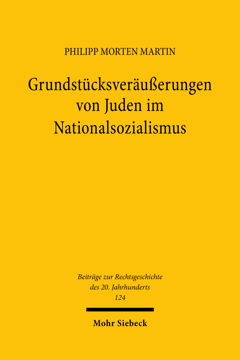
BOOK: Philipp Morten MARTIN, Grundstücksveräußerungen von Juden im Nationalsozialismus [Beiträge zur Rechtsgeschichte des 20. Jahrhunderts; 124] (Tübingen: Mohr Siebeck, 2024), 219 p., ISBN 978-3-16-163684-4

Cover von 'undefined'

ABOUT THE BOOK:

Philipp Morten Martin beschäftigt sich mit Grundstücksveräußerungen von Juden im Nationalsozialismus in den Jahren 1938 und 1939. Dazu hat er über 40.000 Notarurkunden aus den Landgerichtsbezirken Düsseldorf, Köln und Wuppertal untersucht. Ziel war es, die in der historischen Forschung bisher wenig berücksichtigte Frage nach der Wirksamkeit dieser Veräußerungen zu erfassen. Der Autor arbeitet heraus, an welchen vertraglichen Regelungen und Umständen des Vertragsschlusses sich der Einfluss der nationalsozialistischen Verfolgung darstellen lässt. Dies betrifft etwa die erzwungenen Veräußerungen von Grundstücken oder solche Veräußerungen, die unter Drohungen gegen die Veräußerer zustande kamen. Auch wird untersucht, wie die jüdischen Eigentümer an den Veräußerungen beteiligt wurden, wenn sie selbst nicht mehr bei der Beurkundung erscheinen konnten, weil sie geflohen waren.

Find more here.

05 July 2024

CONFERENCE: Legal Unification through Case Law? (Regensburg: University of Regensburg, Institute for East European Law, 21 - 22 NOV 2024)


Conference program:

21. November 2024 (2 p.m.)

Introduction (Martin Löhnig)

Legal harmonisation between Austria and Germany before the amendments to the ABGB (Kamila Staudigl-Ciechowicz)

The ABGB in the case law of the VIII. Civil Senate of the German Reichsgericht 1939 - 1945 (Martin Löhnig)

The British Judicial Committee of the Privy Council (David Schorr)

22. November 2024 (9 a.m)

The Role of the Hungarian Royal Curia in the Unification of Private Law between the Two World Wars  (László Ádám Joó)

The Supreme Court for Bosnia and Herzegovina and the unification of judicial practice (Mehmed Becic)

The Supreme Court of the Second Polish Republicon Civil Status Records: A Case Law Review (Bartosz Kamil Truszkowski)

Registration:

rechtskultur@ur.de

Organized by:

Prof. Dr. Martin Löhnig (University of Regensburg)

Conference venue:

Institut für Ostrecht/Institute for East European Law
Landshuter Str. 4
D-93047 Regensburg

Find more information here.

04 July 2024

JOURNAL: Comptabilité(s). Revue d'histoire des comptabilités, XV (2023): Sources, normes et procédures de la fiscalité en Europe méditerranéenne (XIIIe-XVIe s.) [OPEN ACCESS]

(Image source: Revue Comptabilités)


La revue accueille toute recherche portant sur l’histoire et l’archéologie des documents comptables, des institutions qui les commanditent et des personnes qui les réalisent. Elle reçoit dossiers thématiques, articles de fonds et méthodologiques, éditions commentées de documents, comptes-rendus de thèses, de rencontres et d’ouvrages, notes d’actualités. Elle publie des textes dans toutes les langues européennes et les accompagne de résumés en français, anglais, allemand, espagnol.


TABLE OF CONTENTS

  • Béatrice Touchelay – Avant-propos
  • Marco Conti et Ézéchiel Jean-Courret – Sources, normes et procédures de la fiscalité directe en Occident méditerranéen (XIIIe-XVe s.)
  • Francesco Bettarini – La valutazione del reddito d’impresa nel Catasto del 1427
  • Marco Conti – Contribuables, equitas et estimation des richesses du contado bolonais au début du XIVe siècle. Notes en marge de l’édition de l’estimo de 1303
  • Florent Garnier – Temporalités documentaires, normatives et fiscales à Millau au milieu du XIVe siècle
  • Ézéchiel Jean-Courret – « Aysso qui s’ensec avem baylat per far e per ordenar e per mandar e per levar lo talh ». Discours, procédures et régimes de la fiscalité directe à Périgueux aux XIVe et XVe siècles
  • Laura Miquel Milian – El impuesto directo en la Barcelona del siglo XV
  • Jordi Morelló Baget et Albert Reixach Sala – “Iuxta facultates bonorum ipsorum singularium”: las fuentes para la fiscalidad directa en las comunidades rurales de la Cataluña bajomedieval y el estudio de la desigualdad
  • Davide Morra – Un dialogo delle ragioni. I conti della tassa diretta nel regno di Napoli all’epoca di Ferdinando I d’Aragona (1458-1494)
  • Fabrizio Alias – La fiscalità diretta nella terra sarda dei Della Gherardesca: analisi delle pratiche di scrittura e del prelievo signorile attraverso il «Liber introytuum et reddituum» (1323) [Texte intégral]
  • Catarina Rosa – Uma aproximação à documentação fiscal em Portugal: fontes para o estudo da fiscalidade municipal direta na Idade Média (sécs. XV-início do XVI)
  • Pau Viciano – Matérialité des registres fiscaux et pratiques administratives. Les livres de la levée de l’impôt direct municipal dans le royaume de Valence (Vila-real, 1451)

Hors série

  • Philippe Charon Maîtres auditeurs, clercs et notaires des comptes sous la dynastie des Évreux-Navarre (1329–1387)
  • Marc Nikitin Le mot comptabilité s’est répandu à la fin du XVIIIe siècle pour désigner une technique de gouvernement


More information can be found here.

03 July 2024

SCHOLARSHIPS: Visiting Researchers 2025-2026 (Department "Historical Regimes of Normativity", Max Planck Institute for Legal History and Legal Theory) (DEADLINE 30 AUG 2024)

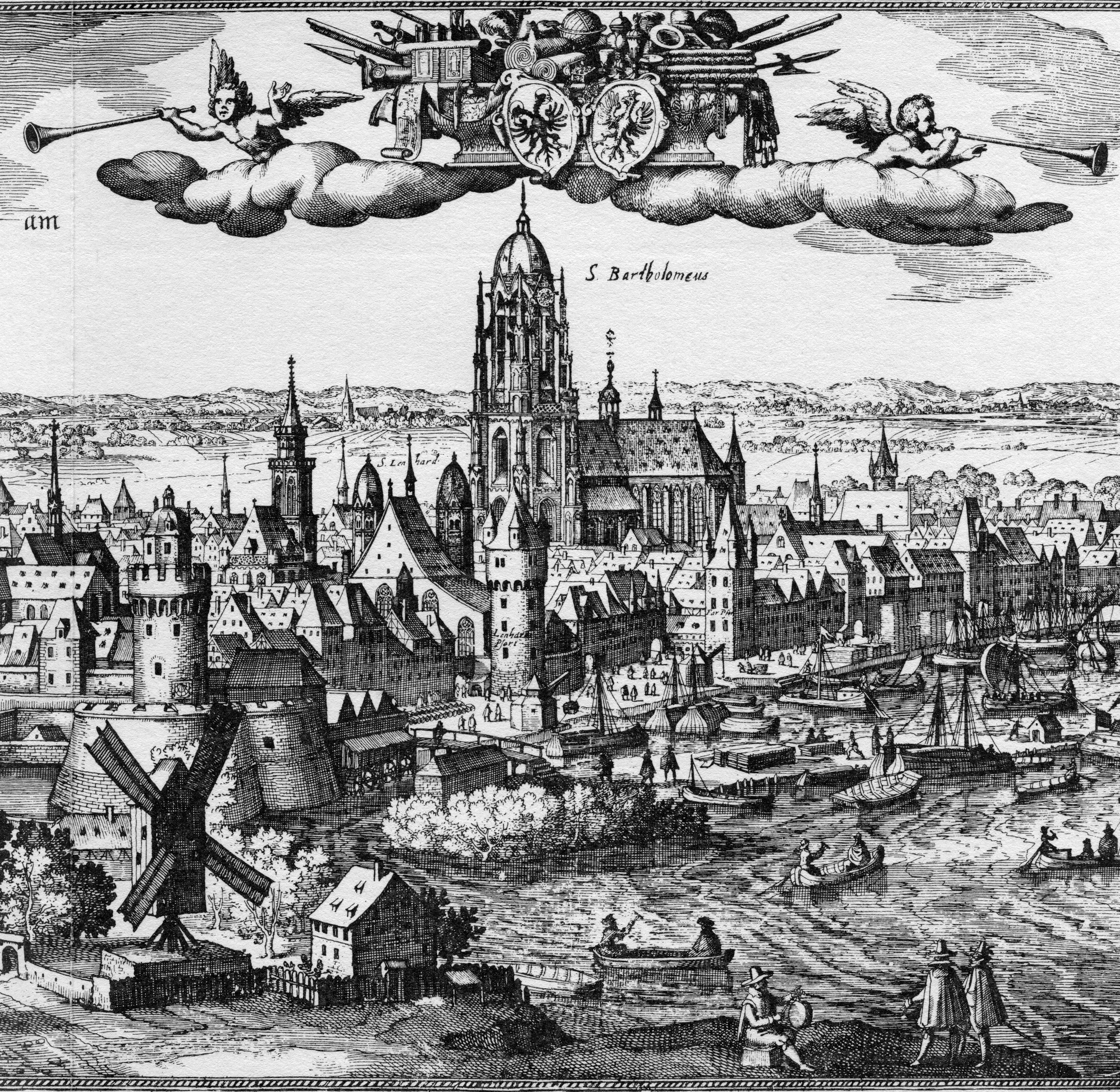
(Frankfurt, 16th century; image source: Wikimedia Commons)
 

The Department Historical Regimes of Normativity (Prof. dr. Thomas Duve) will award scholarships for research stays of three or six months, starting on 1 April 2025 / 1 July 2025 / 1 October 2025 / 5 January 2026 for PhD students, post-doctoral and senior researchers. Deadline 30 August 2024.

More information here.

Please ensure that your application reaches us at least four months before your intended research stay. Submit your complete application via our online application system.

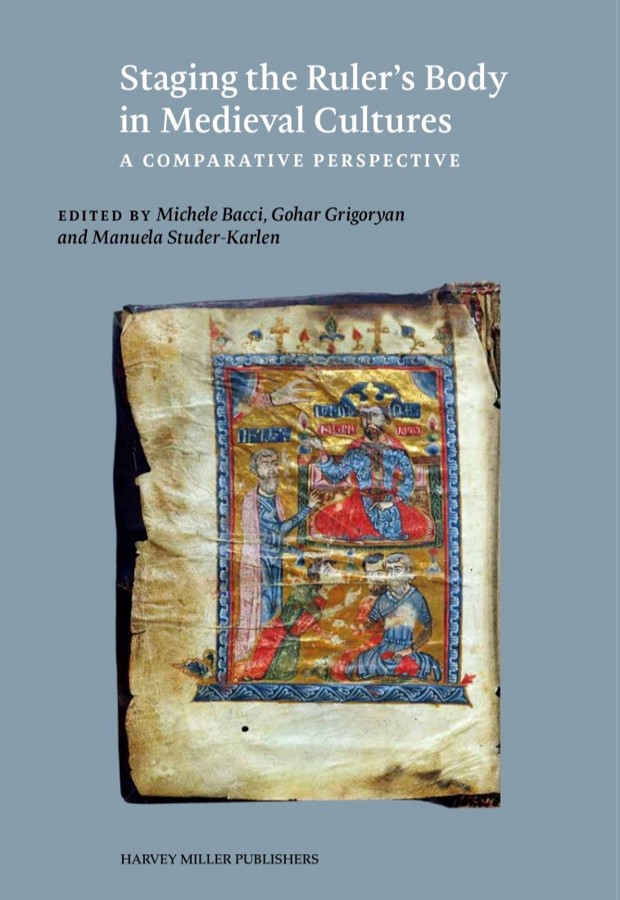
BOOK: Michele BACCI, Gohar GRIGORYAN, Manuela STUDER-KARLEN (eds.), Staging the Ruler’s Body in Medieval Cultures: A Comparative Perspective (Turnhout: Brepols, 2023). ISBN: 9781915487087 [OPEN ACCESS]

(Image source: Brepols)


ABOUT THE BOOK

This book explores the viewing and sensorial contexts in which the bodies of kings and queens were involved in the premodern societies of Europe, Asia, and Africa, relying on a methodology that aims to overcoming the traditional boundaries between material studies, art history, political theory, and Repräsentationsgeschichte. More specifically, it investigates the multiple ways in which the ruler’s physical appearance was apprehended and invested with visual, metaphorical, and emotional associations, as well as the dynamics whereby such mise-en-scène devices either were inspired by or worked as sources of inspiration for textual and pictorial representations of royalty. The outcome is a multifaced analysis of the multiple, imaginative, and terribly ambiguous ways in which, in past societies, the notion of a God-driven, eternal, and transpersonal royal power came to be associated with the material bodies of kings and queens, and of the impressive efforts made, in different cultures, to elude the conundrum of the latter’s weakness, transitoriness, and individual distinctiveness.


ABOUT THE EDITORS

Michele Bacci is Professor of Medieval Art History at Fribourg University, Switzerland, and a member of the Academia Europaea. His research has been focused on artistic interactions in the Medieval Mediterranean and beyond, and the history of cult-objects and holy sites from a phenomenological-comparative viewpoint. He is the author of numerous publications, including Il pennello dell’Evangelista (1998), The Many Faces of Christ (2014), the Mystic Cave (2017), and Veneto-Byzantine Artistic Interactions (2021).

Gohar Grigoryan, Ph.D. (2017), University of Fribourg, is currently senior researcher at the same university within an SNSF-funded project. She is the author of over two dozen peer-reviewed articles on medieval Armenian art and history and of an upcoming monograph on royal imagery in Cilician Armenia.

Manuela Studer-Karlen, Ph.D. (2010), University of Fribourg, is a SNSF Professor for Medieval Art at the University in Bern. She has published a monograph on late antique sarcophagi and recently her habilitation has been published with the title: "Christus Anapeson. Image and Liturgy". Her research centres on the history of visual-cultural processes in late antiquity, the interactions among text, image and space in Byzantine churches, medieval Georgian art, and Gothic ivories.


TABLE OF CONTENTS

  • The Ruler’s Multiple Bodies and Their Mise-en-Scène: Some Introductory Remarks (MICHELE BACCI)

  1. Staging the Body of the Lord of the Sevenfold World. Methectic Spaces and Chiasmatic Viewing in Sasanian Iran (MATTHEW P. CANEPA)
  2. Queen Consort Mariam Dadiani and Female Architectural Patronage in Late Medieval Georgia (NATIA NATSVLISHVILI)
  3. The ‘Just Judgement’ of King Lewon IV. Representational Strategies of Righteous Rulership in Cilician Armenia (GOHAR GRIGORYAN)
  4. Royal Imagery and Devotional Spaces in Early Solomonic Ethiopia. The Case of Gännätä Maryam (JACOPO GNISCI)
  5. Staging as Metaphor. The King’s Body and the Theatricality of Power (ANTONY EASTMOND)
  6. Clothes maketh the emperor? Embodying and Performing Imperial Ideology in Byzantium through Dress (MARIA PARANI)
  7. Staging for Commemoration: The Cherubikos Hymnos (MANUELA STUDER-KARLEN)
  8. The Khan in the West. The Reception of Mongol Political Power in the Texts and Images of Medieval Latin Europe (ELEONORA TIOLI)
  9. Staging the Virgin Mary as the Ruler of the Sienese City-State (KAYOKO ICHIKAWA)
  10. Shaping the Face of Power. The Portraits of King Robert of Anjou (1309-1343) (MIRKO VAGNONI)
  11. Staging the Royal Corpse. Reburials of Monarchical Bodies at the Basilica of San Isidoro in León (ALEKSANDRA RUTKOWSKA)
  12. The Presence and Propaganda of Jaime the Conqueror of Aragon (r. 1213-76) in the Llibre dels Fets. The Image, Action, and Rhetoric of a King (SOFIA FERNANDEZ POZZO)
  13. The Royal Presence of Pedro IV (r. 1336-87) in Contemporary Textual and Iconographic Sources (MARTA SERRANO-COLL)
  14. Staging the Absent King. Effects of Presence on Medieval Royal Thrones (SABINE SOMMERER)

More information can be found here.

02 July 2024

FELLOWSHIPS: IEG-Stipendienprogramm (Mainz: Leibniz-Institut für Europäische Geschichte, DEADLINE 15 AUG 2024)


(image source: Wikipedia)

Description:

Das Leibniz-Institut für Europäische Geschichte (IEG) vergibt Stipendien für Promovierende sowie Postdocs aus dem In- und Ausland. Gefördert werden Forschungsprojekte von der Frühen Neuzeit bis in die Zeitgeschichte, die sich mit der Religions-, Politik-, Gesellschafts- und Kulturgeschichte Europas befassen. Besonders willkommen sind vergleichende, transfergeschichtliche und transnationale Projekte sowie geistes- und religionsgeschichtlichen Fragestellungen. Das Institut ermöglicht seinen Stipendiat:innen, konzentriert ihr eigenes Forschungsvorhaben zu verfolgen. In einer internationalen Gesprächsatmosphäre schärfen sie Methoden und Fragestellungen einer interdisziplinären historischen Europaforschung. Je nach Interesse und fachlicher Ausrichtung können sie an den vielfältigen wissenschaftlichen Aktivitäten des Instituts mitwirken und sich mit seinen internationalen Kooperationspartnern austauschen. Die zu fördernden Forschungsprojekte sollten auf 6 bis 12 Monate angelegt sein. Die Stipendien sind mit einer Residenzpflicht in Mainz verbunden. Kürzere Reisen zu Archiven, Bibliotheken, auswärtigen Fachleuten und Fachtagungen sind im Rahmen dieser Residenzpflicht möglich. Die Stipendiat:innen wohnen und arbeiten im Institutsgebäude in Mainz. Für ihre Forschungen steht ihnen die Spezialbibliothek des Instituts und die Infrastruktur am Wissenschaftsstandort Mainz zur Verfügung. Forschungsliteratur, die nicht im Bestand vorhanden ist, kann über einen Ausleihservice aus der Universitätsbibliothek Mainz oder per Fernleihe bestellt werden. Die wissenschaftlichen Arbeitssprachen des IEG sind deutsch und englisch. Gute Kenntnisse der englischen Sprache sind Voraussetzung. Haftungshinweis: Wir übernehmen keine Haftung für die Inhalte externer Links.

Read more here. 

CALL FOR PAPERS: Gender, Identity, and Authority in Late Antiquity (Tulsa, 20-23 MAR 2025; DEADLINE 1 OCT 2024)

(Image source: WikimediaCommons)


The Society for Late Antiquity is pleased to announce the sixteenth biennial meeting of Shifting Frontiers in Late Antiquity, which will be held at The University of Tulsa, in Tulsa, Oklahoma. We encourage papers that investigate issues and aspects of gender, identity, and/or authority within the broader late antique world, either in relation to one another or on their own. This thematic scope is intentionally broad, allowing for many different approaches and from a host of disciplines and methodologies. Gender, for example, might include the impact of religion or other factors on ideas of the family, sex, and sexuality, understandings of the nature of gender differences, or conceptions of identity and authority in relationship to the gendered or genderless self or other. Likewise, identity might focus on its self-perception or ascription by others, its potential to be malleable, situational, or contested, or its various components, like ethnicity, political allegiance, religious affiliation, or class. Finally, authority might interrogate its attribution to or expectation for a particular person (e.g., an empress or saint), place (e.g., Rome), or thing (e.g., a text or creed), the mechanisms for its attainment or rejection, such as tradition, merit, or force, or its realization of lack thereof, either as an actual fact or ideal.

Abstracts (no more than 500 words) for papers presenting original scholarship should be submitted for consideration no later than October 1, 2024.


More information can be found here.

01 July 2024

HONORARY DOCTORATE: Prof. John Cairns (Edinburgh) receives honorary doctorate from the University of Glasgow


 (image source: University of Edinburgh)

First paragraph:

On Wednesday, 19 June 2024 the University of Glasgow awarded Professor John Cairns, Professor of Civil Law at Edinburgh Law School, the honorary degree of Doctor of Laws. The degree was awarded by the University of Glasgow’s Chancellor and Olympian Gold Medallist Dame Katherine Grainger. Dame Grainger Is also a former student of Professor Cairns from her time as an undergraduate law student at Edinburgh Law School.

Read further here. 

BOOK: Martine CHARAGEAT, Mathieu SOULA, Mathieu VIVAS (eds.), Faire justice. Petit répertoire de sources commentées (Moyen Âge-XXe siècle) (Villeneuve d'Ascq: Presses universitaires du Septentrion, 2024). ISBN: 9782757441343


ABOUT THE BOOK

Conçu pour des étudiants et des enseignants, cet ouvrage favorise l'approche de l’histoire de la justice à n’importe quel niveau d’apprentissage, que ce soit celui d’une initiation ou bien d’une spécialisation. L’historiographie qui bénéficie à ce jour d’une longue tradition, pour les périodes allant du Moyen Âge au XXe siècle, n’est pas celle qui a le plus édité de sources de manière accessible et pédagogique (transcription, traduction, etc.). Partager ses sources et expliquer comment les manipuler est un pan de l’histoire judiciaire que les chercheurs n’ont pas encore pleinement investi. Il n’est sans doute pas simple d’éditer des lettres de rémission ou des procès, par exemple, et la raison en est facile à comprendre : ils sont trop longs à publier en termes de volume. La mise en ligne de certains dossiers, comme sur le site de Criminocorpus, atténue en partie ce manque, que le présent ouvrage aimerait également venir modestement pallier.


More information can be found here.

28 June 2024

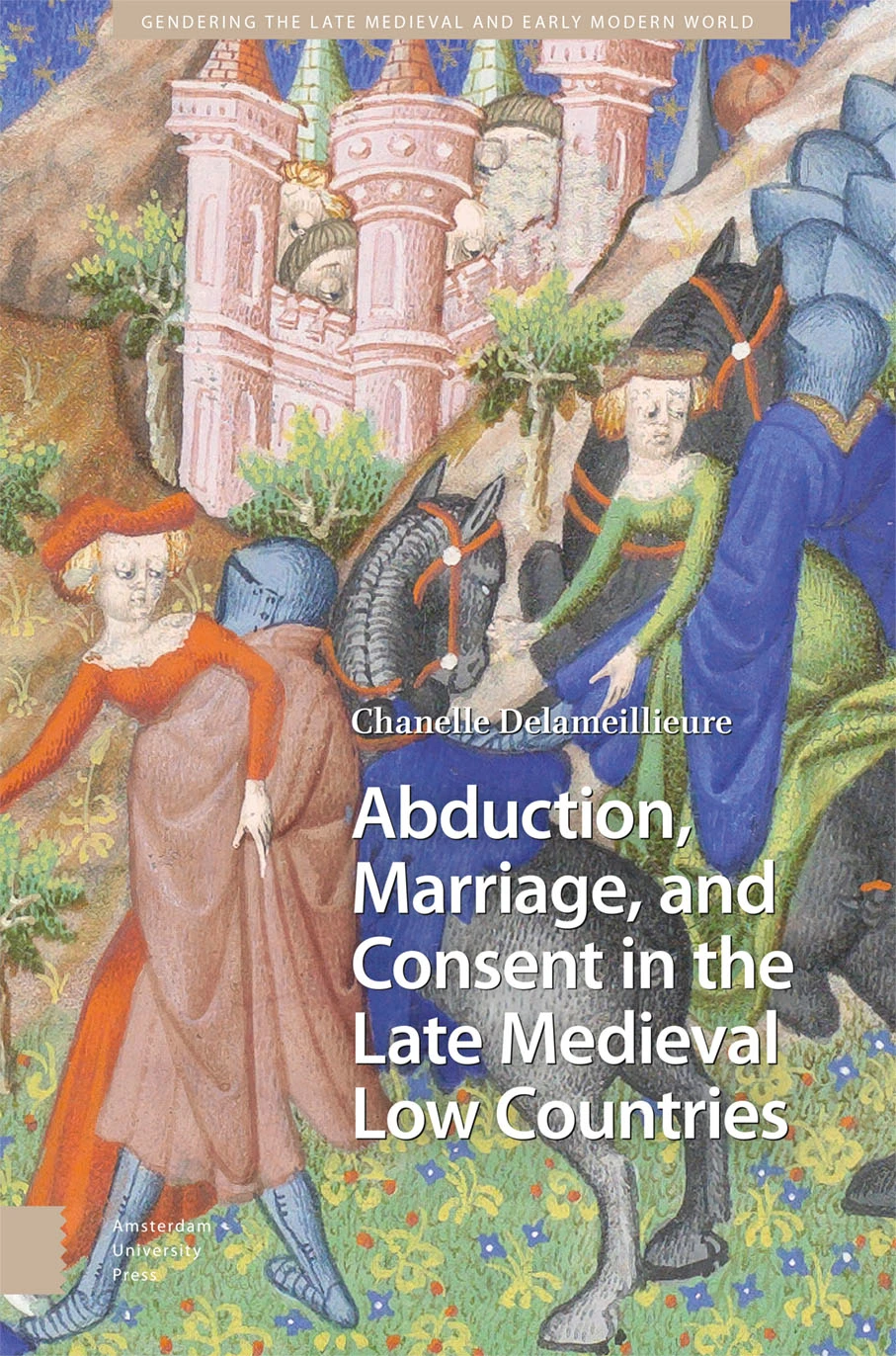
BOOK: Chanelle DELAMEILLIEURE, Abduction, Marriage, and Consent in the Late Medieval Low Countries (Amsterdam: Amsterdam University Press, 2024). ISBN: 9789463724074


ABOUT THE BOOK
The Middle Dutch term schaec referred to abduction with marital intent. This book explores this phenomenon to understand wider attitudes towards marriage-making in the fifteenth-century Low Countries. Whilst exchanging words of consent was all that was required legally, making marriage was a social process that evoked public concern and familial scrutiny. Abductions embodied contrasting evaluations of what mattered when selecting a spouse and resulted in polarized trials in which narratives on consent, coercion, and family strategy coincided and competed. Abduction, Marriage, and Consent draws from a wide range of legal records to assess how men, women, families, and authorities used, navigated, and dealt with abductions during this period. It contributes to debates on consent, family involvement, and women’s access to justice and demonstrates that abduction should be approached as a comprehensive social phenomenon, one that is crucial in the history of marriage and women’s social and legal status.

ABOUT THE AUTHOR
Chanelle Delameillieure researches late medieval gender and family history with a focus on marriage, sexuality and the social history of the law. She is a tenure track professor of medieval history at KU Leuven.

TABLE OF CONTENTS
Introduction
I. Perks and Perils of Being an Heiress
II. Abduction’s Who, How, and Why?
III. Consent in and out of the Courtroom
IV. What Authorities Did to Help
Conclusion

More information can be found here.

27 June 2024

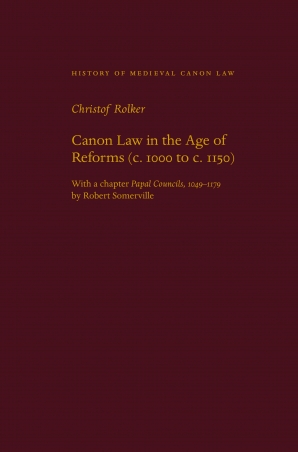
BOOK: Christof ROLKER, Canon Law in the Age of Reforms (c. 1000 to c. 1150), (Washington: The Catholic University of America, 2023). ISBN: 9780813237572


ABOUT THE BOOK

This monograph addresses the history of canon law in Western Europe between ca. 1000 and ca. 1150, specifically the collections compiled and the councils held in that time. The main part consists of an analysis of all major collections, taking into account their formal and material sources, the social and political context of their origin, the manuscript transmission, and their reception more generally. As most collections are not available in reliable editions, a considerable part of the discussion involves the analysis of medieval manuscripts. Specialized research is available for many but not all these works, but tends to be scattered across miscellaneous publications in English, German, French, Italian, and Spanish; one purpose of the book is thus to provide relatively uniform, up-to-date accounts of all major collections of the period. At the same time, the book argues that the collections are much more directly influenced by the social milieux from which they emerged, and that more groups were involved in the development of high medieval canon law than it has previously been thought. In particular, the book seeks to replace the still widely held belief that the development of canon law in the century before Gratian’s Decretum (ca. 1140) was largely driven by the Reform papacy. Instead, it is crucial to take into account the contribution of bishops, monks, and other groups with often conflicting interests. Put briefly, local needs and conflicts played a considerably more important role than central (papal) ‘reform’, on which older scholarship has largely focused.


ABOUT THE AUTHOR

Christof Rolker is a professor of medieval history at the University of Bamberg.


More information can be found here.

26 June 2024

EXHIBITION: Connaissez-vous Jean-Jacques-Régis de Cambacérès ? (Paris: place Vendôme, 3 JUN - 12 JUL 2024)


Du 3 juin au 12 juillet 2024, la place Vendôme, à Paris, accueille une exposition avec accès gratuit dédiée à Jean-Jacques-Régis de Cambacérès (1753-1824) à l’occasion du bicentenaire de sa mort. 

Proposée dans le cadre de la programmation culturelle du ministère de la Justice, cette exposition gratuite est une invitation à découvrir le parcours de ce personnage oublié qui a pourtant marqué l’histoire de la justice.

Les dix panneaux de l’exposition retracent la vie de Cambacérès, de ses origines montpellieraines à son ascension politique sous l’ère napoléonienne. Vous pourrez saisir combien son action et ses qualités de juriste ont contribué à l’affirmation de l’État de droit au sortir de la tourmente révolutionnaire. Avocat, puis conseiller de cour souveraine, député, ministre de la Justice, deuxième consul, archichancelier… Habile sur le plan politique, Cambacérès aura réussi à se maintenir sous tous les régimes de 1792 jusqu’en 1815, date de la chute de Napoléon. 


More information can be found here.

25 June 2024

ARTICLE: Jo GULDI, "The Revolution in Text Mining for Historical Analysis is Here" (The American Historical Review CXXIX (2024), No. 2 (June), 519-543


(image source: OUP)

Abstract:

We have known since Vico to think of written text and oral traditions as two systems of culture. Social historians have long treated the rise of literacy itself as an important index of modernity, although collectors of oral traditions have typically transcribed folk songs and oral stories into text. Modern historians track the appearance of different genres of writing, from parliamentary blue books to the newspaper to the novel to published transcripts of court cases, as an index of evolving institutions and markets. And knowledge of the way that these texts circulated—whether read aloud in the post office or debated on bulletin board systems on the early internet—is often a clue to important social structures. The knowledge accessible through text does not exhaust in any way the full repository of artifacts that historians use—which of course extends to the formats of texts; to visual and audio media, which may or may not combine graphics, video, or sound with text; to the record of the built and natural environment itself; and to demographic, price, and climate data sometimes measured in nontextual ways and stored in separate repositories. Despite innovation and a plurality of possible concerns, many of our points of entry into the past remain through text.

Read more here: DOI 10.1093/ahr/rhae163.


PROGRAM: PHEDRA’s Summer School (Palos de la Frontera: Universidad Internacional de Andalucía, 25-28 JUN 2024)


(Source: Phedra)

Summer school of the international research network PHEDRA: Pour une Histoire Européenne du DRoit des Affaires

25th June 2024

18.00-20.00 – Plenary session – AULA MAGNA

Lecture 1. Roman Law in the Sources of Commercial Law – Prof. Dario Mantovani and prof. Guido Rossi

§§§

26th June 2024

9.00-11.30 Parallel sessions

AULA 2 Antiquity – Discussants: prof. Luisa Brunori, prof. Olivier Descamps, prof. Carlos Petit                                      

Albert Gómez Jordán – Las cripto monedas como precio del contrato de compraventa/Los bienes con elemento digitales como objeto del contrato de compraventa/ La negotiorum gestio: casos dudosos.

Carlota Hernández García – El estudio de la multa en el derecho romano y el análisis del comercio marítimo en la Antigüedad.

Julio Romano Cabello – Reconstrucción del derecho privado constantiniano a partir de los rescriptos de la época.

Vid Žepič – Favor debitoris and Factors of Its Evolution in the Imperial Legislation between the 4th and 6th Centuries.

AULA 6 Early Modern Period – Discussants: prof. Giovanni Chiodi, prof. Florent Garnier

Femke Gordijn – Law and Trade in Late Medieval Bruges and Southhampton (c. 1400-1520).

Alexis Audemar – The legal treatment of labour by the early modern scolastics.

Paola Iezzone – The saffron trade in Rome during the Renaissance: archive sources and trade routes from Abruzzo.

AULA MAGNA Contemporary Period  – Discussants: prof. Albercht Cordes, prof. Dave De ruysscher

Damian Baçzkiewicz – A Tsunami or a Gentle Tide? The Influence of the French Commercial Code of 1807 on the Formation of Belgian Legal Discourse.

Aurelia Ghetivu – Le rôle de la coutume jurisprudentielle devant le Tribunal de commerce de la Seine sous la Second Empire (1852-1870).

Jérôme Hecker – L’importance du cadre juridique dans le développement économique au Grand-Duché de Luxembourg. Une perspective historique (1929-1990).

Break

12.00-13.30 – Plenary session – AULA MAGNA

Lecture 2. Long Distance Trade – Prof. Ron Harris

Lunch

15.30-18.00 – Parallel sessions

AULA 2 – Middle Ages – Discussants: prof. Luisa Brunori, prof. Olivier Descamps, Prof. Ana Belem Fernández Castro

David De Concilio – The Ecclesiastical Stance on Just Price in the Thirteenth Century

Niels Fieremans – Law, Leverage and Litigation. Legal strategies of foreign merchants in late medieval Bruges.

Daniele Tinterri – The Liber Gazarie

Ana Cláudia Silveira – Setúbal, a rising Portuguese sea port in the international trade of the Late Middle Ages.

AULA 6 – Early Modern – Discussants: prof. Giovanni Chiodi, prof. Albercht Cordes; Prof. Florent Garnier

Andriws González Barrera – Florence and Toulouse (1450-1550): Early Modern Examples of Economic Sovereignty and Legal Drafting in Commercial Policies.

Daniel Bökenkamp – A Tale of Two Cities: sovereignity, diplomacy and commerce in early modern Lübeck and Rouen.

Stefano Cattelan – In the Shadow of the Great Powers: Freedom of the Sea and Neutrality in the Long Eighteenth-Century.

Francesca Fusco Italian terms of commerce in German: the entries of the MICOLL glossary

AULA MAGNA – Contemporary Period Discussants: Prof. Anja Amend-Traut, Prof. Dave De ruysscher, prof. Carlos Petit

Greta Spineti – New Forms of Cultural Tourism in Adriatic: The Potential Role of Ancient Maritime Wine Routes.

Christian Magaling – Private Colonialism and Island Diplomacy: Germany’s Company Rule in Pacific Politics.

Hélène Hu – La concession française de Shanghai : aspects juridiques et juridictionnels.

Carolina Argiroffi – Commercial law goes to the countryside: Association and labour subordination in the 19th-20th century Italian legal discourse.

Break

18.30-20.00 – Plenary session – AULA MAGNA

Lecture 3. – Early-modern archival sources on foreign commercial nations’ judicial competences, and their relations to the local, regional and central jurisdictions (illustrated by Antwerp cases) – Prof. Georges Martyn

§§§

27th June 2024

9.00-10.30 – Plenary session – AULA MAGNA

Lecture 4. The Sources of Northern European Commercial Law – Prof. Heikki Pihlajamäki

Break

11.00-13.30 – Parallel sessions

AULA 2 – Early Modern Discussants: prof. Anja Amend-Traut, prof. Dave De ruysscher, prof. Olivier Descamps

Roberto Ganau – Sovranità e commercio nella Francia del XVI secolo. Verso una storia intellettuale della bancarotta

Gilles Hebben – The Levant Company (1592-1825).

Victor Le Breton-Blon – A transnational history of commercial paper in Europe (16th-18th century)

Laurine Manac’h – Incorporating business: merchants, law and the regulation of business organizations in the age of liberalism. Barcelona and Buenos Aires, 1778-1840.

AULA 6 – 18th-19th c. – Discussants: prof. Albrecht Cordes, prof. Florent Garnier, prof. Ana Belem Fernández Castro

Matthieu Mraizika – Modélisation mathématique et impôt dans la France du XVIIIe siècle.

Luca Jacopo Salvadori – Mutual Aid in Eighteenth Century.

Manon Séréni – Le crédit dans les répertoires de droit, d’une crise à l’autre (1715-1789).

Alexandre Valverde – L’idée de codification du droit privé à l’échelle européenne et internationale (fin XVIIIe s-début XXe).

AULA MAGNA – Contemporary Period – Discussants: prof. Luisa Brunori, Prof. Giovanni Chiodi, Prof. Carlos Petit

Andrea Raffaele Amato – Tra Progresso e Innovazione: Il lungo itinerario della scienza giuridica italiana verso la socializzazione dell’ordine familiare.

Marjorie Carvalho de Sousa – A General Law out of a Special Jurisdiction: Commercial Law of Labor in Nineteenth-Century Brazil.

Justine Chauvel – Le bail immobilier du local commercial-Histoire comparée des droits européens (XVIIIe-XXe siècle).

Rodrick Van Der Smissen – Roman law and the formative interpretation of history in nineteenth-century insolvency law (c. 1850-c. 1900)”. 

Lunch

15.30-17.30 – Plenary session – AULA MAGNA

Lecture 5. Reading the Sources of Commercial Law Doctrine – Prof. Annamaria Monti and prof. Xavier Prévost

Break

18.00-20.00 – Plenary session – AULA MAGNA  

Lecture 6. Lexicon and Translation of Commercial Law Sources – Prof. Jake Dyble and Prof. Stefania Gialdroni

§§§


Practical information

Universidad Internacional de Andalucía (UNIA)

Paraje de La Rábida s/n, 21819 Palos de la Frontera – Huelva – Spain

Phone +34 959350452

Breakfast 8.00h – 9.00h
Lunch 14h-15h
Dinner 20.30h-21.30h

Luisa Brunori +33 6 37 79 23 70 / +39 331 77 33 230
Ana Belem Fernández Castro +33 7 77 33 66 71
Carlos Petit +34 666 41 86 3

24 June 2024

CALL FOR PAPERS: 8th ESCLH BIENNIAL CONFERENCE (Szeged, 2-4 JUL 2025; DEADLINE 31 OCT 2024)


The Organising Committee and the Executive Council of the European Society for Comparative Legal History are pleased to call for papers for the upcoming Society’s 8th Biennial Conference to be held from 2 to 4 July 2025 at the University of Szeged, Hungary.

The conference series started in Valencia (2010), followed by Amsterdam (2012), Macerata (2014), Gdansk (2016), Paris (2018), and Lisbon (2022). In 2023, we had a successful conference in Augsburg.

The theme of the conference is to call attention to the development of legal institutions that are related to and serve as the foundation of modern/contemporary state and law. We mainly expect papers based on the examination of primary sources, since the main aim of the conference is to draw attention to the importance and analysis of primary sources (e.g. archival sources, judgements, parliamentary materials) in legal historical research, across legal systems.

The organizers wish to offer the opportunity to all participants who intend to present their legal historical and comparative research based mainly on primary sources, regardless of the historical era and geographical areas.

Back to the past and analysis of primary sources, new findings can be presented which can be used for the development of law in the contemporary period. Building the future can only be based on thorough historical and legal research, which can be achieved by connecting the past to the present. Through the complex and comparative assessment of the different branches of law, we can work towards a more general picture of legal development.

To offer a paper, please submit an abstract of up to 400 words, in English, by 31 October 2024. The abstract should include the title of your proposed paper and your personal data (full name, email address, work affiliation). Please also send a short CV (no more than 4 pages). Anyone at any stage in their research career can offer a paper. The submissions should be sent to vargan@juris.u-szeged.hu. Abstracts will be assessed against: (1) the aim to have a diverse conference; (2) the novelty of the work; (3) a professionally grounded presentation proposal including a description of the sources and methodology involved and a concise description of the research results. One author may only give one paper at the conference in order to allow as many people as possible to deliver papers.

It is also possible to submit a proposal for a complete panel. Panels normally consist of three papers. A panel proposal should – in addition to the abstracts and CVs of those who wish to present a paper in that panel – include an abstract for the entire panel, as well as a CV of the panel organizer. The list of accepted papers will be announced by December 2024.

A conference website will be launched with further details of the conference in December 2024.

The conference website will also contain information on the attendance fee for those not members of the ESCLH, transport to and from Szeged, and accommodation in Szeged. The conference website will allow registration for the conference, starting in February 2025. Finally, the conference will be preceded by an additional PhD-workshop on 2 July 2025. Further information about the workshop will also be published in December 2024.

Norbert Varga
organizer

University of Szeged

Faculty of Law and Political Sciences

Department of Hungarian Legal History