Search

Showing posts with label history of social law. Show all posts

17 July 2026

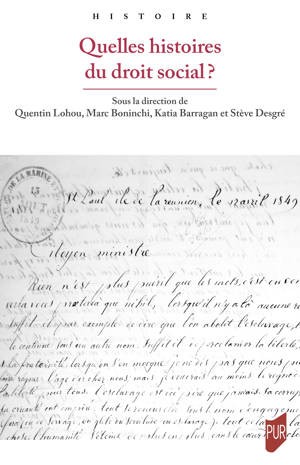
BOOK: Quentin LOHOU, Marc BONINCHI, Katia BARRAGAN & Stève DESGRÉ (dir.), Quelles histoires du droit social ? [Histoire, ed. Noëlline CASTAGNEZ, Frédéric CHAUVAUD, Philippe HAMON, Florian MAZEL & Francis PROST] (Rennes: Presses universitaires de Rennes, 2026), 324 p. ISBN 9791041304660, €25


Abstract:

La condition ouvrière, les formes de solidarités à travers le syndicalisme et le mutualisme, la période de l’entre deux-guerres et le régime de l’État français entre 1940 et 1944, les territoires anciennement colonisés par la France, tels sont les thèmes traités ici et constitutifs du droit social et de son histoire. La diversité des contributions témoigne des multiples façons dont le droit et ses acteurs peuvent être appréhendés, tout particulièrement en matière de relations du travail et de protection sociale. Avec des approches différentes, des formes et supports variés, juristes, historiens et sociologues explorent des thématiques qui ont constamment retenu l’attention de Jean-Pierre Le Crom, historien du droit, directeur de recherche émérite au Centre national de la recherche scientifique et membre du laboratoire Droit et changement social de Nantes Université (Unité mixte de recherche CNRS 6297). Publié avec le soutien de Nantes Université

Indicative table of contents:

L'Entre-deux-guerres et le régime de Vichy Le droit des colonies L'histoire du droit social La condition ouvrière Le syndicalisme et le mutualisme 

See publisher's website for Table of Contents and free excerpt.

08 July 2026

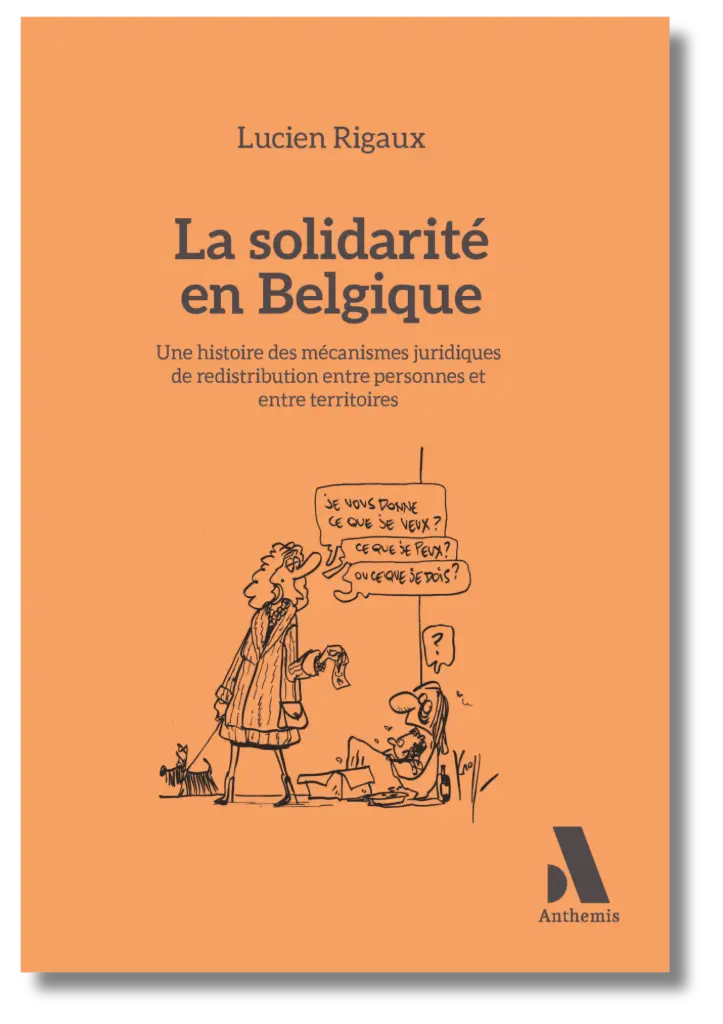
BOOK: Lucien RIGAUX, La solidarité en Belgique. Une histoire des mécanismes juridiques de redistribution entre personnes et territoires (Wavre: Anthémis, 2026), 660 p. ISBN 978-2-8072-1598-6, € 119

(image source: Anthémis)

On the author:
Pourquoi payons-nous des impôts ? Pourquoi la solidarité est-elle devenue un droit… et une obligation ? De la charité volontaire à l’État social, cet ouvrage retrace l’histoire fascinante de la solidarité en Belgique et interroge son avenir à l’heure des crises, du fédéralisme et de la mondialisation. Aux origines de nos impôts, de notre sécurité sociale et des transferts entre territoires : un principe essentiel, celui de la solidarité. Comment la Belgique est-elle passée d’un modèle de charité libre et volontaire à un régime de solidarité structuré, fondé sur des droits et des obligations ? Quels événements, quels choix politiques et économiques ont façonné notre système de redistribution entre personnes et entre territoires ? Issu d’une thèse de doctorat en droit saluée pour son originalité et la richesse de sa documentation historique, juridique et économique, cet ouvrage retrace les grandes transformations de la solidarité en Belgique, des origines aux défis contemporains. Lucien Rigaux explore les moments de ruptures – crises économiques, guerres, montée du libéralisme, revendications nationalistes – qui ont redéfini les contours de la redistribution, tout en mettant en lumière les dynamiques paradoxales qui traversent l’État belge : désintégration fédérale d’un côté, intégration européenne de l’autre. À travers une plongée passionnante dans les mécanismes fiscaux, les dispositifs de sécurité sociale et les transferts interterritoriaux, l’auteur interroge les rapports entre capacités contributives et besoins sociaux, tout en se livrant à l’exercice ambitieux de mettre en perspective la solidarité interpersonnelle et la solidarité interterritoriale. À travers l’étude des régimes de solidarité, il offre ainsi une lecture vivante et nuancée de l’histoire sociale, économique et institutionnelle de la Belgique, et surtout une réflexion plus large sur le rôle de la redistribution dans une économie de marché mondialisée où les interdépendances se renforcent, mais où persistent des défis majeurs : concurrence fiscale, soutenabilité des systèmes sociaux, replis identitaires et quête de justice sociale. Destiné aux juristes, économistes, chercheurs en sciences sociales ainsi qu’à tout lecteur curieux de comprendre les inégalités et les outils dont nos sociétés disposent pour y répondre, ce livre propose des clés précieuses pour appréhender les enjeux actuels de la solidarité et imaginer ses évolutions possibles. Au-delà des chiffres et des normes, il invite à réfléchir sur ce qui, collectivement, nous relie.

On the author:

Lucien Rigaux s'est vu décerner le Prix Joseph Hubert HELSEN en mai 2025. Plus qu'une analyse technique, son étude a été récompensée pour sa vision novatrice et son engagement en faveur du progrès humain, offrant des pistes de réforme audacieuses pour l'évolution de notre société.

Read more with the publisher.


11 November 2025

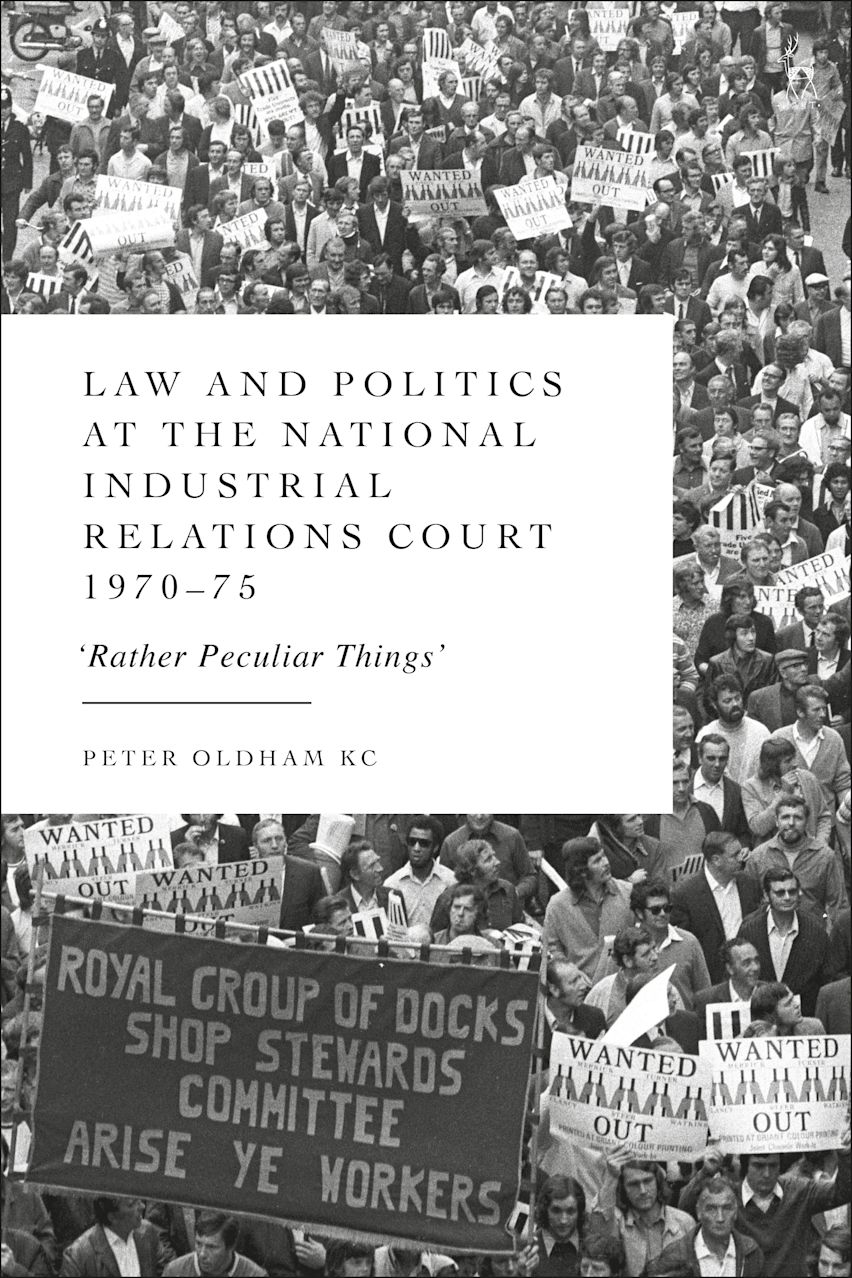
BOOK: Peter Oldham KC, Law and Politics at the National Industrial Relations Court 1970-75. 'Rather Peculiar Things' (London: Bloomsbury/Hart, 2025), 208 p. ISBN 9781509985418, 108 USD


(image source: Bloomsbury)

Abstract:

This book gives extraordinary new insights into the legal, political and industrial strife in the UK of the early 1970s, focusing on the National Industrial Relations Court and how its independence came to be injured at a time of national crisis. Constitutional and employment lawyers, and indeed anyone interested in the history of the times, will not want to be without this deeply researched yet entertaining work. When the Heath Government came to power in 1970, it set up the National Industrial Relations Court to referee highly contentious disputes between unions and employers. Regarded with hostility by the labour movement from the start, the Court and its President, Sir John Donaldson, faced mounting suspicion, and were regularly front-page news. When Donaldson jailed five dockers in 1972 – the Pentonville Five – for defying the Court's orders, strikes erupted and the docks closed. With the country's food supplies dwindling, a state of emergency loomed. How had it come to this? Could a way through be found? This is a revelatory account of the National Industrial Relations Court's defining crisis, set in the context of a wider, and frequently startling, exposition of how Donaldson went about his role as its President. Peter Oldham KC combines decades of experience as a barrister with archival research to shine a bright new light on how and why the Court found itself doing – in Donaldson's own words – 'rather peculiar things'.

Table of contents:

Foreword, Sir Patrick Elias
1 'Little Cause for Gratitude to our Profession': The Origins of the National Industrial Relations Court
2 'Doubt Upon my Parentage': Donaldson's Appointment
3 'It is a Court and Totally Independent of the Government': Communication between the Department of Employment and the NIRC
4 'Less than Orthodox': Donaldson's Expansive Presidency
5 'Angry after Lunch': Prosecuting Martyrs
6 'The Answer Which We Were All Seeking', or 'Seemed to be a Load of Rubbish to Me': Three Days in July 1972
7 'Judges are not Expendable. Lord Chancellors Are': Con-Mech

8 'Not a Happy Outcome for Anyone': The End of the NIRC, and What Donaldson did

On the author:

Peter Oldham is a barrister at 11 King’s Bench Walk, UK.

Read more here. 


23 October 2025

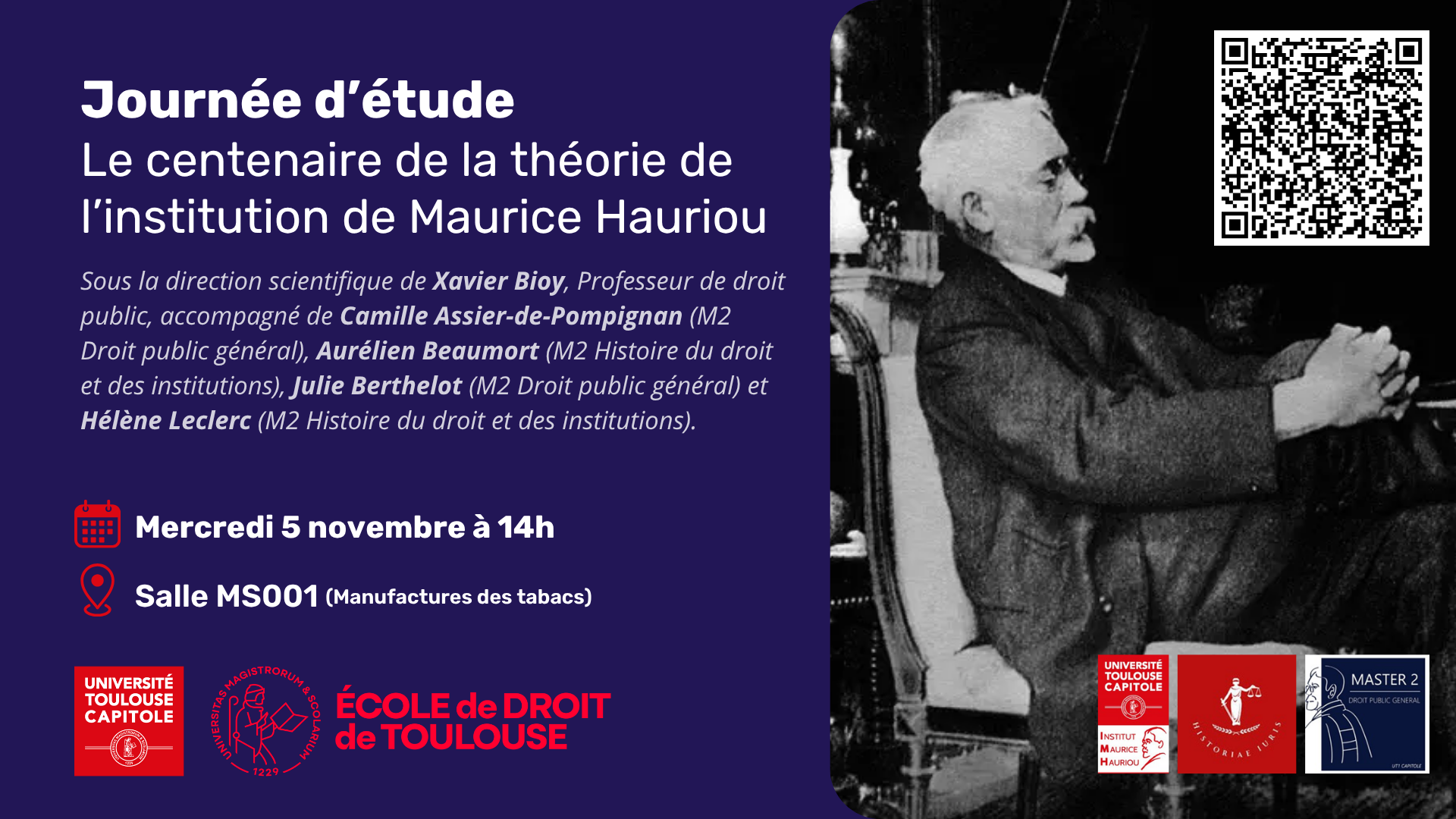
CONFERENCE: Le centenaire de la théorie de l'institution de Maurice Hauriou (Toulouse: Manufacture des Tabacs, 5 NOV 2025)


(image source: Université Toulouse Capitole)


Abstract:

Le Master Droit public Général et le master Histoire du droit et des institutions de l'École de Droit de Toulouse, organisent une journée d’étude consacrée au centenaire de la théorie de l'institution de Maurice Hauriou, sous la direction scientifique de Xavier Bioy, Professeur de droit public à l’Université Toulouse Capitole et membre de l’EDT-R (IMH), accompagné de Camille Assier-de-Pompignan (M2 Droit public général), Aurélien Beaumort (M2 Histoire du droit et des institutions), Julie Berthelot (M2 Droit public général) et Hélène Leclerc (M2 Histoire du droit et des institutions). Découvrez le programme !

Program:

13h30 : Accueil du public

14h00 : Ouverture de la Journée d’étude
Matthieu Poumarède, Doyen de l’École de Droit de Toulouse, Professeur de droit privé

14h20 : Propos introductifs
Hélène Leclerc, étudiante en M2 Histoire du droit et des institutions à l’UTC

14h30 : Théologie et évolutionnisme à l’origine de la théorie de l’institution
Tristan Pouthier, Professeur de droit public à l’Université Paris-Cergy

14h50 : Le rejet de la sociologie Durkheimienne au fondement de la théorie de l’institution
Léo Ravaux, qualifié maître de conférences en histoire du droit et en droit public à l’Università di Corsica Pasquale Paoli

15h10 : Débat

15h30 : Pause

15h50 : Filiations académiques de la théorie de l’institution : une école de Toulouse ?
Aurélien Beaumort, étudiant en M2 Histoire du droit et des institutions à l’UTC
Julie Berthelot, étudiante en M2 Droit public général à l’UTC

16h10 : L’influence du Doyen Hauriou dans le droit public italien, l’œuvre de Costantino Mortati
Cesare Pinelli, Professeur de droit public à l’Université Rome I - La Sapienza

16h30 : Hauriou et le droit privé : les fondements du régime d’état
Xavier Bioy, Professeur de droit public à l’UTC et vice- doyen
Julia Schmitz, Maitre de conférences de droit public à l’UTC

16h50 : Débat

17h10 : Conclusion

Camille Assier-de-Pompignan, étudiante en M2 Droit public général à l’UTC

 Read more here.

12 May 2025

CONFERENCE: Droit social et années 1930 (Bordeaux: Université de Bordeaux, 14-15 MAY 2025)


(image source: dtsocial2025)

Abstract:

La thèse d’un « retour des années 30 (ou aux années 30) » fait partie des idées qui sont aujourd’hui dans l’air du temps. Elle mérite cependant d’être interrogée depuis le point de vue du droit social. La décennie 1930 constitue en effet une période particulièrement riche pour le droit du travail et le droit de la protection sociale. Le colloque se propose d’étudier ces derniers dans leur contexte historique mais aussi dans leur rapport aux évolutions actuelles du droit.

Program: download here.

More information here.

22 August 2024

BOOK: Dario DI CECCA, Introduzione al socialismo giuridico francese [Collana di Studi di storia del diritto medievale e moderno - Monografie, 14; eds. Paolo ALVAZZI DEL FRATE, Giordano FERRI, Giovanni ROSSI, Elio TAVILLA] (Roma: Historia et Ius, 2024), 152 p. ISBN 979-12-81621-05-3 [OPEN ACCESS]


(image source: Historia et Ius)

Foreword:
Con la defi nizione di socialismo giuridico si intende inquadrare una dottrina giuridica dalla forte connotazione politica aff ermatasi, soprattutto in Italia e in Francia, tra gli anni Ottanta dell’Ottocento e i primi decenni del Novecento. Tale scuola nacque grazie all’ispirazione delle teorie di Anton Menger sulla possibilità di instaurare un sistema giuridico socialista in modo incruento e senza abbattere il regime preesistente. Questo sarebbe stato possibile grazie agli strumenti forniti dal diritto esistente: una graduale modifi ca della legislazione che tenesse conto delle istanze delle classi lavoratrici e meno abbienti e una giurisprudenza che, sulla scorta delle recenti teorie sul ruolo dell’interprete, applicasse il diritto adattandolo al nuovo contesto economico e sociale.

Read the full book here. 


06 December 2019

VACANCY: Two doctoral students (m/f/d) in the History of Social Law (Frankfurt am Main: MPIeR; DEADLINE 15 JAN 2020)

The Max Planck Institute for European Legal History in Frankfurt is a world leader in researching the history of law in Europe and beyond. Its two research departments with more than 60 scholars, the unrivalled collections of its specialized library and its numerous national and international co-operations make it the central research hub for a global scientific community investigating the past, present and future of legal regimes.


We are now looking to recruit

Two Doctoral Students (m/f/d)

from 1 April 2020 or as soon as possible thereafter
for the research programme ‘The History of European Union Employment Law’,
under the supervision of Professors Thorsten Keiser and Stefan Vogenauer,
dealing with the following topics:

(1) 
The History of EU Employment Law;

(2) 
The History of Antidiscrimination in Labour Relations:
France and Italy in Light of EU Law

Essential Duties & Responsibilities
You will develop, co-ordinate and pursue a doctoral project on one of the two research projects. Your doctoral thesis will turn on one of the two topics mentioned above. You will publish your findings and actively participate in the research activities of the Institute under the guidance of Professors Keiser and Vogenauer.
Your Profile
You hold a first class or high upper second class degree, preferably in law, alternatively in a different branch of the humanities or social sciences. You work independently, are fully proficient in the English or French language and willing to learn German if necessary.

Your CV should demonstrate your potential to pursue research at a very high international level. You are able to work independently and are committed to adopt interdisciplinary and comparative approaches.
Our Offer
We offer an attractive and international work environment with an unparalleled research infrastructure and a good working atmosphere. Payment and social benefits are based on the German Civil Service Collective Agreement (TVÖD). The annual salary before tax will amount to approx. EUR 32,700 (EG13 band 1, 65%). The job is a full time position (currently 39 hours per week), with presence in Frankfurt required. The position is a fixed-term appointment for three years, with the possibility of renewal for a further year in exceptional circumstances.

We are located on one of the most beautiful university campuses in Europe, right at the heart of the thriving and cosmopolitan city of Frankfurt, the centre of finance, banking and the legal professions of Europe’s biggest economy.

The research programme is conducted jointly with the Faculty of Law of Justus Liebig University Gießen, where work spaces will be made available, you will participate in a working group on the history of fair wages, and where you will also awarded the doctoral degree upon successful completion.

The Institute belongs to the Max Planck Society, Germany’s most successful research organization. Since its establishment in 1948, no fewer than 18 Nobel laureates have emerged from the ranks of its researchers, putting it on a par with the most prestigious research institutions worldwide. The mission of the Max Planck Society is to conduct fundamental (i.e., non-applied) research in the natural sciences, life sciences, social sciences and the humanities at the highest possible level. Its 84 Institutes are scattered across Germany and beyond, and they focus on research fields that are particularly innovative and require unusually extensive resources.

The Institute is part of Max Planck Law, the network of eleven Max Planck Institutes that engage in advanced legal research. The first of these was established in Berlin in 1924. Today, we cover a broad range of legal studies, from the anthropology of law to tax law, in nine different locations across Germany and Luxembourg.

The Max Planck society is committed to increasing the number of individuals with disabilities in its workforce and therefore encourages applications from such qualified individuals.

The Max Planck Society strives for gender and diversity equality. We welcome applications from all Backgrounds. Furthermore, the Max Planck Society seeks to increase the number of women in those areas where they are underrepresented and therefore explicitly encourages women to apply.

Application procedure

Your application should be written in either English or German and contain the following documents:

1. Personal Statement:
  • Cover letter with reference to your research proposal and an explanation as to how your profile matches the selection criteria
  • Names and addresses (postal and electronic) of two scholars who have agreed to provide a reference for you


2. CV:
  • Detailed CV
  • List of publications


3. Other Documents:
  • Research proposal (up to five pages)
  • Transcripts
  • A sample of writing of some 20 pages length (seminar paper, journal article, book chapter etc.)


Please provide your referees with all the documents that you submit for your application and ask them to send their references direct to jobs@rg.mpg.de by the closing date of 15 January 2020. References may only be submitted by email. They do not have to be signed as long as they are emailed from the official mail address of the referee. Strong applicants will be invited for an interview, probably on 5 February 2020.
Contact
Informal enquiries as to the substance of the research topics may be directed to Professors Thorsten Keiser (Thorsten.Keiser@recht.uni-giessen.de) or Stefan Vogenauer (vogenauer@rg.mpg.de).

Questions as to the terms and conditions of employment may be directed to Ms Anna Heym (jobs@rg.mpg.de).

Your application must be submitted online via the link on our homepage (http://www.rg.mpg.de/job_offers) by the closing date of 15 January 2020
(source: MPIeR)

19 December 2017

CALL FOR PAPERS: AGORA Proposal, ESIL Conference 2018 (Manchester). Deadline 17 JAN 2018


ESIL's Interest Group "History of International Law" invites submissions for an Agora Proposal to be submitted for consideration for the ESIL Conference 2018. For 2018, Manchester has been chosen as venue, around the theme 'International Law and Universality'

Please find our call below:


The Local in the Universal: Social, Women’s, Labour and Radical Histories of International Law

The Interest Group on the History of International Law seeks abstracts for an Agora Proposal to be submitted to the European Society of International Law for its 2018 Conference on ‘International Law and Universality’ to be held 13–15 September 2018 in Manchester.

Theme:
Universality’s flip side is the local and the particular. Locations are inescapable parts of any idea of universality. People are positioned in time, place, class, gender, race, ethnicity, indigeneity, and sexuality. These particulars formed familiar coordinates for locating different peoples within ideas of the universal; at the bottom of hierarchies — subsumed, excluded, ignored, erased. 

The beginning of international legal history’s recent renaissance lay in exploring one assertion of universality — the liberal-democratic progressive narrative — and Europe as its location, and white male jurists as its particular. Later advances began to unpack the imperial, racial and class aspects of international law’s pasts, to understand how that universal spread to many localities. Some of the most recent and exciting historical projects have begun to draw our attention to the everyday, to materiality, objects, and archives beyond the legal, to tell personal, hidden and revealing histories of international law. 

And yet, international legal history has so far been largely resistant to more radical forms of history that spurred so many of the main innovations in twentieth century historiography: social histories, women’s histories, labour histories, and histories of resistance and radicalism. Other themes at the 2018 ESIL Conference invite papers on universality and particularism’s histories at the juridical, conceptual and theoretical levels. This Agora seeks to expand that universe in the direction of something more local, personal and radical — to uncover histories that have been hidden within these longues durées and big trends.

Fitting with and interrogating the theme of universality, we seek papers that look for the local in the universal and the legal, from across the globe and from any period of historical inquiry. We are looking to share the hidden stories, archival gems, and accounts of everyday lives and movements that illuminate and contest the universal in new and powerful ways. It is particularly fitting that we do this in Manchester, a city that was one major birthplace of the industrial revolution, the labour movement, and the suffragette movement.

Issues arising within this theme might include, but are not limited to:

  • The role of women and women’s movements in constructing, challenging and critiquing the ideas of universality in international law.
  • Labour and international law: competing universals of solidarity and capitalism.
  • Race, ethnicity, indigeneity, intersectionality and the stories of challenging, rethinking and repurposing the universal.
  • Rebellions, radicalism and resistance: histories of popular debate, protests and discord over universality in law.
  • Shifting the ‘turn to biography’ in international legal histories: introducing the field to new lives and new, untold stories.
  • The significance of rural areas, cities, communities, migration and labour flows for rethinking law, the international, and the universal.

 Instructions
  • Submit an abstract of no more than 800 words, submitted by email to esilighil@gmail.com by 17 January 2018. No late submissions will be considered.
  • An interest group subcommittee will then blind review the abstracts and finalise the proposed format. The likely format will be a panel of 4 papers, but this may change depending on abstracts received.
  • Selected abstracts will be sent, with the Agora theme, to the ESIL 2018 Conference organisers for their consideration by 31 January 2018.
  • If the proposal is successful, full papers (minimum 3000 words) will need to be submitted by 15 July 2018 for circulation to other Agora participants.
  • We encourage proposals from scholars in any discipline — legal or not — and at any stage of career. Selection will be based on scholarly merit and with regard to producing an engaging workshop, without prejudice to gender, seniority, language or geographical location
  • Please circulate this call to anyone you think may be interested.
  • Please direct any questions to Martin Clark (m.clark1@lse.ac.uk) or Markus Beham (markus.beham@uni-passau.de).
(source: ESILHIL-blog)

25 November 2016

WORKSHOP: Labour Accidents, 19th-20th Century, France/Belgium (Lille, Lille II University/CNRS, 9 Dec 2016)


The Centre d'Histoire Judiciaire (Lille II/CNRS) organizes a workshop on labour accidents, with the support of the Belgian Scientific Policy IAP Justice & Populations.

All persons interested should register on nathalie.flament@univ-lille2.fr.

The full program can be consulted here.