Search

Showing posts with label encyclopedia. Show all posts

04 February 2026

ENCYCLOPEDIA: Sylvie CROGIEZ-PETREQUIN "Le Code Théodosien (438-439) : un jalon du droit romain" (EHNE) [OPEN ACCESS]


 (image source: EHNE)

Introduction:

Le Code Théodosien est un recueil de règlements et de décisions impériales des ive et ve siècles, écrit en latin, et compilé à partir de 429. Les textes rassemblés ne sont pas des lois au sens moderne du terme : il s’agit d’un ensemble de décisions à propos de questions qui intéressent directement l’État romain impérial, comme les impôts ou l’administration de l’Empire. S’il est impossible d’en résumer le contenu, tant celui-ci touche à des sujets divers, il permet néanmoins d’approcher la société romaine de son époque.

Read the full entry here. 

05 December 2025

BOOK REVIEW: William BARBEY on Elgar encyclopedia of comparative law edited by Jan M. Smits, Jaakko Husa, Catherine Valcke and Madalena Narciso (Comparative Legal History, XIII (2025), nr. 2)

(Image source: Taylor&Francis)

Reviewing a collective work, an encyclopaedia no less, is not an easy task. How do you start your reading? Is one supposed to read it from cover to cover, from the first to the last entry in the order of print? Or is one to focus on the most important entries (and in that case how does one select them)? Put in another way: how can a single reviewer do justice to the work of more than 200 eminent scholars?
I once read that in order to criticise a book, you do not have to read all of it: like the cooking of a steak, one bite is all it takes to tell if the chef was off his game. Nonetheless if the dish is properly made, and if you enjoy even your greens, you will probably be more than tempted to order a pudding.
Not entirely sure of the merit of such a method, I narrowed down a few entries (as if selecting from a menu) according to my own fields of interests (eg ‘comparative jurisprudence’, ‘legal families’, ‘legal history and comparative law’, ‘codification’, ‘estoppel’, ‘trust law’, ‘subjective right(s)’) and out of curiosity (eg ‘Islamic law’, ‘gift’, ‘Iceland’). And so, I dived right into it – just to see if it would satisfy my appetite.
After a while, the many cross-references guided me towards more and more new entries I had at first neglected. And being in the habit to look up words in a (printed) dictionary only to forget the one word I was looking for in the first place (having encountered numerous more interesting definitions in the meantime), I ended being quite astray from my original path, transported to other times and other places: ‘Constitutional Court (Germany)’, ‘lex mercatoria’, ‘Europe small jurisdictions (Andorra, Liechtenstein, Monaco)’, ‘supervening events and force majeure’.
For a scholar, to be lost in the material is not a curse but a gift. It is the very essence of comparative research: discovering and revealing connections between per se unrelated themes or jurisdictions. One has to be curious and willing to confront oneself to unknown territories (‘it is simply impossible to master all methods that are needed in order to explore all the law at all times and places’, writes Agustín Parise, vol 1, 359). Above all it demands to go beyond one’s comfort zone.

To read the full review, please click here. Online access is free for members of the European Society for Comparative Legal History.

DOI: 10.1080/2049677X.2025.2580119


26 November 2025

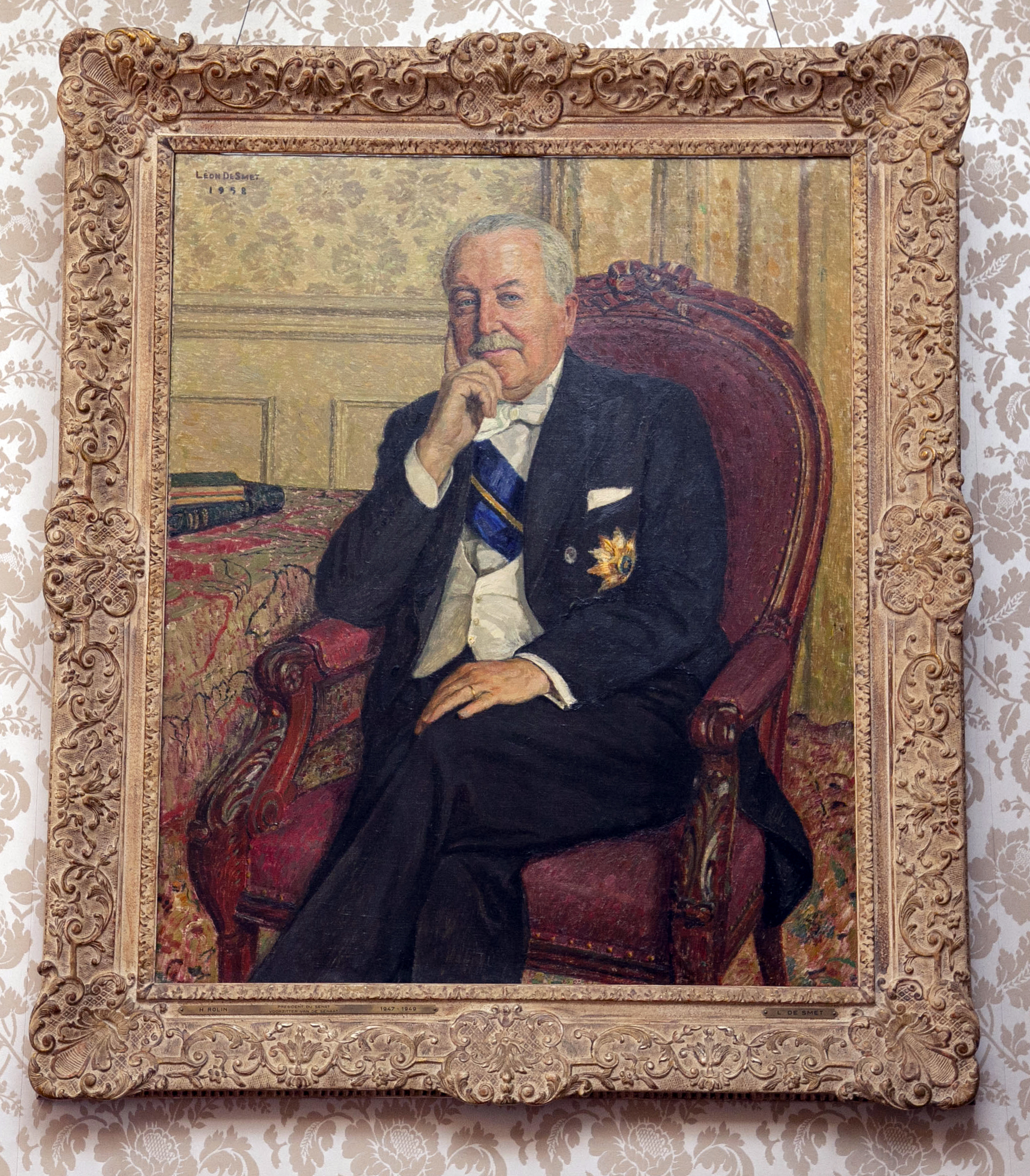
ENCYCLOPEDIA: Alain COLLIGNON & Dirk LUYTEN, "Henri Rolin" (BelgiumWII)


(image: Henri Rolin as President of the Belgian Senate; source: Belgian Senate)


Alain Collignon and Dirk Luyten (both Belgian State Archives/CegeSoma) published a new biographic lemma on Henri Rolin (1891-1973): lawyer, Professor, diplomat at the UN, judge at the European Court of Human Rights and prominent politician in Belgium (Senator, Minister of Justice).

Read the article here.

12 November 2025

ENCYCLOPEDIA: Marguerite RONIN, "Une histoire de l'eau dans le droit romain" (EHNE, Sorbonne-Université, NOV 2025)

(image source: EHNE)

First paragraph:

L’eau constitue à la fois une ressource naturelle indispensable à de nombreuses activités économiques et sociales, mais peut également engendrer des risques dommageables à ces activités. Dans le monde romain, cette dynamique des opportunités et des risques est bien reflétée par les règles juridiques. Leur étude montre que les juristes et les institutions envisageaient le contrôle de l’eau avant tout à travers la protection d’usages comme l’irrigation, le drainage, ou le transport fluvial, dans le respect des intérêts particuliers et de l’intérêt général. L’héritage du droit romain mérite cependant aujourd’hui d’être adapté, car il est peu approprié au nouvel enjeu que constitue la protection des ressources et des écosystèmes.

Read the contribution here. 

04 September 2019

ENCYCLOPEDIA: Max Planck Encyclopedia of International Procedural Law (Launch 5 SEP 2019)

(image source: Oxford UP)

Launching on 5 September 2019, this new module will sit alongside the existing Max Planck Encyclopedia of Public International Law (MPEPIL) as part of the relaunched Max Planck Encyclopedias of International Law (MPIL). The Max Planck Encyclopedia of International Procedural Law (MPEiPro) will map and analyze the systems and processes through which international law is made and adjudicated in practice. Each article is commissioned by General Editor Professor Hélène Ruiz Fabri and a team of experts at the Max Planck Institute Luxembourg for Procedural Law, providing cutting-edge and rigorously peer-reviewed research on areas of international law that are often under-explored. MPEiPro will take a broad view of international procedure, examining it from three different angles: technical points of procedure within specific institutions or across similar organizations; comparative accounts of families of institutions within specific subject areas or with similar functions; and theoretical, interdisciplinary entries. The scope of the Encyclopedia will mirror the broad understanding of procedure underlying it, encompassing decision-making by international organs in general, including political and administrative bodies. At launch, the Encyclopedia will cover dispute settlement and adjudication. Coverage of non-adjudicatory modes of dispute settlement such as negotiation, mediation, and conciliation, as well as international political and administrative procedures will be added over time. The Encyclopedia will eventually contain over 1000 entries.

Max Planck Encyclopedias of International Law (MPIL)
The Max Planck Encyclopedia of Public International Law (MPEPIL) and the Max Planck Encyclopedia of International Procedural Law (MPEiPro) are comprehensive analytical resources that feature peer-reviewed articles on every aspect of international law. These definitive reference works are the first port of call for anyone interested in international law. Contains the Max Planck Encyclopedia of Public International Law and the Max Planck Encyclopedia of International Procedural Law Search and browse a comprehensive collection of articles on every aspect of international law Read peer-reviewed articles written by an incomparable team of scholars and practitioners Updated throughout the year with new and revised articles.
On the editors:
General Editor (MPEiPro): Hélène Ruiz Fabri, Director of the Max Planck Institute Luxembourg for Procedural Law. General Editor (MPEPIL): Rüdiger Wolfrum, Managing Director, Max Planck Foundation of International Peace and Rule of Law; former Director at the Max Planck Institute for Comparative Public Law and International Law. 
(source: ESILHIL Blog)