Search

Showing posts with label decolonization. Show all posts

27 March 2026

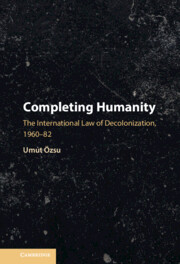
BOOK: Umut ÖZSU, Completing Humanity. The International Law of Decolonization, 1960-1982 (Cambridge: Cambridge University Press, 2024), ISBN 9781108566230, € 35


(image source: CUP)

Abstract:

After the Second World War, the dissolution of European empires and emergence of 'new states' in Asia, Africa, Oceania, and elsewhere necessitated large-scale structural changes in international legal order. In Completing Humanity, Umut Özsu recounts the history of the struggle to transform international law during the twentieth century's last major wave of decolonization. Commencing in 1960, with the General Assembly's landmark decolonization resolution, and concluding in 1982, with the close of the third UN Conference on the Law of the Sea and the onset of the Latin American debt crisis, the book examines the work of elite international lawyers from newly independent states alongside that of international law specialists from 'First World' and socialist states. A study in modifications to legal theory and doctrine over time, it documents and reassesses post-1945 decolonization from the standpoint of the 'Third World' and the jurists who elaborated and defended its interests.

On the author:

Umut Özsu, Carleton University, Ottawa 

Read more here: DOI 10.1017/9781108566230. 


25 February 2025

SEMINAR: 'Mayotte: Statut et régime d’un territoire français singulier' (Poitiers: Université de Poitiers, 12 MARCH 2025)

(Source: Univdroit)


Programme


18h00 : Mayotte dans l'empire français : de la colonie isolée à la colonie englobée
Eric Gojosso, Professeur d'Histoire du droit à l'Université de Poitiers

Le statut de Mayotte en droit international : un processus de décolonisation inachevé ?
Florian Aumond, MCF HDR en Droit public à l'Université de Poitiers

Mayotte, 'vrai' ou 'faux' département ?
Aurélie Virot-Landais, MCF en Droit public à l'Université de Poitiers

Les défis des libertés face aux singularités mahoraises
Aurélie Laurent, MCF en Droit public à l'Université du Mans

La tension migratoire comme moteur de la singularité juridique : le droit des étrangers à Mayotte
Ninon Cochonnet, Doctorante à l'Université de Poitiers

20h00 : Fin


Contact : droit@univ-poitiers.fr 
Entrée libre

Conférence organisée sous la direction scientifique de Florian Aumond, MCF HDR en Droit public à l'Université de Poitiers
Faculté de droit, Amphi Hardouin - 2 rue Jean Carbonnier, 86000 Poitiers

04 September 2023

BOOK: Kalyani RAMNATH, Boats in a Storm: Law, Migration, and Decolonization in South and Southeast Asia, 1942–1962 (Stanford, CA: Stanford University Press, 2023), 308 pp, ISBN 9781503632981, $90


(image courtesy: Stanford University Press) 

Book description: 
For more than century before World War II, traders, merchants, financiers, and laborers steadily moved between places on the Indian Ocean, trading goods, supplying credit, and seeking work. This all changed with the war and as India, Burma, Ceylon, and Malaya wrested independence from the British empire. Set against the tumult of the postwar period, Boats in a Storm centers on the legal struggles of migrants to retain their traditional rhythms and patterns of life, illustrating how they experienced citizenship and decolonization. Even as nascent citizenship regimes and divergent political trajectories of decolonization papered over migrations between South and Southeast Asia, migrants continued to recount cross-border histories in encounters with the law. These accounts, often obscured by national and international political developments, unsettle the notion that static national identities and loyalties had emerged, fully formed and unblemished by migrant pasts, in the aftermath of empires.
Drawing on archival materials from India, Sri Lanka, Myanmar, London, and Singapore, Kalyani Ramnath narrates how former migrants battled legal requirements to revive prewar circulations of credit, capital, and labor, in a postwar context of rising ethno-nationalisms that accused migrants of stealing jobs and hoarding land. Ultimately, Ramnath shows how decolonization was marked not only by shipwrecked empires and nation-states assembled and ordered from the debris of imperial collapse, but also by these forgotten stories of wartime displacements, their unintended consequences, and long afterlives.


Table of contents: 
Introduction: Boats in a Storm
1 1942
2 Banana Money
3 Partnership Deeds
4 Application Forms
5 Women Who Wait
6 Red Flags
7 1962
Conclusion: An Uneasy Calm

About the author: 
Kalyani Ramnath is Assistant Professor of History at University of Georgia.

More information can be found here. 

22 December 2021

WORKSHOP: Decolonization by Codification: The Making of the 1958 Penal Code in Late Colonial Nigeria, 4 January 2022

(Source: mpilhlt)

MPI-TAU Transnational Legal History Workshop

DATE: Jan 4, 2022 TIME: 19:00 - 20:30
SPEAKER: Rabiat Akande (Osgoode)
CONVENORS: Thomas Duve, David Schorr (TAU), Stefan Vogenauer
LOCATION: video conference
ROOM: For further information please contact mpitauwkshp@gmail.com


29 April 2021

CALL FOR PAPERS: Decolonial comparative legal history: indigenous and global South law prior to colonialism (Oxford, University of Oxford/MPIPRIV, 9-10 September 2022)


Paper submission deadline: 9 February 2022                                   Decisions: 9 May 2022          


THEME: The second Decolonial Comparative Law Workshop will focus on comparing indigenous law and pre-colonial law, both in settler-colonial regions of the global North and in the area now often referred to as the global South. Decoloniality, as we understand it, promotes a pluriversal understanding of “law,” which means that each society defines and practices law distinctly, such that no society’s law is either universal or inherently superior. In the modern era, the ideology of coloniality promoted narrow expressions of law, particularly (though not exclusively) as “positive law.” In addition, colonizers distinguished positive law from colonial notions of “religious law,” “customary law,” and “native law,” which had significant implications for legal understandings and practices in colonized areas—as well as for the self-understanding of the colonized. Reacting against colonialism, many colonized peoples looked to pre-colonial or indigenous law to counter the hegemony of colonial law. In contemporary courtrooms and political debates, lawyers, legal scholars, and activists dispute the nature and applicability of pre-colonial and indigenous laws. Yet, present concerns and ideas always shape historical inquiry and the pre-colonial or indigenous law that they “excavate” is often a contemporary construct—albeit one based on history, historiography, and memory. We seek to engage critically with indigenous and global South histories, avoiding both romanticized nostalgia and imposing colonial historiographic methods. Although law is pluriversal and historically contingent, colonial law remains hegemonic in historiography and in legal practice. Consequently, pre-colonial and indigenous legal traditions are translated habitually into the language of coloniality. The challenge for scholars of decoloniality is to decolonize the concept of law shared by both colonizers and the colonized. Accordingly, our workshop aims to interweave several objectives: delinking from colonial notions of law; exploring decolonial (legal) historiography; comparing indigenous law in settler-colonized regions and pre-colonial law in colonized regions; offering decolonial translations of pre-colonial law.


PAPER SUBMISSION: We invite papers that destabilize coloniality by engaging with how indigenous and global South societies defined or practiced law prior to colonialism. Papers should be based on original research, ideally relying on primary or indigenous sources from prior to the colonial era (broadly defined). Papers should identify “law” in a specific tradition or place, with particular attention to indigenous or pre-colonial epistemologies and practices. Since colonial legal notions continue to distort historiography, we welcome papers that decolonize (i.e., identify and replace) coloniality in the legal historiography of the precolonial global South and indigenous communities. (Authors may want to make use of the bibliographies of decolonial theory and decolonial legal studies provided on the DCL Project website.) Please send your paper to decolonial@mpipriv.de (i) as an attachment in the template provided on the Decolonial Comparative Law Project website (ii) in any language (iii) not exceeding 5000 words (iv) by 9 February 2022. The advisory committee will review all papers and decisions will be sent by 9 May 2022.


ACCEPTED PAPERS: Authors of accepted papers will have an opportunity to submit revised versions of their papers for the workshop, with a deadline of 9 June 2022. Submitted papers that are written in a language other than English will be professionally translated. Papers will be pre-circulated prior to the workshop. The workshop will bring together authors of legal historiography with discussants (primarily legal scholars specializing in indigenous, global South, or decolonial legal studies). Authors will not present their papers at the workshop. Final submission of papers will be 9 December 2022. After peer-review, the papers will be published in an edited volume or journal symposium issue.


ORGANIZATION: The British Academy Global Professorship and the Max Planck Institute for Comparative and Private International Law provide funding for the workshop. Organizers expect to offer two nights of accommodation and travel reimbursement for authors of accepted papers. Authors and discussants will have the option of participating remotely. The Decolonial Comparative Law Workshop is co-organized by Lena Salaymeh (University of Oxford) and Ralf Michaels (Max Planck Institute for Comparative and Private International Law). In addition to the organizers, the advisory committee includes Claire Charters (Auckland Law School), Farhat Hasan (University of Delhi), Kentaro Matsubara (University of Tokyo), Ethelia Ruiz Medrano (Instituto Nacional de Antropología e Historia), Blaise Alfred Ngando (Université de Yaoundé 2 – Soa), and Mark Walters (Queen’s University).


LOCATION: The Oxford School of Global and Area Studies will host the workshop, which will take place at the University of Oxford. Translation services can be provided at the workshop.


05 August 2020

CALL FOR PAPERS: Mapping South-South Connections: Networks, Alliances and New Actors on the International Scene during the Decolonization Process and Cold War in Latin America, Asia and Africa (1810-1990) (21-22 November 2020, Teheran) (DEADLINE: 10 September 2020)


We learned of a call for papers for an international conference in Teheran on connections between Latin America, Asia and Africa during the decolonization process and the Cold War from an interdisciplinary perspective. Here the call:

This conference aims to explore historical, political and cultural connections between Latin America, Asia and Africa during the decolonization process and the Cold War from an interdisciplinary perspective. Traditionally, the history of the ‘international’ has been presented from the perspective of major Western European and North American powers, based on their specific experience of the events and according to their imperial expansion, geostrategic and economic interests, the challenges they faced and the strategies they developed to counter them, and more generally the political and cultural or ideological climate and circumstances prevalent in the Europe and North America. Little attention has been paid to works developed taking into account or written from the perspective of the territories that were the object of the Western European and North American powers’ projection and interests. Networks, connections and alliances that were put into place by state and non-state actors coming from the so-called Global South that did not serve or follow those projections and interests were overlooked by historians. Although in the last two decades some works have appeared in the fields of Political Science and Economy, these are limited in number and moreover do not offer an adequate historical perspective. In addition, fields such as Diplomacy, Visual Studies or the Arts remain largely understudied if not unexplored. This is due to several reasons, among them the difficulty to access primary sources, instability or insecurity in different Global South countries, long distances among them and language diversity. The aim of the conference is to fill this gap by fostering the mapping of South-South connections between Latin America, Asia and Africa.

More info on the conference website.

27 July 2020

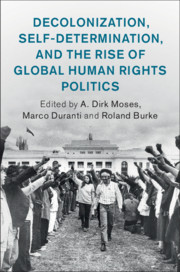
BOOK: A. Dirk MOSES, Marco DURANTI, and Roland BURKE, Decolonization, Self-Determination, and the Rise of Global Human Rights Politics (Cambridge: Cambridge University Press, 2020). ISBN 9781108479356, 90.00 GBP


(Source: CUP)

Cambridge University Press is publishing an edited collection on the global history of human rights politics in the age of decolonization.

ABOUT THE BOOK

This volume presents the first global history of human rights politics in the age of decolonization. The conflict between independence movements and colonial powers shaped the global human rights order that emerged after the Second World War. It was also critical to the genesis of contemporary human rights organizations and humanitarian movements. Anti-colonial forces mobilized human rights and other rights language in their campaigns for self-determination. In response, European empires harnessed the new international politics of human rights for their own ends, claiming that their rule, with its promise of 'development,' was the authentic vehicle for realizing them. Ranging from the postwar partitions and the wars of independence to Indigenous rights activism and post-colonial memory, this volume offers new insights into the history and legacies of human rights, self-determination, and empire to the present day.

ABOUT THE EDITORS

A. Dirk Moses, University of Sydney

A. Dirk Moses is Professor of Modern History at the University of Sydney. He is Senior Editor of the Journal of Genocide Research.

Marco Duranti, University of Sydney

Marco Duranti is Senior Lecturer in Modern European and International History at the University of Sydney. He is the author of The Conservative Human Rights Revolution (2017).

Roland Burke, La Trobe University, Victoria

Roland Burke is Senior Lecturer in World History at La Trobe University. He is the author of Decolonization and the Evolution of International Human Rights (2010).

TABLE OF CONTENTS
Introduction. Human rights, empire, and after Roland Burke, Marco Duranti and A. Dirk Moses
Part I. Anti-colonial struggles and the right to self-determination:
1. Seeking the political kingdom: universal human rights and the anti-colonial movement in Africa Bonny Ibhawoh
2. Decolonizing the United Nations: Anti-colonialism and human rights in the French Empire Marco Duranti
3. The French Red Cross, decolonization, and humanitarianism during the Algerian War Jennifer Johnson
4. Connecting indigenous rights to human rights in the Anglo settler states: Another 1970s story Miranda Johnson
5. Privileging the Cold War over decolonization: The US emphasis on political rights Mary Ann Heiss
Part II. Post-colonial statehood and global human rights norms:
6. Cutting out the ulcer and washing away the incubus of the past: genocide prevention through population transfer A. Dirk Moses
7. Codifying minority rights: postcolonial constitutionalism in Burma, Ceylon, and India Cindy Ewing
8. Between ambitions and caution: India, human rights, and self-determination at the United Nations Raphaëlle Khan
9. 'From this era of passionate self-discovery': Norman Manley, human rights, and the end of colonial rule in Jamaica Steven L. B. Jensen
10. Re-entering histories of past imperial violence: Kenya, Indonesia, and the reach of transitional justice Michael Humphrey
Part III. Colonial and neo-colonial responses
11. The inventors of human rights in Africa: Portugal, late colonialism, and the UN human rights regime Miguel Bandeira Jerónimo and José Pedro Monteiro
12. 'A world made safe for diversity': Apartheid and the language of human rights, progress, and pluralism Roland Burke
13. Between humanitarian rights and human rights: René Cassin, architect of universality, diplomat of French Empire Jay Winter
14. The end of the Vietnam War and the rise of human rights Barbara Keys
15. Decolonizing the Geneva Conventions: national liberation and the development of humanitarian law Eleanor Davey
16. Liberté sans frontières, French humanitarianism, and the neoliberal critique of Third Worldism Jessica Whyte.

More info here

16 June 2020

BOOK: Luigi NUZZO, Lawyers, Space and Subjects: Historical Perspectives Historical Perspectives on the Western Legal Tradition (Lecce: Pensa Multimedia, 2020). ISBN: 9788867607129, pp. 283, 28,00€

(Source: Pensa Multimedia)


ABOUT THE  BOOK

How it is possible to appropriate the European legal legacy for writing a decolonized history of international law? Is this task possible also for a European legal historian ? Or is he is stucked in his past with his ‘dead white heroes’? Assuming an historical perspective, the book intends to answer these questions and tells the history of the paradoxical beginnings of a Western law. It was a new law that was considered the measuring unit of the civilized world and the instrument to reassemble the distinctions between ‘Us and the Others’ that it did not cease to produce.

ABOUT THE AUTHOR

Luigi Nuzzo is full professor of Legal History and History of International Law at the Law Faculty of the University of Salento (Lecce). He has been research fellow at the Max-Planck-Institut für europäische Rechtsgeschichte (Frankfurt am Main) and at the Freie Universität Berlin; Senior Robbins Research Fellow at the University of California at Berkeley; Hauser Global Research Fellow at the New York University and Fernand Braudel Fellow at European University Institute. He published extensively in Italian, English, German and Spanish about the history of international law, the Spanish Indies and the German and Italian legal culture between the XIXth and XXth centuries.


More information with the publisher.

29 August 2019

NEWS: New entry “Decolonization in International Law” by Professor Mai Taha – Oxfordbibliographies


Oxfordbibliographies has just published a new bibliography on “decolonization in international law”.

“In Gillo Pontecorvo’s evocative film The Battle of Algiers (1966), viewers reach the conclusion that the fight against colonialism would not be fought at the UN General Assembly. Decolonization would take place through the organized resistance of colonized people. Still, the 1945 United Nations Charter and the 1948 Universal Declaration of Human Rights provided some legal basis, albeit tenuous, for self-determination. When Third World leaders assembled in the 1955 Bandung Conference, it became clear that the UN needed to shift gears on the question of decolonization. By 1960, and through a show of Asian and African votes at the General Assembly, the Declaration for the Granting of Independence to Colonial Countries and Peoples was adopted, effectively outlawing colonialism and affirming the right of all peoples to self-determination.” […]

The full bibliography can be found here

04 February 2015

ARTICLE: "The Evolution of Corporate Law in Post-Colonial India: From Transplant to Autochthony", by Umakanth Varottil

Umakanth Varottil (National University of Singapore (NUS) - Faculty of Law), The Evolution of Corporate Law in Post-Colonial India: From Transplant to Autochthony

LEGAL HISTORY eJOURNAL
Vol. 19, No. 13: Feb 3, 2015
abstract

The essential thesis of this paper is that while Indian corporate law began as a legal transplant from England, it has been progressively decoupled from its source with subsequent amendments and reforms being focused either on finding solutions to local problems or borrowing from other jurisdictions. To that extent, decolonization has had a significant effect of radically altering the course of Indian corporate law. Current Indian corporate law not only represents a significant departure from its colonial origins, but the divergence between Indian law and English law as they have developed since independence has been increasing. While the Indian lawmaking process indulged in close cross-referencing of English legal provisions during the colonial period and immediately thereafter, the more contemporary legislative reforms pay scant regard to corporate law in the origin country that initially shaped Indian corporate law.