Search

Showing posts with label call. Show all posts

26 March 2026

REMINDER: CALL FOR PAPERS: Dirigeants et dirigés [Journées de la Société d’histoire du droit et institutions des pays flamands, picards et wallons] (Versailles, 15-16 MAY 2026) [DEADLINE 15 APR 2026]


Les journées de la Société d’histoire du droit et des institutions des pays flamands, picards et wallons se tiendront cette année à Versailles les 15 et 16 mai 2026, à l’invitation de Madame Catherine Lecomte, professeur émérite à l’université de Versailles-Saint Quentin et présidente honoraire de la société, sur le thème « Dirigeants et dirigés ».

Si la notion de gouvernance a été, ces dernières années, souvent questionnée dans ses structures, ses moyens et ses fins, celle de gouvernant et plus largement de dirigeant mérite à nouveau une particulière attention. L’actualité contemporaine montre en effet qu’en matière de gouvernance publique, les structures institutionnelles ne suffisent pas à déterminer à elles seules les politiques qui demeurent influencées par la personnalité des dirigeants. Renouant avec une problématique classique de l’Histoire des idées politiques, un tel sujet propose une réflexion sur les gouvernements à travers la personne de ses dirigeants, ses qualités attendues, ses modes de désignation, ses réseaux, ses limites personnelles et les garde-fous institutionnels. 

Le thème des « Journées » de la Société n’est pas en outre limité à une réflexion sur les seuls dirigeants politiques mais s’étend à l’étude des dirigeants d’autres organisations juridiquement constituées et productrices elles-mêmes d’une réglementation, comme les dirigeants militaires, municipaux, provinciaux, mais aussi les dirigeants spirituels (la direction de l’Eglise) ou économiques (les directions de sociétés). Enfin, le thème de la rencontre comprend aussi l’étude des dirigés, de leur adhésion à leurs dirigeants ou à l’inverse la manière dont ils s’expriment et s’organisent pour limiter leurs dérives. S’il n’est pas fixé de limite temporelle au thème proposé, les communications se concentreront sur le plan géographique sur les régions linguistiques des Pays, flamands, picards et wallons.

Les propositions de communications sont à envoyer à Monsieur Tanguy Le Marc’hadour tanguylemar@yahoo.fr, président de la Société et à Madame Catherine Lecomte catherine.lecomte@uvsq.fr, présidente honoraire, avant le 15 avril 2026. Celles-ci seront accompagnées d’une brève présentation en français. 

Les communications pourront être présentées dans une des langues de la Société, le français, le néerlandais ou l’anglais, avec, compte tenu du lieu des « « Journées », une préférence pour le français.

 Pour le bureau,

Tanguy Le Marc’hadour, président de la Société.


05 January 2026

CALL FOR NOMINATIONS: 2025 ESIL IG History of International Law Article Prize (DEADLINE 6 FEB 2026)

(image source: ESILHIL)

The ESIL IG History of International Law invites its members to nominate an article that they believe has had or will have a major impact on the field of international legal history (sensu stricto).

Members may nominate any article on the history of international law published in any academic journal in 2023, 2024, or 2025 (the range is deliberately broad to avoid restricted access due to publisher embargoes). The prize winner will be invited to present the paper at an online ESIL event and participate in an interview with the IG Coordinating Committee, with the intention of publishing the interview in a peer-reviewed scientific venue. It is our intention to award this prize annually, with the following year’s award covering 2024, 2025, and 2026.

Nominations should adhere to the following rules (eligibility):

-          While the IG does not wish to define the history of international law, we prefer articles that, in substance, deal with history and international law, for example, by relying on archival materials. Articles whose primary focus is present-day international law (theory or practice), with an incidental historical excursion, will not be eligible for the award. Articles whose primary focus is history, with an incidental account of international law, will also not be eligible. In case of doubt, members are welcome to nominate the article. The evaluation committee will make the final decision based on the abovementioned criteria.

-          Self-nominations are not allowed.

-          The official year of publication of the article needs to be 2023, 2024, or 2025.

-          Only papers published in the Society’s official languages, English or French, are eligible.

-          Nominations should be sent to esil.ighilprize@gmail.com by the 6th of February 2026 with the subject line following the format: [FirstName_SURNAME_Paper title], with the paper attached in PDF. Nominations that do not adhere to this format will be excluded from evaluation.

Evaluation procedure:

-          Members of the IG Coordinating Committee and invited evaluators cannot express an opinion on or score papers submitted by colleagues currently or formerly affiliated with the same university to avoid a conflict of interest. The evaluators will assess any further conflicts of interest in accordance with the Canadian guidelines for federal research funding.

-          Threshold for consideration: The Coordinating Committee does not award this prize; the members of the IG do. To draw on the “wisdom of the crowd,” the Coordinating Committee will evaluate only the ten most nominated papers.

-          Each IG member can nominate only one paper. If a nominated paper does not receive the award, IG members can renominate it in a subsequent year, if they believe the impact of the paper has endured.

-          Nominations must be submitted through an institutional email address; IG members without an institutional email address can ask for a motivated exception.

-          In deciding the award, the Coordinating Committee will invite one or several highly-regarded, senior historians of international law to join the evaluation committee.

-          The Coordinating Committee calls upon its members to make an individual evaluation of a paper, in line with the four Mertonian norms underpinning the scientific ethos: communality, universalism, disinterestedness, and organized scepticism. Social media campaigns or other types of advertising, recruiting, or intimidation to increase a paper’s nominations are considered unethical.

The evaluation committee will assess papers based on the following criteria (1-5 scale):

-          The paper addresses longstanding and emergent questions regarding the history of international law from an innovative methodological and/or theoretical point of view.

-          The paper expands the history of international law by examining overlooked/understudied social contexts.

-          The paper bridges the history of international law with other disciplines in ways that result in new and original knowledge, advancing the state of the art of our field.

-          The paper soundly and rigorously explores the topic at hand, and offers significant or impactful insights, beyond increasing our knowledge of the field in question.

-          Clarity: The paper lays out the main argument unambiguously without unnecessarily reducing complexity or nuance.

Questions regarding the prize can be addressed to Dr. Florenz Volkaert (florenz.volkaert@uclouvain.be).


Appel à candidatures : Prix d’Article 2025 de groupe d’intérêt pour l’histoire du droit international de la SEDI

Le GI Histoire du droit international de la SEDI invite ses membres à proposer un article qui, selon eux, a eu ou aura un impact majeur sur le domaine de l’histoire du droit international (au sens strict).

Les membres peuvent proposer tout article portant sur l’histoire du droit international, publié dans n’importe quelle revue académique en 2023, 2024 ou 2025 (la plage d’années est délibérément large afin d’éviter les restrictions d’accès liées aux embargos des éditeurs). Nous avons l’intention de décerner ce prix chaque année, la remise de l’année suivante couvrant les années 2024, 2025 et 2026.

Les candidatures doivent respecter les règles suivantes (éligibilité) :

  • Bien que l’IG ne souhaite pas définir l’histoire du droit international, nous privilégions les articles qui traitent, en substance, d’histoire et de droit international, par exemple en s’appuyant sur des sources archivistiques. Sont exclus du prix les articles dont l’objet principal est le droit international actuel (théorie ou pratique), se contentant d’une incursion historique accessoire. De même, sont exclus les articles principalement historiques se limitant à un volet accessoire de droit international. En cas de doute, les membres peuvent proposer l’article. Le comité d’évaluation prendra la décision finale sur la base des critères susmentionnés.
  • Les auto-candidatures ne sont pas autorisées.
  • L’année officielle de publication de l’article doit être 2023, 2024 ou 2025.
  • Seuls les articles publiés dans l’une des langues officielles de la Société, l’anglais ou le français, sont éligibles.
  • Les candidatures doivent être envoyées à esil.ighilprize@gmail.com avant le 6 février 2026 avec, dans l’objet, le format suivant : [Prénom_NOM_Titre de l’article], et inclure l’article au format PDF. Les candidatures ne respectant pas ce format seront exclues de l’évaluation.

Procédure d’évaluation :

  • Les membres du comité de coordination de l’IG et les évaluateurs invités ne peuvent pas donner d’avis ni noter les articles soumis par des collègues actuellement ou anciennement affiliés à la même université, afin d’éviter tout conflit d’intérêts. Les évaluateurs examineront tout autre conflit d’intérêts conformément aux directives canadiennes relatives au financement fédéral de la recherche.
  • Seuil de considération : Le comité de coordination n’attribue pas ce prix ; ce sont les membres du GI qui en décident. Pour exploiter la « sagesse des foules », le comité de coordination n’évaluera que les dix articles ayant reçu le plus de propositions.
  • Chaque membre du GI ne peut proposer qu’un seul article. Si un article proposé n’est pas primé, les membres du GI peuvent le proposer de nouveau lors de l’année suivante, s’ils estiment que son impact perdure.
  • Les candidatures doivent être soumises depuis une adresse email institutionnelle ; les membres de l’IG sans adresse email institutionnelle peuvent demander une dérogation motivée.
  • Pour fixer le prix, le comité de coordination invitera un ou plusieurs historiens confirmés et renommés en droit international à rejoindre le comité d’évaluation.
  • Le comité de coordination invite ses membres à procéder à une évaluation individuelle d’un article, conformément aux quatre normes mertoniennes qui sous-tendent l’éthique scientifique : communauté, universalité, désintéressement et scepticisme organisé. Les campagnes sur les réseaux sociaux ou toute autre forme de publicité, de recrutement ou d’intimidation visant à augmenter le nombre de propositions pour un article sont considérées comme contraires à l’éthique.

Le comité d’évaluation évaluera les articles selon les critères suivants (échelle de 1 à 5) :

  • L’article aborde des questions anciennes ou émergentes relatives à l’histoire du droit international dans une perspective méthodologique et/ou théorique innovante.
  • L’article élargit l’histoire du droit international en examinant des contextes sociaux négligés ou peu étudiés.
  • L’article crée des liens entre l’histoire du droit international et d’autres disciplines, aboutissant à de nouvelles connaissances originales et faisant progresser l’état de l’art de notre domaine.
  • L’article explore solidement et rigoureusement le sujet traité, et apporte des perspectives significatives ou marquantes, allant au-delà de l’accroissement de nos connaissances dans le domaine concerné.
  • Clarté : L’article expose l’argument principal de manière non ambiguë, sans réduire inutilement la complexité ou les nuances.

Toute question concernant le prix peut être adressée au Dr Florenz Volkaert (florenz.volkaert@uclouvain.be).


15 May 2024

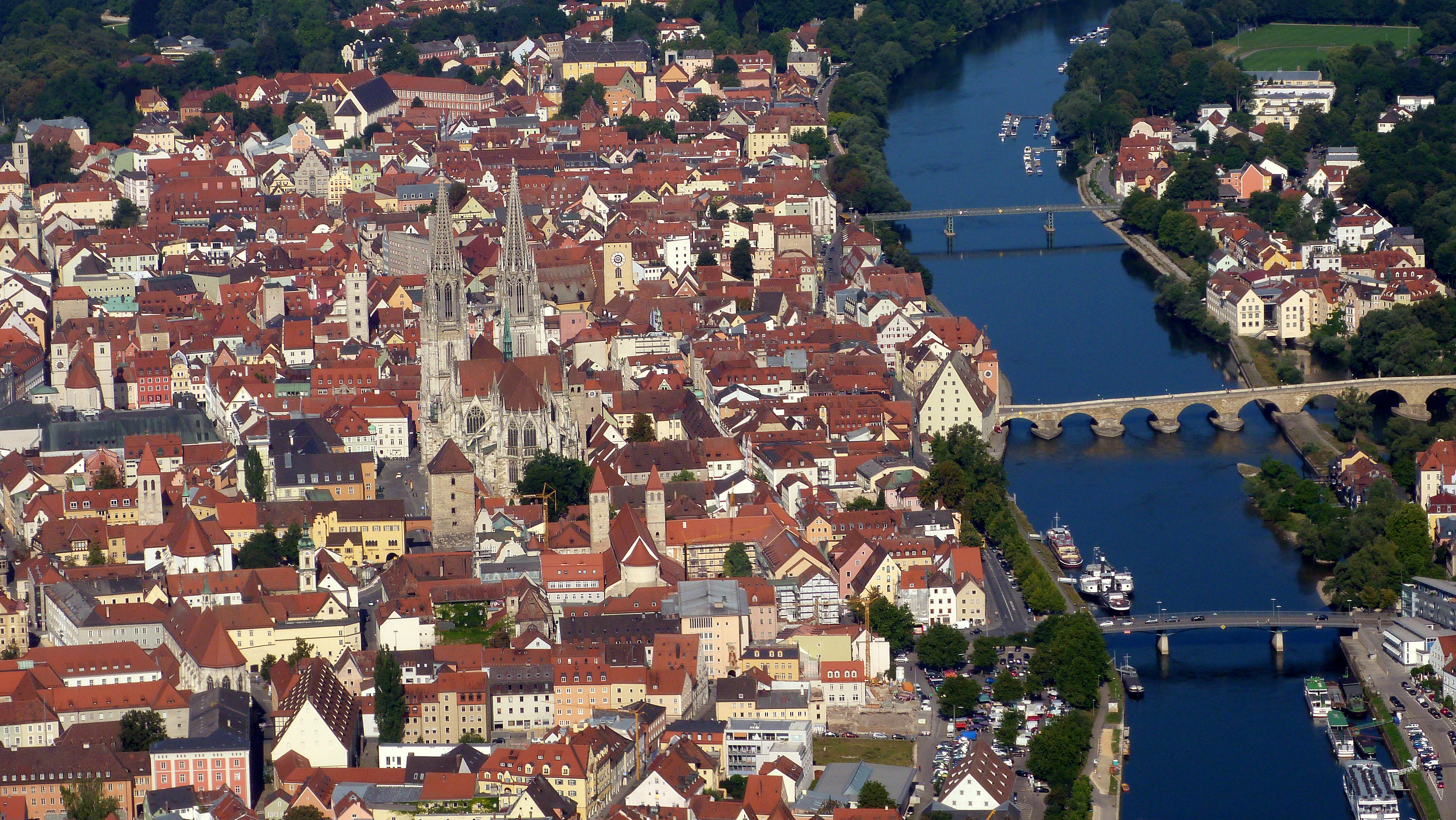
CALL FOR TOPICS: Conference about the Franco-Italian draft for a common Code of Obligations in Regensburg in summer 2025 (Regensburg: Universität Regensburg Deadline: 31 JUL 2024)

(image source: Wikimedia Commons)


Call:
Almost one hundred years ago, in 1927, the Franco-Italian draft for a common Code of Obligations was drawn up. As is well known, it did not become law in either Italy or France. Nevertheless, it is worth taking a closer look at this important draft, which eminent scholars from both countries have already undertaken. It seems important to me to now also look at the transnational impact history of the draft. In other words, not only the question of whether the new Italian Codice civile, which was created shortly afterwards, or the Code civil, which was reformed decades later, benefited - explicitly or implicitly - from the work of the Franco-Italian commission. In fact, the draft was to a certain extent a reference work for every legislator, which probably influenced the legislation on obligations in numerous states to a greater or lesser extent. Poland, Albania or Greece come to mind spontaneously, for example, but this list is by no means exhaustive. Moreover, the draft was very closely observed and received by German legal scholars - and certainly not only by them. I would therefore like to organise a conference in summer 2025 to examine the history of the draft's impact. Together, we could then publish a monograph with our findings in a reputable publishing house to mark the centenary of the draft. I would be delighted if this topic were to meet with your interest, and I would ask that you kindly acknowledge this call and forward it to other colleagues.

The small print: I request your suggestions for topics by 31 July 2024 (martin.loehnig@ur.de). I will compile the conference programme by 31 August 2024 and submit proposals for the exact date of the conference. The travel and hotel costs of all speakers will of course be reimbursed.

Kind regards

Martin Löhnig

05 November 2019

CALL FOR UP-TO-DATE INSTITUTIONAL LINKS


The European Society for Comparative Legal History displays a list of links to legal history-relevant research institutes, libraries and other institutions within and outside of Europe. We call upon our members or all persons interested to suggest up to date links, or new additions where this might seem relevant and/or necessary.

Suggestions can be mailed to esclhblog@gmail.com. The ESCLH Bloggers will proceed with updating this list before the end of 2019.

20 August 2018

CALL FOR Editors/Advisory Board Members (H-Law; from 1 OCT 2018 on)

Greetings 
Please read this message if you
* would like the H-Law network expanded to meet your needs
* look forward to more forum content, including reviews, blogs, essays, graphics, etc.
* would consider
  • participating in content creation
  • applying for the role of network editor
  • applying for the role of review editor
  • serving on the H-Law board of advisors 
I'm Charles Zelden, lead editor of H-Law.  H-Law was one of the first half-dozen H-Net lists and I've been involved with H-Law from the beginning.  At times, H-Law has been very stimulating, but of late it has been reduced to little more than a bulletin board.  I'd like to see that status change, and I expect many network members share that desire.
Many H-Net lists have fallen on hard times since the conversion from the list format to the forum format, and I'm convinced that one of the reasons for this problem is the failure to take advantage of the possibilities that a forum offers.  One example is content creation, including blogs, graphics, etc.  Each of us have various interests that we can share through content creation.  
H-Net’s change in format is indeed a key reason for the quiescence of H-Law, but the format itself is not the problem. Rather, our failure to take advantage of the possibilities that a forum has to offer is the reason why H-Law has become so disappointing. Change comes with new leadership (both a head editor and a new board of advisors), volunteers (network and review co-editors), and content creators, including log authors, map curators, or whatever else the creative membership of H-Law chooses to contribute.  
Now is the time to begin the restructuring that will bring H-Law back to the forefront of online resources of legal history.  We need faculty, librarians, graduate students, editors, instructional technologists, archivists, and academic professionals of all kinds to step forward with ideas, energy, and a willingness to help.
Most important, it is time for a change in leadership at the top.  I have been an editor of H-Law for 24 years.  I have served as its lead editor since 2011.  It is time for a new editorial team to take control of H-Law and update it for the new digital age.
H-Law therefore seeks a new list editor (or editors) to take control of H-Law.  H-Law is a collaborative and growing network focused on the scholarly pursuit of legal and constitutional history broadly conceived.  It has a thriving book review program and podcasts.  List editors moderate the discussions, assist subscribers, and help build content on the network, working in concert with each other and with the H-Law Advisory Board. Applicants can be of any rank, but should be ABD (all but dissertation) or above (Ph. D. or J.D.).  They must be approved by the H-Law Advisory Board, and then the H-Net Executive Council.  They will serve for a two year term (with potential for renewal). 
No previous experience is necessary--H-NET will train you. (Don’t let techno-phobia deter you.  H-NET training is fun and easy.)  Editing the list is a good way to keep on top of what is happening in our field, and it provides opportunities for national service to the profession for tenure and/or promotion.
Below please find role descriptions (click on each role to read full descriptions) and applications.
      *  Advisory board members - Advisory Board Member Application

If you have any questions, or any interest in joining the H-Law editorial team, please reach out to me at zelden@nova.edu.  I will walk candidates through the application process.  All application materials should be sent to me for forwarding to the editorial advisory board.
Review of applications will begin on October 1 and continue until the position(s) are filled.
Charles Zelden
Lead Editor, H-Law
Book Review Editor, H-Law


(see here)