Search

Showing posts with label Blog. Show all posts

13 February 2026

BLOG: Mario ASCHERI, "Pathways in History and Law" (MILHIS -Milan Legal History)

(click on image to enlarge)

We received the following announcement:

We are pleased to share that **MILHIS**, the new website of the Legal Historians at the University of Milan, has published its first contribution in the section *Pathways in History and Law,* entrusted to professor Mario Ascheri: Categories amidst Law and History

 Read the contribution here.

15 December 2025

BLOG SYMPOSIUM: Imperialism, Sovereignty and the Making of International Law at 20 (National University of Singapore)


(image source: NUS)

The Centre for International Law Dialogues of the National University of Singapore hosts a blog series on Anthony Anghie's seminal monograph Imperialism, Sovereignty and the Making of International Law (CUP, series Cambridge Studies in International and Comaprative Law, eds. James Crawford and John Bell).

Read more here.

18 July 2025

SUMMER BREAK (18 JUL-18 AUG)


(Lesende und singende Gesellschaft bei Kerzenlicht by Peter Vischer d. J. (Zugeschrieben an) - Albertina, Austria - Public Domain; source: Europeana).

The ESCLH blog will take a Summer break until 18 August (we will be back with more news on that day). We wish our readers a pleasant Summer.

12 May 2025

BLOG: Thomas ANDREU, "La théorie du "lit de justice" est-elle désuète ?" (Jus Politicum Blog, 8 MAY 2025)


(image source: JP Blog)

Abstract:

Doyen Vedel succeeded in striking the right balance to ease the tension between constitutional justice and democracy through the theory of the ‘ »lit de justice ». However, it has recently been pointed out that this solution « no longer seems sufficient » for some constitutionalists, who are campaigning for other, more radical methods that would ensure that the people or their representatives have the « dernier mot ». Yet it seems that such proposals are primarily the result of the fact that the theory of the « lit de justice » now seems obsolete.

On the author:

Par Thomas Andreu, Doctorant contractuel en droit public, Chaire internationale sur l’Europe Souveraine (CILES), Centre de Documentation et de Recherches Européennes (CDRE), Université de Pau et des Pays de l’Adour / Université de Luxembourg 

Read the full blog contribution here. 

20 December 2024

BLOGGING BREAK: 20 DEC 2024-5 JAN 2025


(image: Sankt Florian Abbey Library)

The ESCLH blog will pause for the holidays. New posts will resume from 5 January 2025 onwards. We wish you a peaceful and enjoyable end of the year with your friends and family. 

Our blog was viewed 597 000 times in the past twelve months, with a global readership (United States, France, Germany, Belgium, Israel, UK, China, Russia, Brazil, Italy, Canada, India, the Netherlands, Poland, Ukraine, Austria, South Korea...).

15 May 2023

BLOG BY MAIL: How to configure follow.it?

Pursuant to the announcement that a follow.it-button has been created on the blog, it might be useful to clarify how this simple system works:

(1) Follow-it imports the list of posts from this blog's RSS-feed
(2) By entering your email, you do not create an "account" or leave data with the ESCLH, but with follow.it (= the ESCLH is not collecting your data, we don't know who is reading the updates by mail)
(3) Logging in to your follow.it-account, using the username and password received by mail upon confirmation of your registration, allows you to tweak your subscription as you prefer

(screenshot Folllow.it-settings)


=> it is, for instance, possible to select headlines only (if you prefer clicking and opening the blog in your browser) or the entire story (if you prefer to read everything in Outlook, e.g. below)


=> it is equally possible to modify the hour of delivery or your time zone (e.g. those who prefer to read the blog at breakfast, or after lunch break, at five PM, at the end of a hard day of scientific labour around 11:30 PM... can make sure information arrives at the right time in their daily schedule)



07 September 2021

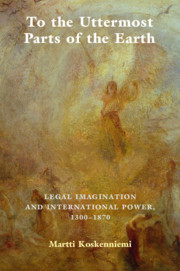
BOOK SYMPOSIA: Rechtsgeschichte and Völkerrechtsblog on Martti KOSKENNIEMI, To The Uttermost Parts of the Earth. Legal Imagination and International Power 1300-1870


(image source: CUP)

Both the open access-journal Rechtsgeschichte (MPILHLT) and the Völkerrechtsblog devote attention to Martti Koskenniemi's most recent work To the Uttermost Parts of the Earth. Legal Imagination and International Power, 1300-1870.

We refer our readers to:

  • Rechtsgeschichte: Thomas Duve's analysis (pre-publication on "Insights from Legal History")
  • Völkerrechtsblog: symposium organised by Christian Pogies and Hendrik Simon (including a response by the author)

03 September 2021

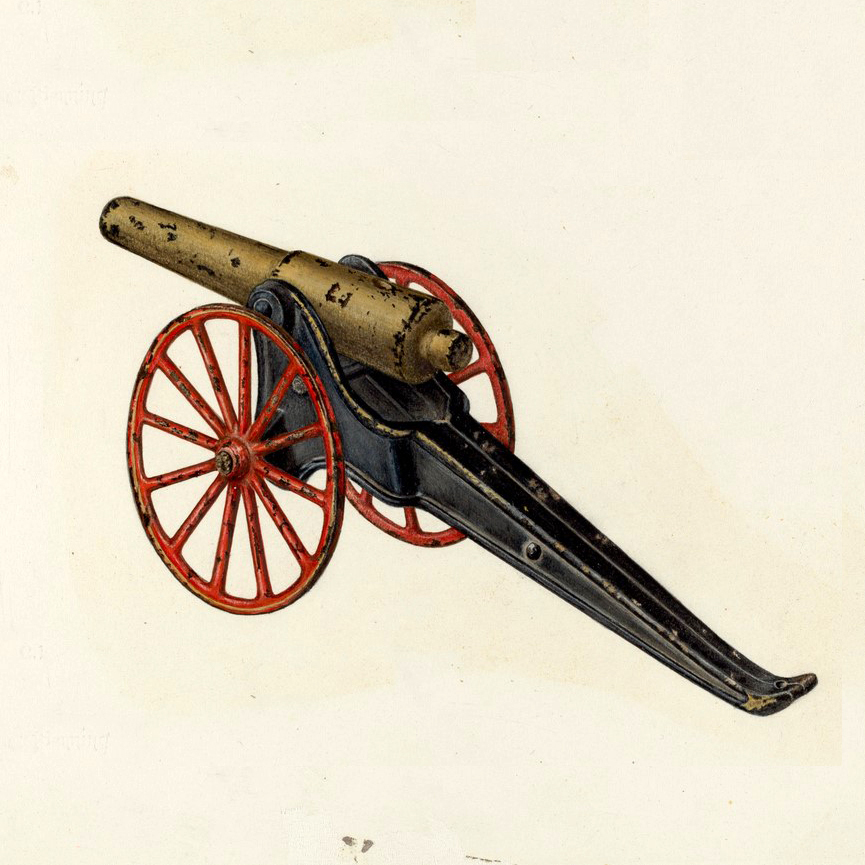
BLOG: Christian POGIES, The Cannon. A Tool for Delimiting Maritime Space (Legal History Insights, MPILHLT)


(image source: MPILHLT)

 First paragraph:

This is the story of the cannon as a tool to delimit maritime space in the history of the law of the sea. It is a story that spans from the 17th to the 20th century – it is a story about a state practice that became legal theory, technological progress and Western dominance in international law.

Read more here.

(source: ESILHIL Blog)

02 September 2021

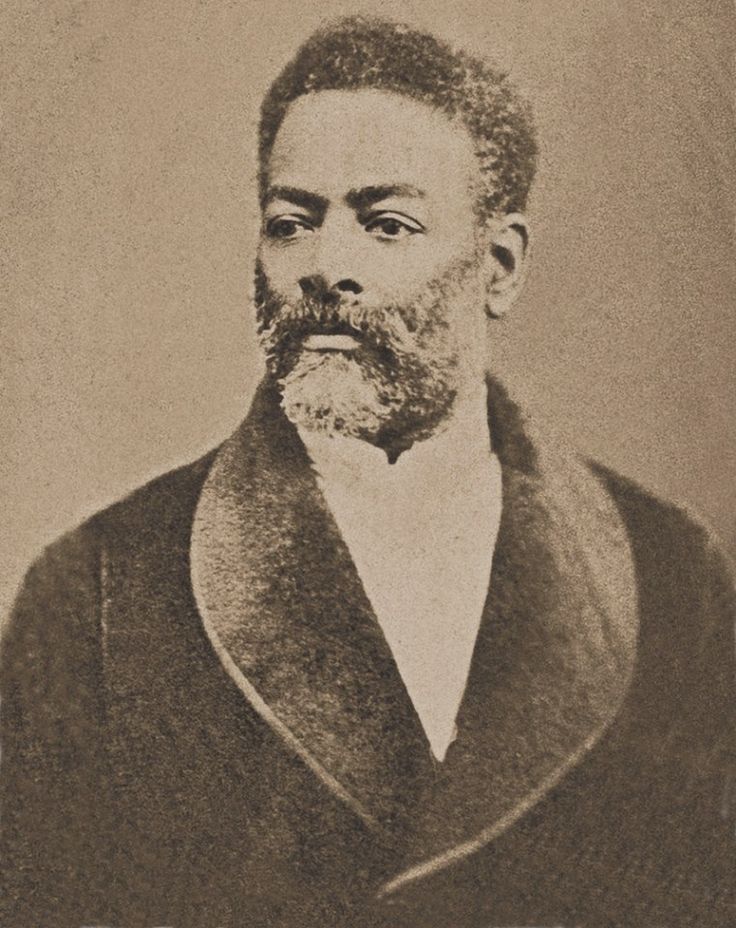
BLOG: Bruno LIMA, “Hidden thunder”: Who Was Luiz Gama? (Legal History Insights Blog, MPILHLT)


(image source: Legal History Insights)

First paragraph:

In 1847, fourteen years after escaping slavery in Kentucky (USA), William Wells Brown published an autobiography that soon became a best-seller and a landmark in the abolitionist propaganda. The epigraph of Brown’s famous Narrative brought about an existential question. Or, rather, a plea, that reflected the author’s state of mind:

Read more here.

(source: ESILHIL Blog)

11 June 2021

BLOG: Pierre-Anne FORCADET, Histoire de la justice. Saint Louis fonde la justice moderne (Hérodote)


(image: Saint-Louis interpreted by El Greco; source: Wikimedia Commons)

First paragraph:

« Selon que vous serez puissant ou misérable – Les jugements de cour vous rendront blanc ou noir ». Jean de La Fontaine n’a pas été le premier, ni le dernier, à critiquer la justice. Si la justice comme sentiment moral est sans doute innée chez l’humain, la Justice comme institution, avec ses textes et ses procédures complexes, remonte elle-même à l’Antiquité.

Mais c’est seulement au Moyen Âge, en particulier à l’époque de Saint Louis, qu’elle a pris la forme que nous lui connaissons, avec ses défauts mais aussi et surtout ses qualités, n’en déplaise à La Fontaine.

Read further on herodote. 

09 April 2021

CALL FOR BLOGGERS (DEADLINE 30 APR 2021)

The ESCLH seeks to recruit new bloggers to strengthen its current team as volunteers. The ESCLH Blog is a reference for information on  publications, calls and vacancies in the field of comparative legal history. The blog aggregates relevant scientific information from legal history and various related fields in the humanities and social sciences, and has so far had a (non-exclusive) focus on Europe. The blog equally serves to disseminate information regarding the activities of the European Society for Comparative Legal History (biannual conferences, postgraduate conferences, zoom seminars) and its journal Comparative Legal History (Routledge). With just under 20,000 pageviews a month, announcements are eagerly received and shared by members of the virtual academic communities built around our blog and twitter account (@esclh). 

We are welcoming applications: please send your CV and a brief covering letter or email to esclhblog@gmail.com by 30 april 2021.  Participation in the Blog Team can consist of adding posts, answering messages on the blog’s email address (esclhblog@gmail.com) or developing a new Facebook page for the society and its blog. Inquiries for further information can be directed to this address as well. The ESCLH welcomes applications from everyone, including those from diverse personal and professional backgrounds.


02 June 2020

BLOGPOST: Legal History blogposts – History: The Official Journal of the Historical Association


(Source: History journal)

History, the official journal of the historical association, has published several posts on topics of interest to legal historians over the past month.

Mark Vincent - Redefining the ‘born’ murderer: Lombrosian legacies in early Soviet criminological discourse. Link here

Siobhan Hearne - Prosecuting procurement in the Russian empire. Link here

C. Annemieke Romein – How to run a country: Early Modern style. Link here

05 November 2019

CALL FOR UP-TO-DATE INSTITUTIONAL LINKS


The European Society for Comparative Legal History displays a list of links to legal history-relevant research institutes, libraries and other institutions within and outside of Europe. We call upon our members or all persons interested to suggest up to date links, or new additions where this might seem relevant and/or necessary.

Suggestions can be mailed to esclhblog@gmail.com. The ESCLH Bloggers will proceed with updating this list before the end of 2019.

07 October 2019

BLOGPOST: Stephen MAYEAUX and Dante FIGUEROA on Spanish Legal Documents (15th-19th Centuries) – Library of Congress


The Law Library Blog of the Library of Congress has a new post on Spanish legal briefs (15th-19th century).

“During this celebration of Hispanic Heritage Month, we bring you the latest—and by far the largest—update from our Spanish Legal Documents series. For more information about the history of this collection, as well as our ongoing efforts to present the full collection online, see our previous posts describing the Canon Law and Opinions & Judgments subsections.

If you have read our previous posts, you may recall that we divided the collection into six categories:
·        Briefs
·        Canon Law
·        Notarial Instruments
·        Opinions & Judgments
·        Laws & Statutes
·        Miscellaneous
[…]”

The full blogpost can be found at the Library of Congress Blog

09 August 2019

LIGHT BLOGGING: 9-16 AUG

(image source: biblioweb.hypotheses)

L.S

This blog will stop adding new posts for the summer, from 9 to 16 August.

Enjoy the holidays !

The ESCLH Blog Team.

21 February 2019

BLOG SERIES: Women scholars in legal history in the spotlight (Legal History Blog): Prof. Mia Korpiola

(image source: Legal History Blog)

The Legal History Blog is currently running a series on female scholars in legal history, featuring inter alias our own Society's Vice-President, Prof. Mia Korpiola (Turku).

First paragraph:
Describe your career path. What led you to where you are today? Finnish academic life has undergone profound changes during the last two decades. After I started my postgraduate studies, post grads and post docs have become increasingly dependent on external funding. Consequently, my so-called career resembles more a patchwork of funding and research projects than a path. Between 1997 and 2014, I had 12 different contracts, including post doc funding from the Academy of Finland, the Helsinki Collegium for Advanced Studies and the Turku Institute for Advanced Studies. Practically all were acquired through competition. Young researchers have to “sell” their research ideas and themselves as realizing these to funding institutions. Only a small percentage is successful. I have been lucky not to have other career breaks than maternity/parental leaves and even more fortunate to be hired in 2014. This was my first permanent job. I am currently one of the three professors of legal history of Finland. To my knowledge, I am also the first female full professor of legal history in the Nordic Countries. As for personal qualities, I am really passionate about research. When my scientific curiosity is awakened, I will dig until I get answers. Legal history research allows me to combine many interests: history, law, languages, people, art and so on. Writing is also fun and I have no difficulties in producing text.
Read further here.

03 January 2019

BLOG: Klaus RÖHL (Bochum) on interdisciplinary research in law (Rsozblog.de)

(image source: rsozblog)

First paragraph:
»Alle reden von Interdisziplinarität aber keiner tut es« (Veronika Fuest). Aber jedenfalls passen sich alle an, denn sie stehen unter dem Diktat der für die Wissenschaftsorganisation und Finanzierung zuständigen Instanzen, die bei praktisch allen Mittelanträgen, Akkreditierungen oder Evaluationen im Wissenschaftssystem Interdisziplinarität als Kriterium verwenden, vermutlich auch, weil dieses Kriterium einfacher zu handhaben ist als Qualität in der Sache.
(source: Rsozblog)

21 December 2018

BLOGGING BREAK: Holidays (Until 2 Jan 2019)

(image source: secretldn)

The ESCLH Blog Team thanks all its visitors for their uninterrupted stream of visits. We will though take a break from posting until 2 January 2019.

Enjoy the holidays and visit us again for updates in the New Year !

BLOG SYMPOSIUM: South and East Asian Perspectives on International Law (Völkerrechtsblog)

(image source: Voelkerrechtsblog)

The Völkerrechtsblog launched a symposium on South and East Asian Perspectives on International Law.

Contributions so far:
- "The Ecological Atlas of International Law. A Chinese Reading of Three Celebrated Works in the Comparative International Law Discourse" (Yuwen Fan)
- The ‘Standard of Civilization’ in international law. Intellectual perspectives fom pre-war Japan (Mohammad Shahabuddin)
- "Are We Living in the “Eastphalian” Moment? South and East Asian Perspectives on International Law" (Raffaele Kunz & Sebastian Spitra)

More information here.

INTERVIEW: Dimitri VAN DEN MEERSSCHE & Pascal MESSER interview Martti KOSKENNIEMI on "International Law and the Far Right" (Opinio Iuris, 10 DEC 2018)

(image source: OpinioJuris)

Opinio Iuris has an extended interview with Martti Koskenniemi, following his lecture on 29 November 2018 in The Hague on "International Law and the Far Right."

First paragraph:

Last week in the Peace Palace, Prof. Martti Koskenniemi spoke about international law and the rise of the far right for the Hague-based T.M.C. Asser Instituut. “Economic reforms are of no concern to these protesters. And the more you try to reform, the more you will appear like a hopeless idiot.” An interview with Prof. Martti Koskenniemi on the backlash against globalism, fake expertise and the smoking gun in his historical work by Dimitri van den Meerssche & Pascal Messer. At the Fourth Asser Annual Lecture you spoke about the current ‘backlash’ against international law and its institutions and the rise of the extreme right. You seem to have your own analysis on the nature of this backlash and where it stems from. Yes. I am critical of this liberal understanding which tries to establish a sympathetic relationship with people who are assumed to have been, as the cliché goes, ‘left behind’, those lost somewhere in an ‘unavoidable process of globalisation’. This sociological and economic account looks at the way in which the economic benefits from globalisation have not reached a group of people. These people would be reacting to their relative deprivation, by being critical of elites and of life in the city. And by Brexit and by voting for Trump, and by kicking in the ass those people who they think are responsible for their deprivation and marginalisation.
Prof.  Koskenniemi's lecture was announced earlier on this blog.
(source: ESILHIL Blog)