Search

Showing posts with label Native American Legal History. Show all posts

14 February 2023

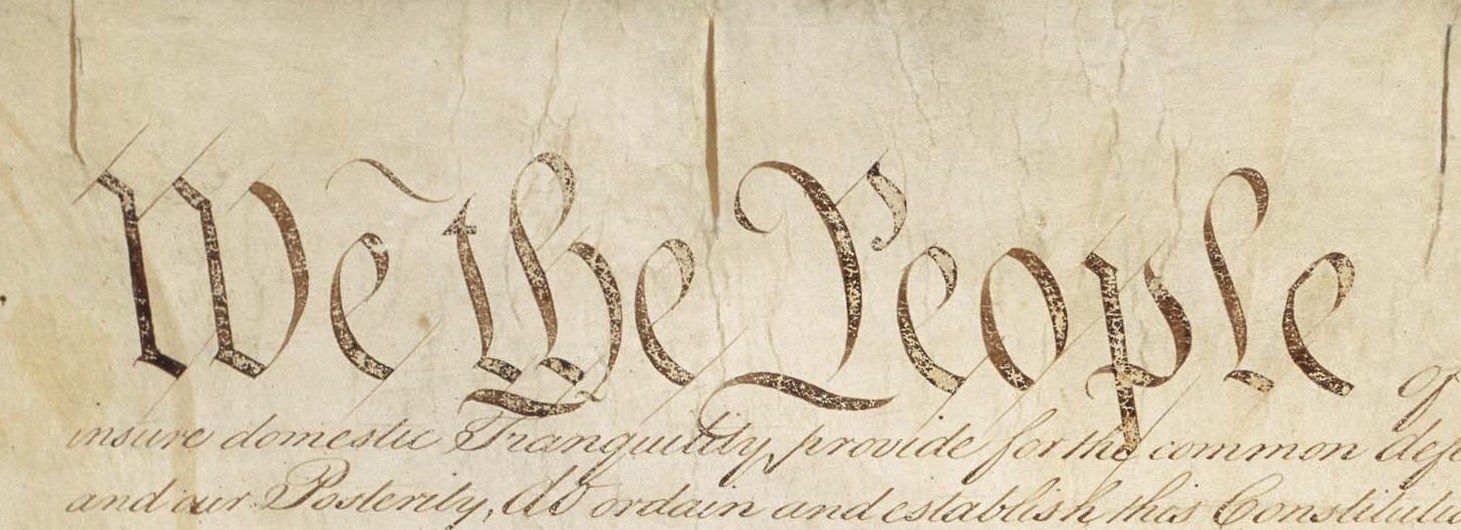
SSRN PAPER: Gregory ABLAVSKY & W. Tanner ALLREAD, "We the (Native) People?: How Indigenous Peoples Debated the U.S. Constitution" (Columbia Law Review (forthcoming))


(image source: Wikimedia Commons)

Abstract:

The Constitution was written in the name of the “People of the United States.” And yet, many of the nation’s actual people were excluded from the document’s drafting and ratification based on race, gender, and class. But these groups were far from silent. A more inclusive constitutional history might capture marginalized communities’ roles as actors, not just subjects, in constitutional debates. This Article uses the tools of legal and Native history to examine how one such group, Indigenous peoples, argued about and with the U.S. Constitution. It analogizes Native engagement to some of the foundational frames of the “Founding” to underscore its significance for current constitutional discourse. Like their Anglo-American neighbors, Native peoples, too, had a prerevolutionary constitutional order—what we here dub the “diplomatic constitution”—that experienced a crisis during and after the Revolution. After the Constitution’s drafting, Native peoples engaged in their own version of the ratification debates. And then, in the early republic, Native peoples both invoked and critiqued the document as they faced Removal. This Article’s most important contribution is proof of concept, illustrating what a more inclusive constitutional history might look like. Still, some of the payoffs are doctrinal: broadening the “public” in original public meaning, for instance. But the more significant stakes are theoretical. As this Article contends, by recognizing Indigenous law and constitutional interpretations as part of “our law”—in other words, the pre- and post-constitutional legal heritage of the United States—Native peoples can claim their role as co-creators of constitutional law.

Read the paper on SSRN. 

27 July 2021

RESEARCH PROJECT: NYU-Yale American Indian Sovereignty Project


(image: Prof. Maggie Blackhawk; source: NYU)

Description: 

On July 2, NYU Law announced the establishment of the NYU-Yale American Indian Sovereignty Project, whose goals include supporting the sovereignty of Native nations and addressing the impact of American colonialism on Native peoples. Professor of Law Maggie Blackhawk (Fond du Lac Band of Lake Superior Ojibwe) and Ned Blackhawk (Te-Moak Tribe of Western Shoshone Indians of Nevada), professor of history and American Studies at Yale University, will jointly run the multi-year project.

Read more here. 

(source: ESILHIL Blog)

08 December 2020

BOOK: Heidi BOHAKER, Doodem and Council Fire: Anishinaabe Governance through Alliance (Toronto: University of Toronto Press, 2020). ISBN 9781442647312, USD 48.75


The University of Toronto Press is publishing a book on the Anishinaabe and clan identification markings on treaties and legal documents during the 17th-19th centuries.

ABOUT THE BOOK

Combining socio-legal and ethnohistorical studies, this book presents the history of doodem, or clan identification markings, left by Anishinaabe on treaties and other legal documents from the seventeenth through the nineteenth centuries. These doodems reflected fundamental principles behind Anishinaabe governance that were often ignored by Europeans, who referred to Indigenous polities in terms of tribe, nation, band, or village – classifications that failed to fully encompass longstanding cultural traditions of political authority within Anishinaabe society.


Making creative use of natural history, treaty pictographs, and the Ojibwe language as an analytical tool, Doodem and Council Fire delivers groundbreaking insights into Anishinaabe law. The author asks not only what these doodem markings indicate, but what they may also reveal through their exclusions. The book also ooutlines the continuities, changes, and innovations in Anishinaabe governance through the concept of council fires and the alliances between them. Original and path-breaking, Doodem and Council Fire offers a fresh approach to Indigenous history, presenting a new interpretation grounded in a deep understanding of the nuances and distinctiveness of Anishinaabe culture and Indigenous traditions.


ABOUT THE AUTHOR

Heidi Bohaker is an associate professor in the Department of History at the University of Toronto.

TABLE OF CONTENTS

Preface

Introduction

1. The Doodem Tradition

2. Family in All Four Directions

3. Anishinaabe Constitutionalism

4. Governance in Action

5. Doodem in the Era of Settler Colonialism

Conclusion

Bibliography


More info here

25 November 2019

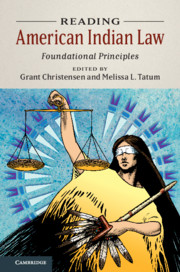
BOOK: Grant CHRISTENSEN and Melissa L. TATUM, eds., Reading American Indian Law Foundational Principles (Cambridge: Cambridge University Press, 2019). ISBN 9781108726481, £ 27.99


Cambridge University Press has published a new book containing seminal articles on American Indian law.

ABOUT THE BOOK

The study of American Indian law and policy usually focuses on federal statutes and court decisions, with these sources forming the basis for most textbooks. Virtually ignored is the robust and growing body of scholarly literature analyzing and contextualizing these primary sources. Reading American Indian Law is designed to fill that void. Organized into four parts, this book presents 16 of the most impactful law review articles written during the last three decades. Collectively, these articles explore the core concepts underlying the field: the range of voices including those of tribal governments and tribal courts, the role property has played in federal Indian law, and the misunderstandings between both people and sovereigns that have shaped changes in the law. Structured with flexibility in mind, this book may be used in a wide variety of classroom settings including law schools, tribal colleges, and both graduate and undergraduate programs.

ABOUT THE EDITORS

Grant Christensen, University of North Dakota

Grant Christensen is an Associate Professor of Law at the University of North Dakota, an Affiliated Professor of American Indian Studies, and an Associate Justice on the Supreme Court of the Standing Rock Sioux Tribe. He is the author of American Indians: Historical and Contemporary Perspectives (2017).
Melissa L. Tatum, University of Arizona

Melissa L. Tatum is Research Professor of Law at the University of Arizona. She has served on the Southwest Intertribal Court of Appeals and has edited multiple volumes of tribal court opinions including for the Navajo Nation and the Muscogee (Creek) Nation. She is the author of Indigenous Justice: New Tools, Approaches, and Spaces (2018), Law, Culture & Environment (2014), and Structuring Sovereignty: Constitutions and Native Nations (2014).

TABLE OF CONTENTS

Editor and contributor biographies
Preface
Acknowledgements
Introduction
Part I. Core Concepts:
1. Marshalling past and present: colonization, constitutionalism, and interpretation in federal Indian law, 107 Harvard Law Review 381 (1993) Philip P. Frickey
2. The algebra of federal Indian law: the hard trail of decolonizing and Americanizing the white man's jurisprudence, 1986 Wisconsin Law Review 219 (1986) Robert A. Williams, Jr
3. Red: racism and the American Indian, 56 UCLA Law Review 591 (2009) Bethany R. Berger
4. (Tribal) sovereignty and illiberalism, 95 California Law Review 799 (2007) Angela R. Riley
Part II. Voices:
5. 'Life comes from it': Navajo justice concepts, 24 New Mexico Law Review 175 (1994) Robert Yazzie
6. Tribal court praxis: one year in the life of twenty Indian tribal courts, 22 American Indian Law Review 285 (1998) Nell Jessup Newton
7. Beyond Indian law: the Rehnquist Court's pursuit of states' rights, color-blind justice and mainstream values, 86 Minnesota Law Review 267 (2001) David H. Getches
8. A narrative of sovereignty: illuminating the paradox of the domestic dependent nation, 83 Oregon Law Review 1109 (2005) Sarah Krakoff
Part III. Property:
9. Sovereignty and property, 86 Northwestern University Law Review 1 (1991) Joseph William Singer
10. The legacy of allotment, 27 Arizona State Law Journal 1 (1995) Judith V. Royster
11. A common law for our age of colonialism: the judicial divestiture of Indian tribal authority over nonmembers, 109 Yale Law Journal 1 (1999) Philip P. Frickey
12. In defense of property, 118 Yale Law Journal 1022 (2009) Kristen A. Carpenter, Sonia K. Katyal and Angela R. Riley
Part IV. (Mis)Understandings:
13. Dependent sovereigns: Indian tribes, states, and the federal courts, 56 University of Chicago Law Review 671 (1989) Judith Resnik
14. There is no federal Supremacy Clause for Indian Tribes, 34 Arizona State Law Journal 113 (2002) Robert N. Clinton
15. American Indians, crime, and the law, 104 Michigan Law Review 709 (2006) Kevin K. Washburn
16. Factbound and splitless: the Certiorari process as barrier to justice for Indian tribes, 51 Arizona Law Review 933 (2009) Matthew L. M. Fletcher.

More information here

05 July 2019

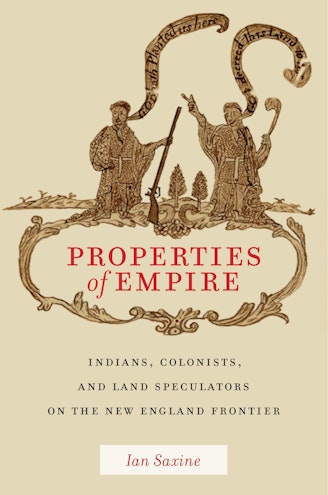
BOOK: Ian SAXINE, Properties of Empire Indians, Colonists, and Land Speculators on the New England Frontier (New York: New York University Press, 2019). ISBN 9781479832125, $35.00


(Source: NYU Press)

New York University Press has published a new book on the dynamic relationship between Native and English systems of property in colonial America.

ABOUT THE BOOK:

A fascinating history of a contested frontier, where struggles over landownership brought Native Americans and English colonists together in surprising ways to preserve Indigenous territory.

Properties of Empire shows the dynamic relationship between Native and English systems of property on the turbulent edge of Britain’s empire, and how so many colonists came to believe their prosperity depended on acknowledging Indigenous land rights.

As absentee land speculators and hardscrabble colonists squabbled over conflicting visions for the frontier, Wabanaki Indians’ unity allowed them to forcefully project their own interpretations of often poorly remembered old land deeds and treaties. The result was the creation of a system of property in Maine that defied English law, and preserved Native power and territory. Eventually, ordinary colonists, dissident speculators, and grasping officials succeeded in undermining and finally destroying this arrangement, a process that took place in councils and courtrooms, in taverns and treaties, and on battlefields.

Properties of Empire challenges assumptions about the relationship between Indigenous and imperial property creation in early America, as well as the fixed nature of Indian “sales” of land, revealing the existence of a prolonged struggle to re-interpret seventeenth-century land transactions and treaties well into the eighteenth century. The ongoing struggle to construct a commonly agreed-upon culture of landownership shaped diplomacy, imperial administration, and matters of colonial law in powerful ways, and its legacy remains with us today.

ABOUT THE AUTHOR:

Ian Saxine is Assistant Professor of History at Bridgewater State University. His writing has previously appeared in the New England Quarterly, winning the 2013 Whitehill Prize in Early American History.

More information here

14 March 2019

BOOK: Malcolm EBRIGHT and Rick HENDRICKS, Pueblo Sovereignty (Norman: University of Oklahoma Press, 2019). ISBN 978-0-8061-6199-0, $45.00


The University of Oklahoma Press is publishing a new book on how Pueblo Indian communities have defended their sovereignty, and land and water rights.  

ABOUT THE BOOK

Over five centuries of foreign rule—by Spain, Mexico, and the United States—Native American pueblos have confronted attacks on their sovereignty and encroachments on their land and water rights. How five New Mexico and Texas pueblos did this, in some cases multiple times, forms the history of cultural resilience and tenacity chronicled in Pueblo Sovereignty by two of New Mexico’s most distinguished legal historians, Malcolm Ebright and Rick Hendricks.

Extending their award-winning work Four Square Leagues, Ebright and Hendricks focus here on four New Mexico Pueblo Indian communities—Pojoaque, Nambe, Tesuque, and Isleta—and one now in Texas, Ysleta del Sur. The authors trace the complex tangle of conflicting jurisdictions and laws these pueblos faced when defending their extremely limited land and water resources. The communities often met such challenges in court and, sometimes, as in the case of Tesuque Pueblo in 1922, took matters into their own hands. Ebright and Hendricks describe how—at times aided by appointed Spanish officials, private lawyers, priests, and Indian agents—each pueblo resisted various non-Indian, institutional, and legal pressures; and how each suffered defeat in the Court of Private Land Claims and the Pueblo Lands Board, only to assert its sovereignty again and again.

Although some of these defenses led to stunning victories, all five pueblos experienced serious population declines. Some were even temporarily abandoned. That all have subsequently seen a return to their traditions and ceremonies, and ultimately have survived and thrived, is a testimony to their resilience. Their stories, documented here in extraordinary detail, are critical to a complete understanding of the history of the Pueblos and of the American Southwest.

ABOUT THE AUTHORS

Malcolm Ebright is a historian, an attorney, and the director of the Center for Land Grant Studies. He is a coauthor with Rick Hendricks of the award-wining Four Square Leagues: Pueblo Indian Land in New Mexico.

Rick Hendricks is the New Mexico State Historian. He holds a Ph.D. in Ibero American Studies from the University of New Mexico. He has written or collaborated on numerous books and articles on the Spanish colonial period in the American Southwest and Mexico. He is coauthor of The Witches of Abiquiu: The Governor, the Priest, the Genízaro Indians, and the Devil.

More information here

06 August 2018

BOOK: Allan GREER, Property and Dispossession : Natives, Empires and Land in Early Modern North America [Studies in North American Indian History] (Cambridge: Cambridge University Press, 2018). ISBN 9781316613696, £ 22.99


(Source: CUP)

Earlier this year, Cambridge University Press published a book on the processes by which forms of land tenure emerged and natives were dispossessed from the sixteenth to the eighteenth centuries in New France (Canada), New Spain (Mexico), and New England.

ABOUT THE BOOK

Allan Greer examines the processes by which forms of land tenure emerged and natives were dispossessed from the sixteenth to the eighteenth centuries in New France (Canada), New Spain (Mexico), and New England. By focusing on land, territory, and property, he deploys the concept of 'property formation' to consider the ways in which Europeans and their Euro-American descendants remade New World space as they laid claim to the continent's resources, extended the reach of empire, and established states and jurisdictions for themselves. Challenging long-held, binary assumptions of property as a single entity, which various groups did or did not possess, Greer highlights the diversity of indigenous and Euro-American property systems in the early modern period. The book's geographic scope, comparative dimension, and placement of indigenous people on an equal plane with Europeans makes it unlike any previous study of early colonization and contact in the Americas.

Provides a comparative approach to the colonization of North America, including a study of French, English, and Spanish colonies
Considers colonization in an indigenous America, contrary to the prevailing Eurocentrism of the history of early modern imperialism
Focuses on property formation as a central dimension of colonization

ABOUT THE AUTHOR

Allan Greer, McGill University, Montréal
Allan Greer is a professor in the Department of History and Classical Studies at McGill University in Montreal, Canada. He holds the Canada Research Chair in Colonial North America at McGill University, Montréal. He has published seven books, including Mohawk Saint: Catherine Tekakwitha and the Jesuits (2005) and La Nouvelle-France et le monde (2009).

TABLE OF CONTENTS

1. Introduction: property and colonization
Part I. Three Zones Of Colonization:
2. Indigenous forms of property
3. Early contacts
4. New Spain
5. New France
6. New England
Part II. Aspects of Property Formation:
7. The colonial commons
8. Spaces of property
9. A survey of surveying
10. Empires and colonies
Part III. Conclusion and Epilogue:
11. Property and dispossession in an age of revolution.

More information here