Search

Showing posts with label maritime interactions. Show all posts

13 June 2024

BOOK: Andrew R. C. SIMPSON and Jørn ØYREHAGEN SUNDE (eds.), Comparative Perspectives in Scottish and Norwegian Legal History, Trade and Seafaring, 1200-1800 (Edinburgh: University Press, 2023). ISBN: 9781399503877, pp. 344, £95.00


(Source: Edinburgh UP)


ABOUT THE BOOK

There were significant points of contact and similarities in the ways in which the laws of Scotland and Norway developed. The Treaty of Perth of 1266 was of significance in the state formation of both countries, and in the determination of their territorial boundaries. The laws and customs applicable in the Orkneys and the Shetlands remain distinctive due to Norse influence, centuries after those islands became subject to Scottish sovereignty. The extensive trading links between two countries united by the North Sea raises the question of how trade between the territories was regulated.

This book brings together experts in Norwegian and Scottish legal, economic and political history to explore these points of contact. It breaks new ground, considering Scots law in terms of its historical interactions and similarities with another national legal system, rather than in terms of its place at the intersection between the common law and the civilian traditions.


TABLE OF CONTENTS


Introduction - by Andrew R C Simpson, Jørn Øyrehagen Sunde, pp 1-32

PART 1 - The Medieval Period, ca. 1200–ca. 1500, pp 33-34

1 - The Treaty of Perth: Union of the realm and the king’s law - by Erik Opsahl, pp 35-62

2 - The Treaty of Perth: Union of the realm and the laws of the kingdom - By Dauvit Broun, pp 63-94

3 - Law and Administrative Change in Norway, Twelfth–Fourteenth Centuries - by Jørn Øyrehagen Sunde, pp 95-121

4 - Law and Administrative Change in Scotland, Twelfth–Fourteenth Centuries - by Alice Taylor, pp 122-154

5 - Urban Legal Procedure in Fourteenth Century Norway - by Miriam Jensen Tveit, pp 155-180

6 - Urban Legal Procedure in Fourteenth Century Scotland: A fresh look at the 1317 court roll of Aberdeen - by Andrew R. C. Simpson, pp 181-208

PART 2 - The Early Modern Period, ca. 1500–ca. 1800, pp 209-210

7 - War and Peace: Scottish-Norwegian relations in the early modern period (ca. 1520–1707)- by Steve Murdoch, pp 211-231

8 - Traders and Immigrants: A Norwegian perspective on Scottish-Norwegian economic relations from the fifteenth to the early seventeenth century - by Per G Norseng, pp. 232-271

9 - Norm and Fact: Timber trade in early modern western Norway (1530–1730) - by Sören Koch, pp 272-296

10 - The Law and Economy of Shipwreck in Scotland during the Sixteenth Century - by J. D. Ford, pp 297-321

Index, pp 322-332


More information with the publisher.

19 July 2023

CFP: Sixth International Conference of the Mediterranean Maritime History Network (MMHN) - 27-31 May 2024, Institute for Mediterranean Studies (IMS), Rethymnon Centre of Maritime History [DEADLINE 15 OCT 2023]

(Source: MMHN)


The Centre of Maritime History in the Institute for Mediterranean Studies in Rethymnon announces the Sixth International Conference of the Mediterranean Maritime History Network (MMHN), which will take place at the Centre of Maritime History of the Institute for Mediterranean Studies in Rethymno from the 27th to the 31st of May 2024.

 MMHN has a long tradition of bringing together scholars who study the maritime history of the Mediterranean Sea and its linkages to the world. We welcome papers that explore the relationship between humans and the sea in all its facets: on the sea (seamen, ships, navigation, sea trade, war, piracy); around the sea (maritime communities, islands, port cities, shipping, shipping-related, fishing and touristic businesses); in the sea (fishing, marine resources, environment); because of the sea (maritime transport systems and entrepreneurial networks, maritime empires, international and national maritime institutions and policy); and about the sea (the maritime culture and heritage, the ideology, the myths and poems of a sea, the impact of the sea on art).

If you are interested in participating, we kindly request that you submit a title and an abstract of no more than 300 words, accompanied by a brief biographical note of 200 words, no later than October 15th, 2023. If you would like to present a panel (3-4 speakers), please send the individual abstracts into one file, providing a title and an abstract for the panel topic of no more than 200 words.

Submissions in English or French are welcome and should be sent to organizer.mmhn@gmail.com.

For any further question, please contact us at: secretariat.mmhn@gmail.com

18 July 2023

CFP: 9th IMHA Congress of Maritime History - 19-24 August 2024, Busan, South Korea [DEADLINE 3 December 2023]

(Source: IMHA)

Event date: 19-24 August 2024

Location: Busan, Korea

The Programme Committee appointed by the International Maritime History Association (IMHA) invites proposals for panels, papers and roundtables to be presented at IMHA’s 9th International Congress of Maritime History in Busan, Korea.

The congress will be hosted by the IMA (Institute of International Maritime Affairs), affiliated with the Korea Maritime & Ocean University, and the Korean Association of Maritime History, on August 19 – 24, 2024, in cooperation with KASPS (Korean Association of Shipping and Ports Studies) and WCMCI (World Committee of Maritime Culture Institutes), the academic consortium of research institutes for maritime culture in East Asia.

The main theme is Oceans: Local Mobility, Global Connectivity, and the aim is to address multiple aspects of the relationship between humans and the oceans. Oceans were regarded by humans as barriers in ancient times, although, in modern times, they became routes for exploring, travelling and connecting peoples and worlds separated by spatial and cultural distance. 

As with previous IMHA congresses, the meeting in Busan adopts a broad conception of maritime history, treating it as an interdisciplinary field that covers all historical periods, all regions of the world and all aspects of human interactions with the seas. 

Papers will therefore be welcomed on a wide range of research areas, chronological periods and regions of the world. IMHA welcome submissions by young, mid-career and senior scholars alike, whether working on individual projects or in larger research groups. The Programme Committee also welcomes proposals for full panels and roundtables. They are particularly keen on proposals addressing new, high-risk collective research that integrates different areas of expertise and colleagues from different academic cultures. 

The Congress wishes to create opportunities for researchers to share their work with colleagues in their own areas of interest and with researchers in adjoining fields, seeking to identify and define new avenues for individual and collective research in maritime history.

Find out more and read the full CfP here: Call for papers, 9th IMHA Congress of Maritime History

Deadline for proposals: 3 December 2023

Programme and details


04 November 2021

BOOK: Leos MÜLLER, Neutrality in World History (London: Routledge, 2019). ISBN: 9781138745384, pp. 188, £ 27.99 (paperback)

(Source: Routledge)

ABOUT THE BOOK

Neutrality in World History provides a cogent synthesis of five hundred years of neutrality in global history. Author Leos Müller argues that neutrality and neutral states, such as Switzerland, Sweden and Belgium, have played an important historical role in implementing the free trade paradigm, shaping the laws of nations and humanitarianism, and serving as key global centres of trade and finance. Offering an intriguing alternative to dominant world history narratives, which hinge primarily on the international relations and policies of empires and global powers, Neutrality in World History provides students with a distinctive introduction to neutrality’s place in world history.

ABOUT THE AUTHOR

Leos Müller is Professor of History and Head of the Centre for Maritime Studies at Stockholm University.

TABLE OF CONTENTS

Chapter 1: Introduction: Why Neutrality?

Chapter 2: Birth of Maritime Neutrality: 1500–1650

Chapter 3: Neutrality at Sea: 1650–1815

Chapter 4: The Golden Age of Neutrality: 1814–1914

Chapter 5: Neutrality in Trouble: 1914–2016

Concluding Remarks: Neutrality in the Past, Present and Future


More information with the publisher.

16 October 2020

BOOK: Louis SICKING & Alain WIJFFELS (Eds.), Conflict Management in the Mediterranean and the Atlantic, 1000-1800. Actors, Institutions and Strategies of Dispute Settlement (Brill/Nijhoff: Leiden/Boston, 2020). ISBN: 9789004380639, €129.00

Cover Conflict Management in the Mediterranean and the Atlantic, 1000-1800
(Source: Brill)


ABOUT THE BOOK

Pre-modern long-distance trade was fraught with risks which often created conflicts of interest. The ensuing disputes and the ways the actors involved dealt with them belong to the field of conflict management. How did victims of maritime conflicts claim compensation? How did individual actors and public institutions negotiate disputes which transcended jurisdictional boundaries? What strategies, arrangements and agreements could contribute to achieve the resolution of such conflicts, and to what effect? These and other questions have mainly been studied separately for the Mediterranean and Atlantic regions. Here, the two seascapes are connected, allowing for a comparative long-term perspective. The different contributions enhance our understanding in the complexity of various approaches to conflict management. 

Contributors:Thierry Allain, Cátia Antunes, Eduardo Aznar Vallejo, Catarina Cotic Belloube, Kate Ekama, Tiago Viúla de Faria, Ana Belem Fernández Castro, Jessica Goldberg, Roberto J. González Zalacain, Ian Peter Grohse, Thomas K. Heebøll-Holm, Laurence Jean-Marie, Daphne Penna, Pierrick Pourchasse, Pierre Prétou, Ana María Rivera Medina, Carlo Taviani, and Dominique Valérian.

ABOUT THE EDITORS

Louis Sicking is the Aemilius Papinianus professor of History of Public International Law at Vrije Universiteit Amsterdam and lecturer in history at the University of Leiden. He is presently working on a study of Conflict Management in pre-modern Atlantic Europe. 

Alain Wijffels teaches legal history and comparative law. He is affiliated to the universities of Leiden, Leuven and Louvain-la-Neuve, and is senior research fellow of the French CNRS (at the Centre for Judicial History, Lille).

TABLE OF CONTENTS

Acknowledgements
 List of Abbreviations
 List of Tables
 Notes on Contributors

 Introduction: Flotsam and Jetsam in the Historiography of Maritime Trade and Conflicts
   Louis Sicking and Alain Wijffels

1. The Courts, the Qadi, and the ‘People’: Resolving Mercantile Disputes in the Medieval Islamic Mediterranean
   Jessica Goldberg

2. Finders Keepers, Losers Weepers? Byzantine Shipwreck and Salvage in the Eleventh and Twelfth Centuries
   Daphne Penna

3. Bjarkeyjarréttr and Fárrmanna Logh: Norse or European Laws of the Sea?
   Ian Peter Grohse

4. Du conflit aux conflits : marchands et gens de mer lors de la rupture de trêve en 1224 entre les rois anglais et français
   Laurence Jean-Marie

5. Maritime Conflicts and Their Resolution in Castile in the Thirteenth through the Fifteenth Centuries
  Eduardo Aznar Vallejo and Roberto J. González Zalacain

6. Maritime Conflicts and Larceny in the Bay of Biscay from the Fourteenth to the Sixteenth Centuries
  Ana María Rivera Medina

7. Lutte contre la piraterie et construction de normes partagées entre chrétiens et musulmans en Méditerranée médiévale
  Dominique Valérian

8. Towards a Criminalisation of Piracy in Late Medieval England
  Thomas K. Heebøll-Holm

9. L’émergence du pirate atlantique dans le royaume de France à la fin du Moyen Âge
  Pierre Prétou

10. Maritime Conflict among Hundred Years’ War Allies
  Tiago Viúla de Faria

11. In the Shadow of Other Empires: Genoese Merchant Networks and Their Conflicts across the Atlantic Ocean, ca. 1450–1530
  Carlo Taviani

12. Handling Conflicts in Long-Distance Trade: A View of the Mediterranean through the Experience of Merchants Operating in the Kingdom of Valencia in the Late Sixteenth-Century
   Ana Belem Fernández Castro

13. Mediterranean and Atlantic Maritime Conflict Resolution: Critical Insights into Geographies of Conflict in the Early Modern Period
   Cátia Antunes and Kate Ekama

14. The Commercial Practices of Portuguese Jewish Merchants in London and Their Dispute with Samuel Hayne, Riding-Surveyor for his Majesty’sCustoms, 1680
   Catarina Cotic Belloube

15. When the War Came to Barbary: Dutch Traders and the Management of Their Entry into Conflict with Algiers, 1755–1757
   Thierry Allain

16. Les conflits permanents entre corsaires et neutres: L’exemple de la France et du Danemark au XVIIe siècle
   Pierrick Pourchasse

 Index of names of persons


More information with the publisher.

12 May 2020

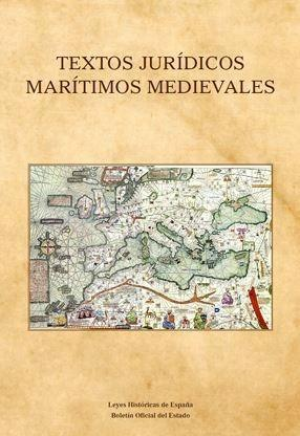
BOOK: Margarita Serna VALLEJO, Textos Jurídicos Marítimos Medievales (Madrid: Agencia Estatal Boletín Oficial del Estado 2018). ISBN: 9788434024793, pp. 986, € 76,00

Cubierta de TEXTOS JURÍDICOS MARÍTIMOS MEDIEVALES


ABOUT THE BOOK

Colección: Leyes Históricas de España

Esta obra, cuyo estudio ha sido realizado por Margarita Serna Vallejo, catedrática de Historia del Derecho de la Universidad de Cantabria, reúne los textos principales de nuestra tradición marítima, tanto atlántica como mediterránea, de la Baja Edad Media. El lector debe tener en cuenta que el derecho marítimo que se perfila a partir del tránsito de la Alta a la Baja Edad Media en las costas europeas es un derecho fundamentalmente consuetudinario porque fueron los propios navegantes quienes procedieron a su creación, englobando dentro del término "navegante" no solo a los individuos que tenían algún protagonismo en las actividades vinculadas directamente con el hecho de la navegación de las embarcaciones, con el arte de navegar en sentido estricto, sino también a los comerciantes que viajaban en los barcos con sus mercancías para poder negociarlas en los puertos de destino de las embarcaciones. Este derecho marítimo es de raíz consuetudinaria, sencillo, atécnico y transmitido oralmente, en cuya formación no intervino el poder público. No obstante, recibió, el apoyo de las autoridades, incluidas las propias monarquías, una vez que constataron la utilidad de sus disposiciones para ordenar el comercio marítimo.
Así surgieron en la Corona de Aragón los consulados del mar con una doble personalidad: como corporaciones profesionales y como jurisdicciones, primero marítimas, y más tarde mercantiles, una vez que extendieron sus competencias sobre el comercio marítimo, pero también sobre el terrestre. En las costas cantábricas de la Corona de Castilla la aparición de los consulados se retrasó hasta la época moderna: solo el primer consulado, el de Burgos, se estableció en las postrimerías de la Baja Edad Media, en 1494.

ABOUT THE AUTHOR

Margarita Serna Vallejo es Licenciada en Derecho por la Universidad de Cantabria (1990) y Doctora en Derecho en la misma Universidad (1995). En esta Universidad ocupó una plaza de Profesora Titular de Historia del Derecho entre los años 1995 y 2009. Fecha a partir de la cual pasó a ocupar la plaza de Catedrática de Universidad en la que continúa en la actualidad. Sus investigaciones se han centrado en tres líneas principales: historia del derecho de la propiedad, historia de las fuentes y de las instituciones marítimas de Época bajomedieval y moderna e historia de la administración territorial y local medieval y moderna. Entre sus publicaciones y al margen de los artículos y capítulos de libros publicados en distintas sedes destacan las siguientes monografías: 1996. La publicidad inmobiliaria en el Derecho hipotecario histórico español; 2004. Los Rôles d’Oléron: El coutumier marítimo del Atlántico y del Báltico de época medieval y moderna; 2010. Los viajes pesquero-comerciales de guipuzcoanos y vizcaínos a Terranova (1530-1808): régimen jurídico.

TABLE OF CONTENTS

Capítulo I. El Derecho Marítimo Medieval del Mediterráneo
1.1. Los privilegios de creación de los consulados de la Corona de Aragón: el inicio de las jurisdicciones consulares y de las corporaciones marítimas del Mediterráneo
1.2. Los privilegios de ampliación de la jurisdicción consular a la negociación terrestre: la conversión de los antiguos consulados marítimos en consulados mercantiles
1.3. La Tradición Mediterránea: El llibre del Consolat de Mar
Capítulo II. La tradición atlántica: los Rôles d’Oléron, el Fuero de Layron y las Ordenanzas de las Cofradías Marítimas
2.1. La versión primitiva de los Roles D'Oléron
2.2. El Fuero de Layron, la versión castellana de los Roles D'Oléron
2.3. Las ordenanzas de las cofradías de pescadores y mareantes del Cantábrico: máxima expresión de la potestad autonormativa reconocida a las cofradías

More information here.