Search

Showing posts with label war. Show all posts

02 October 2026

VIRTUAL EXHIBITION: Crimes et justices de guerre (1430-1945) (Criminocorpus)


(image souce: Criminocorpus)

Curators:

Bentéboula Maurena,  Chinaud-Robert Effie,  Dubs Marcel,  Dufresne-Taillon Esteban,  Fouquet Julien,  Mazy Vincent,  Rahier Alain,  Renard Maxime,  Richelle Sophie,  Sergent F.,  Stennier Perrine,  Tlili-Bourgeois Guillaume,  Vermeersch Romain,  Wouters Théo

Abstract:

Ce projet est le fruit d’une école doctorale qui s’est tenue en juin 2026, en collaboration entre l’Université catholique de Louvain, l’Université de Liège et l’Université du Québec à Montréal. Il est né de l’association de deux projets de recherche, respectivement portés sur les origines médiévales de la notion de crime de guerre et sur le déploiement de la justice militaire du XIVe au XXe siècle. Les jeunes scientifiques ont construit cette exposition virtuelle comme une rencontre entre leurs propres recherches et le partage au public d’un thème encore méconnu, quoique largement fantasmé par la culture populaire. 

Consult the exhibition here. 

01 September 2026

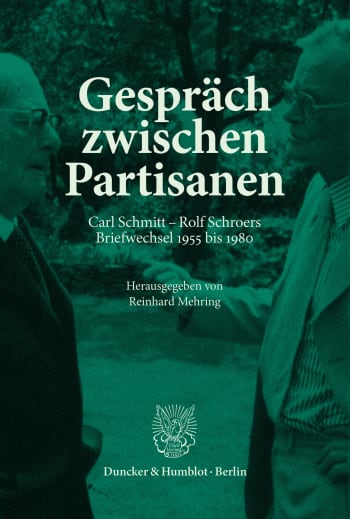
BOOK: Reinhard MEHRING (ed.), Gespräch zwischen Partisanen Carl Schmitt – Rolf Schroers. Briefwechsel 1955 bis 1980 [SCHMITTIANA. NEUE FOLGE; 4] (Berlin: Duncker & Humblot, 2026], 354 p., ISBN 978-3-428-19765-1

Cover: Gespräch zwischen Partisanen 

ABOUT THE BOOK:

Rolf Schroers (1919–1981) war nach 1945 ein Literat (Mitglied der »Gruppe 47«), Publizist, später Direktor der Heuss-Akademie in Gummersbach. Von Ernst Jünger und Paul Celan lief er gleichsam zu Carl Schmitt über, dem er 1955 erstmals begegnete und mit dem sich sogleich intensive Korrespondenz und lebenslanger freundschaftlicher Umgang ergab. Die vorliegende, in 214 Briefen und Gegenbriefen ziemlich vollständig erhaltene Korrespondenz ist ein Schlüssel zu Schmitts ›Theorie des Partisanen‹ (1963), die direkt auf Schroers' Buch ›Der Partisan‹ (1961) antwortet. Sie erinnert mit zahlreichen unbekannten Texten und Materialien auch an einen markanten Repräsentanten der existentialistischen Kriegsgeneration und »Kahlschlagliteratur«, der als Publizist und Akademiedirektor die politischen Diskurse der alten Bundesrepublik mit gestaltete und von Schmitt sehr geschätzt wurde.

ABOUT THE EDITOR:

Prof. Dr. Reinhard Mehring, Jg. 1959, Diss. 1988 (Freiburg) Politikwissenschaft, Habilitation 2000 Philosophie (HU-Berlin); 2007–2025 Prof. für Politikwissenschaft an der PH-Heidelberg, zahlreiche Bücher u.a. zu Carl Schmitt, Martin Heidegger und Thomas Mann; Editionen u.a. zu Ludwig Feuchtwanger (zusammen mit Rolf Rieß) und Emil Utitz. Als Schmitt-Editor u.a.: Briefwechsel mit Rudolf Smend (Duncker & Humblot, 2. Aufl. 2012) und Ernst-Wolfgang Böckenförde (2022).

Find more here. 


06 July 2026

CALL FOR ABSTRACTS: Imperial Legal Spaces and Transitions: Law, Statehood and Administration in Ukraine between Empire, War and State Formation (~1900-1922) (Regensburg: University of Regensburg/Institute for East European Law, 18-19 MAR 2027); DEADLINE 31 JUL 2026


https://www.ostrecht.de/wp-content/uploads/2022/05/ior-LOGO-Standard-2048x1017-1-1920x953.png

Application Deadline: 31 July 2026
Location: University of Regensburg / Institute for East European Law, Germany

Description:

The early 20th century marked a period of profound political, social and legal upheaval for the region
that is now Ukraine. Within a few decades, the region witnessed the collapse of empires, the First World
War, successive occupations and military administrations, competing attempts to establish states, and
the transition to Soviet structures of governance. These developments were accompanied not only by
political and social transformations, but also by a fundamental reorganisation of legal institutions, norms and practices.
While the political history and history of violence of this transitional period have already been researched to some extent, there is still a lack of legal and administrative historical analysis that focuses not only on breaches of the law or the breakdown of legal systems, but also on how the law and institutions function in transitional situations.
The conference therefore focuses on the question: How do legal spaces function when political orders
collapse but institutions (must) continue to operate?
The conference aims to examine the region of present-day Ukraine between approximately 1900 and
1922 as an imperial, or, respectively, post-imperial legal space in which different normative orders, ad-
ministrative traditions and institutional practices did not disappear abruptly, but continued to operate,
overlap, adapt or hybridise.
The conference does not view law merely as a codified norm, but, above all, as a social practice, an
instrument of power and legitimacy, and a resource for stabilising everyday life and administration.

Potential Topics Include:

• Legal transfer and legal pluralism between Habsburg Galicia and the territories oft he Russian
Empire
• Military law and extraordinary justice in the First World War
• Competing legal systems in the years 1917–1921
• Administrative and judicial practice in local borderland spaces
 

The conference adopts a practice- and actor-oriented approach that views law not merely as a normative
system, but as a framework for action. Particular attention is paid to institutional continuities, informal
practices and the role of local decision-makers. At the same time, the conference adopts a transnational
and comparative perspective. The region of present-day Ukraine is not considered in isolation but within its interconnections with Central European, Russian, and later Soviet legal systems. This approach allows for the analysis of regional and local transitions not merely as national anomalies but as part of broader European transformation processes.
The conference seeks to foster an international exchange of perspectives on the region’s history. We
therefore warmly encourage not only scholars from Ukraine but also scholars from other countries, in-
cluding Germany, Poland, Hungary, Romania, Slovakia, and the Czech Republic, to participate.
We welcome contributions from legal history, history, political science, and related disciplines. Applica-
tions from researchers at all career stages are strongly encouraged.

The conference languages are Ukrainian, German and English.

An application for external funding is currently being prepared. Subject to approval, travel and accom-
modation costs may be covered.

As an outcome of the conference, an edited volume with an internationally renowned publisher is
planned. In addition, selected contributions will be published in an open working paper series.

Application Guidelines:

To participate in the conference, please submit the following application documents by July 31, 2026:

1. Detailed academic CV
2. Topic proposal for the presentation and short abstract (max. 2,000 characters including spaces)
3. List of publications, highlighting the five most relevant to the conference

Please send your application (as a single PDF file) and any inquiries to:
office@ostrecht.de

The results of the selection process will be announced by early September 2026.

We look forward to receiving your submissions and to welcoming you in Regensburg in March
2027!

Find more here. 

14 January 2026

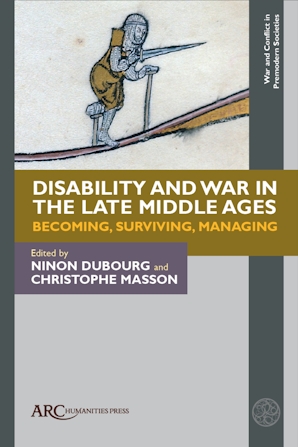
BOOK: Ninon DUBOURG & Christophe MASSON, Disability and War in the Late Middle Ages. Becoming, Surviving, Managing [War and Conflict in Premodern Societies] (York: ARC Humanities Press, 2025), 256 p. ISBN 9781802701647


(image source: ARC Humanities Press)

Abstract:
Issues relating to disability and war remain largely overlooked by military and disability historians. This exclusion is all the more striking since there was hardly a more likely place for receiving permanent injury than a battle, and we can barely imagine a worse place for disabled people than a battlefield. This volume aims to shed new light on a topic pertaining to multiple fields of research: social history, technical medical history, disability history, military history, and the Genesis of the Modern State. This book gathers specialists of premodern history to bring together new research from a variety of disciplines—history, archaeology, literature, and modern medicine—and working with diverse sources, such as account books, biographies, poems, romance texts, Icelandic sagas, petitions and pardon letters, post-battle records, prostheses, skeletons and funerary treatments, chronicles, and theoretical treatises.

Table of contents:

List of Illustrations

Preface

Introduction. "Disability and War: Becoming, Surviving, Managing" by Ninon Dubourg and Christophe Masson

Chapter 1. "The Recidivists: Healed Cranial Trauma from Conflicts in the Late Medieval Period" by Christopher J. Knüsel

Chapter 2. "Disability and Trauma in Battle in the Medieval Icelandic Sagas" by Yoav Tirosh

Chapter 3. "Hungry for Love: Disabling the Knightly Body and Mind through Starvation in Sir Thomas Malory’s Le Morte Darthur" by Kristina Hildebrand

Chapter 4. "A Vulnerable Military Masculinity: Soldiers and Disability in Late Medieval Pardon Letters (France, England, and the Low Countries)" by Quentin Verreycken

Chapter 5. "Traumatic Repercussions: Warfare and Disability in the French Countryside" by Aleksandra Pfau

Chapter 6. "Investigating the Lifecycle of the Medieval English Soldier: Disability, Mental Trauma, and Medicine in Connection with War in Late Medieval English Records" by Wendy J. Turner

Chapter 7. “'What pain I suffered at that time, anyone can well imagine...': Experiences of War, Injury, and Pain in Fifteenth- and Sixteenth-Century Germany and Switzerland" by Bianca Frohne

Chapter 8. "Mechanism/Organism: The Premodern Iron Hand as Conceptual Interface" by John Gagné

Chapter 9. "After Combat: War Wounds, Soldiers’ Benefits, and Dynastic Policies in the Burgundian–Habsburg Armies (1363–1506)" by Michael Depreter

Select Bibliography

Index

On the editors:

Ninon Dubourg is an Alexander von Humboldt Fellow based at the University of Cologne. She studies physical and mental disability, as well as old age, among lay and clerical individuals in late medieval Europe. Christophe Masson is a Permanent Researcher for the Fund for Scientific Research (FNRS) in Belgium. His work addresses the social, cultural, institutional, and technical dimensions of late medieval warfare. 

Read more here.

16 July 2025

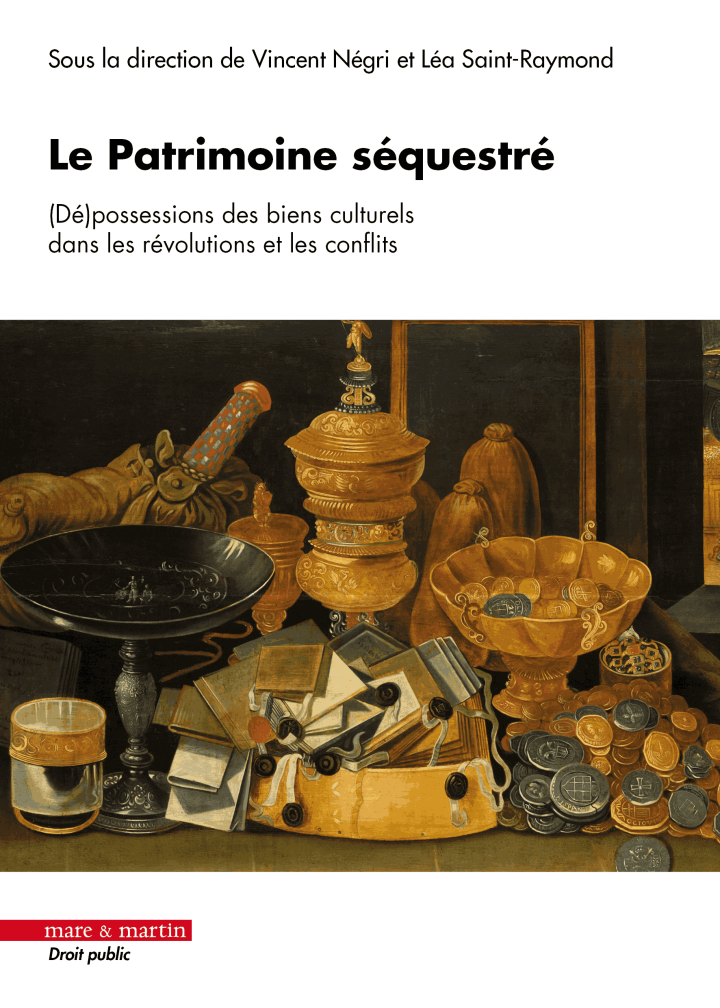
BOOK: Vincent NÉGRI & Léa SAINT-RAYMOND (dir.), Le Patrimoine séquestré. (Dé)possessions des biens culturels dans les révolutions et les conflits [Droit public] (Paris: Mare & Martin, 2025), 300 p. ISBN 978-2-84934-734-8, €26


Abstract:

La guerre en Ukraine a redonné une malheureuse actualité aux séquestres de biens culturels. Encore peu étudiée – contrairement aux « saisies », aux « confiscations » et aux « spoliations » – la notion de « séquestre » mérite d’être interrogée et replacée dans un temps long. Telle est l’ambition de cet ouvrage, mobilisant les apports croisés de l’histoire, de l’histoire de l’art, du droit, des sciences politiques, de l’économie et de la sociologie. Lors des conflits, les séquestres de biens culturels sont motivés par une certaine conception de « l’intérêt général » et relèvent d’intentions et d’opportunités politiques, que cet ouvrage met également en lumière.

 Read more here.

06 February 2025

CALL FOR PAPERS: War and Peace (in legal history) [Sixth student conference on legal history/IUSTORIA 2025] (25-27 MAR 2025); DEADLINE 15 FEB 2025


(click on image to enlarge)

Iustoria 2025


Правни факултет Универзитета у Београду отвара позив за учешће на Шестој студентској конференцији из правне историје – Iustoria 2025, која ће се одржати од 25. до 27. марта 2025. године, са темом „Рат и мир (у правној историји)“.

У 2025. години навршиће се 80 година од завршетка Другог светског рата. Овај крвави сукоб донео је незапамћена разарања, патњу и огромне људске жртве (преко 70 милиона), али и пораз нацистичке Немачке, фашистичке Италије, империјалног Јапана и осталих чланица Сила осовине. Након његовог завршетка, Савезници, државе победнице, решиле су да успоставе систем међународног организовања, у оквиру нове Организације уједињених нација, како би се кроз вишестрану дипломатију, утврђене процедуре, као и механизме међусобног обуздавања све више блоковски супротстављених великих и регионалних сила, обезбедио трајни(ји) мир. Нажалост, многобројни регионални (често „прокси”) ратови, који су уследили у наредним деценијама, неки од којих трају и дан-данас, показали границе оваквог система.

Ратови су, наравно, тамни део људске историје, без кога се не може разумети ни правна историја. Већ први мировни уговор, склопљен пре 3300 година, између Хетитске државе и Египатског новог краљевства, показује да овакво прекидање непријатељстава често подразумева и значајне правне последице: утврђивање граница, размену талаца… Неки од мировних уговора су читави трактати, док други, рецимо онај којим је пре скоро 140 година окончан Српско-бугарски рат, садрже свега једну реченицу.

Вековима се један на други настављају два тока: обичаја ратовања – данас најчешће утврђени међународним конвенцијама – и мировне одредбе, које утврђују куда даље након завршетка истог ратовања. Темама рата и мира бавили су се многобројни научници, махом из области друштвено-хуманистичких наука, особито историјске и правне. Дело Хуга Гроција „О праву рата и мира” поставља корене међународног јавног права; „Вештачење о кривици за рат 1914.” Хермана Канторовича, три касније помера границе теоријскоправног разумевања одговорности држава у изазивању, отпочињању и вођењу рата.

Поред међународног права, међутим, питања рата и мира релевантна су и у многим гранама националних права. Правно уређење војних снага, њиховог регрутовања и накнаде релевантно је у свим правима, од римских легионара и античких плаћеника, преко бројних војничких земљишних поседа старог и средњег века, до питања служења војног рока и приговора савести у новом веку. Ту су и питања попут таквих може ли било ко да ступи у сваки род војске, какво оружје и опрему има право да носи, на који начин држава финансира војне подухвате, те каква ограничења поставља војницима и официрима, од могућности учешћа у политичком животу до тога да ли им је потребна дозвола да би се оженили. А, наравно, питање учешћа жена у ратовању (и улога које су им на бојном пољу доступне) представља широко поље тема за себе.

Казненоправни прописи садрже различите санкције за понашање војника и учесника у рату, од малих прекршаја војне дисциплине у мирно време, до тешких казни за издају или ратне злочине. У грађанском праву, могу се поставити бројна питања, од тога како ратно стање утиче на рокове и услове испуњења у миру уговорених облигација, преко тога ко је и на који начин одговоран за штету причињену ратним дејствима, до питања када ће се лице нестало у ратним сукобима сматрати умрлим, и шта ће бити последице ако се ипак врати живо. Још клинописни зборници садрже прописе о томе шта ће се десити ако се војникова супруга преуда мислећи да је он пао у борби, док су за време Другог светског рата били дозвољени чак и постхумни бракови! А велика смртност мушкараца у ратовима доводила је до многих правних мера, од обавезе старих германских краљева да се старају о удовицама и сирочићима својих ратника, до олакшавања борбе за женско право гласа после великих светских ратова ХХ века.

Подстичемо студенте да се баве свим темама у вези рата и мира, наравног, у оквиру правноисторијског контекста. Ратови и сукоби који и даље трају нису подобни за овакво проучавање, пошто се њихове последице (у најширем смислу) не могу још увек у потпуности докучити.

За учешће у конференцији могу се пријавити сви студенти основних и постдипломских студија правних факултета и других факултета друштвених наука. Пријаве треба да садрже основне личне податке (име и презиме, факултет, ниво, смер и годину студија) и проширени апстракт рада, дужине од 500 до 1000 речи. Могуће је излагање на српском или енглеском језику – охрабрујемо пријаве на енглеском ради лепше комуникације са учесницима из иностранства.

Пријаве се шаљу на адресу iustoria@ius.bg.ac.rs до 15. фебруара 2025. Студенти ће бити обавештени да ли је њихова пријава прихваћена до 20. фебруара. За све додатне информације можете се обратити на исту адресу, а крупније новости ћемо објављивати и на званичној Фејсбук страници конференције https://www.facebook.com/iustoria/

Као и на прошлим конференцијама, поред излагања својих колега, студенти ће на конференцији имати прилику да чују и неколико наставничких предавања од стране реномираних стручњака – више детаља ће бити у коначном програму.

Конференција ће се одржавати у хибридном формату, са могућношћу учешћа уживо или онлајн. Потрудићемо се да учесницима ван Београда који желе да учествују уживо обезбедимо смештај у студентском дому или у приватном аранжману код студената-домаћина из Београда, зависно од расположивости места. 

Коначне верзије радова излаганих на конференцији, уз финалне измене и исправке у разумном року после конференције, биће предате за објављивање у часопису „Весник правне историје / Herald of Legal History“ (http://epub.ius.bg.ac.rs/index.php/Vesnik/index). Рок за предају радова је 15. јул 2025. године.


   Iustoria 2025

The University of Belgrade Faculty of Law is now receiving paper proposals for the Sixth student conference on legal history – the Iustoria 2025, to be held on March 25th-27th, 2025, its topic being “War and peace (in legal history)”.

In 2025, we will mark 80 years since the end of World War II. This bloody conflict brought unprecedented destruction, suffering and enormous human casualties (over 70 million), as well as the defeat of Nazi Germany, Fascist Italy, Imperial Japan and other members of the Axis Powers. After its end, the Allies, the victorious states, decided to establish a system of international organising, within the framework of the new United Nations, in order to secure a (more) lasting peace through multilateral diplomacy, established procedures, and mechanisms for the mutual restraint of increasingly opposing blocs of great and regional powers. Unfortunately, the numerous regional (often “proxy”) wars that followed in the following decades, some of which continue to this day, have shown the limits of such a system.

Wars are, of course, a dark part of human history, without which legal history cannot be understood. The very first peace treaty, concluded 3300 years ago, between the Hittite state and the Egyptian New Kingdom, shows that such a cessation of hostilities often implies significant legal consequences: the establishment of borders, the exchange of hostages, etc. Some of the peace treaties are entire treatises, while others, for example the one that ended the Serbo-Bulgarian War almost 140 years ago, contain only a single sentence.

For centuries, two types of institutes have been developing one after the other: the customs of warfare – today most often established by international conventions – and peace provisions, which determine what to do next after ending a war. The topics of war and peace have been studied by numerous scholars, mainly from the fields of social sciences and humanities, especially history and law. Hugo Grotius's work "On the Law of War and Peace" lays the foundations of public international law; Hermann Kantorowicz’s "Study on the Question of Guilt for the War of 1914", written three centuries later pushes the boundaries of understanding of the responsibility of states in provoking and waging war, in the field of legal theory.

In addition to international law, however, issues of war and peace are also relevant in many branches of national law. The legal regulation of military forces, their recruitment and compensation is relevant in all laws, from Roman legionaries and ancient mercenaries, through the numerous military landholdings of the ancient and medieval eras, to the issue of military service and conscientious objection in the modern times. There are also questions such as whether anyone can join each branch of the military, what weapons and equipment they are entitled to carry, how the state finances military ventures, and what restrictions it places on soldiers and officers, from the possibility of participating in political life to whether they need permission to marry. And, of course, the question of women's participation in warfare (and the roles available to them on the battlefield) is a wide field of topics in itself.

Criminal law regulations contain various sanctions for the behaviour of soldiers and participants in war, from minor violations of military discipline in peacetime to severe penalties for treason or war crimes. In civil law, numerous questions can be raised, from how a state of war affects the terms and conditions for fulfilling obligations contracted in peacetime, to who is responsible and in what way for damage caused by war actions, to the question of when a person missing in wartime will be considered dead, and what the consequences will be if he nevertheless returns alive. Even cuneiform codes contain regulations on what will happen if a soldier's wife marries thinking that he fell in battle, while during World War II even posthumous marriages were allowed! The high mortality of men in wars led to many legal measures, from the obligation of ancient Germanic kings to care for the widows and orphans of their warriors, to facilitating the fight for women's suffrage after both of the World Wars.

We encourage students to deal with all topics related to war and peace, of course, within the legal and historical context. Wars and conflicts that are still ongoing are not suitable for this type of study, since their consequences (in the broadest sense) cannot be yet fully analysed nor understood.

All students of undergraduate and post-graduate studies pertaining to law or other humanities are eligible to apply for the conference. The applications should contain basic personal information (name and surname, faculty, department, level and year of study), along with an extended abstract containing between 500 and 1000 words. Applications are accepted in either Serbian or English.

The applications should be e-mailed to iustoria@ius.bg.ac.rs before the 15th of February, 2025. The students will be informed by the 20th of February whether or not their application has been accepted. For any additional information you may enquire at the same e-mail address, and important news will also be published at the official Facebook page of the conference – https://www.facebook.com/iustoria

Just like on our previous conferences, apart from the presentations given by their colleagues, the students at the conference will have an opportunity to attend several lectures given by renowned experts – more details on this will be available in the final version of the programme.

The conference will be held in a hybrid format: both in-person and online participation will be possible. We'll do our best to secure accommodations either in student dorms or with student host families for participants who don’t reside in Belgrade and who wish to participate in person. These arrangements will depend on the number of available spots. 

The final versions of the papers presented at the conference, with final changes and corrections submitted within a reasonable time after the conference, will be submitted for publication in the journal „Vesnik pravne istorije / Herald of Legal History“ (http://epub.ius.bg.ac.rs/index.php/Vesnik/index). The deadline for the submission of papers is July 15th 2025.

10 November 2020

BOOK: Emmanuelle CRONIER & Benjamin DERUELLE (Eds.), Argumenter en guerre. Discours de guerre, sur la guerre et dans la guerre de l'Antiquité à nos jours (Villeneuve d'Ascq: Presses Universitaires du Septentrion, 2019). ISBN: 102757424580, pp. 420, € 28,00


ABOUT THE BOOK

L'art de l’argumentation ne cède pas ses droits en situation de guerre. Au contraire, la préparation des conflits, la conduite des opérations et la reconstruction de la paix sont d’intenses moments de persuasion, de négociation et de confrontation dans lesquels l’art oratoire occupe toute sa place. Fruit d’une collaboration active entre historiens et juristes, cet ouvrage propose, au travers d’un parcours s’étendant de la guerre antique aux conflits contemporains, une réflexion riche, passionnante et novatrice sur les usages et les fonctions du discours en situation de conflit armé. Il nous transporte des plaines du Péloponnèse et de l’Italie romaine au Tribunal international, en passant par les guerres d’Attila et des ducs de Bourgogne, par les conflits religieux et de la monarchie absolue des temps modernes, ou encore par les guerres de sécessions et les deux conflits mondiaux. S’y découvrent alors les modalités et les enjeux de la parole en guerre, qu’il s’agisse de justifier ou de contester l’engagement, la violence ou les buts de guerres ; de convaincre les autorités politiques et l’opinion publique d’entrer dans le conflit ou les combattants de sacrifier leur vie ; ou encore d’implorer le pardon et de réparer des exactions, mais aussi de s’emparer de la gloire d’une victoire ou de repousser la honte d’une défaite.

ABOUT THE EDITORS

Emmanuelle Cronier est maîtresse de conférences en histoire contemporaine à l'Université de Picardie-Jules Verne et chercheuse au Centre d’Histoire des Sociétés, des Sciences et des Conflits (CHSSC, EA4289).

Benjamin Deruelle est professeur d'histoire moderne à l’Université du Québec à Montréal. Agrégé d’histoire et docteur de l’Université Paris 1 Panthéon-Sorbonne, il est chercheur à l’IRHIS (Institut de Recherches Historiques du Septentrion UMR 8529-CNRS-Université de Lille).

TABLE OF CONTENTS

Introduction

Emmanuelle Cronier & Benjamin Deruelle

Partie 1

Dire, justifier, contester la guerre

Justifier ou restreindre la violence de la guerre : arguments juridiques et arguments moraux dans l'Antiquité tardive

Hervé Huntzinger

Justifier et légitimer l’engagement : la guerre de Candie (1645-1669) et la France

François Pugnière

L’argumentation juridique dans les guerres de sécession

Emanuel Castellarin

Les arguments juridiques contemporains de l’intervention en guerre

Marie-Clotilde Runavot

Partie 2

Convaincre, adhérer, mobiliser

Quand les femmes parlent de la guerre : le dossier des apophtegmes laconiens

Jean-Manuel Roubineau

La guerre, ultima ratio des ducs de Bourgogne ? Argument guerrier et autorité du prince législateur (fin XIVe – début XVe siècle)

Jean-Baptiste Santamaria

L’argument de la guerre dans la négociation fiscale, le cas valdôtain au XVIIe siècle

Julien Alerini

Monarchie absolue et monarchie limitée face à la guerre : les stratégies argumentatives françaises et anglaises à la fin du XVIIe siècle

Solange Rameix

Illustrer ou persuader ? 

Schémas et dessins dans la réflexion militaire de la France des Lumières

Arnaud Guinier

Le théâtre de la guerre révolutionnaire : Cris, harangues et discours des généraux à l’armée des Pyrénées orientales (1793-1795)

Laurent Cuvelier

Partie 3

Argumenter au cœur du combat

Argumenter en plein combat : 

Formes et fonctions de l’exhortation au combat dans les batailles rangées romaines à la fin de la République

Xavier Lapray

Le contrôle de la parole dans la cité assiégée selon Énée le Tacticien (IVe siècle av. J.-C.)

Jonathan Andujar & Christian Bouchet

Argumenter en guerre civile : les partis de la guerre et de la paix au Conseil du roi pendant les premières guerres de Religion (1563-1570)

Antoine Rivault

Haranguer ses capitaines ? 

Le duc de Guise, chef de guerre et stratège de mots à Châlons-en-Champagne (26 mars 1585)

Xavier Le Person

Le Mercure François entre en guerre

Virginie Cerdeira

La déportation de civils en vue du travail forcé – le discours normatif de l’occupant allemand, d’une guerre à l’autre

Michel Erpelding

Partie 4

Mémoire, appropriation et droit

« Poure compaignon de guerre » ou « meschant homme » ? 

La représentation du soldat dans les lettres de rémission des ducs de Bourgogne (1386-1482)

Quentin Verreycken

L’affaire d’Hastenbeck, la relation de bataille en tant qu’instrument de diffamation

Antoine Roussel

L’œuvre de mémoire en Europe après la Seconde Guerre mondiale : l’appropriation de la Guerre par le Droit

Marion Larché

Conclusion

Émilie Dosquet

Les auteurs

Résumés

Index


More information with the publisher.