Search

Showing posts with label law and development. Show all posts

07 September 2026

BOOK: Steffen SCHLINKER (ed.), Rechtsbegriff und Rechtsentstehung. Gedächtnisschrift für Dietmar Willoweit (Tübingen: Mohr Siebeck, 2026), 183 p., ISBN 978-3-16-200473-4

Cover von 'undefined' 

ABOUT THE BOOK:

Der vorliegende Band ist Dietmar Willoweit (1936-2023) gewidmet, der von 1984 bis 2004 als Ordinarius für Deutsche und Bayerische Rechtsgeschichte, Bürgerliches Recht, Handelsrecht und Kirchenrecht an der Universität Würzburg lehrte und von 2006 bis 2010 Präsident der Bayerischen Akademie der Wissenschaften war. Er versammelt die Vorträge eines Symposiums, das zu seinen Ehren am 17. Juli 2024 in der Neubaukirche der Universität Würzburg stattfand.
Im Zentrum der Beiträge stehen Begriff und Entstehung des Rechts. Ist es vorrangig die autoritative Rechtssetzung, etwa in Form herrschaftlich-staatlicher Gesetzgebung, die Rechtssätze in Kraft setzt oder handelt es sich ursprünglich und auch noch heute zumindest teilweise um einen innergesellschaftlichen Prozess der Rechtsbildung? Mit diesen für die Rechtswissenschaft zentralen Fragestellungen nehmen die Beiträge zugleich auf Dietmar Willoweits posthum erschienene Monographie „Rechtsdenken" (2024) Bezug, in der Willoweit an die gegenseitige Anerkennung subjektiver Rechte als Quelle der Rechtsentstehung erinnert hat. Im Rahmen der Auseinandersetzung mit dieser Thematik treten alle Autoren in einen Dialog mit dem Geehrten.

TABLE OF CONTENT:

Jan-Dirk Harke: Das römische Recht - doch ein Gesetzesrecht? - Ulrike Müßig: Die Aufführung der individuellen Gewissensentscheidung in Tenglers Weltgerichtsspiel - verfassungsgeschichtliche Überlegungen - Joachim Lege: Am Anfang war... Rechtsphilosophische Überlegungen zur Rechtsentstehung - Steffen Schlinker: Die Formen der Rechtsentstehung am Beispiel des ius in bello - Eric Hilgendorf: Rechtsgeschichtsschreibung und Wertfreiheitspostulat. Am Beispiel der Juristischen Zeitgeschichte - Matthias Heilmeier: Kapitalanlagefreiheit versus Kapitalanlegerschutz am historischen Beispiel der Beurkundungspflicht des Gründungsakts bei Aktiengesellschaften - Jan Schröder: Innergesellschaftliches Recht bei Dietmar Willoweit und bei Eugen Ehrlich
Epilog
Wolfgang Riedel: Dietmar Willoweit als Präsident der Bayerischen Akademie der Wissenschaften. Auch eine persönliche Erinnerung - Jan Schröder: Laudatio zur Verleihung der Ehrendoktorwürde durch die Juristische Fakultät der Eberhard-Karls-Universität Tübingen an Dietmar Willoweit am 16. Dezember 2011

Find more here. 

28 August 2026

BOOK: Gilduin DAVY, Introduction historique au droit normand [Droit fondamental] (Paris: Presses Universitaires de France, 2026), 496 p., EAN 9782130864684, € 36

(image source: PUD)

Résumé

Ce livre propose un panorama de l’histoire du droit normand, depuis ses origines au Xe siècle jusqu’aux bouleversements de la période révolutionnaire et au-delà. Terre qualifiée de « Pays de sapience », la Normandie s’est affirmée par l’élaboration d’un droit coutumier original, qui a profondément contribué à forger son identité provinciale.

En matière de justice, de droit des biens, de famille ou de successions, la coutume normande s’est distinguée des autres systèmes juridiques en vigueur dans la France d’Ancien Régime. Issue de la pratique des tribunaux et de la réflexion des juristes, elle a su développer des solutions cohérentes et adaptées aux réalités locales, au point de devenir l’un des droits coutumiers les plus structurés du royaume.

Défendu avec ténacité par des institutions attachées à sa préservation, le droit normand a traversé les siècles, résisté aux entreprises d’unification monarchique, survécu à la Révolution et laissé son empreinte jusque dans l’élaboration du Code civil.

À travers cette synthèse accessible et rigoureuse, l’ouvrage met en lumière la vitalité d’une tradition juridique durablement inscrite dans l’histoire et la société normandes.

Autour de l'auteur

Gilduin Davy est professeur agrégé des facultés de droit. Auteur d'une thèse primée par l'Institut de France sur le pouvoir des premiers ducs de Normandie, il a consacré de nombreuses études à l'histoire des institutions et de la pensée juridique au Moyen Age et à l'époque moderne.

Sommaire

Première partie. Le droit normand, des origines à la fin du Moyen Âge

Chapitre 1 / Les éléments constitutifs du droit normand

Section I. La fabrique du droit normand 

Section II. La Normandie ducale 

Section III. La Normandie capétienne 

Section IV. La Normandie lancastrienne 


Chapitre 2 / Les thèmes du droit normand 

Section I. La famille 

Section II. La propriété 

Section III. Les contrats 

Section IV. La procédure 


Seconde partie. Le droit normand, de la fin du Moyen Âge à la révolution… et au-delà

Chapitre 1 / les évolutions externes du droit normand 

Section I. L’âge d’or du droit normand 

Section II. Les institutions normandes sous la Monarchie administrative


Chapitre 2 / la société normande à l’époque moderne

Section I. Dogme, croyances et cultures 

Section II. L’évolution de la famille normande 

Section III. L’évolution des propriétés normandes 


Chapitre 3 / Heurs et malheurs d’une province française 

Section I. La fureur des Normands 

Section II. Le crépuscule du droit normand ? 

Read more on PUD & PUF.

29 May 2020

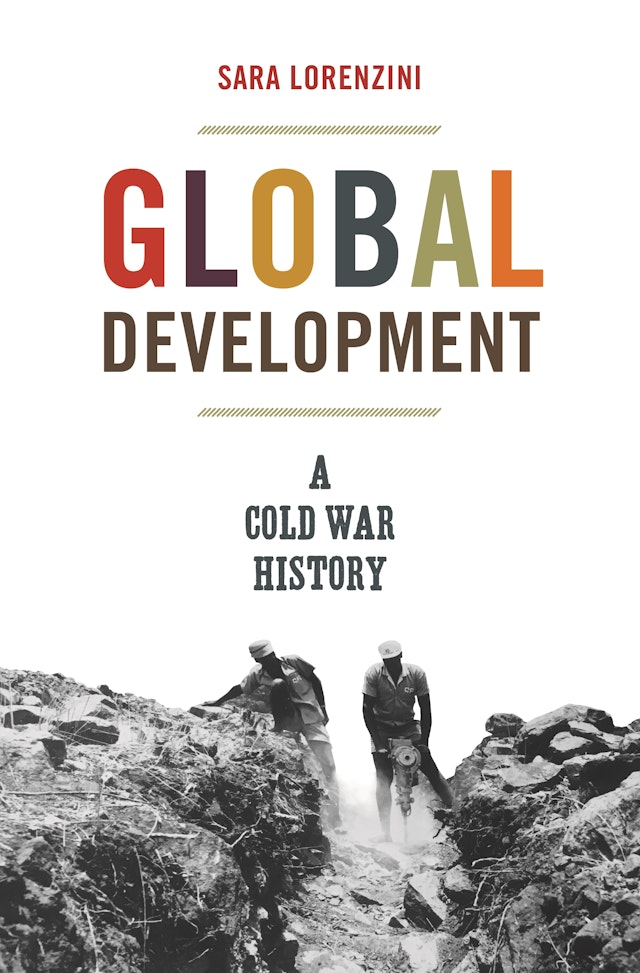
BOOK: Sara LORENZINI, Global Development : A Cold War History (Princeton: Princeton University Press, 2019). ISBN 9780691180151, 29.95 USD


Princeton University Press has published a new book on the history of development during the Cold War period.

ABOUT THE BOOK

In the Cold War, “development” was a catchphrase that came to signify progress, modernity, and economic growth. Development aid was closely aligned with the security concerns of the great powers, for whom infrastructure and development projects were ideological tools for conquering hearts and minds around the globe, from Europe and Africa to Asia and Latin America. In this sweeping and incisive book, Sara Lorenzini provides a global history of development, drawing on a wealth of archival evidence to offer a panoramic and multifaceted portrait of a Cold War phenomenon that transformed the modern world.

Taking readers from the aftermath of the Second World War to the tearing down of the Berlin Wall, Lorenzini shows how development projects altered local realities, transnational interactions, and even ideas about development itself. She shines new light on the international organizations behind these projects—examining their strategies and priorities and assessing the actual results on the ground—and she also gives voice to the recipients of development aid. Lorenzini shows how the Cold War shaped the global ambitions of development on both sides of the Iron Curtain, and how international organizations promoted an unrealistically harmonious vision of development that did not reflect local and international differences.

An unparalleled journey into the political, intellectual, and economic history of the twentieth century, this book presents a global perspective on Cold War development, demonstrating how its impacts are still being felt today.
ABOUT THE AUTHOR
Sara Lorenzini is associate professor of international history in the School of International Studies at the University of Trento in Italy.

More info here

19 December 2019

BOOK: Michał GALEDEK and Anna KLIMASZEWSKA, eds., Modernization, National Identity and Legal Instrumentalism (Vol. I: Private Law; Vol. II: Public Law) (Leiden - New York: Brill, 2019). ISBN 978-90-04-41727-4 & 978-90-04-41735-9, €139.00 & €99.00


(Source: Brill)

Brill is publishing a two-volume work on modernization of the law over the past few centuries, nationality identity and legal instrumentalism.

ABOUT THE BOOK

The driving force of the dynamic development of world legal history in the past few centuries, with the dominance of the West, was clearly the demands of modernisation – transforming existing reality into what is seen as modern. The need for modernisation, determining the development of modern law, however, clashed with the need to preserve cultural identity rooted in national traditions. With selected examples of different legal institutions, countries and periods, the authors of the essays in the two volumes Modernisation, National Identity and Legal Instrumentalism: Studies in Comparative Legal History, vol. I:Private Law and Modernisation, National Identity and Legal Instrumentalism: Studies in Comparative Legal History, vol. II: Public Law seek to explain the nature of this problem. 

ABOUT THE EDITORS

Michał Gałędek Ph.D. (2010), University of Gdańsk, is Professor in the Department of Legal History, Faculty of Law and Administration. In his research he focuses on the Polish administration, judiciary, constitutionalism, and political thought at the beginning of the 19th century and in the interwar period.

Anna Klimaszewska Ph.D. (2011), University of Gdańsk, is Assistant Professor in the Department of Legal History, Faculty of Law and Administration. In her research she focuses on the influence exerted by the French law on the shape of the Polish legal system, commercial law, civil procedure and national legal identity in the 19th century.

TABLE OF CONTENTS

VOLUME I – PRIVATE LAW
1 Introduction: Modernisation, National Identity, and Legal Instrumentalism
  Michał Gałędek

2 Prenuptial Agreements of the Hungarian Aristocracy in the Early Modern Era
  Zsuzsanna Peres

3 Revolution and the Instrumentality of Law: Theories of Property in the American and French Revolutions
  Bart Wauters

4 English Commercial Law in the Longue Durée: Chasing Continental Shadows
  Sean Thomas

5 The Italian Destiny of the French Code de commerce (19th Century)
  Annamaria Monti

6 The Reception of the French Commercial Code in Nineteenth-Century Polish Territories: A Hollow Legal Shell
  Anna Klimaszewska

7 Development of the medical malpractice law and legal instrumentalism in the Antebellum America
  Marcin Michalak

8 The Contractual Third-Party Notion: Beyond the Principle of the Relativity of Contracts: The Comparative Legal History as Methodological Approach
  Sara Pilloni

9 Civilian Arguments in the House of Lords’ Judgments: Regarding Delictual (Tortious) Liability in 20th and 21st Century
  Łukasz Jan Korporowicz

10 Usucapio in Era of Real Estate Title Registration Systems
  Beata J. Kowalczyk

11 In the Name of the Republic: Family Reform in Late Nineteenth and Early Twentieth-Century France and China
  Mingzhe Zhu

12 The Private Law Codification as an Instrument for the Consolidation of a Nation from Inside: Estonia and Latvia between two World Wars
  Marju Luts-Sootak, Hesi Siimets-Gross, Katrin Kiirend-Pruuli

13 Reluctant Legal Transplant: United States Moral Rights as Late 20th Century Honor Law
  Steven Wilf 
VOLUME II – PUBLIC LAW
1 Residential Right in the Course of Time: Changes in the Legal Institution of the Inkolat in the Bohemian Crown Lands
  Jiří BrňovjákandMarek Starý

2 Legal Transfers and National Traditions: Patterns of Modernization of the Administration in Polish Territories at the Turn of the 19th Century
  Michał Gałędek

3 National Modernization through the Constitutional Revolution of 1848 in Hungary: Pretext and Context
  Imre Képessy

4 Restoring the Hungarian Historical Constitutional Order with a Coronation in 1867
  Judit Beke-Martos

5 The Privy Council Appeal and British Imperial Policy, 1833–1939
  Thomas Mohr

6 Direct Impact on Hungarian Migration Policy of the 1870 Agreement on Citizenship between the United States and Austria-Hungary (1880s–1914)
  Balázs Pálvölgyi

7 Political Systems in Transition and Cultural (In)dependence: The Limits of a Legal Transplant in the Example of the Brazilian’s Court of Auditors Birth
  Marjorie Carvalho de Souza

8 Constitutional Systems of Free European States (1918–1939)
  Tadeusz Maciejewski and Maja Maciejewska-Szałas

9 Local Citizenship in the Croatian-Slavonian Legal Area in the First Yugoslavia (1918–1941): Breakdown of a Concept?
  Ivan Kosnica

10 Nazi Law as Pure Instrument: Natural Law, (Extra-)Legal Terror, and the Neglect of Ideology
  Simon Lavis 

More info here