Search

Showing posts with label Papacy. Show all posts

27 August 2025

BOOK: Donald S. PRUDLO (ed.), A Companion to the History of the Roman Curia [Brill's Companions to the Christian Tradition, ed. Christopher M. BELLITTO; 107] (Leiden/Boston: Brill, 2025), XVI+390 p. ISBN: 9789004184626, € 251,22

(Image source: Brill)

About the book:
The Roman Curia is the oldest extant body of institutional administration in the world. Indeed, it was the prototype for the development of centralized government in the monarchies of the Middle Ages. Further, it was the administrative backbone of the first worldwide organization in human history. It developed policies, laws, and procedures that continue to affect the entire world. This book offers scholarly contributions from the origins of the Curia to the early modern period.

Table of contents:

The Early Evolution of the Structures of the Roman Curia
1. The Versatility of the Early Medieval Papal Officials in the Light of the Liber pontificalis (Rosamond McKitterick)
2. Laying Down Papal Law: Archiving Controversy in the Letters of the Collectio Avellana (Bronwen Neil)
3. The Bishop of Rome and His Entourage: the Origins of the Papal Curia (Rita Lizzi Testa)
4. Ex codicibus et ex antiquis polypticis scrinii Sanctae Sedis Apostolicae: Canonical Collections and Archives of the Church of Rome in Antiquity (Dominic Moreau)

Forming the Medieval Curia
5. “Time and Money”: Regulating Appeals to the Roman Curia in the Second Half of the Twelfth Century (Bruce Brasington)
6. Papal Councils and the Curia in the ‘Long’ Twelfth Century, 1088–1215 (Danica Summerlin)
7. A Most Fortuitous Alliance: the Roman Curia and the Mendicant Orders in the Thirteenth Century (Donald S. Prudlo)

Roman Church Governance in the Late Medieval Period
8. Nepotism and the Papal Curia between the Eleventh and the Fifteenth Centuries (Sandro Carocci)
9. From the lectores curie romane to the Magistri Sancti Palatii: Education at the Medieval Roman Curia (Anthony John Lappin)
10. The Papal Penitentiary in the Later Middle Ages (Peter D. Clarke)
11. Administrative and Diplomatic Practices at the Papal Curia between the Thirteenth and Fourteenth Centuries: the Chancery (Barbara Bombi)
12. Sacra Romana Rota – the Papal Tribunal of Tribunals? (Kirsi Salonen)

The Curia in the Early Modern World
13. Locating the Renaissance Curia, c.1420–c.1530 (Miles Pattenden)
14. Europe and the Roman Curia: Conflicts of the Counter Reformation (Elena Bonora)
15. The Congregation of the Council and the Worldwide Provincial Councils, 1564–1622 (Maria Teresa Fattori)
16. The Roman Curia and the Eastern Churches, 1500–1800: Diplomacy, Cultural Policy, Mission, and Confessional Control (Cesare Santus)
17. Two Bodies and One Soul: Papal Finances in the Modern Age (1564–1800) (Massimo Carlo Giannini)
18. The New World by Francesco Ingoli, First Secretary of Propaganda Fide (Giovanni Pizzorusso)

On the editor:
Donald S. Prudlo, Ph.D. (2004, University of Virginia) holds the Warren Chair of Catholic Studies at the University of Tulsa. His research focuses on medieval religious history and thought, on saints and sainthood, and on the Dominican order. He is the author of Thomas Aquinas: A Historical, Theological, and Environmental Portrait (2020), Certain Sainthood (2015), and The Martyred Inquisitor (2009).


More information can be found here: DOI 10.1163/9789004723665.

05 July 2023

CONFERENCE: The Papacy and the Mongolian reigns in the 13th and 14th Centuries (18, 19, 20 July 2023, Wuppertal-Beijing-ONLINE)


The international conference "The Papacy and the Mongolian Reigns in the 13th and 14th Centuries" intends to investigate the phase of relations between Rome and the Far East which is to be places in the first half of the 14th century, a phase that went beyond the first evangelization of the Mongols and times at the institutionalisation of these relations.

The international conference will take place simultaneously in Wuppertal for the European participants and in Beijing for the participants from China, connected via zoom and will be held, due to time difference, on the mornings of 18, 19 and 20 July 2023.

Information and zoom access: cappuccio@uni-wuppertal.de.


***

PROGRAMME


18.07.2023 - Sources

09.00 Johrendt Jochen / Li Wendan: Introduction

09.15 Johrendt Jochen (Bergische Universität Wuppertal): Letters concerning the Mongols in the papal registers

10.15 Alberzoni Maria Pia (Università Cattolica del Sacro Cuore, Milano): The travelogues of the Franciscans in the East

10.45 Andreose Alvise (Università di Udine): Odoric of Pordenone, the Franciscan order and the Papacy

11.45 Li Wendan (Peking University): Historical commentaries on the papal letters concerning the Mongols in the 14th century

12.15 Hautala Roman (Oulu University): Catholic missionary work in the Golden Horde: Factors that contributed to its development

12.45 Discussion


19.07.2023 - Themes and actors of the interaction

09.00 Cappuccio Caterina / Massetti Francesco (Bergische Universität Wuppertal): The Papacy and the Church of Zaytun. Formation and institutionalisation of a Latin diocese in Yuan China

09.45 Concina Chiara Maria (Università di Verona): "aperiatur via... apta nunciis sepe mittendis". The corrispondence between the pope Benedict XII and the Alans in the context of the East-West relations

11.00 Bueno Irene (Università di Bologna): “De societate Christianorum ac Tatarum”: Armenian and Mongols in the diplomatic schemes of the Avignon popes.

11.30 Chen Chunxiao (Chinese Academy of Social Sciences): Byzantine wives of the Mongol Khans

12.00 Musarra Antonio (Sapienza, Università di Roma): Genöse and Venetian merchants in the Far East

12.30 Discussion


20.07.2023 - Perception in the Far East

09.00 Dang Bahoai (Peking University): Two problems related with China mission of Pope Clement V

09.30 Ma Xiaolin (Nankai University): Chinese sources concerning the letters of Toghon Temür and the Alans to Pope Benedict XII

11.00 Qiu Zhirong (Renmin University of China): Some Mongolian terms in Odorico da Pordenone's Relations

11.30 Qiu Yihao (Fudan University): An unknown papal mission in 1312?

12.00 Fujisaki Mamoru (University of Tokyo): Explaining the Christian faith in the papal letters to the Mongols

12.30 Discussion and concluding remarks


More information can be found here.

16 February 2023

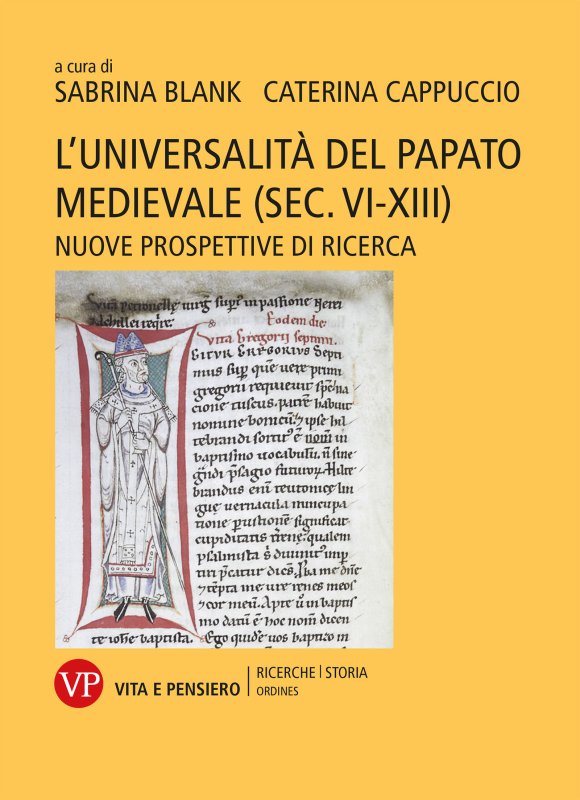
BOOK: Sabrina BLANK, Caterina CAPPUCCIO (eds.), L’universalità del papato medievale (sec. VI-XIII). Nuove prospettive di ricerca (Milan: Vita e Pensiero, 2022). ISBN: 9788834348390


ABOUT THE BOOK

Il volume presenta i risultati del convegno internazionale tenutosi alla Bergische Universität di Wuppertal nel settembre 2019. I contributi raccolti si confrontano con la seconda affermazione contenuta nel dictatus papae di Gregorio VII (Quod solus Romanus pontifex iure dicatur universalis). L’affermazione dell’universalità del papato, già a più riprese indagata dalla storiografia europea, è qui l’oggetto delle ricerche di giovani studiosi e studiose sia da un punto di vista normativo, come nei casi delle elezioni papali, sia nella riflessione teologica di età altomedievale. Questa pubblicazione si inserisce nella linea delle più recenti e affermate tendenze storiografiche della medievistica e dedica particolare attenzione non solo alle norme alla base dell’universalità del papato, ma anche all’applicazione di tali teorie attraverso l’analisi di alcuni vettori dell’interazione tra il papato e le realtà locali. Lo studio di questi attori dell’interazione costituisce la base imprescindibile per la comprensione del papato medievale nelle sue relazioni con le province ecclesiastiche, con l’intento di verificare e approfondire il rapporto esistente tra norma e prassi.


ABOUT THE EDITORS

Sabrina Blank ha conseguito il dottorato di ricerca in Storia medievale presso la Bergische Universität Wuppertal. Le sue ricerche si concentrano sulle elezioni papali e la non giudicabilità del papato dall´età tardo antica al pontificato di Alessandro III. Attualmente è wissenschaftliche Mitarbeiterin presso la RWTH ad Aachen.

Caterina Cappuccio ha conseguito il dottorato di ricerca in Storia medievale presso la Bergische Universität Wuppertal in cotutela di tesi con l’Università Cattolica del Sacro Cuore. Le sue ricerche riguardano la curia romana nel XII e XIII secolo, con particolare attenzione all’istituzione della cappella papale. Attualmente è wissenschaftliche Mitarbeiterin presso la Bergische Universität di Wuppertal.


TABLE OF CONTENT

I. TEORIZZAZIONI DEL PRIMATO PETRINO

  • SABRINA BLANK: …electio uero eorum diuino iudicio est reseruata: Nichtjudizierbarkeit und Papstwahlen in den Kanonessammlungen des 11. und 12. Jahrhunderts
  • MARCO CRISTINI: In toto orbe primus omnium sacerdotum: Pope Vigilius, Arator and the Petrine Primacy
  • MARCO SIRTOLI: Poeti carolingi e primato della Sede Apostolica nel IX secolo

II. PROSPETTIVE CURIALI E PATRIMONIUM PETRI

  • ANDREA A. VERARDI: Le elezioni papali nel Liber Pontificalis romano (secoli VI-IX)
  • ENRICO VENEZIANI: Sed patitur Caelestis, ego nescio cur, aliquando quae nollet: alcune considerazioni sull’elezione di Onorio II
  • STEPHAN PONGRATZ: Kritische Partizipation – Kardinäle und Kurie in den Papstviten des Kardinals Boso
  • ERIC MÜLLER: Kaufmannbankiers und Römische Kurie. Die Rolle der mercatores im sogenannten Protokollbuch des Bassus de Civitate (1269-1276)
  • ALBERTO SPATARO: Potere spirituale e temporale nel governo del Patrimonium Sancti Petri tra XII e XIII secolo. Una proposta di rilettura a partire dal caso di Assisi

III. STRUMENTI DELL’UNIVERSALIZZAZIONE

  • MARIA VEZZONI: Alexander II and the universalis Ecclesia: from praxis to theory
  • CATERINA CICCOPIEDI: I vescovi del Nord Italia: strumento del governo papale?
  • CATERINA CAPPUCCIO: Die päpstliche Kapelle: Entwicklung und Wirksamkeit einer Institution der römischen Kurie
  • FRANCESCO D’ANGELO: La Scandinavia da terra di missione a fidelis Romanae ecclesiae. L’affermazione dell’autorità papale in Scandinavia (secoli XI-XII)


More information can be found here.

16 February 2022

WORKSHOP: «Actes à l’infini», des bases de données infinies ? Exploitation des données – Interopérabilité – Convergences (Online/Luxembourg, Université de Luxembourg, 17-18 february 2022)


Workshop organisiert im Rahmen des Projekts “Lotharingien und das Papsttum“ (INTERLOR). Mit Unterstützung der Deutschen Forschungsgemeinschaft (DFG), des luxemburgischen Fonds National de la Recherche (FNR), des Historischen Instituts der Universität Luxemburg und des Historischen Instituts der RWTH Aachen / Journée d’étude organisée dans le cadre du projet « La Lotharingie et la papauté » (INTERLOR). Avec le soutien de la Deutsche Forschungsgemeinschaft (DFG) du Fonds National de la Recherche (FNR) luxembourgeois, de l’Institut d’Histoire de l’Université du Luxembourg et de l’Institut d’Histoire de la RWTH Aachen

Einschreibung zur Teilnahme über Videokonferenz an: / Inscription pour participation sur visioconférence à : timothy.salemme@uni.lu


***

Jeudi 17 février 2022 / Donnerstag, 17. Februar 2022

(Maison des Sciences Humaines, Rez-de-Chaussée, Black Box)

14h15 : Accueil / Empfang

14h30: Michel Margue (Université du Luxembourg), Harald Müller (RWTH Aachen University): Mots de bienvenue / Begrüßung

14h45 : Timothy Salemme (Université du Luxembourg), Hannes Engl (RWTH Aachen University): Introduction / Einführung

Session I /Sektion I

Les relations entre la Papauté et l’Orbis christianus :un dialogue (im)possible entre bases de données ? / Papsttum und Orbis christianus als Chance zur Vernetzung von Datenbanken?

sous la présidence de / unter der Leitung von

Klaus Herbers (Friedrich-Alexander-Universität Erlangen-Nürnberg)

15h00 : Thorsten Schlauwitz (Friedrich-Alexander-Universität Erlangen-Nürnberg): Die Regesta Pontificum Romanorum online – Erkenntnispotentiale und -grenzen

15h20 : Julien Théry (Université Lumière Lyon 2): Towards a Unified Corpus of Medieval Papal Letters: the APOSCRIPTA Database Project

15h40 : Discussion / Diskussion

16h : Pause-café / Kaffeepause

16h20 : Rolf Große, Sebastian Gensicke (Deutsches Historisches Institut Paris): Gallia Pontificia online. Die Papstregesten der Erzbischöfe von Reims

16h40 : Muriel Foulonneau, Timothy Salemme (Université du Luxembourg): La base de données INTERLOR. Données et transcriptions utilisables pour la recherche

17h00 : Discussion / Diskussion

17h20 : Table ronde sous la présidence de / Rundtischgespräch unter der Leitung von Benoît-Michel Tock (Université de Strasbourg)

19h30 : Repas / Abendessen


Vendredi 18 février 2022 / Freitag, 18. Februar 2022

(Maison des Sciences Humaines, Rez-de-Chaussée, Black Box)

Session II /Sektion II : Construire une base de données, et après ? L’avènement du data mining en histoire médiévale / Vom Textkorpus zur Datenbank und dann? Neue Perspektiven des Data-Mining in der Geschichte des Mittelalters

sous la présidence de / unter der Leitung von Nicolas Ruffini-Ronzani (Université de Namur – Archives de l’État à Namur)

9h20 : Dominik Trump (Universität zu Köln): Capitularia – Die Hybridedition der Kapitularien zwischen digitaler und klassischer Editionstechnik

9h40 : Sergio Torres (École nationale des chartes, Paris) : L’indexation automatique de l’acte diplomatique médiéval: méthodes, modèles et défis

10h : Nicolas Perreaux (LaMOP – Université Paris 1-Panthéon-Sorbonne) : Data mining, stylométrie et sémantique historique. Réflexions sur les enjeux, possibilités et modalités d’un corpus diplomatique européen (CEMA)

10h20 : Discussion / Diskussion

10h40 : Pause-café / Kaffeepause

11h : Sébastien de Valériola (Université libre de Bruxelles – ICHEC Brussels management school): L’historien de demain sera-t-il data scientist? Bases de données globales et méthodes data-driven en histoire médiévale

11h20 : Bastien Dubuisson (Université du Luxembourg – Université de Namur) : Des bases de données au code. Enjeux de la construction d’une enquête stylométrique en histoire médiévale et moderne

11h40 : Discussion / Diskussion

12h00 : Table ronde sous la présidence de / Rundtischgespräch unter der Leitung von Sébastien Barret (CNRS-IRHT Paris-Orléans)

13h00 : Repas (Buffet) / Mittagessen (Buffet)

05 October 2020

BOOK: Ortensio ZECCHINO, L'origine du droit positif chez Frédéric II de Hohenstaufen, Empereur des romains (Paris : LGDJ, 2020). ISBN 978-2-84539-052-2, 39.00 EUR


(Source: LGDJ)

LGDJ is publishing a book on the opposition between natural law and positive law at the time of the Investiture debate.

ABOUT THE BOOK

Au travers d'une étude minutieuse et subtile des sources, l'auteur nous introduit à un des débats majeurs du droit: l'opposition entre le droit naturel et le droit positif, au travers du conflit entre le Saint-Empire et la Papauté. Il nous montre comment Frédéric II de Hohenstaufen, en opposant au « droit naturel » invoqué par Grégoire IX un droit politique en action, construit les fondements de la théorie moderne du « droit positif ». L'auteur, dans la lignée de Kantorowicz, met en évidence la rupture intellectuelle majeure que constitue ce débat. Par rapport aux auteurs français il souligne aussi son antériorité aux affirmations analogues des juristes de Philippe Le Bel.

Cet ouvrage, par son jeu subtil entre droit médiéval, droit moderne et droit contemporain constitue une réflexion essentielle sur le droit occidental.


Il est ici présenté dans une traduction, complétée et enrichie de la 2e édition de sa version italienne publiée en 2018.


More info here

23 April 2020

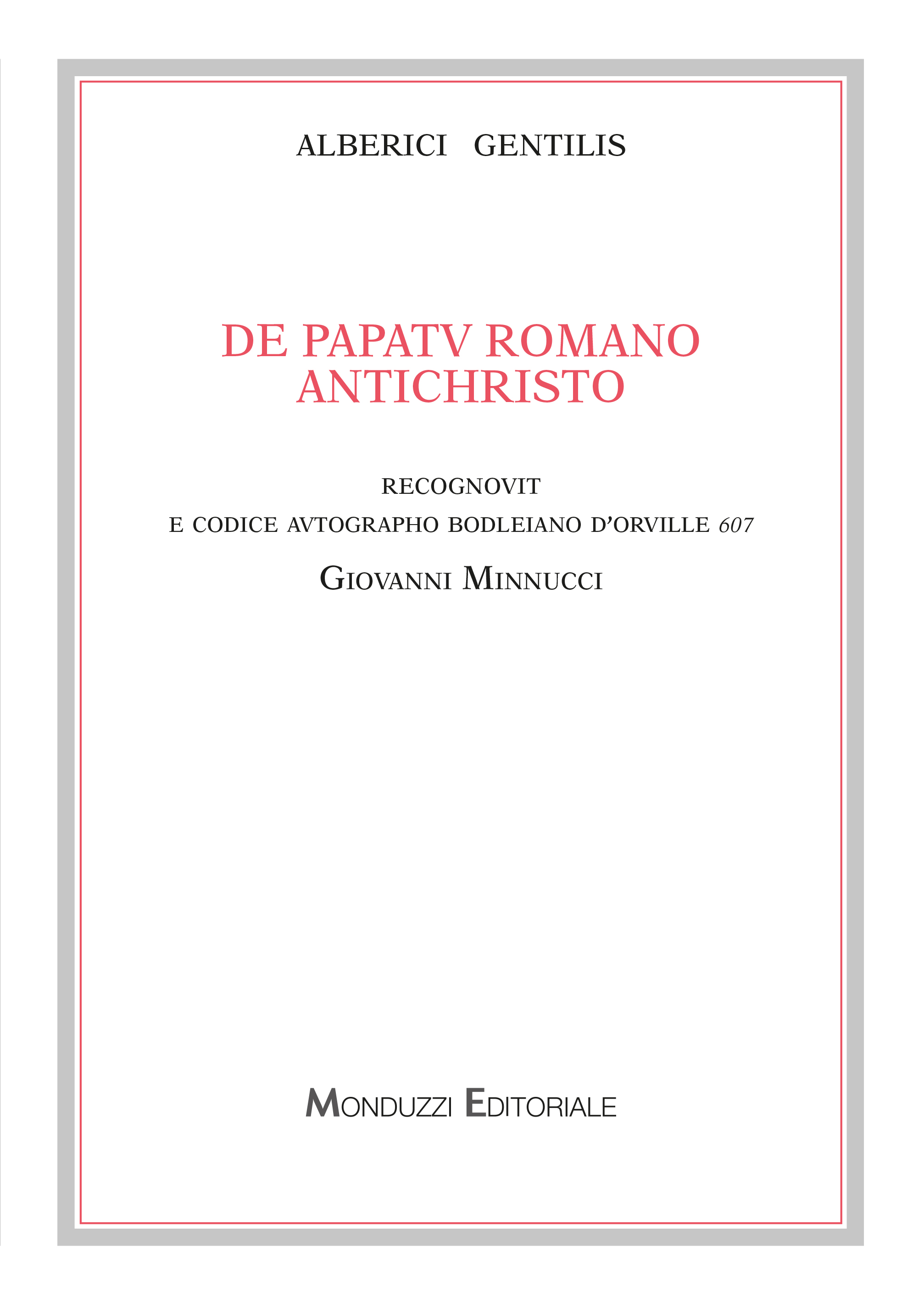
BOOK: Giovanni MINNUCCI (Ed.), Alberici Gentilis, De Papatu Romano Antichristo (Milano: Monduzzi Editoriale, 2018). ISBN: 9788865210949, pp. CLXII-352, € 62,00


ABOUT THE BOOK

Il De papatu Romano Antichristo di Alberico Gentili (San Ginesio 1552 – Londra 1608) è conservato nella Bodleian Library di Oxford e rappresenta il più noto degli inediti del giurista di San Ginesio al quale, soprattutto a partire dal secolo scorso, gli studiosi hanno dedicato particolare attenzione. Le nuove indagini sul manoscritto hanno dimostrato che, pur essendo stato originariamente redatto fra il 1580 e il 1585, quel testo era stato rivisto, corretto e integrato dallo stesso Gentili. Correzioni, aggiunte, appunti scritti dall’Autore almeno fino al 1591: una novità deducibile dalla lettura di alcuni appunti autografi vergati in uno dei primi fogli del manoscritto bodleiano – fogli originariamente destinati a restare bianchi – ove si fa rinvio, più volte, al Tractatus criminalis di Tiberio Deciani la cui editio princeps risale al 1590. Per tentare di comprendere pienamente l’entità e la natura sostanziale di queste modifiche e annotazioni, e le ragioni per le quali il Gentili non giunse mai alla determinazione di completare e successivamente pubblicare il lavoro, occorreva tornare a studiare criticamente la fonte manoscritta nella sua interezza, ma soprattutto predisporne l’edizione critica: un evento sempre auspicato ma mai, fino ad ora, realizzato. Il progetto, dopo oltre sei anni di intenso lavoro da parte di Giovanni Minnucci che, nel corso di questo lungo periodo, ha dato periodicamente conto dei risultati progressivamente raggiunti, è stato finalmente portato a compimento.

Composta di 24 Assertiones, attraverso le quali l’A. intese dimostrare che l’Anticristo era da identificare nel Papato Romano, l’opera è corredata da un numero copiosissimo di allegazioni tratte dalla Sacra Scrittura, dalle opere dei Padri della Chiesa, da quelle teologiche, storiche, filosofiche, letterarie e giuridiche, individuate dal curatore, a piè di pagina, in un apposito apparato critico. In un secondo apparato, sempre a piè di pagina, vengono edite anche le numerose additiones che Gentili vergò nei margini e, talvolta, nelle interlinee del testo. Segue un’Appendice nella quale si legge il testo, criticamente edito, degli appunti di lavoro che Gentili annotò nel frontespizio e nei fogli del manoscritto inizialmente destinati a restare bianchi. In ragione della particolare natura del testo – un vero e proprio work in progress che Alberico Gentili non aveva mai concluso – l’edizione critica del De papatu Romano Antichristo, delle numerose additiones e dei cospicui appunti sparsi che ne caratterizzavano la stesura, era meritevole di essere accompagnata da un saggio introduttivo. Per una migliore comprensione dell’opera, e per una sua più compiuta, ancorché preliminare, illustrazione, Giovanni Minnucci ha ritenuto necessario soffermarsi sulle presumibili ragioni sottese alla decisione assunta da Gentili di voler affrontare il tema oggetto del suo lavoro e sulle fonti complessivamente utilizzate – avendo riguardo anche a quelle prive di esplicito rinvio – cercando di approfondire, allo stesso tempo, la natura delle additiones vergate nei margini e nelle interlinee, e le probabili motivazioni della sua mancata pubblicazione. Né potevano essere ignorate, infine, in ragione dei contenuti eminentemente teologici e giuridici dell’inedito, le idee che, in relazione ai rapporti fra diritto e teologia e fra coloro che quelle discipline professavano, il nostro Autore aveva espresso negli anni ai quali va fatta risalire la conclusione della prima redazione dell’opera e a quelli immediatamente seguenti, allorquando decideva di aggiornarla e modificarla. In questo periodo, com’è noto, si concretizzarono i prodromi di un vero e proprio scontro teorico, di natura politico-dottrinale, con i puritani inglesi e, più in particolare, con il teologo John Rainolds. Queste vicende, già note alla storiografia, erano suscettibili non solo di essere ripensate e approfondite alla luce della documentazione manoscritta che le attesta, ma anche nuovamente contestualizzate: proprio mentre la polemica iniziava ad accendersi per poi successivamente esplodere all’inizio degli anni Novanta del XVI secolo, Alberico stava attendendo alla scrittura e alla successiva revisione del De papatu. Temi e problemi già oggetto di studio da parte di Minnucci, che vengono qui ripresi, integrati, approfonditi e notevolmente ampliati nei Prolegomena che precedono l’edizione. Giunto ad uno stadio avanzato di elaborazione, il De papatu Romano Antichristo attesta i forti dissensi che caratterizzarono la vicenda politica e religiosa europea in uno dei momenti più bui della sua storia millenaria, ed è contestualmente testimone della vastissima cultura e della poliedrica attività scientifica del grande giurista e pensatore italiano, esule in Inghilterra sin dal 1580 per la sua adesione alla Riforma, e regius professor di civil law a Oxford dal 1587.

ABOUT THE EDITHOR

Giovanni Minnucci is Full Professor of History of Medieval and Modern Law at the University of Siena. He teaches History of European Law and History of International Law. Member of the Board of the PhD in "Historical Studies" (University of Florence and Siena). In the Academic year 2019-2020 he is “visiting professor” at the Faculty of Canon Law "San Pio X" of the “Studium Generale Marcianum” in Venice. In 1982-83. Visiting Research Fellow at the Institute of Medieval Canon Law and the Robbins Collection (School of Law - Boalt Hall) - University of California, Berkeley (USA).  He taught at the Universities of Perugia and Siena. At the latter he held the positions of Pro-Rector Vicar, Chairman of the Political Science Faculty, Director of Department, elected member of the Academic Senate. Over the years he has dealt with the following issues, paying particular attention to manuscript sources: the history of universities in the Middle Ages and in the early Modern Age;  history of the process in the medieval age and of the female procedural condition; Of the history of canon law;  history of law and criminal procedure by publishing the critical edition of Tractatus criminum (XII century);  history of marriage in the medieval and modern times;  thought and work of Alberico Gentili, a jurist who has dedicated  four monographs, and has published many unpublished texts kept in the Oxford Libraries.

A PDF version of the table of contents can be downloaded here.

More information with the publisher.

17 April 2020

BOOK: Irene FOSI, Inquisition, Conversion, and Foreigners in Baroque Rome (Leiden: Brill, 2020). ISBN: 9789004422667, pp. 260, € 125.00

Cover Inquisition, Conversion, and Foreigners in Baroque Rome
(Source: Brill)

ABOUT THE BOOK

In Rome, where strategies to re-establish Roman Catholic orthodoxy were formulated, the problem of how to deal with foreigners and particularly with ‘heretics’ coming from Northern Europe was an important priority throughout the early modern period. Converting foreigners had a special significance for the Papacy. This volume, which includes several case studies, explores the meaning of conversion and the changes of policy adopted by the church bodies set up to protect orthodoxy. It uses inquisitorial documents (from Archivio della Congregazione per la dottrina della Fede) and sources from other archives and libraries, both in Rome and elsewhere. The book includes an updated bibliography with a particular attention paid to anglophone historiography.

ABOUT THE AUTHOR

Irene Fosi is professor of Modern History at the University “G. d’Annunzio” of Chieti-Pescara in Italy. She is author of many original studies on Renaissance and Baroque Rome: All’ombra dei Barberini. Fedeltà e servizio nella Roma barocca (Rome 1997); Papal Justice. Subjects and Courts in the Papal States, 1500-1750 (Washington D.C., 2011); Conversion and Autobiography: Telling Tales before the Roman Inquisition, in “Journal of Early Modern History”, 17, 2013, pp. 437- 456; 'The Hospital as a Space of Conversion: Roman Examples from the Seventeenth Century', in Space of Conversion in Global Perspective, ed. by G. Marcocci, W. de Boer, A. Maldavsky, I. Pavan, pp. 154-174 (Brill, Leiden-Boston, 2014).

TABLE OF CONTENTS

Introduction. Winds of the North
1 Rome, a Patria Comune?
 1 Rules and Procedures: Defining the Foreigner
 2 Religious Identity
 3 Protection, Integration, Exclusion: National Confraternities, Hospices and Colleges
 4 Conversions and Reconquests: The Venerable English College in the Late Sixteenth and Seventeenth Centuries
2 Not Only Pilgrims: Reception and Conversion
 1 Conversion and the Holy Years
 2 Abjuring Heresy and Creating a New Identity
 3 Clement VIII’s “Womb of Paternal Compassion”
 4 Rome, a Den of Spies
3 Cristoforo Gaspare Fischer: a Goldsmith, his Inheritance and the Inquisition
 1 Cristoforo “Piscator aurifex in Urbe”
 2 Between Nuremberg and Rome
 3 Lengthy Negotiations and Powerful Intermediaries
4 Johannes Faber, “One of Italy’s Seven Sages”
 1 Johannes Faber’s Roman Career
 2 “Acquiring the Souls of Others”
 3 Friends and Compatriots
 4 Echoes of War
 5 A Dubious Reputation
5 Guillaume Reboul: a Troublesome Convert
 1 A Restless Pamphleteer
 2 Rivalry and “loathing”
 3 Between Paris and Rome
6 Unsettling Mobility: Foreign Heretics in Italy
 1 The Inquisitor’s Doubts
 2 Merchants in the Duchies of Mantua and Savoy
 3 At the Border of the Papal States
 4 From Leghorn to Florence by Way of Siena
 5 Naples: a Port City
7 Between Intransigence and Tolerance
 1 Alexander VII: New Conversion Politics
 2 Difficult Control
 3 A Cultural Conversion Project
 4 The Heretic’s Language
8 Petitions, Enclosures, Burials
 1 Petitions and Intermediaries
 2 Enclosing: the Ospizio Apostolico dei Convertendi
 3 Burials
 4 Onward to the Eighteenth Century
 5 Exiled Princes, Traveling Princes
Conclusion
Bibliography
Index


More information here