Search

Showing posts with label Visigothic law. Show all posts

22 May 2023

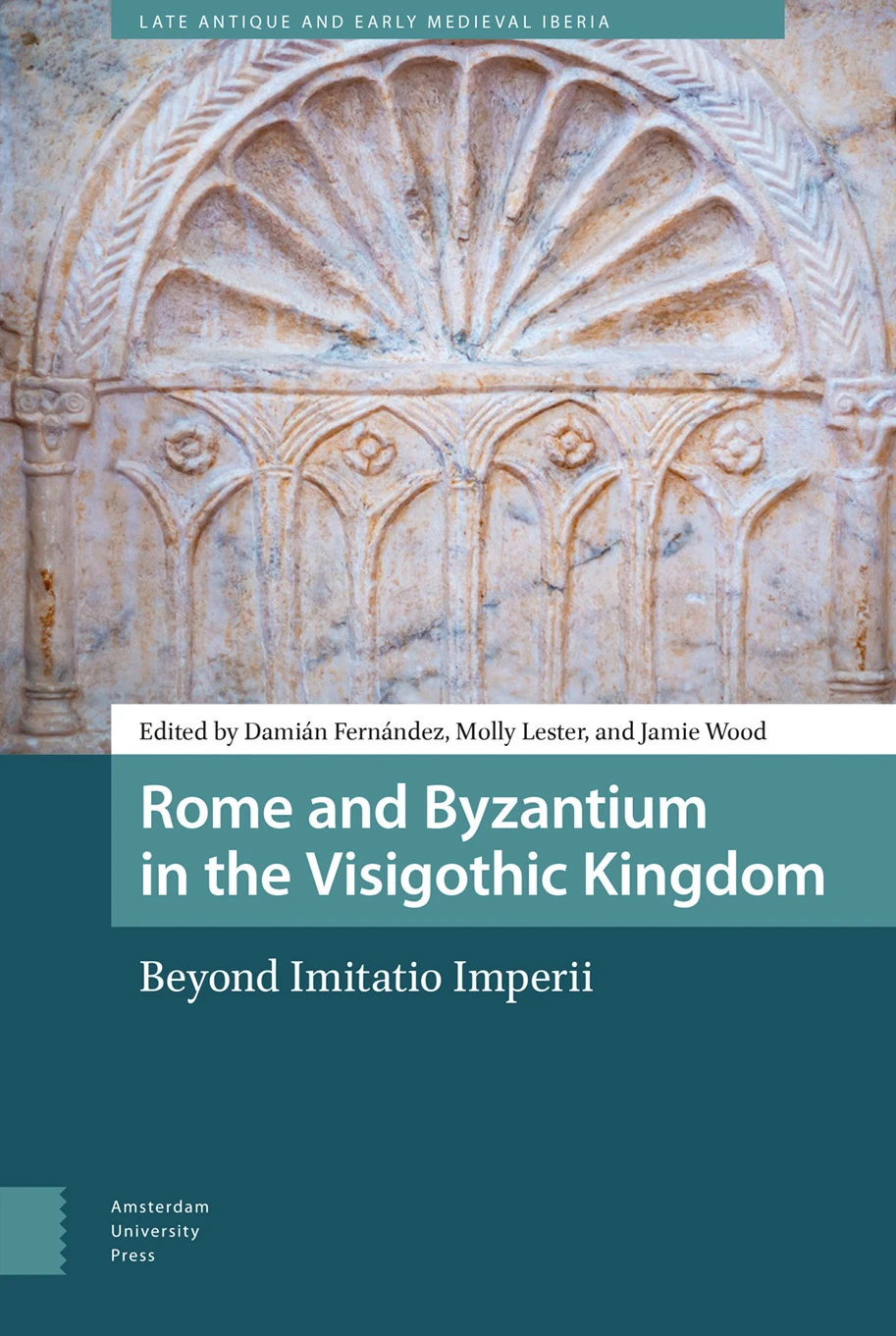
BOOK: Damián FERNANDEZ, Molly LESTER, Jamie WOOD (eds.), Rome and Byzantium in the Visigothic Kingdom Beyond Imitatio Imperii (Amsterdam: Amsterdam University Press, 2023), ISBN: 9789463726412


ABOUT THE BOOK

This volume interrogates the assumption that Visigothic practices and institutions were mere imitations of the Byzantine empire. Contributors rethink these practices not as uncritical and derivative adoptions of Byzantine customs, but as dynamic processes in dialogue with not only the Byzantine empire but also with the contemporary Iberian context, as well as the Roman past. The goal of the volume is to approach Visigothic customs not as an uncritical adoption and imitatio of contemporary Roman models (an "acculturation" model), but as unique interpretations of a common pool of symbols, practices, and institutions that formed the legacy of Rome. The contributors argue that it is necessary to reconsider the idea of imitatio imperii as a process that involved specific actors taking strategic decisions in historically contingent circumstances.


ABOUT THE EDITORS

Molly Lester is Assistant Professor of History at the United States Naval Academy. She is a historian of late antique and early medieval Christianity and has published on orthodoxy and heresy, liturgy, and canon law in Visigothic Iberia. Her current book project is The Word as Lived: Orthodoxy and Liturgy in Early Medieval Iberia.

Jamie Wood is Professor of History and Education at the University of Lincoln. He has published extensively on Isidore of Seville’s historiography, bishops in Visigothic Hispania, and the social functions of violence. His current project explores political, economic, and religious connections between the Iberian Peninsula and the Byzantine world in late antiquity.


TABLE OF CONTENTS
Introduction (Damián Fernández, Molly Lester, and Jamie Wood);
1. Visigothic Spain and Byzantium. The story of a special (historiographical) relationship (Céline Martin);
2. The development of the Visigothic court in the hagiography of the fifth and sixth centuries (Ian Wood);
3. Experiments in Visigothic Rulership: Minting and Monetary Reforms under Alaric II (Merle Eisenberg);
4. A comparison of Roman and Visigothic Approaches towards Exile (Margarita Vallejo Girvés);
5. The Roman Jewel in the Visigothic Crown: A Reassessment of the Royal Votive Crowns of the Guarrazar Treasure (Cecily Hilsdale);
6. Capitalhood in the Visigothic Kingdom (Damián Fernández);
7. Making Rite Choices: Roman and Eastern Liturgies in Early Medieval Iberia (Molly Lester);
8. Ethnicity and Imitatio in Isidore of Seville (Erica Buchberger);
9. Re-imagining Roman Persecution in the Visigothic Passions (David Addison);
10. Romanness in Visigothic Hagiography (Santiago Castellanos);
11. Empire and the Politics of Faction: Mérida and Toledo Revisited (Graham Barrett);
12. The agents and mechanics of connectivity: The Mediterranean world and the cities of the Guadiana valley in the sixth century (Jamie Wood);
13. Staying Roman after 711? (Ann Christys).

More information can be found here

21 April 2021

BOOK: Michael J. KELLY, Isidore of Seville and the Liber Iudiciorum - The Struggle for the Past in the Visigothic Kingdom (Leiden: Brill, 2021). ISBN 978-90-04-34398-6, 174.00 EUR


(Source: Brill)

Brill has published a new book on the Liber Iudiciorum.

ABOUT THE BOOK

Isidore of Seville and the “Liber Iudiciorum” establishes a novel framework for re-interpreting the Liber Iudiciorum (LI), the law-code issued in Toledo by the Visigothic king Recceswinth (649/653-672) in 654. The LI was a manifestation of a vibrant dialectical situation, particularly between two networks of authority, Isidore-Seville and Toledo-Agali, a defining characteristic of the discourse coloring the fabric of writing in Hispania, c. 600-660. To more fully imagine the meaning, significance and purposes of the LI, this book elicits this cooperative competition through a series of four case-studies on writing in the period. In addition to offering an alternative historiography for the LI, this book expands the corpus of “Visigothic Literature” and introduces what the author refers to as “Gothstalgie.”

ABOUT THE AUTHOR

Michael J. Kelly lectures history, critical theory, and the philosophy of history at Binghamton University (SUNY) and is Director of Networks and Neighbours and Gracchi Books (gracchibooks.org). He edited Theories of History: History Read Across the Humanities (Bloomsbury, 2018), with Arthur Rose.

TABLE OF CONTENTS

1 Introduction: the Isidore-Moment, the Liber Iudiciorum, and the Schools Thesis

 1 A Brief History and Introduction to Seventh-Century Hispania

 2 The Isidore-Moment and the Liber Iudiciorum

 3 The “Schools” – Hasta Siempre, Bishop Isidore


2 In the Beginning: The History of the Historiography of Isidore

 1 Introduction

 2 The Historiography of Isidore

 3 The Representations

 4 Other Contemporary Historical Representations of Isidore

 5 Conclusion


3 Origins and Histories: Creating New Chains of Signification

 1 Introduction

 2 Isidore’s Literature of the Past

 3 Isidore’s [Use, Abuse and Philosophy of] History

 4 Conversion and the Locating of Seville

 5 The Goths in Isidore-Seville’s Historical Representations

 6 Conclusion


4 The Historical Lacunae and Damnatio[nes] Memoriae of the Hispana

 1 Introduction

 2 The Hispana

 3 The Example of Gundemar and his Council (610)

 4 The Example of the Third Council of Seville (624)


5 Pinnacle and Twilight: The Liber Iudiciorum and the “Historical” Fulfillment of the Isidore-Moment

 1 Introduction

 2 What Is the Liber Iudiciorum?

 3 Interlude: Short Historical Background

 4 The Structure of the Liber Iudiciorum, and Its Meaning

 5 Constituent Influence of the School of Isidore-Seville

 6 Conclusion


Conclusion


Appendix: Julian of Toledo Not an Agalian

Bibliography

Index


More info here