Search

Showing posts with label Rome. Show all posts

14 March 2025

BOOK: Simona FECI, L’acquetta di Giulia. Mogli avvelenatrici e mariti violenti nella Roma del Seicento (Rome: Viella, 2024). ISBN: 9791254696699

(Image source: Viella Editore) 


About the book

Nella Roma di metà Seicento, pochi anni dopo l’epidemia di peste, viene scoperta in modo rocambolesco l’esistenza di una rete di avvelenatrici: alcune preparano un veleno “perfetto”, conosciuto in tutta Italia come l’«acqua tofana», altre lo acquistano e se ne servono per liberarsi dei loro mariti. È il più clamoroso fatto di cronaca nera del secolo e uno dei pochissimi complotti tutti al femminile della storia. La trama collettiva che viene alla luce ci accompagna nelle pieghe di una città barocca dove trovano posto tutti gli elementi di un potenziale romanzo: amore e veleno, violenza, crimine e morte, sotterfugi ed esibizionismo, denaro e solidarietà. Pronte a sfidare il potere dei padri, il sapere dei medici e l’azione degli inquirenti, le protagoniste e le loro storie offrono uno straordinario passepartout per raccontare la condizione delle donne nel secolo di Artemisia Gentileschi, della monaca di Monza, di Cristina di Svezia.


About the author

Simona Feci is Associate Professor of Medieval and Modern Legal History in the Department of Law at the University of Palermo. She is a member of the PhD Committee on “Human Rights: Evolution, Protection and Limits” at the University of Palermo. She is President of the Società italiana delle storiche (Italian Association of Women Historians) (2016-2020), after serving on the executive board for two years (2014-2016). Her current research projects focus on the history of the family, domestic violence in the early modern period and women’s rights in Italy. Among her publications, see: Pesci fuor d’acqua. Donne a Roma in età moderna: diritti e patrimoni, Rome, Viella, 2004; La violenza contro le donne nella storia. Contesti, linguaggi, politiche del diritto (sec. XV-XXI), ed. with Laura Schettini, Rome, Viella, 2017.


Table of contents

Introduzione

  1. Veleno e violenza
  2. Venefici e narrazioni

1. Vite barocche di donne (quasi) comuni

  1. Giovanna de Grandis
  2. Le intermediarie
  3. Girolama Spana
  4. Veleni, fattucchierie, curiosità
  5. L’acquetta

2. Un affare di donne

  1. Una rappresentazione attendibile?
  2. Identità, mobilità e socialità
  3. La rete
  4. Conflitti e violenza coniugale
  5. Sottrarsi alla violenza, coltivare aspirazioni, inseguire desideri
  6. Madri e figlie
  7. Il prezzo della colpa
  8. Brodini, minestre e altre prelibatezze
  9. Congedarsi dal mondo
  10. Brusii e sospetti

3. Il processo

  1. Entra la corte
  2. Veneficio e parricidio
  3. La scoperta della trama
  4. Il corpo del reato
  5. Interrogatori, confessioni, testimonianze
  6. «Per sradicar simil sorte di genti»
  7. Cecilia Bossi «ucello di campagna»
  8. La duchessa di Ceri

4. Memoria e fortuna dell’acquetta

  1. La morte per via di giustizia
  2. Storie cantate, relazioni e cronache
  3. Il veleno e la peste
  4. Il regime delle professioni
  5. L’emulazione e la fama

Ringraziamenti

Bibliografia


More information can be found here.

19 September 2023

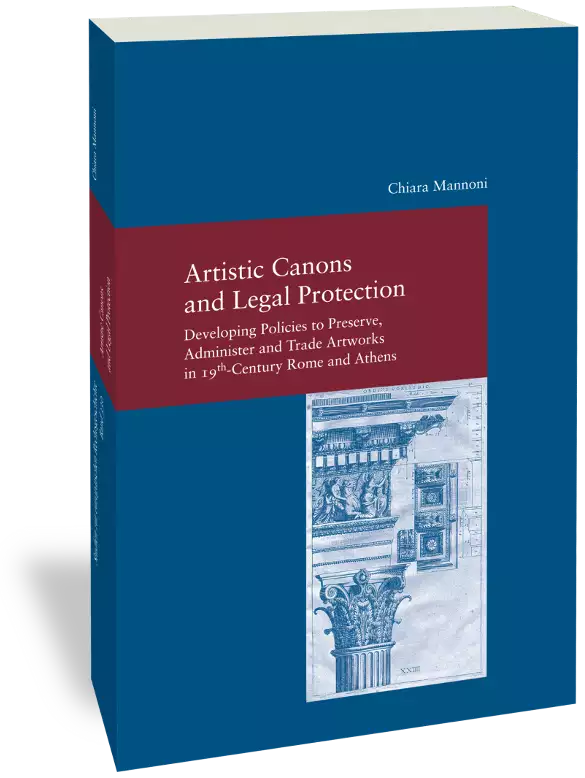
BOOK: Chiara MANNONI, Artistic Canons and Legal Protection. Developing Policies to Preserve, Administer and Trade Artworks in 19th-Century Rome and Athens (Frankfurt am Main: Klostermann, 2023). ISBN 978-3-465-04547-2


ABOUT THE BOOK

The edicts on the antiquities and artworks issued in the Papal States and Greece in the early 19th century constitute the first comprehensive legislation for the protection of heritage in Europe. In this volume, such laws are analysed from a cultural, juridical and art-historical perspective in order to understand how both legal and artistic scholarship affected the guardianship of artefacts, fluctuations in the art market and the establishment of innovative systems for heritage administration in Rome and Athens. The analysis of the origins of these laws, discussed in comparison to earlier edicts (5th–18th century), and of their cultural consequences also sheds light on the development of new definitions of “art”, “artwork” or “monument”, which have become fundamental to contemporary approaches to heritage protection in Europe.


More information can be found here.

28 July 2020

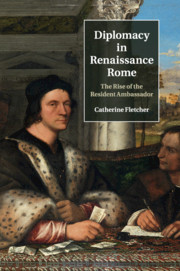
BOOK: Catherine FLETCHER, Diplomacy in Renaissance Rome. The Rise of the Resident Ambassador (Cambridge: University Press, 2020). ISBN: 9781107515789, £ 22.99

Diplomacy in Renaissance Rome
(Source: CUP)

ABOUT THE BOOK

Diplomacy in Renaissance Rome is an investigation of Renaissance diplomacy in practice. Presenting the first book-length study of this subject for sixty years, Catherine Fletcher substantially enhances our understanding of the envoy's role during this pivotal period for the development of diplomacy. Uniting rich but hitherto unexploited archival sources with recent insights from social and cultural history, Fletcher argues for the centrality of the papal court - and the city of Rome - in the formation of the modern European diplomatic system. The book addresses topics such as the political context from the return of the popes to Rome, the 1454 Peace of Lodi and after 1494 the Italian Wars; the assimilation of ambassadors into the ceremonial world; the prescriptive literature; trends in the personnel of diplomacy; an exploration of travel and communication practices; the city of Rome as a space for diplomacy; and the world of gift-giving.

ABOUT THE AUTHOR

Catherine Fletcher is Lecturer in Public History at the University of Sheffield. Her first book, Our Man in Rome: Henry VIII and his Italian Ambassador, was published in 2012. Catherine graduated with a first-class degree in Politics and Communication Studies from the University of Liverpool and worked for the BBC Political Unit before studying for a PhD in History at Royal Holloway, University of London. She held fellowships at the Institute of Historical Research, the British School at Rome and the European University Institute before taking up her current post in 2012. She has published widely on aspects of early modern political culture and diplomacy. Catherine is a regular media contributor and has been a guest on two editions of BBC Radio 4's 'In Our Time' among other programmes. She has been a historical adviser to the new TV production of Wolf Hall and blogs at History Matters.

TABLE OF CONTENTS

Introduction
1. Rome and the rise of resident diplomacy
2. Conceptualising the resident ambassador
3. The ritual world of the curia
4. The personnel of diplomacy
5. Information and communication
6. Locating diplomacy in the city of Rome
7. 'Those who give are not all generous': the world of gifts
Conclusion
Bibliography
Index.

More information with the publisher.

30 August 2019

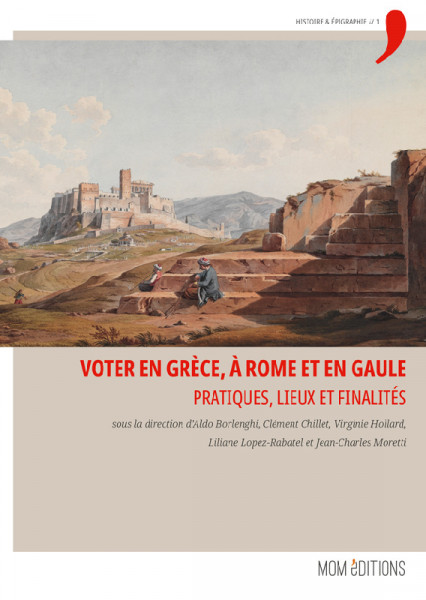
BOOK: Aldo BORLENGHI et al., eds., Voter en Grèce, à Rome et en Gaule : Pratiques, lieux et finalités (Lyon: MOM Editions, 2019). ISBN 978-2-3566-8062-4, €50,00


MOM Editions has published an edited collection on voting and voting systems in Ancient Greece, Rome and Gaul.

ABOUT THE BOOK

Dans ses aspects aussi bien théoriques que matériels, le système du vote dans les mondes grec et romain a depuis longtemps été exploré au sein d'études plus générales sur les institutions ou les différents types de régimes politiques. Il n'a cependant jamais fait l'objet de publications réunissant à la fois les témoignages textuels et les résultats des fouilles archéologiques, dans l'optique d’une compréhension globale de cette pratique.

De ce constat est né le projet d’une synthèse portant sur les modalités, les lieux et les finalités du vote en Grèce, à Rome et en Gaule, dans une perspective comparatiste. Menée dans le cadre d’un programme de recherche interdisciplinaire soutenu par l’université Lumière Lyon 2 et la Maison de l’Orient et de la Méditerranée, cette recherche a suscité, selon les régions et les périodes concernées, des questionnements spécifiques mais elle a aussi fait émerger des points de convergence.
La collaboration de chercheurs issus de plusieurs disciplines – l’histoire, la philologie et l’archéologie – a permis de cerner la pratique du vote à travers ses implications politiques, ses modalités procédurales et la place qui lui a été réservée dans l’espace civique par les différentes sociétés antiques qui l’ont mise en œuvre.

Le présent ouvrage, qui présente une synthèse sur chacune des aires géographiques étudiées et rassemble vingt et une contributions issues de séminaires ou de journées d’études qui se sont tenus à Lyon, à la Maison de l’Orient et de la Méditerranée, de la fin de l’année 2012 au printemps 2014, propose une approche inédite de l’acte de vote dans l’Antiquité.

TABLE OF CONTENTS

Préface
Première partie – Le monde grec
Liliane Lopez-Rabatel
Introduction
Liliane Lopez-Rabatel
Le vote dans le monde grec, procédures et équipement
Marcel Piérart
Ni anarchie ni despotisme. Les élections du Conseil dans la cité des Lois
Christine Mauduit
Le suffrage d'Athéna : réflexions sur le vote dans la tragédie grecque
Enzo Lippolis
Riunioni, operazioni di voto e agoni nell'agorà di Atene
Jean-Charles Moretti
La Pnyx, lieu de vote
Deuxième partie – Le monde romain
Clément Chillet, Virginie Hollard
Introduction
• Les procédures
Dominique Hiébel
Les élections romaines, emblèmes de la souveraineté populaire ou artifices politiques de l'oligarchie ?
Xavier Dupuis
Les curies électorales dans les cités provinciales, une évolution du modèle romain ?
Frédéric Hurlet
Le tirage au sort dans les cités de l’Occident romain
Michel Tarpin
La paperasse avant le papier : enregistrement, déclarations, identité, contrôles à Rome
• Les lieux
Yann Bertelet
Templa de majesté et conception du vote à Rome
Michel Humm
Les espaces comitiaux à Rome pendant la période républicaine
Clément Chillet
Le comitium comme lieu de vote à Rome : une relecture
Aldo Borlenghi
Les installations de vote dans les villes d’Italie : état de la question sur les assemblées électorales dans l’aire du forum
• Les finalités
Gilles van Heems
Le suffrage archaïque : vote et assentiment populaire en Étrurie et à Rome à l’époque des rois et des tyrans
Virginie Hollard
Étude sur la nominatio dans les élections des magistrats de Rome. Éléments apportés à l’histoire d’une étape technique du vote romain et de son évolution entre la République et le régime impérial
Théo Brignoli
La plèbe et le peuple, modalités de l’expression d’organes essentiels de la cité
Troisième partie – Le monde gaulois
Aldo Borlenghi
Introduction
Emilie Mitsakis
Les procédures électorales en Gaule d’après les sources littéraires
Franck Perrin
À la recherche d’un corps civique en Gaule préromaine
Catherine Gaeng, Patrice Méniel, Jeannot Metzler
L’espace public de l’oppidum de Titelberg (L)
Romain Guichon
Des jetons de vote gaulois ? Le petit mobilier circulaire en contexte politico-religieux
Matthieu Poux
Voter dans les sanctuaires en Gaule romaine : espaces architecturaux, indices matériels et cadre institutionnel
Postface
Yves Sintomer
Voter dans l’Antiquit : un regard depuis le XXIe siècle

More info here