Search

Showing posts with label International Workshop. Show all posts

14 May 2021

CALL FOR PAPERS: Ius Commune Workshop on Comparative Legal History 2021: Ius Commune in the Making: Great Debates in the History of Law, - Maastricht University, 25-26 November 2021 (deadline 15 July 2021)


(Source: Maastricht University)


Call for Papers

Ius Commune Workshop on Comparative Legal History 2021

Ius Commune in the Making: Great Debates in the History of Law


The 26th Ius Commune Conference will take place in Maastricht (25-26 November 2021), and a Workshop will be devoted to “Great Debates” in the history of law.

The workshops on “Comparative Legal History–Ius Commune in the Making” aim to reveal and understand the nature and effects of various legal formants in the development of law. Indeed, forces of legal formants are too often lost or hidden beneath a superficies of commonalities. History is a living laboratory. In the past, we explored the role of legal actors (Edinburgh 2014), legal sources (Maastricht 2016), force of local laws (Utrecht 2017), methods and dynamics of law (Amsterdam 2018), networks (Leuven, 2019), and paradigmatic shifts (Maastricht, 2020).

The current Workshop aims to explore the way in which debates–be these academic, judicial, social, or political–have an impact on law and society. Further, it aims to explore how these Great Debates gain a place of pre-eminence, triggering divides but also synergy and joint efforts, remaining in the narrative or fading away. Societal and political debates took place on participation in public powers leading to the eighteenth-century revolutions, and the modern constitutions; social debates took place as corollary to the Industrial Revolution, leading to a change in legal reasoning (eg, Libre recherche scientifique). Great Debates merit attention (eg, colonialism, economic power of private companies), being palpable across time. Likewise, grand academic debates have been omnipresent, on various levels, occasionally causing stagnation of legal science, yet on other occasions triggering seminal changes. Some legendary debates confirm this statement. For example, the early encounters between Proculians and Sabinians, though shrouded in mystery. Examples are found also in the Medieval Investiture Controversy and in the twelfth-century disputes between Martinus and Bulgarus. The tracing of controversies can extend to the encounters in the modern period on codification between von Savigny and Thibaut or between Kemper and Nicolaï. The catalogue of Great Debates ought to include the clash between Loeff and Struycken on the need for separate administrative courts in the Netherlands. The common law was not free of Great Debates, and the quests of Bentham offer rich examples.

Tournaments of Scholars (Sweeney 1972) may keep alive or ignite the interest in the study of a specific aspect of the law or of the actors that shaped the law. This Workshop invites to address those Great Debates, exploring the process of their making and perception, the shifts they may have gestated in the creation, interpretation, and/or application of the law. This Workshop aims to highlight those moments in time in which ideas came to fruition, to find themselves juxtaposed or aligned, and sometimes lost, like tears in rain, throughout the history of law. Further, a look into these seminal debates can explain oscillations and malleability of law, moving across time and space, through legal cultures and systems.

We need to understand and be aware of the different clashes that took place in the past, and hence understand an important way in which law is shaped. As always, calls for change may be heard, from within or from outside the legal domain. History is a necessity, as it offers us the opportunity to identify and analyse change. We seek to identify the nature of these Great Debates and the changes they entailed. Reasons and motivations for change may be highlighted, and reveal the contextual formants, like prevailing ideologies, in time and space. Great Debates took place at different time periods, including Roman law, the learned ius commune, nineteenth-century codification, and the more recent efforts towards a harmonization of law in Europe. Law in the making can be better explained by a look into Great Debates at different times and places.

Senior researchers and PhD candidates are invited to submit an abstract of a paper related to the above-mentioned theme. Abstracts (max. 400 words) should be sent to Agustín Parise (agustin.parise@maastrichtuniversity.nl) no later than 15 July 2021. Shortly after that, the authors will be informed whether their papers are selected for a presentation during the Workshop. All contributions should be in English. Co-authored papers will be also considered. The organizing committee will give preference to early-career researchers when facing submissions of similar high quality.

Researchers from within and outside the Ius Commune Research School will be eligible to present abstracts. Please also forward this call to colleagues who might be interested.

Should you have any questions please do not hesitate to contact a member of the organizing committee,

Harry Dondorp (j.h.dondorp@vu.nl)

Wouter Druwé (wouter.druwe@kuleuven.be)

Michael Milo (j.m.milo@uu.nl)

Pim Oosterhuis (janwillem.oosterhuis@maastrichtuniversity.nl)

Agustín Parise (agustin.parise@maastrichtuniversity.nl)

18 September 2019

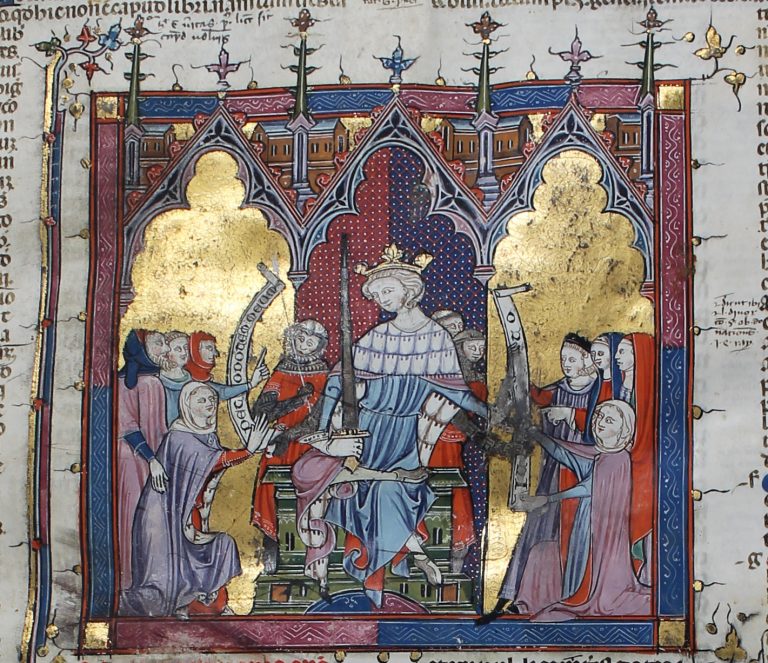
WORKSHOP: The Illuminated Legal Manuscript: Production, Circulation and Use in Medieval Europe (Lisbon, 20 September 2019)


(Source: Ius Illuminatum)

We learned of an International Workshop on illuminated legal manuscripts in Medieval Europe later this week in Lisbon.


The Illuminated Legal Manuscript:
Production, Circulation and Use in Medieval Europe
International Workshop of the research team IUS ILLUMINATUM

Lisbon, Friday 20th September 2019
Faculdade de Ciências Sociais e Humanas
Universidade NOVA de Lisboa
Auditorium 2 – Torre B
Avenida de Berna, 26-C – Lisbon

Organisation:
Instituto de Estudos Medievais (IEM-FCSH/NOVA)
Oficina de investigação IUS ILLUMINATUM

Scientific Coordination and Organization:
Maria Alessandra Bilotta (IEM-FCSH/NOVA – PI of the research team IUS ILLUMINATUM)

Website of IUS ILLUMINATUM: http://iusilluminata.fcsh.unl.pt

9.30 Opening Session
Maria João Branco (Director of IEM-FCSH/NOVA); Maria Alessandra Bilotta (IEM-FCSH/NOVA – PI of the research team IUS ILLUMINATUM); Catarina Tente (Assistant Vice-Dean Research Projects Management Support – IEM-FCSH/NOVA)

Chair of the sessions: Teresa D’Urso, Università della Campania “Luigi Vanvitelli”

Session 1: Italy

10.00 Nuove indagini sui manoscritti giuridici miniati a Napoli
Andrea Improta, Università degli Studi dell’Aquila

10.30 Nuove riflessioni su due manoscritti giuridici trecenteschi miniati a Bologna: le Decretali V e le Institutiones XIV della Biblioteca Capitolare di Vercelli
Gianluca del Monaco, Università di Bologna

11.00 Coffee-Break

Session 2: Spain

11.30 “Esta mi carta de previlleio rrodado”. Productores y espectadores para un documento de lujo
Maria Teresa Chicote Pompanin, The Warburg Institute (School of Advanced Study, University of London) – Ángel Fuentes Ortiz, Universidad Complutense de Madrid

12.00 Manuscritos jurídicos en Salamanca durante el siglo XV. El caso del Colegio Mayor de san Bartolomé
Jorge Jiménez López, Universidad de Salamanca

12.30 Estudiar las Siete Partidas desde la História del arte
Jorge Prádanos Fernández, Universidad Complutense de Madrid

13.00 Debate

13.30 Lunch

Chair of the sessions:  João Carvalho Dias, Fundação Calouste Gulbenkian

Session 3: France

15.00 Onze années de recherche sur les manuscrits juridiques du Midi de la France : résultats, bilans et perspectives de recherches  
               Maria Alessandra Bilotta, IEM-FCSH/NOVA

15.30 Literary and Iconographic Representations of the Jouvenel des Ursins Family: A Preliminary Survey.
               André Vitoria, IEM-FCSH/NOVA - LAMOP

16.00 Coffee-Break

Session 4: Poland

16.30 Manuscrits juridiques enluminés dans les collections polonaises – état de la recherche et individuation des bibliothèques.              
Arkadiusz Adamczuk, Katolicki Uniwersytet Lubelski Jana Pawła II, Lublin


Interdisciplinary research perspectives

17.00 O estudo da heráldica nos manuscritos jurídicos iluminados: novas pistas de investigação
Maria Alessandra Bilotta, IEM-FCSH/NOVA; Miguel Metelo de Seixas, IEM-FCSH/NOVA

17.15 A documentação digital e a virtualização 3D para o estudo dos manuscritos jurídicos iluminados: novas pistas de trabalho
Maria Alessandra Bilotta, IEM-FCSH/NOVA; Rolando Volzone, DINÂMIA’CET – IUL, ISCTE

17.30 O estudo dos manuscritos jurídicos iluminados como “objetos arqueológicos”: perspetivas de investigação Maria Alessandra Bilotta, IEM-FCSH/NOVA; Catarina Tente, IEM-FCSH/NOVA

17.45 Round table coordinated by Maria João Branco (Director of IEM-FCSH/NOVA)

18.45. Final discussion and debate

19.00 Closing Remarks  


About IUS ILLUMINATUM:


IUS ILLUMINATUM is an international scientific team composed of medieval art historians belonging to different European academic institutions, all specializing in illuminated legal manuscripts. The formation of this research group is linked to the current research project “ManJurEurIt. Manuscritos Jurídicos Europeus Itinerantes” of Maria Alessandra Bilotta, researcher in the NOVA School of Social Sciences and Humanities of Lisbon and member of the Institute for Medieval Studies (IEM) at the same University, who is the coordinator and principal investigator of the team. The project “ManJurEurIt. Manuscritos Jurídicos Europeus Itinerantes” aims to investigate the circulation of legal manuscripts in Portugal and their connections to artistic and social mobility in Mediterranean Europe. The research team intends to carry on a comparative study of the artistic, cultural and social currents revealed by the production and the circulation of illuminated legal manuscripts in medieval Europe. Each of the team members proposes to investigate these phenomena through the study of specific types of legal manuscripts, within a definite region of Europe. The team will be considering also the material aspects of the medieval legal book, with the collaboration of codicologists and archaeologists, analysing such books as archaeological artifacts. Finally, another purpose of the team’s work is to help promote and amplify the discussion of our issues by organizing scientific meetings and establishing contacts and interdisciplinary collaborations with other research groups and scientific institutions. IUS ILLUMINATUM has its headquarters at the Institute for Medieval Studies (IEM) in the NOVA School of Social Sciences and Humanities of Lisbon, while the members retain their own academic affiliations.

31 January 2017

CFP & INTERNATIONAL WORKSHOP: "Changements et Continuités. Histoire global, Culture visuelle et Itinérantes" (Lisbon, September 14-16 2017)


WHAT Call for papers & International Workshop Changes and Continuities. Global History, Visual Culture and Itinerancies

WHEN September 14-16, 2017

WHERE Lisbon, Faculdade de Ciências Sociais e Humanas – Universidade Nova de Lisboa

deadline March 31, 2017
all information here

Organization: IEM, CHAM, IHC, IHA
Organization Committee: Francisco José Díaz Marcilla (IEM), Francisco Zamora Rodríguez (CHAM), Jorge Tomás García (IHA) e Yvette Santos (IHC)

Following the I (2014) and II (2015) International Workshops “Changes and continuities”, the Institute of Medieval Studies, the Portuguese Centre for Global History, the Institute of Contemporary History and the Institute of Art History, will organize the III Workshop entitled Changes and Continuities. Global History, Visual Culture and Itinerancies, to be held at the FCSH-UNL (September 14-16, 2017).

The MeC3 will focus on three main research lines. All proposals will be distributed in one of them, under an interdisciplinary and trans-historical frame. Thus, the MeC3 accepts proposals relating to the following topics:

1.      Global History - One of the main challenges that History has to face is globalization. National studies have demonstrated their incapability to correctly understand global phenomena, and the way in which they affect societies. This is why new parameters of study are needed. In this thematic line, the methodological and theoretical issues -in addition to the strictly historical one- will be studied n terms of globalization, from its origins, to its development and its present. Proposals may focus on the following subjects (not exclusively): comparative studies, evolution of global phenomena, historical processes in their diachrony, regional studies, changing economies, cultural continuities, methodological questions on globalization, etc.