Search

20 November 2020

JOB: Wissenschaftliche(r) Mitarbeiter(in) (Ruhr-Universität Bochum) (DEADLINE: 30 November 2020)


(Source: Jura.Rub.de)

The Ruhr-Universität Bochum has an open position with Professor Judit Beke-Martos at the Center for International Affairs of the Law Faculty. Here the call:

Stellenangebot Wissenschaftliche(r) Mitarbeiter(in) für das Zentrum für Internationales der Juristischen Fakultät Für sein Zentrum für Internationales (ZfI) sucht das Dekanat der Juristischen Fakultät der RuhrUniversität Bochum ab dem nächstmöglichen Zeitpunkt eine(n) Wissenschaftliche(n) Mitarbeiter(in) (m/w/d) - 50% Entgeltgruppe 13 TV-L - Die Stelle ist auf 3 Jahre befristet. Gelegenheit zur wissenschaftlichen Weiterqualifikation wird gegeben. Aufgaben: ▪ wissenschaftlicher Beitrag zur Forschung des ZfI im Bereich des internationalen Rechts; ▪ Information und fachliche Beratung von inländischen Studierenden und die Betreuung ausländischer Studierender und WissenschaftlerInnen; ▪ Beteiligung an der Öffentlichkeitsarbeit im In- und Ausland, Betreuung von Forschungskooperationen; ▪ eigene Lehrverpflichtung im Umfang von 2 Semesterwochenstunden; ▪ eigene international ausgerichtete, rechtswissenschaftliche Forschung. Voraussetzungen: ▪ abgeschlossene juristische Ausbildung; ▪ bevorzugt werden Juristen(innen), die mindestens eine Staatsprüfung in Deutschland mit überdurchschnittlichem Erfolg (möglichst Prädikatsexamen) abgeschlossen haben; ▪ Bewerber(innen) sollen ein Studium oder längeres Praktikum im Ausland nachweisen; ▪ sichere Englischkenntnisse; von Vorteil ist die Kenntnis weiterer Sprachen. Wir wollen an der Ruhr-Universität Bochum besonders die Karrieren von Frauen in den Bereichen, in denen sie unterrepräsentiert sind, fördern und freuen uns daher sehr über Bewerberinnen. Auch die Bewerbungen geeigneter schwerbehinderter und gleichgestellter Bewerber und Bewerberinnen sind herzlich willkommen. Bitte senden Sie Ihre Bewerbung schriftlich und in digitalisierter Form (ein PDF-Dokument mit, wenn möglich, max. 4 MB) bis zum 30.11.2020 mit Lichtbild, Lebenslauf und Zeugniskopien adressiert an die Dekanin der Juristischen Fakultät der Ruhr-Universität Bochum und die beiden Co.-Direktoren des ZfI, 44780 Bochum, E-Mail: zfi-jura@rub.de. Bei Rückfragen zur Stellenausschreibung wenden Sie sich bitte an pierre.thielboerger@rub.de. Es wird gebeten, Bewerbungsunterlagen nur in Kopie vorzulegen, da diese nach Abschluss des Verfahrens aus Kostengründen nicht zurückgesandt werden können. Bewerbungs- und Vorstellungskosten können leider nicht erstattet werden.

SEMINAR SERIES: "Régimes dynastiques et modernité politique" - EHESS, Paris- de 19.11.2020 au 06.05.2020

 
(Source: EHESS)

Présentation

Dans le prolongement des années précédentes, le séminaire sondera l’écart entre une organisation politique fortement incarnée dans la personne et la maison du Roi, et le modèle de l’État dont l’abstraction va grandissante, jusqu’au hiatus précoce que provoque la question de sa représentation. La problématique de la permanence des familles, des corps et du royaume, sera au cœur des questionnements, y compris dans sa dimension anthropologique, et jusque dans les apports techniques du droit privé. Même si la notion d’intérêt collectif se heurte constamment au primat lignager qu’entretiennent les régimes dynastiques, les droits de l’État ne sont pas nécessairement en contradiction avec les droits de la famille. Ils peuvent d’ailleurs en apparaître comme les garants, à condition qu’ils reposent sur des principes supérieurs et soient donc englobants. Les enjeux symboliques du droit public dynastique constituent ainsi une matrice d’intelligibilité d’un fonctionnement formant système ; ils sont par certains aspects les ferments de la modernité politique. C’est alors, de la sorte, dans la dialectique entre la nature des régimes dynastiques et l’affirmation d’un Etat qui déplace les priorités que portera l’analyse, laquelle sera principalement centrée sur la période des XVIe-XVIIIe siècle, dans un dialogue constant entre historiens et juristes, mais ne se privera pas d’ouvrir vers d’autres champs de la recherche.

Séminaire organisé par Pierre Bonin, professeur d’histoire du droit à l’Ecole de droit de la Sorbonne-Université Paris 1, et Fanny Cosandey, directrice d’études à l'EHESS

1er, 3e, 5e jeudis du mois, de 17 à 19 h, du 19 novembre 2020 au 6 mai 2021


Programme

19 novembre: Fanny Cosandey, « Alliances dynastiques, le choix des conjoints »

3 décembre: Fanny Cosandey, « Les contrats de mariage royaux et le rapport à l’héritage »

17 décembre: Pierre Bonin, « Les capitaux d’une aristocratie anglaise rêvée, Lord Peter de D.L. Sayers »

7 janvier: Fanny Cosandey, « La fabrique du roi »

21 janvier: Laura Viaut, « Etienne Baluze face à la lutte des grandes familles féodales contre l’affermissement du pouvoir royal »

4 février: Aurore Causin, « Lois fondamentales et succession royale, enjeux terminologiques »

18 février: Arnaud Vergne, « La place de la succession dynastique dans la construction du concept de constitution en France sous l’Ancien Régime »

4 mars: Alain Hugon, « Émigration hispanique, richesse monarchique, et intérêts dynastiques dans les Indes de Castille (1492-1700) »

18 mars: Julie Ozcan, « Le cadre dynastique du régime ottoman au XVIIe siècle »

1er avril: Christophe Duhamelle, « Le Saint-Empire romain germanique : un rapport varié et non exclusif entre régime dynastique et modernité politique »

15 avril: Fanny Cosandey, « Les naissances royales »

6 mai: Marta Peguera-Poch, « Le père "petit" souverain et la famille organe de l'Etat »


En raison des circonstances épidémiques, les premières séances auront lieu en visioconférence. Pour recevoir le lien de connexion, il est donc nécessaire de s’inscrire à l’adresse suivante, au plus tard le lundi soir précédant le séminaire : https://listsem.ehess.fr. 

CONTACT : cosandey(at)ehess.fr, pierre.bonin(at)univ-paris1.fr

More information here.

WEBINAR: Elementi per un'anatomia dello stato moderno: forma di governo e rappresentanza politica - 26 novembre 2020, Università di Verona


Paolo Alvazzi del Frate (Università di Roma 3)
Andrea Buratti (Università di Roma Tor Vergata)
Massimiliano Gregorio (Università di Firenze)

discutono di

GIUSEPPE MECCA, Il governo rappresentativo. Cultura politica, sfera pubblica e diritto costituzionale nell’Italia del XIX secolo, Macerata, EUM, 2019 
MARCO FIORAVANTI, Controllare il potere. Il mandato imperativo e la revoca degli eletti (XVIII-XX secolo), Roma, Viella, 2020

coordina Giovanni Rossi (Università di Verona)

Link Zoom https://univr.zoom.us/j/82880799932

More information here.

19 November 2020

BOOK: Tore IVERSEN, John Ragnar MYKING & Stefan SONDEREGGER, Peasants, Lords, and State: Comparing Peasant Conditions in Scandinavia and the Eastern Alpine Region , 1000-1750 (Leiden: Brill, 2020). ISBN: 978-90-04-42970-3, pp. 375, €119.00

(Source: Brill)

ABOUT THE BOOK

Peasants, Lords and State: Comparing Peasant Conditions in Scandinavia and the Eastern Alpine Region, 1000-1750 challenges the once widespread view, rooted in the historical thinking of the nineteenth century, that Scandinavian and especially Norwegian peasants enjoyed a particular “peasant freedom” compared to their Continental counterparts. Markers of this supposed freedom were believed to be peasants’ widespread ownership of land, extensive control over land and resources, and comprehensive judicial influence through the institution of the thing. The existence of slaves and unfree people was furthermore considered a marginal phenomenon. The contributors compare Scandinavia with the eastern Alpine region, two regions comprising fertile plains as well as rugged mountainous areas. This offers an opportunity to analyse the effect of topographical factors without neglecting the influence of manorial and territorial power structures over the long time-span of c.1000 to 1750. 

With contributions by Markus Cerman, Tore Iversen, Michael Mitterauer, John Ragnar Myking, Josef Riedmann, Werner Rösener, Helge Salvesen, and Stefan Sonderegger.

ABOUT THE EDITORS

Tore Iversen, Dr. Art (1994), Professor emeritus in medieval history at the Norwegian University of Science and Technology. He has published monographs and articles on medieval slavery, property and land tenancy in a Scandinavian and European context. 

John Ragnar Myking, Dr. Art (2003), Professor emeritus in medieval and early modern history at Western Norwegian University of Applied Sciences. He has published monographs and articles on land tenancy in a European context and local and regional history. 

Stefan Sonderegger, Dr. (1994), Professor in medieval history at the University of Zurich and Head of the City Archive of St.Gallen, Switzerland. His research focuses on economic history and the editing of documents.

TABLE OF CONTENTS

Preface 

  Acknowledgements 

  List of Figures 

  Notes on Contributors 

Part 1: Introduction

1 Historiographical and Methodological Reflections 

    Tore Iversen and John Ragnar Myking 

Part 2: Comparing Scandinavia and the Eastern Alpine Region

2 Slavery and Unfreedom from the Middle Ages to the Beginning of the Early Modern Period 

    Tore Iversen 

3 Leasehold and Freehold c. 1200–1750 

    John Ragnar Myking 

4 Peasant Participation in Thing and Local Assemblies c. 1000–1750 

    Tore Iversen and John Ragnar Myking 

5 Summary and Conclusion 

    Tore Iversen and John Ragnar Myking 

Part 3: The Portrayal of Peasants in National Historiography

6 The Historian as Architect of Nations: A Historiographical Analysis of the Norwegian Peasantry as Carrier of National Ideology and Identity in the Medieval and Early Modern Period 

    Helge Salvesen 

7 The Participation of the Tyrolean Peasantry in the Government of the Country: Theory – Reality – Ideology 

    Josef Riedmann 

8 Peasant Ideology in German Historiography 

    Werner Rösener 

9 Switzerland – A ‘Peasant State’? 

    Stefan Sonderegger 

Part 4: Appendix

The Sub-peasant Strata in the Late Medieval and Early Modern Eastern Alpine Region 

    Markus Cerman and Michael Mitterauer 

Active Manorial Lords and Peasant Farmers in the Economic Life of the Late Middle Ages: Results from New Swiss and German Research 

    Stefan Sonderegger 

  Glossary 

  Bibliography 

  Index 


More information with the publisher.

BOOK: Alan SANDONÁ, Della tutela dei diritti. Storia del VI libro del codice civile italiano (Torino: Giappichelli Editore, 2020). ISBN: 9788892133945, pp. 256, € 32,00

Della tutela dei diritti. Storia del VI libro del codice civile italiano

ABOUT THE BOOK

Collana del Dipartimento di Giurisprudenza dell'Università  degli Studi di Brescia

Tra le più significative innovazioni introdotte nel Codice civile del 1942, quella forse di maggiore spessore sistematico fu il ricorso ad una partizione in sei libri: scelta di fondo, in manifesta rottura con la tradizione che il Codice civile del 1865, imitando il Code Napoléon, aveva fatto propria. L'introduzione tra i nuovi libri di uno dedicato alla categoria concettuale della " Tutela dei diritti" costituì una scelta inedita (normativamente, se non scientificamente); ed originale fu la collocazione nell'alveo d'esso d'istituti apparentemente eterogenei tra loro - o quantomeno tradizionalmente intesi come tali - quali la trascrizione, le prove, le norme di responsabilità patrimoniale, le cause di prelazione e della conservazione della garanzia patrimoniale, le regole inerenti la "tutela giurisdizionale dei diritti" e quelle sulla prescrizione. La "singolarità" di un oggetto, in quanto tratto peculiare di esso (ed a condizione che non abbia mera valenza estetica) è spesso rivelatrice della sua autentica natura. L'autore studia il libro VI nella sua dimensione storica, con particolare riguardo alle peculiarità che ne contraddistinsero la genesi, tanto sul piano della forma, quanto sul piano del contenuto, ed ambisce a fornire un contributo alla comprensione dell'autentica cifra di quel libro: quello che vide la luce alla fine della lunga stagione della codificazione fu solo un libro "residuale" e "di chiusura" o piuttosto costituì l'esito di un percorso scientifico di perfezionamento strutturale e concettuale che rispecchiasse anche il portato ideale sotteso alla nuova codificazione? La risposta è tale da gettare ulteriore luce sull'intera opera legislativa venuta a compimento nel 1942.

ABOUT THE AUTHOR

Alan Sandonà è ricercatore presso il Dipartimento di Giurisprudenza dell'Università degli Studi di Brescia nell'ambito del settore disciplinare IUS 19 - Storia del dirittomedioevale e moderno.

TABLE OF CONTENTS

Available in PDF version here.


More information with the publisher.

18 November 2020

BOOK: R. COCHRAN and Michael P. MORELAND, eds., Christianity and Private Law (London: Routledge, 2020). ISBN 9780367893460, 120.00 GBP


(Source: Routledge)

Routledge is publishing a new book on Christianity and private law.

ABOUT THE BOOK

This volume examines the relationship between Christian legal theory and the fields of private law.
Recent years have seen a resurgence of interest in private law theory, and this book contributes to that discussion by drawing on the historical, theological, and philosophical resources of the Christian tradition. The book begins with an introduction from the editors that lays out the understanding of “private law” and what distinguishes private law topics from other fields of law. This section includes two survey chapters on natural law and biblical sources. The remaining sections of the book move sequentially through the fields of property, contracts, and torts. Several chapters focus on historical sources and show the ways in which the evolution of legal doctrine in areas of private law has been heavily influenced by Christian thinkers. Other essays draw out more contemporary and public policy-related implications for private law.

While this book is focused on the relationship of Christianity to private law, it will be of broad interest to those who might not share that faith perspective. In particular, legal historians and philosophers of law will find much of interest in the original scholarship in this volume. The book will be attractive to teachers of law, political science, and theology. It will be of special interest to the many law faculty in property, contracts, and torts, as it provides a set of often overlooked historical and theoretical perspectives on these fields.

ABOUT THE EDITORS

Robert F. Cochran Jr. is Louis D. Brandeis Professor of Law, Caruso School of Law, Pepperdine University, USA, and Senior Fellow, Center for Advanced Studies in Culture, University of Virginia, USA.    

Michael P. Moreland is University Professor of Law and Religion and Director of the Eleanor H. McCullen Center for Law, Religion and Public Policy, Villanova University, USA.

TABLE OF CONTENTS

1. Introduction
a. John Witte, Jr. (Emory) - Foreword
b. The Editors - Introduction
c. James R. Gordley (Tulane) - Christian Origins of Private Law
d. Brent A. Strawn (Duke) - Biblical Understandings of Private Law
2. Property
a. David W. Opderbeck (Seton Hall) - Christian Thought and Property Law
b. William S. Brewbaker III (Alabama) - Augustinian Property
c. Richard H. Helmholz (Chicago) - Religion and English Property Law: 1500-1700
d. Adam J. MacLeod (Faulkner) – Property and Practical Reason
e. Paula A. Franzese and Angela C. Carmella (Seton Hall) – Catholic Social Teaching, Property Law, and Public Housing
3. Contracts
a. Wim Decock (KU Leuven, Belgium) - Contract Law in Early Modern Scholasticism
b. David S. Caudill (Villanova) - Private Law in Christian Perspective: The Example of Dooyeweerd on Contracts
c. C. Scott Pryor (Campbell) - Destabilizing Contract: A Christian Argument For Revitalizing Unconscionability
d. Val D. Ricks (South Texas) – Christianity, Freedom, and the Doctrine of Consideration
e. Michael A. Helfand (Pepperdine) - Privatization and Pluralism in Dispute Resolution: Promoting Religious Values through Contract
4. Torts
a. Michael P. Moreland (Villanova) and Jeffrey A. Pojanowski (Notre Dame) – The Moral of Torts
b. David F. Partlett (Emory) – Christianity and Tort Duties
c. Nathan B. Oman (William and Mary) – Christianity’s Quarrel with Civil Recourse Theory
d. Robert F. Cochran, Jr. (Pepperdine) - Tort Law and Intermediate Communities: Catholic and Calvinist Theories


More info here

BOOK: Francesco BONINI & Sandro GUERRIERI (Eds.), La scrittura delle Costituzioni. Il secondo dopoguerra in un quadro mondiale (Bologna: Il Mulino, 2020). ISBN: 978-88-15-29054-0, pp. 336, € 25,00


(Source: Il Mulino)

ABOUT THE BOOK

Series: "Fonti e studi sul federalismo e integrazione europea - Crie"

«Questa Carta merita di essere favorevolmente apprezzata ed ha un buon posto, forse il primo, fra le Costituzioni dell'attuale dopoguerra»: così Meuccio Ruini, in Assemblea costituente, nel discorso che presenta la Costituzione della Repubblica per il voto finale, riferendo «voci di grandi competenti dall'estero». In questo volume per la prima volta si disegna organicamente, tra la cinquantina di costituzioni elaborate nell'immediato secondo dopoguerra, un percorso sui «tipi» più significativi, organizzati, nella prima parte, nei due quadri europei che la cortina di ferro divide e, nella seconda, in quello mondiale. Ma non solo, perché si disegna un'ulteriore dimensione costituzionale, rappresentata dai progetti di costituzione europea e dallo sviluppo delle istituzioni internazionali, sui quali le due parti del volume rispettivamente si concludono. E, ulteriormente, sottolineano caratteri, importanza e prospettive di una produzione costituente, che gli autori dei diversi saggi affrontano in un'ottica storica, politica, giuridica e istituzionale.

TABLE OF CONTENTS

Presentazione, di Francesco Bonini e Sandro Guerrieri

Da una guerra mondiale all’altra. Sui percorsi del costituzionalismo democratico nel secolo breve, di Realino Marra

Parte prima: In Europa

Rifondare la «République». La sofferta nascita della Costituzione francese del 1946, di Sandro Guerrieri

I processi costituenti in Austria e Germania: due identità costituzionali separate ma unite dalla stabilità di governo, di Ulrike Haider-Quercia

L’Assemblea costituente e la Jugoslavia dal 1944 al 1947, di Budislav Vukas, Jr.

Le Costituzioni dei paesi dell’Europa centro- orientale di ispirazione sovietica, di Maria Angela Orlandi

Una controprova: l’apparente processo «costituente» della Spagna franchista, di Giacomo Demarchi

Una Costituzione per l’Europa: le proposte costituenti tra Seconda guerra mondiale e Assemblea «ad hoc», di Daniela Preda

Parte seconda: Nel mondo

La Costituzione brasiliana del 1946: la democrazia pluralista fra l’eredità dell’«Estado Novo» e la tutela delle forze armate, di Marco Olivetti

«Kaishaku kaiken»: la (mai emendata) Costituzione del Giappone tra imposizione postbellica e riappropriazione interpretativa, di Enrico Buono

«We, the people of India». Interpretazioni della Costituzione indiana dal secondo dopoguerra a oggi, di Domenico Amirante

Dalla Carta delle Nazioni Unite alla Dichiarazione Universale dei Diritti Umani, di Marco Mugnaini

Considerazioni conclusive, di Adriano Giovannelli

Indice dei nomi


More information with the publisher.

17 November 2020

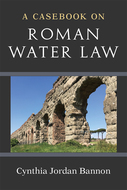
BOOK: Cynthia J. BANNON, A Casebook on Roman Water Law (New Haven: University of Michigan Press, 2020). ISBN 978-0-472-03786-5, 34.95 USD


The University of Michigan Press is publishing a casebook on Roman water law.

ABOUT THE BOOK

The Romans are famous for constructing aqueducts, canals, and dams. But their law is also a lasting, if less visible, monument to their attempts to control water. A Casebook on Roman Water Law presents an analytical collection of Roman sources for water rights. The Romans recognized water as a natural resource, a public good, and an economic commodity, and they grappled with these issues as they developed law to regulate water. Early in their history the Romans crafted laws and institutions to regulate water in both public and private contexts. In later eras they revised and adapted their law to fit changing economic, cultural, and physical environments of an empire that spanned the Mediterranean. Each case documents the role of law in this history, and the study questions engage with key issues in legal and environmental history, ancient and modern.

This casebook aims to cross historical and disciplinary boundaries by making the primary evidence for Roman water rights accessible to students and researchers. Cases are presented in both original Latin and English translation. To prepare for study of the cases, each chapter opens with an overview of its topic while the introduction presents the evidence for water rights and contextualizes them within historical and conceptual frameworks.

ABOUT THE AUTHOR

Cynthia Jordan Bannon is Professor of Classical Studies at Indiana University Bloomington.


More info here

BOOK: Carlos Miguel HERRERA, Albane GESLIN & Marie-Claire PONTHOREAU (dir.), Postcolonialisme et droit. Perspectives épistémologiques (Paris: Kimé, 2020), ISBN 9782841749881, € 20


(image source: Editions Kimé; click on the image to enlarge the table of contents)

Book abstract:
Les études postcoloniales ont, depuis quelques années, largement irrigué les divers champs disciplinaires des sciences humaines et sociales. Force est néanmoins de constater que, en France à tout le moins, le droit n'a pas été conduit à s'interroger en profondeur sur les perspectives épistémologiques ouvertes par le tournant postcolonial. Notre livre offre plusieurs parcours pour analyser l'impact du postcolonialisme sur le droit, en associant de manière étroite des juristes avec des chercheurs venants d'autres disciplines, en particulier historiens et philosophes. L'interrogation épistémologique qui traverse tous ses chapitres, s'exprime par deux grands questionnements, le premier touchant au droit, le deuxième aux disciplines juridiques. La première partie de l'oeuvre se concentre sur les rapports existants entre les institutions juridiques et l'expérience coloniale. Ce volet est abordé d'un point de vue historique (à partir des expériences du colonialisme français en Algérie et anglais en Inde), certes mais aussi dans une perspective actuelle (la question de la Nouvelle Calédonie). Et c'est ici que la pluridisciplinarité de l'ouvrage se fait plus fortement sentir. Dans le second versant du livre, notre travail cherche à confronter les perspectives postcoloniales à trois disciplines juridiques : l'histoire du droit, le droit constitutionnel et le droit international. Ici la réflexion est davantage le fait des juristes, qui explorent ce que le postcolonialisme fait à la rationalité juridique. Une confrontation qui modifierait dorénavant la pensée juridique, dans un contexte de globalisation. L'ouvrage conclut, comme il ne peut pas être autrement, sur une réflexion sur les rapports entre savoir et politique.
Papers by F. Dumassy, A. Geslin, L. Havard, C. M. Herrera, A. Imbert, A. Virmani & R. Ivekovic.

(source: Unithèque/ESILHIL Blog)

BOOK: Alain LOTTIN (Ed.), La désunion du couple sous l'Ancien Régime. L'exemple du Nord (Villeneuve d'Ascq: Presses Universitaires du Septentrion, 2019 - 2e édition). ISBN: 2757424548, pp. 204, € 18,00


ABOUT THE BOOK

2e édition, collection: Histoire et civilisations

Les remises en cause de la famille et du mariage caractérisent notre époque, les débats sur la contraception, l'avortement, le divorce se succèdent. L’Histoire est « fille de son temps ». Sur le thème de la désunion du couple, les auteurs ont donc fouillé le passé. Ils étudient les ruptures de fiançailles, les concubinages, les mariages clandestins, les adultères, les « divorces », les annulations de mariage et ils retracent sur ces sujets les comportements de nos aïeux à partir des précieux documents provenant de l’archevêché de Cambrai et concernant un vaste territoire du Nord de la France et de la Belgique. À travers les complaintes des filles séduites, les justifications de séducteurs ou de maris abusifs et les témoignages de voisins curieux et bavards, des tranches de vie pittoresque et parfois truculentes sont ainsi ressuscitées.

ABOUT THE EDITOR

Alain Lottin (1935-2017) était professeur d'histoire moderne, spécialiste notamment des questions religieuses, sociales et politiques des provinces françaises du Nord, aux XVIe et XVIIe siècles.

TABLE OF CONTENTS

Préface

Philippe Guignet

Introduction

Alain Lottin

Chapitre 1.

L'obstacle surmonté : les dispenses

Philippe Malolepsy (essentiellement d'après les TER de P. Malolepsy et R. Rychalski)

Chapitre 2.

Les fiançailles rompues ou empêchées

Alain Lottin et Kathleen Pasquier (essentiellement à partir des TER de S. Delloye et K. Pasquier)

Chapitre 3.

Les mal-unis

Jean-Renaud Machuelle (essentiellement d’après les TER de J.-R. Machuelle et D. Morin)

Chapitre 4.

Séducteurs, volages et infidèles

Jean-Renaud Machuelle (essentiellement d’après les TER de J.-R. Machuelle et D. Morin)

Chapitre 5.

Les « divorces »

Alain Lottin et Guy Savelon (essentiellement d’après les travaux et TER de J.-L. Geoffroy, L. Kaczmarek, A. Lottin, G. Savelon, J.-L. Vandecavaye)

Chapitre 6.

Les demandes d’annulation de mariage

Jean-Renaud Machuelle (essentiellement d’après les TER de J.-R. Machuelle et D. Morin)

Chapitre 7.

Le couple et sa désagrégation

Alain Lottin

Conclusion

Alain Lottin

Annexes

Les auteurs


More information with the publisher.

16 November 2020

BOOK: Lucien BÉLY (dir.), Dictionnaire de l'Ancien Régime [Dictionnaires Quadrige] (Paris: PUF, 2020 [3rd edition), 1408 p. ISBN 978-2-13-058422-3, € 29,9


(image source: PUF)

Book description:
Ce dictionnaire reconstitue la mosaïque juridique, politique, morale, sociale et religieuse de l'Ancien Régime qui naquit le jour, ou plutôt la nuit du 4 août 1789, au moment même où il disparaissait. L'originalité principale de ce dictionnaire est de considérer l'Ancien Régime comme un monde en soi qu'il convient de connaître et de comprendre dans une perspective historique : il se dessine à la Renaissance, se consolide avec l'absolutisme et se transforme sous l'influence des Lumières. Ce dictionnaire de culture et d'érudition se veut ainsi un plan-relief alphabétique élaboré dans la longue durée.
On the editor:
Publié sous la direction de Lucien Bély, ancien élève de l’École normale supérieure, agrégé d’histoire, docteur d’État, est professeur d’Histoire moderne à l’Université Paris-Sorbonne (Paris IV). Conseil scientifique : Michel Antoine, Bernard Barbiche, Yves-Marie Bercé, Jean Chagniot, Jean-Pierre Gutton, Jean Imbert, Jean Jacquart, Bruno Neveu, Marc Perrichet, Jean-Pierre Poussou, Daniel Roche, Bernard Roussel.

(source: PUF

BOOK: Inge VAN HULLE, Britain and International Law in West Africa - The Practice of Empire (Oxford: Oxford University Press, 2020). ISBN 9780198869863, 99.00 USD


 (Source: OUP)

Oxford University Press is publishing a new book on the the role of international law in Britain's imperialist expansion into West Africa during the early- and mid-nineteenth century.

ABOUT THE BOOK

Africa often remains neglected in studies that discuss the historical relationship between international law and imperialism during the nineteenth century. When it does feature, focus tends to be on the Scramble for Africa, and the treaties concluded between European powers and African polities in which sovereignty and territory were ceded. Drawing on a wide range of archival material, Inge Van Hulle brings a fresh new perspective to this traditional narrative. She reviews the use and creation of legal instruments that expanded or delineated the boundaries between British jurisdiction and African communities in West Africa, and uncovers the practicality and flexibility with which international legal discourse was employed in imperial contexts. This legal experimentation went beyond treaties of cession, and also encompassed commercial treaties, the abolition of the slave trade, extraterritoriality, and the use of force.

The book argues that, by the 1880s, the legal techniques that were fashioned in the language of international law in West Africa had largely developed their own substantive characteristics. Legal ordering was not done in reference to adjudication before Western courts or the writings of Western lawyers, but in reference to what was deemed politically expedient and practically feasible by imperial agents for the preservation of social peace, commercial interaction, and humanitarian agendas.

ABOUT THE AUTHOR

Inge Van Hulle is Assistant Professor of Legal History at Tilburg University, The Netherlands. Prior to joining Tilburg University she worked as a PhD research assistant at the department of Roman law and legal history at KU Leuven where she obtained here PhD in 2016. At Tilburg University she teaches courses such as 'History and Theory of International Law', 'History of International Law', 'History of Government and Public Institutions' and 'Early Modern History'.

TABLE OF CONTENTS

Introduction: Britain and International Law in West Africa

1. The Changing Legal Patterns of Anglo-African Relations (1807-1840)

2. British Legal Strategies and the Abolition of the Slave Trade

3. Extraterritorial Jurisdiction and the Dawn of the Protectorate

4. Benevolent Aggression and Exemplary Violence in West Africa

5. International Law and the Settlement of Disputes concerning West Africa on the Eve of the Scramble

Conclusion


More info here

BOOK: Pamela BARMASH, The Laws of Hammurabi: At the Confluence of Royal and Scribal Traditions (Oxford: Oxford University Press, 2020). ISBN 9780197525401, 99.00 USD


(Source: OUP)

Oxford University Press is publishing a new book on the laws of Hammurabi.

ABOUT THE BOOK

Among the best-known and most esteemed people known from antiquity is the Babylonian king Hammurabi. His fame and reputation are due to the collection of laws written under his patronage. This book offers an innovative interpretation of the Laws of Hammurabi.

Ancient scribes would demonstrate their legal flair by composing statutes on a set of traditional cases, articulating what they deemed just and fair. The scribe of the Laws of Hammurabi advanced beyond earlier scribes in composing statutes that manifest systematization and implicit legal principles, and inserted the Laws of Hammurabi into the form of a royal inscription, shrewdly reshaping the genre. This tradition of scribal improvisation on a set of traditional cases continued outside of Mesopotamia. It influenced biblical law and the law of the Hittite empire significantly. The Laws of Hammurabi was also witness to the start of another stream of intellectual tradition. It became the subject of formal commentaries, marking a profound cultural shift. Scribes related to it in ways that diverged from prior attitudes; it became an object of study and of commentary, a genre that names itself as dependent on another text. The famous Laws of Hammurabi is here given the extensive attention it continues to merit.

ABOUT THE AUTHOR

Pamela Barmash teaches at Washington University in St. Louis and has served as director of Jewish, Islamic, and Near Eastern Studies there. She is the author of Homicide in the Biblical World, the co-editor of Exodus in the Jewish Experience: Echoes and Reverberations, and the editor of The Oxford Handbook of Biblical Law.

TABLE OF CONTENTS

Introduction

Chapter One: The Stela of the Laws of Hammurapi and the Representation of Political Power

Chapter Two: Royal Legitimization Through the Establishment of Justice

Chapter Three: The Laws of Hammurabi as a Royal Inscription

Chapter Four: Scribes and Statutes

Excursus: Scribes and Scribal Education

Chapter Five: Adoption in the Laws of Hammurabi

Chapter Six: The Legal Authority of the Laws of Hammurabi

Chapter Seven: The Afterlife of the Laws of Hammurabi: The Continuation of Scribal

Improvisation Outside of Mesopotamia and the Creation of Commentaries in

Mesopotamia

Conclusion

Acknowledgments

List of Abbreviations

List of Illustrations

Bibliography


More info here

Book: Charlotte DE CASTELNAU L'ESTOILE, Un catholicisme colonial. Le mariage des Indiens et des esclaves au Brésil, XVIe-XVIIIe siècle (Paris: PUF, 2019). ISBN: 9782130800378, pp. 560, € 29,00

(Source: PUF)

ABOUT THE BOOK

Le Brésil a connu une colonisation catholique sous l’égide de la couronne portugaise. Le transfert du mariage chrétien dans ce monde peuplé d’Indiens, mais aussi d’esclaves africains sur plus de deux siècles, a été un élément essentiel de cette colonisation. Quelles ont été les stratégies de l’Église et des missionnaires ? Quelles furent les réactions de ces populations qui occupent des positions subalternes mais n’en sont pas moins réactives face à cette entreprise?Descriptions missionnaires faisant revivre le monde tragiquement disparu des Indiens du Brésil, réflexions théologiques et juridiques qui révèlent le cadre intellectuel dans lequel s’est opérée l’expansion de la chrétienté à l’époque moderne : l'auteure s'appuie sur une documentation d'une grande richesse qui révèle combien l’esclavage était au cœur des réflexions de l'Église. Enfin, l’analyse des pratiques montre à la fois la subtile faculté d’adaptation des missionnaires et l’extraordinaire capacité d’action des Indiens et des esclaves qui utilisent les instruments du droit canonique pour leurs propres intérêts.

ABOUT THE AUTHOR

Charlotte de Castelnau-L’Estoile est professeure d’histoire moderne à l’université Paris-Diderot et codirige, aux Puf, la collection « Nouvelle Clio ». Elle a publié Les ouvriers d'une vigne stérile. Les jésuites et la conversion des Indiens au Brésil 1580-1620 (Centre Culturel Calouste Gulbenkian, Paris, 2000), Páscoa et ses deux maris. Une esclave entre Angola, Brésil et Portugal au XVIIe siècle, (Puf, 2019).

TABLE OF CONTENTS

Introduction – Les Chaînes du Mariage

Première partie – Le transfert du mariage chrétien au Brésil XVIe-XVIIe siècles

Chapitre 1 – Des alliances indiennes au mariage

Chapitre 2 – La papauté et la question du mariage des infidèles 

Chapitre 3 – Le débat sur les mariages brésiliens

Chapitre 4 – Formation de la société esclavagiste et « doutes » sur le mariage

Chapitre 5 – Remarier les esclaves : les enjeux d’une bulle pontificale

Chapitre 6 – Mariages indiens et missions capucines au XVIIe siècle

Deuxième partie – Le mariage dans la société esclavagiste (début XVIIIe siècle)

Chapitre 7 – Se marier : un droit pour les esclaves ?

Chapitre 8 – Rio de Janeiro 1680-1720 : soixante-quinze histoires de mariages

Chapitre 9 – Le mariage et les chaînes de l’esclavage

Chapitre 10 – Les « fils soumis de la très sainte Église » : esclavage et religion


More information with the publisher.

BOOK: Agnès DELAHAYE, Settling The Good Land. Governance and Promotion in John Winthrop’s New England (1630-1650) (Leiden: Brill, 2020). ISBN: 9789004431393, pp. 357, €124.00

Cover Settling The Good Land
(Source: Brill)

ABOUT THE BOOK

Settling the Good Land: Governance and Promotion in John Winthrop’s New England (1620-1650) is the first institutional history of the Massachusetts Bay Company, cornerstone of early modern English colonisation in North America. Agnès Delahaye analyses settlement as a form of colonial innovation, to reveal the political significance of early New England sources, above and beyond religion. John Winthrop was not just a Puritan, but a settler governor who wrote the history of the expansion of his company as a record of successful and enduring policy. Delahaye argues that settlement, as the action and the experience of appropriating the land, is key to understanding the role played by Winthrop’s writings in American historiography, before independence and in our times.

ABOUT THE AUTHOR

Agnès Delahaye, Ph. D. (2003), Paris-Sorbonne, is Professor of Anglophone Studies at the Université Lyon II Lumière and a member of Triangle (UMR 5206). She has published articles on New England history and historiography, Atlantic history, business history and settler colonialism.

TABLE OF CONTENTS

Front Matter
Copyright Page
Acknowledgements
Abbreviations
Figures
Introduction
Pages: 1–18
The Beginnings of English Settlement
Pages: 19–60
Plymouth Colony and the Birth of Settler Literature
Pages: 61–89
Organizing Settlement: The Massachusetts Bay Company
Pages: 90–120
John Winthrop’s Decision for America
Pages: 121–169
Managing New England
Pages: 170–209
Expansion and Violence in Early New England
Pages: 210–261
Liberty
Pages: 262–309
Conclusion
Pages: 310–314
Toggle Tree Node
Back Matter
Bibliography
Index


More information with the publisher.

13 November 2020

BOOK: Valerie A. KIVELSON and Christine D. WOROBEC, Witchcraft in Russia and Ukraine, 1000-1900 : A Sourcebook (Ithaca: Cornell University Press, 2020). ISBN 978-1-5017-5067-0, 113.95 EUR


Cornell University Press is publishing a sourcebook on witchcraft in Russia and Ukraine.

ABOUT THE BOOK

This sourcebook provides the first systematic overview of witchcraft laws and trials in Russia and Ukraine from medieval times to the late nineteenth century. Witchcraft in Russia and Ukraine weaves scholarly commentary with never before published primary source materials translated from Polish, Russian, and Ukrainian. These sources include the earliest references to witchcraft and sorcery, secular and religious laws regarding witchcraft and possession, full trial transcripts, and a wealth of magical spells. The documents present a rich panorama of daily life and reveal the extraordinary power of magical words.

Editors Valerie A. Kivelson and Christine D. Worobec present new analyses of the workings and evolution of legal systems, the interplay and tensions between church and state, and the prosaic concerns of the women and men involved in witchcraft proceedings. The extended documentary commentaries also explore the shifting boundaries and fraught political relations between Russia and Ukraine.

ABOUT THE AUTHORS

Valeria A. Kivelson is Thomas N. Tentler Collegiate Professor of History and Arthur F. Thurnau Professor of History at the University of Michigan. She is the author of Cartographies of TsardomDesperate Magic, and Autocracy in the Provinces.

Christine D. Worobec is Distinguished Research Professor Emerita at Northern Illinois University. She is the author of Possessed and Peasant Russia.

More info here

BOOK: Leslie J. MORAN, Law, Judges and Visual Culture (London: Routledge, 2020). ISBN 9781138618619, 120.00 GBP


(Source: Routledge)

Routledge is publishing a new book on how pictures have been used to make, manage and circulate ideas about the judiciary through a variety of media from the 16th century to the present.

ABOUT THE BOOK

Law, Judges and Visual Culture analyses how pictures have been used to make, manage and circulate ideas about the judiciary through a variety of media from the 16th century to the present.

This book offers a new approach to thinking about and making sense of an important social institution; the judiciary. In an age in which visual images and celebrity play a key role in the way we produce, communicate and consume ideas about society and its key institutions, this book provides the first in depth study of visual images of judges in that context. It not only examines what appears within the frame of these images, it also explores the impact technologies and the media industries that produce them have upon the way we engage with them, and the experiences and meanings they generate. Drawing upon a wide range of scholarship – including art history, film and television studies, social and cultural studies as well as law – and interviews with a variety of practitioners, painters, photographers, television script writers and producers, as well as court communication staff and judges – the book generates new and unique insights into making, managing and viewing pictures of judges.

Original and insightful, Law, Judges and Visual Culture will appeal to scholars, postgraduates and undergraduates from a variety of disciplines interested in the role of visual culture in the production social justice and its institutions.

ABOUT THE AUTHOR

Leslie J. Moran is Emeritus Professor in the School of Law Birkbeck College University of London. He has an international reputation for his research and scholarship in various areas; identity politics and law; hate crime; law and visual culture. Other publications include the monographs The (Homo)sexuality of Law (1996) and Sexuality and the politics of violence and safety, with Beverly Skeggs, Paul Tyrer and Karen Corteen (2004) and a number of edited collections including Legal Queeries (1998) with Daniel Monk and Sarah Beresford, Law’s Moving Image, (2004) with Ian Christie, Emma Sandon and Elena Loizidou and Judicial Images (2018) published as a special edition of International Journal of Law in Context.

TABLE OF CONTENTS

1. Judging pictures
2. Painted portraits
3. Hanging judicial heads
4. Judges through the lens; Carte de visite portraits
5. The judge, the album and the imagined community
6. Cameras in court 1: Introducing Judge John Deed
7. Judges on the small screen 1: Judge John Deed
8. Cameras in court 2: The UK Supreme Court
9. Judges on the small screen 2: The Judgment Summary Videos of the UK Supreme Court
10. Strictly Judge Rinder: Judicial visibility and the industrial production of judicial attention capital
11. After words on judicial pictures


More info here

BOOK: Claudia PASSARELLA, Una disarmonica fusione di competenze: magistrati togati e giudici popolari in corte d’assise negli anni del fascismo (Roma: Historia et ius, 2020). ISBN: 978-88-944154-1-4, pp. 120


(Source: Historia et ius)


The volume is available in open access and PDF version here.

12 November 2020

YOUTUBE: Diego NUNES (coord.), História do direito penal

 
 See Prof. Nunes's channel on Youtube for more.

BOOK: Xiaoqun XU, Heaven Has Eyes – A History of Chinese Law (Oxford: Oxford University Press, 2020). ISBN 9780190060046, USD 39.95.


(Source: OUP)

Oxford University Press is publishing a new book offering a general overview of Chinese legal history.

ABOUT THE BOOK

Heaven Has Eyes is a comprehensive but concise history of Chinese law and justice from the imperial era to the post-Mao era. Never before has a single book treated the traditional Chinese law and judicial practices and their modern counterparts as a coherent history, addressing both criminal and civil justice. This book fills this void.

Xiaoqun Xu addresses the evolution and function of law codes and judicial practices throughout China's long history, and examines the transition from traditional laws and practices to modern ones in the twentieth century. To the Chinese of the imperial era, justice was an alignment of heavenly reason (tianli), state law (guofa), and human relations (renqing). Such a conception did not change until the turn of the twentieth century, when Western-derived notions-natural rights, legal equality, the rule of law, judicial independence, and due process--came to replace the Confucian moral code of right and wrong. The legal-judicial reform agendas that emerged in the beginning of the twentieth century (and are still ongoing today) stemmed from this change in Chinese moral and legal thinking, but to materialize the said principles in everyday practices is a very different order of things, and the past century was fraught with legal dramas and tragedies. Heaven Has Eyes lays out how and why that is the case.

ABOUT THE AUTHOR

Xiaoqun Xu is Professor of History at Christopher Newport University.

TABLE OF CONTENTS

Introduction: Law and Justice in Chinese History


Part One: Law and Justice in Imperial China, 221 BEC-1911 CE

Chapter 1: Five Punishments and Beyond: The Evolution of Penal Codes in Imperial China

Chapter 2: From the Imperial Capital to the Magistrate's Court: Judicial Practices in Imperial China

Chapter 3: The Emperor, the Family, and the Land: Law and Order in Imperial China


Part Two: Law and Justice in Late Qing and Republican China, 1901-1949

Chapter 4: The Best of the Chinese and of the Western: Legal-Judicial Reform in the Late Qing, 1901-1911

Chapter 5: The Rule of Law, Judicial Independence, and Due Process: Ideals and Realities in the Republican Era, 1912-1949

Chapter 6: Bandits, Collaborators, and Wives/Concubines: Criminal and Civil Justice in the Republican Era, 1912-1949


Part Three: Law and Justice in Maoist China, 1949-1976

Chapter 7: "Contradictions between the People and the Enemy": Criminal Justice as the "Proletarian Dictatorship"

Chapter 8: "Contradictions among the People": Mediation and Adjudication of Civil Disputes


Part Four: Law and Justice in Post-Mao China, 1977-2018

Chapter 9: The Legal System and the Rule of Law: Changes in Criminal Justice, 1977-1996

Chapter 10: "Naked Officials" and "Heavenly Net": Changes in Criminal Justice, 1997-2018

Chapter 11: "Look toward Money": Civil Justice in Post-Mao China, 1977-2018


Conclusion: Heaven Has Eyes


Chronology of Chinese History

Chinese Character List

Notes

Selected Bibliography

Index


More info here