Abstract:
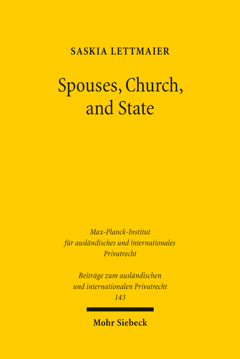
The twelfth and early thirteenth centuries saw some of the most important changes to marriage laws in European history, the foremost being the decision of the Catholic Church to recognize consent as an overriding requirement for marriage. Though this revolutionary position promised far greater personal freedom and individual autonomy, these promises went largely unfulfilled. By Consent Alone explores the developing laws of marriage in this period through the lens of the “case” (Kasus), a short narrative form that asks its audience to judge the new laws against the larger ideology of free consent. The book compares literary depictions of romance and marriage in seven canonical German romances with cases in the historical record, focusing on legal questions of consent, coerced consent, impediments to marriage, spousal abuse, and divorce. It argues that medieval German literature advocated for an expansive definition of individual and women’s rights in marriage. Comparing the fictional depictions of marriage cases with historical law, By Consent Alone provides a unique window into medieval thought and the culture of marriage, often not as it was, but as it was wished to be. By Consent Alone reveals how medieval German literature responded to the evolving laws of marriage and consent in medieval Europe.
On the author:
is an assistant professor of German at Illinois State University.
Read more here.
ABOUT THE BOOK
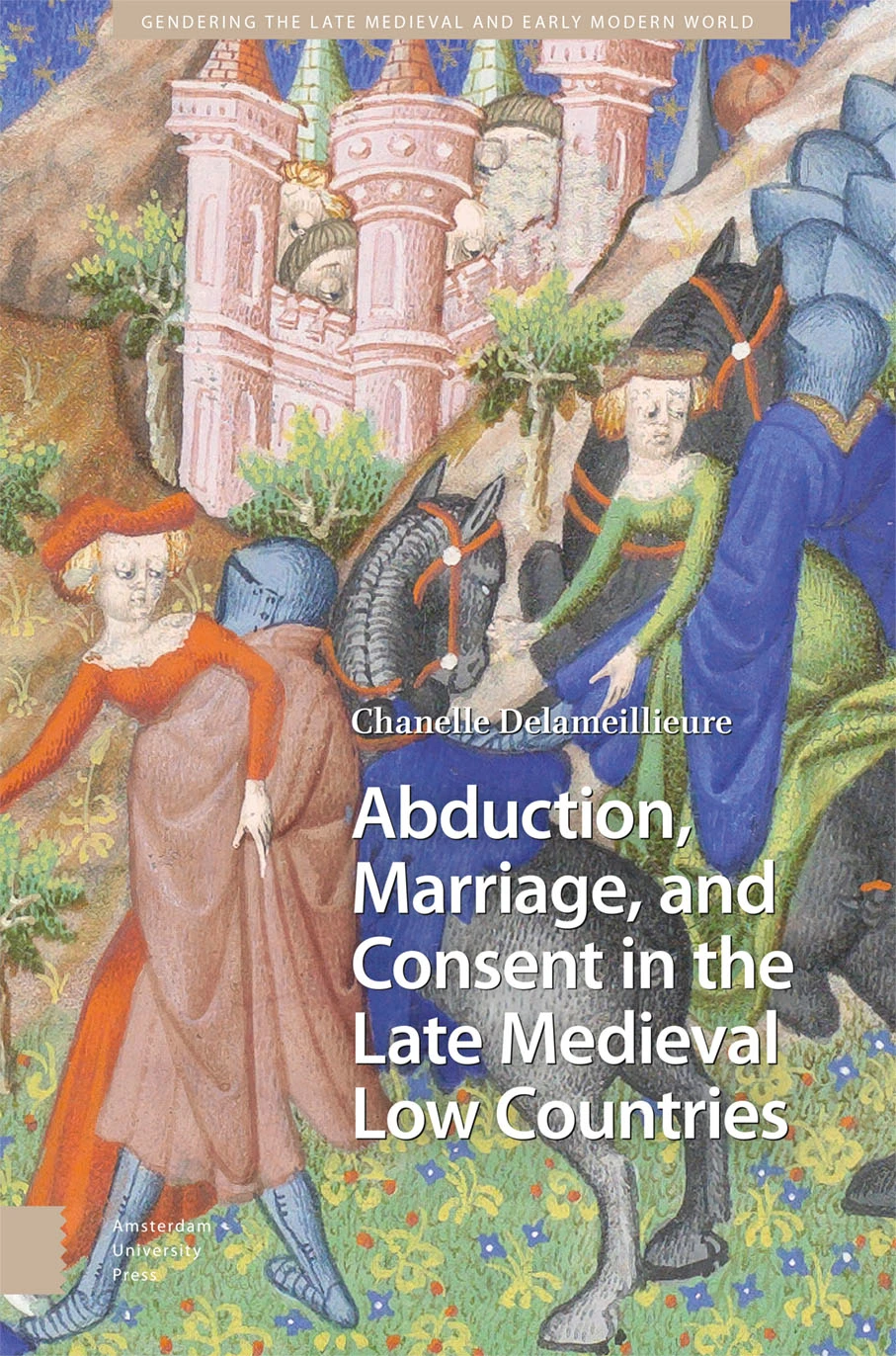
Prima che il concilio di Trento (1563) lo codificasse rigidamente, nel basso medioevo il matrimonio mantenne a lungo una natura laica, mutevole e versatile, caratterizzata da una grande variabilità di pratiche e modelli. Pare quindi più opportuno parlare di matrimoni al plurale, abbandonando la visione univoca dell’istituto affermatasi solo dopo Trento.
Nel volume si farà, pertanto, ampio riferimento non solo ai matrimoni legittimi e codificati, ma anche all’esteso ventaglio di quelli incerti e irregolari, come i matrimoni a tempo, le unioni di fatto, i matrimoni plurimi, le convivenze more uxorio o i rapporti concubinari; si passeranno in rassegna le diverse forme di unioni trasgressive, dal ratto all’adulterio, dai matrimoni finti e simulati sino a quelli violenti e forzati; si rifletterà, infine, sulle forme proibite o a stento tollerate, come i matrimoni interconfessionali, la promiscuità interreligiosa e le unioni con gli esclusi e i marginali.
ABOUT THE AUTHOR
Ermanno Orlando insegna Storia medievale nell’Università per Stranieri di Siena. Fra le sue monografie ricordiamo Altre Venezie. Il Dogado veneziano nei secoli XIII e XIV (Venezia 2008); Sposarsi nel medioevo (Roma 2010); Migrazioni mediterranee (Bologna 2014); Venezia e il mare nel Medioevo (Bologna 2014); Strutture e pratiche di una comunità urbana. Spalato, 1420-1479 (Venezia-Wien 2019); Le repubbliche marinare (Bologna 2021); Medioevo migratorio (Bologna 2022).
TABLE OF CONTENTS
Prefazione
1. Introduzione
1. Paradigmi matrimoniali
2. Altre fonti, altri matrimoni
3. Una nuova stagione storiografica
4. Il matrimonio pretridentino: una pluralità di modelli
5. Variabili matrimoniali
2. Tra disciplinamento e indisciplina: il matrimonio pretridentino
1. Consensus facit nuptias
2. Il matrimonio consensuale nel diritto canonico
3. L’affermazione della teoria consensualistica
4. Un matrimonio aformale?
5. Il matrimonio nel diritto civile e la centralità della dote
6. La questione dei matrimoni clandestini
7. Verso il matrimonio formale: il concilio di Trento
3. Tempi, spazi e riti del matrimonio
1. Il modello ecclesiastico: storia di un sostanziale fallimento
2. La dimensione laica, familiare e comunitaria del matrimonio
3. Il modello notarile di matrimonio
4. Pubblico e celebrativo: il matrimonio aristocratico
5. Altre variabili matrimoniali
4. Dai preliminari alla scelta: mediazioni, modelli e reti
1. La funzione della famiglia e del matrimonio
2. Mediazioni e reti
3. La dimensione circolare e collettiva della mediazione
4. La scelta della sposa
5. Matrimoni incerti, irregolari e trasgressivi
1. Unioni incerte e controverse
2. I matrimoni a tempo e le separazioni di fatto
3. I matrimoni plurimi e in successione
4. I delicta carnis: ratto, adulterio e stupro
5. Adulterio e stupro nelle prassi giudiziarie
6. I surrogati del matrimonio (o quasi matrimoni)
1. Le convivenze more uxorio
2. I rapporti concubinari
3. Il concubinato tra tolleranza e reato
4. Il concubinato d’élite
7. Seduzione e finzione
1. Il finto matrimonio a scopo di seduzione
2. Imposture e raggiri
3. Simulazione e gioco
4. Il matrimonio delle beffe
8. Spose bambine
1. Pubertà e matrimonio
2. Tra infanzia e adolescenza: i signa indubitate pubertatis
3. La maturità psichica e biologica
4. Il matrimonio tra bambini
9. Matrimoni forzati e violenza domestica
1. Nozze forzate, nozze combinate
2. L’annullamento del vincolo propter metum
3. La violenza coniugale
4. Le sevizie come causa di separazione
10. I matrimoni misti
1. Le unioni interconfessionali
2. Cristiani orientali e matrimonio
3. Confronti
4. Affinità
5. L’impatto disciplinante del concilio di Trento
11. Il fascino delle unioni proibite
1. Il matrimonio interdetto: gli infedeli
2. Separazioni, matrimoni di fatto e conversioni
3. Promiscuità e trasgressioni
12. Marginalità e matrimonio
1. Il matrimonio con gli schiavi
2. Legami irregolari e surrogati
3. Il matrimonio con i lebbrosi
Bibliografia
Indice dei nomi e dei luoghi
More information can be found here.
In this lecture Prof. Gisela Drossbach will demonstrate that the relationship between church and state in the Anglo-Norman realm favoured the extension of papal legal culture from the continent to England in the 12th century. In this ambiente the concept of marriage based on the consent of both parties, which pope Alexander III propagated by means of his rapidly developing decretal legislation, was able to prevail. This new form of marriage resulted in the protection of women who could no longer be forced into marriages, that they did not want. I will present three cases to show this clearly. But could this protection in fact be realized and would it last? It will be shown that a possible disadvantage for a woman was the fact that a form for the marriage procedure had not yet been adequately defined and there were many clandestine marriages.
If you wish to attend the lecture, please register here.
Gisela Drossbach will be visiting Centre for Privacy Studies in February 2023. She is a Professor of European Regional History at the University of Augsburg and has her research projects at the Leopold-Wenger-Institut für Rechtsgeschichte at the Ludwig-Maximilians-Universitat and the Stephan Kuttner Institute of Medieval Canon Law in Munich. She wrote her ‘Habilitation’ about the “Hospital and Order of Santo Spirito in Sassia in Rome (1198-1378)” (published 2005) and her PhD about the Bavarian author Konrad von Megenberg († 1373). Her research has been funded by awards from among others the Deutsche Forschungsgemeinschaft and Gerda-Henkel-Stiftung. Furthermore she has received fellowships from the German Historical Institutes in Rome and Paris and she has been a visiting professor at Alma Mater Studiorum Università di Bologna, Dipartimento di Italianistica e Filologia Classica in 2021. She holds positions of different commissions like executive secretary of the Historical Society of Swabia/Bavaria and member of the Advisory Board of the Iuris Canonici Medii Aevi Consociatio (ICMAC). Her expertise is in the field of medieval juridical manuscripts, medieval canon law, text/images relations, history of religious institutions and hospitals, and Bavarian History. In these fields she has published more than 17 books and nearly 100 articles.
Details:
Time: 7 Feb. 2023, 13
Place: Room 6B.1.62, Faculty of Theology, University of Copenhagen.
Organizer: Centre for Privacy Studies
ABOUT THE BOOK
Le Brésil a connu une colonisation catholique sous l’égide de la couronne portugaise. Le transfert du mariage chrétien dans ce monde peuplé d’Indiens, mais aussi d’esclaves africains sur plus de deux siècles, a été un élément essentiel de cette colonisation. Quelles ont été les stratégies de l’Église et des missionnaires ? Quelles furent les réactions de ces populations qui occupent des positions subalternes mais n’en sont pas moins réactives face à cette entreprise?Descriptions missionnaires faisant revivre le monde tragiquement disparu des Indiens du Brésil, réflexions théologiques et juridiques qui révèlent le cadre intellectuel dans lequel s’est opérée l’expansion de la chrétienté à l’époque moderne : l'auteure s'appuie sur une documentation d'une grande richesse qui révèle combien l’esclavage était au cœur des réflexions de l'Église. Enfin, l’analyse des pratiques montre à la fois la subtile faculté d’adaptation des missionnaires et l’extraordinaire capacité d’action des Indiens et des esclaves qui utilisent les instruments du droit canonique pour leurs propres intérêts.
ABOUT THE AUTHOR
Charlotte de Castelnau-L’Estoile est professeure d’histoire moderne à l’université Paris-Diderot et codirige, aux Puf, la collection « Nouvelle Clio ». Elle a publié Les ouvriers d'une vigne stérile. Les jésuites et la conversion des Indiens au Brésil 1580-1620 (Centre Culturel Calouste Gulbenkian, Paris, 2000), Páscoa et ses deux maris. Une esclave entre Angola, Brésil et Portugal au XVIIe siècle, (Puf, 2019).
TABLE OF CONTENTS
Introduction – Les Chaînes du Mariage
Première partie – Le transfert du mariage chrétien au Brésil XVIe-XVIIe siècles
Chapitre 1 – Des alliances indiennes au mariage
Chapitre 2 – La papauté et la question du mariage des infidèles
Chapitre 3 – Le débat sur les mariages brésiliens
Chapitre 4 – Formation de la société esclavagiste et « doutes » sur le mariage
Chapitre 5 – Remarier les esclaves : les enjeux d’une bulle pontificale
Chapitre 6 – Mariages indiens et missions capucines au XVIIe siècle
Deuxième partie – Le mariage dans la société esclavagiste (début XVIIIe siècle)
Chapitre 7 – Se marier : un droit pour les esclaves ?
Chapitre 8 – Rio de Janeiro 1680-1720 : soixante-quinze histoires de mariages
Chapitre 9 – Le mariage et les chaînes de l’esclavage
Chapitre 10 – Les « fils soumis de la très sainte Église » : esclavage et religion
More information with the publisher.
Die Ehe für zwei Menschen gleichen Geschlechts ist keineswegs erst ein Phänomen der jüngeren Geschichte. 2015 hat Guiseppe Marcocci in den Historical Reflections einen Aufsatz veröffentlicht: "'Is This Love?' Same-Sex Marriage in Renaissance Rome". Es geht dabei um die Hintergründe der Hinrichtung von acht Sodomiten in Rom 1578. Einer war Portugiese, einer Albaner, sechs Spanier. Insgesamt waren elf Mitglieder einer Gruppe von 27 oder mehr verhaftet worden. Die übrigen waren geflohen (25). Mindestens zwei Mitglieder der Gruppe hatten geplant in der Kirche des Heiligen Johannes am lateinischen Tor eine Ehe zu schließen. Die Beteiligten hatten sich eine Geheimsprache zugelegt, so dass sie in Gegenwart von Dritten über ihre sexuellen Aktivitäten sprechen konnten, ohne sich zu verraten (115). Aus den Verhören ergibt sich, dass die Mitglieder der Gruppe viele gleichgeschlechtliche sexuelle Kontakte hatten. Es handelt sich also bei den Verhafteten nur um die Spitze eines Eisberges (164).
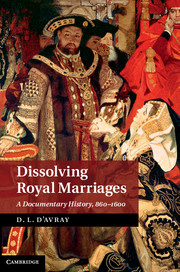
Arguably, no other institution in the Middle Ages and early modern era was as subject to as many legal disparities and disputes between royal and papal power as that of royal marriage. In fact, a royal marriage was far from a private affair. On the spiritual level, the marriage of a royal couple was to reflect the sanctity of the life union between woman and man at the highest strata. Kings and queens were models of marital behaviour who, theoretically, were expected to match the idealistic gendered expectations and roles associated with their positions as husbands and wives. On the secular level, royal marriages symbolised an alliance between kingdoms. Marrying into the ‘wrong’ dynasty and choosing to dissolve one union in favour of another that offered more potential — like power, wealth or the birth of legitimate offspring and, thus, successors — had political ramifications that often reverberated far beyond the boundaries of the individual kingdoms involved. The culture of medieval and early modern Europe before the Reformation was unique as nowhere else in the world were the sexual lives and personal relationships of kings and queens, men and women, so policed by an external entity like the Catholic church. Thus, at its heart, royal marriage was a fundamental issue that defined ongoing relations between Church and State for a number of centuries.