Search

Showing posts with label history of public law. Show all posts

14 October 2026

LECTURE: Bethany McNAMARA-DALE, "Frameworks of German Sovereignty and Legal Reform: Pluralism and Contested Jurisdiction, 1770-1866" (London: Institute of Historical Research, 14 OCT 2026)


(image source: IHR)

Abstract:

This paper examines legal reform as a multi-dimensional political, social and legal process across the late eighteenth and nineteenth century. It explores the supranational, state and social interactions with judicial reform, demonstrating the legal pluralism and fundamental arbitration culture at the heart of German law and state building. Focusing on Bavaria and Hessen-Kassel as primary case studies, it examines the experiences of legal reform in two contrasting examples of states which, for better or worse, survived the upheavals of the era. By focusing upon the courses and dynamics of inevitable jurisdictional tensions, this research provides a new lens through which to understand state-building and legal change. In doing so, it contributes to a richer account of multi-dimensional German governance and society, while also providing a critical historical perspective on the challenges of supranational order – demonstrating that state-building and legal reform were inherently contingent and intertwined.

Location:

Read more here.

25 September 2026

BOOK: Hervé LEUWERS & Virginie MARTIN (dir.), Quelle souveraineté pour la Nation 1789-1791 ? [Histoire, dir. Frédéric CHAUVAUD, Florian MAZEL, Philippe HAMON, Noëlline CASTAGNEZ & Francis PROST] (Rennes: Presses universitaires de Rennes, 2026) [OPEN ACCESS]


(image source: openedition)

Abstract:
Dans les récits de l’entrée en Révolution, le 17 juin 1789 marque le passage de la souveraineté du roi à celle de la Nation, par la fondation de l’Assemblée nationale et sa revendication du droit à fixer le montant des impôts. Dans les faits, pourtant, cette transition d’une souveraineté à l’autre n’est que graduelle ; la séance du 17 juin puis le serment du Jeu de paume, trois jours plus tard, ouvrent un temps de débats, de tensions et de construction progressive d’un « nouveau régime ». C’est par un double déplacement du regard que ce livre entend explorer cette transition de souveraineté méconnue. Le premier délaisse les étapes majeures de l’élaboration de la Constitution de 1791, par le travail d’Assemblée, pour s’attacher aux modalités concrètes du passage d’une souveraineté à l’autre. Le second concerne les « souverains ». Plutôt que d’observer prioritairement les députés à l’œuvre, l’ouvrage s’intéresse au « souverain » ancien et nouveau : au roi et à ses défenseurs, qui ne renoncent jamais totalement à la souveraineté royale, même si sa pratique s’efface peu à peu ; aux citoyens, qui expriment, en mots et en gestes, une attente de souveraineté, qui va parfois bien au-delà de ce qui est accepté par la majorité de l’Assemblée.

Contributors:

Alexandre Maral, Virginie Martin, Charles-Éloi Vial, Benoît Carré, Jeanne-Marie Jandeaux, Stanislas de Chabalier, Michel Biard, Gaïd Andro, Juliette Milleron, Serge Aberdam, Samuel Guicheteau, Catriona Seth, Rolf Reichardt, Francesco Buscemi, Frank Laidié, Guillaume Cot, Hervé Leuwers

Read the book in open access: DOI  10.4000/16p1k.


16 July 2026

OPEN ACCESS: Sébastien DUBOIS, Bruno DEMOULIN, & Jean-Louis KUPPER (Eds.). Les institutions publiques de la principauté de Liège (980-1794). [Studia, 133] (Brussels: State Archives of Belgium, 2012), 2 vol.

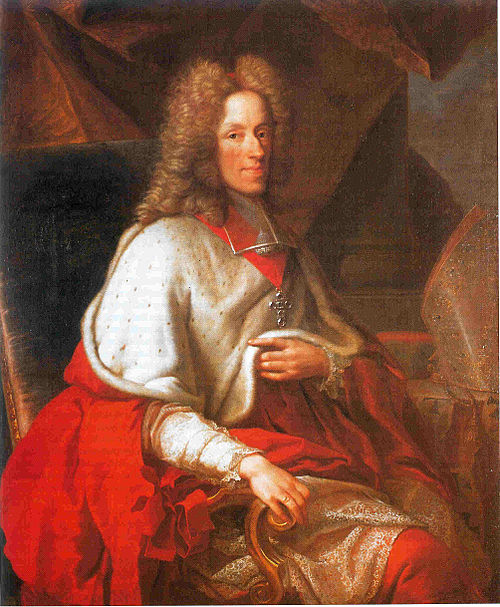
(image: Joseph Clement of Bavaria, Prince-Bishop of Liège; source: Wikimedia Commons)

 Abstract:

Bonne nouvelle ! Le guide 𝘓𝘦𝘴 𝘪𝘯𝘴𝘵𝘪𝘵𝘶𝘵𝘪𝘰𝘯𝘴 𝘱𝘶𝘣𝘭𝘪𝘲𝘶𝘦𝘴 𝘥𝘦 𝘭𝘢 𝘱𝘳𝘪𝘯𝘤𝘪𝘱𝘢𝘶𝘵é 𝘥𝘦 𝘓𝘪è𝘨𝘦 (980-1794) est désormais consultable en ligne et téléchargeable gratuitement ! Les Archives de l’État à Liège conservent de riches fonds d’archives de la principauté de Liège, mais pour y accéder, il faut connaître l’histoire, l’organisation, les compétences et les activités des institutions de l’un des États les plus singuliers de l’Europe d’Ancien Régime. L’organisation politique et administrative liégeoise (où pouvoirs temporel et spirituel s’entrecroisent) est complexe et différente des autres états d’Ancien Régime et, bien sûr, des institutions contemporaines. L’ouvrage offre une synthèse complète et structurée des institutions liégeoises -administratives, judiciaires, financières et militaires ; tant centrales (Conseil privé, États, Chambre des comptes, Cour allodiale, Cour féodale, etc.) que régionales (duché de Bouillon, comté de Looz, condominium de Maastricht, etc.) et locales (villes, métiers, échevinages, etc.). Chaque ville fait l’objet d’une notice spécifique. Chaque notice suit un cadre clair : histoire, organisation, compétences, activités, principaux textes normatifs, listes de fonctionnaires, sources archivistiques et éditions, bibliographie.

Read more here. 

(source: Celida [Centre liégeois de documentation archivistique)

15 June 2026

ADVANCE ARTICLE: Maya MARK, "Civil Disobedience in Defense of Democracy: Menachem Begin’s Struggle Against Emergency Laws in Israel, 1948–1954" (Law and History Review) [OPEN ACCESS]

(image source: CUP)

 Abstract:

This study uncovers a previously overlooked chapter in the historiography of civil disobedience: Menachem Begin’s resistance to Israeli emergency legislation between 1948 and 1954, which he argued undermined foundational democratic principles. It presents the first scholarly analysis of Begin’s resistance, contending that it constitutes a clear instance of civil disobedience, embodying its core tenets. At the heart of this historical case study lies a paradigmatic question: how can laws that erode foundational—yet abstract—democratic principles, such as the separation of powers, be effectively resisted, and can such resistance be accommodated within traditional frameworks of civil disobedience? Begin’s struggle brings these questions into sharp relief, illuminating longstanding critiques of the framework’s overly restrictive boundaries and underscoring the tension between theoretical frameworks and political reality. More broadly, the article engages central debates at the intersection of law, politics, and democratic thought. By examining the democratic convictions of a prominent right-wing leader, it contributes to historical scholarship on the role of conservative and right-wing movements in shaping democratic ideologies, while also providing a historical reference point for subsequent ideological transformations and radicalization processes within these movements. Finally, by illuminating the complexities inherent in opposing laws that erode core-yet abstract-democratic principles, this study resonates with contemporary debates on democratic backsliding, offering a historical lens through which civil disobedience has served as a principled response to such challenges.

Read more here: DOI 10.1017/S0738248026101539

05 June 2026

BOOK: Benoît CARRÉ, Distribuer l’argent du roi au XVIIIe siècle. La monarchie dévoilée (Villeneuve d'Asq: Presses universitaires du Septentrion, 2025), ISBN 978-2-7574-4486-3 [OPEN ACCESS]

(image souce: OpenEdition)


Abstract:

Under the Ancien Régime, the finances of the King of France were shrouded in secrecy until the famous Necker decided to publish estimates of the monarchy’s income and, above all, expenditure. The public then discovered the staggering amount of the pensions that Louis XVI was paying to a large proportion of the nobility. At the time of the Revolution, the National Assembly decided to investigate and revealed the way in which public funds derived from tax coercion had been used to subsidise courtiers. This book tells the story both of the investigation and of the object investigated. By describing for the first time, using unpublished archives, the uses of this social practice that linked the king to the nobility, the author casts a new light on the forces behind the final crisis of the Ancien Régime and traces the genesis of the first retirement system for the State civil service.

On the author:

Chercheur en histoire moderne, spécialiste de l’Ancien Régime et de la Révolution. Il est docteur de l’université de Lille depuis 2018. Distribuer l’argent du roi au xviiie siècle. La monarchie dévoilée est son premier livre.

Read the book here: DOI  10.4000/14c77.

18 May 2026

BOOK: Peter STACEY, The State in Machiavelli (Cambridge: Cambridge University Press, 2025), ISBN 9781009630351, €145,89


Abstract:

While historical scholarship has often downplayed the importance of Machiavelli's theory of the state, this study reconstructs the question of lo stato as the conceptual crux of his political philosophy. Peter Stacey offers a detailed reconstruction of the historical context from which Machiavelli's theory emerges, demonstrating how the intellectual and ideological contours of Machiavelli's thinking, as well as much of its content, were decisively shaped by conceptual apparatuses drawn from Roman philosophical, rhetorical and aesthetic discourse. Stacey further provides a sustained analysis of the development of Machiavelli's picture of the state from his earliest writings onwards, underlining the extent to which the Florentine draws deeply upon several key aspects of this intellectual inheritance in hitherto unacknowledged ways, while calling into question some of its cherished assumptions about the character of collective political entities. As Machiavelli's thinking unfolds across The Prince and the Discourses, Stacey illustrates how a strikingly novel conception of the body politic marks him out as the author of a distinctively new philosophy of the state.

Read more here: DOI 10.1017/9781009630351.

04 May 2026

REMINDER CALL FOR PAPERS: International Conference: Contested Seas. War, Commerce, and the Making of the Law of the Sea (c. 1400–1800) (Ostend: VUB/VLIZ, 19-20 NOV 2026) [DEADLINE 15 MAY 2026]

(Image source: VUB-CORE blog)


International Conference:

Contested Seas: War, Commerce, and the Making of the Law of the Sea (c. 1400–1800)


19-20 November 2026, Ostend, Belgium

Vrije Universiteit Brussel (VUB), Campus Ostend / Flanders Marine Institute (VLIZ)

Conveners:

Stefano Cattelan & Frederik Dhondt
(Vrije Universiteit Brussel – Faculty of Law and Criminology, Research Group CORE)

Keynote speakers: 

Surabhi Ranganathan (Lauterpacht Centre, University of Cambridge)
Indravati Félicité (Friedrich-Alexander-Universität Erlangen-Nürnberg)


Concept and Rationale: The early modern law of the sea did not emerge as a coherent or pacified body of rules. Rather, it took shape as a fragmented and deeply contested legal regime. It was forged through recurrent warfare, commercial rivalry, and persistent struggles over jurisdiction and enforcement at sea. The pelagic arena was characterised by overlapping jurisdictions, uneven enforcement, and profound asymmetries of power (Benton, 2010). The freedom of the seas (‘Mare Liberum’) did not operate as a stable peacetime principle. It was repeatedly restricted, negotiated, and redefined in moments of conflict, particularly through disputes concerning maritime jurisdiction, economic warfare, neutral navigation, and prize-taking.

Hence, several methodological questions arise. Can we chart the deeper structures and long-term evolutions of the law of the sea and, at the same time, remain historically grounded and relevant to contemporary debates?

Recent scholarship has challenged the idea that the law of the sea gradually restrained violence at sea. Instead, norms were forged, tested, and transformed through concrete conflicts over sovereignty, jurisdiction, and neutral navigation (e.g. Steinberg, 2001; Benton, 2010; Schnakenbourg, 2015; Calafat, 2019; Cattelan, 2025). This perspective invites a rethinking of the law of the sea not as a dependent variable of early modern conflict, but as one of its crucial products. The present conference builds on this emerging insight and seeks to explore its broader implications across different regions, actors, and legal contexts.

This conference invites contributions that approach the law of the sea as a historically produced normative regime, examined as (1) a body of legal argument, a set of institutional (2) practices, and a (3) field of political struggle. It seeks to foster dialogue across legal history, international law and the histories of ideas, diplomacy, warfare, and empire, bringing together scholars attentive to different sources, actors and objects (doctrine, archives, institutions, legal reasoning, institutional practice, and material interests). The conference situates the law of the sea within broader processes of state formation, imperial competition, and global connectivity, including its interaction with commercial and maritime legal practices (Félicité, 2024).

This conference takes a broad analytical perspective, to seal a series of three encounters organised under the aegis of FWO Junior Fundamental Research Project G016122N. While earlier meetings in this series focused primarily on neutrality as a legal status, diplomatic strategy, and social practice —particularly from the perspective of small and medium powers— the present symposium shifts the analytical focus: recurrent conflicts over neutrality, belligerent rights, maritime jurisdiction, and enforcement mechanisms did not merely test existing norms. These instances were crucial to the historical formation of the law of the sea as a contested legal regime. In this sense, neutrality is approached as a formative force in the making of the law of the sea across judicial, diplomatic, and commercial arenas.

The conference aims to offer a synthetic reinterpretation of the relationship between mare liberum and mare clausum, peace and war, neutrality and coercion, situating the early modern law of the sea within the longer history of international law without assuming linear trajectories or teleological outcomes. It also invites reflection on the enduring legacies of early modern maritime practices for later codification efforts and contemporary debates on ocean governance in an increasingly polycentric world (Mawani, 2023; Ranganathan, 2016, 2020).

Finally, the conference welcomes contributions addressing different maritime regions and circuits, including —but not limited to— the Mediterranean, Atlantic, and Indian Ocean worlds, as well as interactions between different legal orders and actors (Anand, 1983; Khalilieh, 2019; Subrahmanyam, 2024; Po, 2018). We particularly welcome contributions on cross-cultural legal encounters and concrete sites of norm production, such as courts, diplomatic practices, commercial litigation, port regulations, and contractual arrangements.


Key Questions

The conference invites contributions addressing one or more of the following questions:

  • What kind of legal regime was the early modern law of the sea?
    How can it be understood as a historically contingent and contested normative order rather than a coherent or stabilised body of rules?
  • How did warfare shape the law of the sea?
    In what ways did recurring conflicts over maritime jurisdiction, belligerent rights, neutrality, blockade, contraband, and prize-taking contribute to the production and transformation of legal norms at sea?
  • How was the law of the sea articulated, applied, and contested in daily practice?
    What roles did courts, diplomatic channels, port authorities, consular institutions, and commercial actors play in the everyday functioning of this legal regime?
  • How did neutrality operate as a formative force within the law of the sea?
    How were legal boundaries between peace and war at sea shaped by disputes and agreements involving neutral navigation?
  • How did individuals and non-state actors exercise legal agency at sea?
    The mobilisation of multiple normative orders —public, commercial, and customary by merchants, shipmasters, insurers, chartered companies, or private entrepreneurs — to pursue commercial, political, or strategic objectives is central here.
  • How did different connected spaces and regions shape a distinct legal practice?
    How did practices take shape across and between different maritime regions and circuits, including interactions between European and extra-European legal orders?
  • What are the longer-term implications of early modern practices of the law of the sea?
    How did early modern solutions and conflicts inform later codification efforts and continue to resonate in contemporary debates on ocean governance?


Thematic Areas (Indicative)

The following thematic areas, which constitute the thematic translation of the questions highlighted above, articulate different dimensions of the early modern law of the sea as a contested legal regime produced through conflict, commerce, and legal practice. They are intended to be read as analytically connected rather than as parallel or autonomous agendas. They are indicative rather than exhaustive.


1. The sea as a legal and spatial order

Maritime jurisdiction; territorial waters; ports, straits, and littoral zones; sovereignty and access; legal pluralism at sea; competing claims to control, passage, and enforcement.

2. War, commerce, and neutrality in the law of the sea

Naval warfare and economic conflict; blockade, contraband, and continuous voyage; prize-taking and adjudication; neutrality as legal status, diplomatic strategy, and practical resource; coercion, enforcement, and asymmetries between belligerents and neutrals.

3. Institutions and practices producing the law of the sea

Courts (including admiralty and prize courts); diplomatic correspondence; consular jurisdictions; port authorities and regulatory regimes; chartered companies; litigation, arbitration, and everyday legal practice. Contributions grounded in specific sources or sites of norm production are particularly welcome.

4. Agency and normative pluralism within the law of the sea

The role of individuals and non-state actors —such as merchants, shipmasters, insurers, private entrepreneurs, and colonial intermediaries— in mobilising a plurality of normative orders, including the law of nations, domestic legislation, commercial and maritime law, urban statutes, customary norms, and private contracts.

5. The law of the sea across regions, empires, and legal encounters

Comparative and transregional perspectives; interactions between European and extra-European legal orders; cross-cultural legal encounters; circulation, translation, and contestation of norms governing maritime space in different oceanic worlds.

6. From early modern practice to modern/contemporary ocean governance

Long-term continuities and ruptures in the law of the sea; armed neutrality and collective enforcement; early modern legacies in later codification efforts and contemporary debates on ocean governance.


Disciplinary Scope: The conference welcomes contributions from legal history, the history of international law, maritime and naval history, diplomatic and political history, economic history, and international law scholarship with a historical or theoretical orientation. Interdisciplinary, critical, and transregional approaches are particularly encouraged. Early-career researchers are warmly invited to submit proposals.

Format: The conference is conceived as a focused, discussion-oriented event. Draft papers will be circulated in advance to facilitate in-depth exchange. Presentations will be kept at 20 minutes for each speaker in order to prioritise collective discussion and comparative discussion.

Submission Guidelines: please submit an abstract of no more than 350 words and a short biographical note of up to 150 words to: stefano.cattelan@vub.be.
Submission deadline: 15 May 2026
Notification of acceptance: 1 June 2026
Draft papers (for pre-circulation among participants): 20 October 2026


Publication: Following the conference, selected contributions will be submitted to a special issue in an international peer-reviewed journal (preferably open access).

Practical Information: The organisers aim to secure funding to cover organisational costs and, where possible, to offer limited support for travel and accommodation, particularly for early-career researchers and scholars without access to dedicated research funds. Further practical information will be communicated to accepted participants.


Indicative references:

Alimento, Antonella (ed.), War, Trade and Neutrality: Europe and the Mediterranean in the Seventeenth and Eighteen Centuries (Milano, 2011).

Id., and Stapelbroek, Koen (eds.), The Politics of Commercial Treaties in the Eighteenth Century (Cham, 2017).

Anand, Ram P., Origin and Development of the Law of the Sea. History of International Law Revisited (The Hague/Boston/London, 1983).

Benton, Lauren and Perl-Rosenthal, Nathan (eds.), A World at Sea: Maritime Practices and Global History (Philadelphia, 2020).

Benton, Lauren, A Search for Sovereignty. Law and Geography in European Empires, 1400-1900 (Cambridge, 2010).

Calafat, Guillaume, Une mer jalousée: contribution à l’histoire de la souveraineté (Méditerranée, XVIIe siècle) (Paris, 2019).

Cattelan, Stefano and Frederik Dhondt (eds.), Small Power Neutrality and the Law of the Sea in the Long Eighteenth Century (1650–1800). Law as Argument in the Pelagic Arena (Leiden/Boston, 2025).

Cattelan, Stefano and Louis Sicking. ‘The Coastal Seas in International Law: Contextualising Grotius’s De iure belli ac pacis’, Grotiana, 46(1) (2025), 43-65.

Cattelan, Stefano, Mare Clausum: The Formation of the Law of the Sea in Pre-modern State Practice and Legal Doctrine (c. 1350–1650) (Leiden/Boston, 2025).

Dhondt, Frederik, ‘“Arrestez et pillez contre toute sorte de droit”: Trade and the War of the Quadruple Alliance (1718-1720)’, Legatio: The Journal for Renaissance and Early Modern Diplomatic Studies, 1 (2017), 98-130.

Id., ‘Delenda est haec Carthago. The Ostend Company as a Problem of European Great Power Politics (1722-1727)’, Belgisch Tijdschrift voor Filologie en Geschiedenis/Revue Belge de Philologie et d’Histoire, 93 (2015), 397-437.

Félicité, Indravati, Le Saint-Empire face au monde. Contestations et redéfinitions de l’impérialité (XVe-XIXe siècle) (Paris, 2024).

Ford, John D., The Emergence of Privateering (Leiden/Boston, 2023).

Harding, Richard, Seapower and Naval Warfare, 1650–1830 (London, 2002).

Khalilieh, Hassan S., Islamic Law of the Sea: Freedom of Navigation and Passage Rights in Islamic Thought (Cambridge, 2019).

Mancke, Elizabeth, ‘Early Modern Expansion and the Politicization of Oceanic Space’, Geographical Review, 89(2), 225-36.

Mawani, Renisa, ‘The law of the sea’, in Peter D. Burdon and James Martel (eds.), The Routledge Handbook of Law and the Anthropocene (London, 2023), 115-29.

Müller, Leos, Neutrality in World History (New York, 2019).

Neff, Stephen C., The Rights and Duties of Neutrals: A General History (Manchester, 2000).

Po, Ronald C, The Blue Frontier: Maritime Vision and Power in the Qing Empire (Cambridge, 2018).

Ranganathan, Surabhi, ‘Decolonization and International Law: Putting the Ocean on the Map’, Journal of the History of International Law, 23(1) (2020), 161-83.

Id., ‘Global Commons’, European Journal of International Law, 27(3) (2016), 693-717.

Schnakenbourg, Éric, Entre la guerre et la paix: Neutralité et relations internationales, XVIIe–XVIIIe Siècles (Rennes, 2013).

Sicking, Louis, ‘The Pirate and the Admiral: Europeanisation and Globalisation of Maritime Conflict Management’, Journal of the History of International Law, 20(4) (2018), 429-70.

Stapelbroek, Koen (ed.), Trade and War: The Neutrality of Commerce in the Inter-State System (Helsinki, 2011).

Steinberg, Philip E., The Social Construction of the Ocean (Cambridge, 2001).

Strootman, Rolf, van den Eijnde, Floris, and van Wijk, Roy (eds.), Empires of the Sea. Maritime Power Networks in World History (Leiden, 2019).

Subrahmanyam, Sanjay, Across the Green Sea: Histories from the Western Indian Ocean, 1440–1640 (Austin, 2024).

Wani, Kentaro, Neutrality in International Law. From the Sixteenth Century to 1945 (London/New York, 2017).


14 April 2026

REGISTRATION and PROGRAM: Journées internationales de la Société d'histoire du droit et des institutions des pays flamands, picards et wallons: dirigeants et dirigés (Versailles: Musée Lambinet, 15-16 MAY 2026) [DEADLINE 5 MAY 2026]

(Election of the President of the French (Third) Republic in the Salle du Congrès, Versailles; source: Wikimedia Commons) 

Sixteen speakers are announced for the Journées internationales de la Société d'histoire du droit et des institutions des pays flamands, picards et wallons: dirigeants et dirigés, to be held in Versailles on 15 and 16 May 2026.


Journées internationales d’Histoire du droit et des institutions des pays flamands, picards et wallons

Internationale rechtshistorische dagen van de Vereniging voor de Geschiedenis van het Recht en de Instituties van Vlaanderen, Picardië en Wallonië


Versailles, les 15 et 16 mai 2026


“Dirigeants et dirigés”


Programme provisoire


Vendredi 15 mai 2026


9 h 30 :  Accueil des participants au Musée Lambinet

9 h 45 : Ouverture du colloque par les organisateurs, Catherine Lecomte et Tanguy Le Marc’hadour

10 h : Séance 1 - Gouvernants et dirigeants (I) :

Antoine Leclère, doctorant, FRS-FNRS/Université de Liège/Vrije Universiteit Brussel : « Un dirigeant pour la Révolution liégeoise : les débats autour du Conseil de régence (1789-1790) »

Antonio Grilli, professeur, Università degli studi, ecampus : « Direction d'en haut, entre énergie et humanité : Louis-Ghislain de Bouteville et François-Joseph Rudler (1795-1798 ».

Catherine Denys, professeure, Université de Lille : « Diriger la police d’une colonie d’Ancien Régime, Pierre-Henry Saucet à Port-Louis (île Maurice) dans les années 1780 ».

11 h 15 : Pause-café

11 h 30 : Séance 2 - Gouvernants et dirigeants (II) :

Julie Rocheton, professeure, Loyola University, New Orleans : « Diriger après 1789 : la famille Derbigny entre Picardie et Louisiane »

Xavier François-Leclanché, docteur en droit, consultant : « Gouvernants et gouvernés après la chute de Napoléon (1814) »

Frederik Dhondt, professeur, Vrije Universiteit Brussel : « Les dirigeants dirigés ?  Perspectives externes sur les élites « belges » de 1725 »

12 h 45 : Pause méridienne

14 h 30 : Séance n° 3 - Diriger la ville

Sophie Petit-Renaud, professeure, Université de Versailles-Saint-Quentin : « Dire le ‘murmure’: qualifier et contrôler la parole populaire dans les registres de délibérations de l’échevinage d’Amiens au XVe siècle »

Fred Stevens, professeur ém., KU Leuven : « Turnhout 1830. La gouvernance d’une petite ville devenue zone frontalière »

15 h 30 : Pause

15 h 45 Séance n° 4 - Diriger l’Etat

Nicolas Jehiel, doctorant, Université de Lille : « La rhétorique légaliste de l’“ordre moral” lors de la crise du 16 mai 1877, au service du dualisme constitutionnel »

Catherine Lecomte, professeure ém., Université de Versailles-Saint Quentin, présidente honoraire de la société : « Versailles, capitale de la République »

17 h : Visite

20 h : Banquet de la société


Samedi 16 mai 2026


9 h : Séance 5 - Diriger par la Justice

Jeroen Chorus, senior consultant, professeur ém., Leiden : « Recyclage du droit romain dans la théologie morale à Leuven, vers l'an 1500 : le futur Pape Hadrien VI »

Brent Huygh, doctorant, Vrije Universiteit Brussel : « “Protecteur de toutes les communautés” : Le Conseil de Brabant et les litiges des administrations villageoises, XVIIe-XVIIIe siècles »

Téo Boufflers, Université d’Artois : « Le droit de chasse, entre ayant-droit et usager, entre Cambrésis et Artois »

10h 30 : Pause-café

10 h 45 : Séance 6 - Diriger en temps de guerre et d’occupation (I)

Stefano Cattelan, postdoctorant, Vrije Universiteit Brussel & Brussels School of Governance : « Gouverner par la neutralité : dirigeants et dirigés dans la République de Venise en temps de guerre (1688–1714) »

Thibault Barbieux, maître de conférences, Université de Versailles-Saint-Quentin : « La capitulation de Lille (1667), instrument juridico-politique entre gouvernants et gouvernés »

Ambre Jarassier, doctorante en histoire du droit, Université de Nantes : « La réforme de l’armée par Napoléon III : la défiance des militaires face au chef de l’État »

12 h 15 : Pause méridienne

13 h 30 : Séance 7- Diriger en temps de guerre et d’occupation (II)

Louise Martens, doctorante, KU Leuven/FWO : « Le devoir de défendre : les avocats belges devant les juridictions pendant et après la Deuxième Guerre mondiale »

Sebastiaan Vandenbogaerde, professeur, université de Gand : « Entre soumission et négociation. Les autorités locales en Flandre pendant la Première Guerre mondiale (1914-1918) »

Séance 8 :  Perspectives contemporaines

Aziz Sadik, docteur en droit, Université Mohamed V, Rabat : « Obéir ou résister ? Les formes juridiques et sociales de contestation des dirigés »

15 h :  Assemblée générale de la société

16 h : Visite

Invitation and registration form below:


Société d'histoire du droit et des institutions

des pays flamands, picards et wallons 

(fondée à Lille en 1929)


Journées internationales d'histoire du droit et des institutions

VersAILLES, les 15 et 16 mai 2026


À l’invitation de la présidente honoraire Catherine Lecomte, doyenne honoraire de la faculté de droit et de science politique de l’Université de Versailles Saint Quentin en Yvelines, les journées internationales d'histoire du droit et des institutions 2026 auront lieu cette année à Versailles, les 15 et 16  mai 2026, et auront pour thème général :


« Dirigeants et dirigés ».


Le sujet propose une réflexion sur les gouvernements à travers la personne de ses dirigeants, ses qualités attendues, ses modes de désignation, ses réseaux, ses limites personnelles et les garde-fous institutionnels. Le thème des Journées n’est pas en outre limité à une réflexion sur les seuls dirigeants politiques mais s’étend à l’étude des dirigeants d’autres organisations juridiquement constituées et productrices elles-mêmes d’une réglementation, comme les dirigeants militaires, municipaux, provinciaux, mais aussi les dirigeants spirituels (la direction de l’Église) ou économiques (les directions de sociétés). Enfin, le thème de la rencontre comprend aussi l’étude des dirigés, de leur adhésion à leurs dirigeants ou à l’inverse la manière dont ils s’expriment et s’organisent pour limiter leurs dérives.


Les séances de travail se dérouleront au musée Lambinet, situé 54, boulevard de la Reine.


Pour les déjeuners, nous nous rendrons dans un restaurant près du lieu des sessions.


Le vendredi, après les sessions, ainsi que le samedi, après l’assemblée générale clôturant le congrès, nous prévoyons une visite d’un haut lieu de Versailles. Les demandes et les démarches administratives sont en cours.


Le traditionnel dîner de la Société se déroulera le vendredi soir au centre-ville.


Les détails des lieux des déjeuners, du dîner et du banquet seront communiqués ultérieurement, lorsque le programme des sessions sera établi (l’appel à communications étant encore en cours, ledit programme ne peut pas encore être fixé).


Les frais d'inscription au congrès s'élèvent à 30 euros par participant(e) et comprennent la documentation et les pauses café ; la participation aux frais des déjeuners du vendredi midi et du samedi midi est fixée à 35 euros par personne par repas et la participation au dîner du vendredi soir à 60 euros par personne.


L’inscription se fait en envoyant le formulaire d’inscription avant le 5 mai 2026 par courriel à : tanguy.lemarchadour@univ-artois.fr.


Le numéro de compte bancaire sera ultérieurement envoyé aux inscrits pour leur permettre de régler par virement.


Le bureau de la Société,                                            


Le Président,                                                              Le Secrétaire Général,

Tanguy Le Marc’hadour                                  Christian PFISTER


Les Vice-Présidents,                                                 Le Trésorier,

Stanislas HORVAT                                                    Pascal HEPNER

Michael MILO                                  


Société d'histoire du droit et des institutions des pays flamands, picards et wallons


Journées internationales d'histoire du droit et des institutions

VERsailles, 15-16/05/2026


FORMULAIRE D'INSCRIPTION / REGISTRATION FORM


À envoyer avant le 5 mai 2026 par courriel à : tanguy.lemarchadour@univ-artois.fr

To be sent before May 5th, 2026 by e-mail at : tanguy.lemarchadour@univ-artois.fr


Monsieur/Mr – Madame/Mrs : ………………………………………………………………..


Adresse / Address :             ...………………………………………………………………………

                                   …………………………………………………………………...........

Portable / Cell phone:   …………………………………………………………………..……..


E-mail : ……………………………………………..


1° Droit d’inscription congrès / Registration fee Congress :      ……  x 30 €             Total :      .…. €


2° Lunch vendredi / Lunch Friday 15-05-2026                       

    Nombre de personnes / Number of persons :                            …… x 35 €               Total :      .…. €


3° Lunch samedi / Lunch Saturday 16-05-2026          

    Nombre de personnes / Number of persons :                            …… x 35 €               Total :      .…. €


4° Dîner vendredi soir / Dinner Friday evening (nombre limité / limited number)

    Nombre de personnes / Number of persons :                            …… x 60 €               Total :      .…. €


5° Total à payer / Total amount to be paid:                                                                   ..……... €


6° Visites / Visit :

le vendredi 15 mai / on Friday 15 May :

Participera / Will participate :                     OUI/YES – NON/NO

            Nombre de personnes / Number of persons :      ……


le samedi 16 mai / on Saturday 16 May :

            Participera / Will participate :                     OUI/YES – NON/NO

            Nombre de personnes / Number of persons :      ……


Payements au compte bancaire de la SOCIETE/ Payments on bank account of the SOCIETY :

IBAN _FR76 1670 6000 1416 5360 2370 606- BIC __AGRIFRPP867_____________

Au nom de / Account holder : _La société des amis de l’histoire en sud Artois__________________


Attention : Toute inscription donne lieu à l’obligation de paiement des frais

Be aware that registration leads to the obligation to pay the foreseen cost