Search

Showing posts with label colonialism. Show all posts

30 April 2026

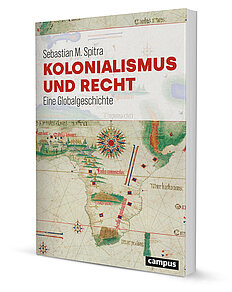
BOOK: Sebastian SPITRA, Kolonialismus und Recht. Eine Globalgeschichte (Wien: Campus Verlag, 2026), 156 p. ISBN 9783593521831, € 28


(image source: Campus Verlag)

Abstract:
Rechtsordnungen stehen heute unter Druck. Die globalen Krisen der Gegenwart bilden schwerwiegende Herausforderungen für eine normenbasierte Ordnung der Welt mit einer langen Liste an Brenn- und Kipppunkten, seien es der völkerrechtswidrige Angriffskrieg Russlands, weltweite Pandemien, Fluchtbewegungen oder die Klimakrise. Viele dieser Probleme sind Ausdruck der bis heute spürbaren Folgen des Kolonialismus und Imperialismus, die seit der Neuzeit die Welt prägten. Kolonialismus war dabei nicht nur Eroberung, Gewalt und Unterdrückung – er war zugleich auch ein Projekt des Rechts. Doch wie nutzten Staaten und Gesellschaften das Recht? Wie wurde Recht zum zentralen Austragungsort kolonialer Ordnung? Wie kamen Herrschaft, Kooperation und Widerstand zusammen? Sebastian M. Spitra geht diesen Fragen von der Frühen Neuzeit bis zur Dekolonisierung im 20. Jahrhundert nach und bezieht gegenwärtige Fragestellungen mit ein, etwa die Reparationen für koloniales Unrecht oder die Restitution von Kulturgütern mit kolonialer Provenienz. Das Buch bringt erstmals die Geschichte des Rechts und die Geschichte des Kolonialismus in einer kompakten Monografie zusammen. Sein globalgeschichtlicher Ansatz bezieht auch die Normen und Rechtsvorstellungen indigener und nicht-europäischer Gesellschaften mit ein und eröffnet dadurch eine ganz neue Perspektive auf die Geschichte des Kolonialismus.

On the author:

Dr. Sebastian M. Spitra ist Postdoc-Forscher am Institut für Rechts- und Verfassungsgeschichte der Universität Wien sowie Mitglied der Jungen Akademie der Wissenschaften und Literatur | Mainz. Als Experte war er für das Österreichische Bundeskanzleramt und ICOM Austria im Rahmen des Projekts »Das Museum im kolonialen Kontext« tätig. 

Read more with the publisher

02 May 2025

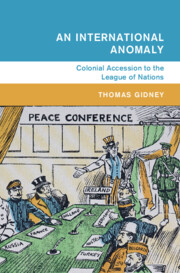
BOOK: Thomas GIDNEY, An International Anomaly. Colonial Accession to the League of Nations (Cambridge: Cambridge University Press, 2025), ISBN 9781009584432 [OPEN ACCESS]


(image source: CUP)

Abstract:
It is often assumed that only sovereign states can join the United Nations. But this was not always the case. At the founding of the United Nations, a loophole drafted by British statesmen in its predecessor organisation, the League of Nations, was carried forward, allowing colonies to accede as member-states. Colonies such as India, Ireland, Egypt, and many more were afforded a tokenistic representation at the League in Geneva during the interwar years, decades before their independence. Thomas Gidney unites three geographically distinct case studies to demonstrate the evolution of Britain's policy from a range of different viewpoints, exploring how this policy came into being, and why it was only exploited by the British Empire. He argues that this membership shaped colonial norms around sovereignty and international recognition in the interwar period and to the present day.

Table of contents:

Introduction
1. India's accession to the Imperial Conference
2. The formation of the League of Nations and Indian membership 'The anomaly among anomalies'
3. Inter Se and the League of Nations
4. Ireland's accession to the League of Nations
5. A membership obstructed: Egypt's delayed accession to the League of Nations

6. The demise of the League of Nations and the reemergence of colonial membership at the United Nations.

On the author:

Thomas Gidney is a a historian of international and colonial history and a Research Fellow at the Global Governance Centre, Graduate Institute Geneva. 

Read more: DOI 10.1017/9781009584432


20 November 2024

CONFERENCE (incl PhD Roundtable): Imperialism, Sovereignty and the making of International Law; 20 years on, with Antony Anghie (Melbourne and online: Laureate Research Program Global Corporations & International Law, 7-8 AUG 2025); DEADLINE 12 DEC 2024


(image source: LPGCIL)

Abstract:

2025 will mark the 20th anniversary of Antony Anghie’s groundbreaking work, Sovereignty, Imperialism and the Making of International Law (CUP 2005). Between 5 and 8 August 2025, we will be holding a suite of events, both in person in Melbourne, and online, to mark the occasion. On the evening of Tuesday 5 August, Professor Tony Anghie will deliver the George Turner Lecture at the Melbourne Law School. On Wednesday 6 August we will have a PhD Roundtable, and on 7 and 8 August 2025, we will be the conference to reflect on the contribution and enduring influence of the book on the field. On Thursday evening we will launch the TWAIL Handbook edited by Tony Anghie, B.S. Chimni, Vasuki Nesiah, Michael Fakhri and Karin Mickelson in a hybrid event.

 In-person papers:

Abstracts are currently being invited for papers for the conference. Papers can address the legacies, formative influences, key themes and questions associated with the book. Contributions from scholars in and of the Global South are particularly encouraged. Send abstracts of 150-200 words to LP-GCIL@unimelb.edu.au with the subject header: Abstract Anghie Conf 2025. Contributions can take two formats:  Papers of 15-20 minutes length and Reflections of 5-7 minutes.   Please name your abstract file: Abstract_Anghi Conf_[your last name].  In the document, please specify format (paper or reflection), title, your name (last name capitalised), discipline, institutional affiliation, and your contact details. At this stage we are only requesting abstracts for those who plan to attend in person.  No travel funding is available, but successful applicants will be notified by 22 December 2024 to enable them to seek funding elsewhere.

Online participation:

The Conference will be held in plenary style so there will be a limited number of spaces, however the conference will be open to attendance by all. We may have a second call for online participation in the new year. 

Read more here

12 December 2023

SYMPOSIUM: Les relations entre le droit comparé, l’identité nationale et le colonialisme (Brussels: University Foundation (and online), 13 DEC 2023)


On Wednesday, 13 December 2023, the comité de redaction of the Revue de droit international et de droit comparé will be hosting a hybrid event to celebrate the 100th issue of the journal. It will be dedicated to Les relations entre le droit comparé, l’identité nationale et le colonialisme.

Program:

17h30 : Accueil, par Guy Keutgen, directeur de la Revue 

    17h40 : Présentation du numéro spécial et des orateurs, par Wim Decock et Henri Culot, coordinateurs du numéro spécial
      17h50 :  « Pour un droit comparé décolonial », par Lena Salaymeh, professeure, University of Oxford et École Pratique des Hautes Études (Paris Sciences et Lettres)
        18h10 : « L’ethnoconstitutionnalisme : signification et limites », par Éric M. Ngango Youmbi, professeur, Université de Garoua (Cameroun)
          18h30 : Conclusion, par Henri Culot, rédacteur en chef de la Revue

          Physical venue:

          Mercredi 13 décembre 2023 à 17h30 Fondation Universitaire - 11, Rue d’Egmont - 1000 Bruxelles Parking : Deux portes Métro : Porte de Namur / Trône – Gare SNCB de Bruxelles-Luxembourg.


          Registration here

          21 February 2022

          LECTURE SERIES: Commissions of Inquiry and the Remaking of British Colonial Slavery, 1822 – 1831 (Law and History Workshop, 1 March 2022, ONLINE)


          We learned that the next seminar of the Law and History Workshop organized by the Stanford Center for Law and History will be held on Tuesday, March 1, from 12:45-2:00PM (Pacific) in Room 320D, Stanford Law School, and via Zoom. 

          Lisa Ford and Naomi Parkinson, University of New South Wales History, will share the paper: "Commissions of Inquiry and the Remaking of British Colonial Slavery, 1822 – 1831." Professor Ford and Dr Parkinson will be presenting the paper via Zoom but participants will be able to attend either in-person or online. 

          Please RSVP by Monday, February 21. To RSVP, click here. Those who confirm their attendance will receive a separate email containing the paper and link to the event after the RSVP deadline.

          For those who attend in-person lunch will be provided at 12:25PM, 20 minutes before the workshop at a table in Crocker Garden to the left of Room 190 entry doors. We also ask all those who attend in-person to comply with current Stanford event guidelines which can be found here.


          ABSTRACT

          In the early 1820s, the Liverpool Government launched an ambitious program to reform the condition of slaves across its Empire. Driven by the ‘Saints’ in Parliament, the British Colonial Office attempted to introduce uniform rights and protections for slaves in British colonies. The Trinidad Ordinance, first introduced in 1824 and eventually imposed on Britain’s crown colonies, was one medium for reform. Commissions of Inquiry, dispatched to almost every British colony from 1818-1830 and tasked with reporting back on the state of slavery, were another.

          This paper examines the role Commissions of Inquiry played as instigators of and witnesses to this wider project of imperial reform. It argues that the commissioners had a marginal role in setting the terms of slavery’s amelioration, as their recommendations for law reform almost always arrived too late to shape imperial policy. However, the commissions had more impact on the ground. Focusing on the Cape, we show how the Commissioners of Eastern Inquiry inserted themselves into everyday conflicts between slaves, masters and officials, taking on the role of de facto protectors. Their investigation of slave complaints was unusual, but showcases an important function of commissions of inquiry, nevertheless. They embodied the Crown in empire, creating new pathways of complaint and surveillance that bound peripheries and center in the aftermath of the Napoleonic War.


          More information can be found here.


          18 December 2020

          BOOK: Jeremia PELGROM and Arthur WESTSTEIJN, eds., The Renaissance of Roman Colonization - Carlo Sigonio and the Making of Legal Colonial Discourse (Oxford: Oxford University Press, 2020). ISBN 9780198850960, 99.00 USD


          (Source: OUP)

          Oxford University Press is publishing a new book on the Italian Renaissance scholar Carlo Sigonio (1522/3-1584) and colonial discourse.

          ABOUT THE BOOK

          The colonization policies of Ancient Rome followed a range of legal arrangements concerning property distribution and state formation, documented in fragmented textual and epigraphic sources. When antiquarian scholars rediscovered and scrutinized these sources in the Renaissance, their analysis of the Roman colonial model formed the intellectual background for modern visions of empire. What does it mean to exercise power at and over distance?

          This book foregrounds the pioneering contribution to this debate of the great Italian Renaissance scholar Carlo Sigonio (1522/3-84). His comprehensive legal interpretation of Roman society and Roman colonization, which for more than two centuries remained the leading account of Roman history, has been of immense (but long disregarded) significance for the modern understanding of Roman colonial practices and of the legal organization and implications of empire.

          Bringing together experts on Roman history, the history of classical scholarship, and the history of international law, this book analyzes the context, making, and impact of Sigonio's reconstruction of the Roman colonial model. It shows how his legal interpretation of Roman colonization originated and how it informed the development of legal colonial discourse, from imperial reform and colonial independence in the nascent United States of America to Enlightenment accounts of property distribution. Through a detailed analysis of scholarly and political visions of Roman colonization from the Renaissance to today, this book shows the enduring relevance of legal interpretations of the Roman colonial model for modern experiences of empire.

          ABOUT THE EDITORS

          Jeremia Pelgrom is an assistant professor at Groningen University. His research focuses on Roman Republican colonialism and Italian landscape archaeology. He has co-directed two research projects funded by the Dutch research council (NWO): Landscapes of Early Roman Colonization (with Tesse D. Stek) and Mapping the via Appia (with Stephan Mols and Eric Moormann), and he is co-editor of Roman Republican Colonization. New perspectives from Archaeology and Ancient History (2014).

          Arthur Weststeijn is an assistant professor at Utrecht University. He specializes in intellectual history and the history of political thought, with a particular focus on early-modern republicanism and imperialism. He is the author of Commercial Republicanism in the Dutch Golden Age (2012) and co-editor of Ancient Models in the Early Modern Republican Imagination (2017) and The Dutch Empire between Ideas and Practice, 1600-2000 (2019).

          TABLE OF CONTENTS

          1. Introduction: Settler Colonies Between Roman Colonial Utopia and Modern Colonial Practice, Jeremia Pelgrom and Arthur Weststeijn

          2. Roman Colonies and the Distribution of Land before Sigonio, William Stenhouse

          3. The Mommsen of the Renaissance: Sigonio, the De antiquo iure populi Romani, and Roman Republican Colonization, John Rich

          4. Sigonio in Anglo-American Projects to Reform the Imperial Constitution, 1751-1777, Mark Somos

          5. Roman Colonization and Land Division between Enlightenment and Romanticism: Beaufort and Niebuhr, Mattia Balbo

          6. Roman Colonization in Twentieth-Century Historiography, Luigi Capogrossi Colognesi

          7. Epilogue: Reflections on the Past and Future of the Roman Colonial Discourse, Christopher Smith


          More info here

          17 November 2020

          BOOK: Carlos Miguel HERRERA, Albane GESLIN & Marie-Claire PONTHOREAU (dir.), Postcolonialisme et droit. Perspectives épistémologiques (Paris: Kimé, 2020), ISBN 9782841749881, € 20


          (image source: Editions Kimé; click on the image to enlarge the table of contents)

          Book abstract:
          Les études postcoloniales ont, depuis quelques années, largement irrigué les divers champs disciplinaires des sciences humaines et sociales. Force est néanmoins de constater que, en France à tout le moins, le droit n'a pas été conduit à s'interroger en profondeur sur les perspectives épistémologiques ouvertes par le tournant postcolonial. Notre livre offre plusieurs parcours pour analyser l'impact du postcolonialisme sur le droit, en associant de manière étroite des juristes avec des chercheurs venants d'autres disciplines, en particulier historiens et philosophes. L'interrogation épistémologique qui traverse tous ses chapitres, s'exprime par deux grands questionnements, le premier touchant au droit, le deuxième aux disciplines juridiques. La première partie de l'oeuvre se concentre sur les rapports existants entre les institutions juridiques et l'expérience coloniale. Ce volet est abordé d'un point de vue historique (à partir des expériences du colonialisme français en Algérie et anglais en Inde), certes mais aussi dans une perspective actuelle (la question de la Nouvelle Calédonie). Et c'est ici que la pluridisciplinarité de l'ouvrage se fait plus fortement sentir. Dans le second versant du livre, notre travail cherche à confronter les perspectives postcoloniales à trois disciplines juridiques : l'histoire du droit, le droit constitutionnel et le droit international. Ici la réflexion est davantage le fait des juristes, qui explorent ce que le postcolonialisme fait à la rationalité juridique. Une confrontation qui modifierait dorénavant la pensée juridique, dans un contexte de globalisation. L'ouvrage conclut, comme il ne peut pas être autrement, sur une réflexion sur les rapports entre savoir et politique.
          Papers by F. Dumassy, A. Geslin, L. Havard, C. M. Herrera, A. Imbert, A. Virmani & R. Ivekovic.

          (source: Unithèque/ESILHIL Blog)

          16 November 2020

          Book: Charlotte DE CASTELNAU L'ESTOILE, Un catholicisme colonial. Le mariage des Indiens et des esclaves au Brésil, XVIe-XVIIIe siècle (Paris: PUF, 2019). ISBN: 9782130800378, pp. 560, € 29,00

          (Source: PUF)

          ABOUT THE BOOK

          Le Brésil a connu une colonisation catholique sous l’égide de la couronne portugaise. Le transfert du mariage chrétien dans ce monde peuplé d’Indiens, mais aussi d’esclaves africains sur plus de deux siècles, a été un élément essentiel de cette colonisation. Quelles ont été les stratégies de l’Église et des missionnaires ? Quelles furent les réactions de ces populations qui occupent des positions subalternes mais n’en sont pas moins réactives face à cette entreprise?Descriptions missionnaires faisant revivre le monde tragiquement disparu des Indiens du Brésil, réflexions théologiques et juridiques qui révèlent le cadre intellectuel dans lequel s’est opérée l’expansion de la chrétienté à l’époque moderne : l'auteure s'appuie sur une documentation d'une grande richesse qui révèle combien l’esclavage était au cœur des réflexions de l'Église. Enfin, l’analyse des pratiques montre à la fois la subtile faculté d’adaptation des missionnaires et l’extraordinaire capacité d’action des Indiens et des esclaves qui utilisent les instruments du droit canonique pour leurs propres intérêts.

          ABOUT THE AUTHOR

          Charlotte de Castelnau-L’Estoile est professeure d’histoire moderne à l’université Paris-Diderot et codirige, aux Puf, la collection « Nouvelle Clio ». Elle a publié Les ouvriers d'une vigne stérile. Les jésuites et la conversion des Indiens au Brésil 1580-1620 (Centre Culturel Calouste Gulbenkian, Paris, 2000), Páscoa et ses deux maris. Une esclave entre Angola, Brésil et Portugal au XVIIe siècle, (Puf, 2019).

          TABLE OF CONTENTS

          Introduction – Les Chaînes du Mariage

          Première partie – Le transfert du mariage chrétien au Brésil XVIe-XVIIe siècles

          Chapitre 1 – Des alliances indiennes au mariage

          Chapitre 2 – La papauté et la question du mariage des infidèles 

          Chapitre 3 – Le débat sur les mariages brésiliens

          Chapitre 4 – Formation de la société esclavagiste et « doutes » sur le mariage

          Chapitre 5 – Remarier les esclaves : les enjeux d’une bulle pontificale

          Chapitre 6 – Mariages indiens et missions capucines au XVIIe siècle

          Deuxième partie – Le mariage dans la société esclavagiste (début XVIIIe siècle)

          Chapitre 7 – Se marier : un droit pour les esclaves ?

          Chapitre 8 – Rio de Janeiro 1680-1720 : soixante-quinze histoires de mariages

          Chapitre 9 – Le mariage et les chaînes de l’esclavage

          Chapitre 10 – Les « fils soumis de la très sainte Église » : esclavage et religion


          More information with the publisher.

          16 June 2020

          BOOK: Luigi NUZZO, Lawyers, Space and Subjects: Historical Perspectives Historical Perspectives on the Western Legal Tradition (Lecce: Pensa Multimedia, 2020). ISBN: 9788867607129, pp. 283, 28,00€

          (Source: Pensa Multimedia)


          ABOUT THE  BOOK

          How it is possible to appropriate the European legal legacy for writing a decolonized history of international law? Is this task possible also for a European legal historian ? Or is he is stucked in his past with his ‘dead white heroes’? Assuming an historical perspective, the book intends to answer these questions and tells the history of the paradoxical beginnings of a Western law. It was a new law that was considered the measuring unit of the civilized world and the instrument to reassemble the distinctions between ‘Us and the Others’ that it did not cease to produce.

          ABOUT THE AUTHOR

          Luigi Nuzzo is full professor of Legal History and History of International Law at the Law Faculty of the University of Salento (Lecce). He has been research fellow at the Max-Planck-Institut für europäische Rechtsgeschichte (Frankfurt am Main) and at the Freie Universität Berlin; Senior Robbins Research Fellow at the University of California at Berkeley; Hauser Global Research Fellow at the New York University and Fernand Braudel Fellow at European University Institute. He published extensively in Italian, English, German and Spanish about the history of international law, the Spanish Indies and the German and Italian legal culture between the XIXth and XXth centuries.


          More information with the publisher.

          26 February 2020

          SEMINAR SERIES: Zürcher Ausspracheabende zur Rechtsgeschichte, Universität Zürich - Frühjahrssemester 2020


          The Centre for Legal History Research, University of Zurich, has published a list of new seminars for its “Zürcher Ausspracheabende zur Rechtsgeschichte”, Spring 2020:

          Donnerstag, 26. März 2020
          Dr. Luisa Stella de Oliveira Coutinho Silva - Max Planck-Institut für europäische Rechtsgeschichte, Frankfurt a. M.
          "Christian Japanese in the Portuguese Empire: Circulation and Production of Normativities in Japanese Lay Communities (1540s-1630s)"
          18.15 Uhr, Rämistrasse 71, KOL-G-212

          Donnerstag, 2. April 2020
          Prof. Dr. Elisabetta Fiocchi Malaspina - Universität Zürich
          "Violence, Colonialism and Property in Africa (19th – 20th Centuries)"
          18.15 Uhr, Karl-Schmid-Strasse 4, KO2-F-150

          Donnerstag, 7. Mai 2020
          Prof. Dr. Michael Peachin - New York University
          "Zum breiteren Kontext der römischen Juristenschriften"
          18.15 Uhr, Rämistrasse 71, KOL-E-18

          Die Zürcher Ausspracheabende zur Rechtsgeschichte (ZAA) sind eine seit 1954 bestehende Vortragsreihe an der Universität Zürich, in deren Rahmen aktuelle rechtshistorische Forschungen präsentiert und diskutiert werden. Die Veranstaltung dauert ca. 90 Minuten.

          Veranstalter: Proff. Dres. José Luis Alonso, Ulrike Babusiaux, Wolfgang Ernst, Elisabetta Fiocchi Malaspina, Johannes Liebrecht, Andreas Thier

          Organisation: Zentrum für rechtsgeschichtliche Forschung, Rämistrasse 74/48, 8001 Zürich 
          Kontakt: lst.thier@rwi.uzh.ch, 044 634 30 34 
          Website: https://www.rwi.uzh.ch/thier

          ABOUT THE SPEAKERS

          Dr. Louisa Stella de Oliveira Coutinho Silva studierte von 2004 bis 2012 in Brasilien und Portugal Psychologie und Recht. Ihre Doktorarbeit schloss sie 2018 an der Universität von Lissabon ab. Gleichzeitig absolvierte sie die brasilianische und portugiesische Anwaltsprüfung. Seit 2018 ist Louisa Stella Coutinho als Post-Doctoral Researcher am Max-Planck-Institut für Europäische Rechtsgeschichte in Frankfurt am Main tätig. Ihr derzeitiges Forschungsprojekt trägt den Titel: «Christian Japanese in the Portuguese Empire. Circulation and production of normativities in Japanese lay communities (1540s-1630s)». Das Projekt ist Teil des MPI Projekts «Glocalising normativities: A Global Legal History (15th - 21th century)» unter der Leitung von Thomas Duve.

          Prof. Dr. Elisabetta Fiocchi Malaspina ist Assistenzprofessorin für Rechtsgeschichte an der Universität Zürich. Nach dem Studium der Rechtswissenschaften an der Università degli Studi di Milano, wurde sie 2012 an der Università degli Studi di Genova promoviert. In ihrer Dissertation „La fortuna del Droit des gens di Emer de Vattel nel XIX secolo“ setzte sie sich mit dem Werk Emer de Vattels, einem bedeutenden Natur- und Völkerrechtler im 18. Jahrhundert, auseinander. Prof. Fiocchi Malaspinas Forschungsinteresse an der Geschichte des internationalen Völkerrechts brachte sie u.A.  als Visiting postdoctoral fellow an die Norwegian Academy of Science and Letters (Oslo), wo sie an dem Projekt „The transformation of international law and Norwegian sovereignty in 1814“ arbeitete. Weitere Forschungsaufenthalte an den Universitäten in Helsinki, Bergen und Oxford folgten daraufhin.  Zudem war Prof. Fiocchi Malaspina mehrmals Stipendiatin des Max-Planck-Instituts für Europäische Rechtsgeschichte in Frankfurt am Main, bis sie 2017 als Assistenzprofessorin an die Universität Zürich kam.

          Prof. Dr. Michael Peachin ist Professor für Altphilologie an der New York University. Momentan arbeitet Michael Peachin an drei Buchprojekten: «A History of the Roman Empire from Augustus to Diocletian», «A Roman World of Abuse» und «The Legal Culture of Augustan Rome». Seine Karriere begann Michael Peachin im Fach Frühgeschichte an der University of Indiana, gefolgt von einem einjährigen Forschungsaufenthalt in Bonn und späterer Tätigkeit an der Columbia University. An letzter Station fertigte er auch seine Dissertation mit dem Titel «Roman Imperial Titulare and Chronology, A. D. 235-284». Das Dissertationsprojekt entstand, so Peachin, auf einem umständlichen Weg über ein Werk Plinius des Jüngeren: Am Ende stand die Erkenntnis, dass die wichtigste Quelle für eine Chronologie des 3. Jh. n. Chr. der Codex Iustinianus mit seinen datierten kaiserlichen Reskripten ist. Seit diesem Zeitpunkt ist Prof. Peachins primäres Forschungsinteresse das Römische Recht und insbesondere dessen Auswirkungen auf das antike Alltagsleben.

          More information here

          18 October 2019

          BOOK: Marouf A. HASIAN JR., Lawfare and the Ovaherero and Nama Pursuit of Restorative Justice, 1918–2018 (Lanham: Rowman & Littlefield, 2019). ISBN 978-1-68393-188-1, £75.00


          Rowman & Littlefield has published a new book on efforts towards restorative justice in former German colonial Namibia.

          ABOUT THE BOOK

          This book provides readers with a critical analysis of the restorative justice efforts of the Ovaherero and Nama communities in Namibia, who contend that they should receive reparations for what happened to their ancestors during, and after the 1904–1908 German-Ovaherero/Nama war. Arguing that indigenous communities who once lived in a German colony called “German South West Africa” suffered from a genocide that could be compared to the World War II Holocaust Namibian activists sued Germany and German corporations in U.S. federal courts for reparations. The author of this book uses a critical genealogical approach to all of this “lawfare” (the politicizing of the law) in order to illustrate some of the historical origins of this quest for social justice. Portions of the book also explain some of the historical and contemporary realpolitik barriers that stood in the way of Ovaherero and Nama activists who were asking for acknowledgments of the “Namibian genocide,” apologies from German officials, repatriation of human remains from colonial times as well as restitution that might help with land redistribution in today’s Namibia. This book shows many of the difficulties that confront those indigenous communities who ask twenty-first century audiences to pay restitution for large-scale colonial massacres or imperial genocides that might have taken place more than a hundred years ago.

          ABOUT THE AUTHOR

          Marouf Hasian Jr. is full professor in the department of communication at the University of Utah.

          TABLE OF CONTENTS

          Acknowledgments

          1.Introduction: Colonial Unkowing, Lawfare and Transgenerational Calls for Ovaherero and Nama Reparations

          2.Heroic and Tragic Tales of Colonial Deeds in German South West Africa, 1884-1908

          3. The German Social Democrats’ Anti-Imperialist Rhetorics and the Promotion of “Native” Rights During the Reichstag Debates, 1904-1913

          4. “Little Heaps of Sand” and the Transcontinental Debates About the Evidentiary Nature of the 1918 British Blue Book

          5. Apartheid, Colonial Aphasia and Decolonizing Remembrances, 1919-1969

          6. Academic Scholarship, Cold War Politics, and the Revival of Scholarly Interest in Ovaerero and Nama Social Restitution

          7. The 2001 Herero People’s Reparations Case Filed in U.S. Courts

          8. Realpolitik Entanglements of Namibian-German Relationships and the Dingpolitik of Ovaherero and Nama Remains

          9. The 2017 Ovaherero and Nama Reparations Lawsuit

          10. Contemplating the Future of Lawfare in Contests over Namibian Claims for Restorative Justice

          Bibliography

          Index

          About the Author

          More info here

          29 March 2015

          BOOK: "Advocates for the Oppressed: Hispanos, Indians, Genízaros, and Their Land in New Mexico", by Malcolm Ebright


          all information here
          Struggles over land and water have determined much of New Mexico’s long history. The outcome of such disputes, especially in colonial times, often depended on which party had a strong advocate to argue a case before a local tribunal or on appeal. This book is partly about the advocates who represented the parties to these disputes, but it is most of all about the Hispanos, Indians, and Genízaros (Hispanicized nomadic Indians) themselves and the land they lived on and fought for. 
          Having written about Hispano land grants and Pueblo Indian grants separately, Malcolm Ebright now brings these narratives together for the first time, reconnecting them and resurrecting lost histories. He emphasizes the success that advocates for Indians, Genízaros, and Hispanos have had in achieving justice for marginalized people through the return of lost lands and by reestablishing the right to use those lands for traditional purposes. 

          12 March 2015

          ARTICLE: Timothy Lubin on "Hinduism and Law" (Legal History e-journal, Vol. 19, n. 29, 12 March 2015)


          Timothy Lubin (Washington and Lee University, Washington and Lee University - School of Law) on "Hinduism and LawHinduism in India: Modern and Contemporary Movements, edited by Will Sweetman and Aditya Malik", 

          Legal History e-journal, Vol. 19, n. 29, 12 March 2015. All information here

          Abstract:
          Beginning with a review of the interaction between religion and law in premodern periods, this essay presents in more detail the complex developments since the seventeenth century up to the present day. This includes the creation of ‘Anglo-Hindu’ law, colonial administration of justice (including the legal treatment of disapproved Hindu practices), and the gradual restriction of Hindu law to matters of family law; legal treatment of Hindus and Hindu institutions under secular law in modern India and Nepal; and Hindu religion under modern secular law outside of South Asia. Throughout, the emphasis is on the fruits of research in the last thirty years or so, especially current developments.