Search

Showing posts with label 17th century legal history. Show all posts

10 February 2026

BOOK: Diederik BURGERSDIJK, Henk J.M. NELLEN & Marc DE WILDE (eds.), Hugo Grotius’s On Public Partnership with Unbelievers (De societate publica cum infidelibus). Introduction, Transcription and English Translation [Mini-monographs in Medieval and Early Modern Studies; 5] (Leiden/Boston: Brill, 2025), viii + 146 p. ISBN 9789004744592, € 102,85


(image source: Brill)

Abstract:

In this hitherto unpublished treatise, Hugo Grotius examines what kinds of partnerships between Christians and non-Christians are legally permissible. These include public partnerships, such as treaties and alliances, but also private associations, such as commercial contracts, marriages, and relations of servitude. Grotius’s treatise is indispensable for understanding his ideas about legal relations between Christians and non-Christians, both in international and domestic contexts. This is the first edition of the annotated Latin text with an English translation and introduction.

 On the editors:

Diederik Burgersdijk, Ph.D. (2010), University of Amsterdam, is a lecturer in classics and ancient history at Utrecht University. His research focuses on the rhetoric and historiography of the later Roman empire, with a special interest in the reception of antiquity in later eras. His most recent co-edited volume is Constantinople Through the Ages: The Visible City from its Foundation to Contemporary Istanbul (Brill, 2025). Henk Nellen, Ph.D. (1980), Catholic University of Nijmegen, is a guest researcher at the Huygens Institute in Amsterdam. He co-edited the final five of the seventeen volumes in the series of Hugo Grotius’s correspondence. In 2007, he completed a biography of Grotius (English translation published by Brill, 2014). In 2021, he published a second biographical study: Geen vredestichter is zonder tegensprekers. Hugo de Groot, geleerde, staatsman, verguisd verzoener (Athenaeum, 2021). Marc de Wilde, Ph.D. (2008), University of Amsterdam, is a professor of jurisprudence at the University of Amsterdam with a focus on the history of legal thought. He has published several articles on Grotius, including on his letters to East-Indian rulers and his draft regulations for Jews.

Read more here: DOI  10.1163/9789004744592.

14 January 2026

ARTICLE: Sébastien BAUER, "Genèse et structure du Léviathan" (Revue philosophique de la France et de l'étranger CL (2025), n°3, pp. 291-309)


(image source: Cairn)

First paragraph:

Dans sa préface à la deuxième édition du De Cive, Hobbes explique en 1647 que les troubles de son pays l’ont contraint à bouleverser l’ordre de parution de sa philosophie :   Ma patrie, quelques années avant l’éclatement de la guerre civile, était en proie à des questions sur le droit de gouvernement et l’obéissance due par les citoyens, précurseurs véritables de la guerre désormais imminente. C’est pourquoi cette troisième partie a été conçue et achevée en hâte, retardant les autres. C’est ainsi que ce qui était logiquement dernier est devenu premier chronologiquement [2].

Read more here: DOI 10.3917/rphi.253.0291


08 December 2025

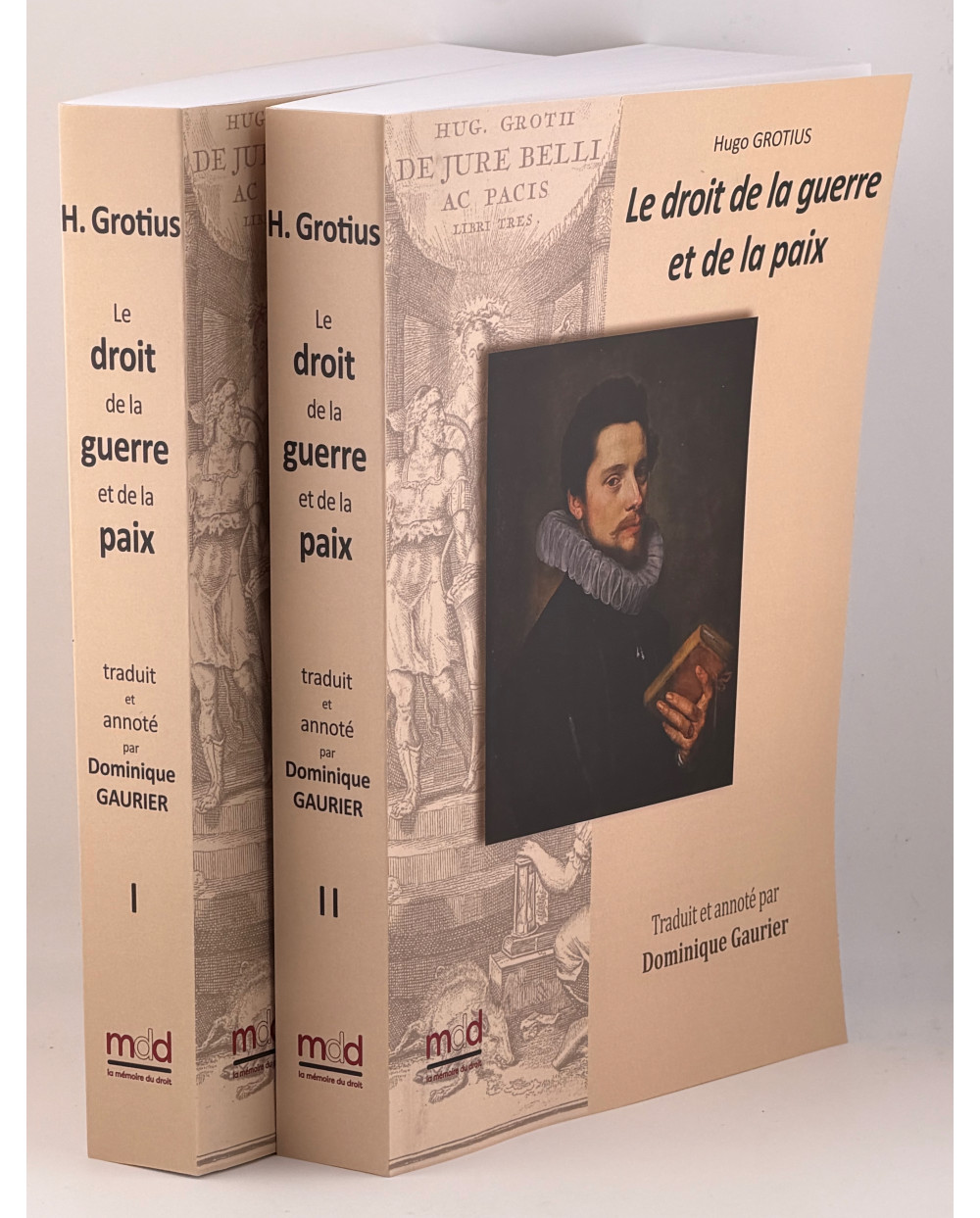
PRE-ORDER: Hugo GROTIUS, De Jure Belli Ac Pacis Libri Tres. Avec les notes de Grotius, de Gronovius, de Barbeyrac et du traducteur (transl. Dominique GAURIER) (Paris: La Mémoire du Droit, 2026), 2 vol., 1350 p. € 480


(image source: MDD)

Abstract:
En 1625, paraissaient à Paris, dédiés à Louis XIII, les De jure belli ac pacis Libri tres d’Hugo Grotius. Pour ce quatrième centenaire, après les trois précédentes traditions en langue française de cet ouvrage, Dominique Gaurier a jugé bon de le retraduire totalement pour permettre aux personnes intéressées d'avoir enfin accès au contenu même de l’ouvrage sans le réécrire ou lui faire dire ce qu'il ne disait pas. De fait, les précédents traducteurs semblent avoir plus fait passer leurs propres idées dans leurs traductions que celles de l’auteur, notamment en modernisant trop le texte et ses concepts.Ce dernier traducteur, qui a beaucoup traduit tant du latin que du néerlandais d'autres ouvrages de Grotius, espère ainsi avoir contribué à une connaissance plus exacte de la place tenue par Grotius qui est loin d’être l'auteur moderne, trop souvent présenté comme le fondateur du droit international moderne, que l’on croit et qui reste très ancré dans la tradition des écrivains de la seconde moitié du XVIe siècle.Le lecteur percevra mieux à travers cette dernière et quatrième traduction, on l’espère, la véracité de cette affirmation.
Read more here.

12 May 2025

BOOK: Diego PANIZZA, Diritto, politica, religione nel pensiero di Alberico Gentili. Saggi e interventi 1969-2014 (a cura di Luca SCUCCIMARRA) [Centro internazionale di studi gentiliani San Ginesio (MC), eds. Luca SCUCCIMARRA, Paolo PALCHETTI & Vincenzo LAVENIA] (Macerata: EUM, 2025), ISBN 9788860568151, 667 p. [OPEN ACCESS]


(image source: EUM)


Foreword by Luca Scuccimarra:

Nell’orizzonte degli studi storici contemporanei è difficile trovare percorsi di ricerca e elaborazione riflessiva comparabili a quello che per più di trent’anni ha legato Diego Panizza alla «vicenda umana e intellettuale» di Alberico Gentili1. Dal momento del suo primo incontro con il grande giurista ginesino, alla fine degli anni Sessanta del secolo scorso, Panizza ha dedicato infatti gran parte delle sue energie intellettuali ad un lavoro sempre più approfondito di scavo testuale e messa a punto interpretativa delle opere gentiliane che ha contribuito non poco alla progressiva riscoperta del ruolo spettante a questo autore nella complessa genealogia della modernità politica e giuridica. Si tratta, come è noto, di un percorso che ha trovato la sua principale collocazione istituzionale nel Centro Internazionale di Studi Gentiliani di San Ginesio, della cui attività Diego Panizza è stato a lungo il principale punto di riferimento scientifico e un’instancabile animatore. Anche grazie alla sapiente programmazione delle Giornate Gentiliane, organizzate dal Centro con cadenza biennale a partire dal 1983 e giunte quest’anno alla XXI edizione, tale percorso è venuto assumendo però nel corso del tempo un sempre più spiccato profilo internazionale, intersecandosi variamente con le esperienze di ricerca di alcuni dei principali studiosi che nel corso degli ultimi decenni, al di qua e al di là dell’Oceano Atlantico, hanno contribuito attivamente alla rinascita degli studi sul pensiero di Alberico Gentili, sino a fare di quest’ultimo un vero e proprio autore di rilevanza globale: da Peter Haggenmacher a Alain Wijffels, da Benedict Kingsbury a Benjamin Straumann, per citarne soltanto alcuni. Nato dalla affettuosa sollecitudine di Pepe Ragoni, che del Centro Internazionale di Studi Gentiliani è stata per molti anni l’inesauribile motore organizzativo, questo volume si propone di rendere omaggio all’intenso itinerario di ricerca di Diego Panizza, mettendo a disposizione dei lettori italiani un’ampia silloge degli scritti e degli interventi da lui dedicati all’opera di Alberico Gentili in un arco temporale che dal 1969 giunge sino al 2014, anno della sua scomparsa. Operare una selezione non è stato agevole: come sa chiunque abbia una conoscenza minimamente approfondita di questa direttrice della sua produzione scientifica, il corpo a corpo storiografico di Panizza con il giurista ginesino è stato una sorta di perpetuum mobile, dei cui risultati egli ha dato conto momento dopo momento attraverso una molteplicità di contributi pubblicistici legati tra loro da un’indistricabile rete di riferimenti incrociati e sviluppi interni. Dovendo scegliere, si è deciso ovviamente di privilegiare i testi dai quali emerge con maggiore evidenza il contributo offerto da Panizza al rinnovamento degli studi in questo ambito, a cominciare dalla monografia Alberico Gentili, Giurista ideologo nell’Inghilterra elisabettiana, pubblicata da un piccolo editore padovano nel lontano 1981 e oggi considerata come un passaggio cruciale di quella Gentili Renaissance che si sarebbe sviluppata con una certa continuità nel corso dei successivi decenni. Come emerge dai contributi raccolti nella prima sezione di questo volume, il testo del 1981 ha rappresentato peraltro nell’itinerario scientifico di Diego Panizza il momentaneo (e del tutto provvisorio) punto di arrivo di un processo di progressivo avvicinamento al nucleo portante della produzione gentiliana iniziato almeno una decina di anni prima e portato avanti eminentemente con gli strumenti di lavoro all’epoca disponibili nella cassetta degli attrezzi dello storico del pensiero politico. Non è un caso, da questo punto di vista, che il punto di attacco da lui prescelto per le sue prime esplorazioni dell’universo dottrinario di Gentili coincida proprio con la discussione della possibile influenza esercitata sul metodo giuridico gentiliano dalla teorizzazione di Machiavelli, in quel momento più che mai al centro degli interessi degli storici del pensiero politico, in Italia e non solo. L’idea stessa di poter applicare ad uno dei padri del moderno diritto delle genti categorie e metodi di analisi tradizionalmente propri della storia delle dottrine politiche testimonia, peraltro, della visione dinamica e libera da obsoleti steccati disciplinari che Panizza ha sempre avuto del suo mestiere di storico. Non è un caso, da questo punto di vista, che nella monografia del 1981 egli abbia scelto di porre al centro dell’indagine la figura a tutto tondo del Gentili «ideologo» dell’Inghilterra elisabettiana, proponendosi dichiaratamente di approfondire l’opera di questo pensatore nella sua «totalità», indagandone la genesi e i vari livelli di significato secondo una prospettiva «più pienamente storica»: «con preciso riferimento cioè al contesto politico, religioso e culturale in cui l’autore si trovò a operare»2. Non si tratta, in verità, dell’unico elemento metodologicamente innovativo presente nell’approccio storiografico di Diego Panizza fin dalla primissima fase del suo itinerario di ricerca. Al contrario, come lui stesso ha avuto modo di sottolineare nel saggio che fa da introduzione a questo volume3, il suo rapporto con le fonti gentiliane è stato mediato fin dall’inizio da un’attenta (e personale) rimeditazione di alcune delle più interessanti linee di «rivolgimento» metodologico impostesi nel campo degli studi storici a partire dagli anni Sessanta del Novecento, con particolare riferimento a quella influente forma di «contestualismo linguistico» resa celebre dagli scritti dei principali esponenti della cosiddetta Cambridge School of Intellectual History: Quentin Skinner, John G.A. Pocock e John Dunn4. Al di là di ogni altra considerazione, è a questo gruppo di autori che secondo Panizza va riconosciuto infatti il merito di aver contribuito «a rendere centrale l’imperativo della “comprensione” storica dei testi», nel rispetto dell’«alterità» dell’interprete e della incolmabile distanza che separa presente e passato. Un assunto, questo, senza il quale «si cade necessariamente nel proiezionismo e quindi in ogni sorta di assurdità storiografiche»5. È appunto l’intento di restituire al «discorso» gentiliano la sua originaria specificità storica, ripulendolo dalle molte incrostazioni prodotte nel corso dei secoli dal conflitto delle interpretazioni, che ha guidato Panizza nel suo confronto a tutto campo con i testi, editi e inediti, del grande giurista cinquecentesco. E al centro della sua indagine si è posta fin dall’inizio l’esigenza di comprendere il concreto ruolo rifondativo giocato dal nascente linguaggio – solo in apparenza settoriale – del moderno Ius naturae et gentium nel polarizzato spazio di esperienza prodotto in Europa dalla fine dell’unità religiosa e dall’avvento di quella concezione secolare della politica che proprio nella urticante riflessione di Machiavelli aveva trovato la sua prima compiuta messa a punto teorica. Un problema, questo, che nella monografia del 1981 – e nei numerosi saggi che ad essa fanno corona – troviamo affrontato nella specifica variante “di contesto” da esso assunta nell’Inghilterra di Gentili, quella cioè originata dal rapporto apertamente competitivo instauratosi tra «giurisprudenza» e «teologia» come cornici regolative della società inglese dell’epoca e dalla «rivendicazione alla prima del primato nella funzione di legittimazione dell’ordine politico», ma che nello sviluppo del percorso storiografico di Panizza sarebbe stato ben presto indagato nei suoi più generali tratti epocali, a partire dal confronto con le due contrapposte «visioni d’ordine» prodotte in Europa dal confronto con i tumultuosi processi di trasformazione politica e sociale in atto a partire dall’inizio del Cinquecento: da un lato il paradigma «teologico neo-scolastico» messo a punto da Francisco de Vitoria e dagli esponenti della Scuola di Salamanca in risposta ai dilemmi della Conquista e dall’altro quello «giuristico-umanistico», nato nel grande laboratorio dell’umanesimo civile europeo e destinato a trovare proprio nella teorizzazione di Gentili una seminale messa a punto categoriale e dottrinaria6. Come emerge con una certa evidenza nei saggi raccolti nella seconda sezione di questo volume, a spingere Panizza verso un sempre più deciso allargamento di prospettiva è stata però anche l’esigenza di confrontarsi con le nuove e più complesse linee di ricerca sulla storia del moderno pensiero internazionalistico emerse a cavallo dei due secoli per effetto dell’alluvionale dibattito sul nuovo ordine politico e giuridico dell’«epoca globale». È anche in forza dell’intenso (e in alcuni casi anche ruvido) confronto intellettuale con le innovative interpretazioni della vicenda storica del moderno ius gentium proposte da autori del calibro di Richard Tuck, Anthony Pagden o Martti Koskenniemi che il Gentili di Panizza ha potuto trasformarsi, infatti, dal «giurista ideologo» dell’Inghilterra elisabettiana in uno dei grandi apripista del pensiero della «modernità-mondo», contribuendo ad alimentare quel processo globale di riscoperta dei testi gentiliani sviluppatosi nel corso degli ultimi anni con modalità davvero sorprendenti, come dimostra l’edizione critica del De armis romanis pubblicata in inglese da Benedict Kingsbury e Benjamin Straumann7. L’ultima sezione di questo volume è stata pensata, appunto, per dare piena evidenza ai risultati originali e oltremodo stimolanti raggiunti dalla ricerca di Diego Panizza nel periodo di più intensa riflessione sulle grandi questioni fondative portate al centro del dibattito dal cosiddetto spatial turn delle scienze umane contemporanee. E le parole-chiave sotto le quali si è ritenuto opportuno collocare gli studi gentiliani di questo periodo sono, non a caso, cosmopolitismo ed impero: perché, a ben vedere, è proprio in una originalissima commistione di universalismo morale e realismo politico che nella sua piena maturità di interprete egli ha ritenuto di poter individuare il contributo più rilevante offerto da Gentili al grande laboratorio della modernità politica, la autentica, unitaria cifra costruttiva di una riflessione apparentemente scissa tra aspetti diversi e contrastanti del sapere della sua epoca. Di questo aporetico sforzo rifondativo ci parla, a ben vedere, anche la concezione gentiliana del diritto di guerra, nella sua insuperabile tensione tra la dimensione dell’utile e quella dell’honestum. Ed è proprio in forza della sua irriducibile complessità che a distanza di molti secoli il pensiero giuridico di Gentili continua a sfidare la comprensione degli interpreti, proponendosi, proprio nella sua insuperabile distanza storica, come un prezioso punto di rifrazione degli irrisolti dilemmi del nostro tempo, come dimostra la lettura davvero a tutto campo offertane da Diego Panizza nei contributi raccolti in questo volume.
Download the book for free here.

03 February 2025

ADVANCE ARTICLE: Edward JONES CORREDERA, "The End of Composite Monarchies: Hugo Grotius’s De iure belli ac pacis and Mid-Seventeenth-Century Iberian Diplomacy" (The English Historical Review)


(image source: OUP)

Abstract:

This article sheds light on the seventeenth-century Catalan, Portuguese and Castilian uses of Hugo Grotius’s De iure belli ac pacis (1625) and, in particular, his chapters on the matter of monarchical succession. By studying the patterns in the ways that Catalan and Portuguese rebels and Spanish diplomats drew on this source to mediate disputes over succession, the article suggests that, while Grotius’s works may have eroded the rights of possession in the Atlantic and the Pacific by building on classical, biblical and Spanish sources, Iberian authors saw the text as a shared rulebook for discussing a sensitive matter that Spain had traditionally resolved through creative ambiguity, by granting and expanding local privileges under the threat of brute force. The article, in this way, encourages a reconsideration of the practical, diplomatic and high-political uses of Grotius’s ideas in Catholic Europe, a reassessment of a clear-cut binary between Dutch ideas of liberty and Spanish visions of empire, and a reconsideration of the historiographical explanation for the decomposition of composite monarchies. 

Read the full article here: DOI 10.1093/ehr/ceae206.

17 January 2022

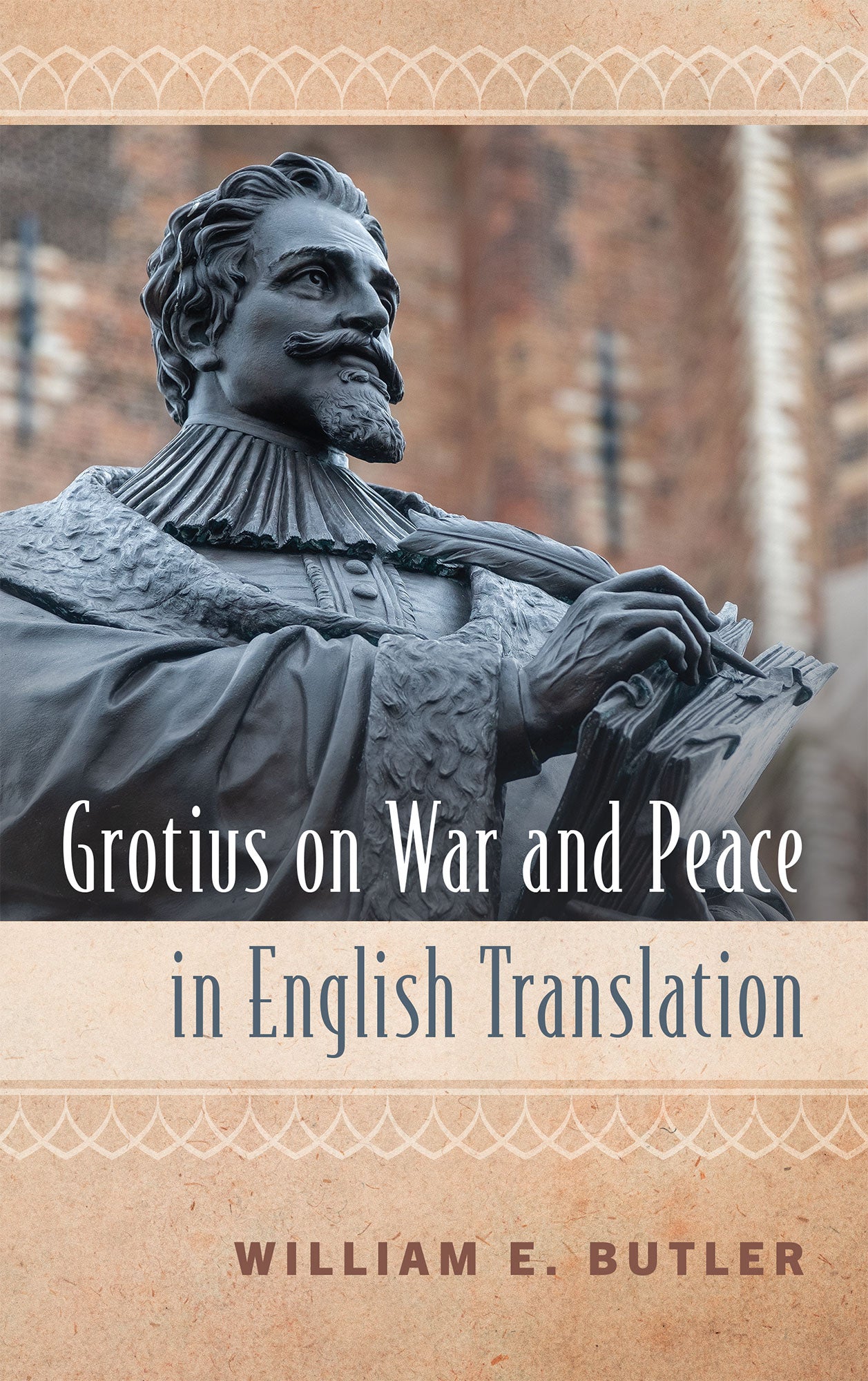
BOOK: William E. BUTLER, Hugo Grotius on War and Peace in English Translation (Clark (New Jersey): Talbot Publishing, 2021), VIII + 162 p. ISBN 9781616196615, 95 USD


On the book:

The seven principal English-language versions of Grotius's classic work On the Law of War and Peace (1625) were published between 1654 and 1928. Either by design or serendipity, each of these appeared on the eve of, during, or immediately after a major international conflict. All major achievements in their time, they expressed an overriding conviction that Grotian insights would enlighten present-day readers and help to lessen the incidence and horrors of armed conflict. Drawing upon archival sources never used previously, this study considers the history of these translations and their different approaches to Grotius's often complicated text. William E. Butler has written extensively on the history of international law and is the founding editor of Jus Gentium: Journal of International Legal History (2016-). He is the John Edward Fowler Distinguished Professor of Law, Dickinson Law, Pennsylvania State University, Professor Emeritus of Comparative Law in the University of London (University College London), Foreign Member, Russian Academy of Natural Sciences and Foreign Member, National Academy of Sciences of Ukraine and National Academy of Legal Sciences of Ukraine.

(source: Lawbook Exchange


19 July 2021

BOOK: Christel Annemieke ROMEIN, Protecting the Fatherland: Lawsuits and Political Debates in Jülich, Hesse-Cassel and Brittany (1642-1655) (Cham: Springer, 2021). ISBN 978-3-030-74240-9, OPEN ACCESS


(Source: Springer)

Springer has published a new book, in open access, in its Studies in the History of Law and Justice series.

ABOUT THE BOOK

This open access book presents a comparative analysis of the use of fatherland terminology in a political and legal context in Jülich, Hesse-Cassel and Brittany from 1642 to 1655. Fatherland terminology includes words such as patria, patriot and nation. In historiography, the use of these words by the nobility is often interpreted as an early sign of nationalism that conflicted with the prince’s initiation of state-building. The book argues that neither ‘states’ nor ‘nationalism’ truly existed yet; rather, the political arena was dominated by dynasties. Further, it rejects the notion of deliberate state-building and demonstrates that the nobility used this terminology to object to princely politics as part of adopting a “presupposed office.” This status allowed the nobility to place itself outside the ruler-subject constellation and critique the situation. The Duchy of Jülich and the Landgraviate of Hesse-Cassel are used as examples of small economies of scale with homogenous nobilities, and ones where the Thirty Year’s War hit hard – which led to the illegal levying of taxes and the billeting of soldiers, and in turn to the nobility critiquing princely politics. In contrast, the Duchy of Brittany, with its large economy of scale and heterogeneous nobility, found an alternative way of pursuing its interests and keeping taxes as low as possible. The goal of this book is to discuss and present three representative cases that offer insights into how the nobility safeguarded the welfare and prosperity of the fatherland and its inhabitants.

ABOUT THE AUTHOR

Annemieke Romein obtained her PhD at Erasmus University in 2016 on a comparative study of the political terminology of the fatherland, patria and patriot in Hessen-Kassel, Gulik and Bretagne. In 2017 she received an NWO Rubicon grant with which she worked in Ghent from September 2017 to February 2020 on a project on political-institutional/legal history, a comparison between the regions of Flanders and Holland between 1576-1702. She was a Researcher-in-Residence/ project leader of the Digital Humanities “Entangled Histories” project at the KB National Library of the Netherlands. Since 2020 she is working at Huygens ING where she continues her research into early modern provincial regulations with her NWO Veni project ‘A Game of Thrones?’.

More info here

03 March 2021

BOOK: Claire PRIEST, Credit Nation: Property Laws and Institutions in Early America (Princeton: PUP, 2021). ISBN 9780691158761, 39.95 USD


(Source: PUP)

Princeton University Press is publishing a new book on property laws and institutions in Early America.

ABOUT THE BOOK

Even before the United States became a country, laws prioritizing access to credit set colonial America apart from the rest of the world. Credit Nation examines how the drive to expand credit shaped property laws and legal institutions in the colonial and founding eras of the republic.

In this major new history of early America, Claire Priest describes how the British Parliament departed from the customary ways that English law protected land and inheritance, enacting laws for the colonies that privileged creditors by defining land and slaves as commodities available to satisfy debts. Colonial governments, in turn, created local legal institutions that enabled people to further leverage their assets to obtain credit. Priest shows how loans backed with slaves as property fueled slavery from the colonial era through the Civil War, and that increased access to credit was key to the explosive growth of capitalism in nineteenth-century America.

Credit Nation presents a new vision of American economic history, one where credit markets and liquidity were prioritized from the outset, where property rights and slaves became commodities for creditors’ claims, and where legal institutions played a critical role in the Stamp Act crisis and other political episodes of the founding period.

ABOUT THE AUTHOR

Claire Priest is the Simeon E. Baldwin Professor of Law at Yale Law School. Twitter @priest_claire


More info here

11 January 2021

BOOK: Robert VON FRIEDEBURG, Luthers Vermächtnis: Der Dreißigjährige Krieg und das moderne Verständnis vom ›Staat‹ im Alten Reich, 1530er bis 1790er Jahre (Frankfurt: Klostermann Verlag, 2021). ISBN 978-3-465-04369-0, 98.00 EUR


(Source: Klostermann)

Klostermann published „Luthers Vermächtnis: Der Dreißigjährige Krieg und das moderne Verständnis vom ›Staat‹ im Alten Reich, 1530er bis 1790er Jahre“, the 320th title in its Studien zur europäischen Rechtsgeschichte series.

ABOUT THE BOOK

In the German-speaking Reich, the term "state" in its modern understanding was not coined with reference to the early modern Old Reich as a whole and certainly not with the consolidation of princely power over land and people as its aim. Rather, its genesis was related to the bitter conflicts between emerging estates and princes in the face of the devastations of the Thirty Years' War. Taking up the contemporary polemics against criminal princes dating back to Luther, Seckendorff's "Teutscher Fürstenstaat" (1656) was supposed to protect its inhabitants from the incompetence and wickedness of the princes by means of their own legal system and lawful administration (Policey) as a unit of land, people and laws that allegedly reached far back into the Middle Ages. Since the last third of the 17th century these ideas, the development of which the book traces on a broad source basis, have increasingly found favour with many princes and their advisors in Protestant and Catholic German countries.

The table of contents can be found here


More info here

07 December 2020

BOOK: Hamilton BRYSON, Some English Law Reporters of Seventeenth Century Cases (Independently published, 2020). ISBN 979-855488-030-8, pp. 278, $7.18

(Source: Amazon.co.uk)

ABOUT THE BOOK

This book is a bibliography of English law reporters who reported cases from the seventeenth century. It gives detailed information about the manuscripts and printed law books.

ABOUT THE AUTHOR

Professor Hamilton Bryson teaches and writes in the areas of English legal history, Virginia legal history, and Virginia procedure and practice. He has published numerous books and book chapters on these subjects, and is the founding editor of the Virginia Circuit Court Opinions. He has also edited and published several collections of early modern English law reports. Professor Bryson is a fellow of the Royal Historical Society, a member of the Executive Committee of the John Marshall American Inn of Court, and the Virginia Correspondent of the Selden Society. He serves on the Advisory Committee on rules of Court of the Supreme Court of Virginia.


More information here.

16 November 2020

BOOK: Agnès DELAHAYE, Settling The Good Land. Governance and Promotion in John Winthrop’s New England (1630-1650) (Leiden: Brill, 2020). ISBN: 9789004431393, pp. 357, €124.00

Cover Settling The Good Land
(Source: Brill)

ABOUT THE BOOK

Settling the Good Land: Governance and Promotion in John Winthrop’s New England (1620-1650) is the first institutional history of the Massachusetts Bay Company, cornerstone of early modern English colonisation in North America. Agnès Delahaye analyses settlement as a form of colonial innovation, to reveal the political significance of early New England sources, above and beyond religion. John Winthrop was not just a Puritan, but a settler governor who wrote the history of the expansion of his company as a record of successful and enduring policy. Delahaye argues that settlement, as the action and the experience of appropriating the land, is key to understanding the role played by Winthrop’s writings in American historiography, before independence and in our times.

ABOUT THE AUTHOR

Agnès Delahaye, Ph. D. (2003), Paris-Sorbonne, is Professor of Anglophone Studies at the Université Lyon II Lumière and a member of Triangle (UMR 5206). She has published articles on New England history and historiography, Atlantic history, business history and settler colonialism.

TABLE OF CONTENTS

Front Matter
Copyright Page
Acknowledgements
Abbreviations
Figures
Introduction
Pages: 1–18
The Beginnings of English Settlement
Pages: 19–60
Plymouth Colony and the Birth of Settler Literature
Pages: 61–89
Organizing Settlement: The Massachusetts Bay Company
Pages: 90–120
John Winthrop’s Decision for America
Pages: 121–169
Managing New England
Pages: 170–209
Expansion and Violence in Early New England
Pages: 210–261
Liberty
Pages: 262–309
Conclusion
Pages: 310–314
Toggle Tree Node
Back Matter
Bibliography
Index


More information with the publisher.

09 November 2020

BOOK: Joris VAN DEN TOL, Lobbying in Company - Economic Interests and Political Decision Making in the History of Dutch Brazil, 1621–1656 (Leiden-New York: Brill, 2020). ISBN 978-90-04-39795-8, 107.00 EUR


(Source: Brill)

Brill has published a new book on political lobbying and decision-making in Dutch Brazil.

ABOUT THE BOOK

In Lobbying in Company, Joris van den Tol argues that people made a difference in the Dutch West India Company colony in Brazil (1630–1654). Through a combination of petitions, personal relations, and public opinion, individuals were able to exercise influence on the decision-making process regarding Dutch Brazil. His thorough analysis of these different elements offers a new perspective on the Atlantic and the Dutch Republic in the seventeenth century as well as a better understanding of lobbying in the early modern period.

ABOUT THE AUTHOR

Joris van den Tol (Ph.D., Leiden 2018) is a visiting postdoctoral scholar at Harvard’s History Department on a NWO Rubicon fellowship. He has published on petitions in relation to the colonies in Brazil, New Netherland, and Taiwan and on smuggling.

TABLE OF CONTENTS

Introduction


1 Lobbying for the Creation of the WIC

1 The Dutch Republic

 1.1 The Cities

 1.2 Provincial States

 1.3 States General

 1.4 The Stadtholders

 1.5 Conflicting Powersbr/> 2 The West India Company

 2.1 Willem Usselincx

 2.2 The Layout of the WIC

3 Brazil

4 Conclusion


2 Lobbying in Brazil

1 1624/1630–1636: Ad Hoc Solutions

2 1637–1646: Consolidation and a Prince in the Tropics

 2.1 The Diet as a Colonial Tool

 2.2 The Brazilian Diet of 1640

 2.3 The 81 Petitions of August 1640

 2.4 Petitions for Regulations

3 Religious Affairs

 3.1 The Power of the Church

4 Slavery

 4.1 Access to Institutions for Non-European

5 The Possible Consequence of Top-Down Decision Making

 5.1 Johan Maurits’ Reaction

 5.2 The Reactions from the Council of Justice and the Ministers

6 Conclusion


3 Trading Regulations or Free Trade

1 The Opening Moves

2 Selecting the Playing Field

3 Making It Count

4 Making It Count Even More

5 The Role of the Amsterdam City Council

6 Delaying a Decision

7 Lobbying to and from the Colony

8 Conclusion


4 Petitioning the Public Sphere

1 What Is the Public Sphere?

2 The Dutch Public Sphere  2.1 Pamphlets and Dutch Brazil

3 Petitions and Public Opinion

 3.1 Printed Petitions

4 Multiple Signatures on Petitions

 4.1 Group Petitions to the States General

5 Managing Information of the Revolt in Brazil

6 Petitioning the Public Sphere on Brazil

7 Petitioning the Public Sphere on the Atlantic

 7.1 Other Forms of Signatures

8 Conclusion


5 Personal Connections and Direct Lobbying

1 Personal Connections and Societal Capital

2 Appointing a New High Government in Brazil

3 Background Issues

 3.1 Peace Negotiations in Münster

 3.2 A Frisian Chamber in the WIC

4 Information Control

5 Personal Relations

6 Conclusion


6 The Last Hope, 1652–1654

1 The Second Battle of Guarapes

2 Why Was Brazil Lost?

3 The Delegates from Brazil

4 Requesting a Resolution from the States General

5 A Delegation to Friesland

 5.1 The Report from the Friesland Commission

6 Accelerating the Admiralties

7 Seizing Momentum

8 Planning for the Future

9 It Is All about the Money

 9.1 It Is about the People

10 The Loss of Brazil

11 Conclusion


7 Lobbying for Money in the Aftermath of Dutch Brazil

1 Return to the Republic

2 Claiming Wages

3 Travel Pennies

4 Shared Features

5 The Printed Petition from the Army

6 Conclusion


8 Making the Company Work


Appendix A – Free Trade Exports from Brazil in 1637

Manuscript Sources

Secondary Literature and Published Sources

Index


More info here

05 November 2020

BOOK: Ekaterina YAHYAOUI KRIVENKO, Space and Fates of International Law - Between Leibniz and Hobbes (Cambridge: Cambridge University Press, 2020). ISBN 9781108488754, 85.00 GBP


(Source: CUP)

CUP is publishing a new book on the influence exercised by the concept of space on the emergence and continuing operation of international law.

ABOUT THE BOOK

The book offers the first analysis of the influence exercised by the concept of space on the emergence and continuing operation of international law. By adopting a historical perspective and analysing work of two central early modern thinkers – Leibniz and Hobbes – it offers a significant addition to a limited range of resources on early modern history of international law. The book traces links between concepts of space, universality, human cognition, law, and international law in these two early modern thinkers in a comparative fashion. Through this analysis, the book demonstrates the dependency of the contemporary international law on the Hobbesian concept of space. Although some Leibnizian elements continue to operate, they are distorted. This continuing operation of Leibnizian elements is explained by the inability of international law, which is based on the Hobbesian concept of space, to ensure universality of its normative foundation.

ABOUT THE AUTHOR

Ekaterina Yahyaoui KrivenkoNational University of Ireland, Galway


Ekaterina Yahyaoui Krivenko is the current Chair of the Interest Group on International Legal Theory and Philosophy of the European Society of International Law. In 2016 she received NUI Galway President's award for research excellence. Her work critically examines theoretical underpinnings of international law and human rights.

TABLE OF CONTENTS

1. Introduction

2. Science and Law in the Seventeenth Century

3. Space

4. The Idea of Universals and Human Cognition

4. Law

5. Intermezzo

6. Space(s) of International Law

7. Conclusions and Way Forward


More info here

02 October 2020

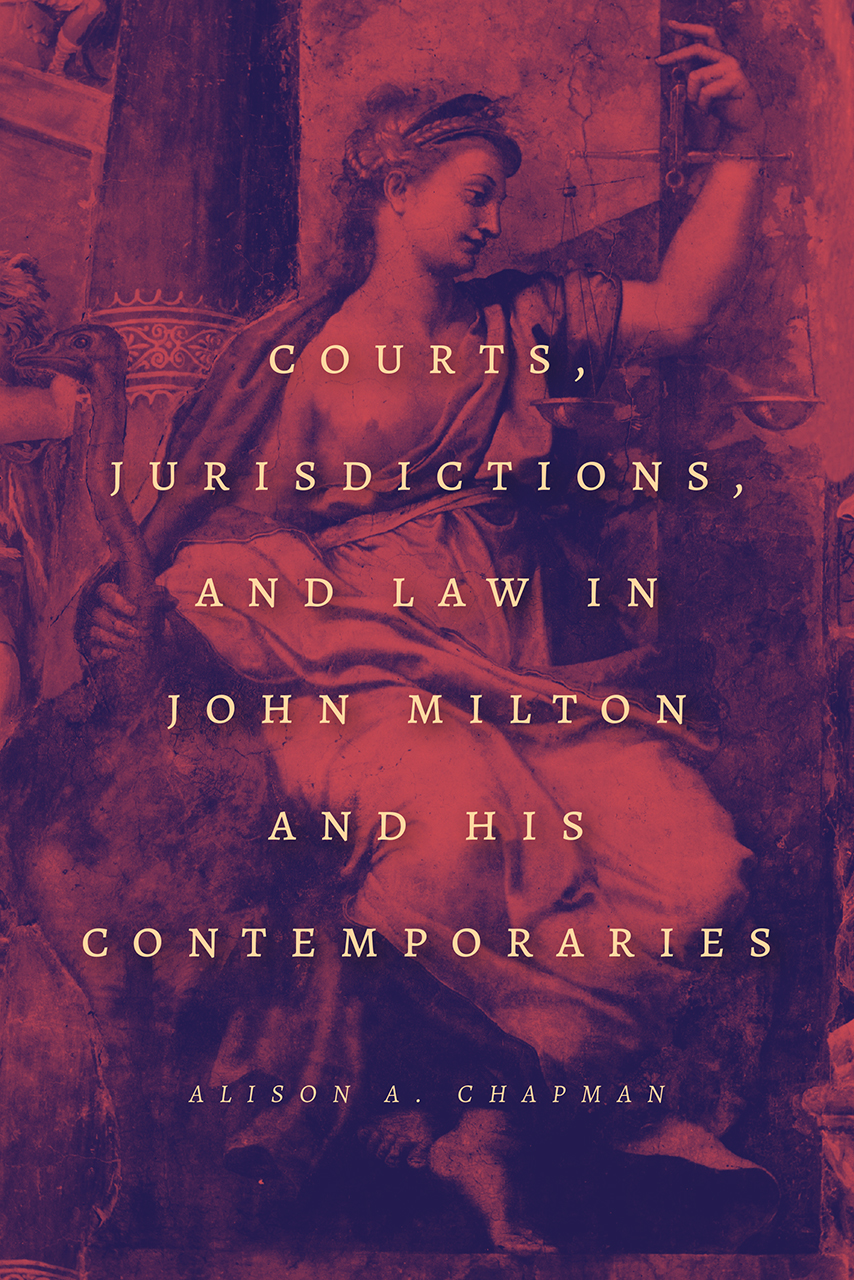
BOOK: Alison A. CHAPMAN, Courts, Jurisdictions and Law in John Milton and His Contemporaries (Chicago: University of Chicago Press, 2020). ISBN 9780226729299, 27.50 USD


The University of Chicago Press has published a new book on law in the 17th century English poet John Milton’s work.

ABOUT THE BOOK

John Milton is widely known as the poet of liberty and freedom. But his commitment to justice has been often overlooked. As Alison A. Chapman shows, Milton’s many prose works are saturated in legal ways of thinking, and he also actively shifts between citing Roman, common, and ecclesiastical law to best suit his purpose in any given text. This book provides literary scholars with a working knowledge of the multiple, jostling, real-world legal systems in conflict in seventeenth-century England and brings to light Milton’s use of the various legal systems and vocabularies of the time—natural versus positive law, for example—and the differences between them.


Surveying Milton’s early pamphlets, divorce tracts, late political tracts, and major prose works in comparison with the writings and cases of some of Milton’s contemporaries—including George Herbert, John Donne, Ben Jonson, and John Bunyan—Chapman reveals the variety and nuance in Milton’s juridical toolkit and his subtle use of competing legal traditions in pursuit of justice.

ABOUT THE AUTHOR

Alison A. Chapman is professor of English at the University of Alabama at Birmingham.

TABLE OF CONTENTS

A Note on Texts
List of Abbreviations
Preface: Making Sense of Many Laws


Chapter 1: Introduction
Chapter 2: Defending One’s Good Name: Free Speech in the Early Prose
Chapter 3: Monstrous Books: Areopagitica and the Problem of Libel
Chapter 4: Civil Law and Equity in the Divorce Tracts
Chapter 5: Defending Pro Se Defensio
Chapter 6: The Tithes of War: Paying God Back in Paradise Lost
Chapter 7: “Justice in Thir Own Hands”: Local Courts in the Late Prose
 

Afterword: Justice in the Columbia Manuscript
Acknowledgments
Bibliography
Index 


More info here

01 October 2020

BOOK: Colin HEYWOOD & Ivan PARVEV (Eds.), The Treaties of Carlowitz: Antecedents, Course and Consequences (Leiden-New York: Brill, 2020). ISBN 978-90-04-40950-7, EUR 105.00

(Source: Brill)


Brill has published a new book on the Treaties of Carlowitz (1699).

ABOUT THE BOOK

The Treaties of Carlowitz (1699) includes recent studies on the Lega Sacra War of 1683-1699 against the Ottoman Empire, the Peace treaties of Carlowitz (1699), and on the general impact of the conflict upon Modern Europe and the Balkans. With its contributions written by well-known international specialists in the field, the volume demonstrates that sometimes important conflicts tend to be forgotten with time, overshadowed by more spectacular wars, peace congresses or diplomatic alliances. The “Long War” of 1683-1699 is a case in point. By re-thinking and re-writing the history of the conflict and the subsequent peacemaking between a Christian alliance and the Ottoman state at the end of the 17th century, new perspectives, stretching into the present era, for the history of Europe, the Balkans and the Near East are brought into discussion.


Contributors are: Tatjana Bazarova, Maurits van den Boogert, John Paul Ghobrial, Abdullah Güllüoğlu, Zoltan Györe, Colin Heywood, Lothar Höbelt, Erica Ianiro, Charles Ingrao, Dzheni Ivanova, Kirill Kochegarov, Dariusz Kołodziejzcyk, Hans Georg Majer, Ivan Parvev, Arno Strohmeier.

ABOUT THE EDITORS

Colin Heywood, Ph.D. (London, 1970) is an Honorary Research Fellow at the University of Hull. He has published numerous studies and articles on Ottoman history and historiography and on Mediterranean and maritime history in the late medieval and early modern period. 

Ivan Parvev, Ph.D. (1993), Habil. D. (2011), University of Sofia, is Professor of Early Modern Balkan history at that university. He has published monographs and articles on Habsburg-Balkan relations, including Land in Sicht. Südosteuropa in den deutschen politischen Zeitschriften des 18. Jahrhunderts (Zabern, 2008).

TABLE OF CONTENTS

  Preface 
  About the Authors 
  Introduction 


Part 1: The War of 1683–1699 – Political Strategies and Balance of Power in Europe


 1On the Road to Carlowitz: Visions of Ottoman Diplomacy in the Letters of Thomas Coke, 1691–1694 
  Jean-Paul A. Ghobrial 
 2‘This Great Work’: Lord Paget and the Processes of English Mediating Diplomacy in the Latter Stages of the Sacra Lega War, 1697–1698 
  Colin Heywood 
 3The Spoils of Peace: What the Dutch Got Out of Carlowitz 
  Maurits H. van den Boogert 
 4The War of 1683–1699 and the Beginning of the Eastern Question 
  Ivan Parvev 


Part 2: The Sacra Lega War Viewed by the Sublime Porte


 5Ottoman Diplomacy in the First Years (1683–1685) of the Ottoman “Long War” 
  Abdullah Güllüoğlu 
 6Ottoman Subjects, Habsburg Allies. The Reaya of the Chiprovtsi Region (Northwestern Bulgaria) on the Front Line, 1688–1690 
  Dzheni Ivanova 
 7Ottoman Knowledge of the Imperial Commanders 
  Hans Georg Majer 


Part 3: Time for War, Time for Peace


 8From Slankamen to Zenta: The Austrian War Effort in the East during the 1690s 
  Lothar Höbelt 
 9The Habsburgs and the Holy League: Religion or Realpolitik? 
  Charles Ingrao 
 10From the ‘Eternal Peace’ to the Treaty of Carlowitz: Relations between Russia, the Sublime Porte and the Crimean Khanate (1686–1699) 
  Kirill Kochegarov 
 11The Treaty of Carlowitz in Polish Memory – A Date Better Forgotten? 
  Dariusz Kołodziejczyk 
 12The Symbolic Making of the Peace of Carlowitz: The Border Crossing of Count Wolfgang IV of Oettingen-Wallerstein during His Mission as Imperial Grand Ambassador to the Sublime Porte (1699–1701) 
  Arno Strohmeyer 
 13The Treaty of Carlowitz and its Impact on Russian-Ottoman Relations, 1700–1710 
  Tatiana Bazarova 


Part 4: Early Modern Demographic and Economic Context


 14War and Demography: The Case of Hungary 1521–1718 
  Zoltán Györe 
 15Venice after Carlowitz: Change and Challenge in Eighteenth-century Venetian Policy 
  Erica Ianiro 
 Concluding Remarks 
  Index 


More info here

28 July 2020

JOURNAL: XVIIe siècle, n° 287 (n°2, 2020). ISBN: 978-2-13-082385-8

XVIIe siècle, n° 287 (n°2, 2020)
(Source: PUF)

The Revue XVIIe siècle has recently published its latest issue.

Articles:

Vittorio Frajese, Savoir et tuer. Analyse d’un document sur Paolo Sarpi à la British Library

François Pierrard, L’apport méconnu de Jean Domat (1625-1696) au droit pénal

Pierre Lyraud, La manière de citer : les citations latines montaniennes dans les Pensées

Matthieu Somon, La découverte de Moïse au bord du Nil selon Nicolas Poussin en 1647

Antoine Gallay, Le problème de l’invention en gravure. L’émergence d’une théorie de la gravure comme art libéral au sein de l’Académie royale de peinture et de sculpture (1651-1674)

Florent Quellier, L’usage de la table par Gourville lors de sa mission à Madrid pour le prince de Condé (1669-1670)

Marie-Clémence Regnier, Le « Tour de France » par les Classiques. Les demeures des écrivains du XVIIe siècle dans le paysage patrimonial français après 1870


More information with the publisher.

15 April 2020

BOOK REVIEW: Richard Jeffrey ROSS and Brian Philip OWENSBY (eds.), Justice in a New World : Negotiating Legal Intelligibility in British, Iberian, and Indigenous America (New York: NYU Press, 2018), by Christopher TOMLINS.

(Source : NYU)


THE REVIEW : Christopher TOMLINS (Professor, Berkeley Law Faculty, University of California) is the author of the book review, published in The American Historical Review, Volume 125, Issue 2, April 2020, Pages 642–643, online access : https://doi.org/10.1093/ahr/rhz858

ABOUT THE BOOK :
Brian P. Owensby and Richard J. Ross’s interesting collection Justice in a New World: Negotiating Legal Intelligibility in British, Iberian, and Indigenous America seeks to advance the history of European Atlantic empires by subjecting the legalities of colonizing to comparative assessment, specifically how encounters between Indigenous peoples and Iberian and Anglophone intruders were refracted by their idiosyncratic legal cultures. Comparison, say the editors, promises broadened conceptual purchase for historians of encounter wishing to interrogate the extent and limits of cross-cultural comprehension. Comparison will open up “new vistas on issues of jurisdiction, sovereignty, legal inclusion and exclusion, the quality and role of intermediation in structuring legal encounters and producing legal outcomes, and the intellectual foundation of justice as a guiding idea for legal engagement”.
Richard Jeffrey ROSS and Brian Philip OWENSBY (eds.), Justice in a New World: Negotiating Legal Intelligibility in British, Iberian, and Indigenous America. New York: New York University Press, 2018. Pp. viii, 330. Cloth $89.00, paper $30.00. 
More information here.

09 April 2020

BOOK: Jessica M. DALTON, Between Popes, Inquisitors and Princes. How the First Jesuits Negotiated Religious Crisis in Early Modern Italy (Leiden/Boston, Brill, 2020). ISBN: 978-90-04-41382-5, €121.00

Image result for Between Popes, Inquisitors and Princes How the First Jesuits Negotiated Religious Crisis in Early Modern Italy
(Source: Brill)


ABOUT THE BOOK

Series: St Andrews Studies in Reformation History.

In Between Popes, Inquisitors and Princes Jessica Dalton uses extensive, original archival research to provide the first history of a unique and controversial papal privilege that allowed the first Jesuits to absolve heretics in sixteenth-century Italy without involving bishops or inquisitors. 
Dalton uses the story of this remarkable privilege to reconsider two central aspects of Jesuit history: their role in the Counter-Reformation and their relationship with the papacy. Dalton convincingly argues that, in the aftermath of the Protestant Reformation, the Jesuits were valued collaborators of popes, inquisitors and princes not for their obedience and subservience but rather because they worked with an autonomy and flexibility that allowed them convert heretics where political barriers and popular hostility hindered inquisitors and prelates.

ABOUT THE AUTHOR

Jessica M. Dalton, Ph.D. (2018), University of St Andrews, is an historian of religion and politics in early modern Europe, particularly the role of the Catholic Church. She has published articles on the early Jesuits and the Roman Inquisition.

TABLE OF CONTENTS

Acknowledgements 
Conventions 
Introduction 
Chapter One: The Confident Society: Mission Building 1540-1555 
Chapter Three: Between the Prince and the Pope: Pius V and the Rise of the Roman Inquisition 
Chapter Four: Bargaining for Autonomy: Challenges and Change at the Close of the Sixteenth Century 
Chapter Five: All Roads Lead to Rome: Jesuit Agents and Rebels at the Close of the Sixteenth Century (1587-1605) 
Conclusion 
Bibliography


More information here

11 March 2020

BOOK: Feisal G. MOHAMED, Sovereignty: Seventeenth-Century England and the Making of the Modern Political Imaginary (Oxford: Oxford University Press, 2020). ISBN 9780198852131, $70.00


(Source: OUP)

Oxford University Press is publishing a new book on 17th century English political thought.

ABOUT THE BOOK

This book argues that sovereignty is the first-order question of political order, and that seventeenth-century England provides an important case study in the roots of its modern iterations. It offers fresh readings of Thomas Hobbes, John Milton, and Andrew Marvell, as well as lesser-known figures and literary texts. In addition to political philosophy and literary studies, it also takes account of the period's legal history, exploring the exercise of the crown's feudal rights in the Court of Wards and Liveries, debates over habeas rights, and contests of various courts over jurisdiction. Theorizing sovereignty in a way that points forward to later modernity, the book also offers a sustained critique of the writings of Carl Schmitt, the twentieth century's most influential, if also most controversial, thinker on this topic.

ABOUT THE AUTHOR

Feisal G. Mohamed, Professor in the PhD Program in English and Coordinator of The Program in Global Early Modern Studies, The Graduate Center, CUNY

Feisal G. Mohamed is Professor of English at The Graduate Center, CUNY, where he also serves as coordinator of The Program in Global Early Modern Studies. His previous books include In the Anteroom of Divinity: The Reformation of the Angels from Colet to Milton (2008) and Milton and the Post-secular Present: Ethics, Politics, Terrorism (2011). He is a past recipient of a Mellon Foundation New Directions Fellowship, which provided second-discipline training in law.

TABLE OF CONTENTS

Introduction
The Crown as Machine: Hobbes and Lord Saye
Provincializing Romance
Milton's Unitary Sovereignty
Marvell's Dread of the Sword
Epilogue: Uzzah and the Protection-Obedience Axiom

More info here

07 February 2020

BOOK : Barbara J. SHAPIRO, Law Reform in Early Modern England, (Hart publishing), ISBN : 9781509934218, £63.18

(Source : Hart publishing


ABOUT THE BOOK : Law Reform in Early Modern England, Crown, Parliament and the Press.

This book provides an illuminating commentary of law reform in the early modern era (1500–1740) and views the moves to improve law and legal institutions in the context of changing political and governmental environments.
Although lawyers have often been seen as the chief obstacles to law reform, this book emphasises their contributions – particularly their role in legislation and in reforming the corpus of legal materials – and highlights the previously ignored reform efforts of Lord Chancellors.

ABOUT THE AUTHOR : Barbara J Shapiro is Professor Emerita and Professor in the Graduate School at the University of California, Berkeley.

TABLE OF CONTENTS :

1. Introduction
2. The Early Tudors and Law Reform 1509–58
3. The Elizabethan Era 1558–1603
4. The Early Stuarts 1603–40
5. The Civil War and Parliamentary Rule 1640–49
6. Commonwealth and Protectorate 1649–60
7. The Restoration Era 1660–88
8. Revolution and Beyond 1688–1740
9. Conclusion