Search

Showing posts with label Spanish Empire. Show all posts

12 May 2026

BOOK: Bianca PREMO, La Ilustración a juicio. Litigantes y colonialismo en el imperio español [Historia del Derecho en América Latina, 1ª Edición] (México: Tirant lo Blanch, 2026), 514 p., ISBN 9788491198727

(image source: Tirant)

Abstract:
Este libro examina cómo las ideas ilustradas se pusieron a prueba en el mundo cotidiano de la justicia iberoamericana entre las personas esclavizadas e indígenas, y entre las mujeres del siglo XVIII. Se centra en los tribunales civiles, tanto en América como en España, como espacios clave de debate sobre los derechos naturales, la expansión de la esfera secular, el historicismo y la libertad.  El libro enseña cómo leer el archivo judicial para sacar a la luz las ideas de personas no letradas, y redibuja la geografía de la modernidad para replantear el origen de nociones habitualmente atribuidas a Europa del Norte.  Al entablar un diálogo con la historia del derecho, la historia intelectual y la historia social, subraya cómo la práctica legal transformó filosofías abstractas en herramientas prácticas. En conjunto, ofrece una reinterpretación poderosa de la Ilustración como un fenómeno forjado en el derecho colonial.
On the author:
Bianca Premo es Profesora Distinguida Universitaria de Historia en la Florida International University, en Miami, Estados Unidos.
Table of contents:

Introducción ¿Por qué es Ilustración?       

Ilustración sin el siglo XVIII        

Escritura, historia y escritura de la historia del Imperio español       

La república de los iletrados        

Una definición        

Verificable y refutable: Un panorama del libro       

Método comparativo        

Regiones       

Periodo de tiempo        

Casos y litigantes         

PARTE I: LIMONES Y LIMONADA: DEMANDAR EN EL IMPERIO ESPAÑOL

1. Agentes y poderes. Litigantes y escritores en los tribunales        

Poderes: Papel y protocolo        

Agentes: autoría y opciones de los litigantes        

“Dios no paga”        

Conclusión         

2. Derecho y Ley: Ilustración jurídica en la filosofía y las políticas      

El árbol de limones: Ilustración jurídica ecléctica        

Limones: Derecho moderno temprano en el Imperio español        

El árbol: Pensamiento jurídico de la ilustración        

Jurisprudencia colonial        

Bravo de Lagunas y la jurisdicción secular        

Bravo de Lagunas y la esclavitud        

Leyes sobre leyes        

“Desembarazados y libres”: Leyes sobre eficiencia judicial        

Jueces de bronce        

El crecimiento de la jurisdicción secular   

Agentes y poderes revisados        

Conclusión         

3. Números y valores: Conteo de casos en el imperio español        

Números        

Conteo de casos        

Conteo de causas        

Valores        

La cultura orientada a la justicia de los Montes de Toledo        

Umbrales y puertas: Las demandas de los subordinados coloniales 

Conclusión        

PARTE II: LUCES A PARTIR DE LITIGANTES 

4. Pleitos y demandas. Conflictos conyugales en tribunales civiles    

Justicia        

Derechos        

Una breve historia sobre los alimentos     

Secularización e individualidad: Jurisdicción y disputas maritales      

Derechos naturales y otras fuentes de derecho        

Los casos civiles de las mujeres como Ilustración        

Conclusión         

5. Ayer y hoy. Estatus y costumbres indígenas        

Ayer            

Armonía y justicia        

La lengua de la ley: Disputas legales en lengua zapoteca        

Hoy                

El mérito o la nueva ciencia del estatus    

Costumbre hoy        

Casos civiles indígenas como Ilustración   

Conclusión         

6. Ser y devenir: Libertad y demandas de esclavos        

El comienzo de la libertad: Periodización e historiografía        

Fines de las demandas por esclavitud       

Jurisprudencia        

Los esclavos en los tribunales eclesiásticos y civiles        

Del amparo a los papeles        

Autoconservación y sevicia        

La personalidad jurídica de los esclavos   

“La libertad que requieran los juicios”       

La etapa de libertad         

Conclusión: Los litigios de esclavos como Ilustración        

Conclusión. ¿Por qué no Ilustración?

Find more on: Tirant.

11 June 2025

BOOK: Santiago MUÑOZ-ARBELÁEZ, The New Kingdom of Granada. The Making and Unmaking of Spain’s Atlantic Empire (Durham (N.C.): Duke university Press, 2025), 328 p., USD 29,95


(image source: Duke)

Abstract:

The New Kingdom of Granada tells the history of the making and unmaking of empire in the diverse and decentralized Indigenous landscapes of the Northern Andes. Santiago Muñoz-Arbeláez examines the intricate and disputed processes that reshaped the peoples and landscapes of present-day Colombia into a kingdom within the global Spanish monarchy. Drawing on correspondence, visitation reports, judicial records, maps, textiles, and accounting and legal documents created by Europeans and Indigenous peoples, Muñoz-Arbeláez outlines the painstaking century-long effort between 1530 and 1630 to consolidate the kingdom. A diverse group of people that included Indigenous interpreters, scribes, and intellectuals spearheaded these projects, which eventually expanded colonial control outward from its base in the highland Andean plateaus down to the lowland river valleys. Meanwhile, autonomous Indigenous political projects constantly threatened imperial rule, as rebels often encircled the kingdom and seized the corridors that linked it to Spain. By foregrounding the kingdom’s difficult establishment and tenuous hold on power, Muñoz-Arbeláez challenges traditional understandings of imperial politics and the myriad ways Indigenous peoples participated in, disputed, and negotiated the establishment of colonial rule.

On the author:

Santiago Muñoz-Arbeláez is Assistant Professor of History at the University of Texas at Austin.

Table of contents:

A Note on Terminology  ix
Introduction. A Kingdom in the Mountains  1
Part I. Producing Indios  21
1. Labyrinths of Conquest  25
2. A Kingdom of Paper  47
3. The Fabric of Kingdom  77
Part II. Indigenous Freedom  107
4. Devouring the Empire  113
5. A Mestizo Cacique  143
6. An Indigenous Intellectual in King Philip’s Court  161
Part III. New Imperial Designs  191
7. Landscapes of Property  197
8. Imperial Alchemy  223
Epilogue  245
Acknowledgments  253
Notes  255
Bibliography  281

Index  307

 DOI 10.1215/9781478060802.

12 May 2025

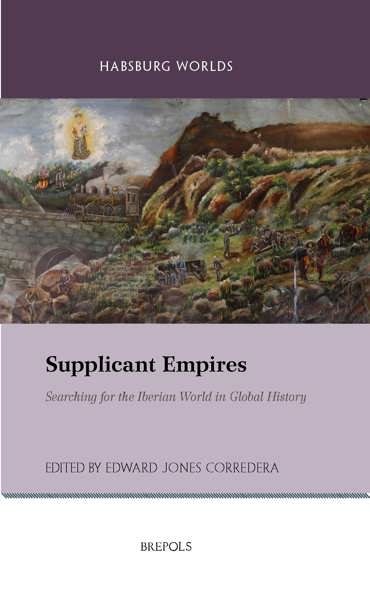
BOOK: Edward JONES CORREDERA (ed.), Supplicant Empires. Searching for the Iberian World in Global History [Habsburg Worlds] (Turnhout: Brepols, 2025), 250 p. ISBN 9782503611211


(image source: Brepols)

On the editor:

Is a Senior Research Fellow at the Max Planck Institute for Comparative Public Law and International Law (Heidelberg) and a Lecturer at the UNED (Madrid).

Table of contents:

Edward Jones Corredera (Max Planck Institute, Heidelberg, and UNED, Madrid)
Introduction: Who Prayed for the Iberian World? Incomparable Empires & Global History

Tamar Herzog (Harvard University)
Is Spain Exceptional? Reflections on Thirty Years of Research and Writing

Pedro Cardim (Universidade Nova de Lisboa)
Corporations, normative pluralism, and jurisdictions in early modern Iberia: The potential and the limitations of an interpretive framework

Marcos Reguera (Universidad del País Vasco)
From Manifest Destiny to “destino manifiesto”: the Hispanic Reception and Formulations of Manifest Destiny

Bethany Aram (Universidad Pablo de Olavide)
Comparative approaches to gender, ethnicity and empires: Britain & Spain

Marta Manzanares (Universidad Autónoma de Madrid)
Rethinking the Place of Sugar in Eighteenth-Century Spain

Fabien Montcher (University of St. Louis)
Imperial Blind Spots: Indeterminacy and Thickness across the Iberian Monarchies

David Martín Marcos (UNED)
Rustics and Barbarians: Otherness and Counter-hegemony in the Early Modern Iberian World

Interviews:

Bartolomé Yun-Casalilla (Universidad Pablo de Olavide), Amanda Scott (Pennsilvania State University), Juan Pimentel (CSIC), José Maria Portillo (Universidad del País Vasco), Maria Gago (European University Institute), Javier Rodríguez (Universidad Autónoma de Madrid), and Thiago Krause (Wayne State University)

 Read more here.

06 May 2025

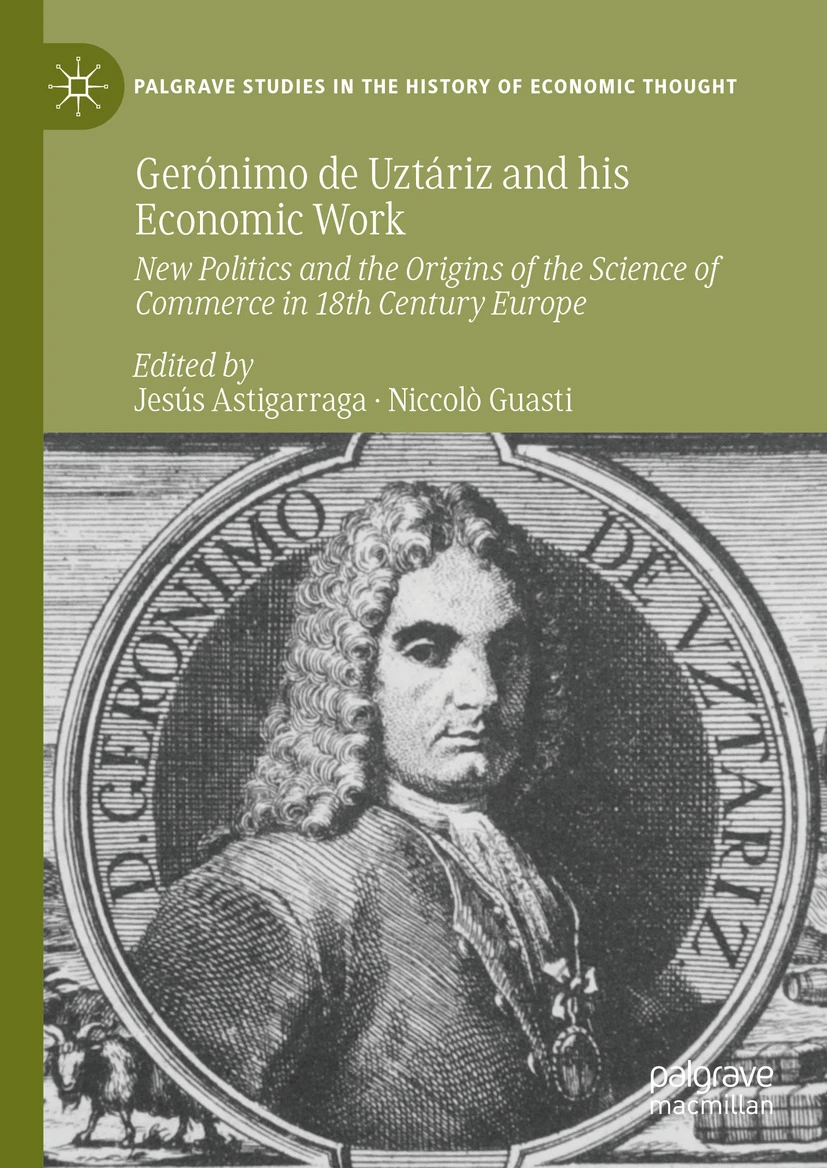
BOOK: Jesús ASTIGARRAGA & Niccolò GUASTI (eds.), Gerónimo de Uztáriz and his Economic Work. New Politics and the Origins of the Science of Commerce in 18th Century Europe [Palgrave Studies in the History of Economic Thought, eds. Peter KIESLER, Jan TOPOROWSKI & Maria Cristina MARCUZZO] (Cham: Palgrave Macmillan, 2025), XVII + 364 p. ISBN 9783031758560


Abstract:

This book provides a detailed and compelling guide to the life and economic work of Gerónimo de Uztáriz. It contextualises his work within the economic and political trends of the time, including the Enlightenment, Spanish liberalism, and colonial empires. Particular attention is given to de Uztáriz’s seminal work Theórica y Práctica de comercio y de marina and how it achieved international circulation and recognition. Its influence on 18th century Spain is examined, alongside a detailed analysis of the trade systems of the day. The translation and reception of Theórica in France, Great Britain, Italy, Ireland, and Germany is also discussed. This book aims to shed new light upon the economic work of Gerónimo de Uztáriz and highlights why his ideas remain relevant and important. It will be of interest to students and researchers working within modern history and the history of economic thought.

Table of contents:

Uztáriz and the Origins of the “Science of Commerce” in Europe (Jesús Astigarraga, Niccolò Guasti)
Abstract:

This chapter aims to introduce the figure of Uztáriz and to underline the importance of his Theórica (1724) in both the Hispanic and European contexts. The state of the art on these issues is discussed in detail, and the book’s main objectives are set out. The chapter highlights Uztariz’s book as an attempt to establish a “new politics” for the Spanish Monarchy and concludes by emphasising its international dimension: to speak of the Theórica is to speak of the origins of the “science of commerce” in the European Enlightenment.

Gerónimo de Uztáriz: Biographical Note (Reyes Fernández Durán)
Abstract:

This chapter aims to reconstruct Uztáriz’s personal and intellectual history. It highlights, among other aspects, his relationship with the influential group from Navarre who had settled in Madrid, his long sojourn in Belgium and the Netherlands, his informative travels around Europe, his posting to the Viceroyalty of Sicily as Treasury advisor, and his return to Spain at the height of the War of the Spanish Succession to serve the Crown in diplomatic affairs and on different councils. These stages are related with the vicissitudes of the 1724 first edition of the Theórica and the 1742 and 1757 re-editions, as well as the range of measures to tackle the country’s economic crisis set out in the work. The importance of examining the reports that Uztáriz wrote at the authorities’ request and other unpublished writings is also stressed.

The Man and His Circumstances: The Historical Context of Writing the Theórica (Sergio Solbes Ferri)
Abstract:

The years following the end of the War of the Spanish Succession were particularly frenzied in several aspects. The revision of the situation in the international and military policy sphere brought about by the Treaties of Utrecht has been emphasized, and this period is also understood to have formed part of a restructuring process for the Spanish economy. However, until recently, the idea of a simultaneous reorganization of an institutional framework affecting Spain as a whole has been blurred. The Nueva Planta reform phase was not limited to its implementation in the Crown of Aragon kingdoms, but was a key moment in the development of the modern state throughout Spain. Jean Orry’s reforms at the end of the conflict did not achieve a stable structure for several decades. Consequently, the context in which Uztáriz’s Theórica (1724) was published needs to be studied as a particularly delicate and significant moment in the halting overhaul of the Bourbon administration.

Europe in the Time of Gerónimo de Uztáriz’s Theórica: Between the Peace of Utrecht (1713) and the Peace of Vienna (1725) (Virginia León Sanz)
Abstract:

Uztáriz finished the Theórica at the end of 1724, a troubled year in Philip V’s reign, characterised by the monarch’s abdication and return to the throne. Bourbon diplomacy was about to undertake a U-turn in terms of its alliances, with a rapprochement with Austria and the signing of the Peace of Vienna in 1725. For almost a decade, Philip V had been endeavouring to reverse the Treaties of Utrecht, mainly those signed with England, but also others relating to the Mediterranean which had meant the loss of Sardinia, Milan, Naples and Sicily and which translated into a dynastic policy that conditioned Atlantic policy. Spain’s joining of the Quadruple Alliance in February 1720 and the slow pace of work at the Congress of Cambrai, the conflicts with England over the implementing of the Trade Treaty and the Treaty of Asiento, and the deterioration of relations with France all culminated in a change in Spain’s attitude and a rethinking of its positions at political and trade level arising from the Europe of Utrecht. In this European context, Uztáriz’s international career and the range of posts he held in Philip V’s service equipped him with a unique perspective on the trade policies of France, England and Holland. Shortly after the work was published, in 1725, Spain signed a Trade Treaty with Austria.

Uztáriz and His Sources: The Public Good Beyond the Reason of State (Niccolò Guasti)
Abstract:

Uztáriz’s treatise advocated a new economic policy for the Spanish Bourbon monarchy: since commerce, at the beginning of the eighteenth century, had come to underpin the balance of power in the international system, he lobbied for strong state intervention to develop national industry and trade with the colonies. Combining his training as a military engineer and a strong expertise in the administrative field with the heuristic tools taken from French Colbertism, Spanish arbitrismo and maybe English Political Arithmetic, Uztáriz featured some possible countermeasures against the re-export Dutch trade and the aggressive economic policy carried out by England since the second half of the seventeenth century. However, he never considered the political solutions or economic data gained from his sources (Vauban, Dubos, Huet, Savary, Moncada, Fernández de Navarrete, etc.) as a theoretical knowledge, but rather a practical know-how, useful to devise an economic policy able to restore Spain as a new model commercial empire.

Taxes and Tariffs in the Fiscal Debate in Spain at the Time of Uztáriz’s Theórica (1724–1757) (Niccolò Guasti, Jesús Astigarraga)
Abstract:

Uztáriz’s Theórica was the most influential Spanish economics text throughout the country and its colonies as a whole in the eighteenth century. It soon became the object of well-honed critical analyses. Although this controversial reception touched on many of the arguments put forward in the work, taxation was undoubtedly a major focus of the interpretations. This chapter aims to define the outlines of the long shadow cast by the Theórica over the three decades after its publication. It is divided basically into three sections. The first analyses Uztáriz’s core proposal for taxation, the second deals with tariffs and the customs system. and the third examines the controversial reception of both, particularly the former, among political economists and reformers of the day. The chapter underlines that Uztáriz conceived taxation (taxes and tariffs) as a linchpin for establishing a “new policy” that would bring Spain into line with Europe’s leading countries and promote the recovery of comercio útil, especially domestic manufacturing.

The Organisation of the Armadas of War and Commerce in the Writings of Gerónimo de Uztáriz (1717–1725): Polemics During the Transfer of the Casa de la Contratación (Ana Crespo-Solana)
Abstract:

The relationship between timber provision for navy shipyards and the naval reforms carried out during the eighteenth century has been the subject of recent analysis. The aforementioned issues, namely those pertaining to naval models and the supply of timber, were prominent in the political and economic discourses that shaped the decision to transfer the trade and navigation tribunals from Seville to Cadiz. This aspect was a point of contention between Gerónimo de Uztáriz and those who advocated for the centralisation of the navy, particularly the minister José Patiño. This chapter puts forward an analysis of the reciprocal relationship between forests, resources for the navy (dealt with in Chapter LXIII of the Theórica), and the organisation of fleets and navies from the perspective of Uztáriz's comparative critique. The author’s analysis is focused on the political and economic debate that took place within the Bourbonic Court concerning the defence of interests surrounding the creation of new shipyards and naval centres in eighteenth-century Spain.

The Colonial Balance of Trade: Uztáriz and the Carrera de Indias (Fidel J. Tavárez)
Abstract:

That Uztáriz’s Theórica had enormous influence in the Hispanic world, especially concerning commercial matters, is a well-known fact. Be that as it may, it remains surprising that an economic treatise centrally concerned with commercial matters had very little to say about the Spanish Empire’s port-restricted and convoy system of trade, the infamous fleets and galleons. Why did Uztáriz almost entirely eschew this topic, even though the reform of the fleets and galleons would later become one of the most important economic concerns among ministers in the court? After describing Uztáriz’s economic thought in relation to various arbitristas (projectors) of the seventeenth century, this chapter proposes that, to answer this question, it is first necessary to reconstruct a related debate about whether a modern commercial nation had to imitate the Dutch in erecting privileged commercial companies. Arguing against the need to imitate the Dutch model, Uztáriz suggested that the most important factor of a successful commercial state was a well-organised system of tariffs and economic incentives that privileged national goods. Whether this occurred via the fleets and galleons or commercial companies was of secondary importance. Instead, the crown had to focus on trading with national goods and achieving a favorable balance of trade.

The Theórica: Publishing History and Economic Lexicon (Elena Carpi)
Abstract:

This chapter deals with the Theórica from the point of view of publishing history and the comparison between the first two editions, with special attention to the paratexts and to the handwritten notes in the margins of the first edition. In addition, it proposes the study of the most relevant neological formations, from a lexicogenetic point of view.

Uztáriz in Britain (Richard van den Berg)
Abstract:

The publication of the English translation of Uztáriz’s Theórica in 1751 signalled the beginning of the reception of this work in Britain. Over the next decades there were frequent, but often somewhat isolated, references to Uztáriz in works dealing with commercial, colonial or naval matters. However, by far the most extensive use was made of this Spanish treatise by Malachy Postlethwayt in his Universal Dictionary of Trade and Commerce. This chapter examines the selections Postlethwayt made and the ways in which he used these substantial borrowings in support of his own positions.

The French Translation of the Theórica: From Political Arithmetic to Political Economy (Antonella Alimento)
Abstract:

This chapter considers the identity of the person who drove forward the 1753 French translation of Uztáriz’s Theórica y práctica de comercio y de marina. Evidence supports the hypothesis that it was Véron de Forbonnais who proposed the translation as part of a broader editorial initiative, which also included the translation of The British Merchant (1753) and was aimed at employing political arithmetic to prevent the renewal of the commercial treaty binding France to the United Provinces and the implementation of the treaty signed with England in Utrecht in 1713. Forbonnais, who admired Uztáriz’s text for its methodological approach, used his notes not only to correct the factual errors made by Uztáriz but also to replace the natural law approach adopted by the Navarrese official with an economic anthropology based on self-interest and “progressive consumptionism”, which he embraced having read and appreciated David Hume.

Uztáriz in the German-Speaking World: Karl Zinzendorf’s Commercial Travels to Spain in 1767 (Simon Adler)
Abstract:

The contribution will examine the reception of Uztáriz’s Theórica in the Habsburg monarchy. It will discuss how Karl Zinzendorf, a leading enlightened Minister in Maria Teresa’s government and specialist in trade affairs, used Uztáriz’s ideas for his commercial travels to Spain in 1767, and it will show how the cameralist writer Joseph von Sonnenfels included the Théorica in his writings. It attempts to highlight the influence of Uztáriz´ ideas amongst economic writers and government ministers in German states.

The Circulation and Translation of Uztáriz’s Theórica in Italy (Niccolò Guasti)
Abstract:

Uztáriz can be considered one of the most frequently quoted foreign economists in eighteenth-century Italy; in some Italian contexts (the Kingdom of Naples, Habsburg Lombardy, the Republic of Venice, the Duchy of Modena and the Papal State), he was regarded among the founding fathers of the new political economy as an academic and scientific discipline. His Theórica was read by Italian reformers and Enlightenment thinkers (Genovesi, Verri, Beccaria, Pagnini, Paradisi, Fracastoro, Vergani, Zanon, etc.) especially through the French translation by Forbonnais (1753), although in 1793 a Spanish expelled Jesuit, Gonzalo Adorno Hinojosa, released a new translation, this time directly from Spanish into Italian. Although it was a partial version (since Adorno translated almost half of original Uztáriz’s treatise), this latest version of the Theórica confirms that at the end of the eighteenth century Uztáriz’s economic ideas and political suggestions were still effective and attractive in several Italian states. The chapter examines the spread of Uztáriz’s Theórica in eighteenth-century Italy through its translations and the reasons for this enduring success.

Uztáriz’s Theórica and Strategies for Spain’s Economic Development (1740–1795) (Jesús Astigarraga, Javier Usoz, Juan Zabalza)
Abstract:

The Theórica’s commercial and industrial goal was hegemonic in Spain during the first half of the eighteenth century, in tune with prevailing ideas in the rest of Europe. During this time the book marked ways of thinking about how the structural problem faced by Spain due to its “lack of trade” could be solved, and from 1740 onwards it became a key text, thanks to the two re-editions in 1742 and in 1757. The work was especially influential in the three areas of taxation, trade and development strategies. However, after around 1760 its influence waned due to the prevalence of doctrines in favour of prioritising agriculture. In spite of this, its proposals for taxation, support for the role of trade, which was partially open to free trade initiatives, and criticism of companies with state privileges meant that the work retained its relevance in this predominantly agrarian context. Its pro-manufacturing stance, which was largely detached from Ancien Regime rigidity and privileges, also survived among major authors and in specific fields. This chapter therefore underlines the argument that there was not just one interpretation of the Theórica but many, and that they were wide-ranging and even contradictory.

Read more here: DOI 10.1007/978-3-031-75857-7.

03 February 2025

ADVANCE ARTICLE: Edward JONES CORREDERA, "The End of Composite Monarchies: Hugo Grotius’s De iure belli ac pacis and Mid-Seventeenth-Century Iberian Diplomacy" (The English Historical Review)


(image source: OUP)

Abstract:

This article sheds light on the seventeenth-century Catalan, Portuguese and Castilian uses of Hugo Grotius’s De iure belli ac pacis (1625) and, in particular, his chapters on the matter of monarchical succession. By studying the patterns in the ways that Catalan and Portuguese rebels and Spanish diplomats drew on this source to mediate disputes over succession, the article suggests that, while Grotius’s works may have eroded the rights of possession in the Atlantic and the Pacific by building on classical, biblical and Spanish sources, Iberian authors saw the text as a shared rulebook for discussing a sensitive matter that Spain had traditionally resolved through creative ambiguity, by granting and expanding local privileges under the threat of brute force. The article, in this way, encourages a reconsideration of the practical, diplomatic and high-political uses of Grotius’s ideas in Catholic Europe, a reassessment of a clear-cut binary between Dutch ideas of liberty and Spanish visions of empire, and a reconsideration of the historiographical explanation for the decomposition of composite monarchies. 

Read the full article here: DOI 10.1093/ehr/ceae206.

22 November 2024

BOOK: Edward JONES CORREDERA, Odious Debt. Bankruptcy, International Law, and the Making of Latin America [The History and Theory of International Law, eds. Nehal BHUTA, Francesca IURLARO, Anthony PAGDEN & Benjamin STRAUMANN] (Oxford: OUP, 2024), 272 p. ISBN 9780192888280, GBP 100


(image source: OUP)

Abstract:

What are fallen tyrants owed? What makes debt illegitimate? And when is bankruptcy moral? Drawing on new archival sources, this book shows how Latin American nations have wrestled with the morality of indebtedness and insolvency since their foundation, and outlines how their history can shed new light on contemporary global dilemmas. With a focus on the early modern Spanish Empire and modern Mexico, Colombia, and Argentina, and based on archival research carried out across seven countries, Odious Debt studies 400 years of history and unearths overlooked congressional debates and understudied thinkers. The book shows how discussions on the morality of debt and default played a structuring role in the construction and codification of national constitutions, identities, and international legal norms in Latin America. This new history of the moral economy of the Hispanic World from the 1520s to the 1920s illuminates contemporary issues in international law and international relations. Latin American jurists developed a global critique of economics and international law that continues to generate pressing questions about debt, bankruptcy, reparations, and the pursuit of a moral global economy.

Table of contents:

Introduction
1:Origins of Odious Debt
2:Sancho Panza's Promised Land: Spain's Default on its American Debts
3:A History of Forgiveness: Moral Bankruptcy in Mexico
4:Fratricide and Redemption: Gran Colombia's Debt to Simón Bolívar
5:Armed Debtor: The Utility of Bankruptcy in Argentina
6:Sacred Debt and Just War: Moral Economy beyond International Law

Conclusion

Read more here


14 December 2023

BOOK: Sepúlveda on the Spanish Invasion of the Americas (ed./tr. Luke GLANVILLE, David LUPHER & Maya Feile TOMES) [The History and Theory of International Law, eds. Nehal BHUTA, Anthony PAGDEN & Benjamin STRAUMANN] (Oxford: OUP, 2023), 448 p. ISBN 9780198863823, 110 GBP


(image source: OUP)

Abstract:

This volume presents the first full English translation of four key texts from the dispute between Juan Ginés de Sepúlveda and Bartolomé de las Casas regarding the justice of Spain's invasion of the Americas, culminating in their famous debate in Valladolid in 1550-51. An impassioned defence of the invasion, Sepúlveda's Democrates secundus (composed around 1544) amplified the controversy within Spain about the justice of its activities in the Americas. When Las Casas schemed to block publication of Sepúlveda's manuscript, Sepúlveda wrote an Apologia (1550) in its defence. Tensions were so high that Emperor Charles V called a temporary halt to undertakings in the Americas and convoked a meeting of theologians and jurists in Valladolid to address the matter. Here, Sepúlveda and Las Casas debated bitterly. Las Casas subsequently printed a composite record of the Valladolid deliberations (Aquí se contiene una disputa o controversia, 1552). Sepúlveda retaliated by penning a furious response (Proposiciones temerarias y de mala doctrina, around 1553-54) and strove to have Las Casas' text banned by the Inquisition. The debate between Sepúlveda and Las Casas was a pivotal moment in the history of international legal thought. They argued over fundamental matters of empire and colonial rule; natural law and cultural difference; the jurisdiction of the Church, responsibilities of Christian rulers, and rights of infidel peoples; the just reasons for war and grounds for resistance; and the right to punish idolatry, protect innocents from tyranny, and subjugate unbelievers for the purpose of spreading the Christian faith. With a detailed scholarly introduction that elucidates the complex story of these four controversial texts and reflects on the impacts of Sepúlveda's ideas, which continue to be felt in the theories and practices of war today, this book is a must-read for all those interested in the fields of history, political science, international relations, and colonial studies.

On the editors/translators:

Edited and translated by Luke Glanville, Associate Professor, The Australian National University, David Lupher, Professor of Classics, University of Pudget Sound, and Maya Feile Tomes, Lorna Close Lecturer in Spanish, University of Cambridge Luke Glanville is Associate Professor of International Relations at the Australian National University. His research spans past and present thought and practice regarding international protection against atrocities, refugee exclusion, and colonial conquest, and he has most recently authored Sharing Responsibility: The History and Future of Protection from Atrocities. David Lupher is Professor of Classics, Emeritus, at the University of Puget Sound. His main area of research is classical receptions in early modern colonial America. He is the author of books including Romans in a New World: Classical Models in Sixteenth-Century Spanish America (2003), as well as a translation of Alberico Gentili's Wars of the Romans (2011). Maya Feile Tomes is Lorna Close Lecturer in Spanish at Murray Edwards College, Cambridge, Bye-Fellow in Modern Languages at Peterhouse, and Affiliated Lecturer in the Faculty of Classics, Cambridge. She has most recently co-edited Brill's Companion to Classics in the Early Americas (2021). This is her second book. 

Read more here

30 October 2023

PUBLICATION: René VERMEIR (éd.), Recueil des ordonnances des Pays-Bas, deuxième série : Règne de Philippe IV (1621-1665) (Bruxelles: Commission royale pour la publication des anciennes lois et ordonnances de Belgique/AGR, 2023), 4 vol., ISBN 9789463913980 (OPEN ACCESS)


Le professeur René Vermeir (Département d'Histoire, Université de Gand) vient de publier quatre volumes contenant une édition savante des ordonnances de Philippe IV, El Rey Planeta (1605-1665), comme souverain des Pays-Bas "Espagnols":

  • Volume I: 14 juillet 1621 au 8 novembre 1633 (669 p.)
  • Volume II: 11 janvier 1634 au 6 avril 1647 (431 p.)
  • Volume III: 6 juin 1647 au 8 avril 1656 (361 p.)
  • Volume IV: 19 mai 1656 au 19 août 1665 (395 p.)

Cette oeuvre majeure complète l'auguste Recueil des ordonnances des Pays-Bas, dont les volumes numérisés pour les Pays-Bas Bourguignons (Philippe le Hardi et Marguerite de Male, Jean sans Peur, Philippe le Bon), Espagnols (Charles Quint, Philippe II, Albert et Isabelle) et Autrichiens (Charles VI, Marie-Thérèse, Joseph II, Léopold II) peuvent être consultés sur le site rechtsreeks.be (KULeuven).

Les quatre volumes sont disponibles en libre accès, à la fois pour la consultation et le téléchargement, grâce aux services de la bibliothèque universitaire gantoise (permalien ici). La version imprimée de cet ouvrage, édité en partenariat entre la Commission Royale et les Archives Générales du Royaume (volume 172 dans la collection Studia) est en vente à la boutique en ligne des Archives Générales du Royaume, au prix de € 100 (ici). 

(source: KCOWV/CRALO)

18 May 2023

ARTICLE: Rafael RAMIS BARCELÓ, "Egresados hispanos en el Colegio de Doctores de Nápoles (1584-1699)" (Memoria y civilización XXVI (2023/1), 147-180) (OPEN ACCESS)


(image source: Memoria y Civilizacion)

Abstract:

This paper studies the presence of Spaniards in the Doctoral Colleges of Naples, from its erection in 1584 to 1699. The characteristics of the Colleges and the sociology of the doctors are explained and the graduates who declared themselves as Spaniard and those who were originally from Spain are studied. This provides a more accurate profile of the presence of Spaniard Doctors in Naples and allows new prosopographical studies.

Read the whole article in open access on the journal's website (DOI 10.15581/001.26.004)

22 March 2023

BOOK: Adrian MASTERS, We, the King: Creating Royal Legislation in the Sixteenth-Century Spanish New World (Cambridge: Cambridge University Press, 2023), 342 pp., ISBN 9781009315418, £85


(image courtesy: Cambridge University Press)

Book description: 
We, the King challenges the dominant top-down interpretation of the Spanish Empire and its monarchs' decrees in the New World, revealing how ordinary subjects had much more say in government and law-making than previously acknowledged. During the viceregal period spanning the post-1492 conquest until 1598, the King signed more than 110,000 pages of decrees concerning state policies, minutiae, and everything in between. Through careful analysis of these decrees, Adrian Masters illustrates how law-making was aided and abetted by subjects from various backgrounds, including powerful court women, indigenous commoners, Afro-descendant raftsmen, secret saboteurs, pirates, sovereign Chiriguano Indians, and secretaries' wives. Subjects' innumerable petitions and labor prompted – and even phrased - a complex body of legislation and legal categories demonstrating the degree to which this empire was created from the “bottom up”. Innovative and unique, We, the King reimagines our understandings of kingship, imperial rule, colonialism, and the origins of racial categories.
Table of contents: 
List of figures
List of tables
Acknowledgments
Prelude: A Peruvian pestizo at the Spanish Court
Introduction: the collective making of an empire
1. Paper ceremonies for a global empire: Gobierno petitions and the collective work of Voluntad
2. The co-creation of the Imperial Logistics Network
3. Distant kings, powerful women, prudent ministers: the gendered creation of the Council of the Indies
4. Lawmaking in a portable council: Gobierno decision-making technologies before 1561
5. 'Bring the Papers:' Royal decision-making and the power of archives in Madrid, 1561–1598
6. Creating the royal decree: format, phraseology, and petitioners' transformation of Indies law
7. Pedro Rengifo's epilogue: subjects of chance
Conclusions
Index.
About the author: 
Adrian Masters is Director of the University of Trier's GloVib: Global Entanglements Project. Raised in rural Costa Rica, he has written several award-winning articles on Spanish imperial history.
More information can be found here

21 October 2022

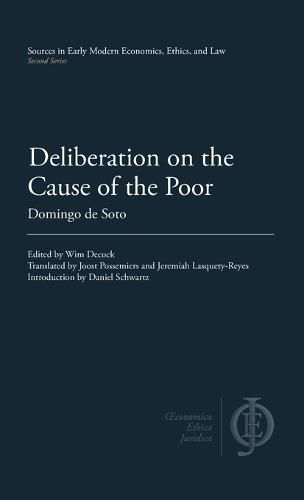
BOOK: Domingo DE SOTO, Deliberation on the Cause of the Poor (Transl. Joost POSSEMIERS, & Jeremiah LASQUETY-REYES, introd. Daniel SCHWARTZ) [Sources in Early Modern Economics, Ethics and Law, Second Series, ed. Wim DECOCK] (Grand Rapids: CLP Academic, 2022), 184 p., ISBN 978194901109, 29,95 USD


(image source: readings)

Abstract:
May beggars be excluded from public spaces? May vagabonds be denied access to foreign cities? Should assistance to the poor rely on private charity rather than public welfare institutions? These and similar questions are at the heart of Deliberation on the Cause of the Poor, a remarkable treatise on poor relief by Domingo de Soto (1495-1560), one of Spain’s most famous jurist-theologians. Confronted with the reform of poor laws in cities across Europe, Soto warns against the potentially dire consequences of restricting access to poor relief for the sake of managerial efficiency. Denouncing the abuse of power by corrupt public officials and the instrumentalization of the sacrament of confession, he argues against well-intended public measures that actually jeopardize the poor’s direct access to life-saving help and assistance. Soto draws on manifold arguments from the Bible, the church fathers, natural law, Roman law, and canon law to defend the legitimate poor’s right to beg for assistance, while recalling the vital importance of the virtue of mercy. Edited by Wim Decock. Translated by Joost Possemiers and Jeremiah Lasquety-Reyes. Introduction by Daniel Schwartz.

 Read more here.

21 March 2022

SEMINAR: Project Comparing Early Modern Colonial Law Launch Seminar


(Source: https://twitter.com/MancillaOrdenes/status/1494372509256495106/photo/1)

Developed at the university of Helsinki by the coordination of prof. Heikki Pihlajamäki, the project CoCoLaw (Comparing Early Modern Colonial Laws) aims to provide a comparative analysis of how early modern colonial laws of England, the Netherlands, Spain, and Portugal were structured. 


Our first event will happen on the 22nd of march, with Annemieke Romein and Mariana Armond Dias Paes as keynote speakers. 


Here is the registering form link:  https://www.lyyti.in/CoCoLaw_Launch_Seminar_Registration