Search

Showing posts with label early modern history. Show all posts

01 May 2026

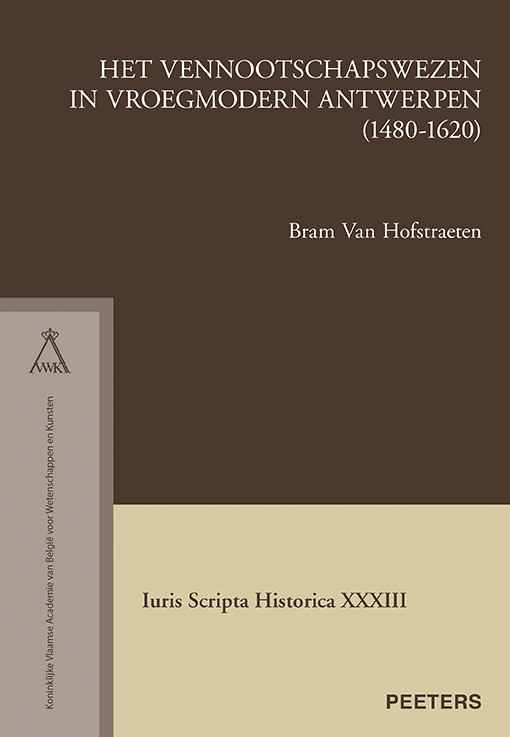
BOOK: Bram VAN HOFSTRAETEN, Het vennootschapswezen in vroegmodern Antwerpen (1480-1620) [Iuris Scripta Historica; 33] (Leuven: Peeters, 2025), VIII + 480 p. ISBN 9789042955356, € 85

(image source: Peeters)

Abstract:
In 1608 werd in Antwerpen de Consuetudines compilatae voltooid. Deze vierde en laatste redactiepoging van het Antwerpse gewoonterecht bevat maar liefst 27 artikels van vennootschapsrechtelijke aard. Kort na het verschijnen van de compilatie weerklonk echter de kritiek dat de redacteuren tal van nieuwe, niet-costumiere normen hadden ingevoerd. Dit boek onderzoekt de houdbaarheid van deze kritiek, in het bijzonder met betrekking tot het geredigeerde vennootschapsrecht. Enerzijds wordt de juridische oorsprong van de vennootschapsrechtelijke bepalingen in de Consuetudines compilatae onderzocht; anderzijds wordt hun inhoud getoetst aan de vennootschappelijke gebruiken zoals die in de zestiende-eeuwse handelspraktijk geobserveerd werden. Als dusdanig zal blijken dat de redacteuren in de eerste plaats remedies wensten te formuleren voor de meest voorkomende oorzaken van vennootschapsgerelateerde onenigheden. Dat zij zich hierbij vaak lieten inspireren door niet-Antwerpse en niet-costumiere rechtsbronnen beïnvloedde de verhouding tussen het geredigeerde vennootschapsrecht en de Antwerpse ondernemers. Men had immers een juridisch kader gecreëerd dat niet noodzakelijk strookte met de gangbare zestiende-eeuwse vennootschappelijke gebruiken in de Scheldestad.

See table of contents here.

More information with the publisher.


28 April 2026

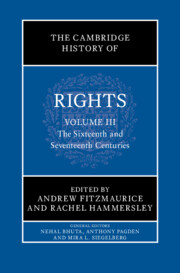
BOOK: Andrew FITZMAURICE & Rachel HAMMERSLEY (eds.), The Cambridge HIstory of Rights, vol. III: The Sixteenth and Seventeenth Centuries [The Cambridge History of Rights, ed. Nehal BHUTA, Anthony PAGDEN & Mira L. SIEGELBERG] (Cambridge: Cambridge University Press, 2026), ISBN 9781108938853, 120 GBP


(image source: CUP)

Abstract:
In the sixteenth and seventeenth centuries, contemporary authors explored the myriad ways in which the concept of rights could be understood but almost always arrived at the same conclusion: It was vital that rights should never be conflated with power. Through twenty-six expertly written essays, Volume III of The Cambridge History of Rights focuses on the language of rights, exploring its use in contexts as diverse as the English family, trading relations, and Asian powers. This was a period in which rights came to the forefront of political discourse, making it crucial to the longer history of rights reflected in this series. By foregrounding the idea of rights in action, the volume considers the relationship between the ways in which rights were articulated – by individuals, institutions, and states – and how they were enacted in practice. In doing so, it uncovers the complexities inherent in the development of the language of rights during this formative period.
Table of contents:
  • Introduction Andrew Fitzmaurice and Rachel Hammersley
  • 1. Roman law: the science of right Daniel Lee
  • 2. Natural rights Mads Langballe Jensen
  • 3. Historic rights in sixteenth-century France Sophie Nicholls
  • 4. Common law rights Alan Cromartie
  • 5. The rights of states to self-preservation Simone Zurbuchen
  • 6. The Right of natural persons to self-preservation Rosemarie Wagner
  • 7. Divine right in early modern political thought Cesare Cuttica
  • 8. The right to punish Signey Gutnick Allen
  • 9. The rights of war and peace Peter Schröder
  • 10. The right of navigation: claiming and challenging the free sea in theory and practice Arthur Westeijn
  • 11. The right to trade, 1500 –1700 Mark Somos
  • 12. The right to property Andrew Fitzmaurice
  • 13. Fair trials in law: imagining the rights of the accused Paul D. Halliday
  • 14. Freedom of religion Stefania Tutino
  • 15. The right of resistance Kajo Kubala
  • 16. The Right to Political participation and representation Markku Peltonen
  • 17. Rights and power in early modern feminism Hannah Dawson
  • 18. Gender and rights Anna Becker
  • 19. The rights of women Sharon Achinstein
  • 20. The rights of the insane Angus Gowland
  • 21. The rights of asylum Gaby Mahlberg
  • 22. The rights of peoples in Spain and its empire Tamar Herzog
  • 23. The rights of people in the English empire Ken Macmillan
  • 24. Rights in the seventeenth-century French empire Saliha Belmessous
  • 25. Rights, authority, and autonomy: the VOC in seventeenth century Southeast Asia Peter Borschberg.

Read more here: DOI 10.1017/9781108938853

26 March 2026

BOOK: Lars REGULA & Jörg ULBERT (eds.), Consular Jurisdiction. On the History of the Judicial Functions of Consulates (12th–20th Century) [Legal History Library, eds. Dirk HEIRBAUT, Matthew C. MIROW, Michelle McKINLEY & C.H VAN REE, 83; Studies in the History of International Law, ed. Randall LESAFFER, 30] (Leiden/Boston: Martinus Nijhoff/Brill, 2026), ISBN 978-90-04-75519-2

(image source: Brill)

Abstract:
For today’s practitioners, the history of the judicial functions of consulates is far more colourful and obscure than modern consular law might suggest. Take, for instance, Consul Annibale de Rossetti in Egypt, who had to arbitrate a lawsuit between two German merchants and was completely overwhelmed. De Rossetti neither knew German nor was he familiar with the law he was expected to apply. Modern consuls often react with disbelief at the fact that their predecessors acted not only as judges, but also as regulatory authorities and bailiffs. This volume brings together contributions on the history of the legal roles and functions of consulates, spanning from America to China and from their origins in the Middle Ages to the modern consulate.

Résumé:

L’histoire des fonctions judiciaires des consulats est bien plus riche et obscure pour les praticiens d’aujourd’hui que ne le laisse penser le droit consulaire moderne. Par exemple, lorsque le consul Annibale de Rossetti, en Égypte, dut trancher un litige entre deux commerçants allemands, il fut dépassé par la situation. De Rossetti ne connaissait ni l’allemand, ni le droit qu’il était censé appliquer. Les consuls modernes réagissent souvent avec incrédulité en apprenant que leurs prédécesseurs exerçaient à la fois les fonctions de juges, d’autorités réglementaires et d’huissiers de justice. De volume réunit des contributions portant sur l’histoire des rôles et fonctions juridiques des consulats, de l’Amérique à la Chine, depuis leurs origins au Moyen Âge jusqu’au consulat moderne. 

Contributors:

Marcella Aglietti, Eleonora Angella, Arnaud Bartolomei, Thibault Bechini, Giorgio Ennas, Ana Belem Fernández Castro, Juliette Françoise, Laura Galoppini, Sacha Gauthier Olssy, Thomas Gidney, Berna Kamay-Ulusay, Jessica Marglin, Cédric Quertier, Lars Regula, Victor Simon, Jörg Ulbert, and Dominique Valérian.

On the editors:

Lars Regula, University of Hamburg, is a Ph.D. student at the Chair for Legal History. His research deals with German consular jurisdiction in the Ottoman Empire. Jörg Ulbert, Ph.D. (2001), Université de Bretagne-Sud, is maître de conférences at the same university. He has published monographs and many articles on diplomatic and consular history, including Consul et services consulaires au XIXe siècle (2010) with Lukian Prijac. 

Read more here: DOI: 10.1163/9789004755192.

24 February 2026

SEMINAR CYCLE: "La escuela de Salamanca: Actualidad, vigencia y legado" (Madrid: Real Academia de la Historia, FEB 2026)


(image source: RAH)


Abstract:

La Real Academia de la Historia organiza, junto a la Fundación Tatiana, la quinta edición del ciclo de conferencias “El Valor de la Historia”. Carmen Sanz Ayán, académica de número de la institución, es una vez más la coordinadora de este ciclo de conferencias, que se desarrollará en dos partes. La primera parte tendrá lugar en febrero de 2026 y la segunda se celebrará en los meses de octubre y noviembre de 2026. La Escuela de Salamanca es un movimiento intelectual y cultural desarrollado en los siglos XVI y XVII que, liderado por el teólogo, filósofo y jurista Francisco de Vitoria (1485-1546), tuvo una amplia proyección no solo en Europa sino en toda la extensión de la global Monarquía Hispánica. Su influencia interdisciplinar en universidades y pensadores coetáneos y posteriores fue tan amplia que con frecuencia sus miembros suelen ser considerados padres de la Modernidad. La transversalidad del enfoque humanista de sus presupuestos teológico-jurídicos manifestado en su revalorización del derecho natural y de gentes, en la defensa de la libertad individual frente a los posibles excesos del poder político y en su preocupación por el comercio justo o la ética económica, priorizó la defensa de la dignidad humana y la aplicación de la razón a la hora de dar respuesta a los problemas sociales y morales que surgieron en su tiempo y merece ser conocido por los ciudadanos y ciudadanas del siglo XXI que a pesar de los 500 años transcurridos desde su aparición, se enfrentan con desafíos de parecida naturaleza. La Fundación Tatiana y la Real Academia de la Historia, comprometidas desde 2019 en una alianza estratégica para visibilizar nuestra relación con el pasado de un modo dinámico y crítico, han promovido para 2026 dos ciclos de conferencias y mesas redondas centradas en la difusión del legado intelectual de la Escuela de Salamanca que en 2026 celebra su V Centenario al recordar la llegada de Francisco de Vitoria a la Universidad salmantina en 1526. Los dos ciclos de conferencias programados durante los meses de febrero, octubre y noviembre de 2026 en las sedes de la RAH y de la Fundación Tatiana, se ocuparán de analizar la naturaleza y el legado de este universal e influyente movimiento intelectual.

Program:

6 de febrero de 2026

Inauguración y presentación de los ciclos

La Escuela de Salamanca: Concepto y Evolución

Carmen Sanz Ayán

Académica de número de la Real Academia de la Historia y catedrática de Historia Moderna (UCM).

19:00h. Sede Real Academia de la HistoriaCalle Amor de Dios, 2, Madrid, 28014 Madrid

13 de febrero de 2026

Las ideas económicas de la Escuela de Salamanca y su praxis política
(Siglos XVI-XVII)

Agustín González Enciso

Académico correspondiente de la Real Academia de la Historia y catedrático emérito Universidad de Navarra.

19:00h. Sede Real Academia de la HistoriaCalle Amor de Dios, 2, Madrid, 28014 Madrid

25 de febrero de 2026

Mesa Redonda

La Escuela de Salamanca en clave humanística: Soberanía y legitimidad del poder

Con la participación

Sergio Bravo Sánchez

Universidad Complutense de Madrid (UCM)

Lorena Velasco Guerrero

Universidad Francisco de Vitoria (UFV)

Jaime Elipe Soriano

Universidad Autónoma de Madrid (UAM)

19:30h. Sede Fundación Tatiana en Madrid. Paseo del General Martínez Campos 25, Madrid


Read more here.

BOOK: Lars BEHRISCH, Democracy's Double Helix. Participation, Equality and Revolution in Early Modern Europe (Cambridge: CUP, 2025), ISBN 9781009029667

 (image source: CUP)

Abstract:

Where does our modern democracy come from? It is a composite of two very different things: a medieval tradition of political participation, pluralistic but highly elitist; and the notion of individual equality, emerging during the early modern period. These two things first converged in the American and French revolutions – a convergence that was not only unexpected and unplanned but has remained fragile to this day. Democracy's Double Helix does not simply project and trace our modern democracy back into history, assuming that it was bound to come about. It looks instead at the political practices and attitudes prevailing before its emergence. From this perspective, it becomes clear that there was little to predict the coming of democracy. It also becomes clear that the two historical trajectories that formed it obey very different logics and always remain in tension. From this genuinely historical vantage point, we can therefore better understand the nature of our democracy and its current crisis.

On the author:

Lars Behrisch, Universiteit Utrecht, The Netherlands 

Read more here: DOI 10.1017/9781009029667

23 February 2026

VACANCY: Assistant Professor in Early Modern British History (fulltime, tenure) (Warwick: University of Warwick, DEADLINE 8 MAR 2026)

(image source: Warwick)
 

Description:

Informal Queries For informal queries about the role, please contact Professor Tim Lockley at T.J.Lockley@warwick.ac.uk The Department of History seeks to appoint an Assistant Professor in Early Modern British History on a full-time and indefinite basis from 1 September 2026. You will be part of one of the largest History departments in the UK with a thriving community of teachers and researchers covering a range of disciplines and geographical areas.

Read more here

13 February 2026

BOOK: Manuel HERRERO SÁNCHEZ, Jonatán OROZCO CRUZ & Pedro CARDIM (eds.), The Asiento System and the Transatlantic Trade in Enslaved Africans (circa 1580–1750) [The Atlantic World, ed. Benjamin SCHMIDT & Wim KLOOSTER; vol. 41] (Leiden/Boston: Brill, 2026), xiv + 374 p. ISBN 978-90-04-54929-6, € €157.94


(image source: Brill)

Abstract:

This is the first edited volume to focus explicitly on the asiento, the contractual framework that regulated the transatlantic slave trade to Spanish America between the late sixteenth and mid-eighteenth centuries. As the mechanism that structured a vast system of human trafficking – one of the foundational tragedies of the modern world – the asiento functioned as a legal, political, and commercial instrument of empire. Drawing on new archival research in multiple languages and from repositories across the Atlantic, the chapters trace the negotiated nature of these contracts, the transimperial flows they enabled, and the roles played by formal and informal agents of diverse social, ethnic, and institutional backgrounds. Contributors are: Pedro Cardim, Christopher Ebert, Manuel F. Fernández Chaves, Alejandro García Montón, Miguel Geraldes Rodrigues, Manuel Herrero Sánchez, Wim Klooster, Thiago Krause, Maximiliano Mac Menz, Joseph Mainberger, Ramona Negrón, Linda Newson, Jonatán Orozco Cruz, Edgar Pereira, William Pettigrew, Filipa Ribeiro da Silva, Klaus Weber, and David Wheat.

 On the editors:

Manuel Herrero Sánchez is Professor of Early Modern History at Pablo de Olavide University in Seville. His research focuses on the comparative approach to the history of the Dutch Republic and Genoa, and on the Spanish Monarchy considered as a polycentric imperial structure composed of urban republics. Jonatán Orozco Cruz is Predoctoral Researcher at Pablo de Olavide University, where he is developing his PhD dissertation Transnational Social Networks Connecting Imperial Spaces: the Spanish Monarchy and the Slave Asiento (1675–1694) under the supervision of Prof. Dr. Manuel Herrero Sánchez. Pedro Cardim is Associate Professor of History at Universidade Nova de Lisboa, Portugal. He has published widely on Iberian history, early modern legal history, and Portuguese colonisation of Brazil.

Rad more here: DOI  10.1163/9789004549296.

13 January 2026

BOOK: Joseph Samuel HARPHAM, The Intellectual Origins of American Slavery. English Ideas in the Early Modern Atlantic World (Cambridge (Mass.): Harvard UP, 2025), ISBN9780674278370


(image source: Harvard UP)

Abstract:

A landmark account of the origins of American slavery, revealing how ancient Roman ideas were used to defend the establishment of a slave empire in the English Atlantic world. The period from 1550 to 1700 was critical in the development of slavery across the English Atlantic world. During this time, English discourse about slavery revolved around one central question: How could free persons be made into slaves? John Samuel Harpham shows that English authors found answers to this question in a tradition of ideas that stretched back to the ancient world, where they were most powerfully expressed in Roman law. These ideas, in turn, became the basis for the earliest defenses of American slavery.

On the author:

John Samuel Harpham is Assistant Professor of Classics and Letters and Wick Cary Professor in the Institute for the American Constitutional Heritage at the University of Oklahoma. 

Read more here


12 January 2026

BOOK: Sylvie DAUBRESSE, Mark GREENGRASS & Marc SCHACHTER, Les procureurs généraux Jean et Jacques de La Guesle. Documents sur l’histoire de France au temps des guerres de Religion (1562-1605) [Documents inédits sur l'histoire de France; 85] (Paris: CTHS, 2025), 420 p. ISBN 978-2-7355-0993-5


(image source: CTHS)

Abstract:
Entre 1570 et 1605, un père et son fils, Jean et Jacques de La Guesle, occupèrent à tour de rôle la charge de procureur général du roi au parlement de Paris, cour souveraine la plus importante de la monarchie française. Alors que le royaume traverse une crise profonde provoquée par les guerres de Religion, les deux hommes, défenseurs des droits du roi, se trouvent plongés au cœur de questions cruciales : pacification du royaume, politique financière, exercice de la justice, relations avec Rome. Le présent ouvrage se compose d’une longue introduction et d’un corpus de soixante-douze textes manuscrits se rattachant à l’activité des La Guesle (lettres, discours, mémoires), dont deux harangues inédites de Jean trouvées à la Folger Shakespeare Library de Washington. Il s’agit là d’un ensemble documentaire remarquable qui éclaire le parcours de deux grands magistrats, les ressorts de leur action, mais aussi les rapports complexes qu’ils entretenaient avec le souverain.

Read more here


09 January 2026

BOOK: Magnus RESSEL & Emir O. FILIPOVIC (eds.), Companion to the Later Crusades (1400–1700) (Leiden/Boston: DegruyterBrill), 2026


(image source: DeGruyterBrill)

Abstract:

The crusading movement endured well beyond the 14th century. Across Late Medieval and Early Modern Europe, the desire for crusading continued to wield substantial influence, transcending borders and permeating diverse social strata. This companion brings together pertinent research and organizes a field of study that has become solidified recently. It focuses on crusading activities, rhetoric, discourses, and symbols that left lasting impacts and had global consequences for both Christian and Muslim societies. With contributions from Marian Coman, André Teixeira, António Lázaro, Pavel Soukoup, Emir O. Filipović, Ferenc Toth, Ana Echevarría, Elma Koric, Ignacio Bernstorff, Iulian Damian, Benjamin Weber, Nikolay Antov, Heribert Müller, Magnus Ressel, Paul Srodecki, Stefan Schröder, James Mixson, Eleni Tounta, Iván Rega Castro, Borja Franco Llopis, Loïc Chollet, Catherine Gaullier-Bougassas, Antonio García Espada, Norman Housley

On the editors:

 Emir Filipovic, University of Sarajevo; Magnus Ressel, Universität Frankfurt am Main.

Read more here: DOI 10.1515/9783110735932

08 January 2026

CONFERENCE: Minorités protestantes et droit(s) en Europe (17e-18e S.) (Le Mans: Le Mans Université, 11-12 DEC 2025)


(image source: IMHC)

On 11 and 12 December 2025, the following conference took place in Le Mans:

Programme

11 décembre 2025

9 h 30 – 10 h | Accueil café

10 h – 10 h 15 | Ouverture du colloque

Session 1 – Droit et justice autour des guerres de Religion

10 h 15 – 10 h 45 | Réparations pour un massacre : la justice transitionnelle et la minorité protestante pendant les guerres de Religion

David van der Linden (université de Groningue)

10 h 45 – 11 h 15 | Le droit à une justice équitable : les justiciables protestants à la chambre de l’édit de Castres (1598-1679)

Sherylin Bouyer (université de Groningue)

11 h 15 – 11 h 45 | La conversion du protestantisme français à l’absolutisme des Bourbons : entre accommodements politiques et fermeté spirituelle (1629-1661)

Laurent Bouchard (université de Poitiers)

11 h 45 – 12 h 30 | Discussion collective

Session 2 – Contraintes et interprétations de la loi

14 h – 14 h 30 | Faire échec à la qualification de relaps pour préserver ses droits en Languedoc autour de la Révocation de 1685

Julien Broch (Aix-Marseille Université –CERHIIP)

14 h 30 – 15 h | “En attendant qu’il plaise à Dieu les éclairer comme les autres” : l’article XII de l’édit de Fontainebleau et la minorité de la minorité huguenote

Hubert Bost (EPHE-PSL – LEM)

15 h – 15 h 15 | Pause café

15 h 15 – 15 h 45 | Beaucoup de bruit pour rien ? Réactions huguenotes à la déclaration royale de 1724

Pauline Haour (EPHE-PSL)

15 h 45 – 16 h 15 | Interpréter l’édit de Versailles de 1787

Didier Boisson (université d’Angers – TEMOS)

16 h 15 – 17 h 30 | Discussion collective

Vendredi 12 décembre 2025

Session 3 – Les acteurs protestants face au droit

9 h – 9 h 30 | Avocats et experts : les protestants saumurois et leur rôle dans l’application du droit et de la justice sous l’édit de Nantes

Léo Maillé (Le Mans Université – TEMOS)

9 h 30 – 10 h | Pasteurs et droit(s) : usages, médiations et enjeux dans les protestantismes minoritaires (xviie-xviiie siècles)

Céline Borello (Le Mans Université – TEMOS)

10h15 – 10h45 | Le pasteur doit-il se faire avocat ? Le Tabernacle de Dieu sous la nuée d’Alexandre Brissac (1666)

Julien Léonard (université de Lorraine – CRULH)

10 h 45 – 11 h | Pause café

11 h – 11 h 30 | La concurrence des capitulations. Les privilèges religieux des troupes étrangères dans les villes de garnison de la dorsale catholique (France, xviie-xviiie siècles)

Paul Vo-Ha (université Paris 1 Panthéon Sorbonne – IHMC/IUF)

11 h 30 – 12 h | Une diplomatie pour les droits des exilés : le cas des réfugiés huguenots (v. 1680 – v. 1720)

Naïma Ghermani (université Grenoble-Alpes – LAHRHA)

12 h – 12 h 45 | Discussion collective

Session 4 – Circulations et héritages du droit

14 h – 14 h 30 | L’Église réformée au Brésil : cadres institutionnels et enjeux coloniaux (1630-1654)

Matheus Vila Nova (EPHE-PSL – LEM)

14 h 30 – 15 h | D’une émancipation à l’autre : convergences entre non conformistes et anglicans autour de l’Émancipation des catholiques en Irlande (1791-1829)

Karina Bénazech Wendling (université de Lorraine)

15 h – 15 h 30 | La laïcité et l’intégration républicaine des minorités religieuses : le choix des protestants (xviiie-xxie siècles)

Valentine Zuber (EPHE-PSL – GSRL)

15 h 30 – 16 h 15 | Discussion collective

Conclusion générale

(source: IMHC

07 January 2026

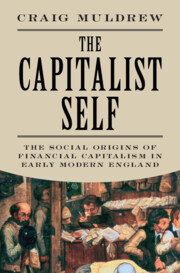
BOOK: Craig MULDREW, The Capitalist Self. The Social Origins of Financial Capitalism in Early Modern England (Cambridge: Cambridge University Press, 2025), ISBN 9781009644488, €40,85


(image source: CUP)

Abstract:

In this radical reinterpretation of the Financial Revolution, Craig Muldrew redefines our understanding of capitalism as a socially constructed set of institutions and beliefs. Financial institutions, including the Bank of England and the stock market, were just one piece of the puzzle. Alongside institutional developments, changes in local credit networks involving better accounting, paper notes and increased mortgaging were even more important. Muldrew argues that, before a society can become capitalist, most of its members have to have some engagement with 'capital' as a thing – a form of stored intangible financial value. He shows how previous oral interpersonal credit was transformed into capital through the use of accounting and circulating paper currency, socially supported by changing ideas about the self which stressed individual savings and responsibility. It was only through changes throughout society that the framework for a concept like capitalism could exist and make sense.

Read more here: DOI  10.1017/9781009644488.

18 December 2025

BOOK: Wouter DRUWÉ, Randall LESAFFER & Geert SLUIJS (eds.), Natural Law and Domestic Government in the Early Modern Period [Legal History Library, eds. Dirk HEIRBAUT, Michelle MCKINLEY, Matthew C. MIROW & C.H. VAN RHEE; vol. 80] (Leiden/Boston: Martinus Nijhoff/Brill, 2025), ISBN 978-90-04-74871-2, €160,93


(image source: Blackwell's)

Abstract:

Natural Law and Domestic Government in the Early Modern Period examines how natural law informed evolving ideas of governance from the sixteenth to eighteenth centuries. Through case studies spanning France, the Low Countries, England, Iberia, and colonial America, this volume explores how jurists, theologians, and political thinkers grappled with questions of sovereignty and justice. Contributors analyse influential figures from Bodin and Coke to Tuldenus and Lipsius, tracing how natural law intersected with legal concepts of rights, obligations, contracts, and associations. By uncovering diverse and contested uses of natural law, this collection offers a nuanced account of its enduring role in shaping early modern statecraft and political thinking.

On the editors:

Wouter Druwé is an associate professor of Roman law and legal history at KU Leuven. He studies the interaction between late medieval and early modern learned law (ius commune) and legal practice, with a particular focus on the Low Countries. Randall Lesaffer is a professor of legal history at KU Leuven and Tilburg University. His research focuses on the history of international law in early modern Europe. He is the general editor of The Cambridge History of International Law and the Brill book series Studies in the History of International Law. Geert Sluijs is a Ph.D. candidate at KU Leuven, holding degrees in law, philosophy, and intellectual history. His research interests include early modern legal and intellectual history. He has previously published on these topics, in particular regarding the Leuven scholar Tuldenus. 

Read more here: DOI 10.1163/9789004748712.

17 December 2025

BOOK: H. Alberto FEENSTRA, Frontiers of Finance: The Political Economy of Public Debt in the Dutch Republic [Library of Economic History, eds. Jeremy LAND, Tomoko SHIROYAMA & Jeroen TOUWEN] (Leiden/Boston: Brill, 2025), ISBN


(image source: Brill)

Abstract:

This book analyses the political economy of provincial public debt within the federal Dutch Republic. Frontiers of Finance: The Political Economy of Public Debt in the Dutch Republic shows that the domestic effect of Holland's financial revolution and Amsterdam's subsequent rise to an international financial centre was limited. Instead, the fiscal and legal fragmentation caused differences in risk, capital supply, transaction costs and, consequently, borrowing costs. The merits of Holland’s financial revolution were thus not transferable to another context. The results are relevant for wider debates about the role of institutions and the financial sector for economic growth.

On the author:

Alberto Feenstra, Ph.D. (2018), University of Amsterdam, is postdoctoral researcher at Utrecht University. He publishes on Dutch financial history, including provincial debt and monetary colonial history. 

Read more here: DOI  10.1163/9789004745254.

16 December 2025

BOOK: Cátia P. ANTUNES, Alejandro GARCíA-MONTON, Elisabeth HEIJMANS et al., A Hydra of Business and Men: The Habsburg Asiento de Negros in Structuring the European Transatlantic Slave Trade [Library of Economic History, eds. Jeremy LAND, Tomoko SHIROYAMA & Jeroen TOUWEN; 21] (Leiden/Boston: Brill, 2025), ISBN 978-90-04-74509-4 [OPEN ACCESS]


(image source: Brill)

Abstract:

This book offers a historical and historiographical analysis of the Spanish asiento de negros, a contract between the Spanish Monarchy and private parties to introduce specific number of enslaved Africans to Spanish America. As the Spanish American market was the largest single market for enslaved people prior to 1720, studying this colonial contract is essential for understanding the development of the most significant colonial contract of the long 17th century. The asiento framed the European transatlantic slave trade for nearly two centuries and shaped much of the political economy of the Spanish Atlantic empire. This book is unique in providing the first comprehensive study of the asiento since George Scelle’s 1906 work (La traite négrière aux Indes de Castille. Contracts et traités d’assiento, 2 vols.). Unlike Scelle, who focused on legal frameworks and presented the monarchy’s perspective, this book examines the asientistas themselves, offering insights into their business decisions and organizations. It concentrates on the period that gave rise to the idea of an asiento and the Habsburg-era asientos (1595–1713), preceding the so-called Bourbon reforms.

Discover the full book for free here: DOI 10.1163/9789004745094.

20 November 2025

BOOK: Maurits DEN HOLLANDER, Court, Credit, and Capital. Amsterdam's Insolvency Legislation in the Dutch Golden Age [Studies in Legal History] (Cambridge: Cambridge University Press, 2025), 312 p. ISBN 9781009631051, 95 GBP


(image source: CUP)


Abstract:
Seventeenth-century Amsterdam was a city of innovations. Explosive economic growth, the expansion of overseas trade, and a high level of religious tolerance sparked great institutional, socioeconomic and legal changes, a period generally known as 'the Dutch Golden Age.' In this book, Maurits den Hollander discusses how insolvency legislation contributed to the rise of a modern commercial order in seventeenth-century Amsterdam. He analyzes the procedure and principles behind Amsterdam's specialized insolvency court (the Desolate Boedelskamer, 1643) from a theoretical perspective as well as through the eyes of citizens whose businesses failed. The Amsterdam authorities created a regulatory environment which solved insolvency more leniently, and thus economically more efficiently, than in previous times or places. Moving beyond the traditional view of insolvency as a moral failure and the debtor as a criminal, the Amsterdam court recognized that business failure was often beyond the insolvent's personal control, and helped restore trust and credit among creditors and debtors.

Read more on Cambridge Core


05 November 2025

BOOK: Stefano CATTELAN, Mare Clausum: The Formation of the Law of the Sea in Pre-Modern State Practice and Legal Doctrine (c. 1350–1650) [Legal History Library, eds. Dirk HEIRBAUT, Michelle McKINLEY, Matthew C. MIROW and C.H. VAN RHEE, 77; Studies in the History of International Law, ed. Randall LESAFFER, 28] (Leiden/Boston: Martinus Nijhoff/Brill, 2025), ISBN 9789004741393, € 147,34


(image source: Brill)


Abstract:

Who owns the sea? This book explores this timeless question by tracing the development of claims over the sea from the late Middle Ages to the early modern era, shedding light on the complex interplay between legal arguments, political interests, and geostrategic realities. By the time Hugo Grotius’s Mare liberum (1609) famously championed the freedom of the seas, competing traditions of ‘claimed seas’ had already shaped European legal debates for centuries. Examining three macro-regions – the Mediterranean, the seas of Northern Europe, and the world oceans – this study challenges the dominant Grotius-centric narrative, offering a broader perspective on how political actors and jurists justified exclusive maritime rights long before John Selden’s Mare clausum (1635). While assessing the Eurocentric foundations of the modern law of the sea, it reveals how historical legal arguments and notions continue to shape contemporary ocean governance.

On the author:

Stefano Cattelan is Postdoctoral Researcher at the Faculty of Law and Criminology at Vrije Universiteit Brussel (Research Group CORE) and Adjunct Professor at the Brussels School of Governance. He publishes on the history of international law, with a particular focus on the law of the sea and the laws of war between the fifteenth and eighteenth centuries. His research has been supported by the Carlsberg Foundation and the Research Foundation Flanders (FWO).

Read more here: DOI 10.1163/9789004741409.

04 November 2025

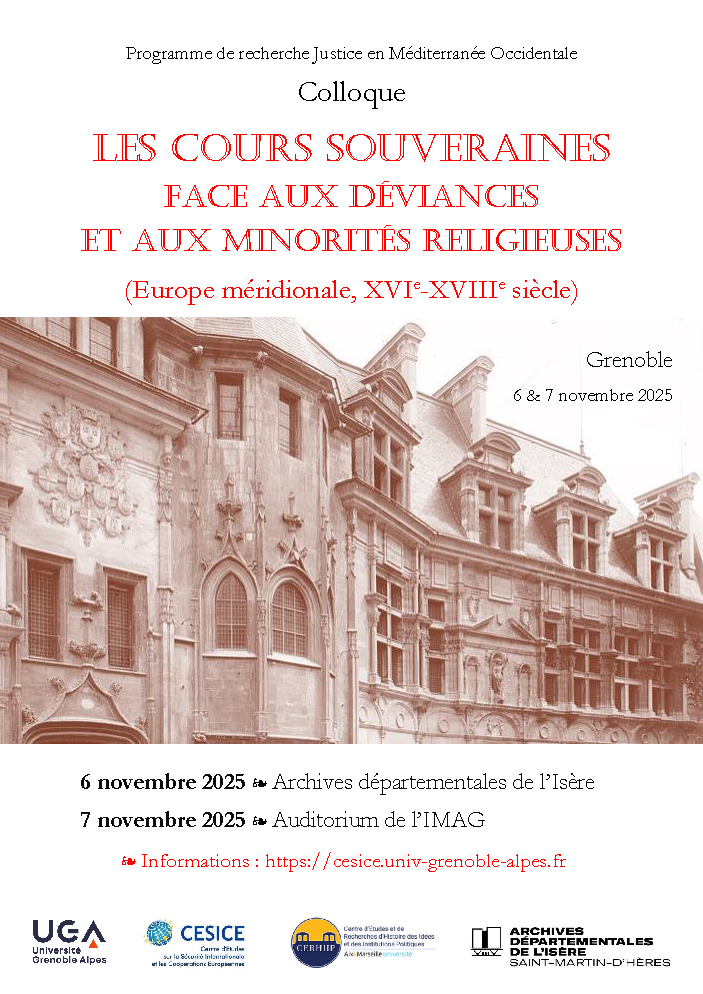
CONFERENCE: "Les cours souveraines face aux déviances et aux minorités religieuses" (Grenoble: CESICE, 6-7 NOV 2025)


(image source: CESICE)

Description:

Du 6 novembre 2025 au 7 novembre 2025 Complément date Le CESICE co-organise avec le CERHIIP un colloque portant sur la thématique "Les cours souveraines face aux déviances et aux minorités religieuses". Ce colloque aura lieu à l'auditorium des Archives départementales le jeudi 6 novembre de 2025 de 9h00 à 12h00 et de 14h00 à 17h00 ainsi que le vendredi 7 novembre 2025 à l'auditorium de l'IMAG de 9h00 à 12h00.

See here for program. 

16 September 2025

BOOK: Virginie LEMONNIER-LESAGE (dir.), Guy Coquille, sieur de Romenay, humaniste et juriste (1523-1603) [Colloques & Essais; 220] (Paris: Institut Francophone pour la Justice et la Démocratie, 2025), 174 p. ISBN 9782370324351, € 19


(image source: LGDJ)

Abstract:
Né le 11 novembre 1523 à Decize dans une famille de juristes – son grand-père maternel est lieutenant général au bailliage de Saint-Pierre-le-Moûtier –, Guy Coquille, sieur de Romenay, est formé au collège de Navarre à Paris avant d’aller étudier le droit civil à l’Université de Padoue. De retour à Paris, il fera son apprentissage pratique, pendant trois ans, auprès de son oncle Noël Bourgoing, conseiller au Parlement de Paris. Entre septembre 1548 et août 1550, Coquille étudie à l’Université d’Orléans où il obtient vraisemblablement le grade de licencié ès lois. Devenu avocat, il exerce à Paris jusqu’en 1553 avant de revenir à Decize et de s’installer définitivement à Nevers à partir de 1559. Guy Coquille exerce différentes charges de procureur fiscal ou bailli avant de se voir confier par le duc de Nevers, en mai 1571, la charge de procureur général et fiscal du duché. Parallèlement à sa carrière de juriste, Guy Coquille mène une carrière politique : conseiller de la ville dès 1560, il devient le premier échevin de Nevers entre 1568 et 1570. Il est élu député du tiers état du Nivernais aux États généraux qui se tiennent à Orléans en 1560 et 1561 et à Blois en 1576 et 1588. Gallican, monarchiste défenseur d’une monarchie tempérée, attaché aux corps intermédiaires et aux institutions locales, Guy Coquille laisse une œuvre doctrinale essentielle, consacrée à la fois au droit privé et au droit public. Auteur gallican, Coquille est aussi auteur coutumier. Défenseur des droits du duché de Nevers, il l’est aussi de ceux du roi catholique. Avocat humaniste, il est auteur de poésies. Autant de centres d’intérêt chez ce grand juriste qui permettent, à l’occasion du cinquième centenaire de sa naissance, de réunir autour de lui de nombreux spécialistes de différentes disciplines : historiens, historiens du droit, historiens des idées politiques, historiens des lettres et tous ceux qui s’intéressent à son œuvre, son environnement ou son influence. Actes du colloque des 29 et 30 juin 2023 organisé, au Château de Romenay, aux Archives départementales de la Nièvre et au Palais ducal de Nevers

On the editor:

Virginie Lemonnier-Lesage, Professeur en Histoire du droit et des institutions.

Read more here


09 September 2025

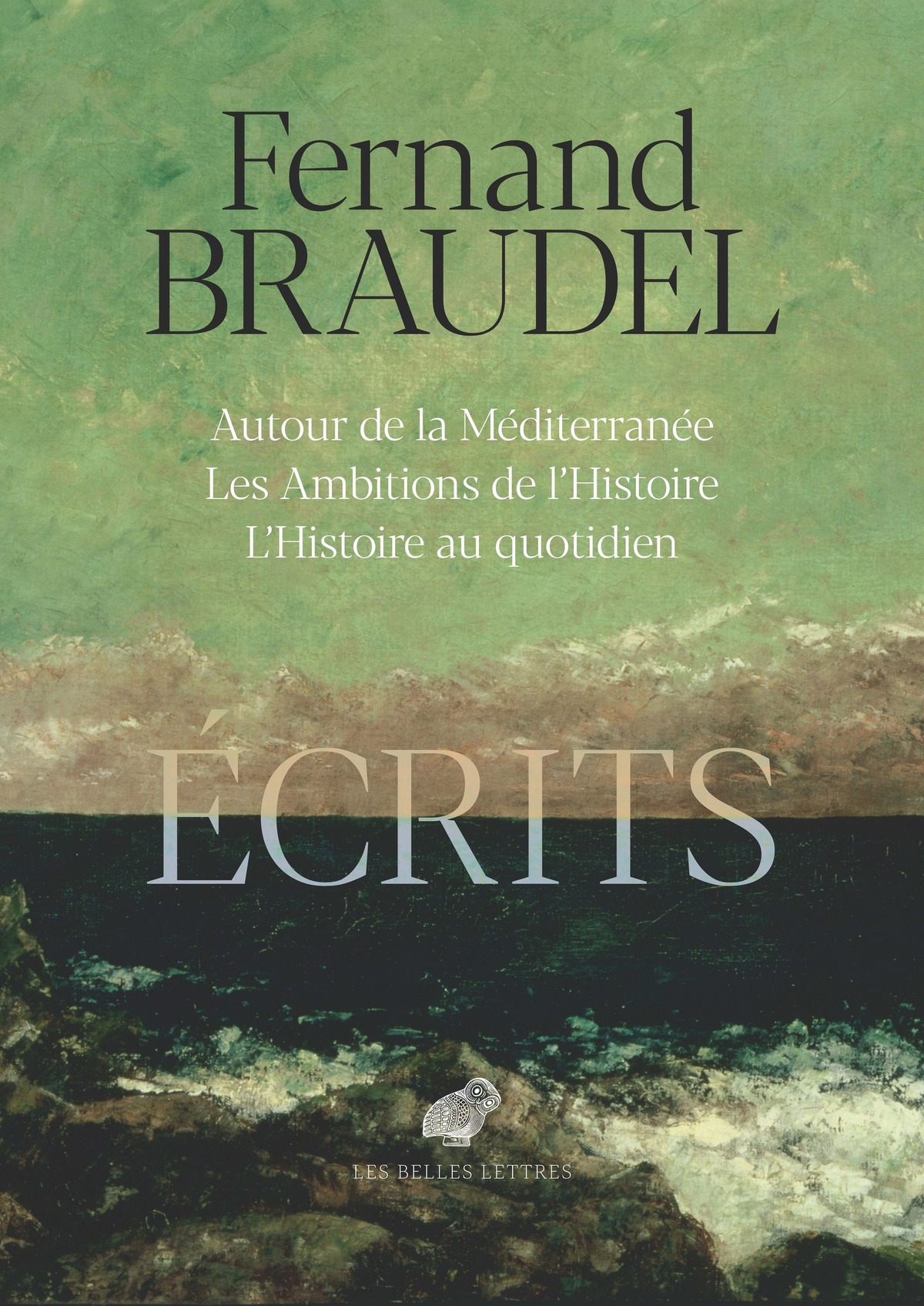
BOOK: Fernand BRAUDEL, Ecrits. Autour de La Méditerranée. Les Ambitions de l'Histoire. L'Histoire au quotidien (ed. Bernard DE FALLOIS) (Paris: Les Belles Lettres, 2025), ISBN 9782251457154 € 59,99


(image source: Les belles lettres)

Abstract:
Ces Écrits rassemblent les textes de Fernand Braudel, rédigés entre 1927 et 1985. Ils retracent, dans son évolution chronologique, le chemin d’une pensée originale et fondatrice pour le renouvellement de la discipline historique au XXe siècle. Si elle s’est longtemps cherchée, sa pensée témoigne d’intérêts constants : pour l’histoire de la Méditerranée, dont il dresse un parallèle éclairant avec l’espace Atlantique pendant un séjour de recherche à Sao Paulo ; pour le capitalisme de l'âge moderne et la place des ouvriers dans l’histoire ; mais aussi et surtout pour la manière dont l’histoire se fait, s’écrit et s’enseigne en France, avec en perspective son engagement au sein de l’École des Annales. La première partie, Autour de la Méditerranée, correspond pour l’essentiel aux premières années d’enseignement et de formation de Braudel. Articles et comptes rendus tournent autour de ses lectures et recherches à partir de 1927. Naturellement, ils concernent d’abord l’Afrique du Nord où il professa de 1923 à 1932. Puis l’Espagne et l’Italie prennent le relais ; elles resteront présentes dans ses curiosités tout au long de sa vie. La deuxième partie, Les Ambitions de l’Histoire, est composée autour de la réflexion théorique de l’auteur : elle s’affirme pendant la longue rumination de la captivité et les rédactions successives de la Méditerranée. Bien entendu, sa longue fréquentation des Annales, alors dans toute leur agressive nouveauté, sa rencontre avec Lucien Febvre en 1937 ont leur part dans cette élaboration. Après la création de la VIe section de l’École Pratique des Hautes Études en 1948, il entre à son tour dans le combat des Annales « pour une plus grande histoire ». Les textes de cette partie, qui vont de la guerre jusqu’à la fin de sa vie, en sont le reflet et s’organisent d’eux-mêmes autour de ses trois ouvrages successifs : La Méditerranée, Civilisation matérielle et Histoire de France. La troisième partie, L’Histoire au quotidien, comme de juste, est plus hétéroclite, à la mesure des activités très diversifiées de Fernand Braudel. On y trouvera successivement les traces de son expérience brésilienne, de ses relations avec les mondes universitaires et scientifiques français et étrangers, de sa direction des Annales jusqu’en 1970, et de l’exercice de son métier d’enseignant, du lycée jusqu’au Collège de France. Ce recueil des Écrits de Fernand Braudel, réunissant des textes dispersés d’accès parfois difficile, nous invite à considérer l’oeuvre comme un tout, dans son élaboration, sa cohérence et ses contradictions. Il met en perspective la progression et l’évolution interne, ainsi que le rapport aux différentes étapes et expériences de la vie de son auteur. Il constitue, à ce titre, un ouvrage de référence qui permettra aux historiens, grâce à son index, de se repérer et de saisir l’oeuvre de Braudel dans son ensemble.

 Read more here.