Search

Showing posts with label Transnational History. Show all posts

13 February 2026

BOOK: Manuel HERRERO SÁNCHEZ, Jonatán OROZCO CRUZ & Pedro CARDIM (eds.), The Asiento System and the Transatlantic Trade in Enslaved Africans (circa 1580–1750) [The Atlantic World, ed. Benjamin SCHMIDT & Wim KLOOSTER; vol. 41] (Leiden/Boston: Brill, 2026), xiv + 374 p. ISBN 978-90-04-54929-6, € €157.94


(image source: Brill)

Abstract:

This is the first edited volume to focus explicitly on the asiento, the contractual framework that regulated the transatlantic slave trade to Spanish America between the late sixteenth and mid-eighteenth centuries. As the mechanism that structured a vast system of human trafficking – one of the foundational tragedies of the modern world – the asiento functioned as a legal, political, and commercial instrument of empire. Drawing on new archival research in multiple languages and from repositories across the Atlantic, the chapters trace the negotiated nature of these contracts, the transimperial flows they enabled, and the roles played by formal and informal agents of diverse social, ethnic, and institutional backgrounds. Contributors are: Pedro Cardim, Christopher Ebert, Manuel F. Fernández Chaves, Alejandro García Montón, Miguel Geraldes Rodrigues, Manuel Herrero Sánchez, Wim Klooster, Thiago Krause, Maximiliano Mac Menz, Joseph Mainberger, Ramona Negrón, Linda Newson, Jonatán Orozco Cruz, Edgar Pereira, William Pettigrew, Filipa Ribeiro da Silva, Klaus Weber, and David Wheat.

 On the editors:

Manuel Herrero Sánchez is Professor of Early Modern History at Pablo de Olavide University in Seville. His research focuses on the comparative approach to the history of the Dutch Republic and Genoa, and on the Spanish Monarchy considered as a polycentric imperial structure composed of urban republics. Jonatán Orozco Cruz is Predoctoral Researcher at Pablo de Olavide University, where he is developing his PhD dissertation Transnational Social Networks Connecting Imperial Spaces: the Spanish Monarchy and the Slave Asiento (1675–1694) under the supervision of Prof. Dr. Manuel Herrero Sánchez. Pedro Cardim is Associate Professor of History at Universidade Nova de Lisboa, Portugal. He has published widely on Iberian history, early modern legal history, and Portuguese colonisation of Brazil.

Rad more here: DOI  10.1163/9789004549296.

13 January 2026

BOOK: Joseph Samuel HARPHAM, The Intellectual Origins of American Slavery. English Ideas in the Early Modern Atlantic World (Cambridge (Mass.): Harvard UP, 2025), ISBN9780674278370


(image source: Harvard UP)

Abstract:

A landmark account of the origins of American slavery, revealing how ancient Roman ideas were used to defend the establishment of a slave empire in the English Atlantic world. The period from 1550 to 1700 was critical in the development of slavery across the English Atlantic world. During this time, English discourse about slavery revolved around one central question: How could free persons be made into slaves? John Samuel Harpham shows that English authors found answers to this question in a tradition of ideas that stretched back to the ancient world, where they were most powerfully expressed in Roman law. These ideas, in turn, became the basis for the earliest defenses of American slavery.

On the author:

John Samuel Harpham is Assistant Professor of Classics and Letters and Wick Cary Professor in the Institute for the American Constitutional Heritage at the University of Oklahoma. 

Read more here


09 September 2025

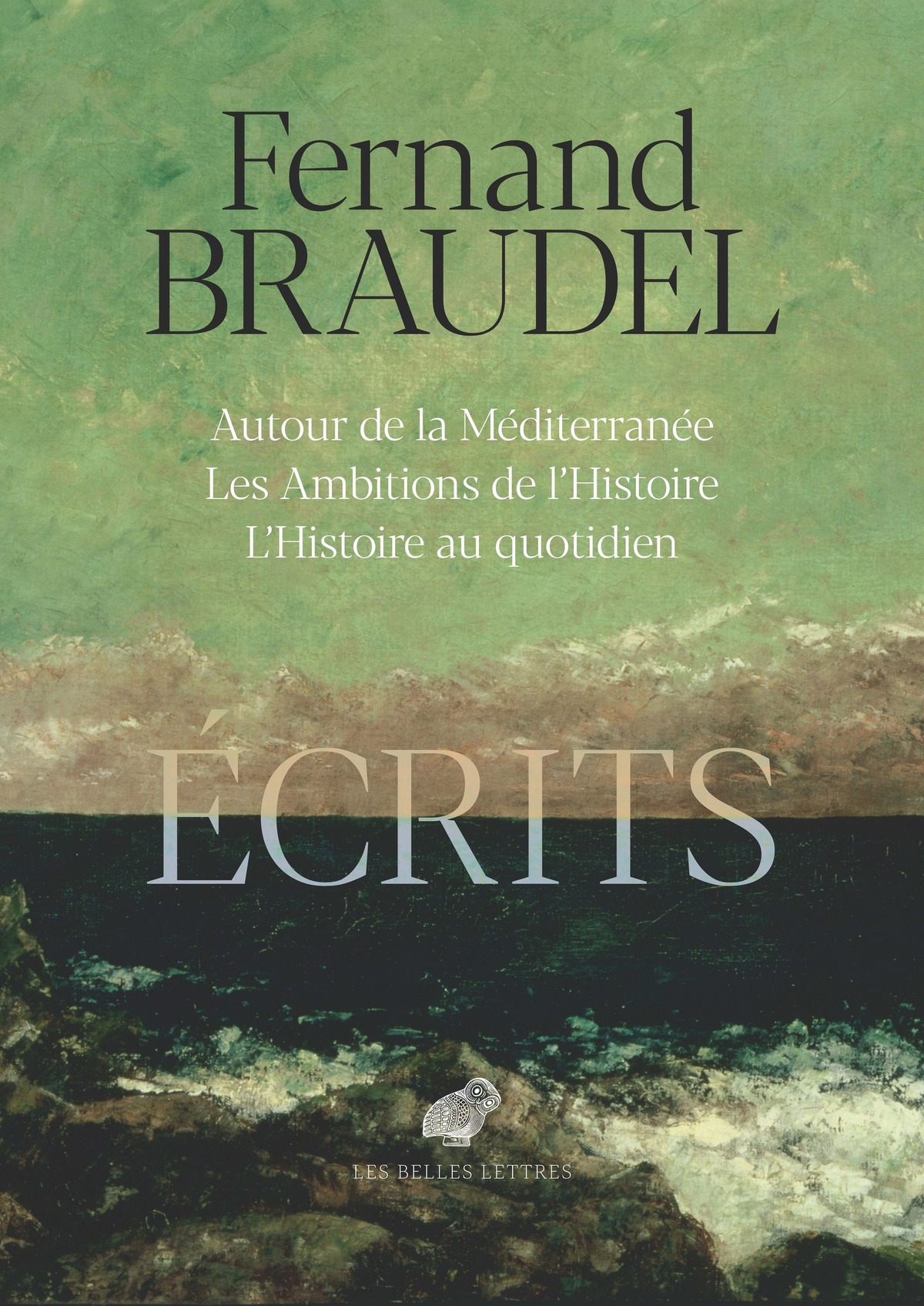
BOOK: Fernand BRAUDEL, Ecrits. Autour de La Méditerranée. Les Ambitions de l'Histoire. L'Histoire au quotidien (ed. Bernard DE FALLOIS) (Paris: Les Belles Lettres, 2025), ISBN 9782251457154 € 59,99


(image source: Les belles lettres)

Abstract:
Ces Écrits rassemblent les textes de Fernand Braudel, rédigés entre 1927 et 1985. Ils retracent, dans son évolution chronologique, le chemin d’une pensée originale et fondatrice pour le renouvellement de la discipline historique au XXe siècle. Si elle s’est longtemps cherchée, sa pensée témoigne d’intérêts constants : pour l’histoire de la Méditerranée, dont il dresse un parallèle éclairant avec l’espace Atlantique pendant un séjour de recherche à Sao Paulo ; pour le capitalisme de l'âge moderne et la place des ouvriers dans l’histoire ; mais aussi et surtout pour la manière dont l’histoire se fait, s’écrit et s’enseigne en France, avec en perspective son engagement au sein de l’École des Annales. La première partie, Autour de la Méditerranée, correspond pour l’essentiel aux premières années d’enseignement et de formation de Braudel. Articles et comptes rendus tournent autour de ses lectures et recherches à partir de 1927. Naturellement, ils concernent d’abord l’Afrique du Nord où il professa de 1923 à 1932. Puis l’Espagne et l’Italie prennent le relais ; elles resteront présentes dans ses curiosités tout au long de sa vie. La deuxième partie, Les Ambitions de l’Histoire, est composée autour de la réflexion théorique de l’auteur : elle s’affirme pendant la longue rumination de la captivité et les rédactions successives de la Méditerranée. Bien entendu, sa longue fréquentation des Annales, alors dans toute leur agressive nouveauté, sa rencontre avec Lucien Febvre en 1937 ont leur part dans cette élaboration. Après la création de la VIe section de l’École Pratique des Hautes Études en 1948, il entre à son tour dans le combat des Annales « pour une plus grande histoire ». Les textes de cette partie, qui vont de la guerre jusqu’à la fin de sa vie, en sont le reflet et s’organisent d’eux-mêmes autour de ses trois ouvrages successifs : La Méditerranée, Civilisation matérielle et Histoire de France. La troisième partie, L’Histoire au quotidien, comme de juste, est plus hétéroclite, à la mesure des activités très diversifiées de Fernand Braudel. On y trouvera successivement les traces de son expérience brésilienne, de ses relations avec les mondes universitaires et scientifiques français et étrangers, de sa direction des Annales jusqu’en 1970, et de l’exercice de son métier d’enseignant, du lycée jusqu’au Collège de France. Ce recueil des Écrits de Fernand Braudel, réunissant des textes dispersés d’accès parfois difficile, nous invite à considérer l’oeuvre comme un tout, dans son élaboration, sa cohérence et ses contradictions. Il met en perspective la progression et l’évolution interne, ainsi que le rapport aux différentes étapes et expériences de la vie de son auteur. Il constitue, à ce titre, un ouvrage de référence qui permettra aux historiens, grâce à son index, de se repérer et de saisir l’oeuvre de Braudel dans son ensemble.

 Read more here.


24 February 2025

ARTICLE: Brendan W. HAIDINGER, Policing Europe: The Origins of a European Security Network, 1794–1815 (German History XLII (2024), No. 4 (Dec), 497-517


(image source: OUP)

Abstract:

The spread of revolutionary ideas reconfigured the machinery of surveillance within the Habsburg state between the Jacobin Trials of 1794 and the Congress of Vienna in 1815. The Habsburg Ministry of Police emerged from the Jacobin Trials with enlarged administrative capabilities, including a new relationship between the secret state police and the military and the increased surveillance of urban working populations. Not only that, but the period also witnessed a push to monitor subversive political activity in foreign territory, including Poland, the Ottoman Empire, the German states and Italy. This article argues that cooperation among European states in the policing of subversive political activity across borders antedated the Congress of Vienna. A focus on these critical decades questions the viability of the ‘Metternichian System’ and points instead to a growing security apparatus that Metternich sought to further internationalize after 1815.

Read more here: 10.1093/gerhis/ghae046.

20 March 2024

BOOK: Elisabetta FIOCCHI MALASPINA, "Dans cette diversité, des principes d'unité": intrecci transnazionali nei sistemi di pubblicità immobiliare tra Otto e Novecento [Collana di Studi di Storia del diritto medievale e moderno - Monografie, eds. Paolo ALVAZZI DEL FRATE, Giovanni ROSSI & Elio TAVILLA; 11] (Roma: Historia et Ius, 2023), 360 p. ISBN 9791281621015 [OPEN ACCESS]


(image source: Historia et Ius)


Abstract:
This book covers the period between the 19th and the first half of the 20th centuries. It investigates the different land registration systems in certain European countries, the relationship between Europe and the African colonies regarding the systems of land ownership and land registration, and the international scientific collaboration developed to deal with problems that might arise when introducing a European land registration system in a colonial context. It may seem that these three issues merit independent investigation, given their breadth and the many possible viewpoints from which they could be studied. However, by researching them together within a manifestly national legal institution such as a land registration system, the transnational entanglements, that took place across various spatial-temporal contexts, can be discerned. To convey the dynamism and complexity of these topics, the book has adopted the structure of Greek tragedy, a literary genre that best achieves the concept of entanglement. The first episode takes place in Europe. Some mechanisms occurring between the 18th and 19th centuries are examined to understand how land registration was used to «harmonise» property without limiting its contents. From the construction of the national space, the scope of the research is expanded to demonstrate how European debates on land registration systems were, in reality, discussed and resolved in several parts of the world. In the African colonial context, the introduction of a specific land regime responded to the creation of an «organised colonial space». The type of land registration system depended not only on the decisions of the «motherland», which might introduce its own system, but also on geographical, historical, political, and legal factors. These factors were decisive in selecting, for the second episode, three African colonies with particularly interesting land regimes: Eritrea, Congo Free State, and Togo. This second episode shows that the majority of colonial empires, before deciding which system to adopt and how to regulate relations between citizens and foreigners from Europe and local populations, always sought «inspiration» from models adopted by other colonial powers. In 1894, former colonial officials and administrators, as well as jurists, founded the Institut Colonial International in Brussels, which is the subject of the third episode. It aimed to construct a common space to discuss and resolve colonial problems, such as teaching, acclimatisation, labour in the colonies, and above all, property and land tenure. The ambitious goal of the members of the Institut Colonial International was to «scientifically» construct a variety of legal principles that would create unity across systems of land register legislation, despite the profound diversity of individual colonies.

Read the full book here in open access. 


06 December 2023

SEMINAR SERIES: Max Planck Institute & Tel Aviv University, Transnational Legal History Workshop (2023-2024)


TRANSNATIONAL LEGAL HISTORY WORKSHOP


6 December: Assaf Likhovski (TAU)

Studying Ancient Constitutional Law in Colonial India and Mandatory Palestine


13 December: Jan-Henrik Meyer (MPILHLT)

European Community Environmental Law in the 1970s: Combatting Water Pollution


20 December: Noga Morag-Levine (Michigan State University)

England’s Missing Boards of Health: The Medieval Beginnings of an Anglo-Continental Divergence


10 January: Alon Jasper (TAU)

Transforming a Polity into an Economy: The Five Nations and the Railroads, 1855-1894


17 January: Raquel Sirotti (MPILHLT)

State-like powers? Charter Companies and the production of knowledge of normativity in Mozambique (1891-1942)


24 January: Egas Moniz Bandeira (FAU)

Changing Legal Professions in China, Japan, and the Ottoman Empire in the long 19th century: Towards a Historical Comparison


31 January: Aparna Balachandran (Delhi University)

Religion, Law and Urban Governance: Subaltern Christians as Legal Subjects in Early Colonial South India


7 February: Cristiano Paixão (University of Brasília)

Transnational legal mobilization: repressive structures and networks of resistance in S. American dictatorships (1964-1988)


14 February: Julia Moses (University of Sheffield)

Harmonizing the Family? International Law, Cultural Norms and Marriage at the Turn of the Twentieth Century


21 February: Sarina Kuersteiner (Union College)

Whatever God Gives: Arabic and Judaeo-Arabic Rizq and Latin Resicum in Commercial Vocabulary, 1154-1164 CE


For more information or to register, please email mpitauwkshp@gmail.com.

19 June 2020

BOOK: Béatriche TOUCHELAY (dir.), Fraudes, frontières et territoires (XIIIe-XXIe siècles) (Paris: Institut de la gestion publique et du développement économique, Comité pour l’histoire économique et financière de la France, 2020), 384 p. ISBN 9782111294554, FREE ACCESS

(image source: openedition)

Book abstract:
La fraude est ici appréhendée dans toutes ses dimensions, spatiales, temporelles, politiques, économiques, juridiques et sociales. Ce livre est le résultat d’un vaste programme de recherches internationales et entend surtout éclairer les relations entre fraudes et territoires. La porosité des frontières politiques ou « naturelles » – mais chaque frontière est artificielle – délimite avant tout une géographie des contournements. Placée dans une perspective de longue durée, car le phénomène de la fraude est ancestral, la fraude se sert des difficultés, voire de l’absence de volonté, des États à contrôler tous les flux ou plutôt les marges. La fraude est une activité économique, par définition mal connue, qui, dans certaines circonstances (guerre, occupation, pénurie…) prend une place prédominante dans la vie quotidienne des populations. Elle peut aussi devenir une question de survie. Les règles juridiques et légales, qu’elles soient douanières ou fiscales, induisent des comportements frauduleux qui proviennent parfois de traditions commerciales préexistantes aux normes étatiques. Enfin, la fraude, malgré ses dangers, fait vivre les fraudeurs et engendre des corps de contrôle. Du Tonkin à la Guadeloupe, en passant par l’Empire espagnol et le Benelux, de Marseille à Londres, en passant par Newport, Calais, Lille, Anvers, le Dauphiné ou encore l’Anjou, les textes de cet ouvrage pluridisciplinaire offrent un vaste panorama des modalités et des acteurs de la fraude. Ils soulignent à la fois les constantes et la diversité des trafics illicites (denrées alimentaires, armes, brevets, sel, monnaies...) dans le monde depuis le XIIIe siècle.
 On the editor:
Professeure d’histoire contemporaine à l’Université de Lille, chercheuse associée à l’Institut de recherches historiques du Septentrion (UMR 8529), spécialiste de l’histoire des statistiques et de la comptabilité des entreprises dans la France et le monde industrialisé contemporain (xixe‑xxe siècle), Béatrice Touchelay s’intéresse plus largement à l’information économique et sociale, et plus précisément à l’histoire des chiffres visant à guider l’action des acteurs de l’économie, à encadrer, à classer ou à contrôler. Elle étudie en outre l’histoire de la fiscalité de guerre et du contrôle fiscal et économique aux xixe et xxe siècles. Elle a co-organisé le séminaire de recherches Chiffres privés, chiffres publics (2013-2016), avec Fabien Cardoni, Anne Conchon et Michel Margairaz, et a codirigé avec Isabelle Bruno et Florence Jany-Catrice, The Social Sciences of Quantification. From Politics of Large Numbers to Target-Driven Policies, Londres, Springer, 2016. Ses dernières publications sur l’impôt et la fraude sont : avec Cheryl S. McWatters, « La comptabilité et l’expertise à l’origine d’un empire industriel : Marcel Boussac et la contribution extraordinaire sur les bénéfices de guerre », Revue du Nord, juill.-sept. 2017, p. 629-643 ; « Comptabilité et fraude fiscale avant la normalisation (1914-1940) », in Jean-Paul Barrière, Régis Boulat, Alain Chatriot, Pierre Lamard et Jean-Michel Minovez (dir.), Les trames de l’histoire : entreprises, territoires, consommations, institutions. Mélanges en l’honneur de Jean-Claude Daumas, Besançon, Presses universitaires de Franche-Comté, 2017, p. 591-599 ; « La naissance du service de vérification comptable en France (1933) ou la confiance déçue ? », in Mathieu Floquet, Pierre Labardin, Yves Le Van (dir.), L’histoire comme méthode pour comprendre le management. Mélanges en l’honneur du professeur Marc Nikitin, Paris, L’Harmattan, 2017, p. 247-260.
DOI 10.4000/books.igpde.11108

(source: openedition)

(source: ESIL IGHL)

14 August 2014

ARTICLE: Thomas Duve on "National Traditions and Transnational Perspectives"

Thomas Duve on "National Traditions and Transnational Perspectives", now available on SSRN.  
The article will be published in the upcoming issue of our journal Rechtsgeschichte-Legal History

click here to read the abstract and download the article