Search

Showing posts with label early modern Atlantic worlds. Show all posts

19 February 2026

ONLINE SEMINAR: 'Kings of Privateering: A History of the Spanish enterprise' with Vera Moya - German Maritime Museum & Prize Papers Project (23 FEB 2026, 1-2 pm CET)


(Source: Prize Papers Project)


Dr Vera Moya Sordo is a Mexican archaeologist and historian whose work dives into shipwrecks, life and fear aboard ships, and the hidden world of privateering. She has held positions at the University of Navarra, INAH-Mexico, and the Nautical Archaeology Society (UK), and is part of the international Red Imperial Contractor State Group, exploring how warfare and state-building were shaped by society itself.

What to expect: Contrary to the traditional historiographical view of Spanish privateers having limited or nonexistent agency, they were fundamental instruments of modern naval warfare and the deployment of monarchical power internationally. Among these "kings" of privateering, those who operated in the Caribbean throughout the 18th century exemplify a multifaceted agency, mobilizing resources for war, trade, smuggling, the slave trade, and other businesses, both regionally and beyond imperial geopolitical borders.

The online lecture series "Ships & Seafaring 1500–1800" is presented as a special collaboration between the German Maritime Museum, Leibniz Institute for Maritime History in Bremerhaven (Deutsches Schifffahrtsmuseum der Leibniz Association) and the Prize Papers Project (Carl von Ossietzky University of Oldenburg / The National Archives, UK) and hosted together with Nele Popp.

Register here: https://lnkd.in/eKkz_8X6.

                     https://www.eventbrite.com/e/ships-seafaring-15001800-tickets-1931080938069

12 May 2025

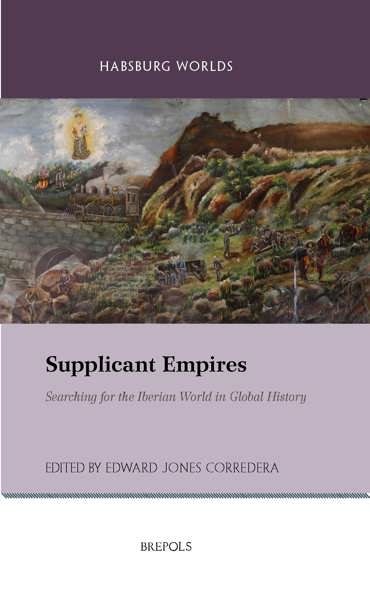
BOOK: Edward JONES CORREDERA (ed.), Supplicant Empires. Searching for the Iberian World in Global History [Habsburg Worlds] (Turnhout: Brepols, 2025), 250 p. ISBN 9782503611211


(image source: Brepols)

On the editor:

Is a Senior Research Fellow at the Max Planck Institute for Comparative Public Law and International Law (Heidelberg) and a Lecturer at the UNED (Madrid).

Table of contents:

Edward Jones Corredera (Max Planck Institute, Heidelberg, and UNED, Madrid)
Introduction: Who Prayed for the Iberian World? Incomparable Empires & Global History

Tamar Herzog (Harvard University)
Is Spain Exceptional? Reflections on Thirty Years of Research and Writing

Pedro Cardim (Universidade Nova de Lisboa)
Corporations, normative pluralism, and jurisdictions in early modern Iberia: The potential and the limitations of an interpretive framework

Marcos Reguera (Universidad del País Vasco)
From Manifest Destiny to “destino manifiesto”: the Hispanic Reception and Formulations of Manifest Destiny

Bethany Aram (Universidad Pablo de Olavide)
Comparative approaches to gender, ethnicity and empires: Britain & Spain

Marta Manzanares (Universidad Autónoma de Madrid)
Rethinking the Place of Sugar in Eighteenth-Century Spain

Fabien Montcher (University of St. Louis)
Imperial Blind Spots: Indeterminacy and Thickness across the Iberian Monarchies

David Martín Marcos (UNED)
Rustics and Barbarians: Otherness and Counter-hegemony in the Early Modern Iberian World

Interviews:

Bartolomé Yun-Casalilla (Universidad Pablo de Olavide), Amanda Scott (Pennsilvania State University), Juan Pimentel (CSIC), José Maria Portillo (Universidad del País Vasco), Maria Gago (European University Institute), Javier Rodríguez (Universidad Autónoma de Madrid), and Thiago Krause (Wayne State University)

 Read more here.

22 May 2024

BOOK: Nuno VILA-SANTA, Knowledge Exchanges Between Portugal and Europe Maritime Diplomacy, Espionage, and Nautical Science in the Early Modern World (15th-17th Centuries) (Amsterdam: University Press, 2024). ISBN: 9789048560479, pp. 372, € 141,00


(Source: AUP)


ABOUT THE BOOK

Following recent historiographical appeals on the need to study knowledge exchanges between European maritime rivals and their impact on overseas expansionist processes, this book makes this study for the Portuguese overseas empire between the fifteenth and seventeenth centuries. As the first European maritime power to systematically launch long-distance voyages, Portugal became a model worth emulation when Spain, France, England and the Dutch Republic started their own overseas enterprises. In different chapters that each adopt a case study relation (Portugal-Spain, Portugal-England, Portugal-France and Portugal-Dutch Republic), this book documents how Portuguese maritime knowledge was outsourced by its maritime rivals. The impact that Portuguese nautical knowledge had is evaluated, resorting particularly to a wide range of diplomatic and espionage documents. Finally, the book discusses the alleged Iberian secrecy policies regarding maritime knowledge, explaining why there is no serious reason to consider their success.


ABOUT THE AUTHOR

Nuno Vila-Santa is a post-doctoral fellow from the RUTTER project founded by the European Research Council. His main works deal with the history of the Portuguese overseas empire in Asia and with Portuguese connections to Europe in the 16th century


TABLE OF CONTENTS

Acknowledgments

Introduction: Maritime History and History of Knowledge for the 16th Century European History

1. The First Global Exchange and Dispute Over the Globe: The Portuguese–Spanish Nautical Interchange (1415–1580)

2. Unexpected or Predictable Espionage and Diplomacy? Portuguese Nautical Knowledge and the English Voyages to West Africa (1551–59)

3. Spying Ambassadors for a French Overseas Empire? Michel de Seure and Jean Nicot’s Maritime and Cosmographical Espionage in Portugal (1557–61)

4. Mare Clausum and Secret Science: João Pereira Dantas and the Portuguese Strategies to Control French and English Overseas Plans (1557–68)

5. A Spy or a Go–Between? Jan Huygen van Linschoten, the Itinerario, and the Rise of Dutch Overseas Expansion (1583–1611)

Conclusion: Five Connected Histories of Knowledge? Portugal, Spain, France, England, the Dutch Republic, and the Attempted Secrecy Policies

Illustrations

Quoted Bibliography and Sources

Index


More information with the publisher.

16 May 2024

BOOK: Mauricio NIETO OLARTE, Exploration, Religion and Empire in the Sixteenth-century Ibero-Atlantic World. A New Perspective on the History of Modern Science (Amsterdam: University Press, 2021). ISBN: 9789463725316, pp. 330 € 141,00


(Source: AUP)


ABOUT THE BOOK

The Iberian conquest of the Atlantic at the beginning of the sixteenth century had a notable impact on the formation of the new world order in which Christian Europe claimed control over most a considerable part of the planet. This was possible thanks to the confluence of different and inseparable factors: the development of new technical capacities and favorable geographical conditions in which to navigate the great oceans; the Christian mandate to extend the faith; the need for new trade routes; and an imperial organization aspiring to global dominance. The author explores new methods for approaching old historiographical problems of the Renaissance—such as the discovery and conquest of America, the birth of modern science, and the problem of Eurocentrism—now in reference to actors and regions scarcely visible in the complex history of modern Europe: the ships, the wind, the navigators, their instruments, their gods, saints, and demons.


ABOUT THE BOOK

Mauricio Nieto Olarte is titular Professor at the Department of History and Geography as well as Dean of the Faculty of Social Sciences at the Universidad de los Andes, Bogota, Colombia.


TABLE OF CONTENTS


List of illustrations Acknowledgments


Introduction

The New World and the problem of Eurocentrism

Science and empire

Summary of the chapters in this book


1. The Iberian Peninsula and the Atlantic

Portugal and Spain

Winds, currents, and sailing ships in the Atlantic

Gold, silver, slaves, souls, and a thousand kinds of trees


2. The imperial bureaucracy and the appropriation of the New World

Seville and the Casa de Contratacion

The universal monarchy


3. The piloto mayor: cosmography and the art of navigation

The post of piloto mayor: seamanship and cartography

The navigation manuals

Manuals for the Empire

Publications, dissemination, and secrecy

Humanism and the classics

Experience and authority

Man against the sea: shipwrecks and meteorology

Routes and chorographic descriptions: The New World within the new global order


4. Machines of the empire

The ships

Shipbuilding

War and artillery

Navigational instruments

The astrolabe

The cross-staff

The mariner’s compass

Time and clocks

The sounding/plumb line

The navigation charts

Astronomical tables

Instruments, measurements, precision, and standardization

The crew

The captain/admiral

The pilot

The shipmaster (maestre) and quartermaster (contramaestre)

The boatswain (guardian)

The ordinary seamen (marineros)

Midshipmen (grumetes) and cabin boys (pajes)

The carpenter, steward, cooper, and cook

The scribe, master-at-arms, and overseer

The cannoneer

The barber/surgeon

The priest

Life on board

The argot of the sailors

Overcrowding

Food and health

Men of the sea and men of God


5. The Master Map (Padrón Real) and the cartography of the New World

Nautical charts and how they were made

The making of a chart

The charts of tierra firme: the earliest maps of the New World

Three early maps of the New World

Juan de la Cosa (1500)

Waldseemuller (1507)

Diego Ribero (1520) 6. The creatures of God never seen before: natural history

Nature in the New World

The classics and the Bible

Monsters in paradise

To describe, classify, and name

Medicine, botany, and the knowledge of the natives

The Empire and natural history


7. The New World, global science, and Eurocentrism

Plus ultra

Experience and authority

The Empire and the challenge of standardization

Eurocentrism


Bibliography

About the Author

Index


More information with the publisher.

21 January 2022

SYMPOSIUM on Comparative Early Modern Legal History: Law, Theology, and the Moral Regulation of “Economy” in the Early Modern Atlantic World - 25th March 2022 - Newberry Library, Chicago

Symposium on Comparative Early Modern Legal History: Law, Theology, and the Moral Regulation of “Economy” in the Early Modern Atlantic World

Date: Friday, March 25, 2022

Location: Newberry Library, Chicago

(Source: The Newberry)

Organized by: Brian Owensby (University of Virginia) and Richard J. Ross (University of Illinois, Urbana/Champaign)

The time is long past when the Western world’s emergent commercial culture could be understood solely in terms of a Protestant ethos or the division between commerce and social morality occasioned by the Protestant Reformation. Scholarship has shown that “modern” ideas regarding commerce and “economics” had their roots in late-medieval Catholic thought and in neo-scholastic ideas that blended theology, justice, and law. It is clear as well that the rise of commercial thinking was not a linear intellectual development. Protestants and Catholics alike, facing the moral and social implications of novel “economic” relations, undertook deep theological and legal reflections regarding unbridled, competitive, exchange-oriented gain seeking. Many of these concerns were raised in the context of Europe’s westward expansion to the New World. Usury, just price, interest, legal personality, slavery, reciprocity, property, cases of conscience, doubts regarding self-regulating mechanisms, concerns for the poor—all figured in a vibrant legal discourse that simultaneously elaborated and critiqued a set of ideas regarding human economy that became dominant between the sixteenth and nineteenth centuries. This conference will bring together historians, legal scholars, and social scientists to investigate law’s historical role in enabling and regulating behaviors now recognized as foundational to modern economies.

Brian Owensby (University of Virginia) and Richard Ross (University of Illinois, Urbana-Champaign) organized “Law, Theology, and the Moral Regulation of ‘Economy’ in the Early Modern Atlantic World.” The conference is an offering of the Symposium on Comparative Early Modern Legal History, which gathers every other year at the Newberry Library in Chicago in order to explore a particular topic in the comparative legal history of the Atlantic world in the period c.1492-1815. Funding has been provided by the University of Illinois College of Law.

Attendance at the Symposium is free and open to the public. Those who wish to attend should preregister by sending an email to Richard Ross at Rjross@illinois.edu. Papers will be circulated electronically to all registrants several weeks before the conference.

For information about the conference, please consult our website at https://law.illinois.edu/faculty-research/specialty-programs/legal-history/ or contact Richard Ross at Rjross@illinois.edu or at 217-244-7890.


Here is the schedule:


9:00 Welcome: Brian Owensby (Virginia, History) and Richard Ross (Illinois, Law and History)

9:05 to 10:35: Panel: Moral Regulation of Market Activity

Wim Decock (UCLouvain, Law): “Moral Regulation of the Market between Scholasticism and Modern Natural Law: The Case of Pedro de Oñate’s De Contractibus (1646)”

Mark Peterson (Yale, History) “Market Regulation in Colonial Boston: Exploring a Historical Puzzle”

Elvira Vilches (Duke, Romance Studies): “Moral Economies and the Early Modern Iberian Book Trade”

Commentator: Laurent Mayali (Berkeley, Law)

Chair: Richard Ross (Illinois, Law and History)

10:35 to 10:50: Refreshment Break

10:50 to 12:20: Panel: Money and the Common Good

Regina Grafe (European University Institute, History): “All that Happened Below 5 Percent: Religious Endowments, Credit, and Interest Rate Discrimination in Colonial Spanish America”

David Lantigua (Notre Dame, Theology): “Native Americans, European Commerce, and the Providential Nature of Money”

Simon Middleton (William and Mary, History): “Country Pay and Current Money Conventions in the Seventeenth-Century North American Colonies”

Commentator: Carl Wennerlind (Barnard, History)

Commentator and chair: Robert Morrissey (Illinois, History)

12:20 to 1:50: Lunch: Participants and audience members are invited to try the restaurants in the neighborhood around the Newberry

1:50 to 3:10: Panel: Boundaries of Capital, Contract, and Usury

Paolo Astorri (Copenhagen, Law): “Business Regulation in Sixteenth-Century Spain and Germany: Catholic and Lutheran Teachings on the Five Percent Contract”

Luisa Brunori (Université de Lille-Cnrs, Law): “The Turning Point of Early Modern Scholasticism on Company Law: Theology Facing 16th Century Transatlantic Mercantile Practice”

Commentator: Dwight Codr (Connecticut, English)

Chair: Brian Owensby (Virginia, History)

3:10 to 3:25: Refreshment Break

3:25 to 4:55 Panel: Society, Economy, and the Vulnerable

J. Michelle Molina (Northwestern, Religious Studies and History): “Sacramental Logics on the Jesuit Hacienda”

Brian Owensby (Virginia, History): “‘All Human Life and Health Depend on the Help of Others’: Debates on Poor Relief and Society in Sixteenth-Century Spain and England”

Steven Pincus (Chicago, History): “The Ideological Context of Governor Edward Trelawny of Jamaica’s Abolitionism”

Commentator: Brodwyn Fischer (Chicago, History)

Commentator and chair: Karen Graubart (Notre Dame, History)

5:00 Adjourn