Search

Showing posts with label dutch legal history. Show all posts

30 March 2026

BOOK: Boudewijn SIRKS (ed.), contr. Christian BROM, Egbert KOOPS & Tim VAN POLANEN, The Observationes tumultuariae of Johan van Bleiswijk (1684–1748) [Legal History Library, eds. Dirk HEIRBAUT, Michelle McKINLEY, Matthew C. MIROW & C.H. VAN RHEE, 81] (Leiden/Boston: Martinus Nijhoff/Brill, 2026), ISBN 9789004750630, € 157,94


(image source: Brill)

Abstract:

In the Dutch Republic, courts made decisions by voting and judgments were not given reasoned motivations. Although some judges kept a record of the preceding deliberations, the only extensive collections we have had until recently from the eighteenth century are those of van Bijnkershoek and Pauw. Fortunately, we are also in possession of the Observationes of Johan van Bleiswijk (in 1723–1748 a colleague of van Bijnkershoek). Van Bleiswijk provides an overview of the various opinions relating to cases at the time, but also expounds on his own views. In this way, he sheds light on his own perspective and legal views. Hence, van Bleiswijk’s Observationes are a most welcome addition to our knowledge of judicial decision-making in the Dutch Republic.

On the editor:

Boudewijn Sirks is Emeritus Regius Professor of Civil Law at the University of Oxford and Fellow of All Souls College. He has published articles on the Hoge Raad (Supreme Court) of Holland and Zeeland in the Dutch Republic and edited C. van Bijnkershoek, W. Pauw, Index in observationes tumultuarias (2005). 

Read more here: DOI  10.1163/9789004750616.

19 October 2023

JOURNAL: Law and History Review XLI (2023), No. 3


(image source: CUP)

Articles

Paper Empires: Layers of Law in Colonial South Asia and the Indian Ocean (Nandini Chatterjee, Alicia Schrikker & Dries Lyna)
DOI 10.1017/S0738248023000081
Abstract:
Anthropologists and historians have recently underscored the ways in which European colonialism created novel regimes of legality and record-keeping, associated with ambitious and exclusive state-centered claims to both truth and rights, while being inevitably and constantly sucked into eddies of forgery and corruption. However, attention so far has been focused on English/European-language records and the colonial institutions that produced, stored, and deployed them. This has communicated a monolithic sense of power and normativity that unwittingly replicates the aspirations of colonial states. Drawing on eight case studies from in and around South Asia from the eighteenth to the twentieth centuries, we propose instead that the law of empires was rooted in the highly localized, often multilingual, and fragmented bureaucracies that produced its records. Here, historians of pre-colonial Indian regimes join hands with historians of British, Dutch, and French colonialism in order to unearth the genealogies of records written in Bengali, Marathi, Persian, Sinhala, and Tamil, as well as in French, Dutch, and English. This special issue collectively excavates the many layers, regimes, and languages in which legally effective records were produced by imperial regimes in South Asia and its much larger watery penumbra, the Indian Ocean.

An Empire in Disguise: The Appropriation of Pre-Existing Modes of Governance in Dutch South Asia, 1650–1800 (Alicia Schrkker & Byapti Sur) (OPEN ACCESS)
DOI 10.1017/S0738248022000554
Abstract:

This article presents an analysis of the paper- and office work at two South Asian corners in the early modern Dutch empire. The article engages with current approaches to the histories of bureaucracy and empire that emphasize the lived experience of “paperwork” in order to gain a localized understanding of what constituted empire. The article focuses on the production and use of pattas, olas, and thombos in the offices of the Dutch zamindar-fiscaal in Chinsurah (Bengal) and the Dutch disāva in Jaffna (Sri Lanka). Dutch bureaucracy in these spaces was entrenched in local practices, and created through processes of layering and blending, as evidenced by material and linguistic characteristics. The deeds and registers recorded essential aspects of life such as labor, marriage, and transactions of property, and the article shows how such paperwork mattered to villagers in Chinsurah and Jaffna. The production of the deeds and registers itself could include a public spectacle, and we argue that this performative aspect of the local bureaucracy added to the perceived relevance of the paperwork. Furthermore, through an analysis of legal cases we reconstruct the use and abuse of these bureaucracies by Dutch officials and local inhabitants, which signifies a parasitical relationship that is characteristic of so many imperial and colonial spaces. Through a focus on the local bureaucratic practices, the authors shed new light on questions about the character of the Dutch empire, where things never turned out to be exactly as they appeared at first sight.

Material Pluralism and Symbolic Violence: Palm Leaf Deeds and Paper Land Grants in Colonial Sri Lanka, 1680–1795 (Dries Lyna & Luc Bulten) (OPEN ACCESS)
DOI 10.1017/S0738248022000426
Abstract:

This article studies the registration practices of land and property on palm leaf deeds (olas) in Sri Lanka, in relationship to the advent of paper land grants (giftebrieven) under the Dutch East India Company (VOC)’s rule in the long eighteenth century. A database of about 2500 Dutch land grant deeds and translated olas, ranging from 1685 to 1795 are contextualised via judicial records of Dutch civil courts, where (translated) olas were regularly used as evidence. Not only does this allow us to track the geographical encroachment of Dutch power over coastal Sri Lanka as part of a colonial transition, but at the same time shift the perspective to study which individuals and communities on the island engaged with Dutch land bureaucracy. In doing so, we showcase the continued importance of traditional ola deeds and (pre-)colonial registers for both local land owners and the colonial bureaucracy itself, regardless of the Dutch government’s push for paper, attempted to delegitimise the local ola recordings, and acts of symbolic violence to infringe on both the materiality as well as the perceived importance of palm leaf deeds. In the long eighteenth century several paper and palm leaf realities coexisted in Sri Lanka and at times conflicted, entangled, and convoluted within and outside the bureaucratic institutions to form what ‘material pluralism’ within a larger context of legal pluralities. 

The Power of Parwanas: Indo-Persian Grants and the Making of Empire in Eighteenth-Century Southern India (Leonard R. Hodges & Nandi Chatterjee) (OPEN ACCESS)
DOI 10.1017/S073824802200044X
Abstract:

This article examines Persian-language orders—parwanas—issued by regimes that succeeded the Mughal Empire in South Asia, to European trading companies. Focussing in particular on the mid-eighteenth-century exchanges between the Nizam of Hyderabad; the Nawab of Arcot; and the French Compagnie des Indes, we see how Mughal-style parwanas, or sub-imperial orders, previously used to give instructions or to make or withdraw grants, were transformed into a form of political currency. They were now used to exchange military and fiscal resources between South Asian state-builders and militarised European corporations, and to secure political legitimacy for all within a putative Mughal imperium. Moreover, the legal fiction of Mughal sovereignty led to a grants race, such that rivals—European and South Asian—sought more and more parwanas, while also querying the legitimacy of authorities that issued them. The very fragility of the Mughal empire and the lability of the political landscape in eighteenth-century South Asia was thus generative of prolific Persian legal documentation, as well as its rewiring to novel uses. European empire-builders negotiated this legal landscape with only partial literacy, consequently fetishizing the material aspects and ceremonial accompaniments of Persian legal documents, and according them power beyond their immediate substance. 

Registering and Regulating Family Life: The School Thombos in Dutch Sri Lanka (Bente de Leede & Nadeera Rupesinghe) (OPEN ACCESS)
DOI 10.1017/S0738248022000499
Abstract:

In eighteenth-century, colonial Sri Lanka, the Dutch church kept extensive registers of the local population. These “school thombos” contain individual registration of baptism, marriage, school attendance and death. This article argues that the school thombos reveal moral control over family life by the Dutch East India Company and the Dutch Reformed Church, while offering locals a legal and religious identity to employ in negotiating the Dutch colonial bureaucracy. These rarely studied registers shed new light on Sri Lankan family history and the practices of Dutch colonialism. What do they tell us about conjunctures of locals with colonial religion in eighteenth-century Sri Lanka? The school thombo was an instrument used to register and regulate family life, with specific functions and uses by different actors. This article explores the format, objectives and use of the school thombo. Why was the school thombo created and who were registered in these sources? What were the micro practices of drawing up the school thombo? The article is supported by several case studies that illustrate how the school thombo found its way into family life while demonstrating the value of written identities.

A New Language of Rule: Alwar's Administrative Experiment, c. 1838–58 (Elizabeth M. Thelen)
DOI 10.1017/S0738248022000657 (OPEN ACESS)
Abstract:

Many rulers of newly formed Indian Princely States enacted substantial administrative reforms in the first half of the nineteenth century as they sought to reinforce their power and secure revenue in the wake of British colonial conquest. In one such case, the ruler of Alwar, Banni Singh, recruited Aminullah Khan, a former record-keeper in Delhi's colonial courts, to serve as diwan (chief minister) and undertake administrative reforms starting in 1838. These reforms focused on agrarian taxation, the civil courts, and the military, and included changes to the roles of local officials, methods of record-keeping, and the language of governance. The reforms were encoded in seven slim volumes of regulations and model forms, handwritten in Persian. Through a study of these regulations, I situate the reforms of Alwar's administration within Banni Singh's broader self-fashioning as a modern ruler in a Mughal mode and show how the reforms drew from both Mughal and colonial ideas of statecraft. The regulations represented a shift toward a legalistic conception of that state as seen in the ideals of good governance that they espoused, and they constructed contractual relationships among villagers, low-level officials in the districts, and the central state through the extensive bureaucratic procedures that they encoded.

A True Copy? Documents and the Production of Legality in the Bombay Inam Commission (Dominic Vendell) (OPEN ACCESS)
DOI  10.1017/S0738248022000372
Abstract:

This essay examines the role of Indian-language documentation in the production of legality in colonial western India, focusing on the workings of the Bombay Inam Commission (1852-1863). It situates legal validation of claims to tax-free land revenue within the broader process of securing, organizing, classifying, and registering Marathi- and Persian-language documents. Combating the effects of rain, dirt, and pests on old state records often sold as “waste paper,” the Inam Commission deployed material interventions to secure a legal archive for verifying individual claims to property. While such evidence weighed heavily in the evaluation of the testimony and corroborating documents of an individual claimant’s case-file, questions of writing also shaped the legal reasoning of the Commission. Inquiries about any given document’s conformity to or deviation from conventional style figured prominently in judgments about its authenticity. The scribe Sayyid Usman’s investigation in 1856 of a date in a Persian document attributed to the Mysore ruler Tipu Sultan struggled to establish the parameters of conventional style against the plurality of entangled regimes of property. I argue that a material approach to writing allows us to better understand the imperfect and dispersed production of legal truth in imperial settings.

Oceanic Mobility and the Empire of the Pass System (Bhavani Raman) 
DOI 10.1017/S0738248022000542
Abstract:

From the age of empires to the apartheid regime in South Africa, pass laws have defined the scope of the mobility of subjects by relying on a paper document, the pass. This essay focusses on the pass document to understand the governance of mobility in the Indian ocean. In doing so, it shows how the pass document in its various forms through many centuries in fact, illuminates a form of inter-legal governance through which racialized life came to be constituted via convention and statute.

The Sailing Scribes: Circulating Law in the Twentieth-Century Indian Ocean (Fahad Ahmad Bishara)
DOI 10.1017/S0738248022000402
Abstract:

What did the practice of law look like on the high seas? This has been a matter of some discussion among legal historians, with the bulk of the evidence coming from encounters between European ships in the Atlantic and Asia. This article takes a different tack, taking as its starting point a series of contracts copied into the logbook of the early-twentieth century Arab dhow captain (nakhoda) ‘Abdulmajeed Al-Failakawi. Although some of these appear to have been contracts that the nakhoda entered into or witnessed, most were contractual templates that presented formulas for a variety of written obligations between members of the Indian Ocean maritime community. In reading these formulas alongside contracts left behind by Al-Failakawi and other Indian Ocean nakhodas, I reflect on how law circulated by members of an itinerant society of mariners that sought to forge the contours of a commercial world on their ships and across the waters, and weave it through an imperial seascape. I explore how workaday forms of law and legal epistemologies circulated around the maritime marketplaces of the Indian Ocean world, at the margins of a colonial and imperial political economy, through actors who read across different genres of literature, and who moved between the multiple roles of captain, navigator, supercargo, and scribe.

Persistence of Practice in Law's Parwana and Palm Leaf Empire (Paul D. Halliday)
DOI  10.1017/S0738248023000305
Abstract:

The essays in this forum demonstrate how attending to the intricacies of documentary practice provides a way to see legal practices over the long haul. Different materials—for instance, paper and palm leaves—manifested different ways of understanding and doing law. But change from one way of doing law to another is sticky; old practices persist alongside new ones. Appreciating this helps us see past apparent ruptures in ways of living brought about by states and empires as they come and go. By looking closely at the routines and physical materials through which law works, we can look past simple binaries: European vs. indigenous; pre-colonial vs. colonial; resistance vs. accommodation; oral vs. literate; manuscript vs. print; paper vs. palm leaf.

Read the articles here

21 March 2022

SEMINAR: Project Comparing Early Modern Colonial Law Launch Seminar


(Source: https://twitter.com/MancillaOrdenes/status/1494372509256495106/photo/1)

Developed at the university of Helsinki by the coordination of prof. Heikki Pihlajamäki, the project CoCoLaw (Comparing Early Modern Colonial Laws) aims to provide a comparative analysis of how early modern colonial laws of England, the Netherlands, Spain, and Portugal were structured. 


Our first event will happen on the 22nd of march, with Annemieke Romein and Mariana Armond Dias Paes as keynote speakers. 


Here is the registering form link:  https://www.lyyti.in/CoCoLaw_Launch_Seminar_Registration


30 November 2020

BOOK: Erica HEINSEN-ROACH, Consuls and Captives: Dutch-North African Diplomacy in the Early Modern Mediterranean (Woodbridge: Boydell & Brewer, 2019). ISBN 9781580469746, 95.00 GBP


Last year, Boydell & Brewer published a new book on Dutch-North African Diplomacy in the Early Modern Mediterranean.

ABOUT THE BOOK

This work offers a new perspective on the history of diplomacy in the western Mediterranean, examining how piracy and captivity at sea forced Protestant states from northwest Europe to develop complex relationships with Islamic North Africa. Tracing how Dutch diplomats and North African officials negotiated the liberation of Dutch sailors enslaved in the Maghrib, author Erica Heinsen-Roach argues that captivity and redemption helped shape (rather than undermine) a new diplomatic order in the western Mediterranean.


Making use of extensive archival research, Consuls and Captives shows how encounters with North African society led the Protestant North to adjust to the norms and practices of the western Mediterranean. Dutch consuls became state representatives, tasked with claiming the unconditional release of captives from the Netherlands. But caught between these directives and the realities of Maghribi politics, the diplomats consented to pay ransom, participated in what they considered lavish gift-giving practices, and began to pay tribute -- all practices that were departures from the norms the Dutch States General upheld in "doing" diplomacy.


In analyzing these adjustments, Heinsen-Roach brings into question earlier interpretations of diplomacy as a progressively evolving institution anchored in the western modern tradition. Consuls and Captives shows instead that early modern diplomacy in the western Mediterranean developed in uneven ways as a product of cultural encounters. With its compelling argument and wide-ranging evidence, this book will have a strong appeal to scholars of early modern diplomacy, slavery, and Mediterranean history, as well as to specialists on the Dutch Republic.

ABOUT THE AUTHOR

Erica Heinsen-Roach is visiting assistant professor at the University of South Florida St. Petersburg.

TABLE OF CONTENTS

Global Treaty Making: From Morocco to Constantinople

Captivity and Diplomacy in Algiers and Tunis

The Consul as State Representative

Ransoming is the Norm

Collective Redemption: Naval Violence and Hostage Taking

A True Public Minister: Consuls and Jewish Mediators

The Reluctant State

The Cannon as Gift: Institutionalizing the Problem


More info here

09 November 2020

BOOK: Joris VAN DEN TOL, Lobbying in Company - Economic Interests and Political Decision Making in the History of Dutch Brazil, 1621–1656 (Leiden-New York: Brill, 2020). ISBN 978-90-04-39795-8, 107.00 EUR


(Source: Brill)

Brill has published a new book on political lobbying and decision-making in Dutch Brazil.

ABOUT THE BOOK

In Lobbying in Company, Joris van den Tol argues that people made a difference in the Dutch West India Company colony in Brazil (1630–1654). Through a combination of petitions, personal relations, and public opinion, individuals were able to exercise influence on the decision-making process regarding Dutch Brazil. His thorough analysis of these different elements offers a new perspective on the Atlantic and the Dutch Republic in the seventeenth century as well as a better understanding of lobbying in the early modern period.

ABOUT THE AUTHOR

Joris van den Tol (Ph.D., Leiden 2018) is a visiting postdoctoral scholar at Harvard’s History Department on a NWO Rubicon fellowship. He has published on petitions in relation to the colonies in Brazil, New Netherland, and Taiwan and on smuggling.

TABLE OF CONTENTS

Introduction


1 Lobbying for the Creation of the WIC

1 The Dutch Republic

 1.1 The Cities

 1.2 Provincial States

 1.3 States General

 1.4 The Stadtholders

 1.5 Conflicting Powersbr/> 2 The West India Company

 2.1 Willem Usselincx

 2.2 The Layout of the WIC

3 Brazil

4 Conclusion


2 Lobbying in Brazil

1 1624/1630–1636: Ad Hoc Solutions

2 1637–1646: Consolidation and a Prince in the Tropics

 2.1 The Diet as a Colonial Tool

 2.2 The Brazilian Diet of 1640

 2.3 The 81 Petitions of August 1640

 2.4 Petitions for Regulations

3 Religious Affairs

 3.1 The Power of the Church

4 Slavery

 4.1 Access to Institutions for Non-European

5 The Possible Consequence of Top-Down Decision Making

 5.1 Johan Maurits’ Reaction

 5.2 The Reactions from the Council of Justice and the Ministers

6 Conclusion


3 Trading Regulations or Free Trade

1 The Opening Moves

2 Selecting the Playing Field

3 Making It Count

4 Making It Count Even More

5 The Role of the Amsterdam City Council

6 Delaying a Decision

7 Lobbying to and from the Colony

8 Conclusion


4 Petitioning the Public Sphere

1 What Is the Public Sphere?

2 The Dutch Public Sphere  2.1 Pamphlets and Dutch Brazil

3 Petitions and Public Opinion

 3.1 Printed Petitions

4 Multiple Signatures on Petitions

 4.1 Group Petitions to the States General

5 Managing Information of the Revolt in Brazil

6 Petitioning the Public Sphere on Brazil

7 Petitioning the Public Sphere on the Atlantic

 7.1 Other Forms of Signatures

8 Conclusion


5 Personal Connections and Direct Lobbying

1 Personal Connections and Societal Capital

2 Appointing a New High Government in Brazil

3 Background Issues

 3.1 Peace Negotiations in Münster

 3.2 A Frisian Chamber in the WIC

4 Information Control

5 Personal Relations

6 Conclusion


6 The Last Hope, 1652–1654

1 The Second Battle of Guarapes

2 Why Was Brazil Lost?

3 The Delegates from Brazil

4 Requesting a Resolution from the States General

5 A Delegation to Friesland

 5.1 The Report from the Friesland Commission

6 Accelerating the Admiralties

7 Seizing Momentum

8 Planning for the Future

9 It Is All about the Money

 9.1 It Is about the People

10 The Loss of Brazil

11 Conclusion


7 Lobbying for Money in the Aftermath of Dutch Brazil

1 Return to the Republic

2 Claiming Wages

3 Travel Pennies

4 Shared Features

5 The Printed Petition from the Army

6 Conclusion


8 Making the Company Work


Appendix A – Free Trade Exports from Brazil in 1637

Manuscript Sources

Secondary Literature and Published Sources

Index


More info here

23 April 2020

BOOK: Ariadne SCHMIDT, Prosecuting Women A Comparative Perspective on Crime and Gender Before the Dutch Criminal Courts, c.1600-1810 (Leiden-New York: Brill, 2020). ISBN 978-90-04-42490-6, €105.00


(Source: Brill)

Brill is publishing a new book on crime and gender before the Dutch criminal courts (1600-1800).

ABOUT THE BOOK

In the early modern period women played a prominent role in crime. At times they even made up half of all defendants. Female criminality was a typically urban phenomenon. Why do we find so many women before the Dutch criminal courts? 

In Prosecuting Women Ariadne Schmidt analyses the relation between female crime and the urban context by comparing prosecution patterns in various Dutch cities. Prosecuting Women looks beyond the bare figures, examines the personal circumstances of criminal women and shows how women's illegal activities were linked to the socio-economic context of the locality and varied over time. The local interplay between actual crime and the responses of the authorities gave every city a location-specific dynamic in its pattern of prosecuted crime.

ABOUT THE AUTHOR

Ariadne Schmidt, Ph.D. (2001), is the professor by special appointment of the history of urban culture, in particular of Leiden, and lecturer in social and economic history at Leiden University. She has published widely on early modern urban history, gender history, family history and the history of women's work.

More info here

14 February 2020

BOOK: Vincent K.L. CHANG, Forgotten Diplomacy, The Modern Remaking of Dutch-Chinese Relations, 1927–1950. Series: Studies on Modern East Asian History, Vol. 2 (Leiden/Boston: Nijhoff/Brill, 2019). ISBN: 9789004410701, € 149.00

Cover Forgotten Diplomacy
(Source Brill)


ABOUT THE BOOK

In this meticulously researched volume, Vincent Chang resurrects a near forgotten yet pivotal chapter of Dutch-Chinese ties to narrate how World War II, the civil war in China, and Indonesia’s decolonization redefined and remade this age-old bilateral relationship. 
Drawing on a unique range of hitherto unexplored archives, the book explains how China’s nascent rise on the global scene and the Netherlands’ simultaneous decline as a colonial power shaped events in Dutch-controlled Indonesia (and vice versa) and prompted a re-calibration of their mutual ties, culminating in the Netherlands’ recognition of the People’s Republic and laying the foundations for Dutch and Chinese policies through to the present. 
Offering insightful analyses of power dynamics and international law at the close of empire, this book is a critical resource for historians and China specialists as well as scholars of international relations.

ABOUT THE AUTHOR

Vincent K.L. Chang, PhD (2016), a Dutch lawyer and historian, is Associate Professor of History at Southwest University (China) specializing in modern Chinese history and diplomacy. He also teaches at Leiden University and serves as a fellow of the LeidenAsiaCentre.

TABLE OF CONTENTS

Contents
Acknowledgments
List of Tables
List of Plates
Note
Introduction
 1 Dutch Diplomatic History
 2 Chinese Diplomatic History
 3 Merging Histories
 4 Traits of Modern Dutch-Chinese Relations
 5 Aims, Arguments, and Organization of the Book

Part 1: Readjustment
1 Diplomatic Relations During the Prewar Years: 1927–1936
 1 International Context
 2 Development of Bilateral Ties
 3 Dutch Official Representation in China
 4 Chinese Official Representation in the Netherlands
 5 Conclusion
2 Remission of the Dutch Share in China’s Boxer Indemnity
 1 A Watershed Moment
 2 The Central Hydraulic Research Institute at Nanjing
 3 Life, Loss, and Lasting Friendship
 4 Effects and Significance
Plates 1–24

Part 2: Realignment
3 Diplomatic Relations during the War Years: 1937–1945
 1 International Context
 2 Development of Bilateral Ties
 3 Dutch Official Representation in China
 4 Chinese Official Representation in the Netherlands
 5 Conclusion
4 Abrogation of Dutch Extraterritorial Rights in China
 1 The System of Extraterritoriality in China
 2 Extraterritoriality and Dutch-Chinese Treaty Relations
 3 The Dutch-Chinese Treaty of
 4 Effects and Significance
Plates 25–45

Part 3: Reset
5 Diplomatic Relations during the Postwar Years: 1946–1950
 1 International Context
 2 Development of Bilateral Ties
 3 Dutch Official Representation in China
 4 Chinese Official Representation in the Netherlands
 5 Conclusion
6 Recognition of the People’s Republic of China
 1 Early Encounters
 2 The Path to Recognition
 3 Rationales, Response, Result
 4 Effects and Significance

Conclusion
 1 Change and Continuity
 2 Policies and People
 3 Power Dynamics
 4 Past and Present
 5 The Future Past
Appendix 1: Chronology of Major Events
Appendix 2: Overview of Senior Envoys, 1927–1950
Appendix 3: Exchange of Notes Dated 4 April 1933
Appendix 4: Joint Announcement Dated 15 February 1943
Appendix 5: Dutch-Chinese Treaty of 29 May 1945
Appendix 6: Notes on Recognition, March/April 1950
Bibliography
Index

More information here

20 December 2019

BOOK: Wouter DRUWÉ, Loans and Credit in Consilia and Decisiones in the Low Countries (c. 1500-1680) (Leiden - New York: Brill, 2019). ISBN 978-90-04-41652-9, €209.00


(Source: Brill)

Brill is publishing a new book on loans and credit in the Golden Ages of Antwerp and Amsterdam (c. 1500-1680).

ABOUT THE BOOK

Based on consilia and decisiones, Wouter Druwé studies the multinormative framework on loans and credit in the Golden Ages of Antwerp and Amsterdam (c. 1500-1680). He analyzes the use of a wide variety of legal financial techniques in the Low Countries, such as money lending and the taking of interest, the constitution of annuities, cession and delegation, bearer bonds, bills of exchange, partnerships, and representation in financial affairs, as well as the consequences of monetary fluctuations. Special attention is paid to how the transregional European system of learned Roman and canon law ( ius commune) was applied in daily ‘learned legal practice’. The study also deals with the prohibition against usury and with the impact of moral theology on legal debates.

ABOUT THE AUTHOR

Wouter Druwé (1991) is assistant professor of Roman law and legal history at KU Leuven. He read law (Ph.D. 2018, MLaw 2013), canon law (JCL 2018) and theology (BA 2013). He mainly studies the ius commune in the Low Countries.

TABLE OF CONTENTS

ACKNOWLEDGEMENTS

INTRODUCTION
1. Need for credit in the Golden Age(s) and its normative framework
2. Research questions
3. Methodological considerations
4. Structure

CHAPTER I. CONSILIA AND DECISIONES IN THE LOW COUNTRIES
1. Introduction
2. Consilia and decisiones: a general framework
A. Consilia
B. Decisiones

3. Consilia in the Low Countries
A. The first printed consilia: Nicolaas Everaerts and Angelus a Sancto Ioanne
B. Leuven law professors and their consultation practice (ca. 1550 – 1590)
C. Learned legal practitioners: the Kinschot family (ca. 1580 – 1650) and Antoon Anselmo
D. A humanist counsellor: Jean de Deckher de Walhorn (1583-1646)
E. Learned consultations by a canon lawyer: Franciscus Zypaeus (1580-1650)
F. Jacob Coren
G. The Hollandic and Utrecht consultations: disordered and varied collections
4. Decisiones in the Low Countries
A. Collections of decisiones from the Northern Low Countries
B. Printed collections of decisiones from the Southern Low Countries
5. Conclusion

CHAPTER II. SIMPLE MONEY LENDING AND THE TAKING OF INTEREST
1. Introduction
2. Money loans and the law of evidence
A. Proof of original payment of the capital
B. Proof of mutual intention
C. Other impediments to a claim for restitution: the S.C. Macedonianum
D. Proof of repayment of the money lent
3. The taking of interest
A. Introduction
B. Contractually stipulated interest for the duration of a (money) loan
C. Interest in case of default (mora)
D. Some questions on the proof of usury
E. Sanctions
4. Conclusion

CHAPTER III. SALE OF ANNUITIES
1. Introduction
2. Constitution of annuities
3. Enforcement of annuities: the issue of prescription
4. Redemption, reduction and forced restitution of annuities
A. Redeemability and reductibility by the seller of the annuity
B. Reduction of annuities through the enactment of tax legislation
C. Forced restitution of the capital

5. Conclusion

CHAPTER IV. TRANSFER OF BONDS AND CLAIMS
1. Introduction
2. Cession and assignment
A. Introduction
B. Proof of a cession: transfer and causa
C. Alternative causae for the transfer of a bond
D. Consequences of a cession and its revocability
E. Recourse liability
F. Legal remedies by the ceded debtor
G. Intermediate conclusion

3. Delegation and novation
A. Introductory remarks
B. Proof of novation
C. Recourse liability
D. Legal remedies by a delegated debtor
E. Intermediate conclusion

4. Bonds to bearer
A. Introduction
B. The solution of the ius commune
C. The causa of the transfer
D. Legal remedies by the debtor against the bearer
E. Recourse liability by the bearer against the transferor
F. Questions of proof
G. Intermediate conclusion

5. Bills of exchange
A. Introduction
B. Acceptance by the drawee
C. Liability of the drawer
D. Liability of the remitter of a bill of exchange
E. Bills of exchange and usury
F. Determination of the exchange rate
G. Intermediate conclusion

6. Conclusion

CHAPTER V. PARTNERSHIPS, REPRESENTATION AND SEA LOANS
1. Introduction
2. The law of partnerships
A. Foundation of partnerships
B. Liability of partners vis-à-vis third parties
C. Relationship between partners
D. Leonine clauses and triple contracts
E. Trade in shares

3. Representation in financial affairs
A. Introductory remarks
B. Claims by principals and/or agents
C. Claims against the principal
D. A mandate should not harm the institor

4. Sea loans ( faenus nauticum)
5. Conclusion

CHAPTER VI. MONETARY FLUCTUATIONS AND DEBTS
1. Introduction
2. One-time payments
A. Introductory remarks
B. Coinage to be used
C. Applicable rate or valuation
D. Intermediate conclusion

3. Recurring payments
A. Introductory remarks
B. Rate of payment: relevant location
C. Rate of payment: relevant time

4. Conclusion

CONCLUSION
1. Research questions and the core sources
2. The evolution of the normative framework on loans and credit: a summary
3. Transregional multinormativity
4. Moral theology
5. North and South: An Age of Estrangement?
6. Consilia and decisiones
7. Open questions

BIBLIOGRAPHY
1. Netherlandish sources of learned legal practice: the core material
2. Other primary sources
3. Customary law and ordinances
4. Legal historical literature 

More information here

07 October 2019

JOB: Junior Researcher in Dutch Parliamentary History – Radboud Universiteit Nijmegen (DEADLINE: 13 October 2019)


The Radboud University is looking a for a junior researcher in Dutch Parliamentary History (one year, in Dutch). Here the call:

FUNCTIEOMSCHRIJVING

U verricht historisch-wetenschappelijk onderzoek naar de Nederlandse parlementaire geschiedenis van de jaren zeventig (1971-1982) ten behoeve van deel 10 van de serie Parlementaire geschiedenis van Nederland na 1945. Het onderzoek richt zich op het functioneren van parlement en kabinet, geplaatst in nationale en internationale context. Aan de hand van toegespitste onderzoeksvragen bestudeert en analyseert een team van onderzoekers van het Centrum voor Parlementaire Geschiedenis een omvangrijk bronnencorpu. Dit omvat onder andere parlementaire stukken, notulen van de ministerraad en media-verslaggeving. U maakt deel uit van dit onderzoeksteam.

FUNCTIE-EISEN

  • Een afgeronde universitaire opleiding, bij voorkeur Geschiedenis.
  • Ervaring met het verrichten van historisch onderzoek.
  • Gebleken vaardigheid in het effectief kunnen omgaan met deadlines.
  • Aantoonbare kennis van de politieke geschiedenis van Nederland vanaf 1945.
  • Het vermogen om zowel zelfstandig als in teamverband te kunnen werken.
ARBEIDSVOORWAARDEN

Dienstverband voor bepaalde tijd: 1 jaar.
  • Aanstelling: 32 - 40 uur per week.
  • Maximum salaris per maand € 4.274,- bruto op basis van een 38-urige werkweek (salarisschaal 10).
  • Het salaris is afhankelijk van opleiding en het aantal jaren (relevante) werkervaring.
  • Het salaris is exclusief 8% vakantietoeslag en 8,3% eindejaarsuitkering.
  • Contractduur: 1 jaar.
  • De gewenste datum indiensttreding is 1 januari 2020, of zoveel eerder als mogelijk.
  • Bekijk ook onze andere aantrekkelijke arbeidsvoorwaarden.


More info here

23 September 2019

BOOK: Wolfgang BARTUSCHAT, Stephan KIRSTE, and Manfred WALTHER, eds., Naturalism and Democracy - A Commentary on Spinoza’s “Political Treatise”; in the Context of His System (Leiden-New York: Brill, 2019).


(Source: Brill)

Brill has published a new book on the political philosophy of Spinoza (translated from German).

ABOUT THE BOOK

Naturalism and Democracy, first published in German in 2014, presents a long-awaited commentary on Spinoza’s Political Treatise (Tractatus politicus). Its contents reflect a recent intensification in the interest in Spinoza’s political philosophy in Germany. The volume addresses Spinoza’s political philosophy according to its place within his philosophical system as a whole, beginning with his theory of the natural genesis of law and state. Following from this are commentaries on the foundations of political philosophy, the relation of natural and state law, the theory of sovereignty, and theory of international relations. These chapters lay the basis for four essays interpreting Spinoza’s attempt to conceive of a systematic optimization of political and legal institutions for all three forms of governance (monarchy, aristocracy, democracy). The volume closes with an analysis of the current relevance of Spinoza’s political thinking and his influence on contemporary debates.

ABOUT THE EDITORS

Wolfgang Bartuschat is professor (ret.) of Philosophy at Hamburg University. His areas of research are Philosophy of Modernity (emphasis on Spinoza and Kant), Systematic Metaphysics, Hermeneutics, and Philosophy of Law. 

Stephan Kirste is professor of Philosophy of Law and Social Philosophy at the University of Salzburg. His interests lie in Philosophy of Law and Constitutional Law. 

Manfred Walther is professor (emeritus) of Philosophy of Law at the Law Faculty of the Leibniz University of Hannover. His main areas of research are the Philosophy of Law and State since antiquity, as well as Spinoza and his reception, mainly in Germany. 

TABLE OF CONTENTS

Spinoza’s Ontology and Epistemology as Background to his Political Theory
By: Wolfgang Bartuschat
Pages: 1–10
Political Philosophy as Theory of Practice (Chapter 1: Introduction)
By: Stephan Kirste and Manfred Walther
Pages: 11–16
Natural and State Right, or, Spinoza’s Justification of Practical Reason (TP, Chapter 2)
By: Gunnar Hindrichs
Pages: 17–37
Spinoza’s Theory of Sovereignty (TP, Chapter 3, §§ 1–10)
By: Oliver W. Lembcke
Pages: 38–56
Spinoza’s Theory of International Relations (TP, Chapter 3, §§ 11–18)
By: Tilmann Altwicker
Pages: 57–67
Right and Reason in Spinoza’s Political Philosophy
On the Tasks and Limits of State Authority (TP, Chapter 4)
By: Tobias Herbst
Pages: 68–80
Theory of the Best State (TP, Chapter 5)
By: Martin Leiner
Pages: 81–92
Institutional Design to Stabilize the State i
Theory of the (Constitutional) Monarchy (TP, Chapters 6 and 7)
By: Manfred Walther
Pages: 93–102
Theory of the Aristocracy (TP, Chapters 8–10)
By: Wolfgang Bartuschat
Pages: 103–122
Spinoza’s Theory of Absolute Democracy (TP, Chapters 7/5, 8/1, 11; ttp 16)
By: Rainer Keil
Pages: 123–148
The Political Treatise in Present Discussion
By: Tilman Reitz
Pages: 149–180

More info here

08 July 2019

BOOK: Arthur EYFFINGER, T.M.C. Asser (1838-1913) : In Quest of Liberty, Justice, and Peace (Leiden-New York: Brill Nijhoff, 2019). ISBN 978-90-04-39797-2, €175.00


(Source: Brill)

Brill is publishing a book on the life and intellectual legacy of T.M.C. Asser.

ABOUT THE BOOK

This publication presents a comprehensive review of the life and intellectual legacy of the Dutch Nobel Peace laureate and father of the Hague tradition of international law. It is the first research study based on a wealth of recently disclosed private and family files, and deepens and modifies all earlier evaluations. It enlarges on Asser’s achievements as legal practitioner, university don, pioneer of private international law, diplomat and arbitrator, and State Councillor. It discusses his durable impact as founder of international law bodies and institutions. It likewise highlights the impressive Asser family tradition that exemplifies 19th-century Jewish emancipation in Amsterdam, addresses Asser’s youth and student years, his role as family man and the impact of personal drama on his career. 

ABOUT THE AUTHOR

Arthur Eyffinger is classicist (PhD Amsterdam 1981) and law historian, co-founder of the Grotiana Foundation(1978) and former Head Librarian of the International Court of Justice (1988-2003). He edited works of Hugo Grotius and published monographs on International The Hague.

The table of contents can be consulted here

More information here

17 June 2019

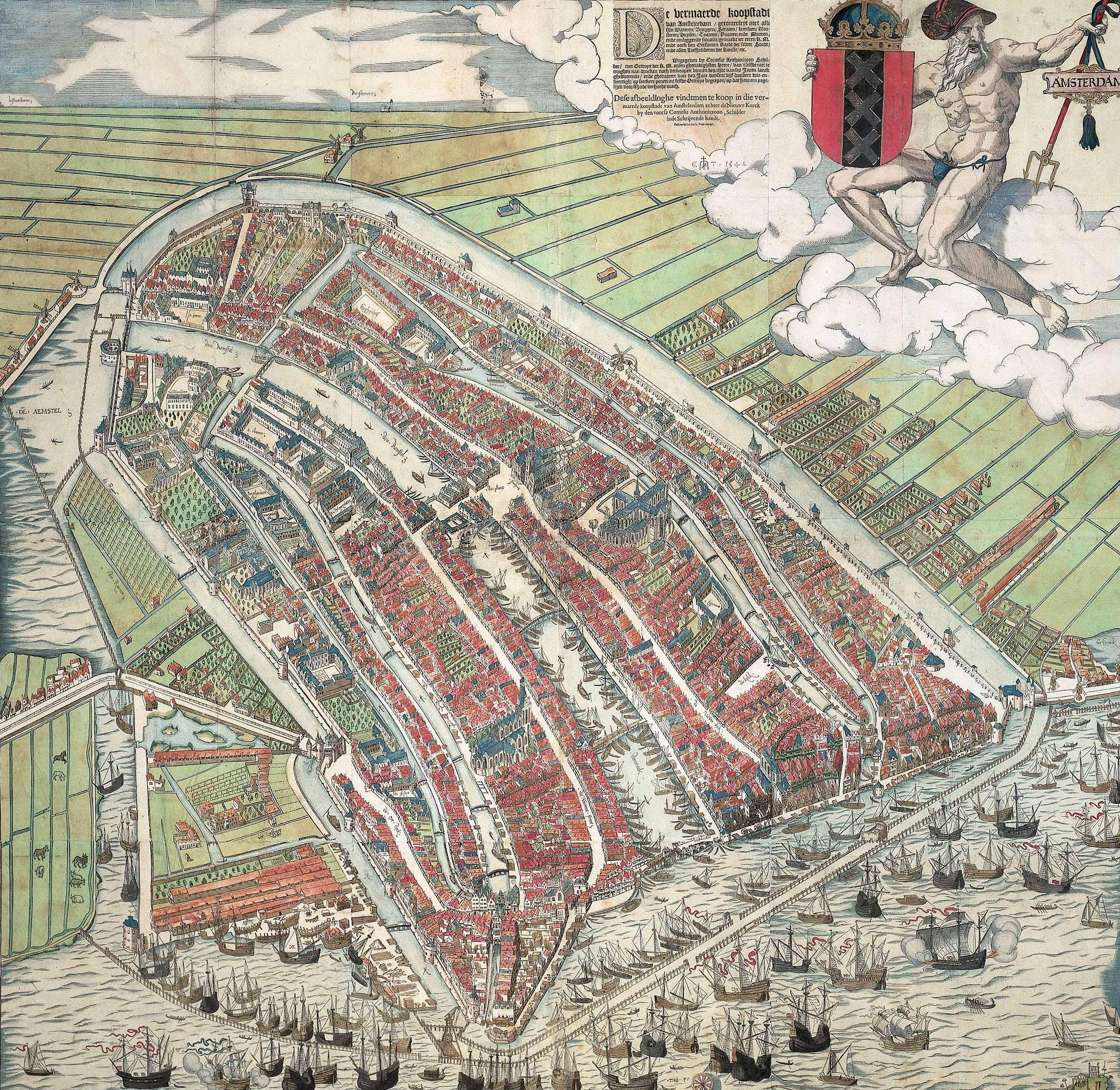
CALL FOR PAPERS: Law and Governance of a Global City: 17th-century Amsterdam (Amsterdam, June 2020) (DEADLINE: 1 July 2019)


(Source: Wikipedia)

We learned of a call for papers for a symposium on law and governance in 17th century Amsterdam. Here the call:

Four hundred years ago, like today, globalisation and urbanisation impacted the world’s cities. In seventeenth-century Amsterdam, the afflux of trade and migrants prompted rapid economic and demographic growth, resulting in dynamic multicultural urban life and leading to complex questions of governance. The foreign merchants and newcomers were governed by the city administrators, who pursued policies of commercial and religious freedom. The governance of the city was both local and global. The Amsterdam Chamber of the Dutch East India Company was the most affluent and had a large say in the Company’s policies.

The communities of foreign merchants and often well-skilled newcomers were very well connected to their home regions and cities contributing to the constitution of Amsterdam at the center of global trade networks. It was the city where the first ‘modern’ stock exchange was established and the availability of capital pushed the Amsterdam and Dutch economy into a new phase of capitalism. The Dutch hegemony in the global slave trade soon made a significant contribution to the wealth of the city. The Burgerzaal of the seventeenth-century City Hall visualised the city’s bold ambition: Amsterdam as the center of a global (commercial)empire – the center of the universe.  From 1500 to 1700 Amsterdam grew from 12.000 to 200.000 inhabitants, mostly due to massive immigration. The city’s relatively tolerant intellectual climate contributed to an influx of – sometimes very wealthy – religious refugees as well as progressive/radical thinkers.Economics and politics were highly intertwinned. Economic interests and ambitions went hand in hand with political interests and ambitions. The public and the private were very much intertwined. How to govern such a rapidly expanding and very diverse city well? How did this impact existing local government practices? How to approach global trade and commercial activities stemming from and coming through Amsterdam? How did law and government support and contribute to the Amsterdam economy, and vice versa? How did the city governors deal with the risks, tensions and complications of a city and its people catapulted into a global existence? How did the city government approach Amsterdam’s immigration and diversity? What were the legal and institutional responses to the local and global challenges that came with globalisation and urbanisation in this 17th century city? The revolt against Spain ended ultimately in a quest for independence. But how to organise and govern a leading city of this emerging state? Where should sovereignty be vested? How did Amsterdam contribute to the position of The Dutch Republic on the international stage? The Dutch Republic developed into a (con)federalised state with powerful towns and Holland as the most urbanised province. Amsterdam – the rising metropolis of a rapidly expanding colonial Empire - was a city in need of new ideas, policies and institutions to govern at home and abroad. The global role of cities and city-based companies contributed to a normative discourse, which drew on different bodies of law, including (Dutch-)Roman law and the emerging law of nations and nature, ius gentium et naturale.   Slavery, trade, war, as well as discussions of religious toleration, justice and good government triggered legal questions and debates.

Against this background, this Call for Papers invites submissions engaging with the aforementioned questions and issues related to three themes:  I.  City of commerce and tradeII. City of immigration and diversity III. City of Innovative governance and law

Call for papers:

We call on scholars from legal history, history and theory of international law, urban history, as well as scholars from related disciplines, such as political philosophy, economic history, social history, history of ideas and intellectual history, history of slavery and empire, and migration studies, to send an abstract of circa 500-700 words setting out the prospective paper they would like to submit for inclusion in the symposium dealing with one of thethemes identified within the overarching topic of law and governance of Amsterdam in the 17th-century. 

PLEASE SUBMIT PAPER PROPOSALS TO LGAMSTERDAM@ASSER.NLDeadline
Abstracts July1st, 2019
On the basis of the Abstracts we will select authors by September 1st, 2019.
Deadline First Draft March1st, 2020 Selected Authors’deadline for first draft.
Symposium June2020

In June 2020, a symposium will take place in Amsterdam to bring together the selected authors.
Co-donors / co-organisers: ERC-Project led by Dave De ruysscher (Tilburg University), ‘Coherence in Law Through Legal Scholarship’ (http://www.clls.eu/ ).Gieskes Strijbis-project led by Janne Nijman (Asser Institute/University of Amsterdam), ‘The Global City: Trust, Challenges, and the Role of Law’ ( http://www.asser.nl/Global-City ). VIDI-Project led by Bram van Hofstraeten (Maastricht University), ‘What's in a Name? Challenging Early Modern Ideal-Types of Private Partnerships in the Low Countries (17th-18th Centuries)’ (http://www.maastrichtuniversity.nl/privatepartnerships )

All info can be found here

25 March 2019

REMINDER: CALL FOR PAPERS: International Days of the Society for Legal and Institutional History of Flanders, Picardy and Wallonia: life and death ("vie et mort") (Oudenaarde, 31 MAY & 1 JUN 2019)


(image source: oudenaarde.be)


International Days of the Society for Legal and Institutional History of Flanders, Picardy and Wallonia
Oudenaarde, 31 May & 1 June 2019

The Society for Legal and Institutional History of Flanders, Picardy and Wallonia holds its annual "International days" on 31 May and the 1st of June in Oudenaarde (Belgium).

The theme of the conference is: « Vie et mort » (“Life & Death”)

The general theme of the “International Days” incorporates numerous historic and legal aspects of life and death. For example, ceremonies and customs regarding life and death (e.g. baptism, religious or civil wedding, funeral), civil law subjects (e.g. legal status, property law, etc.) or criminal law subjects (death penalty, pardon), life and death during wars (killed soldiers, shot soldiers, extermination camps, etc.), ...

This general theme does not exclude papers about other subjects regarding legal history or institutional history.

Presentations can be held in French, English or Dutch. Speakers have to send a summary to the organization (in French and/or English).

The conference will take place on Friday 31 May 2019 starting at 10 a.m. and on Saturday 1st of June 2019 starting at 9.30 a.m. in the conference room of the former convent of the Black sisters of Oudenaarde, Pamelekerkplein 4, 9700 Oudenaarde (along the Scheldt river, see: 

Lunches and dinner will be served in a restaurant in the city centre.

The General Assembly of the Society will be held on Saturday 1 June after the sessions.

The detailed programme will be sent to the participants later. Participants have to register by sending the attached registration form by e-email to guido.lambeets@mil.be or by mail to M. Guido Lambeets, Royal Military Academy – SCGW, avenue de la Renaissance 30, 1000 Brussels (Belgium).

Proposals can be sent before 15 April 2019 to Stanislas HORVAT by e-mail (shorvat@skynet.be).

The registration fee amounts to 25 € (for documentation and coffee). Lunches on Friday and Saturday are 30 € p.p. each. Dinner on Friday evening is 60 € per person. The  total amount should be paid at the same moment as the registration on the bank account of  the Société d'histoire du droit et des institutions des pays flamands picards et wallons:

IBAN BE77 7370 5007 1342 - BIC KREDBEBB

If it is difficult to pay in advance, it will be possible to pay cash at the start of the conference Be aware that checks are no longer accepted in Belgium.

Participants will have to make their hotel reservation. A city map and a list of hotels will be sent by email to the participants after registration.

We all hope to welcome you in Oudenaarde in May.

Best regards,

The Board,

The President,                                                The Secretary General,
Emese von BÓNÉ                                        Christian PFISTER

The Vicepresidents,                                       The Treasurer,
Tanguy LE MARC’HADOUR                     Pascal HEPNER
Michael MILO
Stanislas HORVAT


Société d'histoire du droit et des institutions des pays flamands, picards et wallons


Journées internationales d'histoire du droit et des institutions
Internationale rechtshistorische dagen
International Days for Legal and Institutional History
OUDENAARDE, 30/05/2019-01/06/2019


FORMULAIRE D'INSCRIPTION/ INSCHRIJVINGSFORMULIER/REGISTRATION FORM


À envoyer avant le 15 mai 2019 par courriel à/ Vóór 15 mei 2019 per e-mail te sturen aan/To be sent by e-mail before 15 May 2019 to: guido.lambeets@mil.be

Par courrier/Per post/By normal mail : M. Guido Lambeets, Ecole Royale Militaire–SCGW, avenue de la Renaissance 30, 1000 Bruxelles (Belgique/België/Belgium).


Madame/Mevrouw/Mrs – Monsieur/Mijnheer/Mr:

Adresse/Adres/Address :


Téléphone portable/Gsm/Cell phone:

E-mail :


Droit d’inscription/Inschrijving/Registration fee                                                 25 €

Lunch vendredi/vrijdag/Friday 31/05/19             
Nombre de personnes/Aantal personen/Number of persons :          …… x 30 €     Total : …. €

Lunch samedi/zaterdag/Saturday 01/06/19         
Nombre de personnes/Aantal personen/Number of persons :          …… x 30 €     Total : …. €

Diner/Dinner vendredi soir/vrijdagavond/Friday night
Nombre de personnes/Aaantal personen/Number of persons :         …… x 60 €     Total : …. €
                                   

Total à payer/Te betalen eindbedrag/Total amount to be paid:                                     …. 


Au compte bancaire  /Op bankrekening/On bank account :
IBAN BE77 7370 5007 1342 - BIC KREDBEBB


Au nom de la Société / Op naam van / Account holder :

Société d'histoire du droit et des institutions
des pays flamands, picards et wallons 
(fondée à Lille en 1929)

Journées internationales d'histoire du droit et des institutions
AUDENARDE, 31 mai et 1er juin 2019


Madame, Monsieur,

Les journées internationales d'histoire du droit et des institutions auront lieu cette année à Audenarde (Oudenaarde, Belgique), les 30  mai et 1er juin 2019.

Le thème qui a été retenu par le bureau de la Société est le suivant :

« La vie et la mort »

Le thème des Journées permet de couvrir de nombreux aspects de la vie et de la mort, tant historiques que juridiques. Citons, à titre d’exemple, les rites et coutumes de la vie et de la mort (p.ex. le baptême, le mariage religieux ou civil, l’enterrement), des matières de droit civil (p.ex. le statut de la personne, le droit patrimonial, etc.) ou de droit pénal (la peine de mort, la grâce), la vie et la mort pendant les guerres (soldats tombés au champ d’honneur, les fusillés, les camps d’extermination, etc.), ...

Ce thème général n’exclut pas, par ailleurs, la possibilité de communiquer sur d’autres sujets d’histoire du droit, de la justice et des institutions.

Les interventions peuvent être faites en français, en anglais ou en néerlandais ; les orateurs sont priés d’envoyer un résumé à l’avance aux organisateurs (de préférence en français).

Les participants seront accueillis le vendredi 31 mai 2019, à 9h30, à l’ancien couvent des sœurs noires (Zwartzusterklooster), Pamelekerkplein 4, 9700 Oudenaarde (le long de l’Escaut, voyez : .


Les séances de travail se dérouleront dans la salle de réunion de l’ancien couvent le vendredi 31 mai 2019, à partir de 10h00, et le samedi 1er juin 2019, dès 9h00. Les déjeuners seront pris au centre-ville.

L’assemblée générale de la Société se tiendra le samedi 1er juin 2019, à la fin des séances de travail.

Notre traditionnel diner se déroulera le vendredi soir dans un restaurant de la ville.

Le programme détaillé des journées sera communiqué ultérieurement aux participants, qui sont priés de renvoyer le formulaire d’inscription ci-joint avant le 15 mai 2019 par courriel à guido.lambeets@mil.be ou par courrier à M. Guido Lambeets, Ecole Royale Militaire – SCGW, avenue de la Renaissance 30, 1000 Bruxelles (Belgique).

Afin de nous permettre de dresser le programme définitif du colloque, nous remercions les personnes désireuses de communiquer de faire parvenir leur proposition de communication avant le 15 avril 2019 à Stanislas HORVAT (par courriel: shorvat@skynet.be).

Les frais d'inscription aux journées s'élèvent à 25 € et comprennent la documentation et les pauses-café ; les déjeuners des vendredi et samedi à 30 € chacun. La participation au diner du vendredi soir est de 60 € par personne. Ces sommes sont à verser au moment de l’inscription par virement bancaire européen sur le compte de la Société d'histoire du droit et des institutions des pays flamands picards et wallons:

IBAN BE77 7370 5007 1342 - BIC KREDBEBB

En cas de problème à effectuer le paiement par virement préalable, il est possible de payer sur place le premier jour du colloque. Notez que les chèques ne sont plus acceptés en Belgique.

Une liste d’hôtels à Audenarde et un plan de la ville seront envoyés par mail, dès son inscription, à chaque participant. Nous vous invitons à procéder vous-même à votre réservation dès que possible.

Au plaisir de vous rencontrer à Audenarde en mai prochain, nous vous prions d'agréer l'expression de nos sentiments très cordiaux.

Le bureau de la Société,                                                       

La Présidente,            
Emese von BÓNÉ                                                               

Les Vice-Présidents,                                                                                     
Tanguy LE MARC’HADOUR
Michael MILO                                  
Stanislas HORVAT
                       
Le Secrétaire Général,
Christian PFISTER

Le trésorier,
Pascal HEPNER


Société d'histoire du droit et des institutions
des pays flamands, picards et wallons 

Internationale rechtshistorische dagen
OUDENAARDE, 31 mei – 1 juni 2019

Mevrouw, Mijnheer,

De internationale dagen de Société d'histoire du droit et des institutions des pays flamands, picards et wallons zullen dit jaar op 31 mei en 1 juni in Oudenaarde (België) plaatsvinden.

Het thema dat door het bureau van de Société werd weerhouden, is:

« Vie et mort » (“Het leven en de dood”)

Het thema van de Rechtshistorische dagen dekt talrijke aspecten, zowel historische als juridische, van het leven en van de dood. Zo bijvoorbeeld de rituelen en de gebruiken rond het leven en de dood (bv. het doopsel, het kerkelijke of burgerlijke huwelijk, de begrafenis), materies uit het burgerlijk recht (bv. de staat van de persoon, het vermogensrecht, enz.) of uit het strafrecht (de doodstraf, de genade), gevolgen van oorlogen (gesneuvelden, gefusilleerden, uitroeiingskampen enz.) ...

Dit hoofdthema sluit overigens lezingen over andere onderwerpen van rechtsgeschiedenis of van de geschiedenis der instellingen niet uit.

De lezingen kunnen in het Frans, het Engels of het Nederlands doorgaan. De sprekers worden verzocht vooraf een samenvatting aan de organisatoren te bezorgen (bij voorkeur in het Frans).

De deelnemers worden op vrijdag 31 mei 2019 om 9.30u verwacht in het voormalig Zwartzusterklooster van Oudenaarde, Pamelekerkplein 4, 9700 Oudenaarde (langs de Schelde, zie: 
De sessies gaan door in de vergaderzaal van het voormalige Zwartzusterklooster op vrijdag 31 mei vanaf 10 u, en op zaterdag 1 juni vanaf 9 u. De lunches zullen doorgaan in een restaurant in het stadscentrum.

De algemene vergadering van de Société gaat door op zaterdag 1 juni, na afloop van de sessies.

Ons traditioneel diner zal op vrijdagavond in een restaurant in de stad doorgaan.

Het gedetailleerde programma van de dagen zal later aan de deelnemers worden toegezonden. Deelnemers worden verzocht het bijgaand inschrijvingsformulier vóór 15 mei 2019 op te sturen per elektronische post naar guido.lambeets@mil.be of per gewone post aan M. Guido Lambeets, Koninklijke Militaire School – SCGW, Renaissancelaan 30, 1000 Brussel (België).

Met het oog op het vastleggen van het definitieve programma van het colloquium verzoeken wij de kandidaat-sprekers om hun voorgenomen onderwerp met titel vóór 15 april 2019 mee te delen aan Stanislas HORVAT (per e-mail: shorvat@skynet.be).

De inschrijving voor het colloquium bedraagt 25  en dekt de documentatie en de koffiepauzes, de lunches van vrijdag en zaterdag kosten 30 € per persoon per dag. De deelname aan het diner van vrijdagavond kost 60 € per persoon. Gelieve bij de inschrijving het totale bedrag via Europese overschrijving te storten op de rekening van de Société d'histoire du droit et des institutions des pays flamands picards et wallons:

IBAN BE77 7370 5007 1342 - BIC KREDBEBB

Wie moeilijkheden ondervindt om vooraf de overschrijving te verrichten, kan bij aanvang van het colloquium nog ter plaatse betalen. Opgelet: checks worden in België niet meer aanvaard.

Een lijst van hotels en een stadsplan zullen aan elke deelnemer per e-mail worden toegestuurd bij zijn inschrijving. Reserveer zo snel mogelijk uw hotel.

Wij hopen u in Brussel te kunnen verwelkomen in mei eerstkomend. In afwachting groeten wij u alvast heel hartelijk,


Het bureau van de Société,                           

De Voorzitster,          
Emese von BÓNÉ                                       

De Ondervoorzitters,                                                                                   
Tanguy LE MARC’HADOUR        
Michael MILO
Stanislas HORVAT
                       
De Secretaris-generaal,
Christian PFISTER

De Penningmeester,
Pascal HEPNER