Search

Showing posts with label 20th century history. Show all posts

24 August 2026

BOOK: Julien BROCH (dir.), René Cassin 1914-1948: Les années décisives [Merlin Université] (Paris: Les Editions Mérlin, 2026), € 25


(image source: Editions Merlin)
Abstract:
Méconnu dans certaines facettes de son parcours, René Cassin demeure l’une des grandes figures du XXe siècle, juriste de la République et artisan des droits de l’homme. À la croisée du droit, de l’histoire et de la pensée politique, cet ouvrage éclaire les années fondatrices d’un itinéraire intellectuel et moral hors du commun : de la Grande Guerre à la France libre, de la refondation de l’État à l’avènement du droit international moderne. Issu d’un colloque réunissant chercheurs, enseignants et jeunes historiens du droit, ce livre explore un Cassin en mouvement : civiliste et internationaliste, humaniste et résistant ; dont la pensée, forgée dans les épreuves, reste d’une saisissante actualité. À l’heure où les droits de l’Homme vacillent sous la pression des crises, relire Cassin, c’est redécouvrir la force d’un idéal que seule la lucidité rend durable.

 More information here.

23 June 2026

SSRN PAPER: Michael BIRNHACK, "Colonial Patents: Industrial Property Law and Nationality in Mandate Palestine" (The Journal of Legal History) [OPEN ACCESS]

(image source: SSRN)

Abstract:
This Article offers the first historical analysis of patent law in British Mandate Palestine (1917-1948), examining 4,395 patent applications through a reconstructed registry and archival sources. It develops Colonial Patents as a framework for analysing legal transplantation in colonial contexts. The analysis reveals Britain's hybrid imperial patent policy: rejecting empire-wide unification while creating preferential procedures for British patents. Palestine's 1924 Patent Ordinance emerged from London-Jerusalem negotiations, including London's rejected proposal to abolish local patents. The registry shows profound participation asymmetries: while foreign and local inventors each filed approximately half of applications, Jewish inventors comprised nearly all local applicants, with scant Arab Palestinians filings. Archival sources confirm British engagement with Jewish patent agents but no Arab involvement. This disparity reflects patent law's ideological foundations in Enlightenment progress and industrial capitalism, which resonated with European-educated Jewish immigrants but remained peripheral to Arab Palestinian society, demonstrating how nominally neutral colonial institutions operated differentially.

Read the article here: DOI 10.2139/ssrn.6383879.

(source: Legal History Blog)


07 May 2026

BOOK: Samuel MOYN & Meredith TERRETTA (eds.), The Cambridge History of Rights, vol. V: The Twentieth and Twenty-First Centuries [The Cambridge History of Rights, eds. Nehal BHUTA, Anthony PAGDEN & Mira L. SIEGELBERG] (Cambridge: Cambridge University Press, 2026), €140,05


(image source: CUP)

Abstract:
The concept of a right, and the idea of human rights, were familiar abstractions on the brink of the twentieth century. But the history of political mobilization since shows that human rights had a transformative capacity in that century that no prior age had demonstrated. Through the twentieth century, human rights became institutionalized internationally in laws, movements, and organizations that transcended state-based citizenship and governance – which irrevocably changed the politics around them. Rights continued to evolve as the imperial world order transitioned to a postcolonial world of sovereign states as a primary form of political organization. Through twenty-six essays from experts around the world demonstrating how this period is historically distinctive, volume five of The Cambridge History of Rights is a comprehensive and authoritative reference for the history of rights in the twentieth and twenty-first centuries.

Table of contents:
General editor introduction Nehal Bhuta, Anthony Pagden and Mira L. Siegelberg Introduction Samuel Moyn and Meredith Terretta 1. Genealogies and human rights Ben Golder Part I. Rights, Politics and Mobilization Around the World: 2. Women's rights in international politics, 1900 –1967 Jean Quataert deceased 3. Rights and empire Miguel Bandeira Jerónimo and José Pedro Monteiro 4. Human rights and self-determination Umut Özsu 5. Rights and communism Ned Richardson-Little 6. Regional rights projects and decolonization in the twentieth century Anne-Isabelle Richard and Stella Krepp 7. Hierarchies of rights Barbara Keys 8. Human rights and cold war foreign policy Michael Cotey Morgan Part II. Forms and Fora of Rights Claiming: 9. Visions of human rights Adam Etinson and Jiewuh Song 10. On the critique of rights Jessica Whyte 11. Race, rights and the politics of petitioning Emma Stone Mackinnon 12. Transnational NGOs and human rights Jan Eckel 13. The 1993 world conference on human rights and the new rights ecosystem 14. Transitional justice, legal non-performatives and the sentiments of moving on Kamari Maxine Clarke Part III. Rights Causes and Their Evolution: 15. Rights without subjects: a history of children's human rights Linde Lindkvist 16. Development as the imperialism of 'free' trade: rights, liberalism and the engineering of African economies Alden Young and Tinashe Nyamunda 17. Economic and social human rights in the twentieth century Steven Jensen 18. Christianity, religious rights and decolonization Justin Reynolds 19. (Trans)gender identity and international human rights law Sandra Duffy 20. Resistance and insistence: making postcolonial indigenous rights Miranda Johnson 21. Health Sara Silverstein 22. Human rights and warfare Boyd van Dijk 23. The rights of artificial intelligence Jim Davies 24. Rights and environmental change Kerri Woods 25. Memorialisation, commemoration, and rights Bonny Ibhawoh 26. Empires of real estate: neoliberal legality and the right to housing Brenna Bhandar.


Read more here: DOI 10.1017/9781108938839.

27 April 2026

BOOK: Michael REYNOLDS, Instruments of Peacemaking 1918-1941. The Failure of Diplomacy (London: Bloomsbury, 2026), 328 p. ISBN 9781509976287


(image source: Hart)

Abstract:

This book is a sequel to Instruments of Peacemaking 1870-1914 in that it considers how attempts were made to settle disputes between states without recourse to war after 'the war to end all wars'. It considers the idealism of President Woodrow Wilson's Fourteen Points which formed the basis for the Armistice in 1918, and his scheme for a League of Nations providing for self-determination of nations and 'collective security' for European states. It goes on to analyse the key challenges that faced statesmen and jurists in attempting to resolve disputes under the provisions of the Treaty of Versailles. It considers the consequences of the Peace Conference of 1919 as well as defects in the treaty as an instrument for resolving future disputes and tensions between the victors and the vanquished. Cases referred to the Reparations Commission and to arbitration under the Treaty of Versailles regarding boundary, industrial property, and shipping including the Lusitania claims are considered. More importantly, it analyses the diplomatic challenges faced by statesmen after 1919. The decline and failure of Wilsonian idealism, the League of Nations, collective security, and diplomacy are traced through the various diplomatic exchanges that took place between governments from official records and contemporaneous accounts of the times as well as academic sources. Mr Chamberlain's private diplomacy to appease Hitler is critically analysed. The final chapter briefly considers aspects of America's isolationism resulting in the attack on Pearl Harbor and her peacetime state of unreadiness.

Table of contents:

Preface
Acknowledgements
Table of Cases
Table of Legal and Related Instruments
1. A New International Order or a Precarious Armistice2. Arbitration as an Instrument of Dispute Resolution3. Diplomacy as an Instrument of Prevention4. The Crisis that Led to War and Why Diplomacy Failed

5. American and Japanese Relations

On the author:

Michael Reynolds is a lawyer, arbitrator and Professor of Dispute Resolution and Arbitration at BPP University Law School, UK. He is also a member of The Royal Institute of International Affairs (Chatham House). 

Read more here.

 (source: Legal History Blog)

14 April 2026

BOOK: David ART, The Resilience of the Old Regime. Paths Around Democracy in Europe, 1832–1919 (Cambridge: Cambridge University Press, 2026), ISBN 9781009710718


(image source: CUP)

Abstract:
In The Resilience of the Old Regime, David Art reevaluates the so-called first wave of democratization in Western Europe through the lens of authoritarian resilience. He argues that non-democrats succeeded to a very large degree in managing, diverting, disrupting, and repressing democratic movements until the end of the First World War. This was true both in states political scientists have long considered either full democracies or democratic vanguards (such as the UK and Sweden), as well as in others (such as Germany and Italy) that appeared to be democratizing. He challenges both the Whiggish view that democracy in the West moved progressively forward, and the influential theory that threats of revolution explain democratization. Drawing on extensive historical sources and data, Art recasts European political development from 1832–1919 as a period in which competitive oligarchies and competitive authoritarian regimes predominated. Explores the core arguments of key theorists like Robert Dahl and Barrington Moore as they engage with European political history during the rise of mass politics Explains how archaic practices like plural voting and male-only voting were justified by liberals in supposedly democratizing regimes Provides a revision of this critical period of European political development through the frame of authoritarian persistence rather than the conventional-and sometimes misleading--- one of democratic triumph

On the author:
David Ar is Professor of Political Science at Tufts University. He is the author of The Politics of the Nazi Past in Germany and Austria (Cambridge, 2006) and Inside the Radical Right (Cambridge, 2011) and is a faculty affiliate at the Minda de Gunzburg Center for European Studies at Harvard University.

More information here


18 March 2026

PROJECT: CONDUIT, comparing French and Italian colonial law (Institut Universitaire de France, Prof. Monica CARDILLO/Nantes Université)


(image source: IUF)

Project abstract:

Ce projet porte sur l’analyse et la comparaison des administrations coloniales françaises et italiennes, à partir des ressources archivistiques, afin de comprendre comment s’est construit le droit colonial en Afrique. Plus précisément, à travers l’étude de l’activité de terrain des administrateurs des cercles, ce projet s’attache à comprendre l’évolution des normes traditionnelles du fait du contact colonial, et du processus de « disqualification » et « requalification » de la logique juridique locale. Conduit suivant une approche interdisciplinaire, il vise à mettre en œuvre une méthodologie critique de l’archive coloniale. Inscrit dans les sciences juridiques émergentes, ce projet cible la concrétisation d’actions pédagogiques, scientifiques, de sauvegarde d’archives par la numérisation.

(read more here

05 December 2025

BOOK: Aniceto MASFERRER DOMINGO (ed.), The Making of Criminal Law. The Role of Case Law in the 19th and 20th Centuries (London: Routledge, 2025), 380 p. ISBN 9781003633082

(image source: Taylor & Francis)

Abstract:
The separation of powers produced by the Enlightenment period reinforced the myth of the “perfection of the law”, with criminal law being dependent on the principle of legality. Demonstrating that this principle has not fundamentally altered judges' methods of interpretation and decision-making, this collective volume explores the role of case law in the making of modern criminal law from the late 19th century to the end of the 20th century. It enables us to gauge the influence of case law developed and to assess the extent to which it contributed to major criminal law decisions and the emergence of model criminal codes. The book takes a comparative view across various European and American jurisdictions and offers an overview of European civil law traditions along with comparisons from the Americas. The focus is on Western legal historiography, which has hitherto been notably under-researched. The chronological point of departure is marked by the creation of the Supreme Court and the cassation in each jurisdiction. Each chapter contains a short introduction to the role of jurisprudence in the making of criminal law from the 19th century onwards in that jurisdiction, followed by an exploration of the contribution of the legal doctrine of the Supreme Court in the making or development of a particular criminal offence or institution. The book will be of interest to scholars and historians working or teaching in the areas of legal history, comparative legal history, criminal law and comparative law. It will also be of use to scholars interested in the study of law in different socio-cultural contexts.

Table of contents

The contribution of case law to the making of Western criminal law (Aniceto Masferrer)
Abstract:

Criminal case law has been scarcely studied for various reasons. In fact, until a few years ago, no legal historian had set out to study it as an element shaping the criminal-legal system. However, in the last decade some of them began this task and have achieved surprising results, both in terms of the volume and quality of their scientific production. In Spain, for example, scholars have practically completed the study of the entire doctrine of the Supreme Court with respect to the Special Part of criminal codes and are now working on the General Part. This chapter analyzes the importance of case law as a source of law and as an object of legal and historical-legal study and includes an exhaustive description of the results obtained in recent years. In addition, it gives – as an introductory chapter of the whole collective book – a brief overview of the the role of case law in the making of modern criminal law in some European and American countries (France, Spain, Portugal, Holland, Austria, Hungary, Denmark, Sweden, Finland, Russia, Georgia-USA, and Chile), all belonging to the civil law tradition.

Case law in the court of cassation. Interpreting codification, production, and physiology of judgments (1811–1863) (Claire Bouglé-Le Roux)
Abstract:

The criminal case law of the first half of the French 19th century offers a particularly rich field of observation for those wishing to measure the role of the judge, and particularly the judge of cassation. This was a strategic period: it saw the introduction of the codification of criminal law by judges, whose interpretation was in principle constrained by the principle of the legality of offences and penalties. However, in cassation, the judges developed interpretation techniques and a method for giving reasons for their decisions, which enabled them to free themselves from the text where necessary, but also to acquire full authority over the trial judges, who were in principle the sole holders of the sovereignty of the trial judges. This study highlights the dual power of the judges of cassation in both legal and jurisdictional terms.

French case law about the age of minority. A historical study about the relationships between jurisprudence and juvenile delinquency (Jean-Louis Halpérin)
Abstract:

France is reputed to be one of the first countries in the world to have adopted a penal code, first in 1791 and then in 1810 with the Napoleonic Code, which remained in force until 1992. However, these codes should not overshadow the role of case law, which developed in parallel with the creation of the Tribunal (later the Court) of cassation in 1790. This chapter deals with criminal minority and the application of articles of the Penal Code providing for two distinct regimes depending on the discernment of minors under the age of 16. In doing so, it shows how the Court of cassation ensured that this question of discernment was always asked and has gradually taken an interest in the choice of reformatories. It gives evidence that, after the 1912 law and a 1945 ordinance closing the houses of correction, the Court of cassation reintroduced the criterion of discernment, and demonstrates that, in the longue durée, French higher judges first acted in the interest of the law, then in the interest of children, with a relative influence of social and doctrinal movements in favor of a more lenient treatment of juvenile delinquency.

The burden of proof in the crime of adultery in Spain. The contribution of the Supreme Court (1870–1978) (Aniceto Masferrer)
Abstract:

This chapter shows that, although the criminal provisions contained in the Codes regulating adultery and de facto union established the essential elements of the criminal type, case law complemented the legal regime by applying these precepts ad mentem legislatorem in specific cases, some of which were difficult – if not impossible – for the criminal legislator to foresee. In this sense, the Supreme Court’s magistrates highly contributed to the legal configuration of a crime, the application of which required going beyond what was established by the legal precept. “Going beyond” does not mean contravening or ignoring the precept, but clarifying, developing, and completing certain aspects that required a correct application of the criminal offense described in the legal precept. Although adultery is a crime that has been in force for centuries, the legislator was never fully aware of the complexity involved in proving it. The evidentiary complexity of the expression “yacimiento” (lying/having sexual relations) used in the legal precept to succinctly describe the type of crime (“A married woman who lies with a man who is not her husband commits adultery”) provoked numerous appeals and a large body of legal doctrine on the different ways of proving the existence or not of sexual intercourse, of its imperfect forms, or of sexual relations outside the scope of this particular type of crime or even of criminal law in general. In short, the chapter gives evidence of the relevance of the Supreme Court, whose doctrine greatly contributed to the adultery’s normative configuration.

Diving into Spanish legal dissonance. Honour as a 19th-century two-sided normative reality (José Franco-Chasán)
Abstract:

Law encompasses society’s values, morals, and ways of acting. Those unwritten values can explain why the legal orders of so many countries enormously differ. The rather wide value of ‘honour’ leads us to a manifold outcome. Particularly, caselaw played a very important role in the configuration of honour due to the main contradiction that characterised the duel: a de iure condemnation (through Criminal Codes), and a de facto promotion (through the Code of Honour and social conceptions). Far from acting in a very dogmatic manner, the judges understood the reality of the moment and knew how to read between the lines of what was happening.

Neither one nor the other. Gender, sex, and marriage on trial in Portugal during the 19th and 20th centuries (Maria Clara Calheiros)
Abstract:

This article uses the legal treatment of adultery in Portugal under the 1886 Penal Code (in force until 1982) as a lens to explore broader European shifts in family law, gender norms, and the relationship between law and religion. Despite early 20th-century legislative reforms aiming for gender equality, Portuguese courts continued to punish female adultery more harshly, reflecting persistent traditional and religious influences. Drawing on legal texts, case law, and scholarly literature, the study reveals the tension between progressive legal ideals and conservative judicial practices. It contributes to wider debates on how legal systems mediate social change, gender relations, and secularization processes in modern Europe.

The Dutch Supreme Court on rape and sexual assault between 1886 and 1991 (Janwillem Oosterhuis)
Abstract:

In the Netherlands, sexual morality changed profoundly between the end of the 19th century and the 1970s. To a considerable degree, this changing morality is reflected in criminal legislation, particularly when it comes to adultery, homosexuality, and pornography. In the same period, however, certain articles on sexual morality stayed the same. Between 1886 and 1991, the articles on rape and sexual assault remained unchanged. Only in 1991, when a revision of the Wetboek van van Strafregt (Criminal Code) took place, were these articles revised. This chapter investigates whether the changing public morality is reflected in the decisions of the Hoge Raad, the Dutch Supreme Court, on sexual morality, focussing on rape and sexual assault. Decisions of the Hoge Raad on adultery are almost completely absent, due to the de facto decriminalisation of adultery by the Hoge Raad through a civil law decision of 1883. Apart from this early decriminalisation of adultery via civil law, it appears that the Hoge Raad did not take the lead in adapting the content of criminal law concepts to changing views on sexual morals and marital relations. In view of its function as court of cassation, that is maybe for the better.

Homosexuality in Austrian penal law and the role of the Supreme Court (Martin P. Schennach)
Abstract:

The contribution explores the impact of the Austrian Supreme Court on the interpretation and application of § 129 (1) lit. b of the Criminal Code of 1852. The law criminalized homosexual relations from the latter half of the 19th century until 1971, when it was repealed during the “minor reform of criminal law.” Pivotal judicial rulings of the Supreme Court were forged in the decades around 1900, intricately intertwined with medical and psychiatric discussions. Renowned psychiatrist Krafft-Ebing emerged as a key figure, actively contributing to debates in the field of legal policy. Despite Krafft-Ebing’s influence and that of other medical experts, the Supreme Court diverged from their views. Instead, it adopted an expansive interpretation of prohibited acts, extending beyond mere male-male intercourse or similar acts. The Supreme court stipulated that criminal liability encompassed all interactions between individuals of the same sex aimed at arousing or fulfilling sexual desires. Moreover, the Supreme Court dismissed defense strategies proposed by psychiatric experts, contending that offenders’ mental health conditions did not absolve them of criminal responsibility. Even if the Supreme Court thus deviated from the line of psychiatric science, the Supreme Court aligned itself with the prevailing consensus of the legal academic community. The landmark rulings of around 1900 retained significant influence for subsequent decades. Even as late as 1969, just two years prior to the repeal of criminal liability, the Supreme Court remained steadfast in its established approach, adhering to its prior decisions despite evolving social dynamics and ongoing discussions.

Judicial decisions shaping criminal law. Eight decades of sedition cases in Hungary (Emőd Veress, Bence Zsolt Kovács)
Abstract:

Sedition typically involves actions or speech that incite rebellion against the authority of a state or monarch, or that seek to undermine the lawful authority of the government. This chapter examines the evolution and implications of judicial decision-making on the consistency of criminal law, with a focus on Hungary’s legal history, through significant political changes from the 19th to the 20th centuries. The research highlights the foundational role of Hungary’s highest courts in maintaining legal consistency amidst these transformations, especially in the interpretation of the sedition offence. By delving into Hungary’s transition to a codified criminal framework, exemplified by the Csemegi Code of 1878, to a more politicized judicial approach influenced by Soviet doctrines post-1948, the analysis demonstrates how judicial practices adapted to shifting political landscapes, impacting the uniform application of criminal law. This evolution underscores the difficult interplay between law and changing societal contexts. Through detailed examinations of precedent and the role of high courts, the study provides insights into the broader implications of judicial decisions in shaping legal and societal norms.

Dolus Eventualis in Danish criminal law The introduction of a legal concept by the Supreme Court (Per Andersen)
Abstract:

In 1918, the Danish Supreme Court confirmed a sentence passed by a lower court in  criminal case. Through its arguments for the confirmation, the Supreme Court introduced the concept of dolus eventualis, a form of intent, for the first time in Danish law. The chapter argues that the Supreme Court judges in 1918 were likely inspired by jurisprudential considerations of the period within the small Danish jurisprudential milieu, which again was particularly inspired by German jurisprudence. By introducing the not explicitly declared idea of dolus eventualis, the Supreme Court foresaw a change to forms of intent that would be made in the coming Criminal Act of 1930. The concept may very well have been known during the following decades, but it was nevertheless debated within jurisprudence and among criminal law experts and not used again before the late 1970s. What makes the concept of dolus eventualis in the 1918 judgment remarkable is the fact that this concept is the only criminal concept introduced by the Danish Supreme Court in recent times. The chapter explains why this may be the case, due to a Danish legal tradition characterized by a very cautious and conservative court in terms of introducing new concepts or legal ideas in order not to act as a legislative power.

Case law between the adoption of two criminal codes, Sweden 1864–1962 The definition of rape and aspects of criminal intent (Martin Sunnqvist)
Abstract:

This chapter discusses the development of criminal law through case law during the time of the Swedish 1864 Criminal Code. The main example is how rules relating to rape were interpreted by the Supreme Court. The first fully reported Supreme Court case about rape is from 1925. In this case and another from 1927, a heavy burden was placed on a woman to clearly resist the perpetrator, otherwise the crime would not be defined as rape. In 1937, the types of violence relevant for rape were widened. There was at first a hesitation within the courts how to draw the line between more or less lenient violence, but in two cases in 1937 and 1942, the Supreme Court marked a stricter view on rape than had dominated before. The chapter also discusses some types of cases where Supreme Court decisions from the 19th and early 20th centuries are still important.

Supreme Court of Finland's theft rulings in the context of crises and modernization (Esko Häkkinen)
Abstract:

The chapter examines the evolution of the Supreme Court of Finland’s approach to theft cases from the end of the 19th century to the 1970s, a period of rapid economic modernization and significant social change in Finland. General development of criminal justice and penal policy and the special role of theft in it as well as the history of the supreme administration of justice in Finland and previous research on its criminal justice role is depicted. An analysis of Supreme Court theft cases shows that the court actively updated and expanded the definition of theft in response to emerging forms of property crime. This was facilitated by the absence of a clear statutory definition of theft in the Finnish Criminal Code. In contrast to its activity in modernizing the interpretation of the meaning of theft, the court was passive in responding to the major shifts Finnish penal policy went through during the period. Despite the penal policy’s importance of theft as a high-volume crime treated severely by the Criminal Code, the court’s approach to theft cases remained largely unaffected by broader changes in penal policy.

Evolution of slander and libel in the Russian Empire and Soviet Russia (1870–1970) (Tatiana Alekseeva)
Abstract:

This chapter is devoted to the general problem of judicial influence on criminal law modification. The lack of legislative changes may not be directly related to the application of law. From a historical perspective, in Russia, it can be exemplified with slander and libel ("kleveta"). High courts interpreted all elements of this crime, specified details, and even changed their positions on the same matters. Although actus reus was not very far from the legislative wording of kleveta, the interpretation of mens rea finally became imprecise and unclear without bearing high courts’ decisions in mind.

Infidelity, legality, and Southern jurisprudence Title The newly established Georgia state Supreme Court and its contribution to adultery as a criminal offense (Julie Rocheton)
Abstract:

This chapter examines the jurisprudence of the Georgia Supreme Court regarding adultery as a criminal offense during its formative years (1846–1900). It explores how the court navigated societal values, legal codification, and the enforcement of morality while utilizing cases to assert its authority and legitimacy within Georgia’s evolving judicial landscape. Through an analysis of rulings, legislative developments, and contemporary newspapers, it highlights the tensions between codified law and community standards in defining personal behavior as a matter of public concern. By situating adultery laws within broader concerns of public order, gender norms, and racial dynamics, the chapter emphasizes the interplay between legality and cultural values. It reveals how the court’s reasoning aligned with legislative frameworks to crystallize adultery as a distinct criminal offense while negotiating the boundaries between legality and morality. This analysis positions the newly established Georgia Supreme Court as a vital site for reinforcing societal norms and shaping its institutional identity. This chapter provides new insights into Southern legal history, the intersection of private and public spheres, and the enduring influence of moral regulation on the development of American criminal law and jurisprudence.

Deterrence and criminal law. A first panorama on the application of Article 483 of the criminal law in Chilean Courts (1878–1887) (Macarena Cordero Fernández, Loris De Nardi)
Abstract:

The investigation explores the application of Article 483 of the Chilean Criminal Code between 1878 and 1887 that presupposed the guilt of a merchant if his premises were destroyed by fire. The historic context that motivated the inclusion of this regulation is examined, enhancing its deterrent function on frauds in fire insurances. In this regard, the expansion of the insurance industry and the increase in intentional fires at the time made it necessary to introduce a measure that would discourage the fraudulent practices. It should be added that the detection of fires, provoked or intentional, was complex mainly due to the lack of adequate appraisals. Despite the presumption of guilt established by the article, the analysis of the jurisprudence reveals that in practice the presumption of innocence prevailed. The judges only applied this article in very exceptional cases, which makes its ineffectiveness evident. The regulation, instead of being an effective punitive instrument, served to dissuade the merchants from using fire as a solution to their economic issues, demanding that they prove their innocence instead of the authorities proving their guilt. The study offers a vision that on one side reflects that this ruling constituted a legal innovation at the time and on the other, that its introduction in the XIX century codes reinforced the interests of the bourgeoisie, adapting the laws to new liberal ideas, in this case by means of a legal fiction to facilitate the resolution of difficult cases.

Read more here: DOI 10.4324/9781003633082.


26 November 2025

ENCYCLOPEDIA: Alain COLLIGNON & Dirk LUYTEN, "Henri Rolin" (BelgiumWII)


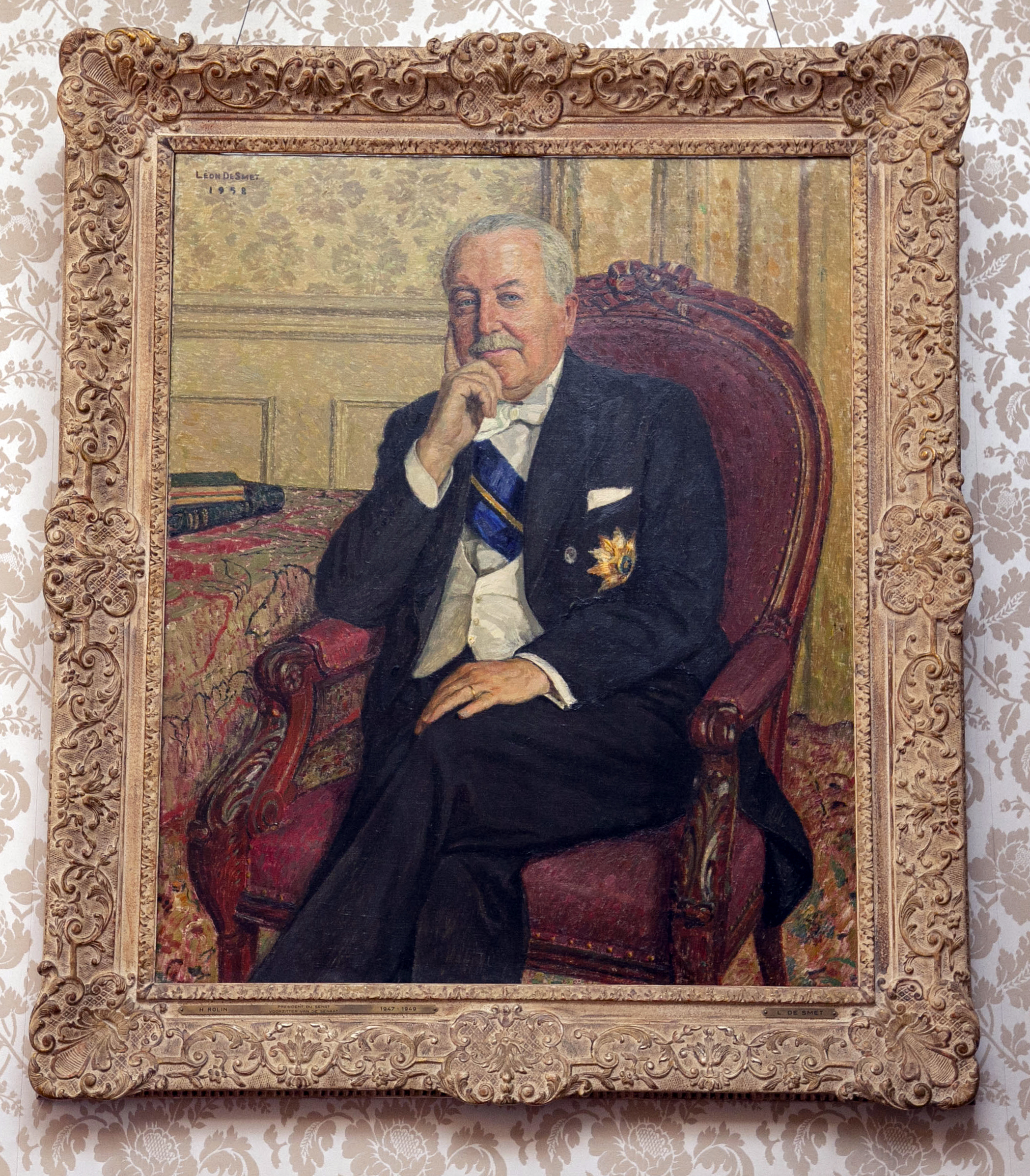
(image: Henri Rolin as President of the Belgian Senate; source: Belgian Senate)


Alain Collignon and Dirk Luyten (both Belgian State Archives/CegeSoma) published a new biographic lemma on Henri Rolin (1891-1973): lawyer, Professor, diplomat at the UN, judge at the European Court of Human Rights and prominent politician in Belgium (Senator, Minister of Justice).

Read the article here.

24 November 2025

BOOK: Georgios GIANNAKOPOULOS, The interpreters. British internationalism and empire in southeastern Europe, 1870-1930 (Manchester: Manchester University Press, 2025), ISBN 9781526160133, 85 GBP


Abstract:
The book offers a new interpretation of the cultural and intellectual exchanges between Britain and southeastern Europe in an age of imperial transformation. It considers systematically the question of the management of ethnic difference in multinational imperial states as diverse as Britain, Austria-Hungary and the Ottoman Empire. It traces the regional experiences and impact of British scholars and public intellectuals steering through competing nationalisms and translating regional national questions to British and international audiences. The emphasis on past attempts to reconcile liberal democracy and nationalism with imperial rule continues to resonate in our day as intellectuals confront the challenges presented the rise of ethno-nationalist politics and shifting place of Britain in Europe.

On the author:

Georgios Giannakopoulos is Senior Lecturer in Modern History at City St George's, University of London.

Read more here


21 November 2025

DATASET: Transcripts of the Nürnberg Trials (Harvard: Harvard Law School Library, 20 NOV 2025) - PODCAST: "1945. Crime contre l'humanité, forger un concept pour le droit" (France Culture, 26 AUG 2025)


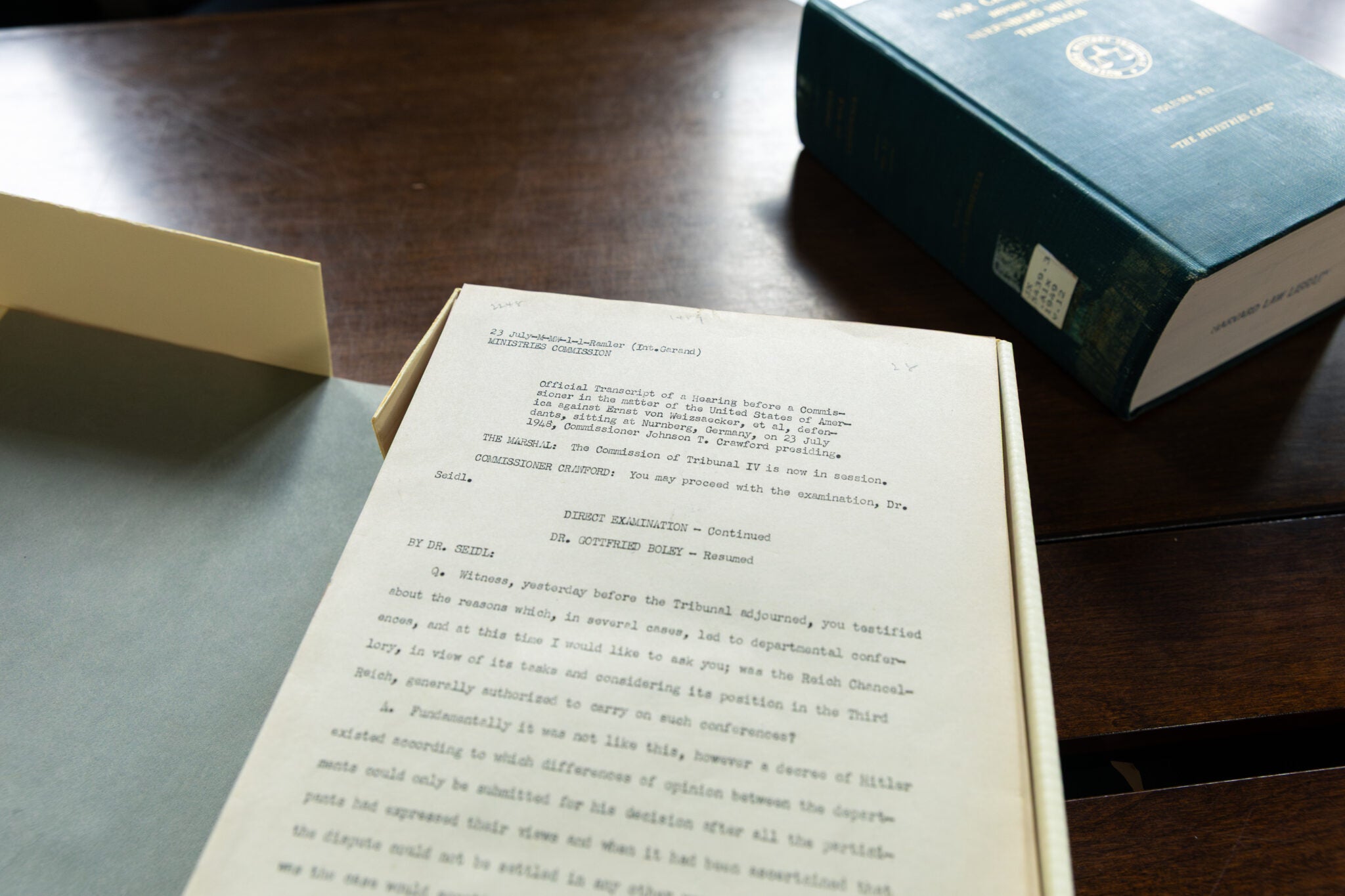
At the occasion of the 80th anniversary of the opening of the Nürnberg Trials, Harvard Law School's Library publishes the "first complete set of digitized Nuremberg Trials records". 

First paragraph:

Beginning today, the Harvard Law School Library is making available online the first complete, fully searchable, digitized collection of official evidentiary documents and trial transcripts in English from all 13 Nuremberg Trials, at https://nuremberg.law.harvard.edu/. On the 80th anniversary of the beginning of the first trial on November 20, 1945, researchers, scholars, and learners around the globe for the first time have open access to a fully searchable digital archive. Led by the library’s Nuremberg Trials Project, the effort to digitize, transcribe, and catalog official documents from the library’s Nuremberg Trials collection has spanned more than a quarter century.

More information here.

See also this podcast, "1945. Crime contre l'humanité, forger un concept pour le droit" in the series Crimes contre l'humanité. Nommer, dénoncer, juger (France Culture: Le Cours de l'histoire) with Anne-Laure Chaumette and Bénédicte Vergez-Chaignon here.

15 October 2025

VIDEO: Michel TROPER, "J'ai fait très peu de droit à Sciences Po" (En Chair(e)) [YOUTUBE]

The Youtube-channel "EnChair(e)" publishes a long video interview with renowned French legal theorist and specialist of constitutional law Michel Troper. 

See above for the first chapter. Youtube-channel here.

30 September 2025

BOOK: Henri DE WAELE & Christian J. TAMS (eds.), Realising the Hope of Ages ? Novel Perspectives on the Permanent Court of International Justice [Studien zur Geschichte des Völkerrechts, eds. Jochen VON BERNSTORFF, Bardo FASSBENDER, Anne PETERS & Miloš VEC] (Baden-Baden: Nomos Verlag, 2025), 270 p. ISBN 9783756032983, € 89


(image source: Nomos)

Abstract:

The present volume fills important gaps in our understanding with regard to the Permanent Court of International Justice (1920–1946). It brings together an assembly of authors from different backgrounds to offer novel perspectives on a classic theme, casting previous assumptions into a new light – from ideas about its design and leading participants in its formation, to the role of particular judges in the development of its jurisdiction and advisory function.

On the editors:

Prof. Dr. Henri de Waele is Professor of International and European Law at Radboud University Nijmegen and the University of Antwerp. Prof. Dr. Christian J. Tams is Professor of International Law at the University of Glasgow and the University Paris I (Panthéon-Sorbonne).

Contributors:

Itai Apter | Dr. Michel Erpelding | Dr. Arthur Eyffinger | Dr. Karin Van Leeuwen | Prof. Dr. Lucas Lima | Dr. Momchil Milanov | Dr. Sean Morris | Dr. Antoine Ollivier | Prof. Dr. Christian J. Tams | Dr. Peter Tomka | Prof. Dr. Henri de Waele

Read more here.

22 September 2025

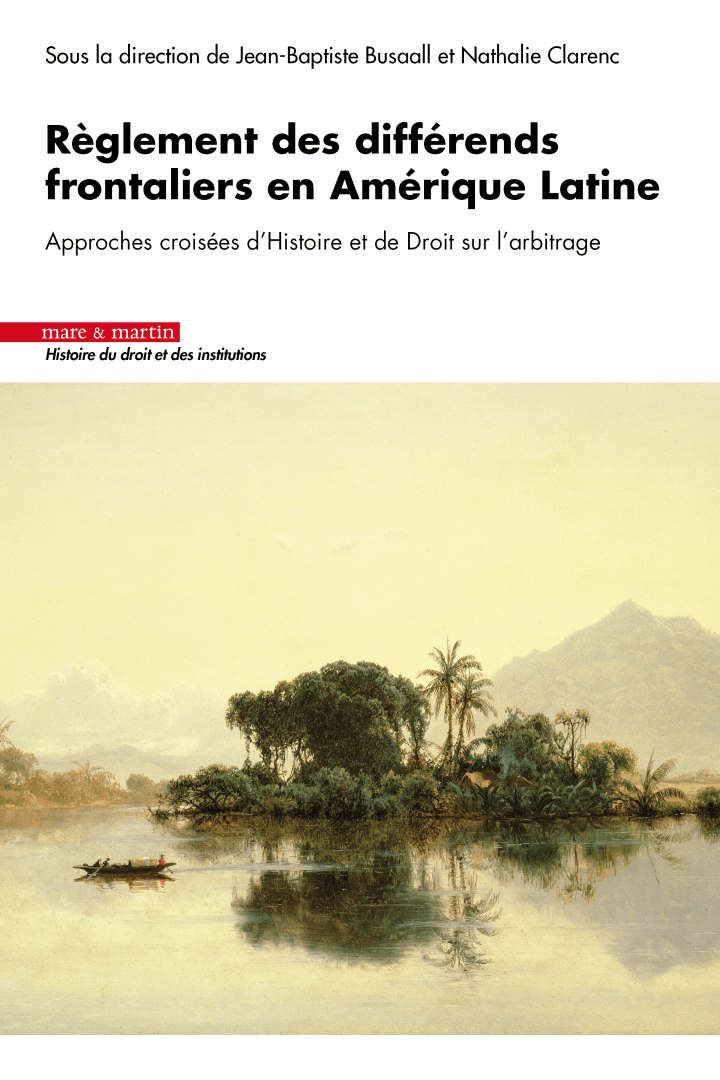
BOOK: Jean-Baptiste BUSAAL & Nathalie CLARENC (dir.), Règlement des différends frontaliers en Amérique Latine. Approches croisées d'Histoire et de Droit sur l'arbitrage [Histoire du droit et des institutions] (Paris: Mare & Martin, 2025), 212 p. ISBN 978-2-38600-061-4, € 27


(image source: Mare & Martin)

Abstract:
Aujourd’hui, le tracé des frontières litigieuses de l’Amérique latine se dessine à La Haye devant la Cour internationale de justice. Il occupe une grande partie de son activité judiciaire : 14 affaires furent introduites seulement depuis le début des années 2000. Mais la question est ancienne et la plupart des différends avaient déjà donné lieu à des procédures d’arbitrage entre le xixe et le début du xxe siècle. Cet ouvrage propose un recueil d’analyses de cas historiques et contemporains d’arbitrages de frontières dans l’espace des anciennes colonies ibériques de l’Époque moderne. L’approche est pluridisciplinaire, car elle allie histoire du droit et droit international. Les contributions des historiens du droit s’inscrivent dans le prolongement d’une historiographie récente qui a montré en quoi l’enjeu de l’intégrité territoriale est l’une des conséquences du double phénomène de construction institutionnelle des États et de la forge d’un discours national, voire nationaliste, au xixe siècle. Les auteurs internationalistes proposent une réflexion sur les modalités juridiques de règlement des disputes territoriales entre États, depuis les arbitrages du xixe siècle jusqu’aux procédures judiciaires du xxie siècle. L’analyse de cette évolution fournit des éclairages utiles sur le droit du contentieux international, et alimente la réflexion lancinante sur l’efficacité de la justice internationale : le règlement judiciaire pourra-t-il réussir là où les tentatives d’arbitrage ont échoué ?

On the editors:

Jean-Baptiste Busaall est Maître de conférences en histoire du droit à l’université Paris Cité. Nathalie Clarenc est Maître de conférences en droit public à l’université Paris Cité.

Read more here.

11 September 2025

BOOK: Mark ROSEMAN & Dan STONE (eds.), Contexts: Origins, Comparisons, Entanglements [The Cambridge History of the Holocaust, ed. Mark ROSEMAN; vol. 1] (Cambridge: Cambridge University Press, 2025), ISBN 9781108913614


(image source: Cambridge)


Abstract:
The Cambridge History of the Holocaust offers a comprehensive and innovative overview of the complex field of Holocaust history from a variety of interpretive perspectives. The first volume begins with essays outlining the evolution of Holocaust historiography and the central conceptual and methodological questions facing historians. Further chapters provide insights into the longer-term causes and contexts of the Holocaust, before focusing on its immediate pre-history. The volume examines Holocaust archives, race-thinking and eugenics, violence in Weimar Germany, Hitler and Nazi ideology, and the implementation of antisemitic policies in the run up to the Second World War. Its ambitious coverage provides an unparalleled overview of the development of the policies that created the conditions necessary for the Holocaust to take place.

Table of contents:

  • General Editor's Introduction Mark Roseman
    • Introduction to volume I Mark Roseman and Dan Stone
    • 1. Historiography of the holocaust: early developments Boaz Cohen
    • 2. The historiography of the holocaust: the years of diversification and integration Dan Stone
    • 3. From 'final solution' to 'holocaust'. Autobiographical reflections Jane Caplan
    • 4. The holocaust, genocide, and the origins of the commensurability problem A. Dirk Moses
    • 5. Fascism and holocaust Aristotle Kallis
    • 6. The holocaust and modernity Mark Roseman
    • 7. Integrated approaches and boundaries in holocaust scholarship Dan Stone
    • 8. Mapping the holocaust Tim Cole
    • 9. Archiving the holocaust Jan Lambertz
    • 10. Antisemitism in interwar Europe Ulrich Wyrwa
    • 11. Race-thinking, Völkisch-nationalism, and eugenics Eric Kurlander
    • 12. Inter-ethnic violence in Europe before the holocaust Robert Gerwarth
    • 13. Communism and anti-Communism Andreas Wirsching
    • 14. Weimar Germany's vanishing point: politics, violence and the rise of the nazis, 1918–1933 Annemarie Sammartino
    • 15. Hitler and the Nazi party Thomas Weber
    • 16. Hitler, state and party Helmut Walser Smith
    • 17. Anti-semitic policy in the early years of the third Reich Hans Christian Jasch
    • 18. Popular participation in anti-Jewish policy up to 1938 Michael Wildt
    • 19. Nazi biopolitics: eugenics, racial policy, and the persecution of 'Asoziale,' 1933–1939 Richard F. Wetzell
    • 20. 'Judenforschung' –Nazi Jewish studies Dirk Rupnow
    • 21. Belonging and belongings: the dispossession of German Jews Christoph Kreutzmüller and Jonathan Zatlin
    • 22. Kristallnacht Alan E. Steinweis
    • 23. Lebensraum, autarky and a new imperial order Richard Overy
    • 24. International responses to nazi race and Jewish policy, 1933–1939 Jonathan Wiesen.

     Read more here.


    10 September 2025

    BOOK: Victor KATTAN & Amit RANJAN (eds.), The Breakup of India and Palestine. The Causes and Legacies of Partition [Studies in Imperialism, eds. Andrew THOPSON & Alan LESTER] (Manchester: Manchester University Press, 2025), 312 p.

    (image source: Manchester UP)
     

    Abstract:

    This book is the first study of political and legal thinking about the partitions of India and Palestine in 1947. The chapters in the volume, authored by leading scholars of partition, draw attention to the pathways of peoples, geographic spaces, colonial policies, laws, and institutions that connect them from the vantage point of those most engaged by the process: political actors, party activists, jurists, diplomats, philosophers, and international representatives from the Middle East, South Asia, and beyond. Additionally, the volume investigates some of the underlying causes of partition in both places such as the hardening of religious fault-lines, majoritarian politics, and the failure to construct viable forms of government in deeply divided societies.

    Table of contents:

    Foreword by Lucy Chester
    Acknowledgements

    Introduction: Connecting the partitions of India and Palestine: institutions, policies, laws and people - Victor Kattan and Amit Ranjan

    Part I The partition of British India
    1 The Mountbatten Viceroyalty reconsidered: personality, prestige and strategic vision in the partition of India - Ian Talbot
    2 The paradigmatic partition? The Pakistan demand revisited - Ayesha Jalal

    Part II The partition of Palestine
    3 Partition and the question of international governance: the 1947 United Nations Special Committee on Palestine - Laura Robson
    4 Fighting for Palestine as a holy duty? The Syrian Muslim Brotherhood and the partition of Palestine in 1947 - Mohamed-Ali Adraoui

    Part III The partitions of India and Palestine compared
    5 The communal question and partition in British India and mandate Palestine - Amrita Shodhan
    6 India's dilemmas of pragmatism v. principles: Nehru's preference for a partitioned India but a federal Palestine - P. R. Kumaraswamy

    Part IV The consequences of partition for South Asia, the Middle East and beyond
    7 The partitions of India and Palestine and the dawn of majority rule in Africa and Asia - Victor Kattan
    8 'Unfinished' partition: territorial disputes, unequal citizens and the rise of majoritarian nationalism in India, Pakistan and Bangladesh - Amit Ranjan
    9 Civil war, total war or a war of partition? Reassessing the 1948 war in Palestine from a global perspective - Arie M. Dubnov
    10 Partitioned identities? Regional, caste and national identity in Pakistan - Iqbal Singh Sevea

    Afterword: Partition as imperial inheritance - Penny Sinanoglou

     On the editors:

    Victor Kattan is an Assistant Professor at the School of Law, University of Nottingham Amit Ranjan is a Research Fellow at the Institute of South Asian Studies, National University of Singapore

    Read more here

    02 September 2025

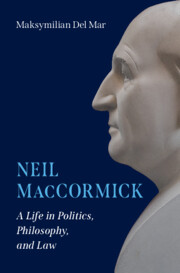
    BOOK: Maksymilian DEL MAR, Neil MacCormick. A Life in Politics, Philosophy, and Law (Cambridge: Cambridge University Press, 2025), ISBN 9781009609937, €58,36


    (image source: CUP)

    Abstract:

    Neil MacCormick (1941–2009) was one of the twentieth century's most important legal philosophers and one of Scotland's most influential public intellectuals. This book tells the story of his political and philosophical life, from his intensely political childhood as the son of 'King John', one of the founders of the Scottish National Party, through to his involvement in Scottish politics – especially as the author of SNP's constitutional policy – and his role as a Member of the European Parliament, helping to draft the European Constitution. With special attention to MacCormick's character, this book offers a reading of his entire oeuvre, covering his contributions to theories of legal and moral reasoning, institutional legal theory, nationalism, post-sovereignty, subsidiarity, and constitutional pluralism in Europe. This book reads MacCormick as a highly creative thinker who excelled in the art of constructing inclusive middles and thereby developed his own distinctive approach to politics and philosophy.

    Read more here: DOI 10.1017/9781009609937

    (source: Legal History Blog)

    11 July 2025

    JOB: PhD Studentship: Insurgent Temporalities: Fascism as a Global Anti-Universalist Project (Maynooth: Maynooth University, DEADLINE 25 JUL 2025)


    (image source: jobs ac uk)

    Abstract:

    Prof. Raul Cârstocea has been awarded an European Research Council (ERC) Consolidator Grant for a project entitled Insurgent Temporalities: Fascism as a Global Anti-Universalist Project (INTEMPO). As part of this project, the Department of History at Maynooth University is pleased to announce that two PhD Scholarships are available for suitably qualified applicants intending to commence their PhD studies in September 2025 / January 2026.

    Project description:

    Insurgent Temporalities: Fascism as a Global Anti-Universalist Project (INTEMPO) is funded by the European Research Council (ERC), as part of the ERC Consolidator Grant 2024 scheme of Horizon Europe, grant number no. 101170033. Led by Prof. Raul Cârstocea (Principal Investigator), the project investigates the global spread of fascism during the interwar period, particularly with a view to the transnational connections established by fascist movements and regimes. INTEMPO hypothesises that, despite their national specificities, fascist movements and regimes around the world recognised their commonalities and drew inspiration from, as well as engaged with, like-minded activists abroad. It argues that, while the significant differences between fascist organisations were a consequence of different national pasts in diverse contexts, fascists shared a common vision of a future ‘New Order’ that allowed them to see themselves as part of a European or, indeed, global fascist moment. This hypothesis will be tested against a number of case studies of fascist movements, within and outside of Europe, through archive-based research into their ideology and practices.

    Read more here

    03 July 2025

    ARTICLE: Jens T. THEILEN, "Civilizational Hierarchies and the Notion of ‘Europe’ in the European Convention on Human Rights" (EJIL XXXVI (2025), nr. 1, 113-142)


    (image source: OUP)

    Abstract:

    When the European Convention on Human Rights was adopted, several states parties were major colonial powers forcefully engaged in retaining that position. This article aims to demonstrate the continued importance of this constellation for European human rights law. Using the convention’s travaux préparatoires as a starting point, it identifies civilizational hierarchies between Europe and other regions as foundational to the European project of human rights. The article then traces how the notion of ‘Europe’ has served as a conduit for these hierarchies to persist in less explicitly racialized form, using two examples: first, that of territorial and extraterritorial applicability and, second, the interpretation of the convention by the European Court of Human Rights based on the margin of appreciation and European consensus. Colonial continuities in the form of civilizational hierarchies, as this article thus aims to show, are not only relevant for specific topics like post-colonial migration but also continue to shape the project of European human rights as a whole.

    Read more here: DOI 10.1093/ejil/chaf018

    24 June 2025

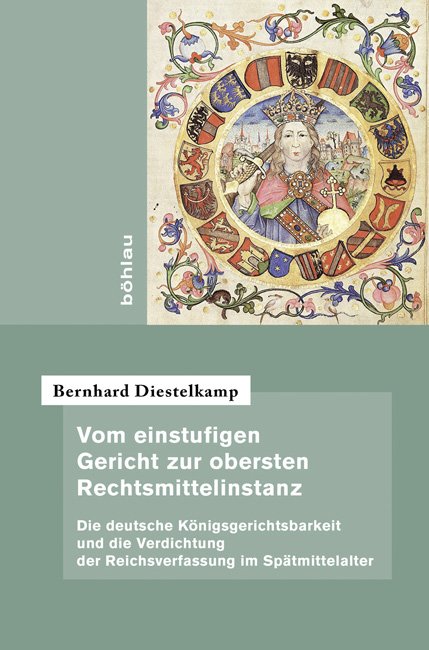
    IM MEMORIAM: Miloš VEC, Herrscher müssen den Frieden sichern. Zum Tod des Rechtshistorikers Bernhard Diestelkamp (FAZ, 22 JUN 2025)

    (image source: Booklooker)
     

    First sentence:

    Als Rechtshistoriker war Bernhard Diestelkamp ein Pionier. Sein bleibendes Verdienst ist die Erforschung der mittelalterlichen Königsgerichtsbarkeit und des Reichskammergerichts. Nun ist er im Alter von 95 Jahren gestorben.

    Read more here


    20 June 2025

    BOOK: Christopher ADAIR-TOTEFF, Dictatorial Power and States of Exception in the Weimar Republic: The Controversial Article 48, 1919-1933 [Routledge Research in Legal History] (London: Routledge, 2025), 202 p. ISBN 9781032320823, 116 GBP


    (image source: Routledge)

    Abstract:

    This book is an account of the tension between the need for order and the desire for freedom during the tense years of the Weimar Republic. It explains how various groups interpreted Article 48 of the Weimar Constitution and utilized it to reinstate peace and tranquility. While Article 48 is usually associated with the so-called “Preußenschlag”—the taking over of the Prussian government by the order of Reich Chancelor Kurt von Papen—it had been introduced as a necessity during earlier “states of emergency”. This investigation delves into the relevant works by many of the leading constitutional scholars in Germany. This list includes Hugo Preuss, Carl Schmitt, Hans Kelsen, Gerhard Anschütz, Richard Thoma, Erwin Jacobi, Hans Nawiasky, and Richard Grau. This book is a clearly written and detailed account of the history surrounding this debate about the appropriate emergency measures to be taken under Article 48. The work is important for its historical interest, and also because the conflict between authority and freedom has continuing relevance. The book will be a valuable resource for researchers and academics working in the areas of Legal History, Legal Philosophy, Legal Theory, Constitutional History, and German Studies.

    Table of contents:

    1 Dictatorship, States of Exception, and Art. 48; 2 1918-1919: The Years of Struggle and Renewal; 31920-1922: The Years of Political and Economic Turmoil; 41923-1926: The Years of Despair and Hope; 5 1927-1929: The Years of Peace and Panic; 6 1930-1933: The Years of Debate and Debacle; 7 Art. 48: Concluding Comments 

    On the author:

    Christopher Adair-Toteff is a philosopher and a social theorist whose research has been in social economics and in political liberalism. He is a Fellow at the Center for Social and Political Thought, University of South Florida, USA.