The Research Centre of the Château de Versailles published an online inventory of sources on the law of the Ancien Régime, compiled by Sandrine Jauneau.
Read more here.

The ESCLH aims to promote comparative legal history and seeks affiliation with individuals and organisations with complementary aims.
The Research Centre of the Château de Versailles published an online inventory of sources on the law of the Ancien Régime, compiled by Sandrine Jauneau.
Read more here.

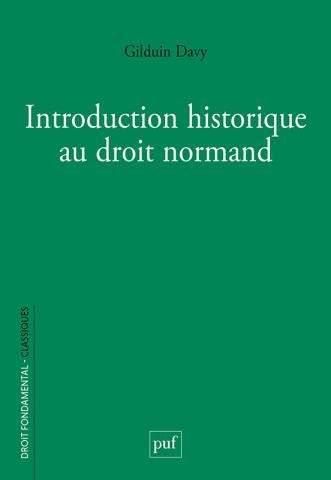
Ce livre propose un panorama de l’histoire du droit normand, depuis ses origines au Xe siècle jusqu’aux bouleversements de la période révolutionnaire et au-delà. Terre qualifiée de « Pays de sapience », la Normandie s’est affirmée par l’élaboration d’un droit coutumier original, qui a profondément contribué à forger son identité provinciale.
En matière de justice, de droit des biens, de famille ou de successions, la coutume normande s’est distinguée des autres systèmes juridiques en vigueur dans la France d’Ancien Régime. Issue de la pratique des tribunaux et de la réflexion des juristes, elle a su développer des solutions cohérentes et adaptées aux réalités locales, au point de devenir l’un des droits coutumiers les plus structurés du royaume.
Défendu avec ténacité par des institutions attachées à sa préservation, le droit normand a traversé les siècles, résisté aux entreprises d’unification monarchique, survécu à la Révolution et laissé son empreinte jusque dans l’élaboration du Code civil.
À travers cette synthèse accessible et rigoureuse, l’ouvrage met en lumière la vitalité d’une tradition juridique durablement inscrite dans l’histoire et la société normandes.
Autour de l'auteur
Gilduin Davy est professeur agrégé des facultés de droit. Auteur d'une thèse primée par l'Institut de France sur le pouvoir des premiers ducs de Normandie, il a consacré de nombreuses études à l'histoire des institutions et de la pensée juridique au Moyen Age et à l'époque moderne.
Sommaire
Première partie. Le droit normand, des origines à la fin du Moyen Âge
Chapitre 1 / Les éléments constitutifs du droit normand
Section I. La fabrique du droit normand
Section II. La Normandie ducale
Section III. La Normandie capétienne
Section IV. La Normandie lancastrienne
Chapitre 2 / Les thèmes du droit normand
Section I. La famille
Section II. La propriété
Section III. Les contrats
Section IV. La procédure
Seconde partie. Le droit normand, de la fin du Moyen Âge à la révolution… et au-delà
Chapitre 1 / les évolutions externes du droit normand
Section I. L’âge d’or du droit normand
Section II. Les institutions normandes sous la Monarchie administrative
Chapitre 2 / la société normande à l’époque moderne
Section I. Dogme, croyances et cultures
Section II. L’évolution de la famille normande
Section III. L’évolution des propriétés normandes
Chapitre 3 / Heurs et malheurs d’une province française
Section I. La fureur des Normands
Section II. Le crépuscule du droit normand ?

Organised by: Klaas Van Gelder (Brussels) & Hannes Ziegler (Dresden)
Practical:
Date: 20.-21.5.2027
Place: Dresden University of Technology
Abstract:
Late medieval and early modern societies are often considered to be relatively static: They were estate-based with limited demographic and economic expansion and relatively stable forms of rule, even though dynasties came and went, and multiple regions were part of different composite polities over the centuries. One of the most important challenges in explaining this period remains, however, that these were also, and at the same time, societies in transition. A highly promising model of not only describing but also explaining change with a view to these societies was and still remains the theory of state-building that seeks to explain the transition from medieval forms of statehood to the “modern” state. It
underlines the increasing involvement of the state in everyday matters, the growth of its bureaucratic apparatus, its territorial expansion, and its growing authority. Nevertheless, the causes, catalysts, chronology and consequences of these processes of state-building remain hotly debated until the present day.
This conference seeks to resume a discussion on state-building that has been somewhat neglected in recent years. Nearly twenty years after the publication of the seminal 2009 volume on “Empowering Interactions” by Wim Blockmans, André Holenstein, and John Mathieu, a wide array of works on the various issues connected to state-building (i.e. taxation, litigation, fiscal-military expansion, etc.), has been published, but what is lacking is a forum to bring this research together and discuss the state of the art of the field in a more condensed manner. “Empowering Interactions” was, after all, the temporary endpoint of a long debate around the question whether state-building was best described as happening “from above” or “from below”. In the shadow of this larger debate, however, other topics have emerged and other problems are being discussed that only marginally touch on this debate.
The role of gender (and more particularly: women) in processes of state-building is a case in point, but so is the question on how rural landscapes can be integrated in processes hitherto largely conceived by “centrist” perspectives dominated by courts, capitals and cities. Cases such as these are not adequately addressed in what is currently often considered to be the state of the field, and there are likely still more. Furthermore, new and promising analytical concepts have been developed that urged historians to pay greater attention to specific aspects of the aforementioned processes, such as ‘accountability’ and ‘popular control’.
This conference aims to take stock of the current state of the research connected to, resulting from and inspired by the Empowering Interactions approach. It is an open invitation to researchers working in the field of late-medieval and/or early modern state-building to showcase their research and explore the conceptual and methodological lacunae in current research. What is – above and beyond the “Empowering Interactions” – the state of the field? What are the most pressing blank spaces? What are the most promising new avenues of research? Topics of interest include (but are not limited to):
- Litigation
- Rural communities
- Petitions
- Representative institutions
- Dynasties
- Women
- Public administrations
- Cities and towns
- Republicanism
- Media and printWe are currently looking for papers (ca. 25min) addressing one or more of the above aspects. If you are interested in participating, please send an abstract by 31 October 2026 of no more than 500 words and a short CV (1-2 pages) to klaas.van.gelder@vub.be and hannes.ziegler@tu-dresden.de. The organizers are hoping to reimburse participants for travel and accommodation costs.
More information here.

As trust is essential for maintaining successful commercial relations, groups of traders relied on methods of exclusion to ensure that everyone carried out their agreed tasks. The Dutch West India Company (WIC), being a heterogeneous commercial organisation, therefore, could not function properly without employing formal methods of exclusion, both internally and in the territories it governed, of which taking recourse to courts was the most important. However, historians have failed to include the WIC in current debates on the principal-agent problem in early modern trade. As such, we know very little about the actual functioning of the judicial system in its overseas territories in general, and in its most important colony, Dutch Brazil, in particular. This article tries to address this problem by using a case study focused on a lawsuit against several Company officials to investigate the workings of the legal system of Dutch Brazil.
De civiele rechtspraak van de schepenbank van Thorn. De zaak Christina Halermans versus Dirk Brouns (1685-1688) (Bram Van Hofstraeten)
DOI 10.5117/PM2026.1.003.HOFS
Abstract:
This study examines the civil jurisdiction of the bench of aldermen of Thorn in the early modern period, focusing on its procedural practices, social accessibility, and the influence of learned legal traditions. Contrary to the notion of a general ‘Great Litigation Decline’ in eighteenth-century Europe, Thorn experienced a relatively low but steady rate of civil litigation, with a notable peak in the late seventeenth century. During the eighteenth century the court increasingly relied upon external impartial legal scholars in order to formulate a verdict which may have contributed to a reduced confidence in the local justice system. A detailed case study of Christina Halermans vs. Dirk Brouns (1685–1688) illustrates the court’s procedural complexity, the tactical – and not always equally careful – use of legal citations, and the increasing influence of legal arguments rooted in Roman law and the ius commune. This shift reflects a growing disjunction between local customary law and the academic legal discourse dominating civil litigation, which may have discouraged litigants from turning to the local court. The study suggests that the court’s procedural stagnation during the eighteenth century was less due to internal disorganization and more to the inability of local magistrates to navigate increasingly sophisticated legal reasoning. In addition, the study demonstrates that lawyers (instead of judges) played a crucial role in the reception of Roman law in early modern Europe.
Les immunités des ecclésiastiques ont leurs bornes Een moordende theologant en de vorstelijke rechtsbedeling in de Oostenrijkse Nederlanden (1749-1750) (Dirk Leyder)
DOI 10.5117/PM2026.1.004.LEYD
Abstract:
In december 1749, Martin van Meir, a 23-year-old theologian, commits two gruesome murders in the archiepiscopal seminary of Mechelen. The president of that institution decides to immediately cover up the case. The Privy Council, however, quickly uncovers the murders and obliges the Fiscal Office of the Great Council of the Netherlands in Mechelen to pursue both the murderer and his superior. The legal experts of the central government consider that the clerical immunities used as a defense by some, do not apply to either culprit. Written interventions by the archbishop of Mechelen, Thomas Philippe d’Alsace, in aid of his president (and to a lesser extent, of his homicidal student), put the regalists in Brussels on their heels, but do seem to affect the governor and the empress. Maria-Theresia eventually lets the case rest. But henceforth discussions about the immunity of clergymen will rather be settled in favor of the State.
Hunebedden en het Romeinse recht Over de privaatrechtelijke status van hunebedden en het Romeinse recht in Drenthe (Jelle Jansen)
DOI 10.5117/PM2026.1.005.JANS
Abstract:
The article begins with a sometimes fiery debate on the status of dolmens (Dutch: hunebedden), found mainly in the Dutch province of Drenthe. Lucas Oldenhuis Gratama, a.o. a lawyer, a legal historian and a member of House of parliament, stated that these dolmens were state property. With the introduction of civil codes in the Netherlands goods without an owner became stat-property and dolmens did not have an owner in the pre-codified era since they were nullius according to Roman law and not privately owned under Germanic law. Oldenhuis’ thesis was met with heavy criticism, it was generally assumed that the dolmens were part of private ownership of the land. The debate is nonetheless interesting since it raises questions on the role of Roman law in Drenthe. Scholars inspired by the anti Roman-law Groningen professor of Natural Law Van der Marck around 1800 again and again stated that Roman law played no role in rural Drenthe. This idea was already met with heavy criticism in Van der Marcks days. An examination of Drenthe’s laws as written down during the 17th and 18th century shows that Roman law played a substantial role in Drenthe’s private law, as it did in the surrounding provinces.
Action de la loi. Juridische draagpenningen in de kledijvoorschriften van de Franse Revolutie (Alexis Vejdani)
DOI 10.5117/PM2026.1.006.VEJD
Abstract:
A lasting legacy of the French Revolution and its legal reforms in France (and by extension in the various territories it occupied during this period) is the clothing prescribed for the magistrates and lawyers to be worn in court. Under the old regime the sovereign was the source of the law, therefore his magistrates wore regal robes when in session. The revolutionaries, having firmly denied this principle, designated the general will of the people as the sole source of law and therefore found inspiration with the representatives of third estate to clothe the members of the new judiciary. Along with their sombre black robes came revolutionary insignia like the cockades, ribbons in the three colours of the nation and above all medals in various forms, bearing legends such as La Loi and Action de la loi to signify the triumph of law over the tyranny of men.
Buiten de koninklijke hand? De taaldimensie van de Belgisch-Nederlandse codificatie-opdracht (1816-1830) (Robin Navez)
DOI 10.5117/PM2026.1.007.NAVE
Abstract:
The Belgian-Dutch civil code was the principle legislative project that occupied parliamentarians during the common years of Belgium and Netherlands. Since the union of these territories in 1815, the codification project had to deal with the coexistence of two main languages and the consequences of this new bilingual dimension for the drafting of the civil code to come. After a first unsuccessful attempt, a code was finally prepared by the Parliament between 1821 and 1826 under a commission led by the Belgian judge Nicolaï. A bilingual civil code was eventually promulgated in July 1830, but due to the Belgian secession, the code was considered too ‘Belgian’ and criticized for its similarity to the French one. Focussing on the issue of the drafting in two main languages, this contribution investigates the methodology used by the commission and its consequences on the project, including regarding the political issues.
Book reviews

The book I review here is one that cannot fail to impress any reader interested in the historical evolution of property rights. This will be the case whether you are interested in the legal discourse around the concept of property, or in the real and material interests that may lie behind the discourse. In this review, I will emphasise the aspects of the book I find most interesting, while pointing out some questions that came to mind during my reading. I will highlight not only the most obvious findings, but also the possibilities the book offers for starting a dialogue with historians who, like me, are working on similar topics, albeit from different angles and perspectives.
This dialogue is facilitated by the author's ability to link the multiple references and quotations he provides from classic works, with which we are all familiar, with research from a wide variety of specialised fields. This is evident from the outset. Hence, Blackstone's statement that starts the introduction: ‘[t]here is nothing which so generally strikes the imagination, and engages the affections of mankind as the right of property, which allows the author to present his book as being about 'legal imagination’; an imagination, he immediately clarifies, that is expressed through the 'idioms of power' (10), a concept taken from Orlando Patterson's book Slavery and Social Death.' James Whitman shares one of the central theses of this book, which is the idea that the modern conception of property has its origins in a slave society. This is an idea that in itself already establishes a dialogue with the modern period, especially in a country such as the United States, which had to wait until the second half of the nineteenth century for the definitive triumph of the 'free-soil doctrines' and the 'disappearance of lawful slavery'. This reference locates us in the contemporary Common Law legal tradition where we are reminded that the success of the 'castle doctrine' and the homestead exemption proves the strong identification of property with land, an idea that is widespread throughout the Western world. To this effect, dialogue between scholars of different legal traditions is guaranteed from the outset because 'the West, as I [the book's author] will speak of it in this book, is the West of the Roman legal tradition' (14). In the last part of this review, I will emphasise the need for this dialogue […]
To read the full review, please click here. Online access is free for members of the European Society for Comparative Legal History.
DOI: https://www.tandfonline.com/doi/full/10.1080/2049677X.2026.2671610

Abstract:
Les Ateliers du Digeste proposent une lecture vivante du Digeste de Justinien à travers des séances filmées. Chaque participant prépare à l'avance un fragment latin et en propose une traduction, discutée ensuite dans un esprit de rigueur, d'humilité et de bienveillance. Les difficultés du texte, les hésitations et les différents choix possibles sont expliqués afin de montrer le travail de traduction en train de se faire. Encadrés par le professeur Cocatre Zilgien et le philologue Luigi Sanchi, les Ateliers s'adressent aux étudiants, aux chercheurs et à toute personne curieuse de découvrir les sources juridiques antiques. Notre ambition : faire revivre le droit romain et se confronter sans peur aux sources anciennes. Les Ateliers du Digeste sont portés dans le cadre de l'Institut d'Histoire du Droit Jean Gaudemet. Traduire, c'est entrer en dialogue avec les sources.
Watch the channel here.

Abstract:
Der szenische Dialog «Frauenkampf ums Recht» wurde 1896 von Emilie Kempin-Spyri, der ersten Privatdozentin der Universität Zürich, verfasst. Studierende der Rechtswissenschaftlichen Fakultät der Universität Zürich interpretieren Emilie Kempin-Spyris Text unter der Regie von Remo Hegglin. Der Film wurde mit Unterstützung der Initiative «Digitalisierung & Interaktives Lernen» der Rechtswissenschaftlichen Fakultät realisiert.
Practical details:
Mittwoch, 30. September 2026, um 18.15 Uhr Universität Zürich, Zentrum Rämistrasse 71, KOL-G-201 (Aula)
More information (including a trailer) here.
Registration here.
Read Emilie Kempin's Die Rechtsstellung der Frau here.

(image source: Schulthess)
Abstract:
Cet ouvrage présente les actes des journées internationales de la Société d´histoire du droit (SHD), tenues du 1er au 4 juin 2023 à Lausanne. Il rassemble plus de trente contributions d´auteurs issus d´une dizaine de pays. Offrant une perspective diachronique et comparative, les études couvrent des périodes de l´Antiquité à l´époque contemporaine et des régions variées comme Madagascar, le Brésil et surtout l´Europe occidentale. Plusieurs contributions explorent les langues des textes juridiques, du grec des constitutions du Bas-Empire romain au plurilinguisme prévalant aujourd´hui en Suisse ou à la Cour internationale de justice. D´autres analysent des expressions propres au droit ou à ses domaines, comme le droit pénal ou fiscal. Le volume aborde aussi l´histoire des répertoires juridiques, les influences terminologiques du droit sur la théologie, la démonologie ou la rhétorique politique, ainsi que l´usage de la langue juridique chez Molière. Certains articles s´intéressent à l´histoire d´adages ou d´actes formalistes comme le serment. Grâce à la variété des sujets et approches, cet ouvrage intéressera les spécialistes de l´histoire du droit, mais aussi les juristes et praticiens curieux d´histoire.
More information here.

(source: ESCLH)
European Society for Comparative Legal History
Call for Members of the ESCLH Website Committee
Deadline: 1 September 2026
The European Society for Comparative Legal History (ESCLH) is seeking applications for the position of member of the to-be-established ESCLH Website Committee. The ESCLH was founded in 2009 and will soon start to work towards the creation of its fist institutional website.
The website of the ESCLH will be designed by a professional developer. Members of the ESCLH Website Committee will be involved in the brainstorming stage and in selecting/producing the content of the institutional website.
Expectations:
Applications, with a brief cover letter and short CV (no more than 400 words), should be sent to Janwillem (Pim) Oosterhuis, janwillem.oosterhuis@maastrichtuniversity.nl (Secretary General of the ESCLH) by 1 September 2026.

[Image source: Piotr Alexandrowicz]
The Centre for Ius Commune at Adam Mickiewicz University (Poznań,
Poland) is seeking three Postdoctoral Researchers for the ERC Starting Grant
project PetrIUS: Petrification of Ius Commune through Printed Paratexts,
led by Piotr Alexandrowicz.
We invite applications from researchers interested in early modern legal history, book history, and digital humanities. The Centre hosts various research projects related to early modern ius commune, including projects on early modern commentaries on the Decretals, law in early modern Venice, early modern scholasticism and law, and the incunabula of the (in)famous Hammer of Witches. We cooperate with numerous scholars and research groups across Europe. To learn more about us, please visit our provisional website: https://rzym.amu.edu.pl/petrius/
PetrIUS Summary
Between the 1460s and 1620s, printed editions of canon and civil law texts witnessed the continuous development of marginal paratexts, such as glosses, summaries, cases, and commentaries. These were added to authoritative legal sources because printers sought to improve the quality and attractiveness of new editions. They often employed legal experts who provided new tools, resources, and ideas, which were incorporated into printed books through innovative printing techniques. As a result, the interaction between improved editions and advances in printing technology fueled the ongoing development of printed legal books. Various questions concerning the origin, transmission, and influence of paratexts are embedded in the interplay between sources and marginalia, manuscripts and print, editors and printers, and books and their readers. PetrIUS adopts an innovative approach by shifting the focus from source texts to marginalia, that is, paratexts. The project examines how print and its evolution helped to petrify, that is, consolidate, landmark achievements of late medieval ius commune by enabling doctrinal developments to be transferred into the marginalia of source editions. The innovations introduced by print affected both legal scholarship and legal communication. PetrIUS explores how legal experts employed new technical tools to transfer the heritage of medieval law into early modern source editions and how these processes influenced patterns of scholarly work and knowledge transfer within academia. To achieve these aims, PetrIUS combines traditional methods of legal history and book history with natural language processing techniques. These methods enable detailed comparisons between printed editions of paratexts and their reception in the scholarly literature. The project will conclude with a legal-theoretical study assessing the significance of paratexts in the early modern period by treating them as a medium of law, that is, as a means of legal communication.
New Calls
All three positions are full-time appointments for 36 months (including a six-month probation period), starting in December 2026 (or slightly later). The application deadline is 30 September 2026. Further details are available via the links below.
Postdoc 2: Legal History
This researcher will work on the work packages Investigation of
Paratexts' Origins and Variants and Research on Paratexts
Forming Part of the Printed Corpora Iuris. Candidates must hold a PhD in
the humanities or social sciences (preferably in legal history), obtained no
later than the commencement of employment, and demonstrate a strong interest in
the history of law in the late medieval and early modern periods, particularly
the history of ius commune and legal books.
More information: https://bip.amu.edu.pl/konkursy-zatrudnienie-w-projektach-badawczych/konkurs_post-doc_2_petrius_centrum-ius-commune
Postdoc 3: Book History
This researcher will work on the work packages Investigation of
Paratexts' Origins andVariants and Research on Paratexts Forming
Part of the Printed Corpora Iuris. Candidates must hold a PhD in the
humanities or social sciences (preferably in book history), obtained no later
than the commencement of employment, and demonstrate a strong interest in the
history of books in the late medieval and early modern periods, particularly
legal books.
More information: https://bip.amu.edu.pl/konkursy-zatrudnienie-w-projektach-badawczych/konkurs_post-doc_petrius_centrum-ius-commune2
Postdoc 4: Digital Humanities
This researcher will work on the work package Large-Scale
Research on Paratext Variants and Their Use in Scholarly Literature.
Candidates must hold a PhD in the humanities, social sciences, information
technology, or another relevant discipline (preferably digital humanities),
obtained no later than the commencement of employment. Applicants should
demonstrate an interest in digital humanities through previous research and
publications. Candidates are expected to possess knowledge of research methods
and tools necessary for the implementation of the project's tasks, including
natural language processing, machine learning (including deep learning), and
programming languages. Familiarity with topics related to the project's subject
matter, such as legal history, book history, or literary theory, will be
considered an advantage.
More information: https://bip.amu.edu.pl/konkursy-zatrudnienie-w-projektach-badawczych/konkurs_post-doc_4_petrius_centrum-ius-commune
For further information about the calls or the project, please do not
hesitate to contact the Principal Investigator, Piotr Alexandrowicz (piotr.alexandrowicz@amu.edu.pl).

| Location: | Maynooth - Ireland |
|---|---|
| Salary: | €47,273 to €47,880 or £41,117.87 to £41,645.83 (converted salary*) per annum (2 points) |
| Hours: | Full Time |
| Contract Type: | Fixed-Term/Contract |
| Placed On: | 21st August 2026 |
|---|---|
| Closes: | 11th October 2026 |
| Job Ref: | 043683 |
The role
Maynooth University is committed to a strategy in which the primary University goals of excellent research and scholarship and outstanding education are interlinked and equally valued.
We are seeking an excellent scholar to join a project team led by Prof. Raul Cârstocea, who has been awarded a European Research Council (ERC) Consolidator Grant for a project entitled Insurgent Temporalities: Fascism as a Global Anti-Universalist Project (INTEMPO). The postdoctoral researcher will be part of a team undertaking a novel analysis of fascism during the interwar period and the Second World War, understood as a global phenomenon. They will engage in archival research, co-organise the activities of the project and contribute to the publications ensuing from them, and co-lead with the PI one of the work packages of the project, as detailed below. They will have the opportunity to develop their research, both individually and as part of a team of ambitious scholars.
INTEMPO
Insurgent Temporalities: Fascism as a Global Anti-Universalist Project (INTEMPO) is funded by the European Research Council (ERC), as part of the ERC Consolidator Grant 2024 scheme of Horizon Europe, grant number no. 101170033. Led by Prof. Raul Cârstocea (Principal Investigator), the project investigates the global spread of fascism during the interwar period, particularly with a view to the transnational connections established by fascist movements and regimes. INTEMPO hypothesises that, despite their national specificities, fascist movements and regimes around the world recognised their commonalities and drew inspiration from, as well as engaged with, like-minded activists abroad. It argues that, while the significant differences between fascist organisations were a consequence of different national pasts in diverse contexts, fascists shared a common vision of a future ‘New Order’ that allowed them to see themselves as part of a European or, indeed, global fascist moment. This hypothesis will be tested against a number of case studies of fascist movements, within and outside of Europe, through archive-based research into their ideology and practices.
For more information on the project, you can visit the project website: intempo-erc.eu.
For more information on the profile of the Principal Investigator, see: www.maynoothuniversity.ie/people/raul-carstocea.
For further details including full comprehensive job description please see reference number 043683
on the Maynooth University vacancies page at: www.maynoothuniversity.ie/human-resources/vacancies
(source: jobs ac uk)
Abstract:
John Rawls’s publication of The Law of Peoples was a profound attempt to design a just peace. Beyond the simple cessation of armed hostilities, the Law of Peoples offered more than (just) peace. It committed its peoples to honor human rights, tolerate other decent political regimes and accept a "duty of assistance" owed by all decent societies to all those in dire need. Importantly, for Rawls, the project he outlined in The Law of Peoples is a constructed peace, one that needs to be established among liberal peoples and then extended to other decent societies. The construction raises the questions of why it is that Rawls thought the peace (1) needed to be constructed and could be constructed in a world otherwise divided by insecurity and strife among states. In doing this, he directly addressed the Realist challenges described by Thomas Hobbes in his Leviathan and revived by Thomas Nagel. It also raises the question of (2) why Rawls thought it was necessary to go beyond Perpetual Peace, a Liberal model of international peace constructed by Immanuel Kant (Rawls’s inspiration and answer to the first question), and (3) why Rawls might have thought that the extension beyond the Kantian peace among liberal republics to a wider "just peace" that incorporated a duty of assistance was possible, and indeed "realistic."
More information here.

Méconnu dans certaines facettes de son parcours, René Cassin demeure l’une des grandes figures du XXe siècle, juriste de la République et artisan des droits de l’homme. À la croisée du droit, de l’histoire et de la pensée politique, cet ouvrage éclaire les années fondatrices d’un itinéraire intellectuel et moral hors du commun : de la Grande Guerre à la France libre, de la refondation de l’État à l’avènement du droit international moderne. Issu d’un colloque réunissant chercheurs, enseignants et jeunes historiens du droit, ce livre explore un Cassin en mouvement : civiliste et internationaliste, humaniste et résistant ; dont la pensée, forgée dans les épreuves, reste d’une saisissante actualité. À l’heure où les droits de l’Homme vacillent sous la pression des crises, relire Cassin, c’est redécouvrir la force d’un idéal que seule la lucidité rend durable.
More information here.
The draft program for the American Society for Legal History’s annual meeting (cf call earlier on this blog) is available here.

Quest'opera si offre al lettore come un affresco denso e minuzioso del pensiero giuridico nell'aurora dell'età moderna: ne indaga le radici più profonde, ma al contempo ne scruta gli orizzonti futuri. Rafael Ramis-Barceló ci guida in questo viaggio intellettuale con mano sicura, attraverso un'analisi rigorosa che attinge al metodo fecondo della storia concettuale. Le conclusioni cui l'autore perviene, tutt'altro che prevedibili, sovvertono consolidate certezze storiografiche: la nascita della nozione di "filosofia del diritto" viene infatti retrodatata di circa due secoli. Una genesi, questa, che non germoglia in isolamento, ma si intreccia inestricabilmente con le dispute sull'insegnamento universitario della giurisprudenza, nelle accademie europee, e con l'anelito mai sopito dei giuristi di volgere il pensiero giuridico verso una sempre più compiuta autonomia dalla teologia e dalla stessa filosofia.

Charles Louis de Secondat Baron de la Brède et de Montesquieu's De l 'Esprit des Lois created a sensation when it was first published in 1748, for reasons that I will touch on in this review; but contemporary readers are likely to balk at reading it from end to end. Montesquieu packed, so it seems, pretty much everything he knew into De l'Esprit des Lois. He knew a lot; and it can be a struggle to plow through it all, for example when it comes to his lengthy, and out of date, disquisitions on German law. I will not suggest that readers - even the learned readers of Comparative Legal History - should feel ashamed if they lose steam while trying.
That said, Montesquieu was, in a word, a genius. His thoughts, some of them presented in chapters hardly longer than post-it notes, are always engaging and frequently brilliant, even if now and then they seem comical or even sinister. (More on that anon.) He deserves more credit than he always gets, for example for discovering fundamental principles of proportionality and deterrence that we usually attribute to Bentham. Not least, he brought a kind of intellectual daring to his comparative work that was rare in the mid-eighteenth century, and that remains rare today - so much so that the reaction of this reviewer, after reading this excellent new annotated edition from Gallimard, is to wonder, wistfully, whether we are falling short of the standard he set two and a half centuries ago.
What modern readers undoubtedly know best are Montesquieu's reflections on the functioning of monarchy, democracy and despotism, which occupy the opening books of the Esprit des Lois and still hold a place on the political theory syllabus. There is much more to Montesquieu's masterpiece than that, though, most of which is neglected or dismissed. This is notably true of one of the claims on which he was most insistent, his theory of the formative effect of different climates on the law. 'Climate determinism', as Ralf Michaels drily writes, 'seems eccentric to comparative lawyers today'. So it does, though Michaels makes an audacious case for a creative return to it. I will not defend climate determinism in its original form (and neither does Michaels). But I will defend the scientific, and moral, attitude that led Montesquieu to it. [...]
To read the full review, please click here. Online access is free for members of the European Society for Comparative Legal History.
DOI: https://www.tandfonline.com/doi/full/10.1080/2049677X.2026.2671608
Description:
MICOLL aims at analyzing the development of commercial law between the 11th and 17th centuries, in the geographical area comprising Northern Italy and present-day Germany, through the tools of historical linguistics. The borrowing and transfer of legal terms will be carried out through a comprehensive and systematic survey of medieval and early modern legal sources, in particular commercial letters, contracts and statutes. The analysis of technical-legal words used in commercial transactions will allow to verify the impact of merchants’ migrations on the development of law as well as on social and economic history. The archival research will focus in the first instance on the following archives: Archivio di Stato di Venezia, Archivio di Stato di Genova, Stadtarchiv Nürnberg and Archiv der Hansestadt Lübeck. The project foresees the creation of a "Glossary of Medieval Commercial Law Terms" and of interactive digital maps of the routes that connected Venice with Northern Europe.
Click here to see all videos, includint the recordings of the International Conference organised by ERC MICOLL.
Abstract:
The idea of status has long puzzled philosophers. Some people have higher social status than others, and some have distinct legal statuses, such as being an employee, a tenant, or a refugee. But why should that be the case? Why should some enjoy more esteem than others? And why should law pick out a class of persons, give it a label, and treat it differently? Status in Law and Morality provides a philosophical account of status, arguing that it is a moral, and not just a legal or social, idea. The point of status is to protect the weaker party in social relations - the employee, or the tenant - through social recognition of their role as well as through legal regulation. Tracing the origins of the idea of status in law and in moral philosophy, this book challenges the commonly held view that status is an inherently inegalitarian idea that should have no place in modern law. It instead distinguishes between 'rank' and 'role' based statuses and argues that law ought to boost the self-esteem of those who hold vulnerable social roles. Thought-provoking and pioneering, this book aims to revive the progressive character of status to work towards regulating unequal social relations and protecting vulnerable groups.
Table of contents:
CHAPTER 1:WHY STATUS?
CHAPTER 2:STATUS IN ROMAN LAW: WHERE IT ALL STARTED
CHAPTER 3:STATUS: 'A MORAL FIELD FOR PERSONS TO EXIST IN'
CHAPTER 4:THE MODALITIES OF OFFENCES AGAINST STATUS
CHAPTER 5:THE NATURE OF STATUS RELATIONS
CHAPTER 6:FOUR OBJECTIONS
CHAPTER 7:ROLE OBLIGATIONS REVISITED
CHAPTER 8:TITLES AND THE SOCIAL RECOGNITION OF STATUSCHAPTER 9:EPILOGUE: FROM CONTRACT TO STATUS-AN INCOMPLETE TRANSITION
On the author:
George Letsas holds the Chair in the Philosophy of Law at University College London (UCL). He is the Co-Director of the UCL Human Rights Institute and Deputy Director of the UCL Quain Centre for Jurisprudence. His main research interests are in legal philosophy and human rights. He has written widely on the interpretation of human rights, theory of European law, philosophy of contract law, and general jurisprudence. He is known for his defence of the evolutive interpretation of human rights, and his critique of the use of consensus by human rights courts as an interpretive method.
Read more with OUP.

Department: Public Law and Governance
On site: Tilburg
Contract size: 0-8 fte/ 1,0 fte (32 - 40 hours per week)
Full-time gross monthly salary: €3546 – €5538
Contract duration: 72 months
Intended start date: 1st January 2027
Are you passionate about academic teaching and do you want to be part of a ground-breaking education programme? If so, we warmly invite you to become part of the Department of Public Law & Governance (PLG).
We are looking for an enthusiastic lecturer who would like to contribute to our international English-taught programmes within PLG, notably the Global Law bachelor. PLG is a dynamic and internationally oriented department that provides teaching in the Dutch-language degree programmes in Law and Public Administration, as well as in the English-taught bachelor programmes in Global Law and Liberal Arts and Sciences, and the master programmes in Public Governance and International and European Law.
We offer an inspiring work environment in which collaboration, international exchange, and academic curiosity are at the heart of what we do.
Your position
As a lecturer, you may be involved in several degree programmes within the Department of Public Law & Governance (PLG), including the bachelor's programmes in Global Law and Liberal Arts and Sciences. Primarily, however, you will deliver engaging lectures and tutorials, develop and assess assignments and examinations in courses throughout the Global Law programme, particularly in the areas of legal theory, legal history and international law. In addition, you will supervise students in their academic development and contribute to a stimulating learning environment. A broad ability and willingness to teach across a range of courses within the public-law related aspects of Global Law is appreciated.
Within PLG, you will work closely with course coordinators and fellow lecturers in a collegial and international environment where teamwork and the exchange of ideas are highly valued. You will have the opportunity to contribute within a team to the further development of the curriculum.
You will also have the opportunity to apply your talents and interests more broadly within the department, for example by organising academic and public engagement activities or by contributing to innovative educational initiatives.
Your profile
Tilburg University is interested in how you can contribute to our teaching and societal impact, and to the team that you will become part of. We therefore aim to gain as complete a picture as possible of your knowledge, expertise, skills, and personal qualities. Below are the qualifications we consider important for this position.
To maintain a vibrant and engaged university community, it is important that we meet each other regularly and foster strong connections within our teams. Therefore, our starting point is that all employees carry out their work in the Netherlands and that teaching is delivered in person.
Our offer
Tilburg University offers excellent benefits in a pleasant working environment:
For more information, please see our website and the CLA Dutch Universities.
Want to know more?
Would you like to know more before applying? Feel free to contact Prof. Morag Goodwin at m.e.a.goodwin@tilburguniversity.edu.
Want to apply?
We kindly invite you to apply before 29th August 2026; this can only be done online. Address your cover letter to Prof. Morag Goodwin and attach your resume. We look forward to your response.
The letter selection will take place by 2nd September 2026. You will be notified as soon as possible thereafter. The first selection interviews will take place on 7th September 2026 and the second on 11th September 2026.
The selection committee consists of:
You will ideally start working for Tilburg University on 1st January 2027.
This vacancy has been published simultaneously internally and externally. In case of equal suitability, our preference is for an internal candidate.
Over Tilburg University
Tilburg University is dé universiteit voor mens- en maatschappijwetenschappen. Al sinds onze oprichting in 1927 zetten we ons in voor een rechtvaardige, inclusieve en duurzame samenleving. Met toonaangevend onderzoek en inspirerend onderwijs dragen wij bij aan duiding en waar mogelijk aan oplossingen voor actuele maatschappelijke vraagstukken, van klimaatverandering tot digitalisering
Onze gemeenschap is persoonlijk, betrokken en kleinschalig. Op onze groene, compacte en levendige campus is ruimte voor ontmoeting, samenwerking én reflectie en persoonlijke groei. Lees meer over Tilburg University.
Werken bij Tilburg University doe je tegen aantrekkelijke arbeidsvoorwaarden in een inclusief team. Hier krijg je volop kansen voor het versterken van je talenten en het ontwikkelen van een loopbaan. In een warme werksfeer waarin we hechten aan de waarden: curious, connected, caring en courageous.
Over Tilburg Law School (TLS)
Tilburg Law School is opgericht in 1963 en is uitgegroeid tot een toonaangevende faculteit voor recht en bestuurskunde. Ons onderwijs en onderzoek hebben een duidelijk innovatief en interdisciplinair karakter. Hierbij worden we gedreven door onze missie om uitdagende maatschappelijke ontwikkelingen zoals nieuwe technologie, duurzaamheid en kwetsbaren in de rechtsstaat daadwerkelijk te beïnvloeden vanuit het perspectief van het recht en de bestuurskunde. We acteren vanuit lokale, regionale, nationale en internationale ontwikkelingen en werken samen met andere disciplines zoals economie, gedrags- en sociale wetenschappen, filosofie, geschiedenis en digital sciences. De faculteit is georganiseerd in vijf departementen: Public Law & Governance, Private, Business and Labour Law, Criminal Law, Tilburg Institute for Law, Technology & Society, en Fiscaal Recht.
Ons onderwijs
Tilburg Law School verzorgt de juridische bacheloropleidingen Rechtsgeleerdheid, Fiscaal Recht, Ondernemingsrecht en Global Law (Engelstalig). Van de negen juridische masteropleidingen worden er vijf hybride aangeboden en zes programma’s zijn Engelstalig. Ook biedt de faculteit een bachelor- en masteropleiding Bestuurskunde aan. In ons onderwijs hebben we bijzondere aandacht voor het kwetsbare en voor de kwetsbaren in de samenleving. Daarmee willen we bijdragen aan een rechtvaardige en duurzame samenleving. Tilburg Law School loopt voorop in onderwijsinnovatie en vindt inclusief, toegankelijk en flexibel onderwijs belangrijk. We leiden onze studenten op tot gedegen, vaardige en kritische academici, die zich kunnen bewegen in de complexe vraagstukken van de veranderende digitale samenleving.
Ons onderzoek
De vijf departementen van Tilburg Law School werken op onderzoeksgebied nauw samen in vier kenmerkende onderzoeksprogramma’s op het gebied van globalisering en recht, regulering van technologie, kwetsbaarheid van individuen in het strafrecht, en duurzame privaatrechtelijke relaties. Binnen de onderzoeksprogramma’s vindt zowel juridisch en bestuurskundig als interdisciplinair onderzoek plaats. Wij zetten in op team science door onderzoekers te stimuleren samen op te trekken, kennis te delen en elkaar te versterken op inhoud en methodes. Lees meer over de Tilburg Law School.
Sollicitatiecode
Tilburg University hanteert de NVP-sollicitatiecode van de Nederlandse Vereniging voor Personeelsmanagement & Organisatieontwikkeling.
Disclaimer
De tekst in deze vacatureadvertentie is auteursrechtelijk beschermd eigendom van Tilburg University. Gebruik, verspreiding en verdere openbaarmaking van de advertentie zonder uitdrukkelijke toestemming van Tilburg University is niet toegestaan en dat geldt expliciet voor gebruik door werving- en selectiebureaus welke niet rechtstreeks handelen in opdracht van de Tilburg University. Reacties naar aanleiding van werving door niet-opdrachtnemers van Tilburg University worden niet in behandeling genomen.
(source: Successfactors)