Search

18 June 2021

BOOK: Sebastian M. SPITRA, Die Verwaltung von Kultur im Völkerrecht. Eine postkoloniale Geschichte [Studien zur Geschichte des Völkerrechts, eds. Anne PETERS, Bardo FASSBENDER, Milos VEC & Jochen VON BERNSTORFF; 39] (Baden-Baden: Nomos Verlag, 2021), 409 p. ISBN 978-3-8487-5375-8. OPEN ACCESS


(image source: Nomos)

Book abstract:

This book analyses the development of the norms of protecting cultural heritage from a postcolonial perspective. In contrast to the traditional historiography of ‘culture’ in international law, it reveals how the highly problematic and Eurocentric ‘standard of civilisation’ in the 19th and 20th centuries served as a driving force for the formation of cultural heritage protection norms. Various actors used the law in different ways to take part in this discourse on ‘civilisation’. The aim of this book is to lay down a new narrative on the history of the protection of world cultural heritage. It endeavours to replace the inherent politics of the dominant narrative on progress with a critical genealogy which reveals the long-lasting hegemonic structures of today’s international law. Sebastian M. Spitra is a research fellow at the Department of Legal and Constitutional History at the University of Vienna and a Grotius fellow at the University of Michigan Law School.

 Read the book in open access: DOI 10.5771/9783845295145. 

(source: ESILHIL Blog)

17 June 2021

ONLINE COLLOQUIUM: Regard critique sur les souverainetés (Afrique, Amériques, Asie, Europe) Moyen Âge – xxie siècle) (Paris: Université de Paris/University of Chicago in Paris/CRHIA Nantes/FMSH/CRHEU/EILA), 23-24 JUN 2021)


(image source: Université de Paris)

The University of Paris (and a number of co-organising entities) hosts a two-day online colloquium on sovereignties, from the Middle Ages to the 21st centuries on 23 and 24 June.

Abstract:

This interdisciplinary conference, bringing together historians, legal experts, and political scientists, will focus on the heuristic contribution of the concept of sovereignty, adopting a critical approach of the notion, in examining for instance sovereignties “without State” or “against the State”. Critical theory will help formulate political hermeneutics to better comprehend the concepts of State and power in Europe, the Americas, Asia, and Africa. The theory developed by Jean Bodin in his Six Books on the Commonwealth, and how it has been received from the end of the xvith to the xxist century, is here examined under a new light, not only deconstructing the usual approach on sovereignty, but also addressing the reasons why in Europe it became a fundamental concept for political science, modern theories of the State, and philosophy. Beyond the traditional distinction between “internal” and “external” sovereignty, one of the questions raised is whether Bodin’s assertion that “it is the essence of sovereign power to be unlimited: it is all powerful, or it is nothing” leaves room for debate and consideration on the nature of power in different types of communities: States, or groups of people defined by chosen or inflicted characteristics (ethnic origin, geography, common political preferences, etc.).

Click here for the full program.

BOOK: Raphael SCHÄFER & Anne PETERS (eds.), Politics and the Histories of International Law - The Quest for Knowledge and Justice (Leiden/New York: Brill, 2021). ISBN 978-90-04-46179-6, 109.00 EUR


(Source: Brill)

Brill is publishing the edited collection ‘Politics and the Histories of International Law’

ABOUT THE BOOK

What are the implications of writing the history of legal issues? Eighteen authors from different legal systems and backgrounds offer different answers, by examining the history writing on issues ranging from slavery over the use of force to extraterritorial jurisdiction. Contributions show how historiography has often distorted or neglected regional cultures and suggest alternative methods and approaches to history writing. These studies are highly relevant for current international relations in which the fight over master narratives is especially fierce among governments, in different academic fields, and also between governments and academics.

 
Contributors are: Jean d'Aspremont, Julia Bühner, Emiliano J.Buis, Maria Adele Carrai, Jacob Katz Cogan, Ríán Derrig, Angelo Dube, Michel Erpelding, Etienne Henry, Madeleine Herren, Randall Lesaffer, Anne-Charlotte Martineau, Parvathi Menon, Momchil Milanov, Hirofumi Oguri, Gustavo Prieto, Hendrik Simon, Sebastian Spitra, and Deborah Whitehall.

ABOUT THE AUTHOR

TABLE OF CONTENTS

Politics and the Histories of International Law: An Introduction

  Anne Peters, Raphael Schäfer and Randall Lesaffer

Part 1: International Law and Vulnerable Groups

1 Strength through Diversity? The Paradox of Extraterritoriality and the History of the Odd Ones Out

  Madeleine Herren-Oesch

2 The Politics of Writing on the History of Slavery in International Law

  Anne-Charlotte Martineau

3 Edmund Burke and the Ambivalence of Protection for Slaves: Between Humanity and Control

  Parvathi Menon

4 One Hundred Years of Soli(dari)tude: The Creation of the Refugee Regime and the Politics of Humanitarianism

  Momchil Milanov

Part 2: The Use of Force Discourse in a Historical Perspective

5 Theorising Order in the Shadow of War: The Politics of International Legal Knowledge and the Justification of Force in Modernity

  Hendrik Simon

6 The Road to Collective Security: Soviet Russia, the League of Nations, and the Emergence of the ius contra bellum in the Aftermath of the Russian Revolution (1917–1934)

  Etienne Henry

7 Three Wartime Textbooks of International Law

  Deborah Whitehall

Part 3: Regional and Cultural Variations of International Law

8 The Politics of History in the Late Qing Era: William A. P. Martin and a History of International Law for China

  Maria Adele Carrai

9 Mixed Claims Commissions in Latin America during the 19th and 20th Centuries: The Development of International Law in between Caudillos and Revolutions

  Gustavo Prieto

10 The Forgotten Continent? A South African Perspective on the Development of African International Legal Thought

  Angelo Dube and Lindelwa Mhlongo

11 International Law and the European Court of Justice: The Politics of Avoiding History

  Michel Erpelding

Part 4: The Looming of the Past over the 20th Century

12 Civilisation, Protection, Restitution: A Critical History of International Cultural Heritage Law in the 19th and 20th Century

  Sebastian M. Spitra

13 International Law, Science and Psychology in the New Haven School

  Ríán Derrig

14 Histories Hidden in the Shadow: Vitoria and the International Ostracism of Francoist Spain

  Julia Bühner

Part 5: New Methods and Approaches

15 Turntablism in the History of International Law

  Jean d’Aspremont

16 The Politics of Anti-Politics: Historiographies of International Law and the Paradox of Antiquity

  Emiliano J. Buis

17 Combatting Naïve Positivism by Quellenkritik: Lassa Oppenheim and His Ascertainment of Customary International Law

  Hirofumi Oguri


18 A History of International Law in the Vernacular

  Jacob Katz Cogan

Index


More info here

WEBINAR: O código napoleônico e a cultura jurídica romano-germânica: bicentenário da morte de Napoleão Bonaparte

(Source: https://www.academia.edu/49171472/Webinar_O_c%C3%B3digo_napole%C3%B4nico_e_a_cultura_jur%C3%ADdica_de_tradi%C3%A7%C3%A3o_romano_germ%C3%A2nica_Bicenten%C3%A1rio_da_morte_de_Napole%C3%A3o_Bonaparte_1821_2021_)

The Federal University of Santa Catarina and other Brazilian institutions will be organizing a talk with prof. Paolo Cappellini on the Napoleonic Code, commemmorating the 200 year anniversary of Napoelon's death. 


JOURNAL: Revue Historique de Droit Français et Étranger, 2021/1


(Source: https://www.dalloz-revues.fr/revues/Revue_historique_de_droit_francais_et_etranger-29.htm)


16 June 2021

JOURNAL: Giornale di Storia Costituzionale, 40, 2/2020. Brazilian Constitutional History: Itineraries, Experiences and Models


(Source: http://www.storiacostituzionale.it/img/GSC_40_MIDI.jpg)

Sommario / Contents:

Diego Nunes, Luigi Lacchè, Constitutional experiences in the Brazilian Legal History / Esperienze costituzionali nella storia del diritto brasiliana

LEZIONI
Diego Nunes, António Manuel Hespanha and the Brazilian Constitutional History / António Manuel Hespanha e la storia costituzionale brasiliana

INTERSEZIONI
Cristiano Paixão, Massimo Meccarelli, Constituent power and constitution-making process in Brazil: concepts, themes, problems / Potere costituente e processo costituzionale in Brasile: concetti, temi, problemi

FONDAMENTI
Cristina Nogueira da Silva, Empire, Federalism, Nation(s) and Homeland(s) in the first Portuguese Constitutionalism (1821-1822) / Impero, federalismo, nazione/i e patria/e nel primo costituzionalismo portoghese (1821-1822)
Walter Guandalini Junior, Moderating Power in the 19th century Brazilian Constitutional Doctrine / Il potere moderatore nella dottrina costituzionale brasiliana del XIX secolo
Ricardo Sontag, History of an «Extra-constitutional Situation»: Banishment in Brazil (1824-1978) / Storia di una «situazione extra-costituzionale»: il bando in Brasile (1824-1978)
Arno Dal Ri Jr., Luciene Dal Ri, Reception of norms of international law in the Brazilian Constitutional Experience: Doctrinal Conceptions about Executive Power overlays Between the Empire and the Republic (1824-1988) / Recezione delle norme del diritto internazionale nell’esperienza costituzionale brasiliana: concezioni dottrinali sulle sovrapposizioni del potere esecutivo tra Impero e Repubblica (1824-1988)
Gustavo Castagna Machado, Legal culture and Public Law in the Brazilian First Republic (1889-1930) / Cultura giuridica e diritto pubblico nella Prima Repubblica brasiliana (1889-1930)
Marcelo Casseb Continentino, History of Constitutional Review in Brazil (From Foundation to Nowadays) / Storia del controllo di legittimità costituzionale in Brasile (dalla fondazione ai giorni nostri)
Raoni Bielschowsky, The birth of Brazilian presidentialism (1889-1902): origins, governism, and first coalitions / La nascita del presidenzialismo brasiliano (1889-1902): origini, ‘governismo’ e le prime coalizioni

ITINERARI
Rafael Mafei Rabelo Queiroz, Abuse of Rhetorical Power and Presidential Impeachment in Brazil: Reflections from Legal History / Abuso del potere retorico e l’impeachment presidenziale in Brasile: riflessioni dal punto di vista della storia del diritto
Airton Cerqueira-Leite Seelaender, Preaching Against the Earthquake. The Rise of State Intervention and the Resistance to It in Brazilian Constitutional and Administrative Law / Predicare contro il terremoto. L’ascesa dell’intervento dello Stato e la resistenza ad esso nel diritto costituzionale e amministrativo brasiliano
Laila Maia Galvão, Social constitutionalism in Brazil: The Brazilian Education Association and the writing of the 1934 Constitution / Costituzionalismo sociale in Brasile: l’Associazione Brasiliana per l’istruzione e la stesura della Costituzione del 1934
Christian Edward Cyril Lynch, Jorge Chaloub, The 1988 Brazilian Constitution and the political regimes: an outline of intellectual history (1972-2019) / La Costituzione brasiliana del 1988 e i regimi politici: un profilo di storia intellettuale (1972-2019)
Andrei Koerner, Strained politics in democracy and its implications for the research on law, politics, and the Judiciary in Brazil / La politica tesa e le sue implicazioni per la ricerca su diritto, politica e potere giudiziario in Brasile

LIBRIDO
Ventitre proposte di lettura / Twenty-three reading proposals


More information: http://www.storiacostituzionale.it/GSC40.html


15 June 2021

FINAL REMINDER: Dialogues on Otherness in Comparative Legal History 15 June 2021 – 17:00-18:00 CEST


(Source: ESCLH Blog)


Journal Comparative Legal History: Dialogues on Otherness in Comparative Legal History

15 June 2021 – 17:00-18:00hs (CEST)


The journal Comparative Legal History is an official academic forum of the European Society for Comparative Legal History. It was first published in 2013 and aims to offer a space for the development of comparative legal history. Based in Europe, it welcomes contributions that explore law in different times and jurisdictions from across the globe. Submissions are currently welcome and are being assessed on a rolling basis. 

The journal will host a one-hour public session to discuss on how to deal with otherness in comparative legal history. Editors (past and present) will present exploratory points and all attendees will be invited to join in a general discussion. 

Otherness is a multidimensional topic. It can relate to, inter alia, methods, disciplines, literature, culture, systems, and time periods. Otherness is needed when crossing time and space, it is needed when seeking for answers within and beyond specific environments. Exposure to otherness can only be beneficial for the disciplinary growth of comparative legal history.

The event is free and open to the public, and it will take place via Zoom. 


Registration is required by sending an email to clhdialogues@gmail.com

JOURNAL: Revue Historique de Droit Français et Étranger, 2020/3


(Source: https://www.dalloz-revues.fr/revues/Revue_historique_de_droit_francais_et_etranger-29.htm)

(More information: https://www.dalloz-revues.fr/revues/Revue_historique_de_droit_francais_et_etranger-29.htm)


14 June 2021

BOOK: Sakiko KAIGA, Britain and the Intellectual Origins of the League of Nations, 1914–1919 (Cambridge: CUP, 2021). ISBN 9781108489171, £ 75.00


(Source: CUP)

CUP has published a new book on the British origins of the League of Nations.

ABOUT THE BOOK

In this innovative account of the origins of the idea of the League of Nations, Sakiko Kaiga casts new light on the pro-League of Nations movement in Britain in the era of the First World War, revealing its unexpected consequences for the development of the first international organisation for peace. Combining international, social, intellectual history and international relations, she challenges two misunderstandings about the role of the movement: that their ideas about a league were utopian and that its peaceful ideal appealed to the war-weary public. Kaiga demonstrates how the original post-war plan consisted of both realistic and idealistic views of international relations, and shows how it evolved and changed in tandem with the war. She provides a comprehensive analysis of the unknown origins of the League of Nations and highlights the transformation of international society and of ideas about war prevention in the twentieth century to the present.

ABOUT THE AUTHOR

Sakiko Kaiga, University of Tokyo
Sakiko Kaiga is a Research Fellow at the Institute of Social Science, University of Tokyo.

TABLE OF CONTENTS

Introduction

1. Precursors: Thinking about War and Peace before 1914

2. The Use of Force to Prevent War? The Bryce Group's Proposals for the Avoidance of War, 1914-15

3. Strategies for Winning Public Opinion: The Success and the Loss of the League of Nations Society, 1915-17

4. A Transnational Movement? The British and American Pro-League of Nations Groups, 1914-18

5. No Peace without Victory: The League of Victorious Allies, 1917-18

Conclusion.


More info here

BOOK: Omer ALONI, The League of Nations and the Protection of the Environment (Cambridge: CUP, 2021). ISBN 9781108838191, 85.00 GBP


(Source: CUP)

CUP has published a new book on the League of Nations and environmental protection.

ABOUT THE BOOK

In the history of how the law has dealt with environmental issues over the last century or so, the 1920s and 30s and the key role of the League of Nations in particular remain underexplored by scholars. By delving into the League's archives, Omer Aloni uncovers the story of how the interwar world expressed similar concerns to those of our own time in relation to nature, environmental challenges and human development, and reveals a missing link in understanding the roots of our ecological crisis. Charting the environmental regime of the League, he sheds new light on its role as a centre of surprising environmental dilemmas, initiatives, and solutions. Through a number of fascinating case studies, the hidden interests, perceptions, motivations, hopes, agendas and concerns of the League are revealed for the first time. Combining legal thought, historical archival research and environmental studies, a fascinating period in legal-environmental history is brought to life.

ABOUT THE AUTHOR

Omer Aloni, Bar-Ilan University, Israel

Omer Aloni is Research and Postdoctoral Fellow in the Faculty of Social Sciences, University of Bar-Ilan, Ramat-Gan, Israel. He received his Ph.D. from Tel-Aviv University (Faculty of Law). He holds research affiliations with the University of Potsdam, the Rachel Carson Center for Environment and Society (LMU Munich) and the Max Planck Institute. He was awarded the Tallinn Prize by the European Society for Environmental History for the best research in 2018 and 2019.

TABLE OF CONTENTS

1. Fighting pollution made by humankind: the League of Nations and the endeavors of the convention against the pollution of the sea by oil

2. The League of Nations and the whaling dilemma

3. Sanitation, spreading diseases, and the environmental concerns: the League of Nations' campaign for rural hygiene

4. Raw materials, the timber crisis, and fears of deforestation during the interwar period

5. Evaluating the environmental regime of the League of Nations: comparative discussion

6. Conclusion.

More info here

ONLINE SEMINAR: Colloqui Ibn Battuta. Storia e metodologia nello studio del mondo musulmano - Primo incontro 18 giugno 2021, h. 15:00-17:00 CET: "Le fonti"


(Source: Academia.edu)


JOURNAL: Giornale di Storia Costituzionale 39, 1/2020


(Source: http://www.storiacostituzionale.it/img/GSC_39_MIDI.jpg)


Sommario / Contents:

Luigi Lacchè, Noli me tangere? Qualche riflessione ai tempi del coronavirus / Noli me tangere? Some reflexions at the time of coronavirus

ITINERARI
Francesco Di Donato, Sonia Scognamiglio, La civilizzazione statuale nell’opera di Gaetano Filangieri. Teoria politica, educazione giuridica, rivoluzione costituzionale / The State civilization in Gaetano Filangieri’s work. Political theory, legal education, constitutional revolution
Stefania Mazzone, Hénri Grégoire e la rigenerazione degli ebrei / Hénri Grégoire and the regeneration of the Jews

RICERCHE

Paola Persano, Sciences Po e la razionalizzazione democratica nella Terza Repubblica francese  / Sciences Po and the democratic rationalization in the Third French Republic
Giuseppe Mecca, Democrazia e libertà. Problemi e immagini dello Stato nella riflessione di Francesco Saverio Nitti / Democracy and freedom. Problems and images of the State in reflection of Francesco Saverio Nitti
Antonio Mastropaolo, Riflessi costituzionali del rapporto tra scuola e Stato nel pensiero e nell’opera di Piero Gobetti / Constitutional Reflections about the Relationship between School and State in the Thought and Work of Piero Gobetti
Patrizia De Salvo, «…O accettarli per alto spirito di patriottismo, o subirli». I provvedimenti per la repressione degli abusi della stampa periodica (1922-1943) / The Measures to suppress the abuse of periodical press (1922-1943) «… Accepting them for high spirit of Patriotism or be subjected to them»
Claudia Storti, Una costituzione per il regime? 1940: lo scoppio della guerra e del conflitto tra partito fascista e scienza giuridica / A constitution for the regime? 1940: outbreak of the war and raise of the conflict between the fascist party and legal culture
Benedetta Barbisan, The Republic of Parties: From Singular to Plural in the 1948 Italian Constitution / La Repubblica dei Partiti: dal singolare al plurale nella Costituzione Italiana del 1948
Giovanni Di Cosimo, Sviluppi del governo parlamentare / Developments of the parliamentary government
Ronald Car, Prove di un costituzionalismo marxista a Berlino Est (1946-1949) / Rehearsals for a Marxist constitutionalism in East Berlin (1946-1949)
Lorenzo Castellani, Verso lo Stato osmotico. Centralizzazione, liberalizzazioni, governance: il governo locale del Regno Unito nell’era dei Conservatori (1979-1997) / The rising of the osmotic State. Centralization, contracting out, governance: UK local government in the Conservative era (1979-1997)

VIRTUTE ET CONOSCENZA
Andrés Botero, Javier Aguirre, Due fori e un giuramento: il contributo storico-filosofico di Paolo Prodi al dibattito sul ruolo della religione nelle democrazie occidentali / The Oath and the Two Forums: The historical-philosophical contribution of Paolo Prodi to the debate on the role of religion in western democracies
Monica Stronati, Il mutuo soccorso tra storia e storiografia, ovvero ripensare il diritto di associazione / The mutual aid between history and historiography, as to say: rethinking the right of association

TESTI & PRETESTI
Giacomo Pace Gravina,  ‘Storie’ del Diritto nei racconti di Luigi Capuana / ‘Histories’ of law in Luigi Capuana’s novels

LIBRIDO
Primo piano / In the foreground
Riccardo Cavallo legge / reads Massimo Cacciari, Natalino Irti, Elogio del diritto. Con un saggio di Werner Jaeger

Ventitre proposte di lettura / Twenty-three reading proposals


More information: http://www.storiacostituzionale.it/GSC39.html 


11 June 2021

ESCLH General Assembly + Seminar "Theology and Law: Recent Research and Publications on the Iberian School of Peace" (ONLINE, 29 JUN 2021)

(image source: HistoriaDomus)


 Dear members,


You're most cordially invited to the ESCLH General Assembly for 2021 and to a Seminar with exciting new research presented by our colleagues at the University of Lisbon (Tuesday, 29 June 2021, 17:00-19:00 hours CET/04:00-06:00 hours PM GMT). Please find the draft agenda as an attachment to this email. As you will see, the Assembly is again online, because of the limitations Covid sets us. Due to these limitations, as you know we decided to postpone the ESCLH Conference again, to 22-24 June 2022, in Lisbon, but are hosting the AGM at the same time as the 2021 conference would have been.


To get a taste of what Lisbon has to offer, academically at least, this year's General Assembly is preceded by a Seminar:

​

Theology and Law: recent research and publications on the Iberian school of peace

Speakers include, Profs Pedro Barbas Homem (Faculty of Law), Pedro Calafate (Department of Philosophy), Margarida Seixas (Faculty of Law) and Ana Fouto (Faculty of Law). They will be speaking about brand new research based on manuscripts at the Universities of Salamanca, Coimbra and Évora from Portuguese and Spanish legal theologians of XVI and XVII century.


In the invitation, but also here you find a registration link (https://www.aanmelder.nl/125842/subscribe), by which you can register for the Workshop and/or the General Assembly 2021.


Candidates for Secretary General

On the agenda is also the position of the Secretary General. The first term of Janwillem Oosterhuis as Secretary General (since 2016) is over. If you are interested in standing, please send an email to matthew.dyson@law.ox.ac.uk before Friday 11 June 2021. If there are any applications, you will be informed by 15 June of the list of elegible candidates. While Dr Oosterhuis is willing to stand again, all members are able to stand for all positions on the Executive Council when those positions are up for election.


Membership fee 2021

As you may have noticed, you have not yet received a reminder for your membership fee for 2021. As you can see in the agenda, we have found a new treasurer (with many thanks to Juan Canizares for his many years of work) and intend also to move to a new bank. However, while we work this out, we kindly ask you to pay your membership (€50 yearly) to the current account in Spain (Bank: Bankia. C/ Guardia Civil, 21. 46020, Valencia (Spain); IBAN: ES48 2038 6546 2360 0015 1293; Swift code: CAHMESMMXXX; Holder: European Society for Comparative Legal History) or use the PayPal account on the ESCLH Blog (http://esclh.blogspot.com/p/donate-to.html). When you have paid, please inform our new treasurer Judit Beke-Martos (treasureresclh@gmail.com) and me, the Secretary General (janwillem.oosterhuis@maastrichtuniversity.nl) of such.

BOOK: Pablo RUIZ-TAGLE, Five Republics and One Tradition - A History of Constitutionalism in Chile 1810–2020 (Cambridge: CUP, 2021). ISBN 9781108835312, 85.00 GBP


(Source: CUP)

CUP is publishing a new book on the history of constitutionalism in Chile.

ABOUT THE BOOK

Like many countries around the world, Chile is undergoing a political moment when the nature of democracy and its political and legal institutions are being challenged. Senior Chilean legal scholar and constitutional historian Pablo Ruiz-Tagle provides an historical analysis of constitutional change and democratic crisis in the present context focused on Chilean constitutionalism. He offers a comparative analysis of the organization and function of government, the structure of rights and the main political agents that participated in each stage of Chilean constitutional history. Chile is a powerful case study of a Latin American country that has gone through several threats to its democracy, but that has once again followed a moderate path to rebuild its constitutional republican tradition. Not only the first comprehensive study of Chilean constitutional history in the English language from the nineteenth-century to the present day, this book is also a powerful defence of democratic values.

ABOUT THE AUTHOR

Pablo Ruiz-Tagle, Universidad de Chile

Pablo Ruiz-Tagle is Dean and Professor of Constitutional Law and Introduction to Law at the Universidad de Chile. Trained at Yale Law School, he has lectured in Chile and abroad and published several books. He has given advice to the Chilean Congress and other institutions on constitutional matters.

TABLE OF CONTENTS

Introduction

Preface to the English translation

Acknowledgements

1. Republican constitutionalism as an ideal type and tradition and its alternatives

2. First republic. The independent republic (1810–1830)

3. Second republic. The authoritarian republic (1830–1870)

4. Third republic. The liberal republic (1870–1924)

5. Fourth republic. The democratic republic (1932–1973)

6. The dictatorial imposition of authoritarian constitutionalism (1973–1990)

7. Fifth republic. The neo-liberal republic (1990 to date)

8. The most recent Chilean constitutional moment and its content

9. Afterword

10. Annex: agreement for social peace and a new constitution (2019)

11. Bibliography

12. Index.


More info here

BLOG: Pierre-Anne FORCADET, Histoire de la justice. Saint Louis fonde la justice moderne (Hérodote)


(image: Saint-Louis interpreted by El Greco; source: Wikimedia Commons)

First paragraph:

« Selon que vous serez puissant ou misérable – Les jugements de cour vous rendront blanc ou noir ». Jean de La Fontaine n’a pas été le premier, ni le dernier, à critiquer la justice. Si la justice comme sentiment moral est sans doute innée chez l’humain, la Justice comme institution, avec ses textes et ses procédures complexes, remonte elle-même à l’Antiquité.

Mais c’est seulement au Moyen Âge, en particulier à l’époque de Saint Louis, qu’elle a pris la forme que nous lui connaissons, avec ses défauts mais aussi et surtout ses qualités, n’en déplaise à La Fontaine.

Read further on herodote. 

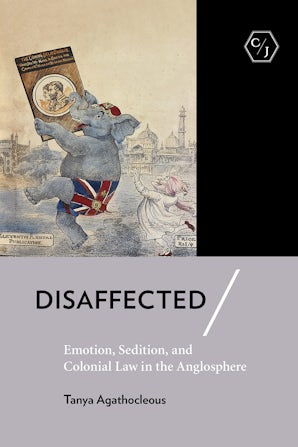
BOOK: Tanya AGATHOCLEOUS, Disaffected - Emotion, Sedition, and Colonial Law in the Anglosphere (Ithaca: Cornell University Press, 2021). ISBN 9781501753879, 115.00 USD


Cornell University Press has published a new book on effects of antisedition law on the overlapping public spheres of India and Britain under empire

ABOUT THE BOOK

Disaffected examines the effects of antisedition law on the overlapping public spheres of India and Britain under empire. After 1857, the British government began censoring the press in India, culminating in 1870 with the passage of Section 124a, a law that used the term "disaffection" to target the emotional tenor of writing deemed threatening to imperial rule. As a result, Tanya Agathocleous shows, Indian journalists adopted modes of writing that appeared to mimic properly British styles of prose even as they wrote against empire.

Agathocleous argues that Section 124a, which is still used to quell political dissent in present-day India, both irrevocably shaped conversations and critiques in the colonial public sphere and continues to influence anticolonialism and postcolonial relationships between the state and the public. Disaffected draws out the coercive and emotional subtexts of law, literature, and cultural relationships, demonstrating how the criminalization of political alienation and dissent has shaped literary form and the political imagination.

ABOUT THE AUTHOR

Tanya Agathocleous is Associate Professor of English at Hunter College. She is author of Urban Realism and the Cosmopolitan Imagination.

TABLE OF CONTENTS

Introduction

1. Affectation: The Aesthete and the Babu on Trial

2. Parody: Colonial Mimicry, Colonial Parody, and theMultiplicity of Punch

3. Review: Worlding White Supremacy and Indian Nationalism

4. Syncretism: From East and West to the Darker Nations

Conclusion


More info here

JOURNAL: Revue Historique de Droit Français et Étranger, 2020/2


(Source: https://www.dalloz-revues.fr/revues/Revue_historique_de_droit_francais_et_etranger-29.htm)


10 June 2021

BOOK REVIEW: Wolfgang REINHARD (Freiburg im Breisgau) on Irene DINGEL et al. (eds.), Handbook of Peace in Early Modern Europe (Berlin: DeGruyter Oldenbourg, 2021) (Sehepunkte, MAY 2021)


(image source: Sehepunkte)

First paragraph:

Ein Werk wie dieses war längst überfällig. Zwar wurde der Friede schon immer gepriesen und hat im 20. Jahrhundert moralisch sogar die Oberhand gewonnen. Der Krieg wurde verboten. Es gibt heute keine Kriegsminister mehr, sondern nur noch Verteidigungsminister und auch so gut wie keine ordnungsgemäß mit Kriegserklärung begonnenen und mit Friedensschluss beendeten Kämpfe alten Stils. Die Wirklichkeit ist freilich nichtsdestoweniger kriegerischer denn je. Auch die Wissenschaft interessiert sich demgemäß lieber für Krieg als für Frieden. Faktisch gilt eben immer noch die Feststellung von Nietzsches Zarathustra "der gute Krieg ist es, der jede Sache heiligt" (97). Sogar die Menschenrechte müssen heute den Krieg "heiligen". Anthropologisch gesehen ist es ja viel einfacher, einen Konflikt auszulösen und durchzufechten als ihn beizulegen und zu beenden. Entsprechend schwer tut sich die Friedensforschung mit der Gewalt und entsprechend verdienstvoll ist der Versuch dieses Buches, hier mit historischer Friedensforschung massiv wissenschaftlich gegenzusteuern.

Read the full review here.

(source: ESILHIL Blog)

BOOK: Craig ANDERSON, Roman Law for Scots Law Students (Edinburgh: Edinburgh University Press, 2021) ISBN 9781474450195, 40.00 GBP


Edinburgh University Press has published a textbook guide to how Roman law influenced Scots law.

ABOUT THE BOOK

A textbook guide to how Roman law influenced Scots law, supported with online student resources

  • Gives a clear, general account of Roman private law: how it developed and how it was administered
  • Explains how Roman law influenced later law in Scotland and elsewhere
  • Guides readers in using Roman materials for modern legal problems
  • Includes chapter summaries and suggestions for further reading

From property law to delict and unjustified enrichment, this textbook focuses on those areas of Roman law that have been most influential on Scots law.

By using this book, students will enter practice with a greater depth of understanding of the roots of modern Scots law, helping them to feel confident in using Roman materials when tackling today's legal problems.

ABOUT THE AUTHOR

Craig Anderson is Lecturer in Law at Robert Gordon University.

TABLE OF CONTENTS

Part I: The Historical and Constitutional Context of Roman Law

Part II: The Law of Persons

Part III: The Law of Things – Property

Part IV: The Law of Things – Succession

Part V: The Law of Things – Obligations

Index


More info here

JOURNAL: Passagens, Revista de História Política e Cultura Política, v. 13, nº 1, January/April, 2021. (Open Access)


(Source: https://periodicos.uff.br/revistapassagens/index)

Borges, libros y lecturas: pesquisa e método
Marcelo Neder Cerqueira
“É antes um delito político do que natural ou individual”: a condição jurídica dos delitos de abuso de liberdade de imprensa no Direito Penal do Brasil Império
Danler Garcia, Diego Nunes
José Luis Duffy, a Revista Penitenciaria e os estudos de medicina legal: para uma prosopografia da administração penitenciária argentina (1905-1909)
Luis González Alvo, Alejo García Basalo
O Tribunal Penal Internacional e o Tribunal de Nuremberg: aspectos históricos e jurídicos
Flavia Denadai Alvarenga, Tarsis Barreto Oliveira
A Lei Antiterrorismo brasileira e a circulação internacional de regimes jurídicos punitivos
Adriano Freixo, Vinicius Armele
Estado e soberania na filosofia protestante: uma introdução ao debate holandês do século XX
Elden Borges Souza, Victor Sales Pinheiro
Pós-verdade e adensamento social: o jogo político em torno do a-sujeitamento na contemporaneidade
Frederico Osanan Amorim Lima
More information: https://periodicos.uff.br/revistapassagens/issue/view/2427