Search

16 July 2024

CALL FOR PAPERS: Residues and Innovations within Imperial Orders. Political Assemblies in Continental Europe, 1800-1850 (Warsaw: DHI, PAS, 23-24 JAN 2025); DEADLINE 31 AUG 2024


(image source: IHPAN)


Organizers: Piotr Kuligowski, Wiktor Marzec, Bartosz Dziewanowski-Stefańczyk Academic Committee: Marnix Beyen, Anna Grześkowiak-Krwawicz, Paulina Kewes, Judit Pál, Henk te Velde First Edition, 23-24 January 2025

The turn of the 18th and 19th centuries witnessed profound transformations in the political landscape of continental Europe, that might be dubbed a Napoleonic moment. Novel ideas regarding national community and state centralization led to the rapid decline of residual republican systems, including almost synchronous collapses of the Dutch Republic, Polish-Lithuanian Commonwealth, and Italian city-republics. Simultaneously, it paved the way for a new type of political assemblies representing a broader, modernly conceived nation, including the third estate. These newly established bodies often deviated from local political traditions, generating uncertainty but also stirring desire for change. These were, however, often created by politicians educated in the time of the 18th century ancien régime. The year 1815 marked a new wave of parliamentarization in Europe, guided by the provisions of the Congress of Vienna and subsequent treaties. Unlike in the Napoleonic era, the architects of the post- Viennese order sought to restore and adapt previously existing representative institutions.

Both pre- and post-Vienna political assemblies, characterized by limited sovereignty were integrated into a broader imperial orders but often situated in buffer zones of empires. While securing imperial rule in these diverse interfaces, these assemblies articulated national-revolutionary claims in times of upheavals and crises, which spurred on centrifugal forces. By comparing these assemblies in the context of their nascent parliamentary culture mixing old forms and innovative designs, a deeper understanding of imperial nexus of power sovereignty, and representation on heterogenous territories can be fostered.

In the first edition of the ‘Parliamentary Junctures in Continental Europe’ conference, we welcome submissions addressing various aspects of representative assemblies’ internal and external functioning during the first half of the nineteenth century. Exemplary areas of inquiry include, but are not limited to:

  • parliamentary rhetoric / discourse and concepts,
  • rearticulations of traditions,
  • procedural and conceptual innovations,
  • assemblies in interface peripheries and inter-imperial bids,
  • social composition of assemblies.

Particular attention will be given to political assemblies situated in imperial borderlands.

Submission deadline: August 31st, 2024

Please send the title, abstract (up to 300 words), and a short CV (one-two pages) at parljunctures@mail.com

Selection results: mid-September 2024

Venues:

  • German Historical Institute, Warsaw (23rd of January 2025)
  • Tadeusz Manteuffel Institute of History of the Polish Academy of Sciences, Warsaw (24th of January 2025)

Practicalities: The conference organizer will provide accommodation to all participants. If necessary, travel expenses may be covered up to 300 EUR. The conference results will be published in the form of a special issue of a respected journal in the field (in English). Participants are expected to circulate drafts of their papers at least two weeks before the workshop.

Read more here.

BOOK: Matthias SCHMOECKEL, Das Recht der Reformation in Frankreich und die Vollendung des modernen Staates (Tübingen: Mohr Siebeck, 2024), 345 p., ISBN 978-3-16-163298-3


ABOUT THE BOOK:

Die französische Rechtsgeschichte ist in Deutschland noch immer zu wenig bekannt: Die Erfindung der Gewaltentrennung wird Montesquieu zugeschrieben, nicht Claude de Seyssel, der dies aufgrund der Abnabelung der französischen Kirche von Rom um 1515 erstmals vertrat. Der Beginn der Diskussionen zur Verfassung und von Grundrechten liegt nicht im 18. Jahrhundert, sondern bei Jean Calvin bzw. dem Schock nach dem Bartholomäusnacht-Massaker. Ziel war der Erhalt des Königreichs unter einem Monarchen, der den verschiedenen Religionen als Rechtsgemeinschaften ebenso wie den Bürgern durch Recht gesicherte Möglichkeiten eines sicheren Lebens in Religionsvielfalt versprach. Mathias Schmoeckel analysiert das Vordringen der Reformation in der Rechtsordnung und Jurisprudenz, analysiert den Begriff »mos gallicus«, und beschreibt dann die Veränderungen des französischen Rechts in Bezug auf die Methoden und Quellen der Rechtswissenschaftler sowie die Auswirkungen auf die Religions- und Staatsordnung sowie ausgewählte Fragen des Zivil- und Strafrechts. Er zeigt, dass das »goldene Zeitalter« der französischen Jurisprudenz durch Guilleaume Farel und Calvin im Sinne einer »Reformation des Lebens« entwickelt wurde, um die herkömmliche Rechtsordnung zu überdenken und feste Rechte für Katholiken und Protestanten gleichermaßen zu gestalten. Dabei wirkten insbesondere die methodischen Anregungen des Philipp Melanchthon; die Juristen um ihn waren bekannt und wurden herangezogen, um sie weiterzuentwickeln. Die Auseinandersetzung mit dem Humanismus ging auch in Frankreich eine Verbindung mit der Reformation ein und führte zu einer neuen Wertschätzung der lokalen Rechtstraditionen. Alle Zweige der Rechtswissenschaft entwickelten neue Anregungen und bedeutende Literatur, die für die weitere juristische Entwicklung in Europa grundlegend wurden. Die insoweit fast unbekannte französische Reformation tritt hier in ihrer Bedeutung für die europäische Geistesgeschichte und Staatsentwicklung in den gleichen Rang neben die deutsche und die englische Reformation.

Read more here.

15 July 2024

PODCAST: Florian REVERCHON, La théorie des nullités: 2000 ans d'histoire [Les Lois de l'Histoire Podcast, Université Sorbonne Paris Nord, Paul CHAUVIN]


Prof. Florian Reverchon (Toulouse) was interviewed for the podcast Les lois de l'histoire (Paul Chauvin) on "la théorie des nullités: 2000 ans d'histoire".

The podcast can be consulted above on Youtube and on the classical platforms.

ARTICLE: Achille MAROTTA, "The Muslim Friend: Cross-Confessional Male Intimacy in Eighteenth-Century Italy" (The Journal of Early Modern History ) 230-252 [OPEN ACCESS]


(iamge source: Brill)

Abstract:

In early modern Italy, stereotypes about Muslim men’s supposed inclination towards the vice of ‘sodomy’ gave rise to fears that Christian masculinity was being tainted. Eighteenth-century court records from the Republic of Genoa and the Papal States contain numerous instances of cross-confessional male relations that faced persecution by state authorities. In each of these cases, Christian men were prosecuted for taking a sexually ‘passive’ role in relation to sexually ‘active’ Muslims, while the reverse scenario was never pursued. This article argues that the sexual focus of judicial authorities obscured the enduring bonds of affection and mutual obligation that developed between men across religious lines. The existence of these relationships unveils an intimate sphere of connections across faith in the early modern Mediterranean while highlighting an intersectional site of Christian social anxiety, where fears of religious contamination overlapped with concerns about same-sex intimacy.

Read the article in open access: DOI 10.1163/15700658-bja10076.

BOOK: Sebastian SCHWAB, Geschichte und Argument [Grundlagen der Rechtswissenschaft; 59] (Tübingen: Mohr Siebeck, 2024), 517 p., ISBN 978-3-16-163526-7


ABOUT THE BOOK:

Historische Argumente im Recht geben Fragen auf. Warum argumentiert man im Recht unter Bezugnahme auf historisches Wissen, obwohl die Geschichtstheorie doch gezeigt hat, mit welchen Unsicherheiten es belastet ist? Und: Hat historische Argumentation in der deutschen Rechtsordnung Platz? Ist sie nicht viel zu reaktionär? Es bedarf eines Zweischritts: Man muss sich von den Debatten um die »historische Auslegung« lösen und historische Argumente ganz abstrakt als Ausdruck der Grundstruktur positiven Rechts fassen. Positives Recht muss historisch argumentieren, weil sich darin seine Rechtlichkeit erweist und aktualisiert. Daneben aber bedarf es einer Betrachtung, die sich tatsächlich auf die ganz konkrete Rechtsordnung einlässt. Nur dann sind Methodenfragen wirklich Verfassungsfragen. Zentrale Weichenstellungen im Verständnis des grundgesetzlichen Demokratieprinzips geraten so in den Fokus.

Read more here.

12 July 2024

JOURNAL: Pro Memorie. Bijdragen tot de Rechtsgeschiedenis der Nederlanden XXVI (2024), No. 1


Redactioneel (Bram Van Hofstraeten & Paul Brood)
DOI 10.5117/PROM2024.1.001.REDA

Arbitrage in de vroegmoderne Nederlanden (A.J.B. Sirks)
DOI 10.5117/PROM2024.1.002.SIRK
Abstract:
Arbitration has always been used to conclude conflicts outside of court. The Low Countries were no exception. Although based on an agreement between parties, there were rules to be followed; and the condition that an arbitral decision should be fair and equitable always made it possible to bring the case on these grounds before the competent court. A problem was the enforcement of an arbitral decision. In Flanders a solution was found: the voluntary condemnation, imposed upon request by the competent court on parties. This remedy was followed widely in the Northern Netherlands (and for all kinds of agreements), but appears to have been replaced in the Southern Netherlands by confirmation of the arbitral decision upon request by the competent court. This practice was probably taken over from France.

Vorstenportretten in vroege drukken van wetgeving in Holland en Zeeland (1500-1540) Vorstelijke propaganda of slimme marketing van drukkers-boekverkopers? (Marie-Charlotte Le Bailly)
DOI 10.5117/PROM2024.1.003.BAIL
Abstract:

Around 1500, just like other sovereigns in Europe, the higher authorities in the Habsburg Netherlands immediately used the printing press in the context of legal and political communication, for example to promulgate laws and statutes. Moreover, their visual aspect played an essential role in their dissemination, as many editions contain woodcuts with princely emblems and/or portraits. Because producing woodcuts was a labourintensive and costly process, printers reused woodblocks from other books, also in legislation. For example, Willem Vorsterman reused portraits of sovereigns he commissioned for his Excellente cronike van Vlaenderen (Antwerp, 1531) in his editions of ordinances. This contribution showcases illustrated ordinances issued in the county of Holland-Zeeland (1500-1540) and traces the origin of reused woodcuts in other texts. Were these portraits purely meant as political communication by the sovereign or was using this particular kind of woodcuts an invention of book printers to promote a new genre?

Rechtsgeleerde rechtsvinding in de Decisiones van Willem Radelant (1538-1612) (E.G.D. Van Dongen & J.M. Milo)
DOI 10.5117/PROM2024.1.004.DONG
Abstract:

Customary law, the unwritten mores of a populace, has a long tradition next to written law. Reception of Roman law, appearance of codified law and positivist methodologies have manoeuvred custom to the margins of the law as it stands, at least in the Netherlands, at the edge of the world. It should be taken seriously, however. The Decisiones of Willem Radelant, president of the Court of Utrecht, are a treasure trove in learned reasoning, and reveal customs growing from facts into accepted law, on the basis of formal criteria (mos, populus, tempus, ratio and aequitas). In Radelants reasoning the acceptance or denial of custom is remarkably oriented on the facts of the case, soundly distinguishing the specific from the general; it provides a systematic place for unwritten rule and decision, between the written signposts of Roman, Canon, feudal and local statutory rules and principles. It does not hesitate either to conditionally give primacy to custom over written law. It is thus a scholarly tale in practical decision-making, with mind and heart, on soft law in hard times

Over de verblinding van twee jonge nationaalsocialistische juristen (Corjo Jansen)
DOI  10.5117/PROM2024.1.005.JANS
Abstract:

The main roles in this article are for Harry van Cranenburgh (1915-1991) and Henk van der Heijden (1916-2012). They were students in Leiden in the decade before World War II. The author is searching for an answer on the question: which ideals and ideas cherished these young lawyers? It looks as they were convinced that the Dutch legal science had come to an end.

Knopen doorhakken en knopen tellen Over de afschaffing van handwissel en huurcerter (H.W. van Boom & M.P.F. Smit)
DOI 10.5117/PROM2024.1.006.BOOM
Abstract:

In the late 20th-century Netherlands, two peculiar types of Dutch rights in rem dating from medieval times were abolished. These two types of customary rights had different characters and different local origins. What they had in common was that in their final years, they hampered economic progress and became increasingly burdensome in socio-economic respect. This article analyses and compares the social and administrative pathways to abolition from both a legal historical and agenda-building perspective.

Recensies

  • Natiestaat en kolonialisme (H.U. Jessurun d’Oliveira, Natiestaat & kolonialisme: een ongemakkelijk verbond. Ras en nationaliteit in de negentiende eeuw. Den Haag, Boom juridisch, 2023, 290 p. ISBN 978-94-6212-834-7) (Peter A.J. van den Berg)
  • Rijkdom van rekesten (Joris Oddens, Op veler verzoek. Inclusieve politiek in Nederland (1780-1860). Amsterdam 2023. 324 p. ʬ 29,90. ISBN 9789024462476) (Paul Brood)
Read the issue online here.

BOOK: Marco ROSCINI, International Law and the Principle of Non-Intervention: History, Theory and Interactions with Other Principles (Oxford: Oxford University Press, 2024), ISBN 9780191829031


(image source: Oxford Academic)

Abstract:

The principle of non-intervention in the domestic affairs of states is one of the most venerable principles of international law but the determination of its exact content has remained an enigma that has haunted generations of international lawyers. This book solves this problem and identifies what the principle of non-intervention specifically prohibits, and what it does not. The principle in question is strictly linked to some fundamental notions of international law, such as sovereignty, use of force, and self-determination: its study, therefore, is of great significance as it offers a fascinating opportunity to explore the macrostructures of international law. Through a comprehensive survey of primary documents, as well as through an extensive evaluation of state practice and literature search, the book provides a systematic and coherent analysis of the principle of non-intervention. The first two chapters tell the story of the principle of non-intervention throughout the centuries up to the present day. Chapters III and IV focus on theory and identify what coercion of state means, what forms of coercion (armed, economic, political subversive) can constitute an unlawful intervention, and the role played by consent in this context. Chapters V, VI, and VII explore the interactions of the principle of non-intervention with other fundamental principles of contemporary international law, namely the principle of internal and external self-determination and the respect for international human rights law and international humanitarian law. Finally, Chapter VIII investigates whether and when cyber operations can constitute an unlawful intervention in the domestic affairs of other states.

 Read more here: DOI 10.1093/oso/9780198786894.001.0001.

11 July 2024

JOURNAL: Comparative Legal History XII (2024), No. 1


Editorial (Agustín Parise & Matthew Dyson)
DOI 10.1080/2049677X.2024.2349849

Articles

Early modern comparative contract law (Piotr Alexandrowicz)
DOI 10.1080/2049677X.2024.2349850
Abstract:

Contract law was one of the main subjects discussed in the early modern legal genre of differentiae iuris civilis et canonici (‘differences between civil and canon law’). Similar topics were covered in both late medieval and early modern differentiae – hence this genre offers a good opportunity for comparative historical research dedicated to selected topics of contract law (such as those discussed here: the actionability of bare agreements, stipulation for the benefit of a third party, overreaching in contract formation and the lease of a house to a scholar). An examination of the sources proves that the authors of early modern differentiae applied the comparative method in their works. This involved the presentation of sources and rationales from the two bodies of law, the interpretation of sources and arguments in favour of the solutions offered, references to the then-current legal literature and practice and most importantly the preferred method of reconciliation for conflicting laws.

Comparative nomogenetics: revisiting Wigmore’s oriental(ist) encounter and the taxonomy of his approach to global legal history (by Morad El Kadmiri) (OPEN ACCESS)
DOI 10.1080/2049677X.2024.2349851
Abstract:

John Henry Wigmore’s life experience as a Westerniser teaching Anglo-American Law in Japan from 1889 to 1892 is an example of legal orientalism. Engaging in the historical study of Japanese law despite diverging cultural paradigms between East and West paradoxically revealed striking similarities leading to the publication of the Materials for Study of Private Law in Old Japan in 1892. More than three decades after his return from Tokyo sparking a lasting fascination for foreign and comparative law, Wigmore published in 1928 A Panorama of the World’s Legal Systems. This case study offers insights on the relationship between legal history and comparative law that these publications respectively represent. The imprecise classification of A Panorama at a time when comparative law was at its infancy stage requires identifying a relevant taxonomy. Wigmore’s legacy is revisited with a focus on both its historical and comparative dimensions.

Parallels and patterns in the Italian (1901) and Hungarian (1903) legislation on migration (Balázs Pálvölgyi) [OPEN ACCESS]
DOI 10.1080/2049677X.2024.2349852
Abstract:

The second half of the nineteenth century was an era of mass labour migration in Europe, when the Atlantic route became of paramount importance alongside intra-continental mobility. From the last third of the century Italy and Hungary were among the most important emigrating countries. By this time changes in the regulation of migration had begun to take place with the development of stronger state control, which affected mobility and the relationship between emigrants and transporters. The question also arose as to whether and how the large emigrating states could ensure the loyalty of their emigrant citizens and control them en route and in the destination states. The regulatory process which began in the 1880s gradually moved from an administrative approach to the development of more comprehensive legal sources covering more and more aspects of emigration with the Hungarian government making use of foreign solutions, particularly the Italian Emigration Act of 1901. 


Review article

Three takes on comparative constitutional history (Ran Hirsch & Nicholas Slawnych)
DOI 10.1080/2049677X.2024.2349853
Abstract:

A review of The Gun, the Ship, and the Pen: Warfare, Constitutions, and the Making of the Modern World, by Linda Colley, New York, Liveright, 2021, 512 pp, $19.95 (pbk), ISBN 978-0871403162; Modern Constitutionalism: Origin and Manifestations. England – North America – France – Germany – Europe/European Union – Latin America, by Horst Dippel, Clark, Talbot Publishing, 2 vols, 2022, xxii + 546, x +547-1177 pp, $295.00 (hbk), ISBN 978-1616196769; The Story of Constitutions: Discovering the We in Us, by Wim Voermans, translated by Brendan Monaghan, Cambridge, Cambridge University Press, 2023, 388 pp, £22.99 (pbk), ISBN 978-1009385046 [published originally in Dutch as Wim Voermans, Het verhaal van de grondwet: zoeken naar wij, Amsterdam, Prometheus, 2019, 512 pp, €34.99 (hbk), ISBN 978-9044640014]

Book reviews

  • Arbeit und Familie in Nordwesteuropa im Spätmittelalter und in der Frühen Neuzeit / Travail et famille en Europe du Nord-Ouest au bas Moyen Âge et à l’époque moderne edited by Audrey Dauchy and Laila Scheuch, Frankfurt am Main, Vittorio Klostermann, 2023, 213 pp., € 69.00 (pbk), ISBN 978-3-465-04602-8) (Anna Bellavitis & Siglinde Clementi)
    DOI 10.1080/2049677X.2024.2349856
  • Intervention and state sovereignty in Central Europe, 1500–1780 by Patrick Milton, Oxford, Oxford University Press, 2022, 320 pp., £ 90,00 (hbk), ISBN 978-0192871183 (Stephan Wendehorst)
    DOI 10.1080/2049677X.2024.2349846
  • Le danze di Clio e Astrea. Fondamenti storici del diritto europeo by Aldo Andrea Cassi, Romano Ferrari Zumbini, Michele Rosboch, Giuseppe Speciale, Chiara Valsecchi, edited by Aldo Andrea Cassi, multimedia project by Alan Sandonà, Turin, Giappichelli, 2023, XVI + 558 pp, 49€, ISBN/EAN 979-12-211-0066-2 (Dante Fedele)
    DOI 10.1080/2049677X.2024.2349848
  • The jury: a very short introduction by Renée Lettow Lerner, New York, Oxford University Press, 2023, 160 pp., £8.99 (pbk), ISBN 978-0-190-92391-4 (Sylvain Soleil)
    DOI 10.1080/2049677X.2024.2349855
  • The ideal river: how control of nature shaped the international order by Joanne Yao, Manchester, Manchester University Press, 2022, 264 pp, £85.00 (hbk), ISBN 978-1526154385 (Jan-Henrik Meyer)
    DOI 10.1080/2049677X.2024.2349847
  • The Routledge handbook of public taxation in medieval Europe edited by Denis Menjot, Mathieu Caesar, Florent Garnier, and Pere Verdés Pijuan, London and New York, Routledge, 2023, XIV + 497 pp., £150 (hbk), ISBN 978-0-367-90336-7 (by Jane Frecknall-Hughes)
    DOI 10.1080/2049677X.2024.2349854
  • We, the King. Creating royal legislation in the sixteenth century Spanish New World (by Adrian Masters, Cambridge, Cambridge University Press, 2023, 342 pp., $110 (hbk), ISBN 978-1009315418) (Alejandro Agüero)
    DOI 10.1080/2049677X.2024.2349857
Read the whole issue here.

CALL FOR PAPERS: Lotus at 100. Inaugural Workshop 2024 (Lund: University of Lund, 9-10 JAN 2025) (DEADLINE 4 OCT 2024)


(image source: studyinsweden)

Author conferences in Marseille, Istanbul and The Hague: 2025-2026

Discussed and dismissed, celebrated and critiqued, the Case of the S.S. “Lotus” has inspired controversial debates ever since it was decided by Max Huber’s presidential casting vote in 1927. As we approach the centenary of the Lotus Case in 2027, we invite reflections on the legacy of the decision and the principle it stands for. Our aim is to discuss the historical significance of the case, assess the impact it had on the theory and practice of international law and to consider its contemporary significance.

Subject to the availability of funding, we would like to hold these Lotus-related conversations at the three places most closely associated with the ship: Marseille (the homeport), Istanbul (the site of the Turkish proceedings triggering the PCIJ case) and The Hague (the seat of the PCIJ). The specific dates for these workshops will be agreed upon among the participants following the inaugural workshop on 9-10 January.

We are aiming to publish the papers presented at these workshops / conferences either as an edited collection or as a special journal issue. The detailed arrangements in this regard will be communicated to the participants of the inaugural workshop as soon as they become available.

Possible themes that papers could explore include:

  • Context: The historical and geographic settings, the domestic proceedings in Turkey, the newly established league and the PCIJ, the emergence of the rule-based international order…
  • Actors: The court’s president, the judges and their various opinions; the Turkish and French counsel; the persons often forgotten – the sailors of the Bozkurt; the passengers on the Lotus…
  • Substantive aspects: jurisdiction; law of the sea; the Lotus Principle, the consent-based international legal order…
  • Legacy: Legacy in Turkey, in France, in international law more generally…
  • We also welcome papers and proposals related to any other aspect of the decision…

Abstracts of no more than 300 words should be submitted by 4 October 2024 to Valentin Jeutner at: submissions@lotus-100.com. For the inaugural workshop (Lund/online), accepted participants are asked to prepare short working papers (ca. 1000-2000 words) setting out initial ideas / proposed approaches to questions related to the Lotus Case.

If you would like to join the Lotus-project’s email list and receive updates about further events planned in connection with the anniversary, please let us know by e-mailing: news@lotus-100.com

Read more  here.

JOURNAL: Annales. Histoire, Sciences Sociales LXXVII (2023), nr. 4 (Dec)


(image source: Cambridge Core)

The journal Annales. Histoire, Sciences Sociales published several issues of interest to legal historians

Articles
Enfermement et graffiti Des palimpsestes de prison aux archives murales (note critique) (Guillaume Calafat)
DOI  10.1017/ahss.2024.4
Abstract:
In the early 2000s, restoration work on the building that housed Palermo’s Inquisition prisons during the early modern period revealed an impressive series of graffiti and prompted their historical study. In Del Santo Uffizio in Sicilia e delle sue carceri, Giovanna Fiume offers a rich synthesis of the individual and collaborative work she has devoted to these “mural archives” of the Palermo court. Bringing together the procedural and material history of incarceration, she succeeds in identifying the possible authors of the inscriptions and drawings that line the cell walls. In so doing, she sheds light on the trajectories of prisoners and their experiences of imprisonment, often passed over in silence by legal sources. These graffiti thus offer a new layer of documentation that broadens our understanding of the Inquisition’s judicial, penal, and carceral systems. More broadly, Fiume’s work is part of a flourishing strand of recent research dedicated to prisons and graffiti, at the confluence of literary studies, anthropology, and art history, which is interested in both the patrimonial and scholarly dimensions of these graphic marks and their aesthetic and ethnographic aspects. In offering a brief overview of the field, this review article aims to suggest some methodological and historiographical avenues for documenting social and intellectual life inside prisons.

« Dans les rues, on ne voit que des musulmans ! » Esclavage délié et appartenance urbaine en Méditerranée espagnole aux XVIIe et XVIIIe siècles (Thomas Glesener & Daniel Hershenzon) 
DOI 10.1017/ahss.2024.3
Abstract:

In 1717, an anonymous petition to the King of Spain expressed concern about the excessive number of Muslims living in Cartagena (Murcia). This complaint prompted the Council of Castile to launch a survey of the Muslim population with the aim of clarifying their status. In addition to galley slaves, the inquiry focused in particular on libertinos, a little-known category of slaves who lived and worked freely in the city but were heavily indebted to their masters because of the sums owed for their ransom. This article reconstructs the condition of these unbound slaves, who lived apart from their masters’ households, and the tensions this provoked between competing systems of norms. On the one hand, the right of slaves to work to finance their own redemption, and that of their masters to live off the rents imposed on them, were deeply rooted in local custom. On the other, rising insecurity along the coast prompted local authorities and the Crown to restrict these overlapping rights by forcing masters to keep their slaves at home. At stake in this conflict between different slavery regimes, the one based on local law and the other on royal jurisdiction, were slaves’ access to the labor market and their right to free residency and the protections afforded by contract law. Finally, by placing the inquiry itself at the heart of the study, the article investigates the meaning of a procedure that was less a demographic enumeration of slaves than a redistribution of rights to the city among its Muslim inhabitants.

 Book reviews

  • Sinclair Bell et Teresa Ramsby (dir.) Free at Last! The Impact of Freed Slaves on the Roman Empire Londres, Bristol Classical Press, 2012, 212 p. (by Marianne Beraud)
    DOI 10.1017/ahss.2024.5
  • Craig Perry et al. (dir.) The Cambridge World History of Slavery, vol. 2, AD 500-AD 1420, Cambridge, Cambridge University Press, 2021, 708 p. (by Jean-Claude Hoquet)
    DOI 10.1017/ahss.2024.6
  • Hannah Barker That Most Precious Merchandise: The Mediterranean Trade in Black Sea Slaves, 1260-1500 Philadelphie, University of Pennsylvania Press, 2019, 328 p. (by Jean-Claude Hoquet)
    DOI 10.1017/ahss.2024.7
  • Meredith Martin et Gillian Weiss Le Roi-Soleil en mer. Art maritime et galériens dans la France de Louis XIV, Paris, Éd. de l’EHESS, trad. par É. Trogrlic, 2022, 403 p. (by M'hamed Oualdi)
    DOI 10.1017/ahss.2024.8
  • Fabienne P. Guillén et Roser Salicrú i Lluch Ser y vivir esclavo. Identidad, aculturación y agency (mundos mediterráneos y atlánticos, siglos XIII-XVIII), Madrid, Casa de Velázquez, 2021, 290 p. (by José Antonio Martínez Torres)
    DOI 10.1017/ahss.2024.9
  • Jean-Frédéric Schaub et Silvia Sebastiani Race et histoire dans les sociétés occidentales, XVe-XVIIIe siècle, Paris, Albin Michel, 2021, 504 p. (by Domitille de Gavriloff)
    DOI 10.1017/ahss.2024.10
  • Daniel Nemser Infrastructures of Race: Concentration and Biopolitics in Colonial Mexico Austin, University of Texas Press, 2017, 221 p. (by Guillaume Gaudin)
    DOI 10.1017/ahss.2024.11
  • Jennifer L. Palmer Intimate Bonds: Family and Slavery in the French Atlantic Philadelphie, University of Pennsylvania Press, 2016, 280 p. (by Olivier Caudron)
    DOI 10.1017/ahss.2024.13
  • Christine Walker Jamaica Ladies: Female Slaveholders and the Creation of Britain’s Atlantic Empire Williamsburg/Chapel Hill, Omohundro Institute of Early American History and Culture/University of North Carolina Press, 2020, 317 p. (by Cécile Vidal)
    DOI 10.1017/ahss.2024.15
  • Manuel Covo Entrepôt of Revolutions: Saint-Domingue, Commercial Sovereignty, and the French-American Alliance New York, Oxford University Press, 2022, XI + 304 p. (by Éric Roulet)
    DOI 10.1017/ahss.2024.16
  • Hebe Mattos Les couleurs du silence. Esclavage et liberté dans le Brésil du XIXe siècle trad. par A. Fléchet, Paris/Aubervilliers, Khartala/CIRESC, [1995] 2019, 359 p. (by Aurélia Michel) DOI 10.1017/ahss.2024.21
  • Tyler Stovall White Freedom: The Racial History of an Idea Princeton, Princeton University Press, 2021, 436 p. (by Jean-Luc Bonniol)
    DOI 10.1017/ahss.2024.22
Read the issue on Cambridge Core.


BOOK: Aurore CAUSIN, Penser le droit de la succession royale par les lois fondamentales (1661-1717) [Bibliothèque de l'IRJS - André Tunc, vol. 127] (Paris: IRJS Éditions, 2023), 480 p. ISBN 9782850020605, € 42


(image source: Paris 1)

Abstract:

Cette thèse propose de replacer la notion de loi fondamentale au coeur des argumentations relatives à la défense de la succession royale, en tenant compte des récentes perspectives de recherche développées en histoire du droit, spécialement l’histoire de la pensée juridique. À travers trois événements du gouvernement personnel de Louis XIV (la signature du traité de Montmartre, les négociations d’Utrecht et l’habilitation à succéder accordée aux princes légitimés), les lois fondamentales intègrent des argumentations marquées du sceau de la pensée juridique moderne. Si le xviiixviiiee siècle voit se développer la notion de constitution, les accents jusnaturalistes de la pensée juridique ne sont pas estompés. En mobilisant les lois fondamentales, pamphlétaires, ambassadeurs, princes du sang ou légitimés convoquent une certaine représentation de l’ordre de la succession royale et de l’État. Ces travaux étudient les lois fondamentales dans la pensée juridique de leur époque. C’est donc la dynamique interne de leur invocation qui a été étudiée, avec ses tâtonnements, ses hésitations et les invocations d’une notion qui contribuent à transformer plus largement le droit de la succession royale. Ces travaux n’écartent pas les références à la nature employées par les auteurs et présupposent la logique interne d’argumentations portant sur le droit de la succession royale bien que n’ayant pas toujours recours aux lois fondamentales. Les argumentations déployées portent avant tout sur la défense du droit de la succession royale et non exclusivement sur la défense des lois fondamentales. À travers l’analyse terminologique réalisée, il apparaît que le droit de la succession royale se défend plus qu’il ne s’impose et la mise en avant d’une expression (droit de naissance, droit du sang) sur une autre contribue à la transformation interne d’un droit que les textes laissent apparaître comme inviolable. Les lois fondamentales, éléments naturels de la succession royale et lois naturelles de l’État, placées à la croisée du droit du sang et du droit de naissance, traduisent finalement la préoccupation qu’ont les auteurs pour la conservation de l’État.

 Read more here.

10 July 2024

BOOK: Ian WARD, The Reformation of the Constitution. Law, Culture and Conflict in Jacobean England (Oxford: Hart, 2024), ISBN


(image source: Hart)

Abstract:

This book revisits one of the defining judicial engagements in English legal history. It provides a fresh account of the years 1606 to 1616 which witnessed a series of increasingly volatile confrontations between, on the one side, King James I and his Attorney-General, Sir Francis Bacon, and on the other, Sir Edward Coke, successively Chief Justice of Common Pleas and Lord Chief Justice. At the heart of the dispute were differing opinions regarding the nature of kingship and the reach of prerogative in reformation England. Appreciating the longer context, in the summer of 1616 King James appealed for a reformation of law and constitution to complement the reformation of his Church. Later historians would discern in these debates the seeding of a century of revolution, followed by another four centuries of reform. This book ventures the further thought that the arguments which echoed around Westminster Hall in the first years of the seventeenth century have lost little of their resonance half a millennium on. Breaks with Rome are little easier to 'get done', the margins of executive governance little easier to draw.

Table of contents:

Introduction: Irony and Rhyme 1. Reformation 2. The Aspirations of James Stuart 3. The Casebook of Sir Edward Coke 4. The Lives of Francis Bacon 5. Apotheoses Epilogue

 Read more here.

JOURNAL: Book reviews in The English Historical Review (CXXXIX (2024), nr. 596)


(image source: Oxford Journals)

The English Historical Review published several legal history-relevant book reviews in its 596th issue (February 2024):

  • Kings as Judges: Power, Justice, and the Origins of Parliaments, by Deborah Boucouyannis (Cambridge:  Cambridge University Press,  2021; pp.  386. £29.99) (by John Watts)
    DOI 10.1093/ehr/ceae007
  • Republics of Difference: Religious and Racial Self-Governance in the Spanish Atlantic World, by Karen B. Graubart (New York:  Oxford University Press,  2022; pp.  320. £64).
    DOI 10.1093/ehr/ceae013
  • The Madman and the Church Robber: Law and Conflict in Early Modern England, by Jason Peacey (Oxford:  Oxford University Press,  2022; pp.  xvi + 295. £35).
    DOI 10.1093/ehr/ceae053
Read more with Oxford Journals.

09 July 2024

BOOK: Theodor BAUMS, Luxemburg und das Reichskammergericht [Quellen und Forschungen zur höchsten Gerichtsbarkeit im Alten Reich; 81] (Köln: Böhlau, 2024), 143 p., ISBN 978-3-412-53052-5


ABOUT THE BOOK:


1548 schloss Kaiser Karl V. mit den Ständen des Heiligen Römischen Reichs den Burgundischen Vertrag. Dieser Vertrag und die nachfolgende Entwicklung führten zur weitgehenden Lösung der burgundischen Erblande der Habsburger, darunter das Herzogtum Luxemburg, vom Reich. Theodor Baums behandelt zunächst die Stellung des Herzogtums Luxemburgs als Reichslehen, die Zuständigkeit des Reichskammergerichts auch für die burgundischen Erblande und sodann Inhalt und Bedeutung des Burgundischen Vertrags. Die durch den Vertrag bewirkte Abspaltung der Erblande vom Reich machte neben anderem die Entwicklung von Normen für die „internationale“ Gerichtszuständigkeit erforderlich. Im zweiten Teil befasst sich die Untersuchung mit der durch den Burgundischen Vertrag ausgelösten Entfaltung dieser frühen Form zwischenstaatlicher Kooperation bei grenzüberschreitenden Konflikten. Hierfür werden die Akten des Reichskammergerichts zu einschlägigen Streitigkeiten mit Bezug zum Herzogtum Luxemburg ausgewertet.

ABOUT THE AUTHOR:

Theodor Baums ist emeritierter Ordinarius für Bürgerliches Recht, Handels- und Wirtschaftsrecht und Gründungs- und Vorstandsmitglied des Instituts for Law and Finance (ILF) der Johann Wolfgang Goethe-Universität, Frankfurt am Main.

Find more here.

08 July 2024

BOOK: Giovanni ROSSI and Pietro SCHIRÒ (eds.), Law and Art in the 19th Century. Power in Images (Pisa: Pacini Editore, 2024) ISBN: 978-88-3379-685-7, 520 pp., €57,00


(Source: Pacini Editore)


ABOUT THE BOOK

This volume deals with the figurative representation of law and power in the 19th Century, emphasising the importance of images and, thus, of the iconographic representation of themes and concepts pivotal to law in 19th-century Europe. The twenty collected contributions examine multiple topics connected to different forms of artistic expression and investigate how painting, sculpture, and architecture reproduced a peculiar vision of law and power, sometimes to amplify its importance, sometimes to formulate an open critique.

The volume analyses a series of case studies to focus, with a comparative and multidisciplinary approach, on the ways in which the emergence of a new juridical experience in 19th-century Europe led to the replacement – or re-semanticisation – of symbols and images traditionally associated with law and power, in order to express and propose to the society of the time a new conception of the law.

 Sono presenti nell’opera testi diversi in italiano, inglese e francese. 


Table of contents available here.

BOOK: Philipp Morten MARTIN, Grundstücksveräußerungen von Juden im Nationalsozialismus [Beiträge zur Rechtsgeschichte des 20. Jahrhunderts; 124] (Tübingen: Mohr Siebeck, 2024), 219 p., ISBN 978-3-16-163684-4

Cover von 'undefined'

ABOUT THE BOOK:

Philipp Morten Martin beschäftigt sich mit Grundstücksveräußerungen von Juden im Nationalsozialismus in den Jahren 1938 und 1939. Dazu hat er über 40.000 Notarurkunden aus den Landgerichtsbezirken Düsseldorf, Köln und Wuppertal untersucht. Ziel war es, die in der historischen Forschung bisher wenig berücksichtigte Frage nach der Wirksamkeit dieser Veräußerungen zu erfassen. Der Autor arbeitet heraus, an welchen vertraglichen Regelungen und Umständen des Vertragsschlusses sich der Einfluss der nationalsozialistischen Verfolgung darstellen lässt. Dies betrifft etwa die erzwungenen Veräußerungen von Grundstücken oder solche Veräußerungen, die unter Drohungen gegen die Veräußerer zustande kamen. Auch wird untersucht, wie die jüdischen Eigentümer an den Veräußerungen beteiligt wurden, wenn sie selbst nicht mehr bei der Beurkundung erscheinen konnten, weil sie geflohen waren.

Find more here.

05 July 2024

CONFERENCE: Legal Unification through Case Law? (Regensburg: University of Regensburg, Institute for East European Law, 21 - 22 NOV 2024)


Conference program:

21. November 2024 (2 p.m.)

Introduction (Martin Löhnig)

Legal harmonisation between Austria and Germany before the amendments to the ABGB (Kamila Staudigl-Ciechowicz)

The ABGB in the case law of the VIII. Civil Senate of the German Reichsgericht 1939 - 1945 (Martin Löhnig)

The British Judicial Committee of the Privy Council (David Schorr)

22. November 2024 (9 a.m)

The Role of the Hungarian Royal Curia in the Unification of Private Law between the Two World Wars  (László Ádám Joó)

The Supreme Court for Bosnia and Herzegovina and the unification of judicial practice (Mehmed Becic)

The Supreme Court of the Second Polish Republicon Civil Status Records: A Case Law Review (Bartosz Kamil Truszkowski)

Registration:

rechtskultur@ur.de

Organized by:

Prof. Dr. Martin Löhnig (University of Regensburg)

Conference venue:

Institut für Ostrecht/Institute for East European Law
Landshuter Str. 4
D-93047 Regensburg

Find more information here.

04 July 2024

JOURNAL: Comptabilité(s). Revue d'histoire des comptabilités, XV (2023): Sources, normes et procédures de la fiscalité en Europe méditerranéenne (XIIIe-XVIe s.) [OPEN ACCESS]

(Image source: Revue Comptabilités)


La revue accueille toute recherche portant sur l’histoire et l’archéologie des documents comptables, des institutions qui les commanditent et des personnes qui les réalisent. Elle reçoit dossiers thématiques, articles de fonds et méthodologiques, éditions commentées de documents, comptes-rendus de thèses, de rencontres et d’ouvrages, notes d’actualités. Elle publie des textes dans toutes les langues européennes et les accompagne de résumés en français, anglais, allemand, espagnol.


TABLE OF CONTENTS

  • Béatrice Touchelay – Avant-propos
  • Marco Conti et Ézéchiel Jean-Courret – Sources, normes et procédures de la fiscalité directe en Occident méditerranéen (XIIIe-XVe s.)
  • Francesco Bettarini – La valutazione del reddito d’impresa nel Catasto del 1427
  • Marco Conti – Contribuables, equitas et estimation des richesses du contado bolonais au début du XIVe siècle. Notes en marge de l’édition de l’estimo de 1303
  • Florent Garnier – Temporalités documentaires, normatives et fiscales à Millau au milieu du XIVe siècle
  • Ézéchiel Jean-Courret – « Aysso qui s’ensec avem baylat per far e per ordenar e per mandar e per levar lo talh ». Discours, procédures et régimes de la fiscalité directe à Périgueux aux XIVe et XVe siècles
  • Laura Miquel Milian – El impuesto directo en la Barcelona del siglo XV
  • Jordi Morelló Baget et Albert Reixach Sala – “Iuxta facultates bonorum ipsorum singularium”: las fuentes para la fiscalidad directa en las comunidades rurales de la Cataluña bajomedieval y el estudio de la desigualdad
  • Davide Morra – Un dialogo delle ragioni. I conti della tassa diretta nel regno di Napoli all’epoca di Ferdinando I d’Aragona (1458-1494)
  • Fabrizio Alias – La fiscalità diretta nella terra sarda dei Della Gherardesca: analisi delle pratiche di scrittura e del prelievo signorile attraverso il «Liber introytuum et reddituum» (1323) [Texte intégral]
  • Catarina Rosa – Uma aproximação à documentação fiscal em Portugal: fontes para o estudo da fiscalidade municipal direta na Idade Média (sécs. XV-início do XVI)
  • Pau Viciano – Matérialité des registres fiscaux et pratiques administratives. Les livres de la levée de l’impôt direct municipal dans le royaume de Valence (Vila-real, 1451)

Hors série

  • Philippe Charon Maîtres auditeurs, clercs et notaires des comptes sous la dynastie des Évreux-Navarre (1329–1387)
  • Marc Nikitin Le mot comptabilité s’est répandu à la fin du XVIIIe siècle pour désigner une technique de gouvernement


More information can be found here.

03 July 2024

SCHOLARSHIPS: Visiting Researchers 2025-2026 (Department "Historical Regimes of Normativity", Max Planck Institute for Legal History and Legal Theory) (DEADLINE 30 AUG 2024)

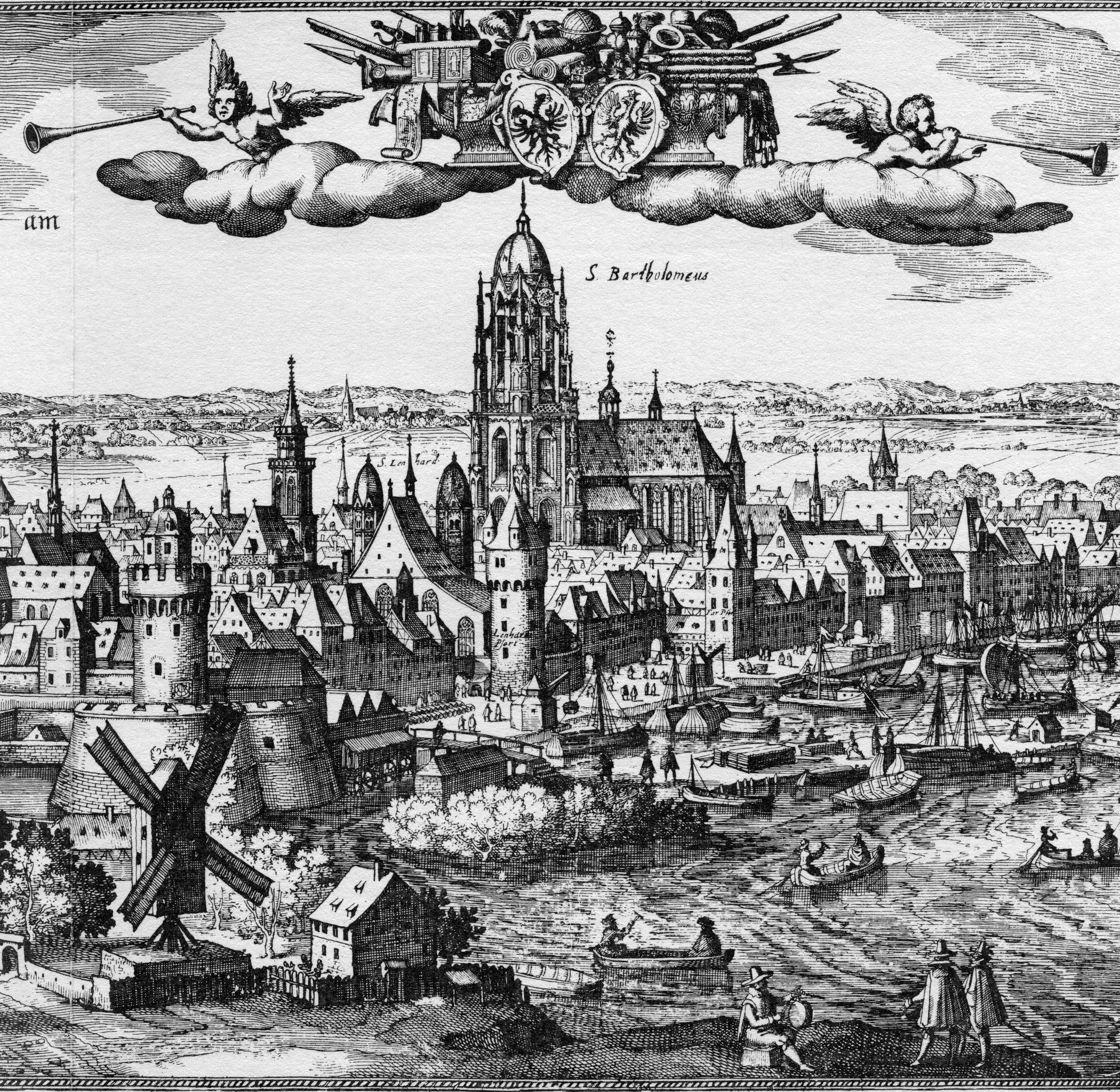
(Frankfurt, 16th century; image source: Wikimedia Commons)
 

The Department Historical Regimes of Normativity (Prof. dr. Thomas Duve) will award scholarships for research stays of three or six months, starting on 1 April 2025 / 1 July 2025 / 1 October 2025 / 5 January 2026 for PhD students, post-doctoral and senior researchers. Deadline 30 August 2024.

More information here.

Please ensure that your application reaches us at least four months before your intended research stay. Submit your complete application via our online application system.

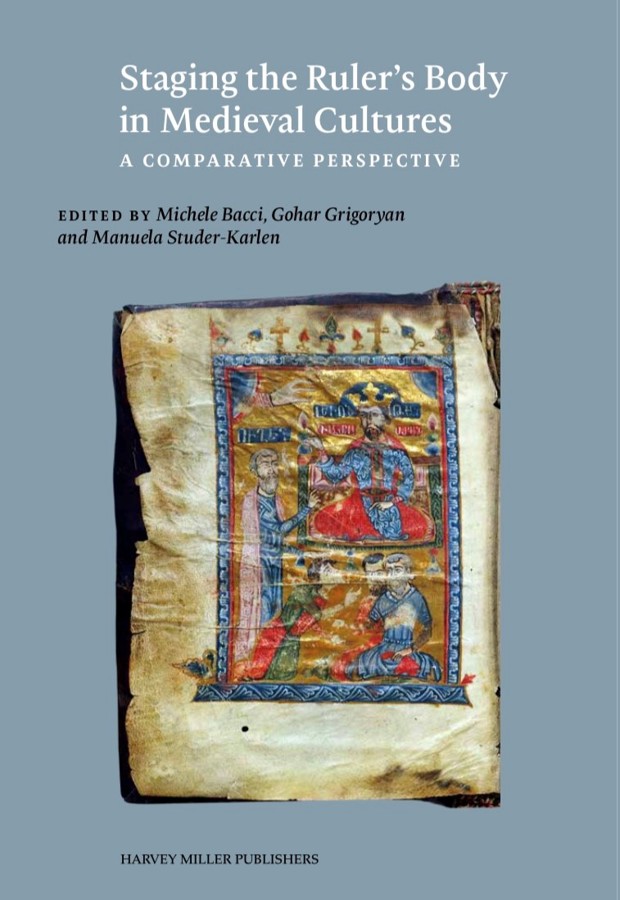
BOOK: Michele BACCI, Gohar GRIGORYAN, Manuela STUDER-KARLEN (eds.), Staging the Ruler’s Body in Medieval Cultures: A Comparative Perspective (Turnhout: Brepols, 2023). ISBN: 9781915487087 [OPEN ACCESS]

(Image source: Brepols)


ABOUT THE BOOK

This book explores the viewing and sensorial contexts in which the bodies of kings and queens were involved in the premodern societies of Europe, Asia, and Africa, relying on a methodology that aims to overcoming the traditional boundaries between material studies, art history, political theory, and Repräsentationsgeschichte. More specifically, it investigates the multiple ways in which the ruler’s physical appearance was apprehended and invested with visual, metaphorical, and emotional associations, as well as the dynamics whereby such mise-en-scène devices either were inspired by or worked as sources of inspiration for textual and pictorial representations of royalty. The outcome is a multifaced analysis of the multiple, imaginative, and terribly ambiguous ways in which, in past societies, the notion of a God-driven, eternal, and transpersonal royal power came to be associated with the material bodies of kings and queens, and of the impressive efforts made, in different cultures, to elude the conundrum of the latter’s weakness, transitoriness, and individual distinctiveness.


ABOUT THE EDITORS

Michele Bacci is Professor of Medieval Art History at Fribourg University, Switzerland, and a member of the Academia Europaea. His research has been focused on artistic interactions in the Medieval Mediterranean and beyond, and the history of cult-objects and holy sites from a phenomenological-comparative viewpoint. He is the author of numerous publications, including Il pennello dell’Evangelista (1998), The Many Faces of Christ (2014), the Mystic Cave (2017), and Veneto-Byzantine Artistic Interactions (2021).

Gohar Grigoryan, Ph.D. (2017), University of Fribourg, is currently senior researcher at the same university within an SNSF-funded project. She is the author of over two dozen peer-reviewed articles on medieval Armenian art and history and of an upcoming monograph on royal imagery in Cilician Armenia.

Manuela Studer-Karlen, Ph.D. (2010), University of Fribourg, is a SNSF Professor for Medieval Art at the University in Bern. She has published a monograph on late antique sarcophagi and recently her habilitation has been published with the title: "Christus Anapeson. Image and Liturgy". Her research centres on the history of visual-cultural processes in late antiquity, the interactions among text, image and space in Byzantine churches, medieval Georgian art, and Gothic ivories.


TABLE OF CONTENTS

  • The Ruler’s Multiple Bodies and Their Mise-en-Scène: Some Introductory Remarks (MICHELE BACCI)

  1. Staging the Body of the Lord of the Sevenfold World. Methectic Spaces and Chiasmatic Viewing in Sasanian Iran (MATTHEW P. CANEPA)
  2. Queen Consort Mariam Dadiani and Female Architectural Patronage in Late Medieval Georgia (NATIA NATSVLISHVILI)
  3. The ‘Just Judgement’ of King Lewon IV. Representational Strategies of Righteous Rulership in Cilician Armenia (GOHAR GRIGORYAN)
  4. Royal Imagery and Devotional Spaces in Early Solomonic Ethiopia. The Case of Gännätä Maryam (JACOPO GNISCI)
  5. Staging as Metaphor. The King’s Body and the Theatricality of Power (ANTONY EASTMOND)
  6. Clothes maketh the emperor? Embodying and Performing Imperial Ideology in Byzantium through Dress (MARIA PARANI)
  7. Staging for Commemoration: The Cherubikos Hymnos (MANUELA STUDER-KARLEN)
  8. The Khan in the West. The Reception of Mongol Political Power in the Texts and Images of Medieval Latin Europe (ELEONORA TIOLI)
  9. Staging the Virgin Mary as the Ruler of the Sienese City-State (KAYOKO ICHIKAWA)
  10. Shaping the Face of Power. The Portraits of King Robert of Anjou (1309-1343) (MIRKO VAGNONI)
  11. Staging the Royal Corpse. Reburials of Monarchical Bodies at the Basilica of San Isidoro in León (ALEKSANDRA RUTKOWSKA)
  12. The Presence and Propaganda of Jaime the Conqueror of Aragon (r. 1213-76) in the Llibre dels Fets. The Image, Action, and Rhetoric of a King (SOFIA FERNANDEZ POZZO)
  13. The Royal Presence of Pedro IV (r. 1336-87) in Contemporary Textual and Iconographic Sources (MARTA SERRANO-COLL)
  14. Staging the Absent King. Effects of Presence on Medieval Royal Thrones (SABINE SOMMERER)

More information can be found here.

02 July 2024

FELLOWSHIPS: IEG-Stipendienprogramm (Mainz: Leibniz-Institut für Europäische Geschichte, DEADLINE 15 AUG 2024)


(image source: Wikipedia)

Description:

Das Leibniz-Institut für Europäische Geschichte (IEG) vergibt Stipendien für Promovierende sowie Postdocs aus dem In- und Ausland. Gefördert werden Forschungsprojekte von der Frühen Neuzeit bis in die Zeitgeschichte, die sich mit der Religions-, Politik-, Gesellschafts- und Kulturgeschichte Europas befassen. Besonders willkommen sind vergleichende, transfergeschichtliche und transnationale Projekte sowie geistes- und religionsgeschichtlichen Fragestellungen. Das Institut ermöglicht seinen Stipendiat:innen, konzentriert ihr eigenes Forschungsvorhaben zu verfolgen. In einer internationalen Gesprächsatmosphäre schärfen sie Methoden und Fragestellungen einer interdisziplinären historischen Europaforschung. Je nach Interesse und fachlicher Ausrichtung können sie an den vielfältigen wissenschaftlichen Aktivitäten des Instituts mitwirken und sich mit seinen internationalen Kooperationspartnern austauschen. Die zu fördernden Forschungsprojekte sollten auf 6 bis 12 Monate angelegt sein. Die Stipendien sind mit einer Residenzpflicht in Mainz verbunden. Kürzere Reisen zu Archiven, Bibliotheken, auswärtigen Fachleuten und Fachtagungen sind im Rahmen dieser Residenzpflicht möglich. Die Stipendiat:innen wohnen und arbeiten im Institutsgebäude in Mainz. Für ihre Forschungen steht ihnen die Spezialbibliothek des Instituts und die Infrastruktur am Wissenschaftsstandort Mainz zur Verfügung. Forschungsliteratur, die nicht im Bestand vorhanden ist, kann über einen Ausleihservice aus der Universitätsbibliothek Mainz oder per Fernleihe bestellt werden. Die wissenschaftlichen Arbeitssprachen des IEG sind deutsch und englisch. Gute Kenntnisse der englischen Sprache sind Voraussetzung. Haftungshinweis: Wir übernehmen keine Haftung für die Inhalte externer Links.

Read more here. 

CALL FOR PAPERS: Gender, Identity, and Authority in Late Antiquity (Tulsa, 20-23 MAR 2025; DEADLINE 1 OCT 2024)

(Image source: WikimediaCommons)


The Society for Late Antiquity is pleased to announce the sixteenth biennial meeting of Shifting Frontiers in Late Antiquity, which will be held at The University of Tulsa, in Tulsa, Oklahoma. We encourage papers that investigate issues and aspects of gender, identity, and/or authority within the broader late antique world, either in relation to one another or on their own. This thematic scope is intentionally broad, allowing for many different approaches and from a host of disciplines and methodologies. Gender, for example, might include the impact of religion or other factors on ideas of the family, sex, and sexuality, understandings of the nature of gender differences, or conceptions of identity and authority in relationship to the gendered or genderless self or other. Likewise, identity might focus on its self-perception or ascription by others, its potential to be malleable, situational, or contested, or its various components, like ethnicity, political allegiance, religious affiliation, or class. Finally, authority might interrogate its attribution to or expectation for a particular person (e.g., an empress or saint), place (e.g., Rome), or thing (e.g., a text or creed), the mechanisms for its attainment or rejection, such as tradition, merit, or force, or its realization of lack thereof, either as an actual fact or ideal.

Abstracts (no more than 500 words) for papers presenting original scholarship should be submitted for consideration no later than October 1, 2024.


More information can be found here.

01 July 2024

HONORARY DOCTORATE: Prof. John Cairns (Edinburgh) receives honorary doctorate from the University of Glasgow


 (image source: University of Edinburgh)

First paragraph:

On Wednesday, 19 June 2024 the University of Glasgow awarded Professor John Cairns, Professor of Civil Law at Edinburgh Law School, the honorary degree of Doctor of Laws. The degree was awarded by the University of Glasgow’s Chancellor and Olympian Gold Medallist Dame Katherine Grainger. Dame Grainger Is also a former student of Professor Cairns from her time as an undergraduate law student at Edinburgh Law School.

Read further here. 

BOOK: Martine CHARAGEAT, Mathieu SOULA, Mathieu VIVAS (eds.), Faire justice. Petit répertoire de sources commentées (Moyen Âge-XXe siècle) (Villeneuve d'Ascq: Presses universitaires du Septentrion, 2024). ISBN: 9782757441343


ABOUT THE BOOK

Conçu pour des étudiants et des enseignants, cet ouvrage favorise l'approche de l’histoire de la justice à n’importe quel niveau d’apprentissage, que ce soit celui d’une initiation ou bien d’une spécialisation. L’historiographie qui bénéficie à ce jour d’une longue tradition, pour les périodes allant du Moyen Âge au XXe siècle, n’est pas celle qui a le plus édité de sources de manière accessible et pédagogique (transcription, traduction, etc.). Partager ses sources et expliquer comment les manipuler est un pan de l’histoire judiciaire que les chercheurs n’ont pas encore pleinement investi. Il n’est sans doute pas simple d’éditer des lettres de rémission ou des procès, par exemple, et la raison en est facile à comprendre : ils sont trop longs à publier en termes de volume. La mise en ligne de certains dossiers, comme sur le site de Criminocorpus, atténue en partie ce manque, que le présent ouvrage aimerait également venir modestement pallier.


More information can be found here.