Search

20 February 2024

CFP: Conference ’Waterloo will wipe out, but that which nothing can wipe out is my Civil Code’. Methods and Models of Reception of Napoleonic Legislation in Europe the Era of the First Half of 19th Century’ (DIOGENES, Jagiellonian University of Cracow, 22 March 2024) [only ONLINE]


We received notice of the following cfp:


Dear Sirs, 

On behalf of the networking platform DIOGENES (Digital Network of European Legal Historians), acting within the framework of Critical Heritage Studies Hub (CHSH), established at the Faculty of Law and Administration of Jagiellonian University in Cracow (Poland), We would like to kindly invite you to participate in the International Scientific Conference ’Waterloo will wipe out, but that which nothing can wipe out is my Civil Code’. Methods and Models of Reception of Napoleonic Legislation in Europe the Era of the First Half of 19th Century’ is aimed at researchers in fields of law and history - in particular at Professors, PhDs, PhD students and graduate students. 

DIOGENES aims to provide the opportunity to participate in attractive workshops and international panel discussions between young legal history researchers (especially PhD students) and budding post-docs, as well as advanced scholars of internationally recognized merit. The first, inaugural meeting, held in Krakow on October 12-13, 2023, gathered more than 50 researchers from around the world (including representatives from such centres as Stanford University, University of Michigan, Massachusetts Institute of Technology, Universität Augsburg, Universität zu Köln, University College London, Universität Wien or Universidad Complutense de Madrid), proved to be a great success, allowing to spread the word about the project among the academic community. 

Aiming to develop a platform and seeking methods to intensify relations between legal historians from different parts of Europe and the world, together with the Chair of History of Polish Law and Chair of General History of State and Law - both at the Faculty of Law and Administration of the Jagiellonian University we have decided to organize an International Scientific Conference on March 22, 2024, entitled: 'Waterloo will wipe out the memory of my forty victories, but that which nothing can wipe out is my Civil Code'; Methods and Models of Reception of Napoleonic Legislation in Europe in the Era of the First Half of the 19th Century. It seems that the subject of the event, focusing on the phenomenon of gradual harmonization of the norms of positive law from the Mediterranean basin to the Vistula Duchy of Warsaw, is a comparative issue that unites legal historians throughout Europe and makes it possible to emphasize the momentous role of the Napoleonic codes in shaping the legal consciousness of the societies of the late 18th and early 19th centuries. In particular, it is impossible to overestimate the influence of the famous Civil Code on changes in legislation, resulting in a slow departure from the model of the absolute enlightened monarch. 

In the course of the Conference, we would like to compare the methods of reception, individual institutions, as well as the sustainability of French solutions in different European countries. For this reason, within the framework of the first expert panel, we would like to give the chance to researchers with recognized achievements and knowledge in the course of a joint debate, in which the audience would be briefly introduced to the process of implementation of Napoleonic regulations, its scope and actual impact on the situation in the Empire itself, as well as beyond its borders - in Spain, Italy, Germany and Poland (Duchy of Warsaw). 

The conference will take place in an online form on the 22nd of March (Friday), 2024. Participation will be possible exclusively via MS Teams.


The event will begin at 10:00 a.m. with an expert debate between eminent specialists in the field of Napoleonic codifications, in which we have the incredible pleasure of hosting the following professors:

 - Prof. Jean-Louis Halpérin (École normale supérieure - PSL, Paris, France)

 - Prof. Aniceto Masferrer (Universitat de València, Spain)

 - Prof. Annamaria Monti (Università degli Studi di Milano, Italy)

 - Prof. Dr hab. Dorota Malec (Jagiellonian University in Cracow, Poland, Vice-Rector for International Relations and Head of the Chair in Administrative History and Thought)


After a short break, three consecutive doctoral-student sessions will be organised, in which, in the course of 15-minute speeches, active participants will present topics related to the conference theme.

Suggested topics include the following:

1. the reception of the Napoleonic Codes throughout the world, especially in Europe

2. the origins of the Napoleonic Code and its legal solutions

3. the influence of the Napoleonic Codes on European legal thought in the 19th century

4. civil codes inspired by the Napoleonic Code in the past and present

5. comparative studies on the differences in how the Napoleonic Codes were received Any other research topics that are in line with the conference topic will of course also be warmly welcomed. If you are interested in taking part in the conference, you just need to send us the topic of your speech and a short abstract (including 250 – 350 words). The length of the speech should not exceed 15 minutes.

Speech can be presented only in English.

We look forward to receiving applications by 10th March 2024.

It is also possible to participate passively in the conference.

Everyone interested in active and passive participation in the conference, please fill in the form below: https://forms.office.com/e/MY1tUHSDuL

Participating in the conference is free of charge. For more information, please contact us by email: diogenes@uj.edu.pl


The rules of this event and the personal data processing clause are available at the link: https://drive.google.com/file/d/1gl5hANVB6RcdYGJ6V1v6Ihjl7jPSdpfS/view?usp=sharing


On behalf of the organising committee,


Yours sincerely,

 Izabela Wasik

 Dariusz Piotrowski

 Piotr Owsiak

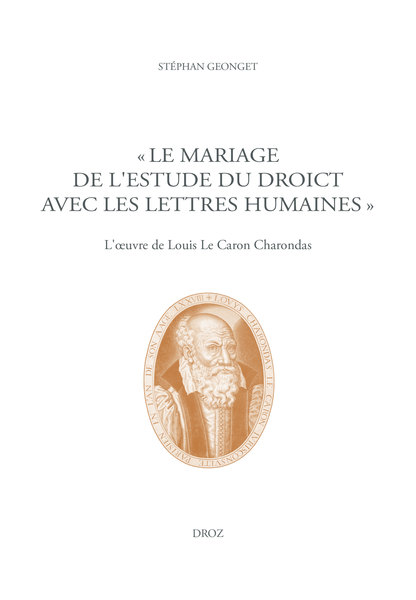
BOOK: Stéphan GEONGET, Le mariage de l’Estude du Droict avec les Lettres humaines. L'œuvre de Louis Le Caron Charondas (Genève: Droz, 2021). ISBN: 9782600062343

(Image source: Librairie Droz)


ABOUT THE BOOK

Louis Le Caron (1534 ?-1613), dit Charondas, est un écrivain de la Renaissance injustement méconnu. Poète véritable et admiré par ses contemporains, philosophe stimulant et auteur d’audacieux Dialogues et de différents Panégyriques, Louis Le Caron est aussi un homme de loi des plus compétents qui commente les textes (la Coustume de Paris notamment), produit une œuvre juridique de premier plan (auteur des Pandectes du droict français) et exerce une charge de magistrat à Clermont-en-Beauvaisis. Pris dans la tourmente du temps, il plaide et œuvre — avec une constance proprement stoïcienne — pour un renforcement du pouvoir royal qu’il voit vaciller jusqu’à l’affermissement providentiel et l’arrivée d’Henri IV au pouvoir. Emblématique de la génération des juristes lettrés (Étienne Pasquier, Claude Fauchet et bien d’autres), il ne cesse de célébrer ce mariage des lettres et des lois qui est une spécificité de ce siècle. Juriste dans ses œuvres littéraires, il est aussi homme de lettres dans ses œuvres de droit. Humaniste « antiquaire », cherchant à « dégloirer l’Italien », il se détourne de l’héritage latin pour se consacrer plus particulièrement au legs français (en droit comme en littérature). .


More information can be found here.

19 February 2024

REMINDER: CALL FOR BLOGGERS: ESCLH Blog (Deadline 1 MAR 2024)


The blog of the European Society for Comparative Legal History is the successful media outlet of our scholarly society. Since its inception in 2010, the posts and pages have attracted over 2,3 million views from Europe and other continents (approx. 22 000 per month in the past twelve months).

We intend to strengthen and enlarge the current team of bloggers, as we regularly welcome new collaborators and thank those who wish to step down after a year of dedicated service.

Candidates are encouraged to send to esclhblog at gmail dot com by 1 March 2024:
- a brief curriculum vitae (mentioning academic credentials and IT experience)
- a cover letter

Bloggers can be at any stage of their academic career (graduate student, PhD-candidate, postdoc, assistant professor, voluntary/associate researcher...). Familiary with legal history (traditionally but not exclusively in a law faculty or history department) is of course a conditio sine qua non. It goes without saying that a Society for comparative legal history is open to candidacies from all backgrounds, irrespective of gender, legal tradition or spatial contingency. We constantly strive to enhance the diversity of our perimeter of interests.  

Serving on the blog is not remunerated. Yet, bloggers receive a reduction on the membership fee of our Society, and are displayed on the blog, as a recognition of their effort.  

The level of engagement with the blog can vary depending on the person. We aim to publish one notification of publication, job announcement, call for papers... per working day, in order to keep the interested audience connected to our RSS-feed, this URL, X (twitter) account, or the daily mailing with follow.it.

CALL FOR PAPERS: The internationalisation of transport law since high industrialisation, Spring 2025, University of Regensburg (DEADLINE: 30 April 2024)

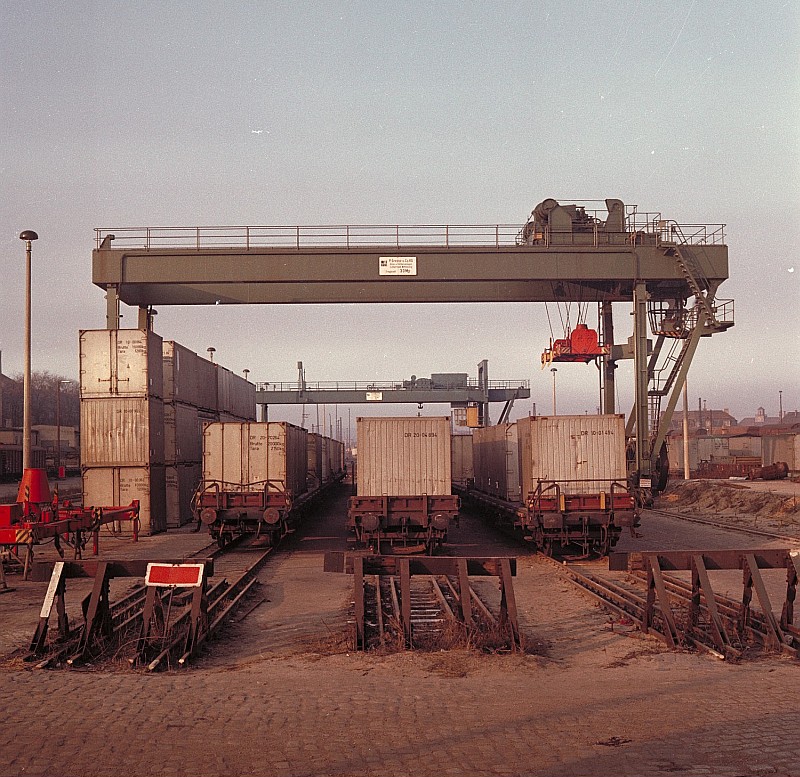
 Containerportalkran Bahnhof Dresden, 1972

 (source: Wikipedia)

CfP: The internationalisation of transport law since high industrialisation


The period of high industrialisation in the second half of the 19th century marked the beginning of a new era of transnational circulation of goods on the European continent. The means of transport were initially inland waterway vessels and railways, and later in- creasingly lorries. This internationalisation of the transport sector requires a legal frame- work with regard to the goods being transported, the means of transport and the people carrying out these transports. One source of law here can be standardised contractual agreements, with the help of which the players create their own suitable law. On the other hand, there are international agreements in the area of transport law. Examples include the Convention relative aux transports internationaux ferroviaires (COTIF, 1890) or the Convention relative au contrat de transport international de marchandises par route (CMR, 1956) as almost complete codifications of international transport law, which largely super-sede national law and at the same time internationalise it. Added to this is the establishment of arbitration courts, which are taking the place of ordinary national jurisdiction. This created new areas of action; the national European legal systems experienced a "mobility turn", so to speak, which continues to characterise the law today.


The internationalisation of transport law since high industrialisation will be the subject of a conference to be held in Regensburg in spring 2025. 

Please send your topic proposals (approx. 3000 characters plus CV) to martin.loehnig@ur.de by 30 April 2024. Feedback will be provided by mid-May 2024. Costs for travel and accommodation can be covered. The revised manuscripts will be published in a conference volume by Mohr Siebeck (deadline 31 July 2025).


CfP: Die Internationalisierung des Transportrechts seit der Hochindustrialisierung


Mit der Zeit der Hochindustrialisierung in der zweiten Hälfte des 19. Jahrhunderts beginnt eine neue Ära der transnationalen Zirkulation von Gütern auf dem europäischen Kontinent. Transportmittel sind zunächst Binnenschiffe und Eisenbahnen, später zunehmend auch Lastkraftwagen. Diese Internationalisierung des Transportwesens bedarf eines rechtlichen Rahmens mit Blick auf die transportierten Güter, auf die Transportmittel und auf die Personen, die diese Transporte durchführen. Rechtsquelle können hierbei zum einen standardisierte vertragliche Vereinbarungen sein, mit deren Hilfe die Akteure ihr eigenes, passendes Recht schaffen. Zum anderen entstehen internationale Abkommen im Bereich des Transportrechts. Beispiele sind das Berner Abkommen über den Eisenbahnfrachtverkehr (COTIF, 1890) oder die Internationale Vereinbarung über Beförderungsverträge auf Straßen (CMR, 1956) als fast vollständige Kodifikationen eines internationalen Transportrechts, die das nationale Recht weitreichend verdrängen und gleichzeitig internationalisieren. Hinzukommt die Etablierung von Schiedsgerichten, die an die Stelle der ordentlichen nationalen Gerichtsbarkeit treten. Hierdurch entstehen neue Aktionsräume; die nationalstaatlichen europäischen Rechtsordnungen erleben gleichsam einen „mobility turn“, der das Recht bis heute prägt.


Die Internationalisierung des Transportrechts seit der Hochindustrialisierung soll Gegenstand einer Tagung sein, die im Frühjahr 2025 in Regensburg stattfinden wird. 

Wir erbitten Ihre Themenvorschläge (ca. 3000 Zeichen plus CV) bis zum 30. April 2024 an martin.loehnig@ur.de. Eine Rückmeldung wird bis Mitte Mai 2024 erfolgen. Kosten für Anreise und Übernachtung können übernommen werden. Die Veröffentlichung der überarbeiteten Manuskripte wird in einem Tagungsband bei Mohr Siebeck erfolgen (Abgabefrist 31. Juli 2025).


16 February 2024

SEMINAR: Après-midi de réflexions croisées de droit romain: Dante, la Divine Comédie et le droit [Année de l'Italie] (Mons: UMons/ULB, 27 FEB 2024)


Abstract:

Le dixième anniversaire des après-midis de Réflexions croisées de droit romain s’associe à l’hommage rendu par l’Université de Mons, au cours de l’année académique 2023-2024, à l’Italie en choisissant pour thème de l’Octauus conuentus iuris romani : « Dante, la Divine Comédie et le droit. » L’œuvre majeure de Dante Alighieri (1265-1321) narre le périple imaginaire du poète dans un au-delà tripartite : y a-t-il « Comédie » à descendre en Enfer pour ensuite péniblement gravir la montagne du Purgatoire ? Oui si le mot désigne ici le recours – alors inédit en épopée – à la langue vernaculaire, en rupture avec le latin de Virgile, modèle et guide jusqu’au seuil du Paradis. S’il y aura peu d’élus, Dante s’adresse à tous les appelés dans le dialecte florentin qu’il songe à consacrer comme langue de l’Italie : non seulement gracieux pardon d’un exilé à la cité qu’il ne reverra jamais, mais surtout message universel que l’espérance peut être donnée à entendre en langue maternelle. Avec une conscience aiguë des vicissitudes temporelles et les épreuves vécues par le magistrat qu’il avait été et l’homme politique qu’il resta sa vie durant : car, avant le Jugement, il y a le monde sublunaire où les simples mortels ont bien de la peine à orienter leur libre arbitre. Sans éclairage suffisant malgré ou à cause de deux soleils concurrents : par méconnaissance de leurs domaines respectifs, le pouvoir temporel – un empire à nouveau appelé « romain » eût-il pu pacifier l’Italie ? – et le pouvoir spirituel – le Saint Siège – ne peuvent s’entendre à instaurer la paix et la concorde indispensables à l’épanouissement des vertus individuelles. Reste alors au pèlerin de l’Au-delà à se remémorer le grand précepte du droit romain formulé par Ulpien : suum cuique tribuere : « attribuer à chacun.e ce qui lui revient ». Non évidemment pour préjuger du jugement divin, mais en recourant à la méthode toute romaine des exempla édifiants : la cartographie de l’Au-delà se voit peuplée de cinq cents personnages identifiés, outre le grand nombre des anonymes, distribués entre Enfer, Purgatoire et Paradis, selon une stratigraphie très précise et documentée de leurs crimes, délits, actes de contrition ou vertus. Non sans nombre de paradoxes au regard de l’Histoire… Si la profession de foi du poète donne à considérer les péchés et les aléas sur le chemin de la damnation ou de la grâce, la mémoire de l’ancien magistrat banni ne peut qu’interpeller, voire inspirer le juriste, quelles que soient ses convictions spirituelles : songer à une correspondance entre le droit et la justice n’est-il pas toujours un pèlerinage taraudé par le doute même si animé par l’espoir ? Espérance que Dante situe au milieu de son parcours en proposant la figuration du Purgatoire la plus élaborée à la fin du Moyen-Âge, avant de revenir du Paradis pour délivrer à la postérité au moins cette preuve d’immortalité : celle de son œuvre.

Program:

  • Laurence Pieropan (UMONS – FTI) : « Pierre Poirier (1889-1974), avocat, esthète et traducteur de la Divine Comédie: une spécificité francophone ? »
  • Nina-Tatiana Noto-Millefiori (étudiante en Master en droit, ULB-UMONS) : extraits choisis en langue originale et en traduction ;
  • Marie Ducoulombier (Master en Histoire de l’art, ULB) : « Le bestiaire mythologique de l’Enfer et la figuration de l’Au-delà dantesque »
  • Wouter Druwé (KUL) : Dante et le Forum internum.
  • Jean-Claude Laes (ULB) : « Religions tolérées ou interdites dans la Rome antique »
  • Patrick Vassart (ULB) : introduction, contexte et synthèse
More information here.

DEADLINE EXTENDED: CALL FOR BLOGGERS: ESCLH Blog (Deadline 1 MAR 2024)


The blog of the European Society for Comparative Legal History is the successful media outlet of our scholarly society. Since its inception in 2010, the posts and pages have attracted over 2,3 million views from Europe and other continents (approx. 22 000 per month in the past twelve months).

We intend to strengthen and enlarge the current team of bloggers, as we regularly welcome new collaborators and thank those who wish to step down after a year of dedicated service.

Candidates are encouraged to send to esclhblog at gmail dot com by 1 March 2024:
- a brief curriculum vitae (mentioning academic credentials and IT experience)
- a cover letter

Bloggers can be at any stage of their academic career (graduate student, PhD-candidate, postdoc, assistant professor, voluntary/associate researcher...). Familiary with legal history (traditionally but not exclusively in a law faculty or history department) is of course a conditio sine qua non. It goes without saying that a Society for comparative legal history is open to candidacies from all backgrounds, irrespective of gender, legal tradition or spatial contingency. We constantly strive to enhance the diversity of our perimeter of interests.  

Serving on the blog is not remunerated. Yet, bloggers receive a reduction on the membership fee of our Society, and are displayed on the blog, as a recognition of their effort.  

The level of engagement with the blog can vary depending on the person. We aim to publish one notification of publication, job announcement, call for papers... per working day, in order to keep the interested audience connected to our RSS-feed, this URL, X (twitter) account, or the daily mailing with follow.it.

CONFERENCE: Sécurité routière, Droit, Assurances, Repères historiques, actualités et perspectives (Paris: Sorbonne, 9 JUN 2024)

 Sécurité routière, Droit, Assurances, Repères historiques, actualités et perspectives,

Journée d’étude organisée par Mathieu Flonneau le 9 juin
pour la chaire Assurance et Société, historicité des savoirs et pratique de l’interdisciplinarité, en partenariat entre l’université Paris 1 Panthéon-Sorbonne et France Assureurs,
en Sorbonne, amphithéâtre Bachelard, de 9 h 30 à 18 h.


 9 h 30

Ouverture de la journée par Christine Neau-Leduc, Présidente de l’université Paris 1 Panthéon-Sorbonne, Florence Lustman, Présidente de France Assureurs, Florence Guillaume, Déléguée interministérielle à la sécurité routière, Agnès Roblot-Troizier, Doyenne de l'École de Droit de la Sorbonne.

Sous la présidence de Pierre Bonin, Professeur d'histoire du droit, Université Paris 1 Panthéon-Sorbonne, porteur de la chaire Assurances et Sociétés.
Mathieu Flonneau, Enseignant-chercheur en histoire contemporaine, Directeur de l’Institut d’AES, Université Paris 1 Panthéon-Sorbonne - Propos introductifs : Routes, automobilismes et mobilités saisis par le Droit. Assurances et sécurité routière, un enjeu pour les sciences sociales et humaines.
Dominique Mignot, Directeur du Département Transport, Santé, Sécurité, Université Gustave Eiffel / Laurent Carnis, Directeur de Recherche, Université Gustave Eiffel - La valorisation socio-économique des blessés de la route.
Stève Bernardin, Enseignant-chercheur en sciences politiques, Université Gustave Eiffel - De la sécurité routière à la santé publique une révolution scientifique, politique et sociale outre-Atlantique.
Marine Molina, Conseillère technique Europe et International auprès de la Déléguée interministérielle à la sécurité routière ; Vice-présidente du Groupe d’experts de la CEE-ONU - Pour l’élaboration d’un nouvel instrument juridique régissant la circulation des véhicules automatisés.
Table-ronde, Enjeux publics : responsabilités et mobilités, avec Anne Lavaud, Déléguée générale de l’Association Prévention Routière, Fabrice Hamelin, Enseignant-chercheur en science politique, Directeur adjoint de l’IEP de Fontainebleau, Lionel Namin, Secrétaire général de la fédération des experts automobiles FFEA, enseignant en droit des assurance, Université Paris-Panthéon-Assas, Dominique Mignot, Directeur du Département Transport, Santé, Sécurité, Université Gustave Eiffel.

14 h 30

Sous la présidence d’Etienne Faugier, Enseignant-chercheur en tourisme, université Lumières Lyon 2
Fabrice Hamelin, Enseignant-chercheur en science politique, Directeur adjoint de l’IEP de Fontainebleau - L’acceptation sociale, une nouvelle norme pour l’action publique de sécurité routière ?.
Julien Vick, Délégué général du syndicat des équipements de la route - Equipements de la route et Sécurité routière, entre réglementation et innovation.
Mathieu Flonneau, Enseignant-chercheur en histoire contemporaine, Directeur de l’Institut d’AES, Université Paris 1 Panthéon-Sorbonne - Autour d'En tous sens ! une histoire des équipements de la route et de « Ces morts, ces blessés ces familles meurtries nous interpellent et nous obligent » - Cinquante ans de plaidoyers en faveur de la sécurité routière.
Lionel Namin, Secrétaire général de la Fédération française de l’expertise automobile, enseignant droit des assurance, Université Paris-Panthéon-Assas - Concilier sécurité routière et gestion du sinistre automobile.
Table-ronde, Choc de mobilités : Normes et données, quels avenirs juridiques et assurantiels ?, avec Julien Fursat, AXA Head of Strategy and Sales Enablement, CEO Office - Global Partnerships Laurent Hecquet, Directeur général de l’observatoire Mobilité et prospective, Marine Molina, Conseillère technique Europe et International auprès de la Déléguée interministérielle à la sécurité routière ; Vice-présidente du Groupe d’experts de la CEE-ONU, Nicolas Marescaux, Directeur adjoint Réponses Besoins Sociétaires et Innovation de la MACIF, Stève Bernardin, Enseignant-chercheur en sciences politiques, Université Gustave Eiffel, Julien Vick, Délégué général du syndicat des équipements de la route.
Raymond Dartevelle, Directeur scientifique de la chaire Assurance et Société, Université Paris 1 Panthéon-Sorbonne - Conclusions.


Read more here.

15 February 2024

PRIZE: Silver Medal of the CNRS for prof. Jean-Louis HALPÉRIN (ENS Paris)


The French research organisation CNRS (employing over 30 000 scientists and other staff) has published a list of twenty-five silver medal winners for the year 2024. This important scientific honour has been bestowed upon distinguished legal historian prof. Jean-Louis Halpérin (ENS, Paris), organiser of our Society's Fifth Biennial Conference in 2018. 

(source: CNRS)

JOB OFFER: Wissenschaftlicher Mitarbeiter (m/w/d) - Lehrstuhl für Bürgerliches Recht, Deutsche und Europäische Rechtsgeschichte und Kirchenrecht, Universität Regensburg (DEADLINE 23 February 2024)


(source:  Univ. Regensburg)


Die Universität Regensburg ist mit über 20.000 Studierenden eine innovative und interdisziplinär ausgerichtete Campus-Universität mit vielseitigen und hochrenommierten Forschungsaktivitäten und einem breiten und attraktiven Studienangebot für junge Menschen aus dem In- und Ausland. Der Lehrstuhl von Professor Löhnig widmet sich insbesondere der deutschen und europäischen Rechtsgeschichte des 19./20. Jahrhunderts und der Juristischen Zeitgeschichte. Dort ist eine Stelle als

Wissenschaftlicher Mitarbeiter (m/w/d)

in Teilzeit (20 Stunden pro Woche) zu besetzen. Die befristete Beschäftigung erfolgt zur eigenen wissenschaftlichen Qualifizierung (Promotion) für eine angemessene Vertragslaufzeit (§ 2 Abs. 1 WissZeitVG). Die Vergütung erfolgt nach TV-L E13.

Ihre Aufgaben: 

  • Arbeit an Ihrer Dissertation im Rahmen eines DFG-geförderten rechtsgeschichtlichen Forschungsprojekts (erste Hälfte 20. Jahrhundert)
  • Unterstützung des Lehrstuhlinhabers bei der Arbeit an diesem Forschungsprojekt

Unsere Anforderungen:   

  • Interesse an den rechtsgeschichtlichen Arbeitsbereichen des Lehrstuhls
  • Fachliche Eignung gem. § 5 der Promotionsordnung 
  • Flexibilität und Teamfähigkeit· 

Wir bieten Ihnen:   

  • Exzellentes und wertschätzendes Arbeitsumfeld in einem aufgeschlossenen Team 
  • Anspruchsvolle und abwechslungsreiche Tätigkeit 
  • Ausgezeichnete Möglichkeit zur Promotion mit stetiger und strukturierter Betreuung 
  • Einen hohen Grad an Selbständigkeit mit flexiblen Arbeitszeiten

Die Universität Regensburg strebt eine Erhöhung des Frauenanteils an und fordert daher qualifizierte Frauen ausdrücklich zur Bewerbung auf. Die Universität Regensburg setzt sich besonders für die Vereinbarkeit von Familie und Beruf ein (nähere Informationen unter https:// www.uni-regensburg.de/universitaet/personalentwicklung/familien-service).
Bei im Wesentlichen gleicher Eignung werden schwerbehinderte Bewerberinnen und Bewerber bevorzugt eingestellt. Bitte weisen Sie auf eine vorliegende Schwerbehinderung ggf. bereits in der Bewerbung hin.
Bei Fragen wenden Sie sich bitte an Herrn Prof. Dr. Martin Löhnig (martin.loehnig@ur.de). Wir freuen uns auf Ihre ausführliche Bewerbung, die Sie bitte bis zum 23. Februar 2024 per E-Mail an martin.loehnig@ur.de senden.

Hinweise zum Datenschutz finden Sie unter

https://www.uni-regensburg.de/assets/universitaet/stellenausschreibungen/dokumente/ datenschutz_stellenausschreibungen_2020.pdf


CONFERENCE: 44th Legal Historians' Conference (Frankfurt am Main: Institute for Legal History - Goethe University, 16-20 September 2024, EARLY BIRD until 31 MAY 2024)


Dear colleagues,  

From 16 to 20 September 2024, the 44th Legal Historians' Conference will take place in Frankfurt am Main, organised by the Institute for Legal History at Goethe University. Under the guiding theme of "The Language of Sources", speakers from Germany, Austria and Switzerland as well as many other countries will discuss which sources they use to write legal histories and how they determine, read and process these sources. The digital humanities, but also questions about the sources of a global history of law, of maritime, ecclesiastical or criminal history, as well as law as a body of knowledge in antiquity will play an important role. We would also like to look at media change and the publication culture in our discipline. The preliminary conference programme and information on the accompanying programme can be found on our website.  

A particular concern of the 44th Legal Historians' Conference is to make research projects by young academics and larger research projects on source editions and databases visible. We have therefore given presentations of projects their own prominent place in the conference programme. We invite all interested parties to find out more about the presentation options on the following website and in the attached document. As far as proposals from doctoral students are concerned, these will be selected by the organisers together with the "Young Legal History Network", which was constituted in 2023. The best three presentations by doctoral students will be honoured with a prize.  

Registrations for participation in the Legal Historians' Day are now open. Early registrants can take advantage of an "early bird discount". Further information on registration and accommodation can be found on our website.  

We look forward to seeing you!  

Your 

Albrecht Cordes, Thomas Duve, David von Mayenburg, Guido Pfeifer 

BOOK: Alessandra CASAMASSIMA (cur.), Catalogo della Raccolta di statuti, consuetudini, leggi, decreti, ordini e privilegi dei comuni, delle associazioni e degli enti locali italiani dal Medioevo alla fine del secolo XVIII. Volume X: Venezia (Firenze: Olschki, 2023). ISBN: 9788822268419

(Image source: MinervaWeb)


È appena stato pubblicato il X volume del Catalogo della Raccolta di statuti della Biblioteca del Senato, a cura di Alessandra Casamassima (Firenze, Leo S. Olschki, 2024).

Si tratta del volume più ampio dell'intera collana, interamente dedicato alla produzione normativa della Repubblica di Venezia. Contiene circa 800 schede descrittive, in maggioranza relative a fonti originali dal XIII al XVIII secolo, sia manoscritte che a stampa.

L'eccezionale numero di documenti censiti in vista della pubblicazione dell'ultimo volume del Catalogo ha portato a una revisione del piano dell'opera che, originariamente, avrebbe dovuto comprendere in un solo volume tutte le schede relative alle località V-Z. Si è preferito, dunque, procedere a una suddivisione in tre volumi: il IX, pubblicato nel 2022 e circoscritto alle località da Vado a Venaus; il X qui presentato; e l'XI che, si prevede, sarà pubblicato entro i prossimi due anni e accoglierà le descrizioni dei restanti documenti.


More information can be found here and on the website of the publisher.

14 February 2024

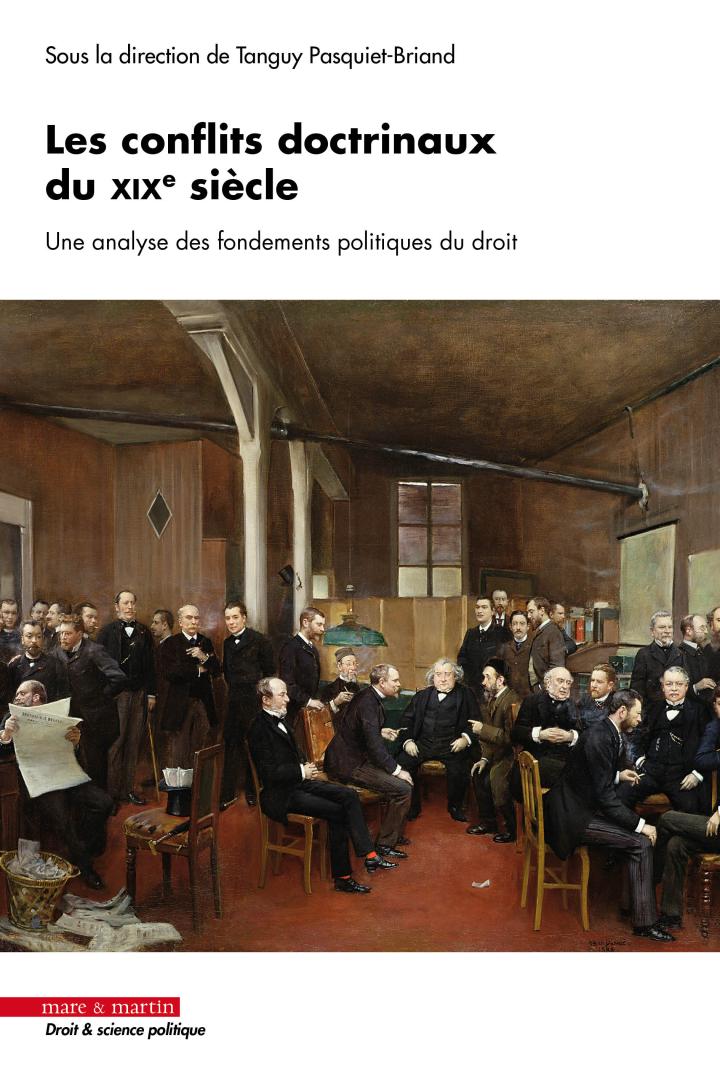
BOOK: Tanguy PASQUIET-BRIAND (dir.), Les conflits doctrinaux du XIXe siècle. Une analyse des fondements politiques du droit [Droit et sciences politiques] (Paris: Mare & Martin, 2023), 262 p. ISBN 9782849347096, € 30


(image source: Mare et Martin)

Abstract:
Rassemblant des contributions denses, diversifiées et ne se limitant pas à l’historiographie française, cet ouvrage se conçoit comme une ouverture sur quelques grands conflits doctrinaux qui ont jalonné le « long xixe siècle ». À la faveur d’une démarche volontairement pluridisciplinaire, il espère susciter l’intérêt pour une redécouverte des oppositions marquantes de ce siècle, caractérisées par une instrumentalisation historiciste et dogmatique du droit, mais également par la recherche d’une fondation scientifique et rétrospectivement pré-positiviste de la matière. Ce livre entend, grâce aux réflexions de chercheurs d’horizons variés, participer à un mouvement de valorisation de la culture juridique.

Read more here. 


SEMINAR: Textualiser l'altérité. Les juristes et l'invention de l'indigène - Luigi Nuzzo (Aubervilliers: Campus Condorcet, 22 février 2024) [hybrid]


13 February 2024

BOOK: Sylvain SOLEIL, Les modèles juridiques. histoire, usages et théorie [Canevas] (Paris: Société de législation comparée, 2023), 196 p. ISBN 9782365171359, € 19


(image source: Université de Rennes)

Abstract:

Le concept de modèle a envahi la littérature juridique à compter de la fin du XX• siècle, spécialement en droit comparé. Toutefois, les juristes l'utilisent sans nécessairement s'interroger sur sa nature, ses vertus et ses défauts, alors même qu'il a fait l'objet de réflexions approfondies en sciences exactes et en sciences humaines et sociales. Cet ouvrage propose d'explorer le sens et les usages juridiques du concept de modèle à partir des réflexions épistémologiques menées en dehors du droit. Un volet historique permet de comprendre comment ce concept s'est développé. Un volet doctrinal et pratique interroge les quatre usages qu'en fait le juriste: l'usage cognitif où les modèles servent à comprendre et faire comprendre des mécanismes juridiques complexes; l'usage réformatif où les modèles servent à trouver des inspirations pour préparer des réformes; l'usage pratique où les modèles servent à simplifier la recherche documentaire et uniformiser l'activité administrative et judiciaire; l'usage prédictif où les modèles juridiques, traduits sous forme d'algorithmes, servent à anticiper les décisions et les pratiques à venir. Un dernier volet, méthodologique, propose une théorie des modèles juridiques.

Read more here.