Search

Showing posts with label Law and Literature. Show all posts

11 June 2026

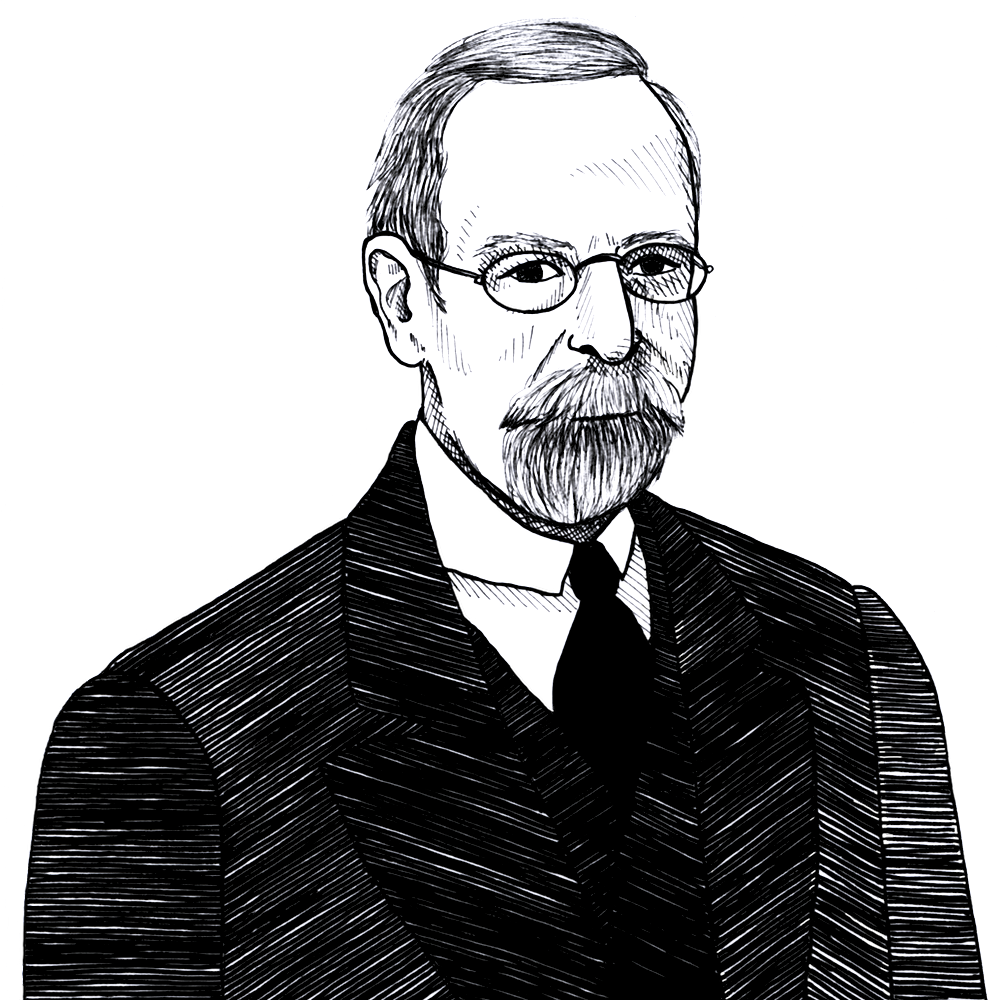
SSRN PAPER: Ross E. DAVIES, "A Wig Without a Home: The Comedic Wisdom of Sir Frederick Pollock" Green Bag 2s XXIX (2025)

(image source: Liberty Fund)


Abstract:

Frederick Pollock (1845-1937) was the Green Bag’s kind of scholar. The first half of this paper consists of a sketch of his career and character, followed by a closer look at his sense of humor and the roles it played in his work. The second half of the paper is in two sections. First, there is a full republication of the text of a tiny book — a short story by Pollock titled “Queen Titania’s Chancellor”— that for nearly a century sat unnoticed on a bookshelf in the library of the Queen’s Dolls’ at Windsor Castle, until Elizabeth Clark Ashby (Curator of Books and Manuscripts in the Royal Library at Windsor Castle) gave Pollock’s miniature masterpiece some long-overdue and well-deserved attention in her 2024 book (full-sized), “The Miniature Library of Queen Mary’s Dolls’ House.” Second, there is a close (but incomplete) reading and analysis of that tiny text. If there are any lessons to be drawn from this paper, perhaps they are that greatness need not always be cloaked in dignity, and that Jack Point was not the only wit who could “teach you with a quip, if I’ve a mind” or “trick you into learning with a laugh.”

Read more here: DOI  10.2139/ssrn.6222058.

(source: Law & Humanities Blog

04 June 2026

BOOK: Domenico DI MICCO, Mario RIBERI & Matteo TRAVERSO (eds.), Puccini in law [Quaderni del Dipartimento di Giurisprudenza dell'Università di Torino] (Torino: Università di Torino & Edizioni Scientifiche Italiane, 2026), p. 440, ISBN: 9788849561777, € 80

(image source: ESI)
Descrizione: 
In occasione del centenario pucciniano, questo volume esplora e ricostruisce il sorprendente intreccio che, tra diritto e melodramma, attraversa le opere di Giacomo Puccini.
Dalla corruzione del potere nella Tosca alle asprezze coloniali di Manon Lescaut, dal conflitto tra ordinamenti in Madama Butterfly all’assenza di istituzioni ne La fanciulla del West, fino alla satira giuridica di Gianni Schicchi e alla crudeltà normativa di Turandot, i saggi qui raccolti – già relazioni al convegno Puccini in Law (2024), organizzato dai curatori del presente volume in collaborazione con il Teatro Regio di Torino e il MAO, Museo di Arti orientali, grazie al sostegno e con il patrocinio del Dipartimento di giurisprudenza dell’Università di Torino – mostrano come il diritto, lungi dall’essere un semplice accessorio della trama, plasmi i destini e le relazioni della società, in un eterno gioco di specchi tra palcoscenico e reale.
I curatori:
Domenico Di Micco, PhD, è docente e ricercatore in diritto privato comparato presso il Dipartimento di Giurisprudenza dell’Università di Torino.
Mario Riberi, PhD, è uno storico del diritto medievale e moderno, docente presso il Dipartimento di Giurisprudenza dell’Università degli Studi di Torino.
Matteo Traverso, PhD, è uno storico del diritto medievale e moderno, docente presso il Dipartimento di Giurisprudenza dell’Università degli Studi di Torino.
Indice:
Introduzione 

Parte I
Puccini, Law, Gender and Society

Giovanni Chiodi
Puccini by Callas: un binomio rivoluzionario

Ida Ferrero
Manon Lescaut e la scuola positiva 

Damigela Hoxha
Una fragile impudicizia. Donne e leggi dell’onore nelle opere pucciniane 

Federico Fornoni
Le conseguenze di un contratto da operetta: la «strana avventura» della Rondine 

Parte II
Puccini tra diritto privato e diritto penale

Geo Magri
Tra codice e pentagramma: il diritto privato come elemento narrativo in Giacomo Puccini 

Valerio Massimo Minale
Asrael (1888) tra Le Villi (1884) ed Edgar (1889): Ferdinando Fontana librettista e il patto giuridico “al soprannaturale” 

Domenico Di Micco
Scarpia. Il suono di un terribile diritto 

Matteo Francisetti Brolin
La fanciulla del West: noterelle semi giuridiche in materia di pena, perdono e redenzione 

Francesco Serpico
Un tragico destino. Classi lavoratrici e “classi pericolose” ne Il tabarro 

Davide Dimodugno
Suor Angelica: il suicidio tra teologia e diritto 

Valerio Gigliotti
Testando e dando al testamento norma (Inf. XXX, 45). La ricezione della figura di Gianni Schicchi nella letteratura e nell’opera buffa 

Filippo Annunziata
Gianni Schicchi: una “fedele” ricostruzione di un “falso” testamento medievale 

Paolo Giani Cei
Mettere in scena Puccini. Tra Vero e Verismo 

Andrea Pennini
Nella storia, con la storia. Puccini autore del suo tempo 

Laura Facchin, Massimo Ferrario
Luigi Morgari e le scenografie delle “prime” pucciniane 

Alberto Maria Tedoldi
“Chi ti ha mandato? Dio?”. Il tenore pucciniano par excellence: Enrico Caruso 

Niccolò Palazzetti
Il lambrusco e lo champagne. Giacomo Puccini e il loggione del Teatro Regio di Parma nel secondo Novecento 

Mario Riberi
Puccini, riflessi sul grande e sul piccolo schermo 

Parte IV
Puccini tra Oriente e globalizzazione

Giorgio Fabio Colombo
Il Giappone di Puccini tra scoperta e Legal Orientalism 

Matteo Traverso
Gli enigmi del diritto: Turandot tra Antigone e Lombroso 

Vittoria Trifiletti
Ultimare l’incompiuta? Da Puccini ai Beatles, da Alfano all’AI 

Alberto Oddenino
Puccini e globalizzazione: un duetto
Find more on ESI.

13 February 2026

BOOK REVIEW: Guillaume COT on La Comédie à la lumière du droit. France, Angleterre, Empire (1600–1800), by Gabrielle Vickermann-Ribémont (Comparative Legal History, XIII (2025), nr. 2 (December), pp. 327-332)

(Image source: Taylor&Francis)

A recurring trait among comparatists may be their tendency – if not their instinct – for erudition. This is particularly true of those engaged in what French comparative literature scholar Florence Schnebelen calls comparatisme au carré (‘squared comparatism’): not only do they compare different geographical and cultural contexts, but also different disciplinary fields – simultaneously. Combining the methodologies of both comparative literature and comparative legal history requires a level of intellectual dexterity that Gabrielle Vickermann-Ribémont clearly demonstrates.

Structured in two parts, containing respectively two and three substantial chapters, this ambitious volume offers a history of theatrical comedy in France, England, and the German-speaking world during the seventeenth and eighteenth centuries. It demonstrates how the history of literature and performance in these regions is deeply intertwined with the development of their respective marriage laws. The author’s central argument is that these three cultural spheres share a common cultural foundation – fuelled by transnational influences and cultural transfers – yet differ significantly in their legal traditions. To highlight this tension between shared cultural references and divergent legal systems, the author offers a detailed examination of matrimonial law across these periods and regions.


To read the full review, please click here. Online access is free for members of the European Society for Comparative Legal History. 

DOI: 10.1080/2049677X.2025.2580108


28 October 2025

BOOK: Melissa J. GANZ (ed.), British Law and Literature in the Long Eighteenth century (Cambridge: Cambridge University Press, 2025), ISBN 9781009224185, € 105,4


(image source: Cambridge Core)

Abstract:
The law underwent significant changes in eighteenth-century Britain as jurists and legislators adapted doctrines to fit the needs of an increasingly commercial, industrial, and imperial society. This volume reveals how legal developments of the period shaped and were shaped by imaginative writing. Reading canonical and lesserknown texts from the Restoration to the Romantic era, the chapters explore literary engagements with libel law, plague law, marriage law, naturalization law, the poor laws, the law of slavery and abolition, and the practice of common-law decision-making. The volume also considers the language and form of legal treatises and judicial decisions, as well as recent appropriations of the period's literature and legal norms by the Christian right. Through these varied case studies, the volume deepens our knowledge of law and literature's mutual entanglements in the long eighteenth century while shedding light on legal and ethical questions that remain of concern to this day.

On the editor:

Marquette University, Wisconsin

Read more here: DOI 10.1017/9781009224185

04 March 2025

BOOK: Robert SPOO & Simon STERN (eds.), Elgar Concise Encyclopedia of Law and Literature [Elgar Concise Encyclopedias in Law] (Cheltenham: E. Elgar, 2025), 538 p. ISBN 9781803925905


(image source: Elgar)

Abstract:

The Elgar Concise Encyclopedia of Law and Literature surveys the intersection between two important fields of study. Interdisciplinary in scope, the volume showcases the many ways in which literary and legal methods and insights both converge and remain distinct.

On the editors:

Robert Spoo, Leonard L. Milberg ''53 Professor in Irish Letters, Department of English, Princeton University, USA and Simon Stern, Professor of Law and English, University of Toronto, Canada

Table of contents:

Contents
Preface xiii
1 Abolition 1
Jess A. Goldberg
2 Admiralty and maritime law 5
Hayley Cotter
3 Adultery 9
Erin Sheley
4 Advertising 13
Anat Rosenberg
5 Affect 17
Kathryn Temple
6 Aggadah and Halakha:
literature alongside law 21
Shulamit Almog
7 Atrocity, law, and literature 23
Richard H. Weisberg
8 Authorship and publishing 27
Mark Rose
9 Automobiles 31
Kieran Tranter
10 Biblical law 35
Yael Landman
11 Black Lives Matter poetry 38
Almas Khan
12 Blackmail 42
Joseph Bristow
13 Blasphemy culture, blasphemy law 46
Elliott Visconsi
14 Body 49
Jolene Zigarovich
15 Canon law 53
Grace Delmolino
16 Canonization, canons, canon formation 57
Peter Schneck
17 Causation 61
Thomas Dikant
18 Censorship, informal and formal 65
Jay A. Gertzman
19 Citizenship 70
Leti Volpp
20 Civil law 74
Jeanne Gaakeer
21 Civil rights 78
Charlton Copeland
22 Climate change 82
Andrew Majeske
23 Clinical legal education from
a humanistic perspective 86
Flora Di Donato
24 Comedy and the law 91
Lars Engle
25 Common law reasoning 94
Maksymilian Del Mar
26 Confession 98
Peter Brooks
27 Consent in literary works 102
Sara Murphy
28 Contract and boilerplate 106
Tal Kastner
29 Copyright: characters and adaptation 110
Betsy Rosenblatt
30 Copyright: scènes à faire 114
Zahr K. Said
31 Copyright and journalism 118
Will Slauter
32 Copyright in the theatre 122
Derek Miller
33 Corporation 126
Peter Jaros
34 Courtrooms (eighteenth- and
nineteenth-century, British) 131
Adam Kozaczka
35 Crime fiction 135
Guyora Binder
36 Death penalty 140
Birte Christ
37 Defamation 144
Sean Latham
38 Despotism 148
Adam Schoene
39 Detective fiction 152
Simon Stern
40 Divine accommodation and
the legal imagination 155
Nomi Maya Stolzenberg
41 Early New England law 159
Nan Goodman
42 Eighth Amendment and ‘cruel
and unusual’ punishment 163
Lisa Haber-Thomson
43 Environmental (or nonhuman)
personhood 168
Paul K. Saint-Amour
44 Equity 172
Mark Fortier
45 Ethics: law and literature as an
ethical enterprise 175
David S. Caudill
46 Evidence (early modern law and drama) 179
Lorna Hutson
47 Evidence (fiction and narrative) 183
Geoffrey A. Baker
48 Fan fiction 187
Rebecca Tushnet
49 Felony 191
Elise Wang
50 Film industry 195
Peter Decherney
51 Forgery (financial, historical,
and literary) 198
Mark Osteen
52 Forgery (literary and cultural) 203
Gregory Mackie
53 Free speech 206
Trevor Ross
54 Freedom suit 210
Faith Barter
55 Fundamentalism 214
Klaus Stierstorfer
56 Gender and modernism 218
Celia Marshik
57 Gothic fictions 222
Jayne Lewis
58 Guardianship 226
Sarah Raff
59 Habeas corpus 230
Sarah Winter
60 Hate speech 234
Martha M. Umphrey
61 Higher law 238
Geoffrey R. Kirsch
62 Human rights 242
Elizabeth S. Anker
63 Identification and identity 246
Rex Ferguson
64 Identification papers 249
Nissa Ren Cannon
65 Imperialism 253
Tanya Agathocleous
66 Incarceration 257
Monika Fludernik
67 Indigenous law 261
Cheryl Suzack
68 Informal norms 265
Matthew H. Birkhold
69 Infrastructure and public works 268
David Alff
70 Inheritance law 272
Rose Casey
71 Inns of Court 276
Jessica Apolloni
72 Intention 280
Lisa Siraganian
73 Jurisdiction 284
Edward Mussawir
74 Justice, theories of 287
Jennifer Jahner
75 Law on television 291
William MacNeil
76 Lawyers in novels 295
Mark Schoenfield
77 Lawyers on US television 299
Christine Corcos
78 Legal fictions 304
Simon Stern
79 Marriage 307
Melissa J. Ganz
80 Masculinity 312
Marco Wan
81 Moral hazard 315
Sharif Youssef
82 Murder 319
Chase Burton
83 Music and law 323
Robbie Sykes and Kieran Tranter
84 Narratives in court decisions 327
Frode Helmich Pedersen
85 Narratology, legal 330
Ralph Grunewald
86 Naturalization 334
Stephanie DeGooyer
87 Novel and the law 337
Hilary Schor
88 Obscenity 342
Katherine Mullin
89 Panopticism 346
Claire Wrobel
90 Pardon and forgiveness 350
Haiyan Lee
91 Performance, theatricality, and
spectacle (legal) 354
Julie Stone Peters
92 Photography 359
Monica Huerta
93 Police 363
Jeannine Marie DeLombard
94 Postcolonial studies 367
Jack Quirk
95 Precedent 372
Ayelet Ben-Yishai
96 Privacy 376
Cathrine O. Frank
97 Property: law, theory, and fiction 381
Ravit Reichman
98 Property: the view from
Shakespeare’s Venice 385
Carol M. Rose
99 Psychoanalysis and language 390
David Gurnham and Haris Psarras
100 Public domain 394
Robert Spoo
101 Publicity rights and celebrity 398
Mark Bartholomew
102 Punishment, theories of 402
John Cyril Barton
103 Queer studies 406
Hannal Manshel
104 Realism, legal 410
Dan Priel
105 Realism, literary 414
Christine Holbo
106 Reconstruction: its law and literature 417
Brook Thomas
107 Refuge and asylum 421
Angela Naimou
108 Rhetoric and law 425
Andrew Zurcher
109 Sacred and secular law 429
Adam Gearey
110 Sanctuary and sanctuary-city 432
Benjamin Woodring
111 Satire 437
Andrew Benjamin Bricker
112 Science fiction 441
Mitchell Travis and Kieran Tranter
113 Self-referentiality and self-reflexivity 445
Hans Lind
114 Slavery 449
Christopher Brown
115 Testimony 453
Dale Barleben
116 Theatre and the law 458
Alex Feldman
117 Theft and burglary 464
Eloise Moss
118 Trademark 467
Jonathan Goldman
119 Tragedy 471
Julen Etxabe
120 Translation 475
Mark Firmani
121 Trauma 480
Belinda Qian He
122 Treason 484
Rebecca Lemon
123 Trial jury (early modern) 488
Penelope Geng
124 Trials in literature 492
Kieran Dolin
125 Trials of literature 496
Ralf Grüttemeier
126 Trusts 500
Gary Watt
127 Truth and post-truth 504
Angela Condello
128 Uncanny 508
Stefan Andriopoulos
129 Undocu literature 512
Esmeralda Arrizón-Palomera
130 Victimization 516
Greta Olson
131 Visual literacy: law’s screen life 520
Richard K. Sherwin
132 Wills 524
Cathrine O. Frank
133 Witches 528
Ian Ward
134 Witness (n. and v.) 532
Nicole Mansfield Wright

This volume contains 134 entries, the first of which ("abolition") is in open access (DOI  10.4337/9781803925912.ch01).

Read more here.

21 February 2025

BOOK: Charles Secondat Baron de MONTESQUIEU, L'esprit des Lois. Lettres persanes. Textes politiques et fictions (eds. Aurélia GAILLARD, Catherine VOLPILHAC-AUGER) (Paris: Bouquins, 2025), 1600 p. ISBN, € 34 9782382926215


(image source: lisez)

Abstract:

Ennemi des dogmatismes, Montesquieu mit une curiosité sans borne, une érudition vertigineuse et un style virtuose au service d’une ambition première : faire penser son lecteur, toujours chercher à ébranler ses certitudes. Convaincu que l’absence de doute ne peut conduire qu’à l’intolérance et au fanatisme, il s’essaya à tous les genres, du roman épistolaire à l’essai politique et historique, de la philosophie au conte. Précurseur en bien des domaines, il plaide pour la distinction et l’équilibre des pouvoirs, prône la juste proportion des délits et des peines, défend la libre disposition de soi – le droit au divorce, et même au suicide –, s’intéresse de près à la place des femmes dans la société… Pour la première fois, un volume invite à approcher en bloc cette oeuvre bigarrée, en soulignant ses lignes de force, mais aussi ses inflexions, en multipliant les ponts d’un livre à l’autre, en refusant toute coupure artificielle entre philosophie et littérature, entre fiction et réflexion. Établie par deux spécialistes incontestées, cette édition a bénéficié des toutes dernières avancées de la recherche sur les manuscrits et l’interprétation des textes. Elle s’accompagne d’un riche appareil critique inédit, qui s’attache à faire sentir l’actualité, la puissance mais aussi la beauté d’une pensée majeure des Lumières.

Contents:

Ce volume contient : Lettres persanes ; Le Temple de Gnide ; Histoire véritable ; Arsace et Isménie ; Essai sur le goût ; Considérations sur les causes de la grandeur des Romains et de leur décadence ; L’Esprit des lois ; Défense de L’Esprit des lois. 

On the editors:

Aurélia Gaillard, professeure émérite de littérature française du XVIIIe siècle à l'université Bordeaux-Montaigne, membre honoraire de l'Institut universitaire de France. Elle a rédigé un ouvrage sur les Lettres persanes (Atlande, 2013) et dirigé un numéro de revue sur Montesquieu et la fiction ("Autour des Lettres persanes : Montesquieu et la fiction", Aurélia Gaillard (dir.), Lumières, n° 40, 2022/2). Spécialiste des croisements entre littérature et esthétique aux XVIIe et XVIIIe siècles, elle a fait paraître récemment L’Invention de la couleur par les Lumières (Les Belles Lettres, 2024). Catherine Volpilhac-Auger est professeure émérite de littérature française à l'École normale supérieure de Lyon, membre honoraire de l'Institut universitaire de France, directrice de l'édition des Œuvres complètes de Montesquieu, présidente de la Société Montesquieu. Elle a publié une centaine d'articles sur Montesquieu et dirigé de nombreux volumes de ses Œuvres complètes, dont les Pensées (2024), et l'édition numérique du Manuscrit de L'Esprit des lois (Montesquieu. Bibliothèque & éditions, 2024). Elle a également publié une biographie  (Montesquieu, Gallimard, coll. "Folio Biographies", 2017) et un recueil d'articles qui envisage l'ensemble de l'œuvre de Montesquieu (Montesquieu. Une histoire de temps, Lyon, ENS Éditions, 2017). 

Read more here

13 December 2024

BOOK: Stéphan GEONGET & Bruno MÉNIEL (dir.), Littérature et droit, du Moyen Âge à la période baroque: le procès exemplaire [Rencontres; 233] (Paris: Classiques Garnier, 2024 [2008]), ISBN 978-2-406-08940-7


(image source: Classiques Garnier)

Abstract:

Centré sur la question de l'exemplarité du procès, cet ouvrage invite à réfléchir sur le dialogue qui se noue, du Moyen Âge à la période baroque, entre juristes et écrivains. Il s’interroge aussi sur ce qui permet à la littérature de déplacer et de dépasser les questions posées par le droit positif.

More information here: DOI 10.15122/isbn.978-2-37312-171-1.

21 November 2024

CALL FOR PAPERS: “Hugo and the Law” (Maastricht: Maastricht University, 8 MAY 2025) [DEADLINE 22 DEC 2024]


Call for Papers

“Hugo and the Law”

8 May 2025

Maastricht University Faculty of Law

Maastricht, The Netherlands


On the occasion of the 150th anniversary of the publication of the first volume of Actes et Paroles, the collection of Victor Hugo’s political speeches, the UM Law and Popular Culture Research Network organizes a Workshop on 8 May 2025 dedicated to the author’s conceptualization of several legal issues. The Workshop will take place at the Faculty of Law of Maastricht University (The Netherlands), with a fully in-person program.


Goal and Background of the Workshop

In his several works, Victor Hugo has often delved into profound perspectives into the relationship between humanity and the law. Hugo was not merely a renowned novelist but a visionary thinker who engaged with multiple societal issues, including the intricacies of the legal system, the condition of women, the rise of socialism, and the future of Europe. On the 150th anniversary of the publication of Actes et Paroles – which perfectly captures such themes– this Workshop aims to examine Hugo’s conception of the law.

Hugo’s conception of the law is multifaceted, encompassing both its theoretical foundations and its practical implications. His writings often reflect a deep concern for the struggle for power and the ethical responsibilities of institutions. Through an examination of Hugo’s literary corpus, the Workshop will explore how his books’ characters grapple with the complexities of law and its impact on individuals and society. One key aspect of the Workshop is Hugo’s emphasis on the moral dimension of the law. His characters navigate questions of morality, duty, and conscience by their interactions with legal systems. At the same time, the Workshop will address Hugo’s critique of the legal machinery, shedding light on his observations regarding the potential for injustice and the abuse of power. Furthermore, this Workshop will investigate the historical context in which Hugo lived and wrote, considering the political and social upheavals that influenced his views on the law. From the aftermath of the French Revolution to the establishment of the Second French Republic, through the rise and fall of the Empire of Napoleon III, until the experience of the Commune, Hugo’s observations of the evolving legal landscape are integral to understanding his perspective on the nature of power, the State and the foundations of Europe, and the condition of women.

By examining the philosophical, historical, and theoretical underpinnings and practical implications of Hugo’s thoughts on law, the Workshop aims to illuminate the enduring relevance of his insights and their potential to inspire contemporary discussions on law and justice.


Abstract Submissions

The “Hugo and the Law” Workshop will feature panel sessions. Submissions should relate to the overarching theme of the Workshop.

Submissions should indicate the title of the contribution, an abstract (max. 400 words), and the contact information and a short biography of the speaker (max. 150 words). Fully written papers are not required. We encourage submissions in English, and co-authored papers will be also considered.


Who Can Participate in this Workshop?

The “Hugo and the Law” Workshop is not restricted to lawyers. We welcome proposals that offer multi-disciplinary perspectives from various areas of law (including civil, criminal, tax, and labor law), as well as from scholars in e.g. the humanities and other social sciences (e.g. history, economics, political science, sociology) with an interest in the Workshop’s theme. We welcome submissions from senior and junior scholars (including doctoral students) and interested practitioners.


How and When to Submit?

Send your submission to agustin.parise@maastrichtuniversity.nl

The Call for Papers closes on 22 December 2024. Shortly after that, the authors will be informed whether their papers are selected for a presentation during the Workshop.


Conference Organizing Committee

Should you have any questions please do not hesitate to contact a member of the Workshop Organizing Committee:


Eline Couperus(e.couperus@maastrichtuniversity.nl)

Agustín Parise (agustin.parise@maastrichtuniversity.nl)

Franco Peirone (franco.peirone@maastrichtuniversity.nl)

Livia Solaro (l.solaro@maastrichtuniversity.nl)

Arthur Willemse (arthur.willemse@maastrichtuniversity.nl)

23 September 2024

BOOK: Michael WIDENER & Ryan Greenwood, Histories of Legal Literature. A Hundred Years of English-Language (Clark, New Jersey: Talbot Publishing, 2024). ISBN-13: 9781616196912, pp. 202, $49.95


ABOUT THE BOOK

The history of the law is known above all through its literature, an extraordinarily diverse body of texts in an equally diverse variety of formats. Histories of Legal Literature maps the past hundred years of English-language scholarship with a bibliography of 998 publications on the origins, authorship, dissemination, design, readership, and preservation of the works that shaped the law books of today, including the vast legal literatures from outside the Anglo-American world. With the help of a detailed subject index and statistical analysis, Widener and Greenwood reveal the strengths and gaps in this body of scholarship and point to opportunities for new contributions. Histories of Legal Literature will be a useful reference for legal historians, book historians, librarians, and those working in allied fields.

ABOUT THE AUTHORS

Michael Widener was Rare Book Librarian at the Yale Law School Library until his retirement in 2021. He teaches a course on law books for the University of Virginia's Rare Book School. He is co-author (with Mark S. Weiner) of Law's Picture Books: The Yale Law Library Collection (Talbot Publishing, 2017), which won the 2018 Joseph L. Andrews Legal Literature Award from the American Association of Law Libraries. 

Ryan Greenwood is Curator of Rare Books and Special Collections at the University of Minnesota Law Library, and has served as Widener's co-instructor at Rare Book School. He is co-author (with Patrick Graybill) of Jewels of the Collection: Treasures of the Riesenfeld Rare Books Research Center, which won the 2024 Joseph L. Andrews Legal Literature Award from the American Association of Law Libraries.


About the book.

04 March 2024

BOOK: Isabel LANGKABEL & Laura UNTNER (Hrsg.), Karl Kraus und die Rechtsakten der Kanzlei Oskar Samek [Literaturgeschichte in Studien und Quellen - Band 37] (Göttingen: Vandenhoeck & Ruprecht, 2024), ISBN 978-3-205-21979-8 , € 35

(image source: Vandenhoeck & Ruprecht)

Abstract:

Karl Kraus (1874–1936) war nicht nur ein unbezwingbarer Satiriker und Polemiker, sondern auch ein beharrlicher Kämpfer ums Recht. Die Rechtsakten der Kanzlei Oskar Samek dokumentieren von 1922 bis 1938 diesen Kampf gegen Zeitungen, Verlage und Schriftsteller, der selbst nach Kraus’ Tod fortbestand. Erstmals setzen sich in diesem Band verschiedene Literatur- und Kulturwissenschaftler:innen mit den Akten auseinander – aus biographischer, literaturwissenschaftlicher und politischer Perspektive. Dabei werden sowohl Forschungslücken geschlossen als auch neue Fragestellungen zum Leben und Werk Kraus’ ermöglicht. 

See publisher's website

20 February 2024

BOOK: Stéphan GEONGET, Le mariage de l’Estude du Droict avec les Lettres humaines. L'œuvre de Louis Le Caron Charondas (Genève: Droz, 2021). ISBN: 9782600062343

(Image source: Librairie Droz)


ABOUT THE BOOK

Louis Le Caron (1534 ?-1613), dit Charondas, est un écrivain de la Renaissance injustement méconnu. Poète véritable et admiré par ses contemporains, philosophe stimulant et auteur d’audacieux Dialogues et de différents Panégyriques, Louis Le Caron est aussi un homme de loi des plus compétents qui commente les textes (la Coustume de Paris notamment), produit une œuvre juridique de premier plan (auteur des Pandectes du droict français) et exerce une charge de magistrat à Clermont-en-Beauvaisis. Pris dans la tourmente du temps, il plaide et œuvre — avec une constance proprement stoïcienne — pour un renforcement du pouvoir royal qu’il voit vaciller jusqu’à l’affermissement providentiel et l’arrivée d’Henri IV au pouvoir. Emblématique de la génération des juristes lettrés (Étienne Pasquier, Claude Fauchet et bien d’autres), il ne cesse de célébrer ce mariage des lettres et des lois qui est une spécificité de ce siècle. Juriste dans ses œuvres littéraires, il est aussi homme de lettres dans ses œuvres de droit. Humaniste « antiquaire », cherchant à « dégloirer l’Italien », il se détourne de l’héritage latin pour se consacrer plus particulièrement au legs français (en droit comme en littérature). .


More information can be found here.

16 February 2024

SEMINAR: Après-midi de réflexions croisées de droit romain: Dante, la Divine Comédie et le droit [Année de l'Italie] (Mons: UMons/ULB, 27 FEB 2024)


Abstract:

Le dixième anniversaire des après-midis de Réflexions croisées de droit romain s’associe à l’hommage rendu par l’Université de Mons, au cours de l’année académique 2023-2024, à l’Italie en choisissant pour thème de l’Octauus conuentus iuris romani : « Dante, la Divine Comédie et le droit. » L’œuvre majeure de Dante Alighieri (1265-1321) narre le périple imaginaire du poète dans un au-delà tripartite : y a-t-il « Comédie » à descendre en Enfer pour ensuite péniblement gravir la montagne du Purgatoire ? Oui si le mot désigne ici le recours – alors inédit en épopée – à la langue vernaculaire, en rupture avec le latin de Virgile, modèle et guide jusqu’au seuil du Paradis. S’il y aura peu d’élus, Dante s’adresse à tous les appelés dans le dialecte florentin qu’il songe à consacrer comme langue de l’Italie : non seulement gracieux pardon d’un exilé à la cité qu’il ne reverra jamais, mais surtout message universel que l’espérance peut être donnée à entendre en langue maternelle. Avec une conscience aiguë des vicissitudes temporelles et les épreuves vécues par le magistrat qu’il avait été et l’homme politique qu’il resta sa vie durant : car, avant le Jugement, il y a le monde sublunaire où les simples mortels ont bien de la peine à orienter leur libre arbitre. Sans éclairage suffisant malgré ou à cause de deux soleils concurrents : par méconnaissance de leurs domaines respectifs, le pouvoir temporel – un empire à nouveau appelé « romain » eût-il pu pacifier l’Italie ? – et le pouvoir spirituel – le Saint Siège – ne peuvent s’entendre à instaurer la paix et la concorde indispensables à l’épanouissement des vertus individuelles. Reste alors au pèlerin de l’Au-delà à se remémorer le grand précepte du droit romain formulé par Ulpien : suum cuique tribuere : « attribuer à chacun.e ce qui lui revient ». Non évidemment pour préjuger du jugement divin, mais en recourant à la méthode toute romaine des exempla édifiants : la cartographie de l’Au-delà se voit peuplée de cinq cents personnages identifiés, outre le grand nombre des anonymes, distribués entre Enfer, Purgatoire et Paradis, selon une stratigraphie très précise et documentée de leurs crimes, délits, actes de contrition ou vertus. Non sans nombre de paradoxes au regard de l’Histoire… Si la profession de foi du poète donne à considérer les péchés et les aléas sur le chemin de la damnation ou de la grâce, la mémoire de l’ancien magistrat banni ne peut qu’interpeller, voire inspirer le juriste, quelles que soient ses convictions spirituelles : songer à une correspondance entre le droit et la justice n’est-il pas toujours un pèlerinage taraudé par le doute même si animé par l’espoir ? Espérance que Dante situe au milieu de son parcours en proposant la figuration du Purgatoire la plus élaborée à la fin du Moyen-Âge, avant de revenir du Paradis pour délivrer à la postérité au moins cette preuve d’immortalité : celle de son œuvre.

Program:

  • Laurence Pieropan (UMONS – FTI) : « Pierre Poirier (1889-1974), avocat, esthète et traducteur de la Divine Comédie: une spécificité francophone ? »
  • Nina-Tatiana Noto-Millefiori (étudiante en Master en droit, ULB-UMONS) : extraits choisis en langue originale et en traduction ;
  • Marie Ducoulombier (Master en Histoire de l’art, ULB) : « Le bestiaire mythologique de l’Enfer et la figuration de l’Au-delà dantesque »
  • Wouter Druwé (KUL) : Dante et le Forum internum.
  • Jean-Claude Laes (ULB) : « Religions tolérées ou interdites dans la Rome antique »
  • Patrick Vassart (ULB) : introduction, contexte et synthèse
More information here.