Search

Showing posts with label SSRN. Show all posts

11 June 2026

SSRN PAPER: Ross E. DAVIES, "A Wig Without a Home: The Comedic Wisdom of Sir Frederick Pollock" Green Bag 2s XXIX (2025)

(image source: Liberty Fund)


Abstract:

Frederick Pollock (1845-1937) was the Green Bag’s kind of scholar. The first half of this paper consists of a sketch of his career and character, followed by a closer look at his sense of humor and the roles it played in his work. The second half of the paper is in two sections. First, there is a full republication of the text of a tiny book — a short story by Pollock titled “Queen Titania’s Chancellor”— that for nearly a century sat unnoticed on a bookshelf in the library of the Queen’s Dolls’ at Windsor Castle, until Elizabeth Clark Ashby (Curator of Books and Manuscripts in the Royal Library at Windsor Castle) gave Pollock’s miniature masterpiece some long-overdue and well-deserved attention in her 2024 book (full-sized), “The Miniature Library of Queen Mary’s Dolls’ House.” Second, there is a close (but incomplete) reading and analysis of that tiny text. If there are any lessons to be drawn from this paper, perhaps they are that greatness need not always be cloaked in dignity, and that Jack Point was not the only wit who could “teach you with a quip, if I’ve a mind” or “trick you into learning with a laugh.”

Read more here: DOI  10.2139/ssrn.6222058.

(source: Law & Humanities Blog

14 May 2025

SSRN PAPER: Adolfo GIULIANI, "Past, Pastness and the Broad Present: Changing Images of Time in Legal History" (in: S. ZORZETTO, et al. (dir.), Law and Spatio-Temporal Dimensions (Cham: Springer, 2025)


Abstract:

How does the past relate to the present, how does being connect to becoming?" This question confronted legal history when it emerged as an academic discipline in early nineteenth-century Germany. Its significance reverberated throughout legal science -- but provoking three successive responses, which this paper categorises as past, pastness, and broad-present.

(i) In the nineteenth century, scholars viewed the past as a pristine ideal to be reconstructed for guidance, its unbreakable connection to the present forming a cornerstone of legal science. 

(ii) The twentieth century, influenced by scientific and philosophical breakthroughs, saw past and present merge into a "pastness" that encompassed collective experiences and reflected a new understanding of law-making. 

(iii) The twenty-first century has expanded this temporal awareness into what scholars call a "broad present" or "long-now"-which at any given time individuals try to make present (or represent) again.

 Read the paper here.

13 May 2025

SSRN: Max Planck Institute for Comparative Public Law and International Law Series


(image source: SSRN)

The Origins of the Calvo Clause: Why Carlos Calvo Supported Napoleon III's Vision for Latin America (Edward Jones Corredera)
https://papers.ssrn.com/sol3/papers.cfm?abstract_id=5092143
Abstract:

This chapter sheds light on the imperial origins of the Calvo Clause. It shows how and why Carlos Calvo, traditionally known as a stalwart supporter of the Monroe Doctrine, initially supported Napoleon III’s imperial vision for the advancement of the interests of the “Latin race” in Latin America. It emphasises how Calvo’s legal thought had a dual role as a critique and an instrument of imperial ambitions. It studies how Carlos Calvo’s diplomatic role as the representative of Paraguay tasked with the resolution of the Canstatt affair in Europe informed his views on international law, intervention, and the role of race in relations between the anglosphere, Latin America, and France. Drawing on his understudied Una página del derecho internacional (1862), this article shows how Calvo marshalled the comments on the affair of leading contemporary statesmen and jurists, such as Édouard Drouyn de Lhuys and Robert Phillimore, his querelle with Juan Bautista Alberdi, the father of Argentinian constitutionalism, and the support of his course of journalists writing in the leading European periodicals of his age, in order to encourage British officials to respect Paraguay’s sovereignty, and to bolster the principle that foreign claims had to be settled according to local laws. Above all, this chapter considers the continuities between Calvo’s defence of Napoleon III’s imperial gaze and his defence of the Monroe Doctrine, encouraging a more contextualised reading of the role of empire, intervention, and diplomacy in the emergence and popularisation of Calvo’s clause and doctrine.

A Histoire Juridique Commune? Historiographical Frames in European and Inter-American Human Rights Narratives (Daniel R. Quiroga Villamarín)
https://papers.ssrn.com/sol3/papers.cfm?abstract_id=5098631 
Abstract:

In every human rights court procedure, arguments related to history —tacitly or explicitly, willingly or unwittingly— are rehearsed by legal professionals, especially in difficult cases that attempt to bring closure to ‘historical wrongs.’ With this in mind, in this article, I interrogate the ways in which historiographical frames underpin human rights narratives, focusing on cases concerning authoritarianism and state violence in the European and Inter-American systems. With this notion, I refer to how courts use existing public materials —as if they were historians encountering a body of scholarly work— and make ‘historiographical’ decisions about the way these documents shed light on the facts or the applicable law in the dispute at hand. In particular, I focus on how the Strasbourg and San José tribunals engage with arguments related to factual context, legal change, and (dis)continuity in relation to their understanding of the history of the respective regions in which they operate —with important consequences for legal reasoning and judicial interpretation. By bringing these two regional systems in conversation, I highlight how a sense of a shared temporal experience is central to their claims to speak on behalf of Europe or the Americas.


14 February 2023

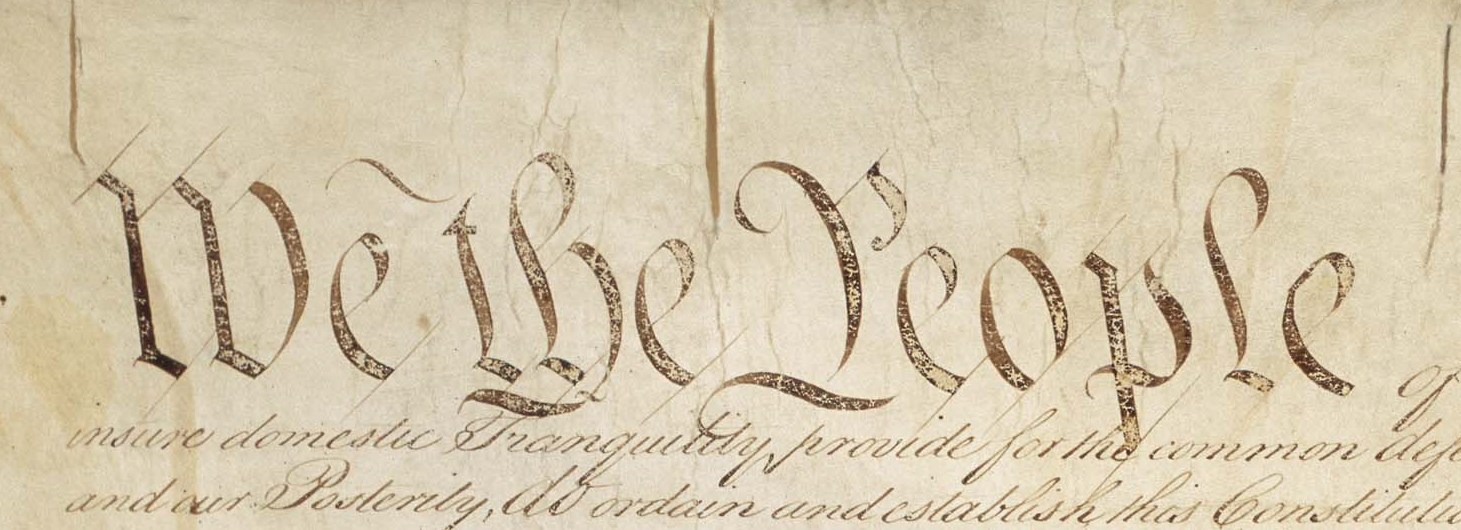
SSRN PAPER: Gregory ABLAVSKY & W. Tanner ALLREAD, "We the (Native) People?: How Indigenous Peoples Debated the U.S. Constitution" (Columbia Law Review (forthcoming))


(image source: Wikimedia Commons)

Abstract:

The Constitution was written in the name of the “People of the United States.” And yet, many of the nation’s actual people were excluded from the document’s drafting and ratification based on race, gender, and class. But these groups were far from silent. A more inclusive constitutional history might capture marginalized communities’ roles as actors, not just subjects, in constitutional debates. This Article uses the tools of legal and Native history to examine how one such group, Indigenous peoples, argued about and with the U.S. Constitution. It analogizes Native engagement to some of the foundational frames of the “Founding” to underscore its significance for current constitutional discourse. Like their Anglo-American neighbors, Native peoples, too, had a prerevolutionary constitutional order—what we here dub the “diplomatic constitution”—that experienced a crisis during and after the Revolution. After the Constitution’s drafting, Native peoples engaged in their own version of the ratification debates. And then, in the early republic, Native peoples both invoked and critiqued the document as they faced Removal. This Article’s most important contribution is proof of concept, illustrating what a more inclusive constitutional history might look like. Still, some of the payoffs are doctrinal: broadening the “public” in original public meaning, for instance. But the more significant stakes are theoretical. As this Article contends, by recognizing Indigenous law and constitutional interpretations as part of “our law”—in other words, the pre- and post-constitutional legal heritage of the United States—Native peoples can claim their role as co-creators of constitutional law.

Read the paper on SSRN

04 June 2020

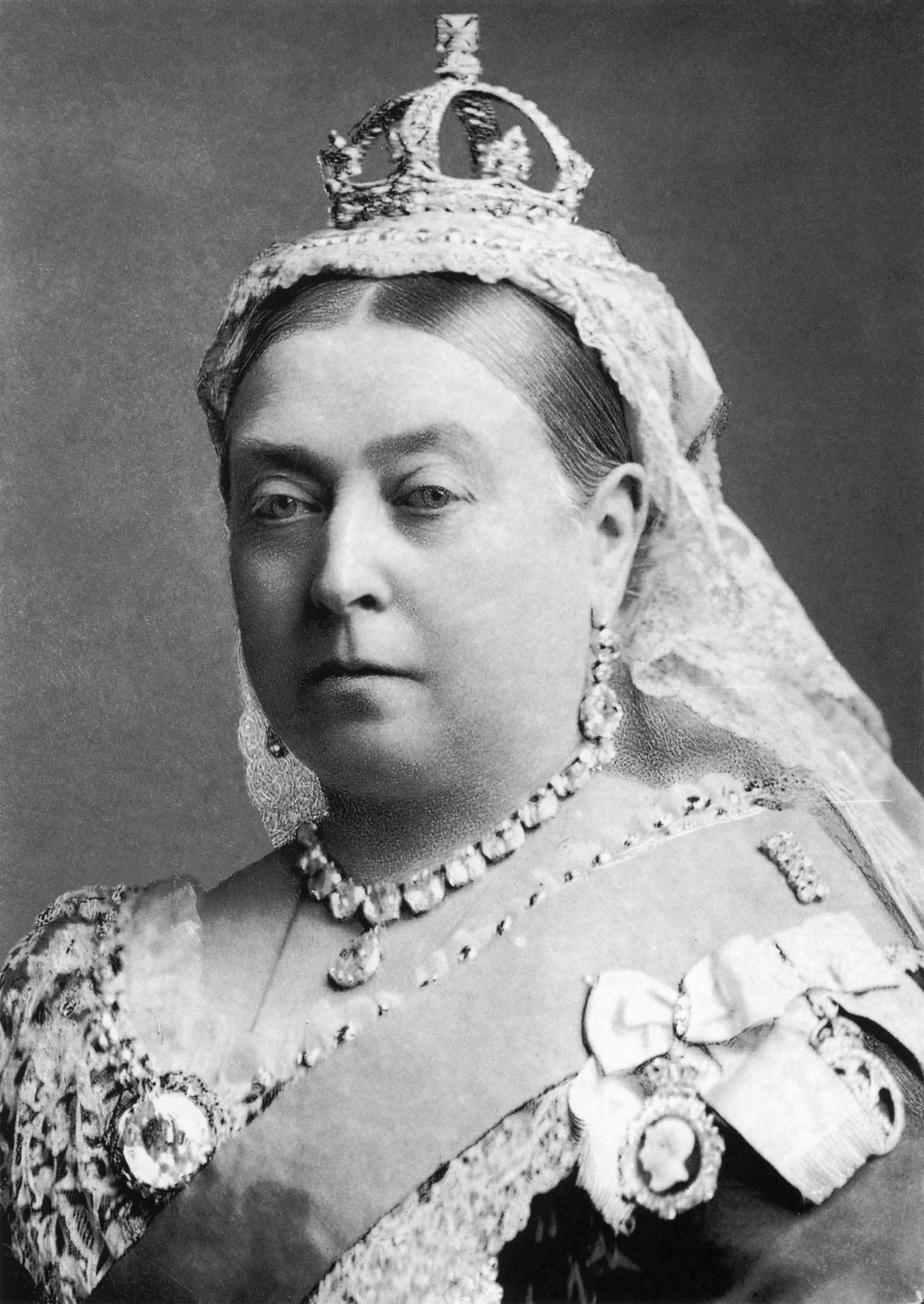
SSRN PAPER: Mitra SHARAFI, Mixing Legal Systems in the British Empire

(image: Queen Victoria; Source: Wikimedia Commons)

Abstract:
This talk was given as part of a mini-plenary session on histories of empire and legal pluralism at the New Orleans meeting of the Law and Society Association in 2016. It examines mixed legal systems in the British empire between the eighteenth and twentieth centuries, focusing on fusions of Roman law or various bodies of personal law with common law. The history of the legal profession sheds light on how new kinds of mixed legal systems became feasible at particular times. Legal pluralism in the form of diverse legal systems administered by the state emerged through practicality as much as principle. As a result, the question for British colonial officials was perhaps not so much "what bodies of non-Anglo law should we retain, as a matter of principle?" as "what bodies of non-Anglo law can we retain, as a matter of personnel and practice?"
Read more on SSRN.


06 April 2020

SSRN PAPER: Matthias GOLDMANN, "Contesting Austerity: Genealogies of Human Rights Discourse"

(image source: Wikimedia Commons)

Abstract:
The dominant understanding of the role of human rights in the context of austerity induced by sovereign debt crises has shifted markedly over time. It reflects, and may have influenced, the genealogies of human rights law in the postwar era. Four different paradigms emerge. During the 1970s, the decade preceding the debt crisis of the 1980s, the idea of austerity as a response to debt crises was contested by the basic (human) needs approach and by the proposal of a New International Economic Order. Both strands of thought showed some affinity with human rights law, although not without ambiguity, understanding self-determination as a structural requirement for ESC rights enjoyment. Counterintuitively, though, the debt crisis beginning in the 1980s silenced, rather than provoked, any form of human rights-based critique. The IMF managed to shift the focus of the debate from human needs to human capital, in line with the emerging Washington Consensus. When the Iron Curtain fell, sovereign debt restructuring became more generous, but debtor states had to pay with ever more intrusive forms of austerity, including structural conditions such as respect for civil and political rights. This “governance paradigm” of human rights was countered by a transformative paradigm of human rights in which civil society articulated its critique of austerity. The IFIs avoided the issue of human rights, but reacted by adding “social” components to austerity that aligned with their focus on efficiency and growth and further entrenched sufficiency. The impact of austerity on the European periphery led to lots of human rights litigation, but a number of structural obstacles prevented its success. Instead, the crisis aftermath saw enormous progress in the political recognition of human rights as a relevant standard for austerity. This has given rise to a new political paradigm of human rights. While this genealogy shows the contingency of human rights discourse in relation to austerity, it reveals their potential for challenging economic expertise and empowering progressive views. The limits of human rights discourse are the limits of our imagination.
Read the full paper here.
(source: International Law Reporter)

23 April 2019

SSRN PAPER: Thomas MOHR, "Irish Home Rule and Constitutional Reform in the British Empire, 1885-1914"

(image source: UCD School of Law/Twitter)

Abstract:
This article examines the meaning of Irish “home rule” as a constitutional experiment and its relationship with other proposals for constitutional change in the British Empire of the late 19th and early 20th centuries. The concept of Irish home rule was seen as a major constitutional experiment and the United Kingdom had little experience of devolution or federal settlements. This article will examine the model that was finally selected for this constitutional experiment which was inspired by the constitution of the Dominion of Canada. The article will also examine the relationship between Irish home rule and other constitutional experiments. These included proposals to create a federal United Kingdom, a concept known as “home rule all round” and even a federal British Empire, a concept known as “Imperial federation”. The conclusion will assess the significance of these constitutional experiments in influencing the campaign for Irish home rule.
More information on SSRN.

17 April 2019

SSRN PAPER: Emily KADENS, Cheating Pays (forthcoming in Columbia Law Review)

(image source: Mendeley)

Abstract:
Common private-ordering theories predict that merchants have an incentive to act honestly because if they do not, they will get a bad reputation and their future businesses will suffer. In these theories, cheating is cheating whether the cheat is big or small. But while reputa­tion-based private ordering may constrain the big cheat, it does not necessarily constrain the small cheat because of the difficulty in discover­ing certain types of low-level cheating and the consequent failure of the disciplining power of reputation. Yet the small cheat presents a signifi­cant challenge to modern contracting, both between businesses and in the contracts of adhesion imposed on consumers. To encourage private law scholars to address the unique governance challenges posed by low-level cheating, this Essay describes the conditions under which low-level cheating can flourish and become widespread. It demonstrates this so-called “Cheating Pays” scenario using a historical case study in which a seventeenth-century London grocer, trading under precisely those condi­tions that private-ordering theories predict will incentivize honesty, not only cheated extensively but also successfully remained in business after having been caught and publicly punished. Identifying the scenarios in which cheating pays has implications for how firms use contracts and how consumers might use the courts to try to reduce opportunistic behavior.
Read the full paper on SSRN.

(source: Legal History Blog)

12 December 2018

SSRN PAPER: Coel KIRKBY, Law Evolves: The Uses of Primitive Law in Anglo-American Concepts of Modern Law, 1861-1961 (AJLH 2018, forthcoming)

(image source: Legal History Blog)

Abstract:
This study traces how Anglo-American legal thinkers used primitive law to develop their concepts of modern law in the century from Austin to Hart. It first examines how Maine developed his historical jurisprudence as a form of social evolutionary analysis of law. Next, it traces the development of legal anthropology as a distinct discipline combining the scientific method of participant observation with the legal method of the case study. Finally, it looks at how Hart uses primitive law to make his famous argument that law was ‘the union of primary and secondary rules’. In each case, legal thinkers develop their concepts of modern law through a foundational contrast with primitive law. This is a striking feature of much Anglo-American jurisprudence that cuts across the borders of the positivist, natural, historical, realist, and other schools of jurisprudence. Appreciating these new uses of primitive law is a first step in excavating an intellectual history of legal thought grounded in the context of colonial knowledge.
Read the paper here.
(source: Legal History Blog)

11 December 2018

SSRN PAPER: Matthew C. MIROW on Léon Duguit and the Social Function of Property in Argentina

(image source: IIDA)

Abstract:
Despite its early introduction to Argentina in 1911, the doctrine of the social function of property was not quickly appropriated into the Argentine legal system. Only after a period of more than thirty-five years did this concept of property find expression in this country through the Constitution of 1949, the Peronist constitution drafted under the guidance of the Arturo Enrique Sampay. Duguit's writings formed part of a broader understanding of the social function of property that was informed by various scholars and sources, and particularly by works on Christian humanism and the social doctrine of the Roman Catholic church. Although mentioned in the debates of the Argentine Constitution of 1949, Duguit was only one of a variety of sources employed by advocates of the doctrine, and his direct influence in the area was significantly less than one might expect considering the historical link between his lectures in Buenos Aires and the creation of the doctrine.
Read the paper here.

(source: Law & Humanities Blog)

07 November 2018

SSRN PAPER: Matthias GOLDMANN, European Integration in the History of International Law [Max Planck Institute for Comparative Public Law & International Law (MPIL) Research Paper No. 2018-26]

(image source: scholarlykitchen)

Abstract:
This paper argues that the Treaties of Rome and the process of European integration they heralded had a lasting impact on the development of international law. However, their significance is usually misattributed. While European law has had little impact on international legal doctrine, and while European integration has remained unique as a political project, European law and the process of European integration have served international law as an important progress narrative. In this respect, they have had an influence on important background understandings characterizing international law since the postwar era, including on the perception of international law as universal, autonomous, pluralistic, and economically liberal. The progress narrative culminates in the view that international law is in a normatively ambitious process of constitutionalization, an idea imported from European law. This progress narrative is now under threat as European integration faces existential difficulties.The crisis of European integration might therefore anticipate a crisis of international law.
Read the full paper on SSRN.
(Source: ESILHIL Blog)

30 October 2018

SSRN PAPER: John C. HARRISSON, 'The Constitution and the Law of Nations', Georgetown Law Journal XVI (2018), 1659-1705


(image source: Wikimedia Commons)

Abstract:
Under the original understanding of the Constitution, customary international law features in the U.S. legal system as general law. It is not law of the United States within the meaning of Articles III or VI of the Constitution, and so does not serve as a basis for federal question jurisdiction or override contrary state law. Under the original understanding, the Constitution does not confer the protections of the international law of state-state relations on either foreign states or governments that have been recognized as such by federal political actors. Congress may confer those protections by statute, but in the absence of statute or treaty, they rest on general law. The Constitution’s text indicates that the laws of the United States referred to in Articles III and VI consist entirely of federal statutes. The Federal Convention’s drafting process indicates that members of the convention had that understanding of the text they produced. That process also indicates that the drafters probably understood the laws referred to by the Take Care Clause of Article II to consist of federal statutes. Prominent figures in the ratification debates treated Articles III and VI as using the term “laws of the United States” to refer to statutes. The First Congress drafted the Judiciary Act of 1789 on the assumption that the laws of the United States referred to in Articles III and VI were federal statutes. During the 1793 prosecution of Gideon Henfield for non-statutory criminal violations of the United States’ neutrality, a number of leading figures took the position that the federal courts could entertain prosecutions under unwritten law. It is unlikely, however, that any of them meant to assert that the law of nations was law of the United States within the meaning of Articles III or VI.
Fulltext on SSRN.

(source: ESILHIL Blog)

30 July 2018

SSRN PAPER: David FOX, "The Anglo-Scots Monetary Union of 1707" [Edinburgh School of Law Research Paper 2018/24]

(image source: Wikimedia Commons)

Abstract:
This article analyses the 1707 monetary union between England and Scotland, seen from a legal historical perspective. The task requires a contextual interpretation of Article XVI of the Treaty of Union but, more especially, a fine analysis of the accounting and administrative documents that implemented the union as a numismatic process. Only when these are understood do the questions of private law emerge from the interstices. The article adds to the emerging literature on the economic history of monetary integration. One theme in the literature is the inter-relationship between political and monetary union. Political union drives monetary union but states that seek to preserve their political autonomy may accept some measure of monetary integration between themselves to facilitate trade relations. Strange as it may now seem, the monetary union of 1707 seemed relatively uncontentious in Scotland at the time. The reason may be that it was incidental to the bigger and more difficult question of political union between the two kingdoms. Unlike the formation of the euro-area nearly 300 years later it did not involve the cession of monetary sovereignty by states that, notionally at least, remained politically sovereign. The main effect of the union was simply to rebase the monetary standard of the currency in Scotland with the currency in England. That had been the goal of the Scottish monetary authorities since 1604, after the regnal union established by James VI/I. In one sense, the union simply restored the long-established status quo.
More information on SSRN.

26 July 2018

SSRN PAPER: John W. F. ALLISON, Minimising Magna Carta and Modernising Exposition of the Rule of Law in the English Historical Constitution (Forthcoming in Christopher MAY & Adam WINCHESTER (eds.), Handbook on the Rule of Law (Cheltenham: Elgar 2018)

(image source: Legal History Blog)

Abstract:
Dicey’s view of the English constitution as historical was traditional, but he promoted, and imported to that constitution, a history that was comparative, critical and modernist. His promotion of history as comparison affected his treatment of Magna Carta and his view of its importance to the rule of law. Provisions of Magna Carta provisions are compared and contrasted with Dicey’s exposition of the rule of law to explain his disdain for Magna Carta’s importance, to show the extent to which his exposition of the rule of law marked its modernisation in the English historical constitution, and to illustrate Diceyan history as comparison. The historical comparison serves as an illustration with which to consider the value of history as comparison - for Dicey in his treatment of Magna Carta and for normative interpretivists in drawing upon his rule of law. (This is a draft chapter that has been accepted for publication by Edward Elgar Publishing in the forthcoming 'Handbook on the Rule of Law' edited by Christopher May and Adam Winchester and due to be published in 2. Chapter 10 is available at: http://ssrn.com/abstract=3219209)
Read more on SSRN.

(source: Legal History Blog)

21 July 2018

SSRN PAPER: Timothy Louis SCHROER, Multinormativity in Western Arguments Regarding Punishment of the Boxers and their Patrons, 1900-1901 [Max Planck Institute for European Legal History Research Paper Series No. 2018-07]


(image source: Github)

Abstract:
Westerners applied multiple normative frameworks in debating policy toward China in the wake of the Boxer Uprising in 1900 and 1901. They variously claimed that treatment of China should be governed by the rules of international law, a code of honor, Christian teachings, the judgment of history, or ill-defined norms of civilization. At other times, however, Westerners called for violence against the Chinese without any meaningful normative basis. The law and the legal discipline have an imperializing character, as the law conceptually tends to subordinate other normative frameworks to itself and integrate them into its own normative order, dubbed law. The debate concerning China in 1900 illustrates that legal norms were inextricably and complexly entangled with other norms. It suggests that legal historians, if they are to grasp the past in its full richness, should attend to multiple normative frameworks beyond the law, since legal history cannot be divorced from its wider context. Moreover, scholars applying the lens of multinormativity should recognize that, at some point, norms end and a-normative arguments begin.
Read the full paper here.
(source: ESILHIL Blog)

20 February 2018

SSRN PAPER: Barry E. HAWK, English Competition Law Before 1800 (Fordham Legal Studies Research Paper)


(image source: Github)

Abstract:
English competition law before 1900 developed over the course of many centuries beginning in the medieval period. That development reflected changes in political conditions, economic theories, and broader cultural values. English competition law mirrored the historical movements in England from the medieval ideal of fair prices and just wages to 16th and 17th century nation state mercantilism to the 18th and 19th century Industrial Revolution, laissez faire capitalism and freedom of contract. The development of English competition law is rich in insights for modern antitrust issues like the adaptability of case law and legislation to changing economic conditions, the role of economic theories in the formulation of legal rules, and the role of political and social values in competition policy. Today the predominant if not exclusive emphasis on economics in the application of modern antitrust laws has resulted in a quasi-regulatory system far more technical, specialized and narrowly focused than the case making of generalist English common law judges. Modern antitrust law adapts well to changes in economic theories and conditions but it is less adaptable than English common law to shifts in political and social values. This lack of adaptability is viewed by most commentators as a beneficial insulation of decision-making from political or social influences. Proponents of non-economic policy concerns (like fear of concentration for political or social reasons), on the other hand, are forced to formulate their concerns in economic terms because of the prevailing view that only economics counts in antitrust. They would have had an easier task under the English common law.

Read the paper here.

(source: Law and Humanities Blog)

15 December 2016

SSRN PAPER: Rebeca FERNANDES DIAS, "Brazilian Criminological Thinking During the First Republic (1889-1930)" [MPI for European Legal History, Research Paper Series 2016-13]

(images source: typepad)

Wouter Druwé (KULeuven-Research Foundation Flanders (FWO) posted "Dignity and Cessio Bonorum in Early-Modern Dutch Learned Legal Literature" on the MPI for European Legal History's Research Paper Series on SSRN.

Abstract:
Imprisonment for debt was a common sanction in the early modern period. Through the learned legal institute of the cessio bonorum, or its customary legal alternatives, insolvent debtors could avoid the shame of prison. Nevertheless, in order to discourage irresponsible administration of one's patrimony, local customs and princely ordinances often added shaming sanctions to the ius commune institute. This contribution first presents the legal framework of the cessio bonorum, as well as some shaming practices, especially in the Low Countries. In its main part, this article analyses early modern Netherlandish learned legal literature on the cessio bonorum and outlines ten different arguments related to honour and dignity. Authors discussed which goods the ceding debtors were allowed to retain both at the moment of the cession and thereafter. On the one hand, fraudulent debtors did not deserve any humane treatment and, thus, neither the benefice of cession. For other classes of debtors on the other hand, like clerics, noblemen or members of the military, the obligations going along with the cession of goods were less severe. The arguments outlined in this paper also illustrate the entanglement of humanitarian and instrumental reasoning.
Fulltext here.

17 August 2016

PAPER on SSRN: Alfons ARAGONESES, "Convivencia and Filosefardismo in Spanish Nation-building" [ Max Planck Institute for European Legal History Research Paper Series No. 2016-05]

(image source: SSRN)


Alfons Aragoneses (Pompeu Fabra University, Barcelona) posted Convivencia and Filosefardismo in Spanish Nation-building, as part of the MPI for European Legal History Research Paper Series (2016-05) on SSRN.

Abstract:
The paper describes the historical trajectory of filosefardismo and references to convivencia in Spain and its reflection in the legal and political culture and the Nation-building process. It considers not the presence of Judaism in contemporary Spanish law and society but, following the suggestions of David Nirenberg, how the references to Jews and to Judaism affected Spanish society, how the “Spanish Jewish question” influenced legal and political thought and the nation-building process in Spain.

To trace this reinvention of the medieval Sephardim, the paper analyzes legal and political texts (laws, administrative texts and parliamentary debates) whose discourse about interpretation and/or legitimacy fulfilled important social and political functions in 19th century deliberations.
Download text here.

09 June 2016

PAPER: Thomas Mohr on "Ireland and the British Empire 1916-1937: A Relationship Reflected in Law Journals" (SSRN)

(source: ucd.ie)

The Law and Humanities blog signals a paper on SSRN by Thomas Mohr (Sutherland School of Law, UCD) entitled "Ireland and the British Empire, 1916-1937: A Relationship Reflected in Law Journals" in the UCD Working Papers in Law, Criminology & Socio-Legal Studies series (04/16).

Abstract:
The purpose of this article is to assess the value of law journals as sources for the analysis of modern Irish history. It examines how two periods of obvious political transition in Irish history are reflected in law journals. The article covers the period between 1916 and 1922, which saw the secession most of the island of Ireland from the United Kingdom, and the period between 1922 and 1937, which saw the gradual secession of the Irish Free State from the British Empire. It examines how military conflict, partition and the 1921 Anglo Irish Treaty influenced the content, nature, and editorial policies followed by Irish law journals. Important non-Irish law journals, in particular the Canadian Bar Review and the Journal of Comparative Legislation and International Law, are also examined in the context of the constitutional relationship between the Irish Free State and Dominion status. These examples are used to support the conclusion that law journals remain important sources in charting and evaluating political transitions in early twentieth century Ireland. 
See text on SSRN.

14 April 2015

ARTICLES: Legal Realism and Natural Law, Logic for Legal Historians, Buddhism and the Law (Law and Humanities Blog)

(image source: Law and Humanities Blog)

 The Law and Humanities blog signalled some interesting new scholarship:
  • Daniel Prey (York), "Legal Realism and Natural Law", in: Maksymilian Del Mar & Michael Lobban (ed.), Law, Theory and History: New Essays on a Neglected Topic (2015) (click here)
The possibility of any meaningful relationship between the legal realists and natural law looks at first rather far-fetched. When it first appeared on the jurisprudential scene, legal realism was savagely attacked by proponents of natural law theory. To this day legal realism is depicted as a modernist, critical, at times almost nihilist approach to law, the polar opposite of the ancient natural law theory that traces its roots to Greek and Roman philosophy, and insists on unchanging objective values. And yet, two of the most famous legal realists, Karl Llewellyn and Jerome Frank, expressed in some of their writings more than a passing endorsement of natural law theory. The purpose of this essay is to try and explain this seemingly odd aspect of their work and in this way help in reassessing their work. We do so by explaining how they understood natural law and how they incorporated it in their work. Though they did not understand the term in precisely the same way, for both of them natural law was connected to the values of the community, which both of them thought were central to understanding law, for explaining how it could remain relatively certain, and ultimately, how it derived its authority.
  •  Ilan Wurman (Winston & Strawn, LLP), "Law Historians' Fallacies", North Dakota Law Review (click here)
A common line of attack against originalists is that lawyers just aren’t good at doing history. But in his famous book Historians’ Fallacies, David Hackett Fischer noted that many historians aren’t good at doing history either: They often fall into one or more of numerous fallacies that he catalogued in his celebrated and often devastating three-hundred page book. This Article points out the many ways in which originalists and other legal historians fall into, but also how they may avoid, some of the same fallacies committed by the historians whose works made their way into Fischer’s book. It will then point to corresponding lessons that lawyers-turned-historians ought to employ to write better history. The belief is that lawyers, judges, and legal academics can become good — or at least better — historians.

Part I confronts two general attacks on the use of history, both of which challenge the possibility of obtaining relevant and objective historical knowledge. Part II establishes the importance of investigative questions and describes fallacies of question-framing that lead originalists astray. Part III explores fallacies of factual verification that stem from reliance on flawed types of evidence. Part IV addresses one fallacy of factual significance — which we shall call the originalist’s fallacy — that leads some originalists to misunderstand the significance of certain evidence. Part V illustrates fallacies of narration, including fallacies of anachronism and presentism, that too often create fruitless investigations and provide ahistorical answers. Part VI, although recognizing the importance of generalization, demonstrates how originalists (and other legal historians) often generalize improperly. 
  • Rebecca French (SUNY Buffalo), "What is Buddhist Law ?", SUNY Buffalo Legal Studies Research Papers (click here)
This Law Review article, and ones that follow, are an introduction to Buddhist Law and its influence in Asia and the rest of the world. While the legal traditions of all major religious traditions have been extensively studied and written about, there are very few scholars of, and little written in any language on, the legal concepts in the Buddhist tradition. There is basically nothing in the legal academic literature in the U.S. nor are translations of the actual legal texts available for general use when working to understand this form of thinking, or in making comparisons to other religious laws. This series of articles will examine the reasons for this gap, outline the contextual setting, explore the actual rules that were established, note how they influenced social systems in Asia and address other general aspects of Buddhist Law.

This article will have two types of writing: (1) in regular script, the legal discussion and description common to a Law Review and (2) in italics, translations of actual Buddhist law code texts, particularly the Vinaya, or canonical law code. The second type of writing is presented to familiarize non-Asian lawyers with the style of the text and some of the concepts and ideas that underlie Buddhism and Buddhist Law. Besides the intrinsic interest of a wholly unknown legal system, this material is useful for comparative lawyers, international lawyers, scholars of public policy and anyone doing law in a former or current Buddhist country.