Search

12 February 2024

CALL FOR PAPERS: Fifth Postgraduate Conference in Comparative Legal History: “The Making of Law in Comparative perspective: Legislators and Judges” (Valencia: Valencia University, 2-4 MAY 2024); DEADLINE 25 MAR 2024


The European Society for Comparative Legal History (ESCLH) is pleased to announce its Fifth Postgraduate Conference. The ESCLH invites PhD-students and post-doctoral researchers who work in the field of comparative legal history to participate in the conference. The conference will be held from 2 to 4 May 2024 at Valencia University, Spain.

The ESCLH wants to overcome the narrow nationalism and geographical segregation of legal history in contemporary European scholarship and professional organisations. The society, thus, aims to promote comparative legal history, the explicit comparison of legal ideas and institutions in two or more legal traditions. The conference will somehow focus on the making of laws, exploring their creation and application by judges.

The Fifth Postgraduate Conference of the ESCLH will give PhD-students and post-doctoral researchers the opportunity to present their research in the field of comparative legal history to a panel of six leading experts. Furthermore, the conference will give all participants the opportunity to build academic networks. The experts on the panel cover a broad range of subjects: Luisa Brunori (Paris), Stefano Vinci (Bari), Matt Dyson (Oxford), Phillip Hellwege (Augsburg) and Judit Beke-Martos (Bochum).

The ESCLH invites doctoral candidates and post-doctoral researchers to submit abstracts of their planned presentation. Please submit one document, as a PDF or Word file with an abstract and a CV, of no more than 5 pages. The abstract should be of no more than 300 words. It should give the title of the research project, the field of research, and personal information (full name, email address, affiliated university). The application should be sent to:

aniceto.masferrer@uv.es

The conference language is English and abstracts must be submitted in English. The closing date for receipt of abstracts is 25 February 2024. Up to twelve applicants will be selected and invited to participate in the conference. Successful applicants will be informed by 25 March 2024.

Participants are expected to cover their own travel expenses (arriving on the 2nd May and departing on the 4th afternoon or evening). Accommodation and catering will be provided without charge. With enough notice, accommodation for the night of Saturday May 4 can also be provided, at cost (approximately 50 Euros per person).

BOOK: Eric SCHNAKENBOURG, La quasi-guerre. Le conflit entre la France et les États-Unis. 1796-1800 (Paris: Tallandier, 2024), 320 p. ISBN 9791021051300, € 22,5

(image source: Tallandier)

Abstract:

Qui sait que la France et les États-Unis se sont affrontés ? Dans la seconde moitié des années 1790, ces deux puissances pourtant alliées entrent ouvertement en conflit. Bien que la guerre ne soit jamais officiellement déclarée, Français et Américains s’opposent lors de combats navals de part et d’autre de l’Atlantique et multiplient les captures de bâtiments, provoquant plusieurs milliers de morts et de blessés. Cet épisode, passé à la postérité sous le nom de Quasi-Guerre, naît de contentieux commerciaux et diplomatiques entre les deux pays. Il vient aussi, et peut-être surtout, d’un sentiment de trahison ressenti par la France quand les États-Unis semblent se rapprocher de leur ancien ennemi commun : la Grande-Bretagne. Les historiens américains ont accordé une grande attention à ce moment singulier car il s’agit du premier conflit de leur pays depuis son indépendance avec une grande puissance européenne. Éric Schnakenbourg propose une histoire totale de cette guerre en français, en s’appuyant sur des archives inédites. Ses recherches nous permettent de découvrir cet épisode méconnu de la France révolutionnaire.

On the author:

Éric Schnakenbourg est professeur d’histoire moderne à Nantes Université et directeur du Centre de recherche en histoire internationale et atlantique (CRHIA). Il a notamment publié Entre la guerre et la paix. Neutralité et relations internationales, XVIIe-XVIIIe siècles (2013) et Le Monde atlantique. Un espace en mouvement, XVe-XVIIIe siècle (2021).

More information here. 


VACANCY: Postdoctoral Researcher on ERC "Communicating the Law in Europe" (St Andrews: University of St Andrews, DEADLINE 13 FEB 2024)

(image source: Wikimedia Commons)

Applications are sought for a full-time Postdoctoral Research Assistant to work with Dr Arthur der Weduwen, conducting research for an ERC-selected, UKRI-funded project entitled Communicating the Law in Europe, 1500-1750 (COMLAWEU). The project is based in the School of History at the University of St Andrews. The PDRA will be expected to work closely together with Dr der Weduwen and the rest of the project group, composed of one other full-time PDRA and two PhD students. 


The COMLAWEU project is a five-year project that investigates how law was communicated to citizens and subjects by the authorities in early modern Europe (1500-1750). It pursues an original comparative study of the publication and circulation of municipal, regional and national law, encompassing oral communication, ceremonial proclamations and the employment of criers, as well as the affixing, distribution and sale of law texts, in manuscript and printed form. Based on extensive archival research, this project will seek to establish for the first time to what extent the increasing body of law that was issued in early modern Europe was made publicly available, and in what forms. The project seeks to add a new and much-needed perspective to the study of European politics in a critical era of state formation, framing the communication of law as an essential stabilising factor in an era of highly participatory but undemocratic politics. This project will offer multiple comparative frameworks through which the communication of law will be studied, including Protestant and Catholic states, urban and rural areas, and empires, national kingdoms and city-states. With the aid of such a comparative lens, it is an overarching aim of the project to analyse how the public dissemination of law shaped early modern civic society and influenced political participation and accountability.


The successful applicant will hold (or, at time of application, be very near to completion of) a PhD in the field of early modern political, legal, book or communication history, with expertise in the history of France, Italy, the Holy Roman Empire or Poland-Lithuania. They will have working fluency in French, Italian, German and/or Polish, and excellent communication skills in English. Reading competency in Latin will also be an advantage.


Under the overall framework of the project, the PDRA will focus on the communication of law in early modern France, the Italian peninsula, the Holy Roman Empire or Poland-Lithuania. This will include fieldwork in archives and libraries away from St Andrews, as well as cataloguing and source analysis in St Andrews, using digital resources and data gathered by the team. The PDRA will co-organise one workshop or conference, co-edit a special issue of a journal or a conference volume, and write and co-author other publications arising from the project’s activities. They will also participate more generally in the project’s communication and outreach activities, which may include contributing to the project website. They will be expected to support the PhD students involved with the project, and to play a collegiate role in the academic life of the School of History and its USTC/Book History group.


The post is available for 3.5 years (42 months), to commence on 1 September 2024, or as soon as possible thereafter. 


Employees of the University have access to a wide range of staff benefits including:

  • Annual leave of 34 days, plus 5 public holidays
  • Membership of the SLAS Pension Scheme with generous employer contributions
  • A hybrid working environment, including partial homeworking where appropriate and a range of family friendly policies 
  • Staff discount scheme for local and national goods and services
  • Free staff parking, employee Carshare and Cycle to Work Schemes and subsidised local bus travel
  • Subsidised sports membership, reduced tuition fees on degree programmes for staff/children of staff, access to library facilities, salary sacrifice scheme and a range of wellbeing initiatives 

Candidates who wish to find out further details about the project or the post are encouraged to contact Dr Arthur der Weduwen (adw7@st-andrews.ac.uk).  


Applications are particularly welcome from women, people from the Black, Asian and Minority Ethnic (BAME) community, and other protected characteristics who are under-represented in research posts at the University.  


Equality, diversity and inclusion are at the heart of the St Andrews experience.  We strive to create a fair and inclusive culture demonstrated through our commitment to diversity awards (Athena Swan, Carer Positive, LGBT Charter and Race Charters). We celebrate diversity by promoting profiles of BAME, LGBTIQ+ staff and supporting networks including the Staff BAME Network; Staff with Disabilities Network; Staff LGBTIQ+ Network; and the Staff Parents & Carers Network.  Full details available online: https://www.st-andrews.ac.uk/hr/edi/


Closing Date:  13 February 2024


Interview Date:  12 March 2024


Please quote ref:  AR2933SB


Further Particulars:  AR2933SB FPs.doc


School of History

Salary: £30,487 - £36,024 per annum

Start: 1 September 2024 or as soon as possible thereafter

Fixed term for 3.5 years


Read more here.

BOOK: Rudi BEAULANT, Les Pratiques de la grâce des ducs et duchesses de Bourgogne à la fin du Moyen Âge (Paris: Classiques Garnier, 2024), ISBN : 978-2-4061-5946-9, pp. 674, 48,00 €


ABOUT THE BOOK

Les ducs de Bourgogne ont usé d’un droit de grâce à l’égard des criminels, à l’instar des rois de France. Cet ouvrage en examine les modalités ainsi que les enjeux sociaux, politiques, juridiques et financiers, depuis les derniers ducs Capétiens jusqu’à la mort de Charles le Téméraire en 1477.

Prix Jean-Claude Vimont

Préface de Bruno Lemesle


ABOUT THE AUTHOR

Rudi Beaulant est postdoctorant au LabEx Hastec, rattaché au LaMOP (UMR 8589). Son projet de recherche porte actuellement sur l’office de bourreau dans le duché de Bourgogne à la fin du Moyen Âge. Sa thèse de doctorat, intitulée Les lettres de rémission des ducs de Bourgogne. Étude sur les normativités sociales, politiques et juridiques, réalisée sous la direction de Bruno Lemesle et soutenue en 2018, est en cours de publication. Ses travaux portent plus généralement sur les pratiques judiciaires urbaines et princières à la fin du Moyen Âge, ainsi que sur le trésor de l’Épargne des ducs de Bourgogne


TABLE OF CONTENTS

PREMIÈRE PARTIE. LE CADRE INSTITUTIONNEL ET LES PRATIQUES DE LA GRÂCE DANS L’ESPACE BOURGUIGNON

Rassemblement du corpus, méthodologie et limites de l’étude

L’exercice du droit de grâce dans les principautés bourguignonnes et ses évolutions

Le processus de grâce criminelle dans l’espace bourguignon et les évolutions structurelles de la lettre de rémission

Conclusion de la première partie


DEUXIÈME PARTIE. CRIME, SOCIÉTÉ ET ARGENT. LES ENJEUX JURIDIQUES, SOCIAUX ET FINANCIERS DES LETTRES DE RÉMISSION BOURGUIGNONNES

Rémission et criminalité dans l’espace bourguignon

La construction du sujet idéal, entre normes sociales et juridiques

Le prix de la miséricorde princière, une économie de la grâce ?

Conclusion de la deuxième partie


TROISIÈME PARTIE. LES ENJEUX POLITIQUES DE LA GRÂCE DES DUCS DE BOURGOGNE

La rémission, outil d’intégration et vecteur de la souveraineté princière

Grâce princière et pouvoir urbain. Le cas de la ville de Dijon

Conclusion de la troisième partie


Conclusion générale

Sources d’archives

Outils de travail et sources imprimées


More information with the publisher.

09 February 2024

BOOK PRESENTATION: Tra diritto e religione. Dialoghi e influenze nella storia giuridica (Roma: École française de Rome, 29 FEB 2024)

(Source: fhi)

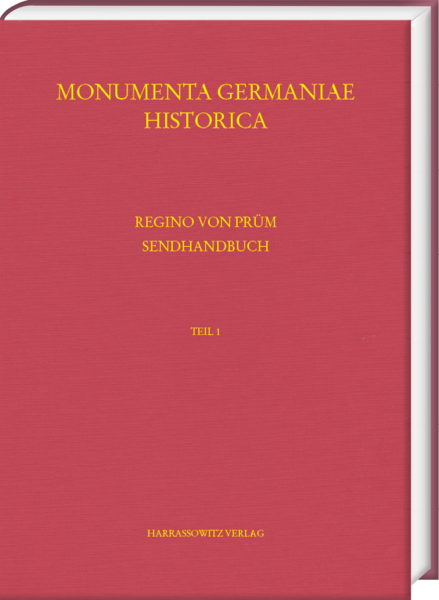
BOOK: REGINO VON PRUM - ed. WILFRIED HARTMANN, Sendhandbuch (Libri duo de synodalibus causis) (Wiesbaden: Harrassowitz Verlag, 2023). ISBN: 9783447119801

(Image source: Harrassowitz Verlag)


Das Sendhandbuch wurde von Regino von Prüm († 915) angelegt und stellt eine der wichtigen Kirchenrechtssammlungen aus dem Mittelalter dar. Die dem Erzbischof Hatto von Mainz gewidmete Sammlung war dazu gedacht, die Bischöfe bei ihren Visitationsreisen und der Durchführung der Sendgerichtsbarkeit zu begleiten. Regino hat dafür Rechtssätze aus Konzilien, Bußbüchern und Kapitularien der Karolingerzeit zusammengestellt, aber auch Auszüge aus Papstbriefen, aus den alten Konzilien und den Schriften der Kirchenväter gesammelt, um die Kleriker bei der Seelsorge zu unterstützen. Neben Fragenkatalogen und Beschreibungen von Delikten enthält das Sendhandbuch genaue Anweisungen über die zu verhängenden Bußen, was es zu einer einzigartigen Quelle für das Kleriker- und Alltagsleben in spätkarolingischer Zeit macht. Die vorliegende Edition bietet neben dem lateinischen Text eine deutsche Übersetzung und wird durch mehrere Register auch für gezielte Fragestellungen erschlossen.

Der Band eröffnet die Reihe „Collectiones canonum“ der MGH, in der Kanonessammlungen des Mittelalter herausgegeben werden.


More information can be found here.

08 February 2024

JOURNAL: Pro Memorie. Bijdragen tot de Rechtsgeschiedenis der Nederlanden XXV (2023), No. 2, 119-140


Articles

In het spoor van het plagiaat van Joos De Damhouder (Bruno Debaenst)
DOI 10.5117/PROM2023.2.002.DEBA
Abstract:

In the 16th century, Joos De Damhouder (1507-1581) engaged in plagiarism by drawing extensively from the writings of his compatriot Filips Wielant (1439-1519). This remained obscure for several centuries, affording De Damhouder the opportunity to establish an international reputation as a preeminent legal scholar, whereas Wielant’s contributions languished in relative obscurity. However, in the latter half of the 19th century, scholars succeeded in unearthing the plagiarism, igniting considerable controversy and scholarly discourse on the matter. This revelation had profound repercussions, leading to a tarnishing of De Damhouder’s oncepristine reputation. Subsequent generations of legal historians undertook investigations into this matter. In recent years, a nuanced reevaluation of De Damhouder’s standing has transpired.

Motieven in het archief van de (Soevereine) Raad van Brabant (Hylkje de Jong)
DOI  10.5117/PROM2023.2.003.JONG
Abstract:

n the archives of the (Sovereign) Council of Brabant, 26 packets designated as Motifs have been handed down. The Motifs occur in French and Flemish, although Latin was prescribed. From the year 1744 onwards, they can be referred to as a series. They appear incomplete, because Motifs can also be found in the litigation files, sometimes from only one party. In these secret Motifs, parties state the legal framework of their arguments for the justices. Goswin Arnold Wynants (1661-1732) observes that in these Motifs, the legal framework and the legal literature have not always been properly and accurately incorporated and applied. The random sample (small but in size very extensive) shows that his observation holds true.

Tussen vaccin-verering en vaccin-verschrikking. De rechtshistorische ontwikkelingen van het Nederlandse vaccinatiebeleid (Rogier Simons)
DOI 10.5117/PROM2023.2.004.SIMO
Abstract:

Inspired by the socio-political debate on the COVID-19 vaccination policy, this contribution examines the legal-historical developments of the Dutch vaccination policy from the 18th to 20th century, in particular regarding the use of pressure and coercion. An important observation that follows from this contribution is that discussions regarding the use of pressure and coercion in the vaccination policy, particularly the arguments in favour and against measures in this regard, did not really change over time, even though the contextual factors substantially differed. What also follows from this analysis, is that debates concerning a less voluntary vaccination policy were often fuelled by infectious disease outbreaks. An important lesson from the past is therefore to conduct the discussion regarding the use of pressure and coercion in the vaccination policy timely, in order to reach societal consensus about a clear and balanced vaccination policy before the outbreak of a (new) infectious disease.

Jan Ackersdijck tegen slavernij. Een missie met methode tussen recht en economie (J.M. Milo)
DOI 10.5117/PROM2023.2.005.MILO
Abstract:

Jan Ackersdijck (1790-1861) read law at Utrecht University (1806-1810), came to practice law for some 15 years, but was attracted to empirical research in historical and statistical economy, rather than to more abstract positivist legal methodologies. Called to chairs in political history, economy and statistics (at the law schools) in Liege (1825-1830) and Utrecht (1831-1860), he came to advocate empirical research, on the basis of careful observations and reporting, illustrated by meticulously compiled statistical information out of publications like books and newspapers, and by his numerous so-called ‘statistical travels’ throughout Europe, which he acurately and precisely recorded. How can a society grow in prosperity? Individual freedom is particularly suitable for this purpose, according to Ackersdijck’s economic principles, and a nonsensical, repulsive and evil institution like slavery in the Dutch colonies should be abolished. He founded an association to that purpose, as well as a journal, entitled (translated) Contributions to the Knowledge of Dutch and Foreign Colonies, Especially Regarding the Emancipation of Slaves. Late 1847 his association initiated a petition to the Dutch Parliament in 1848, urging slavery’s abolition – widely supported, also by Ackersdijck’s colleagues from the legal domain, among whom G.W. Vreede and Ackersdijck’s son-in-law C.W. Opzoomer. That abolition was to take another 15 years was certainly not the fault of Ackersdijck, who acted from the principles of freedom, enlightenment and humanity, on a methodological basis of sound observation and scientific attention, as a legally educated political economist and statistician at the Utrecht Law Faculty.

De twee petten van de gerechtsdeurwaarder. Ambtelijke taken en incasso in historisch perspectief aan de hand van deurwaarder Van Horrik (Bram Buik) 
DOI 10.5117/PROM2023.2.006.BUIK
Abstract:

Dutch judicial officers are public officials who also perform commercial debt collection work. This has been the case since the first Dutch regulations from 1838. These regulations lagged behind other professional groups and surrounding countries. Hendrik van Horrik, a candidate and aspiring judicial officer, made a proposal for a legal regulation in 1919, which partly relied on ancient statutory French law. This proposal has been completely forgotten. Van Horrik, disappointed with the progress of his career, turned his back on the judicial officers’ practice and became a municipal bailiff. He also started debt collection work, under that banner, as if he were a judicial officer. His dubious manner came to light when he applied to be admitted as a lawyer in Utrecht.

De redenaar van George Minne. Waar retoriek, recht en spiritualiteit synergetisch samenkomen (Chiara Logghe)
DOI 10.5117/PROM2023.2.007.LOGG
Abstract:

A preliminary examination of the bronze sculpture, De redenaar (The Orator), created by Ghent sculptor George Minne (1866-1941), inevitably draws attention to the unusual pose of the male figure. Upon closer inspection, De redenaar reveals a profound sense of introspection – a recurring theme in Minne’s oeuvre. While the sculpture shares resemblances with a lawyer, the question of whether it effectively represents a legal professional remains unanswered, despite certain indications that suggest a portrayal of a legal practitioner. It is noteworthy that the creation of this work followed a period during which progressive artists and lawyers maintained close ties in their shared efforts to modernize and humanize Belgian society. A more in-depth exploration into the meaning of De redenaar leads the author to the conclusion that it symbolizes the processes of introspection and contemplation, coupled with persuasiveness. In this sense, it at least constitutes a significant source of inspiration for jurists.

Book reviews

  •  Het tragische leven van een veelzijdig jurist (Kees Cappon)
  • Nazi-roofkunst in België (Amber Gardeyn)
  • Gevangenisgeschiedenis Oudenaarde (Kunst en recht) (Georges Martyn)
  • Averij-grosse en andere averijen (Tim Lubbers)
Read all articles and reviews here.

07 February 2024

BOOK: Nora E. JAFFARY, Historia del aborto en México (México: Tirant lo Blanch, 2023). ISBN: 9788411971768, pp. 164, $ 299.00 MXN

(Source: Tirant lo Blanch)


ABOUT THE BOOK 


Series:  Historia del Derecho en América Latina 


Todas las familias mexicanas esconden historias de embarazos imposibles y no deseados. Hubo mujeres que, legal o ilegalmente, los interrumpieron. Este libro pone en perspectiva histórica las experiencias de estas mujeres, sus comunidades y los contextos jurídicos en que vivieron, a través de un análisis de la historia del aborto en México desde el Virreinato hasta nuestros días. Se examinan las actitudes de la Iglesia Católica con respecto al aborto, las prácticas médicas utilizadas a lo largo del tiempo para interrumpir el embarazo, así como las relaciones entre estas actitudes y prácticas con las cambiantes construcciones de género. El enfoque central del libro, no obstante, recae sobre la cambiante regulación del aborto en la ley. Como demuestra esta obra, hasta finales del siglo XX, la discusión sobre la personalidad y los derechos del feto desempeñó un papel relativamente marginal para la ley, los jueces, la opinión pública e incluso la Iglesia Católica. En lugar de ello, durante gran parte de la historia de México, la regulación jurídica de esta práctica se orientó esencialmente por el imperativo de proteger el honor sexual de las mujeres y la reputación de sus familias. 


ABOUT THE AUTHOR 


NORA JAFFARY es Doctora en Historia por la Universidad de Columbia y profesora del Departamento de Historia de la Universidad Concordia en Montreal, Canadá. Entre sus obras destacan False Mystics: Deviant Orthodoxy in Colonial Mexico (Nebraksa, 2004) y Reproduction and Its Discontents in Mexico: Childbirth and Contraception from 1750 to 1905 (UNC Chapel Hill, 2016), que recibió el premio Wallace K. Ferguson de la Asociación Histórica Canadiense.

JOURNAL: Tijdschrift voor Rechtsgeschiedenis/Revue d'Histoire du Droit/The Legal History Review XCI (2023), No. 3-4


(image source: Brill)

Articles

Zur Entmündigung wegen Wahnsinn und Verschwendung im römischen Recht (Christine Lehne-Gstreinthaler) [OPEN ACCESS]
DOI 10.1163/15718190-20233405
Abstract:

This article is devoted to the incapacitation procedure for insane and profligate persons in Roman law. On the basis of literary and legal sources, an attempt is made to explain the incapacitation procedure in more detail. Special attention is given to the concept of interdiction and the question of involvement of physicians in such proceedings.

Origen de la teoría sobre la Paráfrasis del Pseudo-Teófilo (Fernando Reinoso-Barbero)
DOI  10.1163/15718190-20233404
Abstract:

Origin of the theory about the Pseudo-Theophilus’ Paraphrase. – The sudden and abrupt change in Contardo Ferrini’s stance towards Theophilus, is attributed here to the misinterpretation of a letter sent to him by Zachariä von Lingenthal on January 31, 1884, just as his magnificent edition of the Paraphrase was on the brink of publication. This circumstance compels him to hastily modify and adapt its Prolegomena to his new theory, leading to significant unforeseen consequences. Furthermore, due to the rush, he also overlooks making modifications in other sections of his edition where, for this reason, Theophilus is still acknowledged as the author of the Paraphrase.

Testamentary law in late Medieval Dubrovnik A case study of the testament of notary Thomasinus de Savere (1284) (Henrik-Riko Held)
DOI 10.1163/15718190-20233411
Abstract:

This paper explores testamentary law in late medieval Dubrovnik (Ragusa) by analysing the testaments made by notary Thomasinus de Savere, working at Dubrovnik, 1277–1286. De Savere was an educated notary, originating from Reggio Emilia in Italy. He greatly contributed to the spread of doctrinal elements of ius commune in Dubrovnik. In determining the reach of his influence on testamentary law, I will first examine inheritance law in Dubrovnik at the time, followed by an analysis of the testaments De Savere composed for the local population. I will then compare these testaments with the testament De Savere made for himself (1284). The latter differs from the testaments composed for the locals, as it is doctrinally in line with the latest developments of the ius commune. I will discuss the possible reasons and relevance of this difference.

Modest building blocks The state of the art of monopoly thinking at the turn of the Middle Ages and the Early Modern Period in the works of lawyers and theologians (Wout Vandermeulen) 
DOI 10.1163/15718190-20233401
Abstract:

This article seeks to contribute to the growing current of legal historical literature on early modern commercial law. It examines the topic of monopolies and their prohibition in the Codex of Justinian (C. 4,59,2). Its purpose is to explore one aspect of the renewed interest in the topic among lawyers and theologians in the early 16th century, when trading corporations and authorities worldly and ecclesial caused a proliferation of monopolies. The aspect in question is the source material from the legal and theological tradition that early modern authors had at their disposal. Through analysing the printed editions of medieval works from Roman and canon law and from theology, this contribution sketches an image of scattered attention and a strong focus on guilds until the very last years of the Middle Ages. Only after 1450 do the roots of the notions that would dominate later debates come to the fore, and near exclusively in the works of moral theologians such as Konrad Summenhart.
Testamentary practices and village courts in the Bailiwick of ’s-Hertogenbosch (c. 1470-1550) (Mark Vermeer)
DOI 10.1163/15718190-20233409

Abstract:

This paper discusses the origin, function and uses of schepentestamenten, acts of last will registered before municipal courts of aldermen. From the second half of the fifteenth century, peasants and townsmen found recourse to these courts for the registration of acts of last will. At first these acts were primarily contracts among spouses mutually conveying to each other the property upon death, but especially after the secularisation of the notarial profession in 1531 the number of pious bequests and religious beneficiaries greatly increased. In general, three strategies prevail in the employment of the last will: overruling the customary dispensation to the surviving spouse and providing this person with additional resources, specifying the position of each of the children (especially when some were illegitimate or had received by life), and preventing loss of wealth from the family. For the legal instruments, the aldermen resorted to their standard formulary, although attuned to the peculiarities of the last will. The trust and authority the courts of aldermen enjoyed, in combination with their executive clout in enforcing compliance, allowed them to discard various formal elements required in notarial instruments, while also making them popular institutions for the registration of last wills.

L’élaboration d’une normativité en droit des gens: le recours au discours historique dans le De legationibus d’Alberico Gentili (Emilie Colpaint)
DOI 10.1163/15718190-20233407

Abstract:

The development of normativity in international law: the use of historical discourse in Alberico Gentili’s De legationibus. – The aim of this article is to examine the sources used and the method employed by Alberico Gentili in his De legationibus, to elaborate a norm for the law of embassies. Although legal sources feature prominently in this treatise, the majority of them are derived from a variety of sources from Antiquity (historians, philosophers, rhetors, poets, etc.). Alberico Gentili mainly uses historical sources, and more specifically the exemplum, in his treatise. By mobilizing historical exempla alongside legal sources, the jurist created a rational normative system capable of responding to the diplomatic challenges of the sixteenth century brought about by constantly evolving practice

The legal personality of foreign states in civil law: l’affaire Zappa and the bequest of the Marquise du Plessis-Bellière (Laurens van Apeldoorn) (OPEN ACCESS)
DOI 10.1163/15718190-20233408

Abstract:

This article traces the doctrinal debate on the civil legal personality of foreign states occasioned by two famous legal cases during the closing decade of the nineteenth century: the protracted conflict between Greece and Romania following Evangelis Zappa’s bequest of immovable property located in Romania to the Greek state for the purpose of resurrecting the Olympic Games, and the contested will of the Marquise du Plessis-Bellière which named Pope Leo xiii as legatee of real estate located in France. As Ernst Rabel and others have thought, the debate confirmed the scholarly consensus that the recognition given to a foreign state according to the rules of public international law, implies recognition of its capacity in private law matters. The objective of this article is to reconstruct the considerations that led to this apparent consensus, thus helping to facilitate an assessment of the persuasiveness of those considerations

Book reviews

  • M. Graziadei and L. Zhang (eds.), The making of the civil codes, A twenty-first century perspective. [Ius Gentium: comparative perspectives in law and justice, 104]. Springer, [Singapore 2023]. xv + 412 p. (Alain Wijffels)
  • S. Lepsius (ed.), Juristische Glossierungstechniken als Mittel rechtswissenschaftlicher Rationalisierungen, Erfahrungen aus dem europäischen Mittelalter – vor und neben den großen ‘Glossae ordinariae’. [Abhandlungen zur rechtswissenschaftlichen Grundlagenforschung, Münchener Universitätsschriften, Juristische Fakultät]. Erich Schmidt Verlag, [Berlin 2022]. vi + 333 p. (Jan Hallebeek)
  • U. Babusiaux, Chr. Baldus, W. Ernst, F.-S. Meissel, J. Platschek [und] Th. Rüfner (Hrsg.), Handbuch des Römischen Privatrechts, Bände i-iii. Mohr Siebeck, Tübingen 2023. xxxiv + 3050 p. (Bd. i, ii); xxxii + p. 3051-3673 (Bd. iii) (A.J.B. Sirks)
Obituaries
  • In memoriam Johannes Henricus Antonius (Jan) Lokin, 1945–2022 (Bernard H. Stolte)
  • In memoriam Hans van de Wouw, 1939–2023 (G. Dolezalek)
  • In memoriam Eltjo Johannes Hidde Schrage, 1945–2023 (Harry Dondorp)
Read more here.

06 February 2024

CALL FOR PAPERS: Nachwuchstagung Rechtsgeschichte (2. Tagung des jungen Netzwerks Rechtsgeschichte) „Rechtssicherheit im Wandel der Zeit“ (Wien: Universität Wien, 20-22 Juni 2024) [DEADLINE 15 FEBR]

(Source: Austria info)


Rechtssicherheit gilt als eines der Kernziele unserer modernen Rechtsordnung. Egal ob im Verfassungsrecht, wo das Prinzip der Rechtssicherheit etwa in Art. 20 des deutschen Grundgesetzes oder im 5. und 14. Zusatzartikel zur US-amerikanischen Verfassung zum Ausdruck kommt, im Zivilrecht, wo es in den verschiedensten Bereichen vom Sachen- und Schuldrecht über das Familienrecht bis hin zum modernen Wirtschaftsrecht eine Schlüsselrolle spielt oder auf dem Gebiet des Strafrechts - man denke hier nur an das Prinzip nulla poena sine lege oder an das Spannungsverhältnis zwischen Rechtssicherheit und Verjährung – ist sie als Garant für Rechtsstaatlichkeit von immenser Bedeutung. Ähnliches gilt im Völkerrecht, wo Rechtssicherheit für die Aufrechterhaltung einer internationalen Friedensordnung unabkömmlich ist und sie sich in Grundprinzipien wie pacta sunt servanda widerspiegelt. 


Doch was ist überhaupt unter dem Begriff der Rechtssicherheit aus dogmatischer/wissenschaftstheoretischer Sicht zu verstehen, handelt es sich dabei – wie Joseph Raz meint – um ein „politisches Ideal“ oder nach Hans Kelsen um eine „bloße Illusion“? Kann unter dem Begriff der Rechtssicherheit mehr als die „Berechenbarkeit bzw. Vorhersehbarkeit des staatlichen Handelns“ verstanden werden? 


Wie wurde mit dem Bedürfnis nach Rechtssicherheit zu den verschiedenen Zeiten auf den verschiedenen Rechtsgebieten umgegangen? Inwiefern können sich erste Ansätze zur Schaffung von Rechtssicherheit schon im römischen Recht identifizieren lassen, wie etwa durch das Zwölftafelgesetz (451/450. v. Chr) des römischen Stadtstaates – zum Einen bereits durch die öffentliche Zugänglichmachung von Rechtsvorschriften, welche dadurch für die Allgemeinheit kontrollierbar und der Willkür des Rechtsausübenden entzogen wurden, zum Anderen auch durch konkrete Gesetzesbestimmungen, wie etwa jenen des Schutzes des Schuldners vor willkürlichen Übergriffen seines Gläubigers? Welche Rolle spielt in dieser frühen Phase der Rechtsentwicklung die enge Bindung von Rechtsprechung an Ritual? In welchem Maße sorgt die Ablösung der jährlichen Publikation des prätorischen Edikts durch das edictum perpetuum (ca. 130 n. Chr.), welches den Katalog der der Rechtsgemeinschaft zur Verfügung stehenden Klagen fixierte, und die klare und weitgehend unwandelbare Formulierung der einzelnen Klagsformeln für Rechtssicherheit? Inwiefern können wir in den constitutiones der späten Kaiserzeitweitere Schritte zur Rechtssicherheit erblicken – oder gerade nicht? Welche Rolle spielt schlussendlich die große justinianische Kodifikation (ab 530 n. Chr.)? Und inwiefern ist Rechtssicherheit in dieser Epoche bereits ein – explizit artikuliertes oder implizit angestrebtes – Ziel, welches ihren Eingang in das Schrifttum und die juristische Praxis gefunden hat? 

Welche Wandlung erfuhr die Konzeption der Rechtssicherheit im Laufe der Zeit? Wie gingen die verschiedenen politische Regime (NS-Regime, Kommunismus) mit der Rechtssicherheit um? 


Welche Rolle spielten staatliche Einrichtungen wie etwa Verwaltungsbehörden und Gerichte – im kontinentaleuropäischen Raum auch Notare – bei der praktischen Um- und Durchsetzung der Rechtssicherheit? 


Die aufgeworfenen Fragen sollen eine erste Annäherung an das Generalthema der 2. Nachwuchstagung des jungen Netzwerks Rechtsgeschichte, die vom 20. bis 22. Juni 2024 vom Institut für Rechts- und Verfassungsgeschichte und vom Institut für Römisches Recht und Antike Rechtsgeschichte an der Universität Wien (Juridicum) ausgerichtet wird, darstellen und sind lediglich als Anregungen zur Themenfindung gedacht, abweichende Beiträge zum Thema Rechtssicherheit sind selbstverständlich ebenso willkommen! 

Wir ermuntern Interessierte ausdrücklich dazu, ihre laufende Forschung anhand des Themas Rechtssicherheit zu reflektieren und laden dazu ein, auf der Tagung einen Beitrag hierzu im Umfang von 20 Minuten zu leisten. Die Tagungssprache wird Deutsch und Englisch sein. 


Bewerbungen für einen Vortrag bestehend aus: 

➔ einem anonymisierten Exposé von max. 500 Wörtern sowie 

➔ einem Lebenslauf (ohne Bild, eine Seite) 

als PDF im Anhang bitten wir bis zum 15. Februar 2024 an nachwuchstagung2024.rechtsgeschichte@univie.ac.at zu schicken. Eine Zusage erfolgt bis 1.März 2024. Im Anschluss an die Tagung ist eine Publikation der Beiträge (nach Möglichkeit mit peer-review) beabsichtigt. 


Da die Tagung insbesondere dem Austausch zwischen Rechtshistoriker:innen dienen soll, laden wir auch sehr herzlich Personen ohne Vortrag zur Teilnahme an der Tagung ein. Details zur Anmeldung werden ab März 2024 auf der Homepage der Tagung https://nachwuchstagung2024RG.univie.ac.at/ zur Verfügung gestellt. 


Aus derzeitiger Sicht hat jeder die Reise- und Nächtigungskosten selbst zu übernehmen. 


Miriam Gassner - Caterina Mitwalsky - Anna Novitskaya - Kamila Staudigl-Ciechowicz 


für das junge Netzwerk Rechtsgeschichte. 

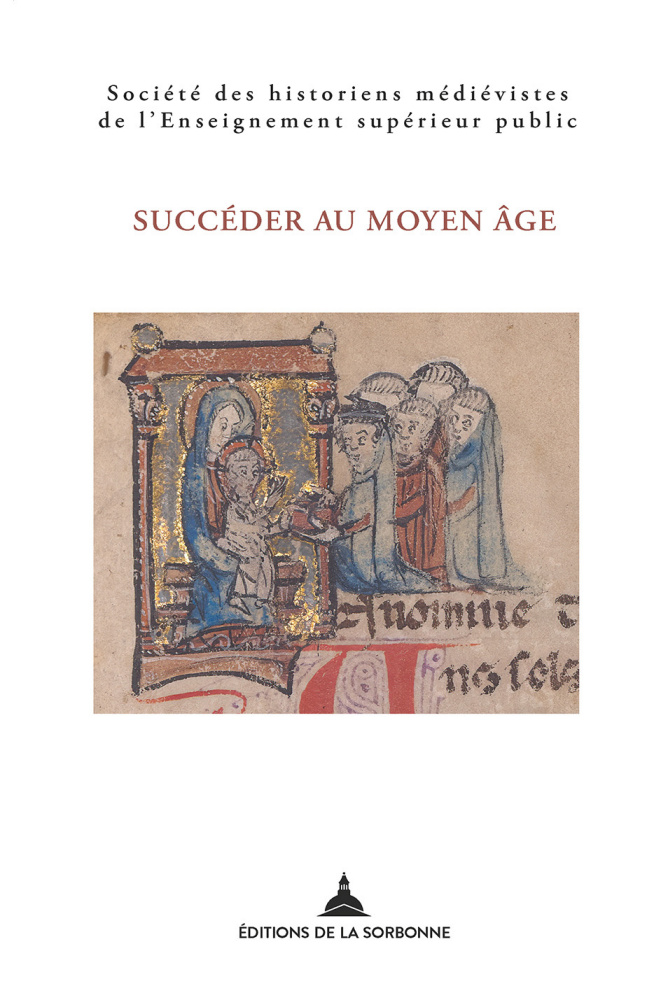
BOOK: Succéder au Moyen Âge. LIIIe Congrès de la SHMESP (Paris: Éditions de la Sorbonne, 2023). ISBN: 9791035108991

(Image source: Éditions de la Sorbonne)


ABOUT THE BOOK

« Tradition », « réforme », « rénovation » ou « translation » : diverses notions ont servi à qualifier le fait de succéder, à savoir l’enchaînement, le relai ou le séquençage temporel dans les sociétés médiévales du Ve au XVe siècle (Occident et Orient, Chrétienté, Islam, Byzance). Toutes témoignent de ce que les institutions du Moyen Âge ont régulièrement prétendu répondre à la nécessité du changement sans bouleverser leurs cadres de référence ou, du moins, sans assumer de le faire. Des travaux récents ont enrichi notre connaissance de l’usage contextuel de ces concepts dans leurs expressions politiques, religieuses et culturelles. À travers eux, c’est souvent le point de vue de celui qui lègue qui a été adopté, laissant dans l’ombre l’action de celui qui prend la suite. Succéder n’est pas hériter : le successeur est supposé s’inscrire activement dans une chronologie et définir sa propre identité en regard d’une entité disparue. Cela est vrai dans le monde du travail ou celui de la vie intellectuelle comme dans l’ordre familial et dynastique, à la tête des gouvernements urbains aussi bien que des institutions ecclésiales. Observer les façons de succéder, c’est alors considérer comment des femmes et des hommes, des institutions et des courants intellectuels ont tenté de résoudre l’équation de la continuité et du changement. Le 53e congrès de la Société des historiens médiévistes de l’Enseignement supérieur public, qui s’est tenu à Rome les 26-28 mai 2022, a envisagé cette vaste question sans renoncer aux diversités des temps, des lieux, des domaines de l’histoire et des acceptions, du littéral au métaphorique.


TABLE OF CONTENTS
  • Avant-propos (Dominique Valérian);
  • Succéder dans la société chrétienne latine. Rapport introductif (Joseph Morsel);
  • Succéder dans les mondes musulmans médiévaux. Rapport introductif (Vanessa Van Renterghem);
Comptes, bilan, transmission : reprendre un patrimoine
  • Dettes et bilan monastiques. Solder le passif d’un abbé dans la Toscane du XIIIe siècle (Philippe Lefeuvre);
  • Succéder ou prendre la place ? Les veuves juives du Roussillon et de la Catalogne (XIVe siècle) (Chloé Bonnet);
  • Apprentis et héritiers. Règlements et pratiques de succession dans le monde des métiers en Normandie, XIIIe-XVe siècle (François Rivière);
Les dynasties : normes, pratiques et limites des successions
  • Planifier la succession royale et échouer. Le cas de Théodoric (489-526) et la compétition pour le règne en Italie (Cristina La Rocca);
  • Cuncta reparans. Recceswinth ou la succession réparatrice (Céline Martin);
  • Succéder à son frère ? Pratiques de la succession dans les royaumes anglais du haut Moyen Âge (VIIe-XIe siècle) (Justine Audebrand);
  • L’empire controversé. Interpréter les pratiques successorales des rois normands et Plantagenêt (1066-1199) (Fanny Madeline);
  • Une compétition sous contrôle ? La fabrique du successeur dans l’émirat de La Mecque (XIIIe-XIVe siècle) (Clarck Junior Membourou Moimecheme);
  • Troubles de la succession royale sous Charles VII et Louis XI (Franck Collard, Lydwine Scordia);
Constructions historiographiques et constructions théoriques
  • Succession des temps et cycle des astres. La conscience historique des hagiographes latins (VIe-XIe siècle) (Marie-Céline Isaïa);
  • Inventer sa succession dans l’exégèse médiévale (XIIe-XIIIe siècle) (Emmanuel Bain);
  • Succéder à Chaucer dans l’Angleterre du XVe siècle (Aude Mairey);
  • Légitimer une dynastie princière par l’image. La succession entre Philippe le Bon et Charles le Téméraire (1467-1470) (Julien Guerro);
  • Une parenté bien ordonnée. Succession, hiérarchie et pouvoir dans le Livre de la danse des aveugles et de l’abuzé en court (v. 1480) (Marie-Lise Fieyre);
Succéder dans l’Église
  • Succéder au siège épiscopal de Ravenne (Ve-IXe siècle) : une approche visuelle (Maria Cristina Carile)
  • Neophyta ! Usages polémiques d’une hérésie de la succession épiscopale (seconde moitié du IXe siècle) (Isabelle Rosé)
  • Succéder au temps de la réforme de l’Église. Définition des procédures canoniques de l’élection pontificale entre le XIe et le XIIe siècle (Umberto Longo)
  • L’impossible succession. Une approche juridique de l’hérédité en milieu clérical (XIIe-XIIIe siècle) (Arnaud Fossier)
  • Les successions familiales dans le Sacré Collège au XVe siècle (Pierre-Bénigne Dufouleur)
Rites et légitimations aux marges du principe dynastique
  • Succéder à l’imam dans l’ibadisme omanais. Sources de légitimité d’un pouvoir dissident en marge du califat (XIe-XIIe siècle) (Enki Baptiste)
  • Un étranger au pouvoir. Identités et légitimation dans les successions exogènes en Bretagne (IXe-XIIIe siècle) (Lucile Queney)
  • Cossols viels et novels. Succession et continuité au sein du consulat montpelliérain (v. 1200-v. 1450) (Vincent Challet)
  • Quand la nuit succède au jour. Rêveries conclusives (Patrick Boucheron)

More information can be found here.

05 February 2024

CALL FOR PAPERS: XXVIII Annual Forum of Young Legal Historians, Religion and Ethics in Legal History (Milan: University of Milan/University of Milan-Bicocca, 4-7 September 2024) (DEADLINE: 31 MAR 2024)

(Source: AYLH)


The call for papers for the next Annual Forum of Young Legal Historians has just been published on the conference website.

Introduction

We are delighted to announce that the University of Milan and the University of Milan-Bicocca are hosting the 28th Annual Forum of Young Legal Historians (AFYLH).

The purpose of this forum is to bring together young legal scholars to share ideas, foster collaborations and contribute to the expansion of academic research and knowledge in the field of legal history.

The forum will be composed of three days: the first day as welcoming day with keynote speakers, and numerous parallel sessions over the following two days.

The broad theme of the 28th Forum is Religion and Ethics in Legal History.

The full call for papers, including information on submissions (DEADLINE: 31 March 2024) can be found on the conference website.


REMINDER: CALL FOR BLOGGERS: ESCLH Blog (Deadline 11 FEB 2024)


The blog of the European Society for Comparative Legal History is the successful media outlet of our scholarly society. Since its inception in 2010, the posts and pages have attracted over 2,3 million views from Europe and other continents (approx. 22 000 per month in the past twelve months).

We intend to strengthen and enlarge the current team of bloggers, as we regularly welcome new collaborators and thank those who wish to step down after a year of dedicated service.

Candidates are encouraged to send to esclhblog at gmail dot com by 11 February 2024:
- a brief curriculum vitae (mentioning academic credentials and IT experience)
- a cover letter

Bloggers can be at any stage of their academic career (graduate student, PhD-candidate, postdoc, assistant professor, voluntary/associate researcher...). Familiary with legal history (traditionally but not exclusively in a law faculty or history department) is of course a conditio sine qua non. It goes without saying that a Society for comparative legal history is open to candidacies from all backgrounds, irrespective of gender, legal tradition or spatial contingency. We constantly strive to enhance the diversity of our perimeter of interests.  

Serving on the blog is not remunerated. Yet, bloggers receive a reduction on the membership fee of our Society, and are displayed on the blog, as a recognition of their effort.  

The level of engagement with the blog can vary depending on the person. We aim to publish one notification of publication, job announcement, call for papers... per working day, in order to keep the interested audience connected to our RSS-feed, this URL, X (twitter) account, or the daily mailing with follow.it.

02 February 2024

WORKSHOP: 'Droit et littérature. Un regard croisé sur les textes médiévaux' (Geneva: Université de Genève, 16 FEB 2024)


 Droit et littérature. Un regard croisé sur les textes médiévaux


Journée d'études ¦ le 16 février 2024

Uni Mail, Salle M1193 ¦ Bd du Pont d'Arve 40 ¦ 1205 Genève


Comité scientifique et d'organisation :

Dr. Ignazio Alessi

Dr Gavino Scala


09.00 - 09.15 Introduction

Dr. Ignazio ALESSI et Dr. Gavino SCALA (Université de Genève)


09.15 - 10.00

Prof. Sara MENZINGER (Università degli studi Roma Tre)

Dante and the Law. Notes from some recent studies


10.00 Pause café


10.30 – 11.30

Cassandre CRESPIN (Sorbonne Université, Paris)

La fiction judiciaire amoureuse au Moyen Âge (XIIe-XVe s.)

Marta MILAZZO (Università degli studi di Padova)

« Droit non »: una formula da rileggere ancora


11.30 – 12.30

Farzad FALLAH (Geneva Graduate Institute of International and Development Studies,

Genève)

Speculative interpretation in the jurisprudence Muhammad ibn Idris al-Shafi’i:

narrativization in the service of textualism

Dr. Vincenzo Roberto IMPERIA (Università degli studi di Palermo)

Intrecci letterari e giuridici nell’epistolario di Pierre de Blois


12.30 Repas de midi


14.15 - 15.00

Prof. Claudio LAGOMARSINI (Università degli studi di Siena)

« Par bataille ou par juise » : la pratique de l’ordalie dans le Lancelot-Graal


15.00 – 16.00

Federico NOVELLO (Università degli studi di Siena –Universität Zürich)

Processo al lupo, processo all’uomo: la giustizia ne « Levallet aus douze fames »

Davide NOVATI (Scuola Normale Superiore, Pise –Universität Zürich)

Il supplizio del duca di Bellegarde e altri casi di punizioniesemplari nella narrativa romanza

medievale


16.00 pause café


16.30 - 17.00

Prof. Dijana ZRNIC (Banja Luka University)

Dušan’s code, between law and literature


17.00 – 18.00

Chen CUI (Université de Lausanne – Birkbeck College,London)

Entre homélie et textes juridiques: nouvelles perspectivessur la valeur littéraire de l’oeuvre

de l’archevêqueWulfstan d’York

Dr. Matthew CLEARY (Max Planck Institute, Heidelberg)

Exploring legal and linguistic dimensions in late medieval English jurisprudence: William

Lyndwood’s « Provinciale» and inheritance practices


18.00 CLÔTURE

Dr. Adrien WYSSBROD (Université de Fribourg – Institutde recherche A. Piaget,

Neuchâtel)


18.15 Apéritif dînatoire

CONFERENCE: 'Il diritto medievale. Fonti e metodi' (Palermo: Università di Palermo, Dipartimento di Giurisprudenza, 6-9 FEB 2024)


IL DIRITTO MEDIEVALE. FONTI E METODI


MARTEDÌ 6 FEBBRAIO 2024

Accoglienza

Presentazione dei partecipanti

Introduzione generale


MERCOLEDÌ 7 FEBBRAIO 2024

h 9.30

BEATRICE PASCIUTA (Università di Palermo, PI FONTES)

Introduzione

h 9.45

PAOLO NAPOLI (École des Hautes Études en Sciences Sociales)

Normatività sociale e normatività giuridica

h 17.15

EMANUELE CONTE (Università Roma Tre, École des Hautes

Études en Sciences Sociales)

Che cos'è una fonte giuridica?

h 15.00 BEATRICE PASCIUTA e GUIDO ROSSI (Università di

Palermo)

I Libri Legales

h 16.30 DAVID DE CONCILIO (Università di Padova)

Generi dialettici: questiones, distinctiones, brocardica


GIOVEDÌ 8 FEBBRAIO 2024

h 9.00

JOANNA FRONSKA (Institut de Recherche et d'Histoire des

Textes)

Introduction to medieval codicology

h 10.00

SONIA MERLI (Università di Palermo)

Le scritture delle fonti documentarie latine (secc. XI-XIII)

h 11.00

FRANCESCA POTENZA (Università di Palermo)

Le scritture delle fonti documentarie greche (secc. XI-XIII)

h 15.00

ORAZIO CONDORELLI (Università di Catania)

Introduzione alle fonti del diritto canonico medievale, con specifico

riferimento al Decretum Gratiani

h 16.00

VINCENZO ROBERTO IMPERIA (Università di Palermo)

Le decretali nel diritto canonico medievale

h 17.00

IGNAZIO ALESSI (Université de Genève)

Il genere del tractatus nel diritto canonico medievale


VENERDÌ 9 FEBBRAIO 2024

h 9.30

MACIEJ MIKULA e KACPER GÓRSKI (Jagiellonian University

in Krakóv)


Statutory sources in late medieval and early modern central Europe

(the case of the Kingdom of Poland)

h 10.30

BEATRICE PASCIUTA e MARTA CERRITO (Università di

Palermo)

Le fonti giuridiche del Regnum Siciliae

h 11.30

CONCLUSIONI

PODCAST: 'The Hanseatic League' - BBC Radio 4, In Our Times (1 February 2024)


(Source: BBC Sounds)

Released On: 01 Feb 2024 

Melvyn Bragg and guests discuss the Hanseatic League or Hansa which dominated North European trade in the medieval period. With a trading network that stretched from Iceland to Novgorod via London and Bruges, these German-speaking Hansa merchants benefitted from tax exemptions and monopolies. Over time, the Hansa became immensely influential as rulers felt the need to treat it well. Kings and princes sometimes relied on loans from the Hansa to finance their wars and an embargo by the Hansa could lead to famine. Eventually, though, the Hansa went into decline with the rise in the nation state’s power, greater competition from other merchants and the development of trade across the Atlantic.


With

Justyna Wubs-Mrozewicz: Associate Professor of Medieval History at the University of Amsterdam

Georg Christ: Senior Lecturer in Medieval and Early Modern History at the University of Manchester

Sheilagh Ogilvie: Chichele Professor of Economic History at All Souls College, University of Oxford


Producer: Victoria Brignell

BOOK: Irene BUENO, Vincenzo LAVENIA, Riccardo PARMEGGIANI (eds.), Current Trends in the Historiography of Inquisitions. Themes and Comparisons (Rome: Viella, 2023). ISBN: 9791254694879

(Image source: Viella editore)


ABOUT THE BOOK

This volume launches the book series of “Inquire – International Centre for Research on Inquisitions” of the University of Bologna, a research network that engages with the history of religious justice from the 13th to the 20th century. This first publication offers twenty chapters that take stock of the current historiography on medieval and early modern Inquisitions (the Spanish, Portuguese and Roman Inquisitions) and their modern continuations. Through the analysis of specific questions related to religious repression in Europe and the Iberian colonial territories extending from the Middle Ages to today, the contributions here examine the history of the perception of tribunals and the most recent historiographical trends. New research perspectives thus emerge on a subject that continues to intrigue those interested in the practices of justice and censorship, the history of religious dissent and the genesis of intolerance in the Western world and beyond.


TABLE OF CONTENTS

Introduction

I. Inquisitions in the Medieval West

  • Thomas Scharff, The Beginnings and Early Stages of the Medieval Inquisition: Traditional Interpretations and New Approaches
  • Irene Bueno, Papacy, Censorship and Government Through Investigation: The 14th Century
  • Jessalynn Bird, Inquisitions in France and the Crown of Aragon
  • Riccardo Parmeggiani, The Medieval Inquisition in the Italian Peninsula: A Historiographical Approach
  • Fiona Somerset, The Historiography of Anti-Heresy Repression in England
  • Thomas A. Fudge, Inquisitorial Culture in Medieval Central Europe
  • Kirsi Salonen, The Apostolic Penitentiary and Inquisition
  • Matteo Duni, Magic and the Witch-Hunt

II. The Iberian Inquisitions, Europe and the World

  • Kimberly Lynn, The Spanish Inquisition: Power, Minorities and Dissent
  • Claudia Geremia, Magical Objects and Inquisition in the Canary Islands (16th-18th Centuries)
  • Gabriel Torres Puga, Carlos Mejía Chavez, The Historiography of the Mexican Inquisition: Professionalisation and the Use of the Archive
  • M. Macarena Cordero Fernández, The District Court of the Lima Inquisition: A Historiographical Approach
  • José Pedro Paiva, Current Trends Regarding the History of the Portuguese Inquisition: What Has Been Done and What Remains
  • Bruno Feitler, Twenty Years of Historiography on the Portuguese Inquisition in Asia and in the Atlantic: Towards an Equilibrium?

III. Rome and the Congregations of the Curia

  • Vincenzo Lavenia, The Roman Inquisition: The Centre, the Peripheries and the Papacy
  • Giorgio Caravale, Censorship: Rome and the Others
  • Andreea Badea, Roman Censorship and the Shaping of a Catholic Thought Collective
  • Agnès Desmazières, The Inquisition After the Inquisition: Permanence and the Reshaping of Inquisitorial Practices in the Modern Holy Office


More infomation can be found here.

01 February 2024

CONFERENCE: Lectures de… : La condition des sujets ennemis en France pendant la guerre (1916) et Cours radiodiffusé sur l’héritage (1938-1939) de René Cassin (Paris: SHFD/IRJS, 1 JUN 2024)

Lectures de… : La condition des sujets ennemis en France pendant la guerre (1916) et Cours radiodiffusé sur l’héritage (1938-1939) de René Cassin

(image: René Cassin; Source: Wikimedia Commons)


(J. Broch éd., Académie des sciences morales et politiques, 2021),
Journée d’étude organisée le 1er juin
 par la SHFD et l’IRJS, Paris 1,
site de Port-Royal (1 rue de la Glacière), bâtiment Veil au 2ème étage, salle des séminaires


10 h

Sous la présidence d’Anne-Marie Leroyer, professeur de droit privé, université Paris 1 Panthéon-Sorbonne, directrice de l’Institut de Recherche Juridique de la Sorbonne.
Xavier Lagarde, professeur de droit privé, université Paris 1 Panthéon-Sorbonne, directeur de l’Institut d’Etudes à Distance de l’Ecole de Droit de la Sorbonne, Propos introductifs sur la diffusion des savoirs juridiques.
Michel Grimaldi, professeur émérite de droit privé, université Paris-Panthéon-Assas, Existe-t-il un droit à l’héritage ?
Christophe Vernières, professeur de droit privé, université Paris 1 Panthéon-Sorbonne, Les grands principes du droit successoral à travers le cours de René Cassin.

14 h

Sous la présidence de Nader Hakim, professeur d’histoire du droit, université de Bordeaux, secrétaire général de la Société pour l’histoire des Facultés de droit.
Muriel Ubeda-Saillard, professeur de droit public, université de Lille, La neutralisation des personnes perçues comme dangereuses par la communauté en guerre, préfiguration du droit pénal de l'ennemi.
Sarah Durelle-Marc, maître de conférences en droit public, institut catholique de Lille, La condition des sujets ennemis et les prémices d’un droit des minorités.
Michel Erpelding, chercheur en droit international et européen, université du Luxembourg, René Cassin, la condition des sujets ennemis et l’émergence du juge international comme garant des droits de l’individu.
Nikolas Karmis, doctorant en droit public, université Paris-Panthéon-Assas, « Comme un otage économique pour l’heure du règlement de compte avec nos ennemis » : la possibilité de saisie des biens des civils ennemis.

Et en présence de Julien Broch, maître de conférences en histoire du droit, université d’Aix-Marseille


More information here.

BOOK: Allen BOYER & Mark NICHOLLS, The Rise and Fall of Treason in English History (London: Routledge, 2024), ISBN 9780367509934, 104 GBP


(image source: Routledge)

Abstract:

This book explores the development and application of the law of treason in England across more than a thousand years, placing this legal history within a broader historical context. Describing many high-profile prosecutions and trials, the book focuses on the statutes, ordinances and customs that have at various times governed, limited and shaped this worst of crimes. It explores the reasons why treason coalesced around specific offences agreed by both the monarch and the wider political nation, why it became an essential instrument of enforcement in high politics, and why, over the past three hundred years, it has gradually fallen into disuse while remaining on the statute book. This book also considers why treason as both a word and a concept remains so potent in wider modern culture, investigating prevalent current misconceptions about what is and what is not treason. It concludes by suggesting that the abolition or 'death' of treason in the near future, while a logical next step, is by no means a foregone conclusion.

Table of contents:

Introduction  1. Origins to 1066  2. Treason at the King’s Discretion, 1066-1352  3. The Great Statute of Treason and its Aftermath: 1352-1500  4. An Ultimate Weapon of State: Treason in Tudor England  5. The World Turned Upside Down: A Crisis of Treason, 1600-1700  6. Treason in the Eighteenth Century  7. The Death of Treason

On the authors:

Allen Boyer is a graduate of Vanderbilt University and the University of Virginia School of Law, and he earned his doctorate at the University of St Andrews. As a lawyer, he served as senior appellate counsel at the New York Stock Exchange Division of Enforcement. In a parallel career, he has published numerous articles on legal history, and five books, notably Sir Edward Coke and the Elizabethan Age and Rocky Boyer’s War. Mark Nicholls is a Fellow, and former President, Librarian and a Tutor of St John’s College Cambridge. He has published extensively on British conspiracies and succession politics. His books include Investigating Gunpowder Plot (1991), A History of the Modern British Isles 1529-1603 (1999) and, with Penry Williams, Sir Walter Raleigh in Life and Legend (2011).

Read more here.