Search

Showing posts with label Criminal law. Show all posts

20 May 2026

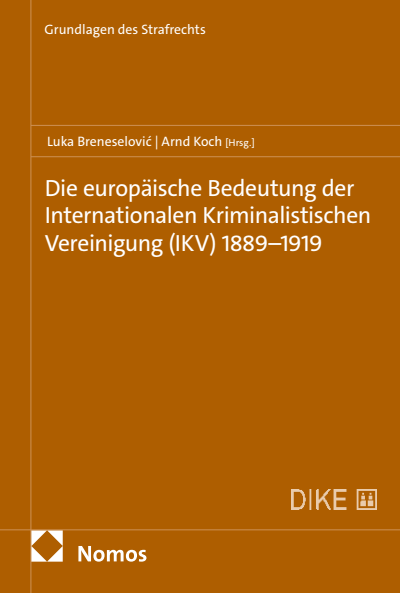
BOOK: Luka BRENESELOVIC and Arnd KOCH (eds.), Die europäische Bedeutung der Internationalen Kriminalistischen Vereinigung (IKV) 1889–1919 [Grundlagen des Strafrechts; 16] (Baden-Baden: Nomos Verlag, 2026), 336 p. ISBN 978-3-7560-0794-3


(image source: InLibra)

Abstract:
Die Internationale kriminalistische Vereinigung war eine international erfolgreiche Vereinsgründung der Belle Époque. Initiiert von Franz v. Liszt, Adolphe Prins und G. A. van Hamel legte sie ihrer Tätigkeit die Prämisse zugrunde, dass Verbrechen und Strafe „ebenso sehr vom soziologischen wie vom juristischen Standpunkte aus ins Auge gefasst werden müssen“ (Art. 1, Satzung von 1889). Auf dieser Basis erhob die IKV kriminalpolitische Forderungen, die bis heute das moderne Bild des Strafrechts maßgeblich prägen. Der Band widmet sich aus einer vergleichenden Perspektive der Tätigkeit und legislatorischen Wirksamkeit der nationalen Landesgruppen der IKV und leistet so einen wichtigen Beitrag zur europäischen Geschichte des Strafrechts.

Contributors:

Mit Beiträgen von Prof. Dr. Attila Barna | Dr. Luka Breneselović, LL.M. | Prof. Dr. Yves Cartuyvels | Prof. Dr. Dr. h.c. Cyrille Fijnaut | Prof. Dr. José Franco-Chasán | Prof. Dr. Sabine Freitag | Dr. Urs Germann | Prof. Dr. Jørn Jacobsen | Mag. Dr. Nina Kaiser | Prof. Dr. Sylvia Kesper-Biermann | Prof. Dr. Arnd Koch | Prof. Dr. Dr. Michael Kubiciel | Prof. Dr. Dunja Milotić | Prof. Dr. Martin Sunnqvist | Dr. Richard Wetzell

Read more here: 10.5771/9783748915515

19 March 2026

SEMINAR: Luigi DELIA, "Les Lumières du droit pénal: principes et projets de réforme" [Europe et Lumières] (Paris: Sorbonne Universite, 20 MAR 2026]

(image source: Sorbonne Université)

Luigi Delia will intervene in the seminar hosted by the "Pôle Europe des Lumières" at Sorbonne Université on Friday 20 March at 17:30.

Title:

Les Lumières du droit pénal: principes et projets de réforme

More information here.

14 July 2025

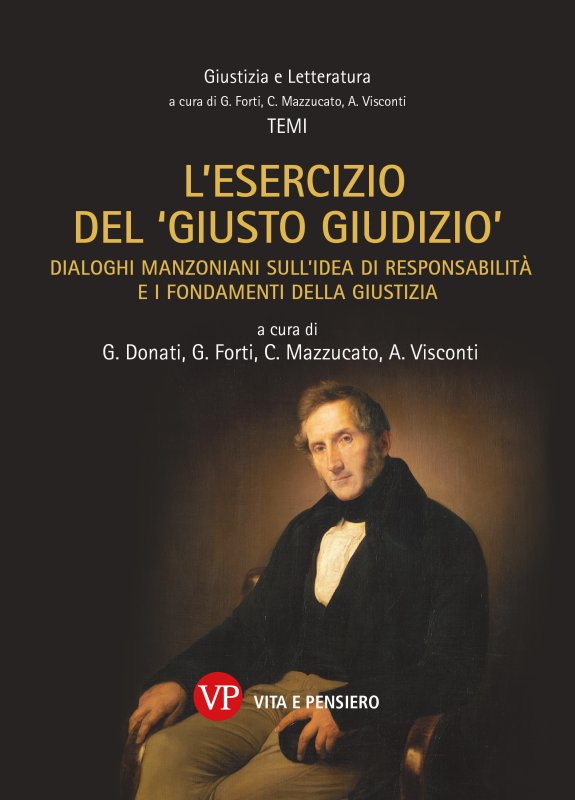
BOOK: Gabrio FORTI, Gaia DONATI, Claudia MAZZUCATO & Arianna VISCONTI (eds.), L'esercizio del 'giusto giudizio'. Dialoghi manzoniani sull'idea di responsabilità e i fondamenti della giustizia (Milano: Vita e Pensiero, 2025), 504 p. ISBN 9788834357873, € 34


(iamge source: Vita e Pensiero)

Abstract:

Che cosa rende ‘giusto’ l’esercizio del ‘giudizio’? Quanto, come e perché il ‘giudicare’ non si lascia ridurre al semplice ‘spiegare’? Queste le domande che si dischiudono non appena si mette a tema il ‘giudizio’, tanto più in un contesto socio-culturale, oltre che giuridico-istituzionale, nel quale si assiste, a tutti i livelli, a un ‘infuriare’ di giudizi ‘sommari’, il cui assordante rumore di fondo sembra renderci orfani di giudizi veri e, appunto, giusti. Le opere letterarie prese in considerazione in questo volume lasciano intravedere spiragli di risposta a tali secolari quesiti dell’umanità. La Storia della colonna infame, che è il luogo del giudizio e del giudizio sul giudizio, ma anche I promessi sposi, dove il giudizio è più squisitamente narrativo, pongono le basi per scandagliare, con Alessandro Manzoni, la dimensione etica della vita e il delicato equilibrio tra giudizio e comprensione. Un interrogativo che si ripropone nel dialogo con Leonardo Sciascia e Primo Levi, ma anche con molti altri autori e pensatori, attualizzato, ad esempio, nella serrata discussione critica con la tendenza, espressione di una crescente ‘ansia punitiva’, a mal sopportare i tempi e i vincoli di garanzia dello stesso procedimento penale, in favore del ben più rapido, ed emotivo, ‘giudizio mediatico’. Congiungendo competenze teoriche e sensibilità applicative, esperienze giuridiche e prospettive filosofiche, sociologiche, psicologiche e criminologiche, il volume incoraggia il lettore, tanto più quello interessato al livello di civiltà giuridica (e, dunque, di civiltà tout court) della società in cui vive, a dipanare l’intreccio tra responsabilità, giudizio, riparazione e pena, «tutte categorie che evocano situazioni di sofferenza». La risposta alla perturbante domanda «Ma come rispondere diversamente?» sta nel prendere sulle spalle un «pezzetto della croce della società», aprendosi a un’idea di giustizia come ascolto e attenzione.

Contributors:

Con i contributi di: Carla Bagnoli, Giuliano Balbi, Mauro Bertolotti, Giovanni Canzio, Lucia Castellano, Patrizia Catellani, Maurizio Catino, Adolfo Ceretti, Paola Corvi, Franca D’Agostini, Francesco D’Alessandro, Cristina de Maglie, Gaia Donati, Luciano Eusebi, Luigi Ferrarella, Gabriele Fornasari, Gabrio Forti, Pierantonio Frare, Loredana Garlati, Diletta Giuffrida, Fausto Giunta, Aldo Grasso, Natalino Irti, Claudia Mazzucato, Isabella Merzagora, Niccolò Nisivoccia, Carlo Enrico Paliero, Mauro Palma, Silvano Petrosino, Antonio Sichera, Francesco Viganò, Arianna Visconti.

On the editors:

L’Alta Scuola “Federico Stella” sulla Giustizia Penale (ASGP), istituita presso l’Università Cattolica del Sacro Cuore, rappresenta un unicum nel panorama culturale e professionale italiano. È un laboratorio di analisi e progettazione che si dedica alla ricerca di soluzioni regolative e applicative in tutti gli ambiti – giuridici, economici e sociali – connessi alla giustizia penale. Il suo metodo è il confronto serrato con l’‘immane concretezza’ dei problemi di oggi, reso esperto e consapevole grazie al dialogo costante tra docenti e ricercatori italiani e stranieri, nonché tra qualificate realtà istituzionali, professionali e imprenditoriali. Le iniziative didattiche e scientifiche dell’Alta Scuola, diretta da Gabrio Forti, hanno principalmente a oggetto, oltre all’esplorazione del rapporto tra diritto/giustizia e letteratura, i crimini d’impresa, le condizioni della compliance nelle organizzazioni complesse, la prevenzione della corruzione, la responsabilità in campo sanitario e il problema della gestione del rischio clinico, le misure patrimoniali di contrasto alla criminalità organizzata, le nuove frontiere della giustizia riparativa (restorative justice), la riforma dell’ordinamento penitenziario, la tutela del patrimonio culturale e dell’ambiente.

More information here


26 June 2025

ARTICLE: Mia KORPIOLA & Jørn ØYREHAGEN SUNDE, "The Influence of the Principle "Necessitas Non Habet Legem" on Nordic Medieval Laws on Theft" (Journal of the History of Ideas LXXXV (2024), nr. 4 (Oct), 681-711


(image source: UPenn Press)

First paragraph:

The chapter on theft in the Norwegian Code of the Realm, compiled through the initiative of King Magnus VI Lawmender (r. 1263–80) and promulgated by him in 1274, opens by declaring theft unlawful.1 However, the Code goes on to stipulate that larceny would not merit punishment in the case of a starving man who steals food after unsuccessfully seeking gainful [End Page 681] employment.2 The Code of 1274 then prescribes the penalties for petit larceny for first-time offenders who do work to support themselves. Thus, the Code explicitly distinguishes between starving unemployed persons who steal food out of necessity and those who steal despite having access to a livelihood. It was a longstanding and widespread norm, as the Code was drafted for the whole of rural Norway and remained in force well into the seventeenth century. In this article, we consider whether this norm could have been inspired by the canonical maxim necessitas non habet legem (necessity knows no law).

Read the article here: DOI  10.1353/jhi.2024.a944582.

14 May 2025

JOURNAL: Les échanges en matière de droit pénal entre les États-Unis et l’Europe (eds. Jean-Louis HALPÉRIN & Amalia D. KESSLER) (Clio@Thémis XXVIII (2025)) [OPEN ACCESS]

(image source: openedition)

Introduction (Jean-Louis Halpérin & Amalia D. Kessler)
DOI 10.4000/13wwa

Quelle connaissance et quel impact du droit criminel américain dans la France du xixe siècle ? (Jean-Louis Halpérin)
DOI 10.4000/13wwb
Abstract:

At two moments during the 19th century, French jurists were interested in American criminal law, and not only in the overseas prison systems discussed in the 1833 report by de Beaumont and Tocqueville. The first moment occurred between 1825 and 1835, when Livingston’s draft of a penal code for Louisiana was published in French, and when Livingston came to France. This project, which provided for the abolition of the death penalty, was seen as a response to the risks of increased repression by ultra-royalists on the basis of the Napoleonic Penal Code. The second moment occurred at the turn of the 20th century, when American innovations in indeterminate sentencing and juvenile courts were discussed in France. After identifying and analyzing the texts of French jurists who dealt with American criminal law in these two periods, the article examines the estrangement of French specialists of criminal law from American ideas.

Atlantic Knowledge Transfer. U.S. Criminal Law in 19th Century Germany (Sylvia Kesper-Biermann)
DOI  10.4000/13wwd
Abstract:

The article examines the transfer of legal ideas from the U.S.A. to Germany in the long 19th century. On the one hand, actors and paths of knowledge transfer are described. On the other hand, selected examples are used to examine which North American ideas, texts, and experiences were perceived and discussed in Germany. It is shown that two phases with different emphases of reception must be distinguished, namely a first phase from the 1830s to the 1850s and a second phase around the turn of the 20th century.

French and American Histories of Animal Prosecutions: Criminal Punishment and Animal Rights through the Prism of the Past (Amalia D. Kessler) 
DOI 
Abstract:

Between the early 1800s and the early 1900s, a sudden, and as yet unexplained, transatlantic literature on the history of animal prosecutions emerged. Focusing on France and the United States, this article explores the birth and evolution of this literature. A product of such developments as the rise of historicism, positivist criminology, and a social movement against animal cruelty, this literature addresses what proved to be enduring challenges of criminal punishment and animal rights. In so doing, it highlights the interrelation of these seemingly distinct domains.

Criminal Justice in Italy between the End of the Liberal State and Fascism: Transnational Perspectives between the USA and Italy (1919-1945) (Luigi Lacchè)
DOI 10.4000/13wwe
Abstract:

This article considers how American scholars and articles published in English viewed the Italian reforms of Criminal Justice implemented between the “Ferri project” (1919) and the Fascist regime. It analyzes in particular how Fascist criminal reforms have been received, interpreted and assessed from that perspective. To summarize the views of American legal thinkers on Fascist criminal reforms we can say that, despite the popularity of positivism in the U.S. at the turn of the century, the radical Ferri Code was criticized in several respects. By the mid-1930s American responses were still focused on questions of criminal science, rather than the nature of the regime itself. The isolationist policy of the U.S. did not prevent a number of scholars from assessing certain aspects of Fascist codes and criminal reforms, pointing out problems and contradictions. The transnational viewpoint is therefore important to understand better the real nature of the Fascist regime and the formal maintenance of the principle of legality.

Why and How Sexual Freedom Changed Western Criminal Law (19th and 20th centuries) (Aniceto Masferrer)
DOI 10.4000/13wwf
Abstract:

This article explains “why” and “how” the new paradigm of sexual freedom radically changed Western criminal law. “Why” touches upon the change in the moral sexual paradigm in the West at the cultural level. “How” describes the ways in which sexual (criminal) laws were reformed in accordance with the new cultural paradigm, describing the mutual influences between the US and Europe: while the US Supreme Court took the lead in forbidding states to make laws that might interfere in the sexual behaviour by resorting to the right to privacy – and this legal doctrine notably influenced most of European jurisdictions –, in Europe legal scholars and legislatures were the protagonists in undertaking criminal law reform, adjusting sexual criminal law to the new cultural ideas.

 Varia

The doctrine in power and the origins of the doctrine dirigée: the early role of the Soviet legal doctrine through the official legal journal of the RSFSR (1918-1922) (Marco Mellina)
DOI 
Abstract:

Analysing data about articles and authors from the official legal journal of the Russian Soviet Federative Socialist Republic, Proletarian Revolution and Law, this article shows that the legal doctrine writing in the journal was primarily composed by jurists who were also part of the ruling class from 1918 to 1921, effectively creating a doctrine in power. This observation partly contrasts with the dominant Western historiographical notion of Soviet legal doctrine being only directed by an external political power. However, the article also shows how, with the advent of the NEP, the establishment of the USSR, the revival of law and the consequent proliferation of legal journals, Soviet legal doctrine expanded and laid the foundations for the doctrine dirigée of later years.

Read the full issue in open access here

01 May 2024

CONFERENCE ANNOUNCEMENT: Il volto del crimine Antroplogia criminale, fisiognomica e diritto alla fine del XIX secolo (Verona: University of Verona, 2-3 MAY 2024)

Giovedì 2 maggio 2024

15.00-15.15: Saluti istituzionali

15.15-15.45: Giovanni ROSSI (Università di Verona)

Introduzione al Convegno


Prima SESSIONE

Coordina: Cecilia PEDRAZZA GORLERO (Università di Verona)

15.45-16.15: Isabella MERZAGORA (Università di Milano)

Da Lombroso alle neuroscienze: il pregiudizio scientista

16.15-16.45: Silvano MONTALDO (Università di Torino)

Lombroso, Ferri, Garofalo: l’inizio della collaborazione e la nascita

della “scuola” italiana

16.45-17.15: Paolo MARCHETTI (Università di Teramo)

Da Cesare Lombroso alla ‘Precrime’. Le scienze dell’uomo alla ricerca

dell’identità criminale

PAUSA

17.30-18.00: Ernesto DE CRISTOFARO (Università di Catania)

Tecnologie visuali e ordine pubblico. Dalla frenologia alla polizia

scientifica

18.00-18.40: Nicoletta LEONARDI (Accademia di Belle Arti di Brera) -

Nadia PUGLIESE (Università di Torino)

Il tipo criminale nell’“imparziale testimonianza del sole”:

Cesare Lombroso e la mediatizzazione della devianza

18.40: Discussione


Venerdì 3 maggio 2024

Seconda SESSIONE

Coordina: Giovanni ROSSI (Università di Verona)


9.00-9.30: Lucia RODLER (Università di Trento)

La fisiognomica e la nascita dell’antropologia criminale

9.30-10.00: Pietro SCHIRÒ (Università di Verona)

Tra antropologia criminale e medicina sociale. Le riforme proposte

da Lorenzo Tenchini a partire dagli studi sul cervello dei delinquenti

10.00-10.30: Roberta BALLESTRIERO (Accademia di Belle Arti di Venezia)

Ceroplastica e crimine: rappresentazione di Colpevoli e Vittime

PAUSA

10.50-11.30: Roberto TONI (Tufts University - Boston) - Fulvio BARBARO

(Università di Parma)

Le maschere di Lorenzo Tenchini all’Università di Parma:

una prospettiva biomedica del rapporto forma-funzione nel contesto

della psicopatologia di fine ’800

11.30-12.00: Cristina CILLI (Museo di Antropologia criminale “Cesare

Lombroso” di Torino)

Da “Il mio museo criminale” al Museo di Antropologia criminale

“Cesare Lombroso” dell’Università di Torino

12.00: Discussione - Conclusione dei Lavori


VISITA DELLA MOSTRA FOTOGRAFICA

“Il volto del crimine”


Link Zoom (iscrizione obbligatoria): https://univr.zoom.us/j/94713030223


Comitato scientifico

Giovanni Rossi (Univ. di Verona) Presidente – Paolo Marchetti (Univ. di Teramo)

Pietro Schirò (Univ. di Verona)

Organizzazione scientifica

GIOVANNI ROSSI (Università di Verona) – PIETRO SCHIRÒ (Università di Verona)

Per informazioni.- e-mail: pietro.schiro@univr.it

15 November 2023

BOOK: George PAVLICH, Thresholds of Accusation: Law and Colonial Order in Canada (Cambridge: Cambridge University Press, 2023), 265 pp., ISBN 9781009334044, £95


(image courtesy: Cambridge University Press)

Book description: 
This critical socio-legal history probes pretrial accusations through which colonial criminal law forged social orders for settler-colonialism across western Canada, focusing on Alberta, 1874–1884. Following military intelligence, a Northwest Mounted Police force was established to compel Dominion law. That force began by deploying accusatory theatres to receive information about crimes, arrest suspects, and decide via preliminary examination who to send to trial. George Pavlich draws on exemplary performances of colonial accusation to show how police officers and justices of the peace translated local social lore into criminal law. These performances reflected intersecting powers of sovereignty, disciplinarily, and biopolitics; they held accused individuals legally culpable for crimes and obscured social upheavals that settlers brought. Reflecting on colonial legacies within today's vast and unequal criminalizing institutions, this book proposes that we seek new forms of accusation and legality, learning from Indigenous laws that tackle individual and collective responsibilities for societal disquiet. 

Table of contents: 
1. Grammars of critique and colonial accusation
2. Reconnaissance discourses for colonial law
3. Sovereign spectacles and criminal accusation
4. Justices of the peace at accusatory theatres
5. Training police accusers
6. Moulding accused individuals
7. Biopolitics and colonial accusation
8. Denouements and turned spades

About the author:
George Pavlich is H. M. Tory Chair and Professor in the Department of Sociology and the Faculty of Law at the University of Alberta. He has authored many books, co-edited several collections, and is widely published in leading journals. In 2022, he received the James Boyd Whyte Award from the Association of the Study of Law, Culture, and the Humanities.

More information can be found here

13 February 2023

BOOK: Giandomenico DODARO, Giuliano Vassalli tra fascismo e democrazia. Biografia di un penalista partigiano (1915-1948). (Milano, Giuffrè, 2023). ISBN 9788828844488. 49,40€


(Source: https://shop.giuffre.it/024217256-giuliano-vassalli-tra-fascismo-e-democrazia)

Icona di una generazione di giovani giuristi costituenti, protagonisti della storia dell’Italia repubblicana, precursore della seconda generazione della “penalistica civile” del XX secolo, Giuliano Vassalli costituisce una delle figure-chiave per la comprensione degli sviluppi della cultura penalistica italiana nel passaggio dalla dittatura alla democrazia costituzionale.

Della sua lunga vita il libro racconta gli anni della giovinezza, della formazione giuridica e della maturazione politica attraverso non solo l’analisi dottrinale delle sue opere scientifiche o giornalistico-divulgative, ma anche un accurato studio di fonti storiche d’archivio, molte delle quali inedite. La ricerca ha permesso di comprendere in maniera più chiara le scelte, che Vassalli veniva maturando nei confronti degli eventi e del potere costituito nel fluire delle dinamiche politico istituzionali.

Le biografie, poco note, di altri giuristi, affermati e attivi scientificamente in quegli anni o, come Vassalli, all’inizio della carriera accademica, riscoperte in alcuni casi attraverso un paziente scavo storiografico, hanno consentito di restituire uno spaccato più completo e sfaccettato delle culture penalistiche dell’epoca e del modo di interpretare il ruolo del giurista accademico


12 December 2022

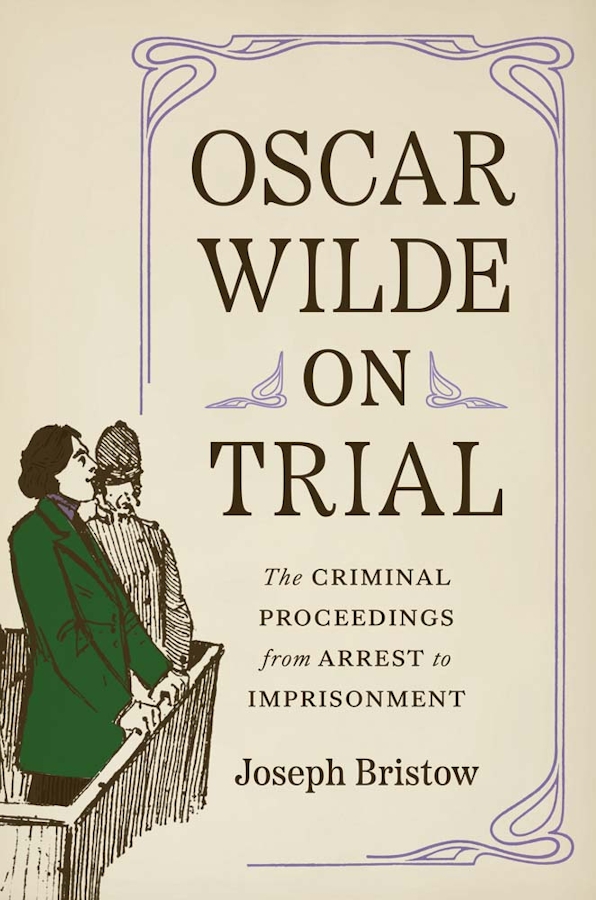
BOOK: Joseph BRISTOW, Oscar Wilde on Trial: The Criminal Proceedings, from Arrest to Imprisonment (New Haven, CT: Yale University Press), 672 pp., ISBN 9780300222722, $85


(image source: Yale University Press)
Book description: 
Among the most infamous prosecutions of a literary figure in history, the two trials of Oscar Wilde for committing acts of “gross indecency” occurred at the height of his fame. After being found guilty, Wilde spent two years in prison, emerged bankrupt, and died in a cheap hotel room in Paris a few years after his release. The trials prompted a new intolerance toward homosexuality: habits of male bonding that were previously seen as innocent were now viewed as a threat, and an association grew in the public mind between gay men and the arts.

Oscar Wilde on Trial assembles accounts from a variety of sources, including official and private letters, newspaper accounts, and previously published (but very incomplete) transcripts, to provide the most accurate and authoritative account to date of events that were pivotal in both legal and cultural history.
About the author: 
Joseph Bristow is a distinguished professor of English at UCLA. He is the coauthor of Oscar Wilde’s Chatterton: Literary History, Romanticism, and the Art of Forgery.
More information can be found here

04 August 2022

BOOK: Matthew DYSON, Explaining Tort and Crime. Legal Development Across Laws and Legal Systems, 1850–2020 (Cambridge: University Press, 2022). ISBN: 9781107144866, £ 95.00

(Source: CUP)

ABOUT THE BOOK


Tracing almost 200 years of history, Explaining Tort and Crime explains the development of tort law and criminal law in England compared with other legal systems. Referencing legal systems from around the globe, it uses innovative comparative and historical methods to identify patterns of legal development, to investigate the English law of fault doctrine across tort and crime, and to chart and explain three procedural interfaces: criminal powers to compensate, timing rules to control parallel actions, and convictions as evidence in later civil cases. Matthew Dyson draws on decades of research to offer an analysis of the field, examining patterns of legal development, visible as motifs in the law of many legal systems.


The book completes a trilogy of works, along with the edited collections Unravelling Tort and Crime (2014), focused on English law, and Comparing Tort and Crime (2015), focused on modern comparative law, all published with Cambridge University Press.


ABOUT THE AUTHOR


Matthew Dyson is Professor of Civil and Criminal Law at the University of Oxford.


TABLE OF CONTENTS


Table of Contents Part I. Setting the Scene: Introduction and Methods for Explaining: 1. Introduction 2. Organising tort and crime Part II. Mental States and Careless Acts: The Development of Fault Doctrine in Crime and Tort: 3. Fault doctrines in criminal law 4. Fault doctrines in tort law 5. Explaining the criminal and tortious developments in fault doctrine Part III. Procedures Interfacing Tort and Crime: 6. Claims and formats 7. Timing rules 8. Criminal judgments in the civil law Part IV. Conclusions: 9. Patterns of development 10. Conclusions.


https://www.cambridge.org/gb/academic/subjects/law/private-law/explaining-tort-and-crime-legal-development-across-laws-and-legal-systems-18502020?format=HB

15 July 2022

BOOK: Benoît AUROY & Constance LEHMAN (dir.), Le droit et les péchés capitaux [Collection des Presses Universitaires de Sceaux] (Paris: Mare & Martin, 2022), 224p. ISBN 9782849346228, €29


(image source: Mare & Martin)

Abstract:

Le 3 octobre 2019, le CERDI organisait sa première journée d’étude jeunes chercheurs. Le thème peut surprendre, tant droit canonique et droit séculier sont désormais bien distingués. Interdits religieux fondamentaux, les péchés capitaux reçoivent toutefois une traduction juridique : en certaines occasions, ils sont sanctionnés par le droit, telles la colère ou la luxure. À l’inverse, le droit enfreint parfois l’interdit religieux et tombe dans l’envie, la paresse ou autre. C’est cette ambivalence des rapports entre droit et péchés capitaux que la journée d’étude a cherché à mettre en lumière.

On the editor and contributors:

Benoît Auroy est membre du CERDI et docteur en droit privé et sciences criminelles. Constance Lehman est également membre du CERDI et doctorante en droit privé et sciences criminelles à l’université Paris-Saclay. Contributions de Clémentine Antoine, Loup Bommier, Cyrielle Chamot, Maxime Charité, Elias Chebaye, Eustache Da Allada, Benjamin Fiorini, Quentin Le Pluard, Quentin Ricardel, Gauthier Soufflard, Marine Virapin, Théo Vuarnet. 

(see publisher's website

27 April 2022

BOOK : Claire WROBEL, Roman noir, réforme et surveillance en Angleterre (1764-1842), (Classiques Garnier, 2022), ISBN : 978-2-4061-2379-8, pp.546, 49€

(Source : Classique Garnier)


A propos de l'ouvrage : 


À travers une lecture croisée des œuvres de Jeremy Bentham (1748-1832) et d’Ann Radcliffe (1764-1823), cet ouvrage propose une exploration du moment culturel dans lequel elles s’inscrivent et des ramifications qui sous-tendent le rapport dialectique entre réforme pénale et roman gothique.


A propos de l'auteur : 


Claire WROBEL est auteure d'une thèse intitulée « Gothique et Panoptique : lecture croisée des œuvres de Jeremy Bentham (1748-1832) et d'Ann Radcliffe (1764-1823) » qu'elle a soutenu en 2009.


Table des matières : 


Introduction p7-27

PREMIÈRE PARTIE : FONDATIONS, NÉGOCIER LHÉRITAGE GOTHIQUE DANS LANGLETERRE DES LUMIÈRES 

Batailles historiographiques autour du château gothique p31-95


L'Autre du Droit Anglais p97 à 199


Des prisons de l'Inquisition au pénitencier de Pétonville p201-266 


DEUXIÈME PARTIE : ÉLÉVATIONS, LE PANOPTIQUE EN THÉORIE ET EN FICTION

Imaginaire de la réforme carcérale chez Jeremy Bentham p269-317

Poétique de la conspiration dans les romans de Radcliffe p319-423 

Fiction théorique et cryptes de la modernité  p425-476

Conclusion p477-499

Bibliographie p501-527 

Index des noms p529-531

Index des oeuvres p533-534

Index des notions p535-536

Index des lieux p537

Index des textes et événements historiques p539

Table des figures p541

Table des matières p543-546


03 March 2022

BOOK: Gianluca RUSSO. Governare castigando: le origine dello stato territoriale fiorentino nelle trasformazioni del penale (1378-1478). (Minalo: Giuffrè, 2021). ISBN 9788828838722. € 42


(Source: https://shop.giuffre.it/024215159-governare-castigando-le-origini-dello-stato-territoriale-fiorentino-nelle-trasformazioni-del-penale-1378-1478-.html)

PARTE PRIMA LA COSTRUZIONE DEL DOMINIO SOTTO IL REGIME ALBIZZESCO(1378-1434) 
CAPITOLO PRIMO L’ORDINE PUBBLICO COME TUTELA DELL’ORDINE POLITICO. L’EMERGENZA REPRESSIVA
CAPITOLO SECONDO PROFILI EGEMONICI DEL PENALE NEGLI STATUTI FIORENTINI DEL PRIMO QUATTROCENTO
CAPITOLO TERZO IL CONTROLLO DEL CORPO SOCIALE. L’OFFENSIVA MORALIZZATRICE
CAPITOLO QUARTO STRATEGIE PENALI A « CONSERVATIONE E AUGUMENTO » DEL DOMINIO TERRITORIALE

PARTE SECONDA IL CONSOLIDAMENTO DEL DOMINIO SOTTO IL REGIME MEDICEO(1434-1478) 
CAPITOLO QUINTO GLI OTTO. DA CACCIATORI DI RIBELLI A GIUDICI CRIMINALI
CAPITOLO SESTO « IURIS ORDINE NON SERVATO ». OLTRE GLI STATUTI
CAPITOLO SETTIMO ESERCITARE RIGORE E CLEMENZA. LA VICENDA DI VOLTERRA RIBELLE
CAPITOLO OTTAVO « IL CASO DE’ PAZZI ». LO SPETTRO DEL CRIMEN MAIESTATIS
CONCLUSIONE QUATTROCENTO FIORENTINO E STATO MODERNO. SUL CRINALE TRA REPUBBLICA E PRINCIPATO

More information: https://shop.giuffre.it/024215159-governare-castigando-le-origini-dello-stato-territoriale-fiorentino-nelle-trasformazioni-del-penale-1378-1478-.html  

23 December 2021

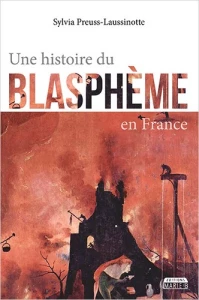
BOOK: Sylvia PREUSS-LAUSSINOTTE, Une histoire du blasphème en France (Clichy: Éditions Marie B., 2021 ) 137 p. ISBN 9791093576961, € 16

(image source: actuallite)
 

Abstract:

Le blasphème n'est pas un objet stable, mais une construction historique à géométrie variable. Le blasphémateur est dénoncé comme menace sociale. Objet de récupération politique, il permet d'instrumentaliser la force de la croyance religieuse pour asseoir un pouvoir, qu'il soit monarchique ou divin. L'ouvrage remonte depuis les origines de la pénalisation du blasphème dès l'Antiquité, jusqu'à fin 2020. Qu'ils soient juifs, catholiques ou protestants, hérétiques - victimes de l'Inquisition, auteurs de crimes de lèse-majesté... -, la liste de ceux qui « outragent » est longue : châtiments corporels, emprisonnement ou peine de mort, tel était le sort réservé aux contrevenants de l'époque. On évoquera dans ce livre des affaires et des personnages qui ont marqué l'Histoire : Molière, le chevalier de La Barre, l'affaire Calas et Voltaire, Baudelaire, Flaubert, et jusqu'à nos jours les attentats de Charlie Hebdo, l'assassinat de Samuel Paty.

On the author:

Sylvia Preuss-Laussinotte est docteure en droit public, diplômée en ethnologie, en sociologie, en épistémologie et histoire des sciences exactes. Maître de conférences honoraire habilitée à diriger des recherches à l'Université de Paris- Nanterre, elle est à l'origine de la création en 2000 du Credof (Centre de recherches et d'études sur les droits fondamentaux) ainsi que d'Actualités Droits-Libertés créé en 2002 et est auteure de nombreux ouvrages dont : La Liberté d'expression (Ellipses, 2014), L'Essentiel des libertés et droits fondamentaux (Gualino, 2001).

(More on the book here

03 December 2021

INTERVIEW: Enora PERONNEAU SAINT-JALMES on Eighteenth-century French rape cases (Le Monde des Livres, 1 DEC 2021)


(image source: Eyrolles)

Le Monde des Livres interviewed historian Enora Peronneau Saint-Jalmes on her work.

First paragraph:

Au XVIIIe siècle, dans les affaires de viol, « une quête intense de vérité » L’historienne Enora Peronneau Saint-Jalmes a étudié les « crimes sexuels à la fin de l’Ancien Régime ». Son livre éclaire un pan important de l’histoire des femmes.

Dans Crimes sexuels et société à la fin de l’Ancien Régime, Enora Peronneau Saint-Jalmes analyse trente et une affaires de violences sexuelles jugées autour d’Auxerre et Sens entre 1695 et 1780. Ce panorama unique d’une réalité méconnue, adapté d’une thèse soutenue en 2020, a valu à la jeune historienne – elle a 26 ans – de recevoir la première bourse Victor-Baubet, créée par les éditions Perrin en partenariat avec l’Ecole nationale des chartes, dont elle est issue.

Read further on Le Monde's website.

On the author:

Archiviste-paléographe et diplômée d’un master d’histoire de Sorbonne Université, Enora Peronneau Saint-Jalmes est la première élève de l’École nationale des chartes lauréate de la bourse Victor-Baubet. Ce prix, initié par les Éditions Perrin, permet de faire connaître auprès d’un large public le fruit de ses recherches et récompense sa thèse d’établissement soutenue en 2020, intitulée Crimes sexuels et société à la fin de l’Ancien Régime. Le viol à Auxerre et à Sens au XVIIIe siècle.

More on the book here.

17 September 2021

BOOK : Marc-Olivier BARUCH (dir), Vichy et les préfets (La Documentation française, Paris, 2021), ISBN : 978-2-1114-5673-0, pp.327, 19€


A propos de l'ouvrage : 


Résumé de l'éditeur : Les rencontres organisées en 2016 sur le thème " Préfets et préfectures pendant le Seconde Guerre mondiale" étaient destinées à éclairer la compréhension des contraintes, des choix et des motivations des personnels préfectoraux qui eurent à conduire l’administration territoriale française entre 1939 et 1945. Les auteurs questionnent ainsi de façon stimulante sur les outils de la répression et de l’exclusion, le métier et la carrière préfectorale sous Vichy, les relations des préfets avec leurs ministres, leurs destins à la suite de la réinstallation des institutions républicaines et la mémoire du corps sur Vichy.


A propos du directeur de l'ouvrage : 


Marc-Olivier BARUCH a soutenu sa thèse en histoire en 1996, qui a été publié par la suite avec l'ouvrage Servir l’État français. L’administration en France de 1940 à 1944. Il est président depuis 2018 du Comité pour l'histoire préfectorale.


Sommaire : 


Préface de Jean-Benoît Albertini, Secrétaire général du ministère de l’Intérieur

Introduction de Marc Olivier Baruch : Qui sont les préfets de Vichy ?

Partie 1 : Sources
- Les sources pour l’histoire des préfets de Vichy en services d’archives : producteurs et typologie
- Figures de préfets de Normandie à l’aune de leurs archives. Aperçus du corps préfectoral normand durant la période de la guerre

Partie 2 : Les préfets dans l’Etat français
- Les préfets et l’exercice du pouvoir dans la France de Vichy
- La journée du serment (Vichy, 19 février 1942) : un « pousse-au-jouir » du maréchal Pétain
- Reconstruire la France, reconstruire l’État : Jacques Morane à Orléans, préfet bâtisseur ou préfet politique ?
- Les rapports d’information des préfets à Vichy
- Les préfets dans le dispositif répressif allemand, 1940-1942. Surveillance, contrôle et mise au pas
- Préfets et préfectures face à la persécution des juifs, 1940-1944. Aperçu général suivi d’une focale sur le cas parisien
- Aménagement urbain et politiques antisémites : les opportunités saisies par la préfecture de la Seine entre aménagement urbain et politiques antisémite

Partie 3 : Figures de l’ambivalence, figures de la résistance
- Préfets du Var et de Provence, convictions, double jeu et agir double
- Fernand Carles (1886-1945), préfet en « zone rattachée » (Nord-Pas-de-Calais)
- Deux déportations, deux assassinats : Henri Dadoune et Alfred Golliard
- Edouard Bonnefoy. Préfet et Résistant, de Paris à Neuengamme
- Jean Moulin, préfet résistant ou préfet de la Résistance ?

Partie 4 : Devenir et souvenir
- Hommage à Adrien Tixier
- Préfets déportés, préfets résistants ? La reconnaissance et les formes de la résistance des préfets
- Des préfets de Vichy aux préfets de la Libération : le modèle proconsulaire en action
- Que deviennent les préfets de Vichy après 1945 ?
- Mémoires et fictions des préfets de Vichy

22 October 2020

BOOK: Alberto TORINI, La battaglia abolizionista in Italia. Il Giornale per l’abolizione della pena di morte (1861-64) (Roma: Aracne Editrice, 2020). ISBN: 9788825533415, pp. 256, € 15,00


(Source: Aracne Editrice)


ABOUT THE BOOK

La questione dell’abolizione della pena capitale si sviluppò in Italia a seguito dell’unificazione nazionale con la fondazione da parte di Pietro Ellero, nel 1861, del Giornale per l’abolizione della pena di morte con il fine di raccogliere e istanze abolizioniste ed attuare un profondo rinnovamento del sistema penale italiano. Il volume analizza il momento “genetico” della questione della pena capitale, nella consapevolezza dell’importanza del confronto che si sarebbe generato a livello accademico, giudiziario e politico. In tale contesto viene approfondita l’influenza che il Giornale ha esercitato sulla dottrina e sui progetti di codificazione penale italiana ed internazionale.

ABOUT THE  AUTHOR

Alberto Torini, dottore di ricerca, è assegnista in Storia del diritto medievale e moderno presso il Dipartimento di Giurisprudenza dell’Università Roma Tre. Insegna la medesima materia presso l’Università LUMSA di Roma. I suoi interessi scientifici attengono principalmente alla storia del diritto penale nell’Ottocento e alla definizione dei reati finanziari in Inghilterra e in Europa tra Ottocento e Novecento.

Table of contents available in PDF version, here.


More information with the publisher.

01 September 2020

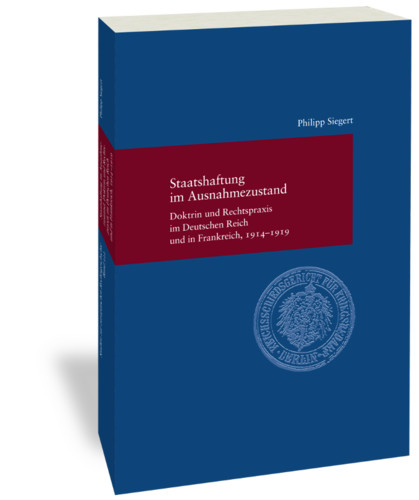
BOOK: Philipp SIEGERT, Staatshaftung im Ausnahmezustand. Doktrin und Rechtspraxis im Deutschen Reich und Frankreich, 1914–1919 [Studien zur europäischen Rechtsgeschichte; 322] (Frankfurt: Vittorio Klostermann, 2020), XIV + 348 p. ISBN 978-3-465-04400-0, € 89


(image source: Klostermann)

Abstract:

The First World War represented the 'primordial experience' of the modern constitutional state with the state of emergency. Guided by the question of the legal responsibility of the state under such circumstances, this comparative study examines state liability law in Germany and France between 1914 and 1918. Categories of 'legitimate' and 'illegitimate' state action that were missing or even contradicted each other in pre-war international law were sanctioned by the peace treaties. Despite further turning points in the 20th century, the basic elements of today's international order can be traced back to decisions made in 1919. This applies in particular to the responsibility of states under international law, which is elaborated against the background of the liability law of both countries concerning destruction, expropriation and economic war measures.

(source: Klostermann

09 June 2020

BOOK: Alessia Maria DI STEFANO, Il corso di diritto penale (1840-1843) di Emerico Amari, un maestro della penalistica civile tra illuminismo e positivismo (Torino: Giappichelli, 2018). ISBN: 9788892115262, pp. 328, € 41,00

Il corso di diritto penale (1840-1843) di Emerico Amari, un maestro della penalistica civile tra illuminismo e positivismo


ABOUT THE BOOK

Nel corso di lezioni di «dritto penale e procedura» tenuto nell’Università di Palermo a partire dal 1840, Emerico Amari filtra con la sua sensibilità i risultati più significativi della riflessione dei giuristi intorno ai problemi principali del diritto penale quali il metodo, il fondamento del potere di punire e la funzione della pena.
Cattolico e liberale, figura di spicco del Risorgimento siciliano, saldamente ancorato ai capisaldi della cultura illuminista e attento alle novità del positivismo, Amari combatte le sue battaglie per la libertà politica ed economica soprattutto dalle pagine dei più importanti periodici isolani, convinto che l’intellettuale debba contribuire attivamente al progresso sociale mettendo a disposizione della collettività in generale e dei governanti in particolare i propri studi e le proprie conoscenze, al fine di far emergere le criticità dei sistemi sociopolitici e di suggerire le riforme più utili per favorire il progresso. La battaglia per l'abolizione della pena di morte, che coinvolge e affascina gli studenti palermitani e spaventa le gerarchie, la partecipazione alla rivoluzione del ’48, non sono che alcuni tra i tanti tratti che segnano la personalità di Amari, un protagonista di quella stagione della cultura giuridica che Sbriccoli ha definito penalistica civile.

ABOUT THE AUTHOR

Alessia Maria Di Stefano dal dicembre 2018 è ricercatore a tempo determinato presso il Dipartimento di Giurisprudenza dell’Università degli Studi di Catania. Ha conseguito il titolo di Dottore di ricerca in Storia del Diritto presso l’Università di Macerata (2010); già assegnista di ricerca presso il Dipartimento di Giurisprudenza dell’ateneo catanese (2012), ha svolto periodi di ricerca all’estero presso la School of Law – UC Berkeley e il Max-Planck-Institut für europäische Rechtsgeschichte di Frankfurt am Main.Ha insegnato Storia del diritto medievale e moderno all’Università degli Studi di Palermo, corso di Laurea Magistrale in Giurisprudenza di Trapani .

TABLE OF CONTENTS

A pdf version of the the table of contents can be downloaded here

More information here

16 February 2020

CALL FOR PAPERS, Approches épistémologique et historiographique du droit criminel. Jalons pour une histoire intellectuelle du droit pénal, (Université de Bordeaux), 2 October 2020.

(Source : Université de Bordeaux)

WHEN : Wednesday 2 October 2020

APPLICATION DEADLINE : 26 February 2020 

WHERE : Université de Bordeaux

TOPIC : This symposium aims to promote legal criminal thought and discussing about "an intellectual history of criminal law".

CONTACT :  legalthoughtirm@icloud.com


HOW TO APPLY :

1) Envoi et sélection : Les propositions (500 mots maximum) devront nous parvenir au plus tard le 26 avril 2020 à l’adresse
suivante : legalthoughtirm@icloud.com . Vous serez recontacté.e.s fin mai 2020.
2) Financement : Les participant.e.s sélectionné.e.s seront défrayé.e.s pour le transport et le logement (le cas échéant), et ce dans les limites du budget du colloque.
3) Publication : Les actes de cette journée feront, en principe, l’objet d’une publication dans une revue — sous réserve d'acceptation par son comité de lecture.
4) Présentation : Ce colloque est organisé par Alexandre FRAMBÉRY-IACOBONE et Marine VETTER, doctorant.e.s contractuel.le.s de l’Université de Bordeaux ; il bénéficie du soutien structurel et scientifique de l’Institut de Recherche Montesquieu (IRM-CAHD — Université de Bordeaux), du Centre d’Études et de Recherche sur la Diplomatie, l’Administration publique et le Politique (CERDAP2 — Université de Grenoble Alpes), et du Centre d’Histoire et d’Anthropologie du Droit (CHAD — Université Paris Nanterre).

SCIENTIFIC COMMITTE :
-Antonio AMALFITANO, Docteur en droit (université de Bordeaux) & Docteur en Sciences   politiques (Università Federico II di Napoli) ;
- Jérôme FERRAND, Maître de conférences, Université de Grenoble Alpes ;
- Nader HAKIM, Professeur, Université de Bordeaux ;
- Jean-Louis HALPÉRIN, Professeur, ENS ;
- Martine KALUSZYNSKI, Directrice de recherche CNRS, Pacte ;
- Marie MANIKIS, Professeure, McGill University ;
- Massimo MECCARELLI, Professeur, Università di Macerata ;
- Annamaria MONTI, Professeure, Università Bocconi ;
- Mathieu SOULA, Professeur, Université Paris Nanterre.