Search

07 December 2020

BOOK: Valerio TORREGIANI, Stato e culture corporative nel Regno Unito. Progetti per una rappresentanza degli interessi economici nella riflessione inglese della prima metà del XX secolo (Milano: Giuffrè, 2018). ISBN: 9788814225994, pp. 300, € 28,00


(Source: Giuffrè)

ABOUT THE BOOK

Il volume offre una ricostruzione dello sviluppo e della diffusione di culture politico-giuridiche corporative nel Regno Unito durante la prima metà del XX secolo. A partire dalla fine del XIX secolo, l'emergere delle strutture associative collettive tipiche della modernità industriale - partiti, sindacati operai, federazioni industriali, etc. - inizia a mettere in crisi il modello individualista di convivenza politica, economica e sociale, provocando un ricco dibattito teorico sul tema della rappresentanza degli interessi economici. La ricerca analizza il percorso di elaborazione di proposte di riforma istituzionale di tipo corporativo nel contesto politico-culturale inglese, interpretate come parte integrante di quella policentrica famiglia di somiglianze corporative che, dichiarandosi alternativa alle ideologie liberale e socialista, caratterizzò molti contesti nazionali durante la prima metà del XX secolo.

ABOUT THE AUTHOR

Valerio Torreggiani is research fellow at the Institute of Social Sciences of the University of Lisbon. His main research interests include: (a) the trans-national diffusion of corporatist ideas, analysed under an interdisciplinary political, economic, juridical and cultural perspective; (b) the history of trade unions and employers' federations in the 19th and 20th centuries; (c) the history of contemporary financial systems; and (d) the history of international organizations, specifically the International Labour Organization. He is a member of NETCOR (Network for the Analysis of Corporatism and Organized Interests), ESHET (European Society for the History of Economic Thought), HION (History of International Organization Network), COMFAS (International Association for Comparative Fascist Studies), SISSCO (Società Italiana per lo Studio della Storia Contemporanea), SISLav (Società Italiana di Storia del Lavoro) and LISE (Laboratorio Italiano di Storia Economica).

TABLE OF CONTENTS

It can be downloaded in PDF version, here.


More information with the publisher.

BOOK: Sanne MUURLING, Everyday Crime, Criminal Justice and Gender in Early Modern Bologna (Leiden: Brill, 2020). ISBN: 9789004440586, € 121.00

(Source: Brill)

ABOUT THE BOOK

Series: Crime and City in History, Volume: 5

Female protagonists are commonly overlooked in the history of crime; especially in early modern Italy, where women’s scope of action is often portrayed as heavily restricted. This book redresses the notion of Italian women’s passivity, arguing that women’s crimes were far too common to be viewed as an anomaly. Based on over two thousand criminal complaints and investigation dossiers, Sanne Muurling charts the multifaceted impact of gender on patterns of recorded crime in early modern Bologna. While various socioeconomic and legal mechanisms withdrew women from the criminal justice process, the casebooks also reveal that women – as criminal offenders and savvy litigants – had an active hand in keeping the wheels of the court spinning.

ABOUT THE AUTHOR

Sanne Muurling, Ph.D. (2019), Leiden University, is a postdoctoral researcher at Radboud University. She has published on the social history of daily life, crime and deviance, gender, disease, poverty and welfare arrangements.


More information with the publisher.

05 December 2020

BOOK : Central Courts in Early Modern Europe and the Americas, A.M. GODFREY & C. H. VAN RHEE (Eds.), (Ducker &Humblot, Berlin, 2020), 978-3-428-18033-2, €89.90.


(Source : Duncker-Humblolt)  


 ABOUT THE BOOK:

The intimate connection between medieval royal government and the administration of justice led to a new generation of centralized law courts emerging in early modern Europe. Some were newly created institutions, but often they were associated with the evolution of the judicial role of royal councils, or equivalent bodies, which sat outside the ordinary course of justice. Typically these were empowered on behalf of the sovereign to make interventions in legal process on grounds of equity. Legal change of this kind was connected with the development of the state, and reflected the way that enhancement in the exercise of centralized judicial authority could be a powerful force reshaping the administration of justice more generally. The contributions to this book seek to examine how such newly created or reformed central judicial bodies (in Europe but also to some extent in European colonial settlement in the Americas) became integrated into the wider structures of jurisdiction within states, with a superior or even supreme jurisdiction. A particular emphasis is given to exploring how their jurisdiction and authority related to other more political institutions of central governance with an adjudicative role, such as parliaments or privy councils.

TABLE OF CONTENTS:
A. M. Godfrey / C. H. van Rhee: Introduction
K. Salonen: The Sacra Romana Rota
N. G. Jones: The English Court of Chancery
W. Prest: An ‘ordinary court of justice’? The appellate jurisdiction of the House of Lords,
1689–1760
A. M. Godfrey: The College of Justice, Court of Session and Privy Council in sixteenth
century Scotland, 1532–1603
J. D. Ford: Adjudication in the Scottish Parliament, 1532–1707
P. Oestmann: The highest courts of the Holy Roman Empire: Imperial Chamber Court and
Imperial Aulic Council
D. Tamm: The King in Council and the Supreme Court in Denmark, 1537–1660
M. Korpiola: The Svea Court of Appeal: A basis for good governance and justice in the early
modern Swedish realm, 1614–1800
H. Pihlajamäki: The Appeals Court of Dorpat in the seventeenth century: Establishing
Swedish judiciary overseas
A. Wijffels: The supreme judicature in the Habsburg Netherlands
C. H. van Rhee: Supreme judicature in Holland, Zeeland and West-Friesland after the Dutch
Revolt, 1582–1795
D. Freda: The Sacro Regio Consiglio of Naples, 15th–17th century
I. Czeguhn: The history of the supreme courts in the Iberian peninsula from the 14th century
to the 18th century
L. López Valencia: The Royal and Supreme Council of the Indies: the Supreme Court of New
Spain
S. Dauchy: The Sovereign Council of New France, 1663–1760
W. H. Bryson: The General Court of Virginia, 1619–1776

04 December 2020

DATABASE : Enslaved – People of the Historical Slave Trade

(Source: Enslaved)

We learned of the online launch of the database Enslaved – Peoples of the Historical Slave Trade.

Enslaved: Peoples of the Historical Slave Trade has a long history with digital collections about enslavement. In 2011, the project originated from an earlier digital humanities project Slave Biographies: The Atlantic Database Network funded by the National Endowment of the Humanities. This project initiated six years of work to develop the needed partnerships as well as plans for possible infrastructure, controlled vocabularies, and data models to do a larger project that would bring together datasets on enslaved people from around the world. A larger project offered many challenges given the disparate, dispersed, and idiosyncratic structure of much of the data.

In 2017, the opportunity to move Enslaved.org project forward came with a planning grant from The Andrew W. Mellon Foundation. After a successful planning stage, in 2018, the Foundation funded Phase 1 of Enslaved.org, to build a proof of concept. The idea was simple: given the complex nature of the plans and the many problems with the data and the innovative nature of the technologies, we needed to prove the project could be done. After successfully doing so, in 2019, Mellon funded an implementation grant to begin populating Enslaved.org with data and begin publishing the Journal of Slavery and Data Preservation as a gateway for including new datasets through peer review into Enslaved.org.

[…]”

More info about the project can be found on Enslaved.org

JOURNAL: Historia et ius, rivista di storia giuridica dell'età medievale e moderna - n. 18, dicembre 2020

 
(Source: Historia et ius)


Historia et ius is an online, open access, International journal dedicated to medieval, modern and contemporary historical legal studies. Founded after the initiative of a group Italian legal historians, the journal is supported by an editorial board composed by European legal historians of high scientific profile. It is divided into three sections: the first one – Topics and issues – hosts essays of general content on legal history made by well-established academics; the second – Studies – concerns articles which are admitted through a preventive evaluation based on a double blind peer review system; the third – Interventions – regards communications, research projects and book reviews. The journal’s main purpose is to provide an agile and easy to use tool aimed at disseminating the results of legal-historical researches at the international level, as well as facilitating the exchange of ideas and methods.


LAST ISSUE: Num. 18 - dicembre 2020 


1) Le domande di uno storico: in ricordo di Raffaele Ajello - di Orazio Abbamonte - DOI 10.32064/18.2020.01 - 1 luglio 2020 - paper 1 

2) Un giurista cosmopolita. Ricordo di Laurent Waelkens (1953-2020) - DOI 10.32064/18.2020.11 - 1 luglio 2020 - paper 11 - di Paolo Alvazzi del Frate

3) Un Maestro: Gian Savino Pene Vidari (1940-2020) - DOI 10.32064/18.2020.11 - 1 dicembre 2020 - paper 27 


Temi e questioni

4) Mario Caravale, Tradizione, legge, consuetudine: qualche osservazione sul pensiero dei commentatori - DOI 10.32064/18.2020.24 - 1 dicembre 2020 - paper 24 

5) Lorenzo Sinisi, "Pro tota iuris decretalium ulteriore evolutione": le declarationes della Congregazione del Concilio e le loro raccolte dei secoli XVI e XVII fra divieti e diffusione - DOI 10.32064/18.2020.08 - 1 luglio 2020 - paper 8 

6) Sylvain Soleil, "On the Vocation of our Age for Codes". Le recours à Savigny lors de la controverse anglo-américaine sur la codification du common law (1820-1835) - DOI 10.32064/18.2020.03 - 1 luglio 2020 - paper 3 


Studi (valutati tramite blind peer review)

7) Federica Boldrini, Prime note sulla regolamentazione giuridica della professione del sarto tra Basso Medioevo e prima Età Moderna - DOI 10.32064/18.2020.23 - 1 novembre 2020 - paper 23 

8) Stefano Cattelan, Iberian expansion over the oceans: law and politics of mare clausum on the threshold of Modernity (XV-XVI centuries) - DOI 10.32064/18.2020.26 - 1 dicembre 2020 - paper 26 

9) Enrico Fameli, La costruzione del diritto di superficie come diritto reale Dal pensiero di Coviello al Codice del 1942 - DOI 10.32064/18.2020.19 - 1 novembre 2020 - paper 19 

10) Elisabetta Fusar Poli, Confluenze e interferenze fra morale e diritto: sguardi attraverso le sentenze penali dell’Otto-Novecento - DOI 10.32064/18.2020.20 - 1 novembre 2020 - paper 20 

11) Lorenzo Gagliardi, La romanistica ottocentesca e la ‘costruzione’ niebuhriana del ius migrandi - DOI 10.32064/18.2020.15 - 1 novembre 2020 - paper 15 

12) Federico Alessandro Goria, "L’istituto del gratuito patrocinio così com’è regolato non basta". L’Ufficio di assistenza legale per i poveri di Milano, dalla Società Umanitaria all’ente autonomo - DOI 10.32064/18.2020.17 - 1 novembre 2020 - paper 17 

13) Fulvio Mancuso, Tra « lex commissoria » e « precaria possessio » : la prima concettualizzazione della riserva di proprietà nei glossatori - DOI 10.32064/18.2020.06 - 1 luglio 2020 - paper 6

14) Eloisa Mura, Il problema della "penetrazione" del principio corporativo nel diritto commerciale nelle pagine di Finzi, Greco e Ascarelli - DOI 10.32064/18.2020.25 - 1 novembre 2020 - paper 25 

15) Cecilia Pedrazza Gorlero, «Inevitabile contradizione»: narrazioni e stereotipie moderne del delitto di infanticidio - DOI 10.32064/18.2020.22 - 1 dicembre 2020 - paper 22

16) Mario Riberi, Quando il gioco si fa serio… Procedura penale di Dino Buzzati e Luciano Chailly (1959) e La più bella serata della mia vita di Ettore Scola (1972) - DOI 10.32064/18.2020.12 - 1 agosto 2020 - paper 12 

17) Filippo Ruschi, La clausola di colpevolezza: ordine e giustizia internazionale dopo la Grande Guerra​ - DOI 10.32064/18.2020.09 - 1 luglio 2020 - paper 9

18) Luigi Trisolino, L’Alta Corte di Giustizia. Sulla funzione giurisdizionale del Senato in epoca statutaria - DOI 10.32064/18.2020.07 - 1 luglio 2020 - paper 7

19) Natale Vescio, L’eredità del Salvioli socialista: Stato e politiche pubbliche negli interventi su "Echi e Commenti" - DOI 10.32064/18.2020.21 - 1 novembre 2020 - paper 21


Interventi

20) Giordano Ferri, Riflessioni sulla teoria del potere discendente e della ‘eclissi del costituzionalismo’ nell’Alto Medioevo - DOI 10.32064/18.2020.05 - 1 luglio 2020 - paper 5 

21) Silvia Gasparini, Sailing to Damietta. Rent of an anchor for a Venetian ship (1118) - DOI 10.32064/18.2020.04 - 1 luglio 2020 - paper 4

22) Paolo Marchetti, Scipio Sighele and the responsibility of the criminal crowd - DOI 10.32064/18.2020.10 - ​1 agosto 2020 - paper 10 

23) Gianmarco Palmieri, Nisi probos efficias disciplina. La questione penitenziaria nella Roma pontificia dell’Ottocento: una ricerca bibliografica - DOI 10.32064/18.2020.14 - 1 agosto 2020 - paper 14 

24) Pietro Schirò, From the school of legal socialism to the social jurist movement in Europe: the misguided label of Juristen-Sozialismus in Germany, France and Italy - DOI 10.32064/18.2020.18 - 1 novembre 2020 - paper 18

25) Alberto Spinosa, "Il cigno nero". Diritti, potere e libertà di fronte al silenzio della legge. Un dibattito teorico di primo novecento - DOI 10.32064/18.2020.13 - 1 agosto 2020 - paper 13 

26) Massimo Tita, Note e documenti sulla Costituzione romana del 1849 e sulla sua influenza: una ricerca in corso - DOI 10.32064/18.2020.02 - 1 luglio 2020 - paper 2

"Centro di studio e di ricerca per la storia della giustizia criminale"​

27) Sonia Abis, L’omicidio bestiale nella seconda metà del XVIII secolo (con particolare riferimento alla Bologna pontificia) - DOI 10.32064/18.2020.16 - 1 novembre 2020 - paper 16


All the contributions are available in open access here.

BOOK: Eva SCHUMANN, Gesetz und richterliche Macht - 18. Symposion der Kommission "Die Funktion des Gesetzes in Geschichte und Gegenwart" (Berlin: De Gruyter, 2020). ISBN 978-3-11-064999-4, 89.95 EUR


(Source: De Gruyter)

De Gruyter has published the edited collection “Gesetz und richterliche Macht”.

ABOUT THE BOOK

Der Band widmet sich einem Thema, das schon seit langem nicht nur juristische Debatten bewegt. Insgesamt fünf Beiträge gehen dem Verhältnis von Gesetz und richterlicher Macht aus verschiedenen Perspektiven nach. Der Band beginnt mit einem rechtshistorischen Beitrag zur richterlichen Unabhängigkeit und zum Schutz bürgerlicher Freiheiten im 19. Jahrhundert und gibt dann einen Einblick in Richterbilder im 20. Jahrhundert. Weitere Beiträge beschäftigen sich mit der kontrovers diskutierten Gesetzgebung durch Höchstgerichte, mit rechtstheoretischen Überlegungen zur Richterbindung und Richterfreiheit sowie mit aktuellen Entwicklungen in der Rechtsprechung und Gesetzgebung zum Familienrecht.

ABOUT THE EDITOR

Eva Schumann, Georg-August-Universität Göttingen.

TABLE OF CONTENTS

Einführung

Wolfgang Sellert

Seiten: 1–4

Der unabhängige Richter und der Schutz bürgerlicher Freiheit im 19. Jahrhundert

Hans-Peter Haferkamp

Seiten: 5–32

Bilder von Richtern – Richterbilder

Hubert Rottleuthner

Seiten: 33–80

Gesetzgebung durch Höchstgerichte und Parlamente

Frank Schorkopf

Seiten: 81–118

Richterbindung und Richterfreiheit in Regeln und Standards

Marietta Auer

Seiten: 119–162

Bewältigung gesellschaftlicher Ungewissheitslagen durch Gesetzgebung und Rechtsprechung

Anne Röthel

Seiten: 163–214

Abschlussdiskussion

Seiten: 215–222

Nachweis der Abbildungen

Seiten: 223–224

Teilnehmer des Symposions

Seiten: 225–226

Personen- und Sachregister

Seiten: 227–240


More info here

BOOK: Leonardo Pompeo D'ALESSANDRO, Giustizia fascista. Storia del Tribunale speciale (1926-1943) (Bologna: Il Mulino, 2020). ISBN: 978-88-15-28769-4, pp. 288, € 27,00


(Source: Il Mulino)

ABOUT THE BOOK

Il Tribunale speciale per la difesa dello Stato, strumento di repressione politica, fu creato dal fascismo perché, si è sostenuto, non aveva fiducia nella magistratura ordinaria. Ma cosa è stato quest'organo e che ruolo ha avuto nell'assetto istituzionale del regime? In realtà l'obiettivo era una riforma in senso fascista dell'intero sistema della giustizia; il Tribunale speciale voleva essere una specie di prova generale. Alla sua attività contribuirono, insieme ai magistrati militari e ai membri della Milizia, proprio i magistrati ordinari, con le prassi tipiche della magistratura, la loro cultura, ma anche il loro zelo repressivo. Basato su documenti inediti, lo studio indaga il concreto funzionamento del Tribunale e gli esiti, spesso contraddittori, della sua azione, senza trascurare la personalità dei giudici dei quali traccia un penetrante ritratto di gruppo.

TABLE OF CONTENTS

Introduzione p. 9

I. Alle origini della giustizia fascista

1. Una legislazione per l’“emergenza”

2. Un “giudice speciale” a difesa del regime

3. Una Camera senza opposizione

4. L’ambiguità del Senato

II. Una giustizia “speciale”

1. Nuovi organi, “vecchi” uomini

2. Una falsa partenza: l’istituzione della Commissione istruttoria

3. Un verdetto annunciato: il processo ai comunisti

4. Bilanci e ripensamenti

5. L’apertura ai magistrati ordinari

III. Da speciale a ordinario: la cesura del 1931

1. Tribunali militari e repressione politica: continuità e rotture

2. Militare vs politico? La scelta ibrida del regime

3. Tribunale speciale e nuovo sistema penale: un processo di normalizzazione

4. Il plauso della magistratura e il paradosso della nuova giustizia fascista

5. Un atto scontato: l’approvazione della proroga

IV. Dentro la giustizia fascista

1. La stabilizzazione degli anni Trenta

2. Milizia, magistratura, esercito e carabinieri: un organico composito

3. Magistrati in camicia nera? Una foto di gruppo

4. Lo zelo dei magistrati e la centralità della Procura

V. Difendere lo Stato, difendere la nazione: la guerra e i nuovi nemici

1. La giustizia speciale e il confine orientale

2. L’estensione delle competenze e la proroga del 1941

3. I numeri della repressione giudiziaria: un bilancio complessivo

Indice dei nomi


More information here.

BOOK: Jocelyn HENDRICKSON, Leaving Iberia Islamic Law and Christian Conquest in North West Africa (Cambridge: Harvard University Press, 2020). ISBN 9780674248205, 45.00 EUR


(Source: HUP)

Harvard University Press is publishing a new book on Islamic legal responses to Muslims living under Christian rule in medieval and early modern Iberia and North Africa.

ABOUT THE BOOK

Leaving Iberia: Islamic Law and Christian Conquest in North West Africa examines Islamic legal responses to Muslims living under Christian rule in medieval and early modern Iberia and North Africa. The fall of al-Andalus, or reconquista, has long been considered a turning point, when the first substantial Muslim populations fell under permanent Christian rule. Yet a near-exclusive focus on conquered Iberian Muslims has led scholars to overlook a substantial body of legal opinions issued in response to Portuguese and Spanish occupation in Morocco itself, beginning in the early fifteenth century.

By moving beyond Iberia and following Christian conquerors and Muslim emigrants into North Africa, Leaving Iberia links the juristic discourses on conquered Muslims on both sides of the Mediterranean, critiques the perceived exceptionalism of the Iberian Muslim predicament, and adds a significant chapter to the story of Christian–Muslim relations in the medieval Mediterranean. The final portion of the book explains the disparate fates of these medieval legal opinions in colonial Algeria and Mauritania, where jurists granted lasting authority to some opinions and discarded others.
Based on research in the Arabic manuscript libraries of five countries, Leaving Iberia offers the first fully annotated translations of the major legal texts under analysis.

ABOUT THE AUTHOR

Jocelyn Hendrickson is Associate Professor of Religious Studies at the University of Alberta.

More info here

03 December 2020

BOOK : J.John SACKAR, Lord Devlin (Hart Publishing, 2020)


(Source : bloomsburyprofessional.com)   

 The author, Justice John Sackar is a judge at the Supreme Court of New South Wales.

ABOUT THE BOOK : Lord Devlin was a leading lawyer of his generation. Moreover, he was one of the most recognised figures in the judiciary, thanks to his role in the John Bodkin Adams trial and the Nyasaland Commission of Inquiry. It is hard then to believe that he retired as a Law Lord at a mere 58 years of age. This important book looks at the life, influences and impact of this most important judicial figure. Starting with his earliest days as a schoolboy before moving on to his later years, the author draws a compelling picture of a complex, brilliant man who would shape not just the law but society more generally in post-war Britain.

 TABLE OF CONTENTS :

1. Ab Ovo
2. God's House
3. The Early Years in the Law
4. A Relentless Workload
5. The Celebrity
6. Friends Across the Atlantic
7. Up a Notch
8. Darkest Africa
9. The Return to Normality?
10. Appellate Life
11. Not Quite the Wilderness
12. New Challenges and the Enemy Within
13. Revenge 

CALL FOR PAPERS: Before the state. International law and politico-legal pluralism in Europe, 12th-17th century (Conferences of Rome (20 September 2021) and Lille/Kortrijk (18/19 May 2022); DEADLINE 31 JAN 2021)


French description:

L’ambition de ces deux rencontres est de contribuer à combler une lacune historiographique en nouant un dialogue entre les études historiques – où l’on observe depuis longtemps un regain d’intérêt pour l’étude des relations internationales et, en particulier, pour la diplomatie à la fin du Moyen Âge et au début de l’époque moderne – et les études relevant de l’histoire du droit, en particulier l’histoire de la pratique et de la doctrine médiévale du droit des gens.

L’État étant considéré comme l’acteur exclusif et même l’a priori de toute compréhension possible des relations internationales, on conçoit encore souvent le droit international comme le droit interétatique : du même coup, on exclut du champ d’investigation les relations entre pouvoirs politiques les plus divers. Or la constellation politique médiévale était caractérisée par une pluralité de centres de pouvoir au statut variable, où l’autorité politique était répartie à différents niveaux. Au lieu d’un lien univoque entre souveraineté et territoire, cette constellation révèle un entrelacement et un chevauchement complexe de différentes juridictions, fondées sur des liens de dépendance personnelle et sur des relations de sujétion territoriale. Loin de pouvoir être conçu comme un droit interétatique dominé par l’État national souverain, le droit international de la fin du Moyen Âge et du début de l’époque moderne devrait plutôt être considéré comme le cadre multi-normatif qui régit les relations entre une grande variété d’acteurs.

Sur cette question, nous organisons deux rencontres, la première à Rome le 20 septembre 2021 et la deuxième à Lille et Courtrai les 18-19 mai 2022. Notre but est d’aborder un vaste éventail de thèmes concernant le droit international, comme la guerre (ses conditions et son déroulement, soldats et mercenaires, droit de prise et de captivité, négociation et exécution des traités de paix), les représailles, la diplomatie (envoyés diplomatiques, traités d’alliance, ligues et adhaerentiae), les relations féodales (par exemple l’obligation du vassal de répondre à l’appel aux armes du seigneur), la relation entre juridiction et territoire (notion de frontière, statut des étrangers), le droit international privé, le droit de la mer (y compris le statut des pirates), les commerces et les relations avec les juifs et les « infidèles ».

En outre, trois thèmes transversaux feront l’objet d’une attention particulière. Il s’agit des acteurs du droit international (leur sélection, leur statut et la dynamique de leurs relations réciproques) ; des sources du droit international, étant donné que ce dernier ne constituait pas à l’époque prémoderne une branche autonome de la science juridique ; et de la résolution des conflits, en particulier à travers la médiation et l’arbitrage (deux institutions qui ont reçu moins d’attention dans l’historiographie par rapport à la négociation et la guerre).

L’organisation de deux rencontres et la contribution de chercheurs de différentes formations nous permettront de discuter cet ensemble de thèmes sur une période qui s’étend du XIIe au XVIIe siècle, en Europe occidentale et sans exclure les relations des acteurs européens avec l’Orient (Byzance, les Mongols, les Ottomans), le Maghreb et les terres « découvertes » au XVe et au XVIe siècle.

Du point de vue méthodologique, nous envisageons une étude aussi bien de la pratique que de la doctrine. Concernant la pratique, il faut comprendre quels étaient les mécanismes qui permettaient de gérer les relations entre des ordres politiques et juridiques différents. Concernant la doctrine, il s’agit d’étudier la manière de laquelle ce rôle fut joué surtout par le ius commune – produit de la science du droit romain, canonique et féodal – qui fournit aux juristes les concepts et les méthodes nécessaires pour gérer la multi-normativité et, en particulier, les relations entre des systèmes juridiques locaux (appelés iura propria).

Des communications s’inscrivant dans la thématique de ces deux colloques sont attendues. Les propositions, en anglais, en français ou en italien, doivent être adressées par courrier électronique à dante.fedele@univ-lille.fr, randall.lesaffer@kuleuven.be et savy_pierre@yahoo.fr. Elles doivent parvenir d’ici le 31 janvier 2021 et compter au moins 3000 caractères. Le résultat de la sélection sera communiqué avant le 28 février 2021. Une publication des actes soumise au contrôle des pairs est envisagée.

Les frais de transport et d’hébergement seront pris en charge par les institutions partenaires du projet.

 English description:

The purpose of these two conferences is to help fill a historiographical gap by establishing a dialogue between historical studies – which have attested a renewed interest in the study of international relations, and diplomacy in particular, in the late medieval and early modern period – and legal historical studies, in particular the history of the late medieval practice and doctrine of the law of nations.

Today, international law is still basically conceived of as interstate law: in fact, the state is considered as the primary actor – and even the a priori condition of any possible understanding – of international relations. This approach leads to exclude relations between non-statal political actors from the field of investigation. However, the medieval political constellation was characterised by a plurality of power centres of varying status and a distribution of political authority at different levels. Instead of a clear link between sovereignty and territory, this constellation reveals a complex interweaving and overlapping of jurisdictions of various kinds, which were grounded either in bonds of personal dependence or in relations of subjection within territorial domains. Far from being conceived of as interstate law dominated by the sovereign national state, late medieval and early modern international law should be regarded as the multi-normative framework which governed the relations between a wide variety of actors.

Two conferences on this issue will be organised in Rome and Lille/Kortrijk on 20 September 2021 and 18/19 May 2022. Our goal is to tackle a wide range of themes relating to international law, such as war (its conditions and conduct, soldiers and mercenaries, the law of booty and captivity, the negotiation and execution of peace treaties), reprisals, diplomacy (diplomatic envoys, alliance treaties, leagues and adhaerentiae), feudal relations (for example the obligation of vassals to respond to their lord’s call to arms), the relationship between territory and jurisdiction (the notion of border, the status of foreigners), conflicts of laws and jurisdiction, the law of the sea (including the status of pirates), trade and relations with Jews and so-called infidels.

Additionally, three cross-cutting themes will receive special attention. These are the actors of international law (their selection, their status and the dynamics of their reciprocal relations); the sources of international law, which in premodern times was not an autonomous branch of legal scholarship; and the resolution of conflicts, in particular through mediation and arbitration (two institutions which have attracted less interest in historiography, compared to negotiation and war).

The organisation of two conferences and the contributions from scholars of different backgrounds will allow us to discuss these issues over a period stretching from the 12th to the 17th century in Western Europe, including the relations of European actors to the East (Byzantium, the Mongols, the Ottomans), the Maghreb and the lands “discovered” in the 15th and 16th centuries.

From a methodological point of view, both practice and legal scholarship will be considered. Regarding the former, we aim to understand what mechanisms made it possible to manage the relations between various political and legal orders. Concerning legal scholarship, our purpose is to study how this role was played especially by the ius commune (a product of the science of Roman, canon and feudal law), which provided jurists with the necessary notions and methods to manage multi-normativity and, in particular, the relations between local legal systems (the iura propria).

We kindly invite scholars to present their new research on the theme of these conferences. All applications must be sent by 31 January to dante.fedele@univ-lille.fr, randall.lesaffer@kuleuven.be and savy_pierre@yahoo.fr with a proposal of at least 3,000 characters. The results will be communicated by 28 February 2021. The proceedings will appear in a peer-reviewed publication.

  Transportation and accommodation costs will be covered by the organising institutions.

Partner institutions

Centre d’histoire judiciaire (UMR 8025) – Université de Lille (Dante Fedele)

École française de Rome (Pierre Savy)

KU Leuven, Department of Roman Law and Legal History (Randall Lesaffer)

(source: ESIL IGHIL)

BOOK: Michal GALEDEK, National Tradition or Western Pattern? Concepts of New Administrative System for the Congress Kingdom of Poland (1814-1815) (Leiden-New York: Brill, 2020). ISBN 978-90-04-43268-0, 114.00 EUR


(Source: Brill)


Brill has published a new book on the constitutional Duchy of Warsaw and the Kingdom of Poland in 1814-1815.

ABOUT THE BOOK

In the history of the development of Polish law and administration, the short period of the constitutional Duchy of Warsaw, and next of the Kingdom of Poland, was a special time. This is because it was the only moment in the 19th century when the Polish elites gained an opportunity to concentrate their efforts on the organization of the modern state machinery. This book presents the process of restructuring the administrative structures following the collapse of the Napoleonic Duchy of Warsaw and before the establishment of the Kingdom of Poland in 1815. The author focuses on the approach of the Polish elites to the nascent modern state, increasing importance of administration within it and to the young Polish bureaucrats.

ABOUT THE AUTHOR

Michał Gałędek, Ph.D. (2010), Professor of University of Gdańsk, Head of the Department of Legal History, Faculty of Law and Administration. In his research he focuses on the Polish administration, judiciary, codification, constitutionalism, and political thought at the beginning of 19th century and in the interwar period.

TABLE OF CONTENTS

   Introduction

  1 Concept of Administrative Thought

  2 Public Administration

  3 Construction of the Work

  4 Methodology

  5 Source Basis of and Literature


  1 Administration and Administrative Thought in the Late 18th and Early 19th Centuries 26

  1 The Specificity of the Administrative System under the Reign of Stanisław August Poniatowski

  2 Determinants of Administrative Development in Early 19th-century Europe

  3 Controversies Around the Administrative System of the Duchy of Warsaw

  4 Administrative Concepts in the Lithuanian Constitutional Drafts of 1811 and 1812


  2 The Course of Works on the Preparation of Administrative System Reforms

  1 Summer Breakthrough of 1814: establishment of the Civil Reform Committee and the Drafting of Constitutional Principles for the Kingdom of Poland

  2 The Course of Works in the Civil Reform Committee (1814–1815)

  3 Works on the Provisional Organization of Central Administration in 1815

  4 New Plan of Works on Administration for the Second Half of 1815

  5 Works on the Constitution and on Organic Statutes


  3 The Central Government

  1 The Principle of Monarchical Sovereignty and the Polish Political Situation in the Years 1814 to 1815

  2 The Principle of Monarchical Sovereignty in the Course of Works on the Constitution

  3 Ministerial Accountability in the Course of Works on the Constitution

  4 Influence of the Seym ( sejm) on the Executive Power

  5 Namiestnik or a Collegial Government? The Problem of the Royal Deputy

  6Council of State


  4 Ministries

  1 Collegiality and One-man Management

  2 Organization of Ministries

  3 Ministry of Education

  4 Ministry of War

  5 Ministry of Justice


  5 Territorial Administration

  1 Points of Reference and Inspirations

  2 Collegiality

  3 Scope of Operations

  4 Influence of Voivodeship Councils on the Administration

  5 District Administration

  6 Municipal Administration

  7 Rural Administration


  6 Attitude Towards Bureaucrats

  1 Foundations of the Republican Traditionalist Concept

  2 The Moderate Concept of Maintaining Bureaucracy


   Conclusions

  1 Summary of the Course of Works on the Administrative System

  2 “Enlightened Liberalism” and the Issue of the Unity of Political and Administrative Thought

  3 A Summary Evaluation of the Concepts of Administrative System Reforms


   Sources

  1 Archival Sources (Manuscripts)

  2 Printed Sources


   Literature


   Index


More info here


BOOK: Luisa BRUNORI, Olivier DESCAMPS and Xavier PRÉVOST (Eds.), Pour une histoire européenne du droit des affaires : comparaisons méthodologiques et bilans historiographiques (Toulouse : EHDIP, 2020).


(Source: PHEDRA)

The PHEDRA-project at the Université Toulouse 1 has published a new book.

Le projet « PHEDRA – Pour une Histoire Européenne du DRoit des Affaires » entend s’interroger sur la construction du droit des affaires dans le cadre européen conçu comme un « écosystème juridique » à part entière. Pour dépasser la pure approche comparative, il fallait nécessairement dresser un bilan de celle-ci : c’est l’objet du présent ouvrage.

Ce premier volume d’une série destinée à concrétiser le projet PHEDRA, s’appuie encore – pour mieux l’abandonner dans les ouvrages suivants – sur une division de l’Europe par aires géographiques, permettant à la fois de dégager des lignes méthodologiques communes aux recherches européennes en histoire du droit des affaires et de constituer une base de travail partagée entre les chercheurs réunis au sein du projet. Pour cela, les meilleurs spécialistes européens de la question livrent leur lecture des principaux travaux consacrés à l’histoire juridique du commerce pour l’Allemagne, le Benelux, l’Espagne, la France, l’Italie et le Royaume-Uni ».

Table des matières :

Introduction, Luisa BrunoriOlivier DescampsXavier Prévost

The Italian Historiography on Commercial Law. Old Tendencies and new Perspectives, Ferdinando Mazzarella

Historiografía jurídico-mercantil española, Margarita Serna Vallejo

Contribuer à l’écriture de l’histoire du droit commercial : le moment José Martinez Gijon, Florent Garnier

The Low Countries, Alain Wijffels

Companies and Company Law in England, 16th to 19th Centuries: Legal Personality, Limited Liability and Pink Unicorns, Guido Rossi

« Capitalisme rhénan ». La tradition du droit économique allemand entre droit public et privé, Mathias Schmoeckel

Éléments de méthode pour une histoire du droit des affaires en France, par les maîtres de la discipline, Carine Jallamion


More info here

02 December 2020

BOOK: Carolyn STRANGE, The Death Penalty and Sex Murder in Canadian History (Toronto: University of Toronto Press, 2020). ISBN 9781487508371, 60.00 USD


The University of Toronto Press has published a new book on the history of the death penalty and sex murder in Canada.

ABOUT THE BOOK

From Confederation to the partial abolition of the death penalty a century later, defendants convicted of sexually motivated killings and sexually violent homicides in Canada were more likely than any other condemned criminals to be executed for their crimes. Despite the emergence of psychiatric expertise in criminal trials, moral disgust and anger proved more potent in courtrooms, the public mind, and the hearts of the bureaucrats and politicians responsible for determining the outcome of capital cases.


Wherever death has been set as the ultimate criminal penalty, the poor, minority groups, and stigmatized peoples have been more likely to be accused, convicted, and executed. Although the vast majority of convicted sex killers were white, Canada’s racist notions of "the Indian mind" meant that Indigenous defendants faced the presumption of guilt. Black defendants were also subjected to discriminatory treatment, including near lynchings. In debates about capital punishment, abolitionists expressed concern that prejudices and poverty created the prospect of wrongful convictions.


Unique in the ways it reveals the emotional drivers of capital punishment in delivering inequitable outcomes, The Death Penalty and Sex Murder in Canadian History provides a thorough overview of sex murder and the death penalty in Canada. It serves as an essential history and a richly documented cautionary tale for the present.

ABOUT THE AUTHOR

Carolyn Strange is a professor in the School of History at the Australian National University.

TABLE OF CONTENTS

Acknowledgments


Introduction


1. The Politics of the Death Penalty and the Problem of Sex Murder

2. Sex Fiends and the Death Penalty at the Turn of Canada’s Century

3. Contesting Convictions and Questioning Culpability: Sex Murder between the Wars

4. Sexual Psychopathy and Penal Severity in the Post-War Era

5. Sexual Psychopathy, Insanity, and the Death Penalty under Scrutiny in the 1950s

6. Sex Murder in the Sixties and the Demise of the Death Penalty


Epilogue: The Problem of Sex Murder in the Shadow of Abolition


Note on Sources and Methods


More info here

BOOK: C. R. Nuñez, Historia del Derecho peruano (Palestra: 2019). ISBN: 9786123250980 S. 40

(Source: https://palestraeditores.com/producto/historia-del-derecho-peruano-tapa-dura/)


El libro que a continuación presentamos, “Historia del Derecho peruano” escrito por el profesor Carlos Ramos Núñez es un texto de naturaleza divulgativa. Diversas áreas del Derecho de forma general se ven desarrolladas en él.
Es así que, siguiendo un esquema histórico, el libro tiene la virtud de comenzar por problematizar la existencia de un Derecho nativo prehispánico, brindando luces y estableciendo importantes coordenadas conceptuales que sirven de reflexión y como punta de lanza con la cual se da inicio a una revisión sumamente interesante con respecto al Derecho precolombino, al Derecho colonial y luego al Derecho republicano, abordando -en cada capítulo-, diversos aspectos medulares de la institucionalidad jurídica de nuestra historia, proyectando con ello luces, incluso a los probables desarrollos de la ciencia jurídica en nuestro país para las décadas venideras.

PRESENTACIÓN

INTRODUCCIÓN

HISTORIOGRAFÍA JURÍDICA PERUANA
I. ¿Existía un Derecho precolombino?
1.1. Las fuentes en el mundo precolombino
1.2. Agentes de control social entre los incas
1.3. ¿Existían prisiones entre los incas?
1.4. Sistema punitivo en el incanato
1.5. Sucesión e incesto real y correinado
1.6. Propiedad y tenencia en los incas

II. El Derecho indiano o colonial
2.1. La justicia en la época colonial
2.2. La Inquisición
2.3. El comercio en la época colonial
2.4. Los escribanos en la época colonial
2.5. La instauración del tributo indígena
2.6. Instituciones subsistentes
2.7. El juicio a Atahualpa
2.8. El proceso seguido contra Túpac Amaru II

III. La República, sus primeras leyes y el inicio de la codificación
3.1. Esclavitud
3.2. Indígenas
3.3. Españoles
3.4. Propiedad, mayorazgos y capellanías
3.5. La codificación civil
3.5.1. Los códigos civiles de la Confederación
3.5.2. El Código Civil de 1852
3.5.3. El Código Civil de 1936
3.6. La evolución republicana del Derecho penal
3.6.1. El Código Penal de 1863
3.6.2. El Código de Maurtua
3.7. Justicia Militar
3.7.1. La codificación militar
3.8. La evolución de los derechos laborales
3.8.1. Accidentes e indemnización
3.8.2. Descanso obligatorio y la jornada de trabajo
3.8.3. Derecho laboral en la Constitución
3.9 La situación de los extranjeros en el Perú
3.9.1. Inmigrantes asiáticos
3.9.2. Inmigrantes alemanes
3.9.3. Inmigración en el periodo de guerra
3.10. Registros públicos
3.11. El comercio en la legislación
3.12. De escribanos a notarios
3.13. El caótico siglo XX: nuevas formas de represión y convulsión política y social
3.13.1. Represión del abigeato
3.13.2. Represión de la vagancia
3.13.3. Abandono familiar
3.13.4. La ley de seguridad interna de Odría
3.13.5. Represión de cambio de moneda extranjera
3.13.6. Sánchez Cerro y la Ley de Emergencia
3.13.7. Benavides y la anulación de votos
3.13.8. Odría, Belaunde, Velasco y la pena capital
3.13.9. El sufragio
3.13.10. La reforma agraria
3.13.11. Velasco y su lucha contra Santa Claus, Plaza Sésamo,
el pato Donald y Carlos Santana
3.13.12. Terrorismo: de las 48 horas a la cadena perpetua ya los jueces sin rostro
3.14. El siglo XXI: Nuevas tendencias
3.14.1. Reorganización institucional y económica
3.14.2. Comunidad indígena
3.14.3. El medio ambiente
3.14.4. Nuevas tendencias en el Derecho penal
3.14.5. La incapacidad jurídica

EPÍLOGO

BIBLIOGRAFÍA

Carlos Nuñes is professor at the Pontifical Catholic University of Peru and Judge at the Peruvian Constitutional Court

BOOK: Alessia Maria DI STEFANO, «Non potete impedirla, dovete regolarla». Giustizia ed emigrazione in italia: l’esperienza delle commissioni arbitrali provinciali per l’emigrazione (1901-1913) (Roma: Historia et Ius, 2020). ISBN: 978-88-944154-4-5, pp. 235 - open access

 
(Source: Historia et ius)

The volume is part of the "Collana di Studi di Storia del diritto medievale e moderno".

The volume can be downloaded in PDF version here.


01 December 2020

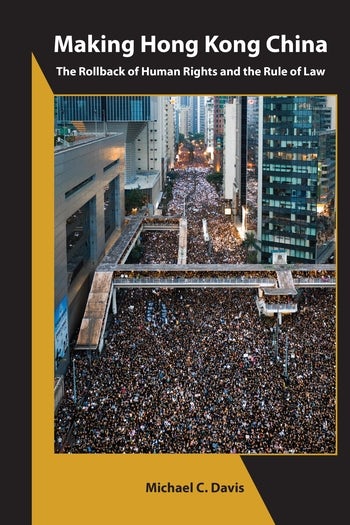
BOOK: Michael C. DAVIS, Making Hong Kong China - The Rollback of Human Rights and the Rule of Law (New York: Columbia University Press, 2020). ISBN 9781952636134, 16.00 USD


Columbia University Press has published a new book on the legal history of Hong Kong since 1997.

ABOUT THE BOOK

How can one of the world’s most free-wheeling cities transition from a vibrant global center of culture and finance into a subject of authoritarian control? As Beijing's anxious interference has grown, the “one country, two systems” model China promised Hong Kong has slowly drained away in the years since the 1997 handover. As “one country” seemed set to gobble up “two systems," the people of Hong Kong riveted the world’s attention in 2019 by defiantly demanding the autonomy, rule of law and basic freedoms they were promised. In 2020, the new National Security Law imposed by Beijing aimed to snuff out such resistance. Will the Hong Kong so deeply held in the people’s identity and the world’s imagination be lost? Professor Michael Davis, who has taught human rights and constitutional law in this city for over three decades, and has been one of its closest observers, takes us on this constitutional journey.

ABOUT THE AUTHOR

Professor Michael C. Davis is in the Fall of 2020 a Visiting Professor in the Faculty of Law at the University of Hong Kong where he teaches core courses on international human rights. He is also currently a Global Fellow at the Woodrow Wilson International Center for Scholars in Washington DC, a Senior Research Scholar at the Weatherhead East Asia Institute at Columbia University and a Professor of Law and International Affairs at O.P. Jindal Global University in India (where he is in residence each spring). A professor in the Law Faculty at the University of Hong Kong until late 2016, he has held a number of distinguished visiting professorships, including the J. Landis Martin Visiting Professor of Human Rights Law at Northwestern University (2005-6), the Robert and Marion Short Visiting Professor of Human Rights at the University of Notre Dame (2004-5) and the Frederick K. Cox Visiting Professor of Law at Case Western Reserve University (2000).


More info here

BOOK: Ennio CORTESE, La norma giuridica (Roma: Senato della Repubblica, 2020) - Opera in due volumi, online version - Biblioteca di storia del diritto


Through the website "Storia del diritto medievale e moderno", we learned about a new digital edition of the two volumes La norma giuridica by the the Italian legal historian Ennio Cortese. 

ABOUT THE BOOK

A distanza di quasi sessant'anni dalla prima pubblicazione, l'opera di Ennio Cortese resta un punto di riferimento per gli specialisti di dottrine giuridiche medievali. L'edizione originale, pubblicata tra il 1962 e il 1964, è da tempo esaurita, così come la ristampa curata da Giuffrè nel 1995. Per tale ragione il Senato ha deciso di inaugurare la nuova Collana dedicata ai classici della storia del diritto con i due volumi de La norma giuridica. Si tratta infatti non solo di un caposaldo della storiografia giuridica italiana, ma anche di un testo che ben rappresenta le collezioni storico giuridiche della Biblioteca del Senato, che annoverano tra i fondi di maggior pregio proprio la biblioteca costruita da Ennio Cortese nel corso della sua lunga attività scientifica e della sua prestigiosa carriera accademica.

«Riconsiderato dopo oltre mezzo secolo dalla sua apparizione, il capolavoro di Ennio Cortese appare come uno straordinario esercizio di immersione in un universo intellettuale che ha marcato in profondità e in permanenza la mentalità occidentale. La stagione della scolastica giuridica è in qualche modo "rivissuta dall'interno", a partire dalla piena comprensione del valore creativo insostituibile che in essa ebbe la sua intrinseca - e perciò ineliminabile - complessità e contraddittorietà: cioè il confronto fra auctoritates contrastanti, fra maestri, e fra scuole diverse, che proponevano interpretazioni opposte. La Norma, insieme ad altre ricerche storico-giuridiche pubblicate in Italia nello stesso giro d'anni, aprì una stagione degli studi di storia del pensiero giuridico affrontati con metodo filologico e attenzione predominante alla letteratura manoscritta. A questo metodo Cortese si è sempre mantenuto fedele, nella convinzione che il pensiero giuridico medievale andasse indagato in tutta la sua ricchezza e profondità, ascoltandone armonie e dissonanze, ricostruendolo senza astrazioni ma nel rispetto della sua stringente logica interna».

(Dall'Introduzione alla nuova edizione)


This new edition is only available in a digital format and it can be downloaded freely here.

BOOK: Ronnie PO-CHIA HSIA (Ed.), A Companion to the Early Modern Catholic Global Missions (Leiden: Brill, 2020). ISBN: 9789004349940, pp. 488, € 190.00

 Cover A Companion to the Early Modern Catholic Global Missions

(Source: Brill)

ABOUT THE BOOK

Series: Brill's Companions to the Christian Tradition, Volume: 80

A survey of the latest scholarship on Catholic missions between the 16th and 18th centuries, this collection of fourteen essays by historians from eight countries offers not only a global view of the organization, finances, personnel, and history of Catholic missions to the Americas, Africa, and Asia, but also the complex political, cultural, and religious contexts of the missionary fields. The conquests and colonization of the Americas presented a different stage for the drama of evangelization in contrast to that of Africa and Asia: the inhospitable landscape of Africa, the implacable Islamic societies of the Ottoman, Safavid, and Mughal empires, and the self-assured regimes of Ming-Qing China, Nguyen dynasty Vietnam, and Tokugawa Japan. 

Contributors are Tara Alberts, Mark Z. Christensen, Dominique Deslandres, R. Po-chia Hsia, Aliocha Maldavsky, Anne McGinness, Christoph Nebgen, Adina Ruiu, Alan Strathern, M. Antoni J. Üçerler, Fred Vermote, Guillermo Wilde, Christian Windler, and Ines Zupanov.

ABOUT THE EDITOR

Ronnie Po-chia Hsia, Ph.D (Yale, 1982) is Edwin Erle Sparks Professor of History and Asian Studies at Penn State University and Academician at the Academia Sinica, Taipei. Among his numerous publications is A Jesuit in the Forbidden City: Matteo Ricci 1552-1610 (Oxford, 2010), which has been translated into Italian and Chinese.

TABLE OF CONTENTS

Acknowledgement 
Notes on Contributors 
Introduction 
Catholic Global Missions and the Expansion of Europe 
Part I. The Americas 
1 Missionizing Mexico: Ecclesiastics, Natives, and the Spread of Christianity 
Mark Christensen 
2 The Andes 
Aliocha Maldavsky 
3 The Missions of Paraguay: Rise, Expansion and Fall 
Guillermo Wilde 
4 Early Modern Catholic Missions in Brazil: The Challenge of the Outsiders 
Anne McGuiness 
5 New France 
Dominique Deslandres 
Part II. Africa 
6 Catholic Missions and Local Rulers in Sub-Saharan Africa 
Alan Strathern 
Part III. Islamic World 
7 Missionaries and French Subjects: The Jesuits in the Ottoman Empire 
Adina Ruiu 
8 Ambiguous Belongings: How Catholic Missionaries in Persia and the Roman Curia Dealt with Communicatio in Sacris 
Christian Windler 
Part IV. Asia 
9 India 
Ines Zupanov 
10 Missions in Vietnam 
Tara Alberts 
11 The Christian Missions in Japan in the Early Modern Period 
M. Antoni and J. Ucerler 
12 Imperial China and the Christian Mission 
R. Po-chia Hsia 
Part V. The Structures 
13 Finances of the Missions 
Fred Vermote 
14 Missionaries: Who were They 
Christoph Nebgen 
Bibliography 
Index


More information available with the publisher.