Search

23 January 2013

Notice: The new editions of Gratian's Decretum: Working materials


A team under the leadership of Professor Anders Winroth is working on new editions of the two recensions of Gratian's Decretum with support of the Andrew W. Mellon FoundationYale University, and the Stephan Kuttner Institute of Medieval Canon Law, and with the assistance from the Yale University Office of Digital Assets and Infrastructure. The new editions aim to replace Emil Friedbergs 1879 edition of the second recension through a fresh collation of the most important manuscripts and a reconsideration of Gratian's sources (both material and formal). The finished edition will be published in the series Monumenta iuris canonici, published by the Kuttner Institute and the Vatican Library. An English translation is also planned.

The purpose of this website is to make the most important working materials of the editorial team available to other scholars already before the edition is published. Users of the site should remember that these are working materials, not the finished edition, and they should use it accordingly.

All information and working materials here


Notice: National Archives of Taranto


This video shows images of some important documents of the National Archives of Taranto, with focus on the 14th century (language = Italian).


Publication: How to write constitutional history (?)

C. M. Herrera and A. Le Pillouer (ed. by), Comment écrit-on l'histoire constitutionelle?, Kimé (Nomos & Normes), 2012. 

If the interest in constitutional history plays an important role in France, the debate about its methodologies seems to be late with reference to other European legal cultures. This books aims at analyzing the issue of the methodology applied in constitutional history studies, comparing the experiences of several researchers (with different backgrounds) rather than identifying a "good methodology". 


More information on Nomodos

Notice: Conference on the history of legal professionals in France (Nice, 11-12 February 2013)

WhatDu lieutenant criminel au juge d'instruction. Rétrospective sur une fonction judiciaire. 
Colloque sous le patronage de Mme Claire d'URSO, Présidente de l'Association Française des Magistrats Instructeurs. Partners: Université de Nice Sophia Antipolis, Ermes, Ecole des Avocats du Sud-est. 
WhereUniversité de Nice Sophia Antipolis, Fac. de Droit et Science politique. 
When: 11 (1:30 pm) -12 February (9:00 am) 2013.  


Organization:
Stéphanie Blot-Maccagnan, Marc Ortolani, Amale Ziad.
Contacts:
Amale Ziad-Secrétariat ERMES Tél: 04-92-15-70-68 Fax: 04-92-15-71-28 
Email: aziad@unice.fr www.ermes-unice.fr


To read the entire program, click here or here

Publication: Studi Veneziani n. LXIV, LXIII, LXII


3 new issues of the journal of the Venetian G. Cini foundation "Studi Veneziani" (LXIV, LXIII, LXII), of 660 pages each, have been recently published.
For more information click here


22 January 2013

BOOK: Carolin on the Constitution of Ireland


I'm very pleased to note the publication of Eoin Carolin (ed), The Constitution of Ireland: Perspectives and Prospects (2012). 
It brings together a range of Irish and international commentators to examine some of the most significant current issues in Irish constitutional law.

Based on a selection of the papers originally presented at a conference to mark the 75th anniversary of the enactment of the current Constitution of Ireland, the collection touches on many of the challenges facing Ireland today. These include: the possibilities for political and constitutional reform; the state of Ireland’s democratic structures; national sovereignty in an era of international organisations; the role and conduct of referenda; questions of national identity and values; the meaning of modern Irish republicanism; and the place of religion in Irish society and government. The contributors describe how the Constitution has influenced developments in Ireland since 1937 and consider how it might continue to do so in the future. At a time when Ireland’s political and constitutional structures are under review, The Constitution of Ireland: Perspectives and Prospects provides expert insight into these important questions.

The contents include:

Introduction: The Hon Mrs Justice Susan Denham, Chief Justice - Some thoughts on the Constitution of Ireland at 75;

Part I Constitutional Values:

  • Philip Pettit - The Republican Constitution;
  • Mark Tushnet - National Identity as a Constitutional Issue: The Case of the Preamble to the Irish Constitution of 1937;
  • Ronan McCrea - Rhetoric, Choices and the Constitution;
  • Amihai Radzyner - The Irish Influence on the Israeli Constitution Proposal, 1948;
  • Eoin Daly - Public Philosophy and Constitutional Interpretation after Natural Law: Republican Horizons;
  • Declan O’Keeffe - God, the Natural Law and the 1937 Constitution;
  • Maria Cahill - Judicial Conceptions of Sovereignty;
Part II Democracy, Politics and the Constitution:
  • Conor O’Mahony - Constitutional Amendment and Judicial Restraint: How Restrained Should an Irish Court Be?;
  • Paul Gallagher - The Limits of Constitutionalism;
  • David Kenny - The Separation of Powers and Remedies: The Legislative Power and Remedies for Unconstitutional Legislation in Comparative Perspective;
  • Jim O’Callaghan - Seanad Éireann – An Opportunity for Real Political Reform;
  • Bláthna Ruane - The Doherty Case and Issues Regarding the Provision of Information and Funding for Constitutional Referenda;
  • Gaetano Marzulli - Direct Democracy by Judges? The Irish Constitution and the Approach of the Courts to the Referendum as a Model in Comparative Perspective;
  • Marie-Luce Paris - Popular Sovereignty and the Use of the Referendum – Comparative Perspectives with Reference to France;

20 January 2013

PUBLICATION: José Calvo Gonzáles on Law and Literature

José Calvo González, El Escudo de Perseo. La cultura literaria del derecho. Estudios interdisciplinares, Granada: ed. Comares, 2012
This book collects 18 papers, for the most part written during the last four years, on the relationship between Law and Literature. It is the expression of the author's long lasting interest in the application of literature or, in general, of the humanities, to legal education.
More information on Nomôdos

You can follow prof. González's work on his blog: http://iurisdictio-lexmalacitana.blogspot.it/ 

Seminar: The Legal Roots of Europe (Maison Française d'Oxford, Jan.-Feb. 2013)

What: Legal History Seminar

Where: Maison Française d'Oxford, All Souls College

When: 23 and 30 January, 27 February 2013 


PROGRAM:
Wednesday 23 January 2013 (5.00pm)
Seminar Room 3, All Souls College
“The Legal Nature of the Feudal Bond. A Story on Law and Society in the 13th Century”, Emanuele CONTE, University of Rome III 
“Jacques de Revigny: Roman Law as a means to shape French Law”, Kees BEZEMER, University of Leiden 

Wednesday 30 January, 5.30pm
Seminar Room 3, All Souls College
“When North becomes South: Military Law in the Bavarian Code”, Stefan ESDERS, Free University, Berlin
Discussant: Ian WOOD, University of Leeds 

Wednesday 27 February, 5.00pm
Seminar Room 3, All Souls College
“The incunabula of the Romano-Canonical Process”, Luca LOSCHIAVO, University of Teramo  Conveners:
Boudewijn SIRKS, All Souls College,
Soazick KERNEIS, Université Paris Ouest-MFO 

- All welcome -

Contact
Maison Française d’Oxford, 2-10 Norham Road, Oxford, OX2 6SE
Tel: (01865) 274 220, Fax: (01865) 274 225
Source: Nomodos

17 January 2013

NOTICE: The ESCLH Facebook Page

Dear ESCLH blog followers,

we are proud to announce that our Facebook page is increasing its contacts: thank you! The past week has been the most successful since the creation of our Facebook page: we have almost reached 100 "I like". If you have a Facebook account, go to our Facebook page and click on "I like" and "Get notifications" in order to stay updated with all the news of the ESCLH blog and to easily share them with your friends and colleagues. 

You can suggest information and comments on news related to comparative legal history both on Facebook and via our email address: esclhblog@gmail.com.  Here are our latest achievements: 


Thank you again!
Stefania Gialdroni
ESCLH Web editor


16 January 2013

PUBLICATION: Geltner on Medieval Prison


The book by Guy Geltner, The Medieval Prison: A Social History, first published in 2008, has been defined as "A most welcome addition to what has been a neglected field of medieval legal and social history. Geltner argues very persuasively that imprisonment was an important phenomenon in medieval Italian cities. The Medieval Prison should appeal to a fairly broad audience outside the field of medieval history" - James B. Given, author of Inquisition and Medieval Society
The Italian translation of this work has been recently published by Viella:
Guy Geltner, La prigione medievale. Una storia sociale, Collana: La storia. Temi, 27, Viella, 2012
More information here.  

13 January 2013

CALL FOR PAPERS: Journal of the History of Universities

We are pleased to publish the following call for papers:

CIAN-Journal of the History of Universities, founded in 1998, publishes articles on the history of universities as well as current topics and debates about Universities. Two digital issues are published each year. The June issue contains the Studies section and December consists of a thematic Dossier. Book reviews are published in both issues in the Bibliography section. A printed edition containing the contents of both digital issues is published in late December.
CIAN-Journal of the History of the University is accepting submissions for issue number 16 which will be edited at the end of 2013. Those interested in sending articles, reviews or proposals for dossiers may submit their work in Spanish or in English. Articles should be no longer than 10,000 words; dossier introductions cannot exceed 4,000 words. Reviews are limited to 3,000 words. Submitted materials will be evaluated on an anonymous basis.
It is preferable that authors register and then submit their text online via the website: www.uc3m.es/cian. It is also possible to send articles to: cuadernos.nebrija@gmail.com
The text should be in MS Word (or RTF, OpenOffice, WordPerfect ....). Authors should include a summary in English, the English translation of the title, five keywords in both languages and a brief biographical note (no longer than 100 words) about the author.
If the text includes illustrations, figures or tables, they should go in their proper place and not at the end of the document. It is also advisable to send a high-resolution copy of these graphics as jpeg attachments to the email address listed above or by following the appropriate steps in the website: www.uc3m.es/cian
The text and should be formatted according to the standards of the Chicago style. Please consult our page: www.uc3m.es/cian for more information.
Carolina Rodríguez-López
Director, CIAN-Journal of the History of Universities

NOTICE: Roundtable with Simona Cerutti at the Centre de Recherche Historique (21st January 2013, Paris)

What: "Les lundis du CRH" - Roundtable on the book Etrangers. Etude d'une condition d'incertitude dans une société d'Ancien Régime, Bayard, Montrougue 2012, by Simona Cerutti.

Where: EHESS, 96 Bd Raspail 75006 Paris, salle M. & D. Lombard.

When: 21 January 2013, 1:00 pm-5 pm.

On January 21st 2013 the "Lundi du CRH" will be devoted to the analysis of Simona Cerutti's recently published Etrangers. Etude d'une condition d'incertitude dans une société d'Ancien Régime, which focuses on the inadequacy of the traditional cathegories used to understand the usage of the term "foreigner" in the modern period.
The roundtable will be intrduced by Katia Béguin (Paris 1), Alain Cottereau (EHESS), Arlette Farge (CNRS/EHESS) and Jacques Revel (EHESS).

Source

PUBLICATION: Riparare Risarcire Ricordare. Un dialogo tra storici e giuristi, ed. by G. Resta and V. Zeno-Zencovich


Riparare Risarcire Ricordare. Un dialogo tra storici e giuristi, ed. by Giorgio Resta and Vincenzo Zeno-Zencovich,  Editoriale Scientifica: Napoli (Interferenze-Collana di diritto e cultura umanistica), 2012.

It is possible to download the entire book here


This book collects some of the results of the PRIN project financed by the Italian Ministry for University and Research and developed by the Universities of RomaTre, Bari "Aldo Moro", Naples "Federico II" and the University of Salento, in collaboration with the Fondazione Centro di Iniziativa Giuridica Piero Calamandrei on the topic "The wounds of history and the restorative law: a historical-comparative investigation" (Le ferite della storia e il diritto riparatore: un’indagine storico-comparatistica). Historical events produce long lasting wounds to persons and their identities as well as to places. Today, an increasing interest in reconstructing history, re-elaborating it also from the point of view of the victims, in order to preserve the memory of some events, is evident. In this framework, law is already playing a (potentially increasable) important role, not only because it is felt as the source of justice, but also because it provides the tools for a moral as well as a material restoration aimed to heal  the wounds of the past and to avoid - as far as possible - the repetition of similar events...

Read more here or directly on the book's first pages (dowload above). 


NOTICE: Conference on signatures, writings and powers around Gaston III comte de Foix (Université de Pau et des Pays de l'Adour, February 1st 2013)

What: Signatures, écritures et pouvoirs autour de Gaston III comte de Foix dit Fébus (Journée d'étude).

Where: Université de Pau et des Pays de l'Adour, Institut Claude Laugénie - Salle Chadefaud.

When: February 1st 2013, 9:00 am.


Within the framework of the Master Cultures et Sociétés: Histoire - Anthropologie - Archéologie of the Université de Pau et de Pays de l'Adour, a conference dedicated to Gaston III earl of Foix and focused on his manuscripts will take place on Friday, the 1st of February 2013. 
For more information about the project directed by Véronique Lamazou-Duplan (Maître de Conférences in medieval history) please click here.

To read the program of the conference click here

NOTICE: American Society for Legal History: Awards and Fellowships

The American Society for Legal History, founded in 1956, "is a nonprofit membership organization dedicated to fostering scholarship, teaching, and study concerning the law and institutions of all legal systems, both Anglo-American and those that do not operate in the Anglo-American tradition". It offers every year a wide range of awards, prizes and fellowships.
For all information please click here.

09 January 2013

ARTICLES SOUGHT: Comparative Legal History (the European Society for Comparative Legal History Journal)

Articles are being sought for publication in Comparative Legal History (CLH), an international and comparative review of law and history. 

CLH is the official journal of the European Society for Comparative Legal History (ESCLH) and is published by Hart Publishing (UK)

The journal is published, both online and in print, twice a year, appearing in the spring and the autumn. The first issue will appear in Spring 2013:

Articles will explore both 'internal' legal history (doctrinal and disciplinary developments in the law) and 'external' legal history (legal ideas and institutions in wider contexts). Rooted in the complexity of the various Western legal traditions worldwide, the journal will also investigate other laws and customs from around the globe. Comparisons may be either temporal or geographical and both legal and other law-like normative traditions will be considered. Scholarship on comparative and trans-national historiography, including trans-disciplinary approaches, is particularly welcome.

The Editors welcome scholarly submissions in the English language:

To submit an article please contact Articles Editor Heikki Pihlajamäki (heikki.pihlajamaki@helsinki.fi). The optimal length for articles is between 7500 to 15000 words, including footnotes. All articles are submitted to double blind peer review.

To propose a review, please contact Reviews Editor Agustin Parise (agustin.parise@maastrichtuniversity.nl). Book reviews will generally range from 1500 to 2500 words. Review articles will also be considered.

The Hart website also has information on the Editors (both the Editorial Staff and International Editorial Board), an Email alert service of the 'Table of Contents', and subscription information. 

Note that a special arrangement between the ESCLH and Hart has been made to ensure that ESCLH membership fees include a subscription to CLH.

Potential contributors should pay special attention to the ‘Notes for Contributors’ on the website. In particular, contributors whose first language is not English are strongly advised to have their papers edited by native Anglophone scholars in advance of their submission to ensure a clear presentation of their ideas and an accurate appraisal of their work.

Spread the word. 

08 January 2013

NOTICE: Yale Law Library Rare Book 9 months Fellowship

The Lillian Goldman Law Library has established a fellowship to train the next generation of rare book librarians to serve the growing number of special collections departments of academic law libraries.  Under the direction of the Rare Book Librarian the fellow will be trained in all aspects of special collections librarianship with an emphasis in law material.  The Rare Book Librarian will design a curriculum for the fellow that includes acquisitions, collection development, cataloging, reference service, exhibit design and preparation, and digital projects.


The Rare Book Fellowship is a competitive fellowship. Preference will be given to candidates with skills in the foreign languages most heavily represented in Yale Law Library special collections (Latin, Italian, German, French, Spanish, Dutch), and to candidates with demonstrated interest in law, legal history, or special collections librarianship.


For more information click here


PUBLICATION: Antonia Fiori on the "purgatio canonica"

Antonia Fiori, Il giuramento di innocenza nel processo canonico medievale. Storia e disciplina della "purgatio canonica", Frankfurt a.M.: Klostermann (Studien zur europäischen Rechtsgeschichte Band 277), 2013. 

The oath of innocence, or purgation, constituted a part of canon law for almost a millennium. It has nevertheless been largely neglected by studies on medieval canonical procedure. This book seeks to 
reconstruct the history of the oath of purgation specifically from the perspective of canon law.

Read more on the editor's website 

NOTICE: Round table on jurists and the Italian cities in the 12th century


What: Giuristi e città nel secolo XII: a round table on the book "La Summa trium librorum di Rolando da Lucca" by Emanuele Conte and Sara Menzinger (Roma: Viella, 2012).

Where: University of Torino, Dipartimento di Studi Storici, Via S. Ottavio 20, Torino, 4th floor, Seminar 1. 
When: 7 February 2012, 3:00 pm. 


Within the framework of the CRISM - Dottorato di studi storici of the University of Turin, Emanuele Conte and Sara Menzinger will discuss their book La "Summa trium librorum" di Rolando da Lucca (1195-1234). Fisco, politica, scientia iuris (Roma: Viella, 2012) with Dario Mantovani (University of Pavia, CEDANT), Mauro Ronzani (University of Pisa), Simone Collavini (University of Pisa). 


07 January 2013

DOCTORAL SCHOLARSHIPS: Legal History - The University of Aberdeen

The University of Aberdeen is offering two scholarships in legal history as part of a larger project on authority and texts. The scholarships will pay fees as well as a stipend, and will provide a desk in a dedicated project office. 

Students are invited to submit research proposals on themes of legal authority, textual authority, and governance. How was legal authority derived, conceptualised, and used in the governance of the late medieval and early-modern periods, when ideas on authority were addressed and began to crystallise? How did changing theories of legal authority alter its use by members of the body politic as they participated in, and challenged, royal burghal, university college, and magnate government? Which legal authorities were drawn on by jurists and governing institutions, and how were they used? Did legal authority function differently in the provinces than in jurisdictions which also functioned as seats of national government

Although the focus of the project is these issues in a Scottish context, comparative approaches are welcomed. 

Further information about the project can be found: http://www.abdn.ac.uk/funding/details.php?funding_id=201 or please email adelyn.wilson@abdn.ac.uk 

Deadline for receipt of applications is 8th March.

03 January 2013

PUBLICATION: New Issue of the Journal of American History

The new issue of the Journal of American History is now available (vol. 99.3, 2012).
 
It includes:
Presidential Address (Capitalism, Democracy, and the Emancipation of Belief by Alice Kessler-Harris)
Articles (Moving beyond 'Rags to Riches': New York’s Irish Famine Immigrants and Their Surprising Savings Accounts, by Tyler Anbinder; On a Temporary Basis: Immigration, Labor Unions, and the American Entertainment Industry, 1880s–1930s, by Krystyn Moon)
A Round Table on Gender History (The Big Tent of U.S. Women’s and Gender History: A State of the Field by Cornelia H. Dayton and Lisa Levenstein; Can We Have a Total American History? A Comment on the Achievements of Women’s and Gender History by Natsuki Aruga; The Impact of Racial and Sexual Politics on Women’s History by Crystal N. Feimster; Gender Identity and the Gendered Process by Alice Kessler-Harris; Seeing Ourselves and for Ourselves: The Infinite Potential of Women’s and Gender History by Ana Elizabeth Rosas, Gender, Generations, Leadership by Elisabetta Vezzosi)
Exhibition Reviews   
Book Reviews
Movie Reviews
Website Reviews
Announcements
Recent Scholarship
 
For more information click here


NOTICE: 44th American Society for Eighteenth-Century Studies Annual Meeting on William Blackstone

What: 44th American Society for Eighteenth-Century Studies Annual Meeting:
"William Blackstone: Intersections between Law and Culture"
Where: Cleveland, OH
When: April 4-7, 2013

"One would be hard-pressed to overstate the importance and popularity among both legal and lay readers of William Blackstone‘s Commentaries on the Laws of England (1765-69), both in the eighteenth century and beyond, and throughout Britain, its empire and America. Nonetheless, Blackstone‘s other ventures, as a historian, as a literary writer, even as a legal writer, have been largely neglected. Building on the recent renaissance in Blackstone studies—most notably, Wilfrid Prest‘s biography, William Blackstone: Law and Letters in the Eighteenth Century (2008), his edited collection, Blackstone and his Commentaries: Biography, Law, History (2009), and his edition of Blackstone‘s correspondence, The Letters of Sir William Blackstone, 1744-1780 (2006)—this panel seeks presentations that address any aspect of Blackstone‘s career, writings or life".

For more information please click here

Source: http://www.h-net.org/announce/show.cgi?ID=196612&keyword=juris

PUBLICATION: The Middle Ages without Feudalism by Susan Reynolds

The Middle Ages without Feudalism. Essays in Criticism and Comparison on the Medieval West, Susan Reynolds, Institute of Historical Research, Lady Margaret Hall, Oxford University, UK, Ashgate, December 2012.

This volume brings together articles (including two hitherto unpublished pieces) that Susan Reynolds has written since the publication of her Fiefs and Vassals (1994). There she argued that the concepts of the fief and of vassalage, as generally understood by historians of medieval Europe, were constructed by post-medieval historians from the works of medieval academic lawyers and the writers of medieval epics and romances. Six of the essays reprinted here continue her argument that feudalism is unhelpful to understanding medieval society, while eight more discuss other aspects of medieval society, law, and politics which she argues provide a better insight into the history of western Europe in the Middle Ages. Three range outside the Middle Ages and western Europe in considering the idea of the nation, the idea of empire, and the problem of finding a consistent and comprehensible vocabulary for comparative and interdisciplinary history.
 
For more information click here

PUBLICATION: The Guild and Guild Buildings of Shakespeare's Stratford

The Guild and Guild Buildings of Shakespeare's Stratford. Society, Religion, School and Stage, Edited by J. R. Mulryne, University of Warwick, UK, Ashgate, January 2013.

The guild buildings of Shakespeare’s Stratford represent a rare instance of a largely unchanged set of buildings which draw together the threads of the town’s civic life. With its multi-disciplinary perspectives on this remarkable group of buildings, this volume provides a comprehensive account of the religious, educational, legal, social and theatrical history of Stratford, focusing on the sixteenth century and Tudor Reformation.
The essays interweave with one another to provide a map of the complex relationships between the buildings and their history....
 
For more information click here

PUBLICATION: Crime, Courtrooms and the Public Sphere in Britain

Crime, Courtrooms and the Public Sphere in Britain, 1700-1850, Edited by David Lemmings, University of Adelaide, Australia, Ashagte, December 2012.
 
Modern criminal courts are characteristically the domain of lawyers, with trials conducted in an environment of formality and solemnity, where facts are found and legal rules are impartially applied to administer justice. Recent historical scholarship has shown that in England lawyers only began to appear in ordinary criminal trials during the eighteenth century, however, and earlier trials often took place in an atmosphere of noise and disorder, where the behaviour of the crowd - significant body language, meaningful looks, and audible comment - could influence decisively the decisions of jurors and judges. This collection of essays considers this transition from early scenes of popular participation to the much more orderly and professional legal proceedings typical of the nineteenth century, and links this with another important shift, the mushroom growth of popular news and comment about trials and punishments which occurred from the later seventeenth century. It hypothesizes that the popular participation which had been a feature of courtroom proceedings before the mid-eighteenth century was not stifled by ‘lawyerization’, but rather partly relocated to the ‘public sphere’ of the press, partly because of some changes connected with the work of the lawyers....

For more information click here

PUBLICATION: The Limits of Empire

The Limits of Empire: European Imperial Formations in Early Modern World History, Essays in Honor of Geoffrey Parker, Edited by Tonio Andrade, Emory University, USA, and William Reger, Illinois State University, Normal, USA, Ashgate, December 2012

This volume, published in honor of historian Geoffrey Parker, explores the working of European empires in a global perspective, focusing on one of the most important themes of Parker’s work: the limits of empire, which is to say, the centrifugal forces – sacral, dynastic, military, diplomatic, geographical, informational – that plagued imperial formations in the early modern period (1500–1800). During this time of wrenching technological, demographic, climatic, and economic change, empires had to struggle with new religious movements, incipient nationalisms, new sea routes, new military technologies, and an evolving state system with complex new rules of diplomacy.

Engaging with a host of current debates, the chapters in this book break away from conventional historical conceptions of empire as an essentially western phenomenon with clear demarcation lines between the colonizer and the colonized. These are replaced here by much more fluid and subtle conceptions that highlight complex interplays between coalitions of rulers and ruled. In so doing, the volume builds upon recent work that increasingly suggests that empires simply could not exist without the consent of their imperial subjects, or at least significant groups of them. This was as true for the British Raj as it was for imperial China or Russia...
 
For more information click here
 

28 December 2012

REMINDER: Juris Diversitas Conference


Juris Diversitas Annual ConferenceREMINDER - 
CALL FOR PAPERS


3-4 June 2013, Lausanne, Switzerland 
Co-Sponsored with the Swiss Institute of Comparative Law

Note that the conference theme, the movement of laws and/or norms over time and space, is particularly appropriate for comparative legal historians.

Proposals should be submitted to Seán Patrick Donlan at sean.donlan@ul.ie by 15 January 2013.

Registration fees (excluding optional conference dinner, €50) are: 

50: Juris Diversitas Members (Full membership 2012 and 2013) 
100: Juris Diversitas Members (Full membership 2013) or Members of the AiSDC 
200: Non-Members

Membership information is available here.

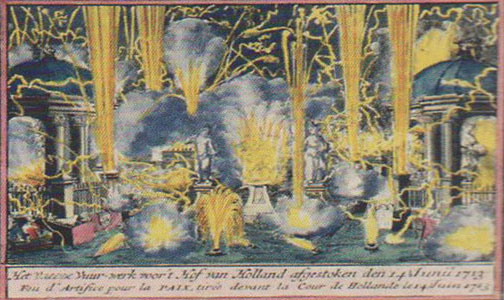
CONFERENCE: Utrecht 1713-2013. Performances of the Peace (Utrecht, 24-26 April 2013) (Utrecht University/Dutch-Belgian Society for Eighteenth Century Studies)

 (fireworks at the occasion of the Peace of Utrecht; image source: Wikimedia Commons)

2013 marks the tricentenary of the peace treaties concluded at Utrecht (11 April 1713), which put an end to (part of) the War of the Spanish Succession. This last great war of Louis XIV's Grand Siècle brought war to the four corners of Europe, as well as to the overseas territories. After the treaties of Utrecht (1713, Rastatt (6 March 1714) and Baden (7 November 1714), Europe entered a rather exceptional peaceful interval in the "bellicose" early modern period, putting a provisional end to a century of uninterrupted bloodshed. The conferences which took place in Utrecht in the years 1712-1713 can be seen as a mirror of changes in intellectual, economic, political and dynastic thought, as well as of elite culture.

A provisional programme for the international conference hosted by Utrecht University and the Dutch-Belgian Society for Eighteenth Century Studies has just been released. The conference, which hosts 12 different panels, will devote attention to legal aspects (panels "Empire" and "Sovereignty"), as well as to the global history perspective.

26 December 2012

ARTICLE: Kuran on Islamic Law and Economic Development


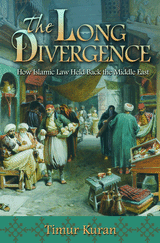
bookjacketA colleague noted that Timur Kuran’s ‘Why the Middle East is Economically Underdeveloped: Historical Mechanisms of Institutional Stagnation’ might be of interest. On SSRN, its abstract reads:

Although a millennium ago the Middle East was not an economic laggard, by the 18th century it exhibited clear signs of economic backwardness. The reason for this transformation is that certain components of the region's legal infrastructure stagnated as their Western counterparts gave way to the modern economy. Among the institutions that generated evolutionary bottlenecks are the Islamic law of inheritance, which inhibited capital accumulation; the absence in Islamic law of the concept of a corporation and the consequent weaknesses of civil society; and the waqf, which locked vast resources into unproductive organizations for the delivery of social services. All of these obstacles to economic development were largely overcome through radical reforms initiated in the nineteenth century. Nevertheless, traditional Islamic law remains a factor in the Middle East's ongoing economic disappointments. The weakness of the region's private economic sectors and its human capital deficiency stand among the lasting consequences of traditional Islamic law.

He noted, too, Kuran’s The Long Divergence: How Islamic Law Held Back the Middle East (2010) and a related video.

PUBLICATION: Journal of the History of International Law XIV (2012), No. 2


The latest issue of the Journal of the History of International Law (Brill) is out.

Contents:
  • Ian Hunter, "‘A Jus gentium for America’. The Rules of War and the Rule of Law in the Revolutionary United States"
  • Ignacio de la Rasilla y del Moral, " The Fascist Mimesis of Spanish International Law and its Vitorian Aftermath, 1939–1953"
  • Giulio Bartolini, " The Impact of Fascism on the Italian Doctrine of International Law"
  • Mark Somos, "Selden’s Mare Clausum. The Secularisation of International Law and the Rise of Soft Imperialism"
 (Source: International Law Reporter)