Search

Showing posts with label Roundtable. Show all posts

09 November 2022

ONLINE BOOK PRESENTATION: Intersezioni. Teoria, storia e diritto positivo a confronto. Discussion on the journal "Storia Metodo Cultura nella scienza giuridica - seconda e rinnovata serie di Diritto romano attuale" (10 November 2022, h. 14:30, ONLINE)

(Image source: Edizioni Scientifiche Italiane)


Il giorno 10 novembre 2022 dalle ore 14:30, nell'ambito del ciclo d'incontri "Intersezioni. Teoria, storia e diritto positivo a confronto", vi sarà la presentazione del primo numero della rivista "Storia Metodo Cultura nella scienza giuridica - seconda e rinnovata serie di Diritto romano attuale".

L'incontro si terrà via Zoom ed in presenza presso l'Aula Crociera Alta di Studi Umanistici dell'Università degli Studi di Milano (via Festa del Perdono, 3). La locandina è disponibile qui.


PRESIEDE E MODERA
  • VITO VELLUZZI, Università degli Studi di Milano
INTERVENGONO
  • OLIVIERO DILIBERTO, Università degli Studi di Roma "La Sapienza"
  • STEFANO PAGLIANTINI, Università degli Studi di Siena
  • CLAUDIA STORTI, Università degli Studi di Milano
  • ALBERTO TEDOLDI, Università degli Studi di Verona

Saranno presenti i Co-direttori della rivista


Partecipazione libera previa iscrizione fino al giorno precedente l’evento inviando una e-mail a: adriano.zambon@unimi.it / silvia.zorzetto@unimi.it. Al  medesimo indirizzo è possibile chiedere il link per il collegamento da remoto.
Ulteriori informazioni sono disponibili presso questa pagina.

14 February 2022

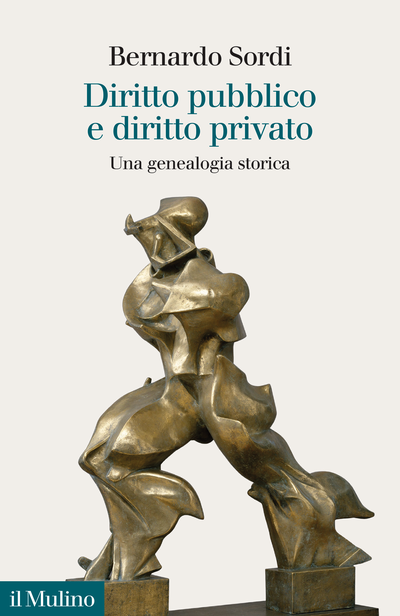
ONLINE BOOK PRESENTATION: Intersezioni. Teoria, storia e diritto positivo a confronto. Discussion on the book Bernardo SORDI, Diritto pubblico e diritto privato: una genealogia storica

(Image source: IlMulino)

Il giorno 14 febbraio 2022, dalle ore 15:00 nell'ambito del ciclo d'incontri "Intersezioni. Teoria, storia e diritto positivo a confronto" vi sarà la presentazione del volume del volume di Bernardo Sordi "Diritto pubblico e diritto privato: una genealogia storica". L'incontro si terrà via Zoom ed in presenza presso l'Università di Milano (via Festa del Perdono 7, Aula 431). La locandina è disponibile qui.


PRESIEDE E MODERA
  • CLAUDIA STORTI, Università degli Studi di Milano
RELATORI
  • NICOLÒ ZANON, Giudice della Corte Costituzionale, Università degli Studi di Milano
  • REALINO MARRA, Università degli Studi di Genova
  • FLORIANA COLAO, Università degli Studi di Siena
REPLICA DELL’AUTORE

DISCUSSIONE


Partecipazione libera, previa iscrizione fino al giorno precedente l’evento inviando una e-mail a: silvia.zorzetto@unimi.it. Al  medesimo indirizzo è possibile chiedere il link per il collegamento da remoto.


25 February 2020

BOOK PRESENTATION: Filippo Maria Renazzi, Università e cultura a Roma tra Settecento e Ottocento - presentazione del volume, Roma 5 marzo 2020

Foto


Tavola rotonda in occasione della presentazione del volume a cura di M.R. Di Simone, C. Frova, P. Alvazzi del Frate.

Università Roma Tre, Dip. di Giurisprudenza – via Ostiense 161 Roma
Giovedì 5 marzo 2020 – ore 15 - Sala del Consiglio (1 piano)


More information here

31 August 2018

ROUNDTABLE: Boston College Legal History Roundtable Fall 2018


Via Legal History Blog, we learned of the coming start of the 17th year of the Boston College Legal History Roundtable.

In the fall of 2018, the Boston College Law School Legal History Roundtable started its 17th successful year. The Roundtable draws on Boston College Law School’s and Boston College’s strength and interest in legal history. It offers an opportunity for Boston College faculty and faculty from other area institutions, students, and members of the Boston College community to meet and discuss a pre-circulated paper in legal history. Meeting several times each semester, the Roundtable seeks to promote an informal, collegial atmosphere of informed discussion.

For the 2018-2019 academic year, Professor Mary Sarah Bilder, Professor Daniel R. Coquillette, Professor Frank Herrmann and Professor Daniel Farbman are conveners.

The Roundtable usually meets several times during the semester in the afternoon at 4:30 pm in the Library Conference Room of the Boston College Law School Library. Refreshments are available beginning at 4:15 pm.*

In 2018-2019, our first Roundtable will be jointly sponsored with the BC Law School Tax Policy Workshop and therefore meet at noon. 

Papers will be available when appropriate before each presentation.

For more information, please contact: 
Joan Manna (617) 552-4344
For assistance with parking passes for non-BC faculty, please also contact Joan.
Fall 2018

Thursday, September 13 (12:15 pm)
Ajay K. Mehrota, Professor of Law and Executive Director, American Bar Foundation and Northwestern University Law School

Ajay K. Mehrotra is the Executive Director and a Research Professor at the American Bar Foundation (ABF) and Professor of Law at the Northwestern University Pritzker School of Law, and an Affiliated Professor of History at Northwestern University. He is the author of Making the Modern American Fiscal State: Law, Politics and the Rise of Progressive Taxation, 1877-1929(New York: Cambridge University Press, 2013), which received the 2014 best book award from the U.S. Society for Intellectual History.  He is the co-editor (with Isaac William Martin and Monica Prasad) of The New Fiscal Sociology: Taxation in Comparative and Historical Perspective (New York: Cambridge University Press, 2009).  His writings have also appeared in student-edited law reviews and interdisciplinary journals including Law & Social Inquiry, Law & History Review, and Law & Society Review.  Mehrotra received his B.A. in Economics from the University of Michigan, his J.D. from Georgetown, and his Ph.D. in American History from the University of Chicago.

 "The VAT Laggard: A Comparative History of U.S. Resistance to the Value-added Tax"

When one examines how modern nation-states generate public revenue, the United States quickly emerges as a striking outlier compared to other advanced industrialized countries.  Even a cursory review of statistics from the Organization for Economic Cooperation and Development (OECD) shows that the United States is out of step with the rest of the developed world in the amount, and the way, it raises tax revenue.  One reason for this apparent American tax exceptionalism is the absence of a U.S. national consumption tax.  Whereas nearly all other OECD countries have a national consumption tax, frequently in the form of a value-added tax (VAT), the United States remains one of the few countries without a consumption tax at the federal level.

This project explores how and why the United States has historically rejected national consumption taxes.  Nearly all developed countries, and many in the developing world, have some type of a national consumption tax, frequently in the form of a value-added tax (VAT).  The United States is an exception.  This project focuses on the fundamental question: why no VAT in the United States?  To address this overall research question, this project explores three key historical periods. The first is the 1920s, when tax theorists in the United States and Germany first began to formulate and propose crude forms of value-added taxes. The second critical period is the decades of the mid-twentieth century. During the 1940s, the United States once again seriously considered but rejected national consumption taxes aimed at raising revenue for World War II. Similarly, after the war, during the U.S. occupation of Japan, American economic experts designed and implemented a proto-VAT for Japan. The third crucial period is the 1970s and ‘80s. During these decades, American lawmakers considered and even supported a U.S. VAT, but eventually withdrew their support or were ousted from political office. At the same time, other developed countries, such as Japan, Australia, and Canada, began to move towards a national VAT. By focusing on these three key historical periods from a comparative perspective, this project seeks to study how and why the U.S. has failed to adopt national consumption taxes, such as the VAT.

Tuesday, October 2 (4:30 pm)

Mitra Sharafi, Professor of Law, University of Wisconsin-Madison

Mitra Sharafi is Professor of Law and Legal Studies at the University of Wisconsin–Madison, with History affiliation. She is the author of Law and Identity in Colonial South Asia: Parsi Legal Culture, 1772-1947 (Cambridge University Press), which won the Law and Society Association’s Hurst Prize in 2015. She is currently working on her second book project, “Fear of the False: Forensic Science in Colonial India” as a Davis Center fellow at Princeton’s History department (fall 2018) and an ACLS Burkhardt fellow ’18 (National Humanities Center, 2020-1).

"South Asians at the Inns of Court: Empire and Expulsion circa 1900"

This paper explores the disbarment proceedings of South Asian members of the Honourable Society of the Inner Temple, one of the four Inns of Court for barristers in London, circa 1900. Law students from across the British Empire attended the Inns by the late nineteenth century, and the two disciplinary cases of A.K. Ghose and S. Krishnavarma shed light on the imperial legal profession’s views of racial and cultural difference; deception, education, and “good character”; and loyalty to British rule.

17 November 2015

ROUND TABLE: "Image et Droit III. Du refus à la régulation des images" (Rome, November 23-25 2015)


WHAT Image et Droit III. Du refus à la régulation des images, roundtable

WHEN  November 23-25 2015

WHERE  École française de Rome, Piazza Navona 62, Rome

Cette dernière table ronde entend revenir sur le refus et la régulation des images, un thème qui a pris, ces derniers mois, une ampleur toute singulière.
En février 2015, l’attaque contre le musée de Mossoul et contre plusieurs oeuvres issues du patrimoine irakien provoquèrent la stupeur et l’incrédulité dans la presse et sur les réseaux sociaux. Ces destructions, qui font écho à celles des Bouddhas de Bâmiyân en 2001, témoignaient de la reviviscence d’un iconoclasme aux enjeux et aux contextes nouveaux. Les destructions, elles-mêmes soigneusement mises en image et en scène, ne posaient pas seulement la question de la licéité des représentations, mais désignaient sans fard le refus absolu des images - y compris celles dont les usages cultuels avaient disparu depuis des siècles- comme un signe de ralliement à une interprétation radicale d’un type d’islam. L’indignation qu’elle suscita sembla cependant oblitérer le fait que ces questions s’adossaient à une très longue histoire de la méfiance et de la relégation des images.
C’est cette histoire que la troisième rencontre du projet Image et Droit souhaite évoquer, celle d’une intense défiance que les images peuvent susciter, de l’abondante réflexion sur leur licéité, leur rejet et leur limitation. Quelles étaient celles qui demeuraient autorisées? Comment les restrictions et les régulations d’images pouvaient-elles produire de nouveaux types d’image? Dans un contexte ouvertement hostile à la représentation du vivant, les formes abstraites et l’ornementation furent-elles une des réponses visuelles à ce choix? Les destructions ou les occultations d’images furent-elles l’objet de codifications précises? Comment les destructions d’images entendaient-elles fonder sinon un nouvel ordre juridique qui ne se restreint pas à la simple question des images, du moins une nouvelle normativité des pratiques? Ces questions ne touchent pas seulement les images de culte, mais aussi, pour certaines périodes historiques, les représentations profanes et notamment le portrait dont la régulation ne fut pas seulement posée par les théologiens protestants, mais aussi par les révolutionnaires français qui légiférèrent précisément sur les retraits de certaines figures royales. Elles continuent encore aujourd’hui de préoccuper les représentants des Etats pour l’établissement des papiers d’identité où la question de la définition légitime de la ressemblance constitue l’objet d’une législation tatillonne. En somme, cette table ronde propose de repenser à nouveaux frais la question du droit des images. Il s’agira de voir combien sa limitation est à la fois l’objet et le produit de conflits juridiques, religieux et politiques, conduisant à de nouvelles définitions et de nouvelles élaborations d’images.


Programme

10 May 2015

ROUNDTABLE: "Una cultura delle libertà: Magna Carta Libertatum 1215-2015" (Rome, May 21, 2015)


WHAT Una cultura delle libertà: Magna Carta Libertatum 1215-2015, roundtable

WHEN May 21, 2015 - 3:00 pm

WHERE Roma Tre University, Law Faculty, Sala del Consiglio, first floor

11 April 2015

ROUNDTABLE: "Biens communs. Stratégies juridiques pour des perspectives européennes" (Paris, 13 April 2015)


WHAT Biens communs. Stratégies juridiques pour des perspectives européennes, International Roundtable

WHEN Monday 13 April 2015, 9:00- 19:00

WHERE Ecole des Hautes Etudes en Sciences Sociales, EHESS, salle Lombard (96, bd Raspail) and salle 11 (105, bd Raspail)

Le CENJ « Yan Thomas » de l’Institut Marcel Mauss a animé pendant deux ans le séminaire interdisciplinaire « Le bien commun, les biens communs, les choses communes, la collectivisation des intérêts » qui a fait appel au monde de chercheurs et de praticiens experts pour examiner l’émergence de la thématique des commons et les interactions entre expériences et recherche autour des relations entre biens communs et droit, les usages de stratégie juridique par les divers acteurs sociaux, les formes de law making élaborées par les bas, les expériences d’interaction entres différents acteurs dans des arènes hybrides.
En considérant l’importance que la notion de « biens publics » a prise dans le débat en économie, celle de « biens communs » dans la réflexion en philosophie et sciences politiques, et le développement de travaux dans le domaine de la « propriété intellectuelle », il nous a semblé utile de faire le point sur les définitions des notions juridiques qui se trouvent au cœur de ces recherches. Traditionnellement, les choses communes sont en effet des choses inappropriables, que ce soit de manière privative ou par une entité publique. Leur nature est de « n’appartenir à personne ». En revanche, les biens sont des choses appropriables, de manière privative ou collective. Elles peuvent également être, dans certains systèmes juridiques, uniquement affectées à un usage particulier, sans faire l’objet pour autant d’une appropriation.

04 March 2015

ROUNDTABLE: "Périodisations et régimes de temporalité en histoire (I et II)" (Paris, 6 et 16 March 2015)

WHAT: Périodisations et régimes de temporalité en histoire (I et II), roundtable

WHEN: 6 and 16 March 2015, 9:30 - 5:30

WHERE: Ecole des Hautes Etudes en Sciences Sociales, Salle Jean-Pierre Vernant  -  190-198, avenue de France  -  75013 Paris

All information here

La remise en cause des découpages chronologiques conventionnels – histoire ancienne, médiévale, moderne et contemporaine – est fondatrice de la naissance même de l’EHESS. Avec Marc Bloch et Lucien Febvre, Fernand Braudel et ses régimes de temporalité multiples forgent une référence essentielle à l’architecture épistémologique et pédagogique de l’EHESS.

Après ces éléments fondateurs, de nombreuses nouveautés sont survenues au cours des dernières décennies :

1) Les découpages chronologiques en histoire européenne. Une mise en perspective historiographie s’impose étant donné les évolutions historiographiques dans ce domaine. Que reste-t-il aujourd’hui des périodisations académiques et quelles sont les alternatives proposées ?

2) L’irruption des aires culturelles. Leur essor à l’EHESS incite à un double questionnement. D’une part, chaque aire avance ses propres périodisations, plus ou moins liées aux historiographies nationales, voire nationalistes. Il s’agit donc de comprendre dans quelle mesure ces périodisations sont recevables et pour quels motifs. Mais d’autre part, l’histoire connectée, l’histoire globale et la world history encouragent, chacune à sa manière, à dépasser ces cadres traditionnels. En ce cas, comment proposer des périodisations capables de dépasser ces segmentations ? Quel rôle attribuer aux échelles temporelles ?


01 October 2014

CONFERENCE: "Località e Storia locale: una tavola rotonda" (Rome, 2 October 2014)


WHAT: "Località e Storia locale: una tavola rotonda", Conference and roundtable on the book "Luoghi. La produzione di località in età moderna e contemporanea", by Angelo Torre

WHERE: Rome, Biblioteca del Senato della Repubblica "Giovanni Spadolini", Sala degli atti parlamentari, piazza della Minerva, 38.

WHEN: 2 October 2014, 3:00 pm

All information here
Speakers

Marco Meriggi, Simona Feci, Osvaldo Raggio, Emanuele Conte, Angelo Torre, Sandro Bulgarelli, Luca Giana, Diego Moreno, Emanuele Colombo, Massimo Vallerani

La tavola rotonda si articola in due sessioni e prende spunto dalla presenza presso la sede della Biblioteca di un fondo speciale detto di "Storia locale".
Nella prima sessione verrà ripresa la discussione storiografica sul tema della località, a partire da una serie di interventi sul libro di Angelo Torre "Luoghi. La produzione di località in età moderna e contemporanea", Donzelli, Roma 2011.
La località è un ambito territoriale di pratiche condivise - modi di fare, di lavorare, di scambiare - che creano dei diritti. Il loro godimento sta alla base di ciò che chiamiamo appartenenza, mentre la loro messa in discussione causa conflitti e dispute che rappresentano le fonti storiche principali per lo studio dei luoghi.
Il libro esamina una successione di casi giudiziari relativi all'Italia nord-occidentale e a un tempo compreso fra il XVI secolo e i giorni nostri.

La seconda parte sarà invece dedicata ad una ricostruzione del dibattito storiografico degli ultimi anni intorno allo statuto della storia locale in Italia, con il proposito di mettere a confronto differenti prospettive interdisciplinari di analisi.
L'incontro, che intende inaugurare una serie di appuntamenti annuali dedicati al tema della storia locale, è curato ed introdotto da Vittorio Tigrino e Raissa Teodori, e promosso dalla redazione della rivista "Quaderni Storici".

18 September 2014

MEPLI ROUND TABLE REGISTRATION: "200 Years Savigny and Thibaut: The Codification Debate Revisited" (Maastricht, 10 October 2014)

WHAT: Registration open for the ‘200 Years Savigny and Thibaut: The Codification Debate Revisited’ , MEPLI Round Table

WHERE: Maastricht

WHEN: 10 October 2014

Registration is now open via this link, where you can also find more information about the location as well as the programme of the event. 

13 May 2013

COLLOQUIUM: Criminology and Legal History discussed with David Garland at the University of Ferrara (16 May 2013)

What: David Garland on "Faucault's geneaology and the study of criminology" (a Colloquium on Criminology and Legal History)
Where: Dipartimento di Giurisprudenza - Sala Consiliare, University of Ferrara
When: 16 May 2013, 10:00 am 

12 March 2013

LECTURE: Giacomo Todeschini on Credits in Medieval Italy

What: Giacomo Todeschini (Univ. of Trieste) on "Giuda e le reti del credito informale in Italia alla fine del Medioevo”.
Where: Aula grande de seminarios (1ª planta) de la IMF-CSIC (c/ Egipcíaques, 15, Barcelona)
When: March 18th 2013, 12:00

The conference is organized by the Departamento de Ciencias Históricas – Estudios Medievales de la Institución Milá y Fontanals (CSIC, Barcelona)

13 January 2013

NOTICE: Roundtable with Simona Cerutti at the Centre de Recherche Historique (21st January 2013, Paris)

What: "Les lundis du CRH" - Roundtable on the book Etrangers. Etude d'une condition d'incertitude dans une société d'Ancien Régime, Bayard, Montrougue 2012, by Simona Cerutti.

Where: EHESS, 96 Bd Raspail 75006 Paris, salle M. & D. Lombard.

When: 21 January 2013, 1:00 pm-5 pm.

On January 21st 2013 the "Lundi du CRH" will be devoted to the analysis of Simona Cerutti's recently published Etrangers. Etude d'une condition d'incertitude dans une société d'Ancien Régime, which focuses on the inadequacy of the traditional cathegories used to understand the usage of the term "foreigner" in the modern period.
The roundtable will be intrduced by Katia Béguin (Paris 1), Alain Cottereau (EHESS), Arlette Farge (CNRS/EHESS) and Jacques Revel (EHESS).

Source

08 January 2013

NOTICE: Round table on jurists and the Italian cities in the 12th century


What: Giuristi e città nel secolo XII: a round table on the book "La Summa trium librorum di Rolando da Lucca" by Emanuele Conte and Sara Menzinger (Roma: Viella, 2012).

Where: University of Torino, Dipartimento di Studi Storici, Via S. Ottavio 20, Torino, 4th floor, Seminar 1. 
When: 7 February 2012, 3:00 pm. 


Within the framework of the CRISM - Dottorato di studi storici of the University of Turin, Emanuele Conte and Sara Menzinger will discuss their book La "Summa trium librorum" di Rolando da Lucca (1195-1234). Fisco, politica, scientia iuris (Roma: Viella, 2012) with Dario Mantovani (University of Pavia, CEDANT), Mauro Ronzani (University of Pisa), Simone Collavini (University of Pisa).