Search

Showing posts with label International Law. Show all posts

18 February 2026

SEMINAR SERIES: Souverainetés - Cycle de la Chaire Droit international des institutions au Collège de France (Paris: Collège de France, 26 FEB 2026 - 2 APR 2026)

(Hope, George F. Watts, 1886, Tate Britain, Londres. © Domaine public).

Abstract

Aujourd’hui revendiquée comme un fait irrésistible ou, au contraire, rejeté comme un fait dépassé, la souveraineté, dont le concept est pourtant normatif, n’aura curieusement que rarement été justifiée ou critiquée dans ses justifications. Le cours de cette année propose une réinterprétation des souverainetés au pluriel par référence, d’une part, à l’égalité des peuples dont l’autodétermination est garantie par le droit international et, d’autre part, à la pluralité des formes institutionnelles que l’exercice de leur autodétermination peut et doit prendre en droit international à l’avenir.

Announcement

Le cours de la Professeure Samantha Besson, titulaire de la Chaire Droit international des institutions au Collège de France clôt un cycle de six ans d’enseignement en revisitant le principe du droit international qui en aura été le fil rouge : la souveraineté.

Aujourd’hui revendiquée comme un fait irrésistible ou, au contraire, rejeté comme un fait dépassé, la souveraineté, dont le concept est pourtant normatif, n’aura curieusement que rarement été justifiée ou critiquée dans ses justifications – du moins, jusqu’il y a peu. Et ce, y compris à l’aune des multiples théories de la légitimité politique du droit international et de ses institutions. Le cours de cette année propose une réinterprétation des souverainetés au pluriel par référence, d’une part, à l’égalité des peuples dont l’autodétermination est garantie par le droit international et, d’autre part, à la pluralité des formes institutionnelles que l’exercice de leur autodétermination peut et doit prendre en droit international à l’avenir.

Programme

Les cours seront dispensés tous les jeudis du 26 février au jeudi 10 avril 2026, de 10h à 11h30

Jeudi 26 février

Jeudi 5 mars

Jeudi 12 mars

Jeudi 19 mars

Jeudi 26 mars

Jeudi 2 avril

Modalités de participation

Les cours sont accessibles à toutes et tous, sans inscription préalable et dans la limite des places disponibles. Toutes les informations sont disponibles vers : https://www.college-de-france.fr/fr/agenda/cours/souverainetes

    Places

    • Amphithéâtre Maurice Halbwachs, site Marcelin-Berthelot - Collège de France, 11 place Marcelin Berthelot, 75005 Paris
      Paris, France (75005)

    Event attendance modalities

    Full on-site event


    Date(s)

    • Thursday, February 26, 2026
    • Thursday, March 05, 2026
    • Thursday, March 12, 2026
    • Thursday, March 19, 2026
    • Thursday, March 26, 2026
    • Thursday, April 02, 2026

    Contact(s)

    • Camille Michel
      courriel : camille.michel@college-de-france.fr

    Reference Urls

    22 January 2026

    BOOK: Robert SCHÜTZE & Mathias SIEMS (eds.) Comparative International Law. Foundations and Critique (London: Bloomsbury, 2026), 360 p. ISBN 9781509972395, 95 GBP


    (image source: Bloomsbury)

    Abstract:

    The modern field of comparative international law emerged in the last century, but it still suffers from a lack of intellectual and methodological foundations. This ambitious collection fills that gap. It examines the key concepts of comparative international law, including its historical and critical perspectives. Contributors from a wide geographical range present their diverse and thought-provoking views on international and comparative law. This is a much-needed and cutting-edge book on an undervalued yet topical field of research.

    Table of contents:

     Part I: Setting the Scene

    1. Comparative International Law: State of the Art, Mathias Siems (European University Institute, Italy)
    2. Comparative International Law: A Historical Re-Construction, 3. 'African' International Law, 4. 'American' International Law, 5. China's Contemporary Approach to International Law, 6. 'European' International Law: European Exceptionalism and Universalism in the Nineteenth-Century, 7. The Islamic Conception of International Law, 8. Is Comparative International Law Really Comparative Law? A Methodological Critique, 9. Comparative International Law: What's Next? 10. Decolonising the Comparative Metrics of (Private) International Law,11. Science in Comparative International Law, 12. Quantitative International Comparisons: A Tale of Missed Encounters, 13. Global Law and Comparative International Law,

    Read more here

    17 March 2025

    BOOK: Sarina LANDEFELD, Individuals in International Humanitarian Law. A Historical Analysis [Studies in International Law] (London: Bloomsbury, 2025), 352 p. ISBN 9781509968220


    (image source: Bloomsbury)

    Abstract:
    This book offers a new, more critical perspective on the regulation and protection of individuals under international humanitarian law. Providing a historical account of the changing conceptualisation of individuals since 1864, the study draws on social constructivism. This approach casts light on the struggle of making sense of, and agreeing on, the position of individuals in armed conflicts during the law-making process, often hidden by international humanitarian law's conventional narratives. This intriguing study grapples with a difficult and disputed area of the law of armed conflict, making a singular and significant contribution which will be welcomed by all scholars in the field.

     Table of contents:

    1. Introduction
    2. Constructing Individuals for International Humanitarian Law
    3. The Early Written Laws of War
    4. The Inter-War Years and the 1949 Geneva Conventions
    5. From the 1949 Geneva Conventions to the 1977 Additional Protocols
    6. The Post-1977 Era
    7. Conclusion

    On the author:

    Sarina Landefeld is Lecturer in Law at the University of Leicester, UK.

    Read more here

    (source: ILReporter)

    17 September 2024

    BOOK: Olivier CORTEN, Le champ juridique international [Collected Courses of The Hague Academy of International Law - Recueil des cours de l'Académie de droit international de La Haye; 436] (Leiden: Brill, 2024), ISBN 978-90-04-69912-0, € 164,3


    (image source: Brill)

    Abstract:

    Plutôt que de le concevoir comme un système ordonné de règles ou comme le produit des besoins ou des aspirations de la communauté internationale, ce cours appréhende le droit international par référence à la notion de « champ juridique », inspirée de la pensée de Pierre Bourdieu. Un champ de tensions entre concepts par définition inconciliables : reconnaissance déclarative ou constitutive, droit dur ou droit mou, légalité ou effectivité, … Un champ de luttes entre acteurs (États, peuples, entreprises, individus, …) qui tendent à imposer leurs conceptions du juste ou à faire prévaloir leurs intérêts. Sont dans cette perspective envisagées diverses problématiques contemporaines : droits des femmes, des migrations ou du dérèglement climatique, crimes internationaux (génocide, terrorisme, écocide, … ), justifications des guerres, des exécutions judiciaires ou de la torture. Le droit international est ainsi étudié à la fois dans sa dimension technique, faites de débats juridiques pointus portant sur son interprétation, et dans sa dimension plus sociologique visant à le replacer dans son contexte politique.

    On the author:

     A fait des études de sciences sociales, sciences politiques, droit et droit international à l’Université libre de Bruxelles (ULB). C’est au sein de cette université qu’il enseigne depuis près de trente ans, même s’il a également dispensé des cours dans d’autres universités, en France (Sciences Po Paris, Paris Panthéon-Sorbonne, Paris Panthéon-Assas, Université d’Aix-Marseille, Université de Grenoble), en Espagne (Universidad Internacional Menéndez Pelayo, Valencia), en Italie (Institut universitaire européen de Florence, Università di Roma « La Sapienza »), en Allemagne (Université de Munich), aux Pays-Bas (University of Amsterdam/Asser Institute), au Brésil (Universidade Federal de Minas Gerais, Belorizonte, 2009), au Japon (Université de Kyoto, 2009) et en Belgique (Facultés universitaires Saint-Louis). Il a aussi enseigné pour l’Organisation des Nations Unies (programme des bourses de perfectionnement en droit international des Nations Unies), ainsi qu’à l’Académie de droit international de La Haye, avec un cours sur « La rébellion et le droit international. Le principe de neutralité en tension », dispensé en 2014. Egalement co-directeur de la Revue belge de droit international et directeur de la collection de droit international (Bruylant). A été conseil et avocat devant la Cour internationale de Justice, principalement dans les affaires du Différend frontalier terrestre et maritime (Cameroun-Nigéria) , de la Licéité de l’emploi de la force (RFY c. 10 Etats) et des Activités armées sur le territoire du Congo (République démocratique du Congo c. Ouganda) . A rédigé de nombreuses études en droit de la paix et de la sécurité internationale, en théorie du droit international et en sociologie du droit et est membre de l’Institut de droit international.

    Table of contents:

    Une ouverture en cinq questions
    1. Le droit international comme sport de combat ?
    2. Le droit international comme champ de luttes ?
    3. Le droit international comme « champ juridique » ?
    4. Un positivisme critique ?
    5. Quel programme ?
    Chapitre I. Qu’est-ce que le champ juridique international ?
    Section 1. Un champ de luttes : une diversité des positions et des approches
    Section 2. Un champ de tensions : des structures communes
    Chapitre II. Les acteurs du champ juridique international : reconnaissance déclarative ou constitutive ?
    Section 1. La reconnaissance d’un « peuple », déclarative ou constitutive?
    Section 2. La reconnaissance d’« Etat », déclarative ou constitutive ?
    Chapitre III. Le discours du champ juridique international : droit dur ou droit mou ?
    Section 1. La protection des droit des femmes : une voie conventionnelle?
    Section 2. La préservation des droits des migrants : une voie coutumière?
    Section 3. La lutte contre le dérèglement climatique : la voie du juge ?
    Chapitre IV. Champ juridique international et champ social : communautéou société ?
    Section 1. Le développement des crimes internationaux : vers l’avènement d’une communauté internationale ?
    Section 2. Quelles juridictions pénales internationales ?
    Chapitre V. Champ juridique international et champ politique : légalité ou légitimité ?
    Section 1. La place du discours juridique dans le champ politique international
    Section 2. Forces et faiblesses du droit international comme register de légitimité

    Bibliographie sélective

     More informatio here.

    09 September 2024

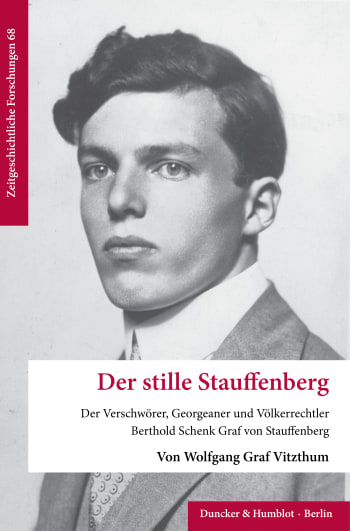
    BOOK: Wolfgang Graf VITZTHUM, Der stille Staufenberg. Der Verschwörer, Georgeaner und Völkerrechtler Berthold Schenk Graf von Stauffenberg [Zeitgeschichtliche Forschungen, vol. 68] (Berlin: Duncker & Humblot, 2024), 180 p., ISBN 978-3-428-19195-6

     Cover: Der stille Stauffenberg

    ABOUT THE BOOK:

    Berthold Schenk Graf von Stauffenberg war ein Völkerrechtler, ein Anhänger des Dichters Stefan George und der engste Vertraute seines Bruders Claus. Als Heranwachsende waren die Stauffenbergs George vorgestellt worden. Seither lebten sie im Bannkreis des Dichters und der Vision eines »Neuen Reiches«. An den Ständigen Internationalen Gerichtshof abgeordnet, verfasste Berthold Stauffenberg das zentrale Werk über dessen Rechtsordnung. Vor allem die deutschen Kriegsverbrechen führten ihn in den aktiven Widerstand. Das Scheitern der rettenden Tat am 20. Juli 1944 bedeutete seinen gewaltsamen Tod. Die vorliegende Studie gibt der verschwiegenen, hintergründigen Persönlichkeit Gestalt und Stimme.

    ABOUT THE AUTHOR:

    Prof. Dr. Dr. h.c. Wolfgang Graf Vitzthum, LL.M., studierte Rechtswissenschaften in Berlin (FU), Freiburg i.Br. und New York (Columbia). Nach Promotion und Habilitation (Freiburg i.Br.) wurde er 1978 an die Münchner Universität der Bundeswehr berufen. Von 1981 bis zur Emeritierung 2009 hatte er den Lehrstuhl für Öffentliches Recht und Völkerrecht in Tübingen inne. Im Mittelpunkt vieler seiner Arbeiten steht der Staat, u.a. seine föderale Gliederung, völkerrechtliche Umhegung und maritime Ausdehnung. Graf Vitzthum hat das Lehrbuch Völkerrecht und das Handbuch des Seerechts herausgegeben. Er ist Vorsitzender des Stiftungsrates der Stefan George Stiftung, ausgezeichnet mit einem Ehrendoktor (Aix-Marseille) und einem Bundesverdienstkreuz Erster Klasse.

    Read more here.

    14 May 2024

    CFP: TraCe Third Annual Conference: The Excessive Use of Force (Gießen: Justus Liebig University Gießen, 30 OCT - 1 NOV 2024) [DEADLINE 15 May 2024!]


    (Source: TraCe)


    When? Wednesday, October 30 - Friday, November 1, 2024

    Where? Justus Liebig University Gießen

    Call for Papers

    The excessive use of force has been a recurring phenomenon over time and throughout different regions in a broad variety of contexts as part of transformations of political violence. Integral to our agenda as a Research Center are efforts to analyze, to better understand and to reduce or at least manage the many conflicts that have again increased in intensity. We are faced with new forms of war and terrorist violence, and there is a systematic disregard for international humanitarian law (and human rights law). Humankind is under pressure in light of these developments that challenge existing norms and practices for containing political violence. However, historically such excessive uses of force have not been unique. It is challenging to socio-culturally (historically and empirically) understand these phenomena, and to ask for normative responses to such developments.

    Our annual conference will be held at Giessen, Germany, from October 30, 2024, until November 1, 2024. We want to organize the conference alongside four sections:

    1. socio-cultural (including historical) analyses of excessive use of force;
    2. empirical studies of excessive use of force;
    3.  the role of international law to avoid excessive use of force;
    4. normative responses to excessive use of force beyond international law. In each of the four sections we want to cover a variety of situations extending from revolutionary and post-revolutionary violence, across civil wars, up to international armed conflicts.

    Propositions covering history, social science, political theory, international relations and international law (both international humanitarian and international human rights law) can be sent in English (yet, French, German and Spanish can be also accepted) by email to raphael.cahen(at)recht.uni-giessen.de and thilo.marauhn(at)recht.uni-giessen.de. All applications must be sent by May 15, 2024, with an abstract of 250 words and a short CV. Accepted papers will be informed until the end of June 2024.

    The Research Center “Transformations of Political Violence” (TraCe) is an inter­disciplinary research network of five Hessian research Institutions: The Peace Research Institute Frankfurt (PRIF), the Goethe University Frankfurt, the Justus Liebig University Giessen, the Philipps University Marburg and the Technical University of Darmstadt. The proceedings will appear in a peer-reviewed publication. We aim at covering transportation and accommodation for accepted panelists.

    24 May 2023

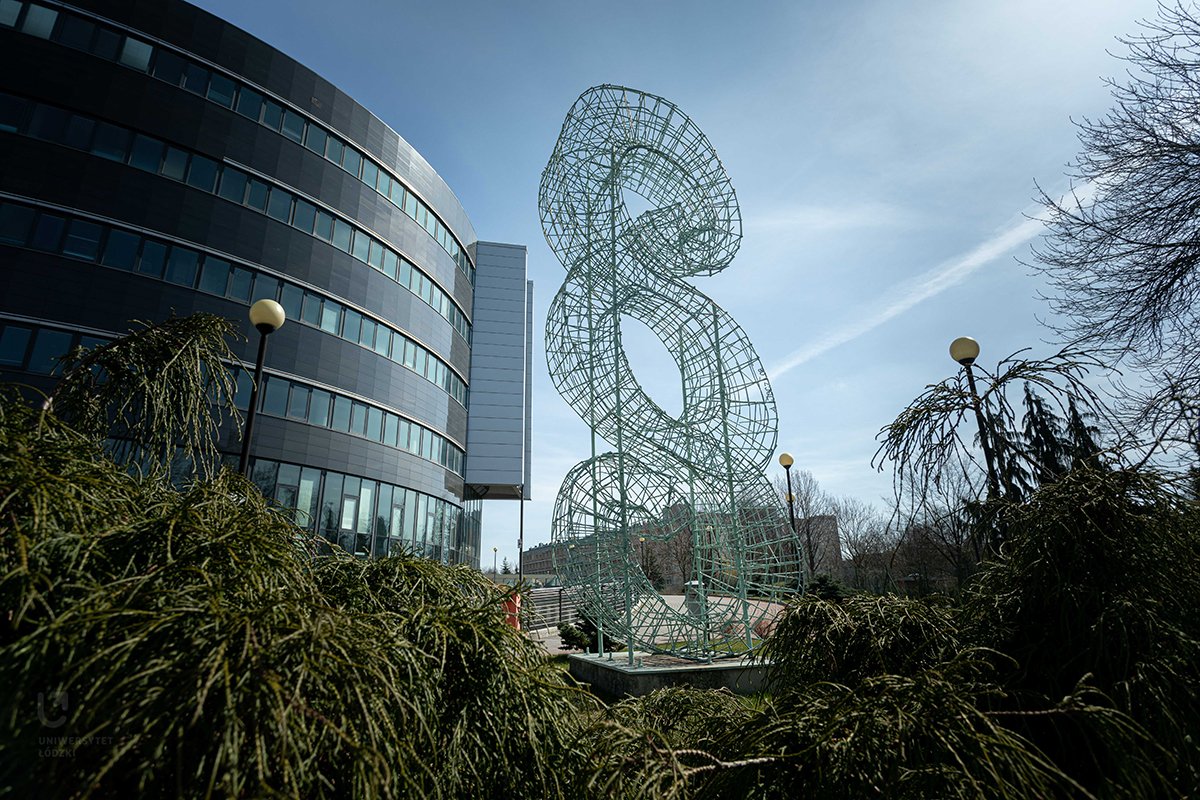
    CALL FOR PAPERS: International Law – Its Heritage as a Response to Modern Problems - Łódź, 16 and 17 May 2024 (DEADLINE: 30.09.2023)


    The Chair of International Law and International Relations and the Centre for Anglo-American Legal Tradition of the University of Lodz invites you to participate in the conference "International Law – Its Heritage as a Response to Modern Problems" that will take place 16-17 (Thursday-Friday) May 2024.

    Conference’s mission

    International law is constantly under attack for its unsuitability in the context of modern international relations and its challenges, the war in Ukraine being one of the most recent and tragic examples. From theoretical negators to cynical politicians, it is said that it is tiger without fangs and claws. Simultaneously, different bodies are constantly searching for new instruments to ensure the stability of today’s world embodied in the rule of law.

    We believe, however, that the international legal community already has the answers to this problem, and that there is no need for a revolution. That response is international law’s greatest strength, i.e. its heritage, deeply rooted in legal tradition and consciousness of humans. Whether embodied either in treaties, customary law, or general rules recognised by the civilised nations it bears its values stemmed from the historical experience of nations.

    The subject itself is broad but we would like to suggest some key issues that can be discussed during the conference. Among them are: (1) rule of law, (2) constitutional values of states, (3) human rights, (4) war crimes, (5) international justice, (6) influence of national or local laws, (7) protection of national interests v. global governance. However, we are not limiting the scope of proposed papers to the above-mentioned themes.

    Because the theme of the conference is so wide and interdisciplinary, we are looking forward to welcoming in Lodz the broadest possible range of scholars, including international lawyers, both scholars and practitioners, legal historians, sociologists of law, specialists in political studies and international relations and more. Especially warmly, we invite young and early career scholars.

    Professor Fernanda Pirie (University of Oxford), Professor Malgosia Fitzmaurice (Queen Mary University of London), and Professor Joseph H.H. Weiler (New York University School of Law) have already generously agreed to participate as key speakers at the conference.

    Application

    Applications can be submitted until 30 September 2023. It should contain:

    • Name and surname

    • Affiliation

    • Short abstract (max 500 words)

    • Author’s decision regarding paper / poster form of presentation (posters are predominantly recommended for Young and Early Career Scholars)

    The Scientific Committee reserves its right to decide about the final programme until 31 October 2023. Authors of the accepted applications will be asked then to prepare longer abstracts (up to 1500 words) which will be collected in the Book of Abstracts (published by the end of January 2024).

    Contact email: Anglo-AmericanLT@uni.lodz.pl

    Call for papers: here.

    Center for Anglo-American Legal Tradition website.

    31 January 2022

    ONLINE WEBINAR: Lauterpacht Centre for International Law, Friday Lecture: 'International Law and the Politics of History' - Prof. Anne Orford, Melbourne Law School - Friday, 4 February 2022 - 1.00pm

    (Source: LCIL)

    LECTURE SUMMARY

    As the future of international law has become a growing site of struggle within and between powerful states, debates over the history of international law have become increasingly heated. In this lecture discussing her new book 'International Law and the Politics of History', Anne Orford explores the ideological, political, and material stakes of apparently technical disputes over how the legal past should be studied and understood. Drawing on a deep knowledge of the history, theory, and practice of international law, she argues that there can be no impartial accounts of international law's past and its relation to empire and capitalism. Rather than looking to history in a doomed attempt to find a new ground for formalist interpretations of what past legal texts really mean or what international regimes are really for, she urges lawyers and historians to embrace the creative role they play in making rather than finding the meaning of international law.

    Friday, 4 February 2022 - 1.00pm. You can register here.

    ABOUT THE SPEAKER

    Anne Orford is Melbourne Laureate Professor and Michael D Kirby Chair of International Law at Melbourne Law School, and Visiting Professor of Law and John Harvey Gregory Lecturer in World Organizations at Harvard Law School. She researches and teaches in the areas of international law, history and theory of international law, international dispute settlement, international economic law, and climate change. She is a Fellow of the Academy of the Social Sciences in Australia and a past President of the Australian and New Zealand Society of International Law. Her publications include International Law and the Politics of History (Cambridge University Press, 2021), Pensée Critique et Pratique du Droit International (Pedone, 2020), International Authority and the Responsibility to Protect (Cambridge University Press, 2011), and Reading Humanitarian Intervention (Cambridge University Press, 2003), and the edited collections Revolutions in International Law: The Legacies of 1917 (Cambridge University Press, 2021) (co-editor), The Oxford Handbook of the Theory of International Law (Oxford University Press, 2016) (co-editor), and International Law and its Others (Cambridge University Press, 2006). She presented a special course on Civil War and the Transformation of International Law at the Hague Academy of International Law in 2021. She has been awarded honorary doctorates in law by Lund University, the University of Gothenburg, and the University of Helsinki, and the Woodward Medal for Excellence in Humanities and Social Sciences by the University of Melbourne.

    17 July 2020

    BOOK: Bertrand G. RAMCHARAN, A History of the UN Human Rights Programme and Secretariat (Brill/Nijhoff: Leiden/Boston, 2020). ISBN: 9789004356474, pp. 272, €165.00

    Cover A History of the UN Human Rights Programme and Secretariat
    (Source: Brill/Nijhoff)

    ABOUT THE BOOK

    Series: International Studies in Human Rights, Volume: 132

    This volume constitutes a valuable and unique history of the United Nations human rights programme and its secretariat. It offers interpretations of the history of the programme and its secretariat against the background of historical currents such as the Cold War, colonialism and decolonisation, and covers the seminal period during which the programme moved decisively towards human rights fact-finding and the denunciation of violations of human rights, which took place in the latter part of the 1970s and the 1980s. The author was a central player in this period, having served as the Special Assistant to three Directors of the Human Rights Division, and so provides historical materials that only he is aware of, having been at the heart of the action. He also provides snapshots of United Nations human rights leaders from the beginning of the United Nations, all of whom he knew personally, and writes about the contributions of NGOs and NGO leaders who served the cause of human rights with fortitude and determination.

    ABOUT THE AUTHOR

    Bertrand G. Ramcharan is President Emeritus of UPR Info. Previously, he was: Chancellor of the University of Guyana; Professor of Human Rights at the Geneva Graduate Institute of International and Development Studies; Deputy, then Acting UN High Commissioner for Human Rights; Commissioner of the International Commission of Jurists; Member of the Permanent Court of Arbitration; Special Adviser of the UN Secretary-General on the peace process in Georgia; Fellow of the LSE; UN Fellow at the Kennedy School of Government, Harvard University.

    TABLE OF CONTENTS

    Preliminary Material, pp. i–xvii
    Introduction, pp. 1–9
    Navigating the Cold War, pp. 10–36
    Navigating the Colonial and Post‑Colonial Worlds, pp. 37–60
    Organization, Mandate, pp. 61–88
    Leaders, pp. 89–107
    Programmes, Resources, pp. 108–129
    The International Bill of Human Rights, pp. 130–153
    Studies and Reports, pp. 154–162
    Implementation, pp. 163–203
    Petitions and Fact-Finding, pp. 204–221
    Voices of Conscience, pp. 222–235
    Promotion and Advisory Services, pp. 236–247
    Partnership with NGOs and Civil Society, pp. 248–257
    Conclusion, pp. 258–262
    Bibliography, pp. 263–265
    Index, pp. 266–271


    More information with the publisher.

    04 May 2020

    BOOK: Edward CAVANAGH (Ed.), Empire and Legal Thought. Ideas and Institutions from Antiquity to Modernity, (Leiden/Boston: Brill/Nijhoff, 2020). ISBN: 9789004430983, € 170.00

    (Source: Brill)

    ABOUT THE BOOK

    Series: Legal History Library, Studies in the History of International Law, Volume: 41/16

    Emphatic of the importance of legal thought to the rise and fall of empires, this book highlights the centrality of empires to the development of legal thought. 
    Comprehension of the development of legal thought over time is necessary for any historical, philosophical, practical, or theoretical enquiry into the subject today, it is argued here. When seen against the background of broad geopolitical, diplomatic, administrative, intellectual, religious, and commercial changes, law begins to appear very resilient. It withstands the rise and fall of empires. It provides the framework for the establishment of new orders in the place of the old. Today what analogies, principles, and authorities of law have survived these changes continue to inform much of the international legal tradition. 

    Contributors are: Clifford Ando, Lia Brazil, Joseph Canning, Edward Cavanagh, Zachary Chitwood, Emanuele Conte, Matt Crow, Alberto Esu, Tiziana Faitini, Dante Fedele, Naveen Kanalu, Alexandre A. Loktionov, P. G. McHugh, Jordan Rudinsky, Mark Somos, Joshua Smeltzer, Lorenzo Veracini, Halcyon Weber, and Sarah Winter.

    ABOUT THE EDITOR

    Edward Cavanagh was a Fellow (2016-2019) of Downing College, after attaining his PhD from the University of Ottawa (2012-2015). His scholarly interests lie at the crossroads of law and history.

    TABLE OF CONTENTS

    Preface
    Notes on Contributors
    1. Empire and Legal Thought: An Introduction - Edward Cavanagh
    2. The First ‘Lawyers’? Judicial Offices, Administration and Legal Pluralism in Ancient Egypt, ca. 2500–1800 BCE - Alexandre A. Loktionov
    3. After the Empire: Judicial Review and Athenian Interstate Relations in the Age of Demosthenes, 354–22 BCE - Alberto Esu
    4. Public Law and Republican Empire in Rome, 200–27 BCE - Clifford Ando
    5. Compromise and Coercion: Imperial Motives Behind Justinianic Legislation in Sixth-century Constantinople - Halcyon Weber
    6. Muslims and Non-orthodox Christians in Byzantine Law until ca. 1100 - Zachary Chitwood 7. Roman Public Law in the Twelfth Century: Politics, Jurisprudence, and Reverence for Antiquity - Emanuele Conte
    8. Ius gentium: The Metamorphoses of a Legal Concept (Ancient Rome to Early Modern Europe) - Dante Fedele
    9. ‘Exiit edictum a Caesare Augusto ut describeretur universus orbis’ (Luke 2:1–2): Debating Imperial Authority in Late Medieval Legal and Political Thought (12th–14th Centuries) - Tiziana Faitini
    10. Ideas of Empire in the Thought of the Late Medieval Roman Law Jurists - Joseph Canning
    11. Medieval Pisa as a Colonial Laboratory in the Historiographical Imagination of the Early Twentieth Century - Lorenzo Veracini
    12. Open and Closed Seas: The Grotius-Selden Dialogue at the Heart of Liberal Imperialism - Mark Somos
    13. Littoral Leviathan: Histories of Oceans, Laws, and Empires - Matthew Crow
    14. From Procedural Law to the ‘Rights of Humanity’: Habeas corpus, Ex parte Somerset (1771–72), and the Movement toward Collective Representation in Early British Antislavery Cases - Sarah Winter
    15. Prerogative and Office in Pre-revolutionary New York: Feudal Legalism, Land Patenting, and Sir William Johnson, Indian Superintendent (1756-1774) - P.G. McHugh
    16. The Pure Reason of Lex Scripta: Jurisprudential Philology and the Domain of Instituted Laws during Early British Colonial Rule in India (1770s–1820s) - Naveen Kanalu
    17. James Bryce’s Home Rule Constitutionalism and Victorian Historiography - Jordan Rudinsky
    18. Crown, Conquest, Concession, and Corporation: British Legal Ideas and Institutions in Matabeleland and Southern Rhodesia, 1889–1919 - Edward Cavanagh
    19. British War Office Manuals and International Law, 1899–1907 - Lia Brazil
    20. Reich, Imperium, Empire: Carl Schmitt and the ‘Overcoming of the Concept of the State’ - Joshua Smeltzer
     Index


    More information with the publisher.

    13 February 2020

    JOB: Fixed-Term Lecturership in international law, three years (Cambridge, DEADLINE 2 MAR 2020)

    (image source: Cambridge University)

    The Faculty of Law is seeking to appoint an appropriately qualified person to a fixed-term Lectureship in International Law commencing 1 September 2020. The funds for the post are available for three years in the first instance, but a further two years of funding may be possible, depending on the return of the substantive post holder. The person appointed will teach on international law papers at undergraduate and postgraduate level, conduct and assist in the supervision of research, and participate in the general work of the Faculty.
    The appointee will demonstrate potential to lecture effectively and to carry out and publish research of the highest calibre. The person appointed will normally hold a PhD or equivalent qualification. The Lecturer will be based in central Cambridge.
    If you have any questions about this vacancy or the application process, please contact Julie Boucher by email jb234@cam.ac.uk. Please quote reference JK22281 on your application and in any correspondence about this vacancy.
    Further particulars and details of the application procedure are available at the University Job Opportunities site.  Online application is available via that site.
    Closing date: 2 March 2020
    Vacancy Reference No: JK22281
    Salary: £41,526-£52,559
    The University values diversity and is committed to equality of opportunity.
    The University has a responsibility to ensure that all employees are eligible to live and work in the UK.

    19 September 2018

    BOOK: Jan Wouters et al., International Law: A European Perspective (Oxford: Hart Publishing, 2018). ISBN 9781849464161, £39.99


    (Source: Hart Publishing)

    Coming November, Hart Publishing is publishing a new book on international law from a European perpective.

    ABOUT THE BOOK

    This textbook offers for the first time a comprehensive analysis of the classic doctrines and main areas of international law from a European perspective, meeting the needs of the many European law schools teaching public international law in English. Special attention is devoted to the practice of the European Union, the Council of Europe and European States – both civil law and common law countries – with regard to international law. In particular the book analyses the interplay between international law, EU law and national law in the case law of the Court of Justice of the EU, the European Court of Human Rights and national jurisdictions in Europe. It provides the reader with insights into how the international legal practice of the EU and its Member States impacts the development of international law, both in terms of doctrines such as treaty-making and customary law, the exercise of (extraterritorial) jurisdiction, state responsibility and the settlement of disputes, as well as particular sub-fields of international law, such as human rights law and international economic law. In addition the book covers other important areas such as the use of force and collective security, the law of armed conflict, and global and regional international organisations. It provides European perspectives on all these issues and will be of great value to students, scholars and practitioners.

    ABOUT THE AUTHORS

    Jan Wouters
    Jan Wouters is Full Professor of International Law and International Organizations, Jean Monnet Chair and Director of the Institute for International Law and Leuven Centre for Global Governance Studies, KU Leuven.
    Cedric Ryngaert
    Cedric Ryngaert is Professor of Public International Law and Director of the Master Programme Public International Law, Utrecht University.
    Tom Ruys
    Tom Ruys is Assistant Professor in International Law at the Ghent Rolin-Jaequemyns International Law Institute (GRILI), Ghent University.
    Geert De Baere
    Geert De Baere is Judge at the General Court of the EU and Associate Professor of EU Law and International Law, KU Leuven.

    More information here

    09 July 2018

    CALL FOR BLOGPOSTS: Online Symposium "Cultural Heritage in a Post-Colonial World - New Framings of a Global Legal Problem" - Völkerrechtsblog (DEADLINE 31 JUL 2018)

    (image source: Völkerrechtsblog)
    The Voelkerrechtsblog is happy to announce an interdisciplinary online symposium on “Cultural Heritage in a Post-colonial World – New Framings of a Global Legal Problem”. Cultural and anthropological objects from colonized or de-facto colonized territories have arrived in Europe in great amounts since the 18th century. Many European metropoles established large collections of those artefacts and human remains to display this shared “heritage” to their people – all projects closely tied to the upcoming political nationalism of that time. Last year, the stepback of professor Bénédicte Savoy from the committee advising the founding process of the new Humboldt Forum in Berlin and the promise of French president Emanuel Macron in Ouagadougou to restitute anthropological and cultural objects taken during French colonial rule caused a wide societal debate about the colonial provenance of collections and artworks in museums. In Germany, the complaint of the Ovaherero and Nama Peoples against the German state currently pending before a US court (see for a recent post on this topic on this blog here), illustrates that the colonial histories keep on haunting the old continent and reaches public opinion. This increased public debate can be considered a significant opportunity to think about the relationship with museums’ collections and cultural property of unclear provenance in general. The advancing globalization and the rising self-confidence of the former “colonized territories” will make these issues even more pressing in the future.
    The aim of this symposium is to discuss the different challenges related to this ambivalent past. Up to now, the appropriation of cultural artefacts are mostly discussed in the context of Nazi-looted art. Seizures in asymmetrical and colonial contexts are just seldom a topic among international lawyers. That is why we want to ask: Which role can and should (international) law and its institutions play when dealing with such questions? We would like to encourage contributors to follow Savoy’s claim raised in her inaugural lecture at the Collège de France to reflect on legal constructions and concepts of private, public, and international law unthought of until today to address these issues. In addition, we are happy to welcome blogposts from other disciplines that open different perspectives on the topic.
    Therefore, we invite contributions on any of these or further questions relevant to the symposium’s theme. Contributions should be around 1000-1500 words long, and are welcome in English, French, or German. The symposium will take place in the period of August and September 2018, contributions will be received till 31 July 2018. Please send us your texts or inquiries at ajv.kontakt@gmail.com.

    27 March 2017

    CFA: “Traffic in Women and International Law" (deadline November 15, 2017)


    "Traffic in Women" and International Law

    Call for Articles


    Six international conventions to combat the so-called “Mädchenhandel”,“white slavery”, “traffic in women” and “human trafficking” were adopted over the course of the 20th century. During the first half of the 20th century the issue received political and public attention to a degree as to make it possible to regulate it through international law. Five of the six international conventions were adopted between 1904 and 1949, while the last one was signed only in 2000. The phenomenon of the “trafficking in women” thus was one of the first fields for the regulation through international law along with more traditional issues, such as war and peace. A joint consideration of “trafficking” and international law thus offers a promising research topic.

    Nevertheless, the international law dimension has only played a minor role in historical research on “trafficking”. So far, “trafficking” has been analysed with a view towards the multiple national as well as transnational civil society efforts and initiatives to combat „Mädchenhandel“, „white slavery“ or „traffic in women“. Some analyses have situated these efforts in the context of a “moral panic” and have, in some cases, questioned the existence of the underlying phenomenon. Studies focusing on the politics and implementation of anti-trafficking initiatives in national and local contexts, concentrated on certain regions. Research focusing on practices and implementation have pointed to an intricate connection between the politics of prostitution, migration and, more generally, sexual politics. A number of studies have analyzed the raced, gendered and classed dimensions of discourses, representations and politics in this field.

    All these studies have pointed to core issues connected to histories of “trafficking”, such as prostitution, sexuality, migration, police, law and order as well as social and political efforts of civil society and media representations. A more general view of the research on the histories on trafficking reveals, however, a rather fragmented field, in particular with regard to the dimensions of international law, which often do not go far beyond teleological success stories of an international struggle against this “evil”.

    This edited volume seeks to integrate all these aspects by approaching the field through actors and institutions: A number of actors in the fields of social and security politics, including networks of legal experts, contributed to the development and expansion of institutions to regulate “trafficking”.

    Debates on “trafficking” were and still are structured by “mental maps” based on ideas of a poverty and civilizational gap. It stands out that at the turn of the 19th to the 20th century mostly Jewish women from Galicia were perceived of being victims of the traffic. With the process of decolonization after 1945 debates on trafficking and migrant prostitution were structured mostly through the lens of North-South-relations (“first world”-“third world”), which then again were re-structured as a gap between East and West after 1989. Against this backdrop it must be asked what it meant for the territorialization of international law that “trafficking” as a field of regulation was often connoted as “Eastern European”.

    26 August 2015

    CONFERENCE: "The Vienna Congress and the Transformation of International Law" (Bonn, September 3-4 2015)


    WHAT The Vienna Congress and the Transformation of International Law, Conference
     
    WHEN September 3-4 2015
     
    WHERE Poppelsdorfer Schloss, Meckenheimer Allee 171, 53115 Bonn

    The Congress of Vienna was a landmark in the history of diplomacy and
    international law. It symbolizes the specific and ambivalent features of
    extrajudicial conflict resolution. The international and interdisciplinary
    conference “The Vienna Congress and the Transformation of International
    Law” aims at understanding the preconditions and consequences of the
    change of international law from pre-modernity to the 19th century. An
    investigation on the scientific literature on the Vienna Congress and its peace
    order might help to understand what the contemporaries regarded as vital
    and striking, how they understood their international order and how they
    wanted to develop it. Early historiography may be a device to determine the
    particularities of the international order in the beginning of the 19th century
    and when and how this order was replaced by another regime. The
    conference will examine the techniques how the treaties were set up and
    which new institutions were founded in order to monitor the development of
    international law issues. Investigations on economic issues will also be taken
    into account. The conference aims at interdisciplinary and international
    analysis of conflicts, conflict activities and conflict resolutions in one of the
    most famous political institutions ever
     

    Organizers
    Prof. Dr. Mathias Schmoeckel
    Univ.-Prof. Dr. Miloš Vec