Search

Showing posts with label Central Europe. Show all posts

30 June 2026

CALL FOR ABSTRACTS: 4rd Central and Eastern European Legal History Conference, University of Belgrade - Faculty of Law, 19-21 May 2027, Deadline for Applications: 15 December 2026

By ZoranCvetkovic - Own work, CC BY-SA 3.0, https://commons.wikimedia.org/w/index.php?curid=35741729


The Central and Eastern European Legal History Conference (CEELHC), first
organized in 2019 in Wien, second in 2023 in Budapest and again 2025 in Cracow,
will take place next year in Belgrade. It will be hostedat the Faculty of Law Belgrade
University.
 
We want to invite all interested scholars to take part in our conference. Registrations
is open to all reserchers who deal with Central and Eastern European legal history and
political doctrines. We ask you to submit only contributions that are thematically
relatred to the broadly conceived legal history of Central and Eastern Europe.
 
The conference language will be English and the conference fee is 200 EUR.
 
In addition, there will be an opportunitty to submit contributions to the journals:
“Annals of the Faculty of Law in Belgrade”, “Beiträge zur Rechtsgeschichte
Österreichs”, “Pázmány Law Review” and "Krakowskie Studia z Historii Państwa i Prawa".
Contributions will only be accepted in English.
 
We ask that you submit your proposal (abstract up to 300 words) by December 15 2026.
Information regarding the acceptance of proposal will be sent by the end of January
2027, at the latest.

Contact information: ceelhc2027@ius.bg.ac.rs

22 October 2025

CONFERENCE REPORT: 3rd Central and Eastern European Legal History Conference (Cracow: Jagiellonian University, 8-10 OCT 2025)


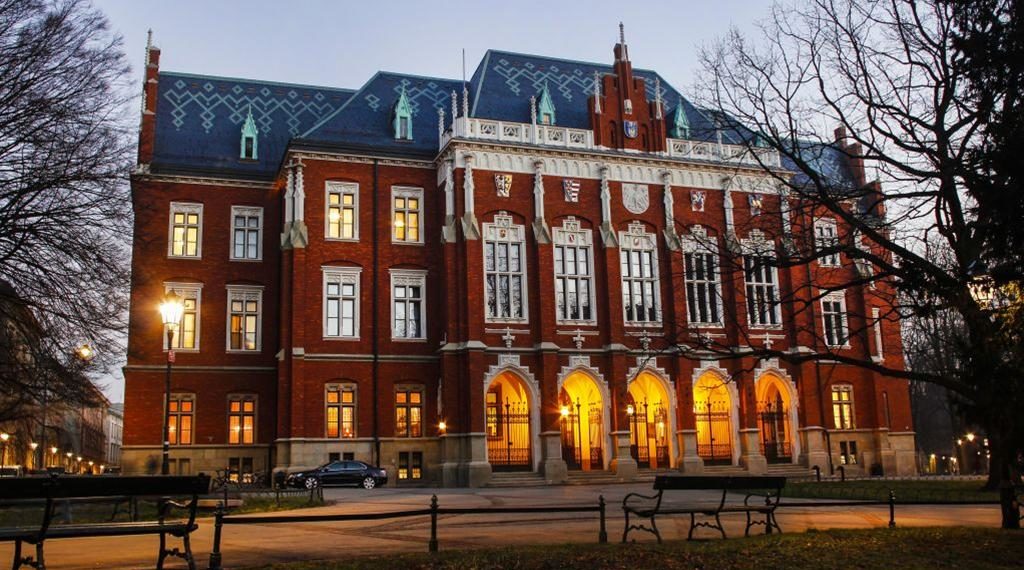
(image source: Krakow.wiki)

We received the following message from  Paulina Kamińska:

On 8–10 October 2025, the Faculty of Law and Administration of the Jagiellonian University in Krakow hosted the 3rd Central and Eastern European Legal History Conference. The conference was held in a stationary format at Collegium Novum and Larisch Palace at 12 Bracka Street in Krakow.
This was the third conference in this series, with previous ones held at the University of Vienna (2019) and Pázmány Péter Catholic University in Budapest (2023). This year's edition has been prepared by the Legal and Historical Departments of the Faculty of Law and Administration of the Jagiellonian University (Scientific Committee: prof. dr hab. Dorota Malec, dr hab. Zdzisław Zarzycki, prof. dr hab. Andrzej Dziadzio, ks. prof. dr hab. Franciszek Longchamps de Bérier, dr hab. Iwona Barwicka-Tylek, dr hab. Izabela Lewandowska-Malec, prof. UJ, prof. dr hab. Krystyna Chojnicka; members of the Organizing Committee: Dr hab. Maciej Mikuła, prof. UJ, Dr Anna Ceglarska, Dr Paulina Kamińska, Dr Mateusz Mataniak, Mgr Wiktor Dziemski, Mgr Izabela Wasik, Mgr Paweł Kaźmierski), in cooperation with the Critical Heritage Studies Hub Flagship Project and the editorial team of the journal ‘Cracow Studies of Constitutional and Legal History’. The event was held under the patronage of the Rector of the Jagiellonian University, the Mayor of Krakow and the Polish Society for the History of Law. TVP3 Krakow provided media patronage. The conference was attended by over 100 researchers from European countries: Austria, Belgium, Croatia, the Czech Republic, Germany, Poland, Romania, Serbia, Slovakia and Hungary. The conference languages were English and German.
During the conference, participants presented papers related to the history of law in Central and Eastern Europe. They shared the results of their research and enriched the discussion. The program included 21 different panels, which can be viewed here: https://ceelhc.confer.uj.edu.pl/programme
The book of abstracts has been prepared (available here: https://ceelhc.confer.uj.edu.pl/book-of-abstracts).
It is worth mentioning that on the last day of the conference, after the thematic sections had ended, a 3MT (Three Minutes Thesis) competition was held. Moreover, the attraction was a tour of Collegium Maius, the oldest university building.


28 May 2025

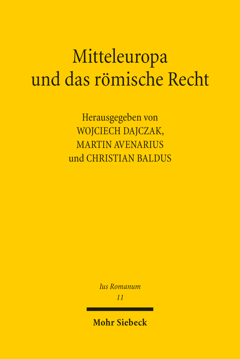
BOOK: Wojciech DAJCZAK, Martin AVENARIUS, Christian BALDUS (eds.), Mitteleuropa und das römische Recht. Methodische Herausforderungen an die Romanistik im Kontext der neuen politischen Ordnung nach dem Ersten Weltkrieg [Ius Romanum; 11] (Tübingen: Mohr Siebeck, 2025), 319 p., ISBN 978-3-16-163956-2

Cover von 'undefined'
ABOUT THE BOOK:
 
Paul Koschakers 1947 publiziertes Buch Europa und das römische Recht löste Diskussionen und Kontroversen über die kulturelle Bedeutung des römischen Rechts für die europäische Rechtsidentität und den Verlauf der Ostgrenze Europas aus. Der vorliegende Band nimmt Bezug auf Koschakers Werk. Die Bedeutung des römischen Rechts für die Rechtsidentität Mitteleuropas nach dem Ersten Weltkrieg stellt sich hier und heute völlig anders dar als bei Koschaker und in der von ihm inspirierten Diskussion. Das Leitmotiv besteht in der Frage, ob und wie methodische Innovationen und Probleme der römisch-rechtlichen Forschung, die vor allem aus Italien und Deutschland bekannt sind, das Studium des römischen Rechts in den Ländern beeinflussten, die nach dem Ersten Weltkrieg in Mitteleuropa wiedergeboren oder gegründet wurden. Grundlage hierfür sind Rekonstruktionen methodischer Profile ausgewählter Romanisten aus der Region.
 
TABLE OF CONTENTS:
 
Joanna Kruszyńska-Kola: Römisches Recht an den mittelosteuropäischen Universitäten in der Zwischenkriegsperiode (1918-1939) - Bulgarien / Konstantin Tanev: The Beginning of History of Law And Roman Law Studies and the Changes of Scientific Method during the Interwar Period in Bulgaria - Estland / Hesi Siimets-Gross/Marju Luts-Sootak: Methodenwechsel durch Generationenwechsel - Romanistik an der estnischen Universität zu Tartu - Lettland / Janis Lazdins/Sanita Osipova: Das Studium des römischen Rechts in der Lettischen Republik in der Zwischenkriegsperiode (1919-1940): Professor Benedikt Cornelius Georg Frese, Professor Vassily Sinaisky und sein Schüler Voldemars Kalninsch - Polen / Wojciech Dajczak: Franciszek Bossowski - ein Privatrechtler, der sich im wiedergeborenen Polen dem römischen Recht widmete - Franciszek Longchamps de Bérier: Borys Łapicki: Marxism as a Remedy for the Crisis in Roman Law - Rumänien / Mihnea-Dan Radu Ștefan Longinescu and Constantin Stoicescu - Important Romanists of the Interwar Period - Sowjetrussland / Martin Avenarius: Bürgerliches Recht im revolutionären Russland. Verteidigung und Fortentwicklung des bedrohten Privatrechtsdenkens bei Pokrovskij und Kantorovič - Tschechoslowakei / Jakub Razim: Miroslav Boháček: Ein tschechoslowakischer Wissenschaftler von europäischem Rang - Pavel Salák jr.: Heyrovský und Sommer - Gründer und Nachfolger - Ungarn / Gergely Deli: Der Grosschmid-Effekt - oder ein Paradigmenwechsel in der ungarischen Romanistik - Emese Újvári: Methodenkonformität der ungarischen Romanistik? Anhaltspunkte aus der ersten Hälfte des 20. Jahrhunderts im Werk von Géza Kiss und Kálmán Személyi 
 
Find more here.

30 June 2023

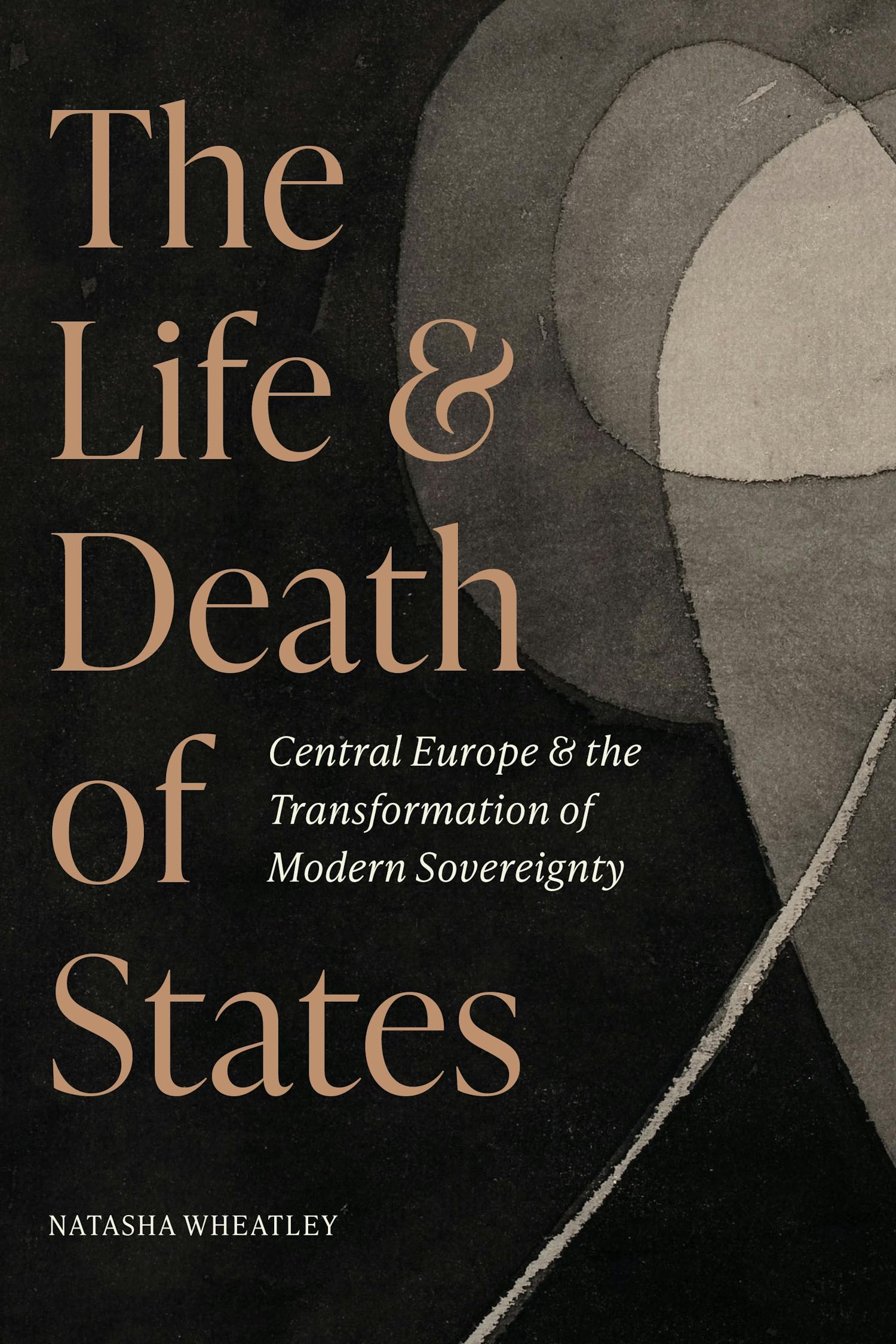
BOOK: Natasha WHEATLEY, The Life and Death of States: Central Europe and the Transformation of Modern Sovereignty (Princeton, NJ: Princeton University Press, 2023), 424 pp, ISBN 9780691244075, $45

(image courtesy: Princeton University Press) 

Book description: 
Sprawled across the heartlands of Europe, the Habsburg Empire resisted all the standard theories of singular sovereignty. The 1848 revolutions sparked decades of heady constitutional experimentation that pushed the very concept of “the state” to its limits. This intricate multinational polity became a hothouse for public law and legal philosophy and spawned ideas that still shape our understanding of the sovereign state today. The Life and Death of States traces the history of sovereignty over one hundred tumultuous years, explaining how a regime of nation-states theoretically equal under international law emerged from the ashes of a dynastic empire.

Natasha Wheatley shows how a new sort of experimentation began when the First World War brought the Habsburg Empire crashing down: the making of new states. Habsburg lands then became a laboratory for postimperial sovereignty and a new international order, and the results would echo through global debates about decolonization for decades to come. Wheatley explores how the Central European experience opens a unique perspective on a pivotal legal fiction—the supposed juridical immortality of states.

A sweeping work of intellectual history, The Life and Death of States offers a penetrating and original analysis of the relationship between sovereignty and time, illustrating how the many deaths and precarious lives of the region’s states expose the tension between the law’s need for continuity and history’s volatility.
Table of contents: 
Introduction
Chapter 1: Constitution as Archive: Drafting the Empire, 1848-1860s
Chapter 2: The Secret Science of Dual Sovereignty: 1867 and After
Chapter 3: Fictional States: Lands and Nations
Chapter 4: Pure Theory: Jellinek and Kelsen Reinvent Legal Philosophy
Chapter 5: What is a New State? 1919 in the History of the Austro-Hungarian Empire
Chapter 6: State Birth at the Frontier of Knowledge: Reimagining International Law from Postimperial Vienna
Chapter 7: Sovereignty in Sequence: Law, Time, and Decolonization 
Conclusion: The Temporal Life of States

About the author: 
Natasha Wheatley is assistant professor of history at Princeton University. She is the coeditor of Remaking Central Europe: The League of Nations and the Former Habsburg Lands and Power and Time: Temporalities in Conflict and the Making of History. Her writing has appeared in Past & Present and the London Review of Books.
More information can be found here. 

23 June 2023

BOOK: Emőd VERESS (ed.), Constitutional History of Transylvania [Studies in the History of Law and Justice, eds. Mortimer SELLERS & Georges MARTYN; 25] (Heidelberg: Springer, 2023), XIII + 373 p. ISBN 978-3-031-22165-1, € 169,59

(image source: Springer)

Abstract:

This book examines the constitutional history of Transylvania, a region of Central Europe that has experienced a compelling series of historical events and been governed by a variety of ancient, medieval, and modern entities, as well as its own peoples, who from time to time have jointly or separately exercised their right to self-governance. The book’s main goal is to provide, for the first time in English, a comprehensive source for those interested in the variety of states, constitutional and public legal orders which have succeeded one another during Transylvania’s tumultuous history. It serves to underline the region’s uniqueness as a space where (for better or worse) several nationalities, multiple religions and varied cultures have had to find a way to get along, under the pressures of external state and constitutional orders. It seeks to show both the positive and the negative solutions found, which advanced or hindered this goal of organised coexistence.
On the editor:
Emőd Veress is a distinguished professor of law, member of the faculty of the Sapientia Hungarian University of Transylvania, and Director of its Department of Legal Studies. His publishing career extends to numerous works in the Romanian, Hungarian and English languages, in the fields of commercial, economic and public (constitutional) law. As a high recognition of his academic achievements in 2016 he has been inducted into the Hungarian Order of Merit.

Read the book here (DOI 10.1007/978-3-031-22166-8) 

09 January 2023

BOOK: Patrick MILTON, Intervention and State Sovereignty in Central Europe, 1500-1780 (Oxford: University Press, 2023). ISBN: 9780192871183, pp. 320, $110.00


(Source: OUP)

ABOUT THE BOOK

Interventions in other states on behalf of their subject populations is often portrayed as a novel phenomenon in state practice, one which breaches the old principle of sovereignty. But is this practice really so new? Patrick Milton argues that such interventions for the protection of other rulers' subjects occurred frequently as far back as the sixteenth, seventeenth, and eighteenth centuries. It is the first detailed study of interventions in the early modern period and focusses on central Europe, in particular the Holy Roman Empire. It therefore challenges the common view that in the period after the Peace of Westphalia (1648), the legal scope for, and occurrence of, intervention, were reduced. The book sheds new light on the geopolitical and legal interconnections between the old German Reich and Europe, while also providing comparative insights. It investigates the norms inherent in central European interventions and thereby contributes to a better understanding of the political and legal culture of the Empire, while also assessing the relative importance of geopolitical considerations in such undertakings.

ABOUT THE AUTHOR

Patrick Milton is the co-author of the book Towards a Westphalia for the Middle East (2018, with Michael Axworthy and Brendan Simms). He has written for several publications, including The English Historical Review, Foreign Affairs, German History, European History Quarterly, The New Statesman, Journal of the History of International Law, and Central European History. He studied, researched and taught history and international relations at Warwick, Mainz, Berlin, and Cambridge, where he was a Research Fellow after receiving his PhD.

TABLE OF CONTENTS

Introduction
1. Legal foundations: Imperial constitutional law and the Law of Nations and Nature
PART ONE. European Interventions in Central Europe
2. Interventions in central Europe I: c.1500-1618
3. Interventions in central Europe II: 1618-1645
4. Guarantees and interventions: European powers and the Empire, 1645-1780
PART TWO. Intervention as Judicial Execution within the Holy Roman Empire
5. Intervention in defence of mediate subjects: the smallest territories, c.1500-1780
6. Intervention in small principalities: the case of Nassau-Siegen, 1699-c.1724
7. Intervention in medium-sized principalities: the case of Mecklenburg-Schwerin 1713-1730
Epilogue


More information with the publisher.