Search

Showing posts with label Conference Report. Show all posts

22 October 2025

CONFERENCE REPORT: 3rd Central and Eastern European Legal History Conference (Cracow: Jagiellonian University, 8-10 OCT 2025)


(image source: Krakow.wiki)

We received the following message from  Paulina Kamińska:

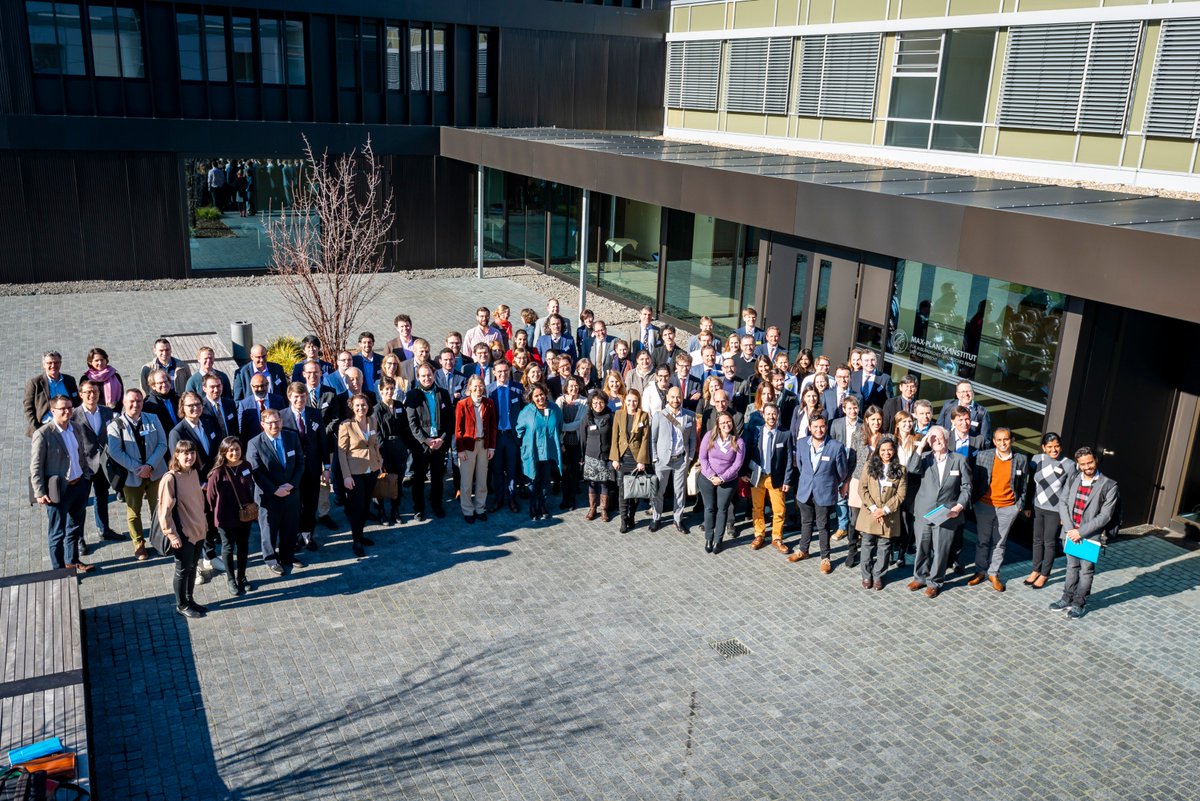
On 8–10 October 2025, the Faculty of Law and Administration of the Jagiellonian University in Krakow hosted the 3rd Central and Eastern European Legal History Conference. The conference was held in a stationary format at Collegium Novum and Larisch Palace at 12 Bracka Street in Krakow.
This was the third conference in this series, with previous ones held at the University of Vienna (2019) and Pázmány Péter Catholic University in Budapest (2023). This year's edition has been prepared by the Legal and Historical Departments of the Faculty of Law and Administration of the Jagiellonian University (Scientific Committee: prof. dr hab. Dorota Malec, dr hab. Zdzisław Zarzycki, prof. dr hab. Andrzej Dziadzio, ks. prof. dr hab. Franciszek Longchamps de Bérier, dr hab. Iwona Barwicka-Tylek, dr hab. Izabela Lewandowska-Malec, prof. UJ, prof. dr hab. Krystyna Chojnicka; members of the Organizing Committee: Dr hab. Maciej Mikuła, prof. UJ, Dr Anna Ceglarska, Dr Paulina Kamińska, Dr Mateusz Mataniak, Mgr Wiktor Dziemski, Mgr Izabela Wasik, Mgr Paweł Kaźmierski), in cooperation with the Critical Heritage Studies Hub Flagship Project and the editorial team of the journal ‘Cracow Studies of Constitutional and Legal History’. The event was held under the patronage of the Rector of the Jagiellonian University, the Mayor of Krakow and the Polish Society for the History of Law. TVP3 Krakow provided media patronage. The conference was attended by over 100 researchers from European countries: Austria, Belgium, Croatia, the Czech Republic, Germany, Poland, Romania, Serbia, Slovakia and Hungary. The conference languages were English and German.
During the conference, participants presented papers related to the history of law in Central and Eastern Europe. They shared the results of their research and enriched the discussion. The program included 21 different panels, which can be viewed here: https://ceelhc.confer.uj.edu.pl/programme
The book of abstracts has been prepared (available here: https://ceelhc.confer.uj.edu.pl/book-of-abstracts).
It is worth mentioning that on the last day of the conference, after the thematic sections had ended, a 3MT (Three Minutes Thesis) competition was held. Moreover, the attraction was a tour of Collegium Maius, the oldest university building.


23 June 2020

CONFERENCE REPORT: Online Symposium on the Society's Journal Comparative Legal history (10 June 2020)

(image: the School of Athens, Rafael; source: Wikimedia Commons)

On 10 June 2020, the first Zoom symposium of Comparative Legal History, the society's peer reviewed journal (Routledge) was held from 10:00 to 12:00 CET. This symposium was attended by 50 scholars from various continents and legal traditions. 

Outgoing editor-in-chief Heikki Pihlajamäki introduced Agustín Parise (Maastricht) as his successor, and presented the other members of the editorial team: articles editor Jacqueline Bemmer, book review editor Marianne Vasara-Aaltonen, copy editor Emmanuel Van Dongen and copy-editor Emilia Mattaix Ferrándiz. The new editorial team had the opportunity to present their background and vision for the future of the journal. 

Two keynote interventions of 15 minutes were presented. The speakers have been so kind as to share a summary:

Prof. Shaunnaugh Dorsett (University of Technology, Sydney):
What is the remit of comparative legal history? What ought it to be? What might this mean for the Society’s Journal? In recent years comparative legal history has sought to shrug off the shackles of paradigmatic comparative legal history – history where the comparative unit is nation state (or a region of it). Over the last 25 years, in response to an increased global consciousness and to post-colonial critique and to the limits of national-based histories that these have revealed, how we think about doing history has changed, in some ways profoundly. We have seen the rise of transnational history and global history in part as a response to these forces. And it seems clear comparative legal history needs to respond to these as well. This raises the question of how does comparative legal history do so without falling into transnational or global history (assuming we want it to retain an identity separate from these)? This is the clear risk of an expansive approach that addresses these concerns. There is now I think a continuum between comparative, transnational and global history. The boundaries are somewhat porous and many pieces that can be described as comparative are also transnational. I think it inevitable that if we look at an expanded view of comparative legal history which is open to the global and to connectedness then it may also be fall into the broad remits of transnational and even global history. But the reverse is not necessarily true – global or transnational history may not always be comparative (although it often will be). It is after all the compare at the heart of comparative legal history that makes it distinctive and allows it, if we want this, to retain an identity.
 What might compare mean and include then? So here I take compare somewhat literally: to compare is to think of one thing in relation to another. But it is not necessarily to set two (possibly similar, possibly not) things side by side. Thus ‘compare’ could (and should) be broad an inclusive. A list might include: an examination of a legal form or development in a single site, but where that examination is seated in a broad context of the intellectual and practical forces arriving from outside which, along with local forces, shape its development and evolution; local developments or legal forms which in part mimic broader Empire or transnational forms (slavery is an obvious example) but which show the political or economic or other contingency of their local development; work focusing on local forms as a result of legal hybridisation; mapping the ways in which legal forms move around a region or Empire, finding new form in new locales; legal personnel and laws which move between centre and periphery (or better still across the globe rather than linearly, missing out the centre entirely). Such work would de-centre Europe (or any Imperial power, located in Europe or not) and re-write movement and comparison from the perspective of the periphery; engagements with plurality. This is broad; but it is all comparative. It is both internal and external. And it all has at its heart ‘compare’. For the Journal my wish list is that this should mean a greater engagement with work from the Global South; work which engages comparisons between Empires; comparisons written from the periphery and which speak back to Europe; better conversation between those working in civil and common law traditions.
Prof. Matt Dyson (Oxford, President of our Society):
Our reflection on what we are trying to do as comparative legal historians is an important part of doing it well. There is room for a great variety of approaches and subject matters, so long as scholarly rigour and care are foremost. For me personally, I have been drawn to the power of explaining why particular legal events have happened, constructs selected and ideas spread. That “micro-purpose” is particularly challenging, but offers insight that can be valuable for a very wide set of audiences.


Doing comparative legal history well involves difficult choices of priority, or “macro-purpose”, of the vast amount of interesting and difficult questions that merit attention, and the joy of intellectual enquiry. Part of that involves an interrogation first as individuals, and then as groups of scholars, over what merit our work has, and what purposes we are going to purpose. That involves challenging questions that, in the tradition of scholarship we aspire to uphold, we must not shy from asking, seeking wisdom to understand, and then trying to over time to improve our answers.


Greater means of collaboration and co-operation seem essential for doing work that can, at a reasonable pace, shed light on important questions not isolated instances unsewn together. We have opportunities across disciplines, as well as across universities and countries. We need to think about what we are publishing, its value and whether it could be better if it was wider, deeper and with more insight. Part of that will involve helping funding and administrative bodies to understand the longer term gains, rather than counting publications. I have seen great generosity from colleagues all over the world, in supporting each other, harnessing that to produce work that is valuable for all over the long term outcomes for all must be one of our goals.


It is also particularly important to make sure our work is accessible, visible, trackable and in effect, promulgated carefully. The risk of not doing so, and of sources overwhelming a legal system’s ability to address them is well known. We can see examples from the /ius commune/ to the more recent digitisation and neutral reporting of case decisions which in the last two years has covered both common law and civil law jurisdictions. It is so easy for sources to overwhelm in number and the best work to be lost. As the excellent work of the journal, and the blog, shows, there is an incredible standard being reached; so much worth sharing.
In the discussion which followed, a number of topics were addressed, including the following:
  • the impact of Digital Humanities, and the suggestion to devote a thematic issue to this methodological innovation (Emmanuel Van Dongen, Florenz Volkaert, Mia Korpiola)
  • the role of philosophy in the discipline of comparative legal history (Adolfo Giuliani)
  • the role of technology, symbolism and the role of law as science (Katharina Isabel Schmidt)
  • the persistence of national legal histories (Helle Vogt)
Each of the the editors on the then added their thoughts and reflections on the role of the discipline and the journal

Prof. Dyson and Prof. Philajamäki thanked the ESCLH Blog team (Frederik Dhondt, Arthur Barretto, Filip Batselé, Stefano Cattelan, Antoni Lahondes and Christel Annemieke Romein), for its relentless efforts in keeping our Society's daily stream of news running.

04 March 2019

CONFERENCE REPORT: "Provoking the Single Story" on the MPIL/JHIL-Conference “Politics and the Histories of International Law” (Heidelberg, 15-16 FEB 2019) (by dr. Sebastian SPITRA, Vienna)

(image source: MPIL, Twitter)

Telling a history of international law is every time a mode of echoing oneself in the present. The danger of a single story and its oppressive force to identities and peoples that are misrepresented or not represented in it have been stressed in recent years by many scholars, but not only them. It was perhaps most remarkably and famously spelled out by the Nigerian novelist Chimamanda Ngozi Adichie in a TED talk already ten years ago: “I loved these American and British books I have read [as a child], they stirred my imagination and opened up new worlds for me. But their unintended consequence was that I did not know that people like me could exist in literature.”

Adichie critiques the one-way street of Euro- and U.S.-centric master narratives that make pupils, students and teachers in the Global South more acquainted with Western cultures than with their own historical heritage and identity. Would there be just one takeaway of the conference “Politics and the Histories of International Law”, it is that the traditional subject of master narratives is increasingly becoming the object of counter-narratives.

The turn to the history – or to the historiography, as it was claimed by several participants – of international law took place almost 20 years ago and has been inaugurated by Martti Koskenniemi’s book The Gentle Civilizer of Nations, published in 2001. But this account in itself of course is a particular narrative and founding myth of how the turn came about. In the pre-workshop to the conference Sundhya Pahuja, international law professor in Melbourne, contrasted this invention of the “turn” with a longer history of counter narratives from the global south. Pahuja took her study of the former Indian prime minister and icon of the independence movement Jawaharlal Nehru as example to illustrate the important role the rewriting of world history and the history of international law played in the struggle for independence. In his so-called prison letters, Nehru sketched his understanding of rival international laws and a non-Eurocentric account of world history. Despite these early efforts to historicize international law, the institutionalization of this discipline and the founding of the Journal of the History of International Law (JHIL), the co-convener of the conference, followed only after European and U.S. scholars realized the importance of new histories for international law.

The conference took a substantial effort to reflect on this bias of and within the discipline. A spring-like Heidelberg offered in the midst of February the venue for almost 40 presentations in nine panels and two plenary sessions that took place in the newly enlarged building of the Max Planck Institute for Comparative Public Law and International Law. The program included several papers that were concerned with making underrepresented groups or nations in the history of international law more visible. The following report will just be able to pick up and discuss a portion of the topics and papers at the conference.

In her keynote lecture, Sundhya Pahuja asked the question, if we can actually speak of one international law or if we have to speak of plural international laws? An argument that is in line with the recent scholarship on comparative international law. Pahuja denounced the idea of an anti-pluralistic international law as an exclusionary and racial project and she also sees tendencies towards an “imperial nostalgia” in current debates and several of the latest scholarly projects. However, her most impressive example came from popular culture. She deconstructed a scene from the movie “The Darkest Hour” that whitewashed the structural racism of that time in a fictive portray of an underground ride leading to a joint poem recitation of Winston Churchill and a black man.

Pahuja emphasized the plurality of the “laws of encounter” in the history as evidence for her claim. Her argument was based on the observation that the historiography of international law started in the course of the 19th century when European imperialism was looming. This was also the birth of the myth of Westphalia as crucial point for European international law. Subsequently, the imperial legal techniques of positivism and jurisdiction, which Pahuja described as “jurisographic” acts, served to give unity and normativity to the “Western” international law. Pahuja put the present relevance of this insight together with the “imperial nostalgia” and concluded that structural injustice should not be comforted with pointing at differences of identities or cultures as they are the pretext for prolonging the unequal status quo.

A whole stream of papers at the conference reflected how empires imposed historically such a uniform international law and with what consequences. These presentations aimed to set the stage for new discourses in different legal fields and introduce into the ambivalences and critiques of historiography master narratives in several fields in order to open up discourses and providing counter-narratives. They also stressed the resistance against the empire. Maria Adele Carrai (Leuven/Harvard) gave insights of political and linguistic specialties of introducing the discipline of international law in China; she pointed out how this discipline also produced particular images of Chinese historical international law for strategic political reasons. Angelo Dube and Lindelwa Mhlongo from the University of South Africa emphasized the importance of a fresh view on pre-colonial Africa and suggested to study the continent’s diplomatic history as early evidence for a distinct international law. The example of Hongkong served Basel based historian Madeleine Herren-Oesch to explore the use of the concept of extraterritoriality in a global microhistory.

In this line, but with a different methodological claim, appeared Jacob Cogan Katz (Cincinnati) evening keynote plea for a “social history” of international law. He requested more scholarship on subjects and actors outside the traditional box of international law. This call is also reflected in his widely read review of the Oxford Handbook of the History of International Law. Some presentations reflected this call, such as Radhika Jagtap (New Delhi), who provided a paper on a social movement perspective of the history of international law in India. Further methodological debates arose in several panels and discussions throughout the conference, such as in the presentations of Jan Lemnitzer (Odense) and Morten Rasmussen (Copenhagen).

Classical actors of international legal history were discussed in the panel on courts, tribunals and dispute settlement mechanisms in international law. The special role of courts and adjudicative bodies in international law began already before the First World War. Still shortly before 1914, many international lawyers at that time hoped that tribunals and arbitration will provide for a depoliticization and de-escalation of international conflicts. At the same time, such institutions often emerge within a certain local historical context and in the search or defense of an own narrative, such as the history of the Chile’s Truth Commission in 1990 (Valeria Vázquez Guevara, Melbourne) or the Polish-German Mixed Arbitral Tribunal after 1919 (Jakob Zollmann, Berlin). Even the avoidance of history may be foundational for the narrative of a tribunal, as Michel Erpelding (Luxembourg) demonstrated for the European Court of Justice.

International law in times of war and the use of force formed an unsurprising pillar in the program, such as in several conventional conferences about the history of international law. This focus stems not least from the significant anniversary industry in (Western) academia: 1648, 1815 and 1918, just to name three of the most recent, are all connected to peace agreements and also a realignment of international law. These events are studied by a large number of researchers and result in manifold scholarly output. However, the conference speakers took a different approach and highlighted particular aspects of the historiography of international humanitarian law (Rotem Giladi, Jerusalem/Leipzig) or the laws of war during the 19th century (Claire Vergerio, Leiden). Thilo Marauhn (Gießen) examined the role of “international peace” in Henry A. Kissinger’s justifications for the use of force and compared this with the “securitization” in international law. Political scientist Hendrik Simon (Frankfurt) traced the divergence in the scholarly work and the personal opinions in the opus of the international lawyers Rudolf von Jhering, Fedor Fedorovic Martens and Johann Caspar Bluntschli. When they argued for the actual use of force in their national interest, international legal norms tended to become fluid, overstretched or ignored.

Overall, these papers displayed a collection of more or less critical approaches to an important part of the history of international law. What doing “critical” history of international law actually means was part of the final plenary talk of Jean d’Aspremont (Manchester). He demanded more and “truly critical” scholarship and perceived the current historiography of international law still as mostly conservative. In his mind, particularly the encounter with nations outside the global north is still mostly looked at from a Western perspective.

In contrast, Nehal Bhuta (Edinburgh) described in his plenary lecture critical historiography as opposed to monumental historiography with prominent reference to Max Weber’s “politics as a vocation” (written in Heidelberg). Bhuta characterizes the current “turn” to history in international law in Nietzschean terms as driven by a change of value commitments that lead to a series of reconsiderations in the history of international law. This includes the topics that are regarded as worthy to research, the selection of sources and the ideas that we value. Bhuta reaffirmed that a certain relation to the past in the form of a particular history is always necessary for a political community and system to empower subjects. He left the audience with the epistemic question: “What is the relationship to the past that international law has that it makes it so important for us to re-interrogate?”

This last panel eventually addressed the elephant in the room: The Jamestown piece that led to the careful organization of the conference by the MPIL and the JHIL. It is a text published 2017 in the Journal of the History of International law that academically and ethically misused the term “genocide” in an anachronistic way to attribute it to an act of anticolonial violence of first nation Americans against white settlers in 1622. Henry Jones and Aiofe O’Donoghue (Durham), who drew the attention to this text in their blogpost on critical legal thinking, were invited speakers and recaptured the content of the article. Both talked about its implications and urged for more sensitivity in the teaching of international law and stressed more historical awareness as an essential part.
Jones and O’Donoghue demanded from the journal to withdraw the article. Anne Peters, the editor-in-chief, replied by describing the several steps the journal has taken and the processes that have been adopted to improve the peer review since then. They left the audience with a controversy about how far the article was an example of unreliable data and ethical misconduct in the terms of general guidelines for academic publications. Should the text have been withdrawn by the publishers as demanded by a range of scholars? And to whom does this question actually matter?

Not even a handful of the 75 signatories to the letter are affiliated in research institutions in the Global South. This is in no way meant to relativize the severity of the incident. Nevertheless, I want to draw with that fact the attention to a structural implication. The low number of signatories from the Global South should not be read as a lack of interest in the topic of scholars in that regions, but as a scarcity of resources. Often for very pragmatic reasons they are not part of the vital academic networks built up since the “turn to history” in international law; thus, the integration of some has had also exclusionary aspects for others. The access to global academic publishing is a prerequisite for a vital and legitimate of academia, however, hardly affordable outside of top universities or research institutes. The participation in a truly global legal discourse demands a number of steps, but open access to the important journals and the possibility to frequently hear their voice in them would be one very significant.


Sebastian M. Spitra is currently a Fulbright and Grotius Fellow at the University of Michigan Law School.

The conference can also be revisited browsing through the #JHIL2019-hasthag on twitter.

05 September 2018

CONFERENCE REPORT: Captivity in War: A Global Perspective (23-24 March 2018, Zürich)


(Source: ASHSM)

Hsozkult.de has published a conference report on the “Captivity in War” conference that was held previously this year in Zürich (Tagungsbericht: Captivity in War: A Global Perspective, 23.03.2018 – 24.03.2018 Bern, in: H-Soz-Kult, 05.09.2018, <www.hsozkult.de/conferencereport/id/tagungsberichte-7855>.). 

First paragraph:

In their opening remarks, TAMARA BRAUN (Zurich) and MARCEL BERNI (Zurich) outlined some of the current approaches to the study of captives in war. They highlighted the importance of looking beyond western theatres of war to lesser-known wars and the difficulties of the term "Prisoners of War" (POW), as it is limited to a specific type of prisoner and frequently used in a legalistic manner. Therefore, they argued in favour of the broader term of "captives" as it includes non-military personnel as well as being better suited to acknowledge the variety of definitions over time and in different places.

Read further on HSozKult.

11 July 2018

CONFERENCE REPORT: The Parisian peace treaties (1919-1920) and the emergence of modern international law (JHIL/Tilburg University, 17 May 2018) (by Prof. dr. Miloš Vec/Univ. Vienna-IMW)


Prof. dr. Miloš Vec (Univ. Vienna/IMW) published a conference report on the JHIL symposium "The Parisian Peace Treaties (1919-1920) and the emergence of modern international law (see earlier on this blog). The text appeared in the Frankfurter Allgemeine Zeitung, nr. 152 (4 July 2018), p. 3 and can be read here above, by clicking on the image.

(source: ESILHIL blog)

06 February 2017

CONFERENCE REPORT: International Law and the Long Nineteenth Century (University of Leuven, November 24-25, 2016) by Ana Delić, Tilburg University

(Image source: F. Dhondt)

Leading scholars as well as junior researchers met in the historic faculty of Leuven University to discuss international law in the long nineteenth century. The event began with a warm welcome by the university’s dean, Prof. Bernard Tilleman who revealed a most interesting anecdote for the international legal historians assembled: the Peace of Versailles had obliged Germany to restore the library of the university. This was followed by warm welcome addresses by Prof. Randall Lesaffer and Dr. Inge van Hulle, the organizers of this well-orchestrated event.


Day One

Panel One: The Eighteenth-Century Fall-Out of Nineteenth-Century International Law (Chair: Randall Lesaffer)
Member of the International Court of Justice, James Crawford considered the basis on which France participated in the Congress of Vienna, the status of Napoleon during the Hundred Days and the legal basis for French responsibility for war damages resulting from the Hundred Days. Crawford eloquently argued that the Bourbon dynasty was legitimized by the prevailing monarchic theory of sovereign power. On the other hand, the status of Napoleon during the Hundred Days was less clear. Certainly, he was not a head of state and as such the basis of reparation for damages incurred by France during this period was discussed on the basis of the theory of responsibility.

Camilla Boisen argued that Edmund Burke bridged the two concerns of international law: authority and enforcement. It was Burke who provided the conceptual scope needed to resolve the issues of enforcement by prescribing specific common law foundations, binding the legal and the moral in international law and presenting it as domestic law.

Inge van Hulle explored a case-study: the legal connections and regimes that developed between British imperial agents and indigenous African communities living in West Africa in the period prior to the Scramble. Anglo-African international relations initially developed on the basis of mutuality and relative equality between parties, but simultaneously, there were imperial legal techniques as well(e.g. extraterritorial jurisdiction, anti-slave trade treaties, the extension of protection to African communities).

(image source: F. Dhondt)

Panel Two: Neutrality (Chair: Inge Van Hulle)
Frederik Dhondt’s discussed how Belgium’s compulsory neutrality  of the 1810 to the 1830s was just one out of multiple tools to guarantee ‘le repos de tous’ and in reality was mostly superficial. Belgium’s compulsory neutrality arose out of a particular socio-historical context –the expansionist and revisionary stance of Napoleon III- and resulted in an interesting reception, including  the view of it as an economic advantage, a legitimation of colonialism, and foremost as a threatened status.

Shavana Musa examined the law of neutrality focusing on the conflicts during the Latin American Wars of Independence. The role of neutrality was discussed as the means of enhancing imperial and commercial power, as a peace-making tool and as a body of law that provided individual (justiciable) rights within the international sphere.

Viktorija Jakimovska’s discussed how throughout the Greek War of Independence, Great Britain generally avoided being dragged into a war but it eventually wished to influence the outcome of the conflict. From 1826-1827, Britain failed to adhere to the essentialia neutralitatis notwithstanding the fact that it never officially renounced the neutrality of its conduct.

Panel Three: Historiography of International Law (Chair: Frederik Dhondt)
 Miloš Vec’s pinpointed key historiographic trends of the nineteenth-century including sources of international law, the conception of the public law of Europe, the so-called shift to a so-called global international law, the regulation of warfare and new technologies around 1900, and state practice.

Jan Lemnitzer examined how the 1850s was a crucial decade in transforming the system of the European law of nations into a universal system of international law. The proliferation of multilateral law-making treaties with the Declaration of Paris in 1856, the growth of international trade, and the rise of independent Latin American states resulted in further contacts between European and non-European states. However, the rise of exclusion in international law was exemplified by the spread of detailed rules for ‘civilized war.’


Day Two

Panel One:  Professionalization and International Law (Chair: Gabriela Frei)

 Stephen Neff discussed how the Darwinian revolution gave rise to American anthropologist Lewis Henry Morgan’s three-fold categorisation of human societies as savage, barbarous and civilised. This found a reflection in the international-law writing of James Lorimer buttressed by imperialistic policies of the European states and, generally, a hierarchical outlook on the part of international lawyers. Evolutionary thought also influenced a revival of natural-law modes of thought as the only acceptable normative regulation of relations between civilised and savage states. In stark opposition to the evolutionary scheme was diffusionism exemplified by Herbert Spencer’s theory of a general progression from militaristic to industrial modes of life. Diffusionism did not gain much traction with nineteenth century international lawyers.

Vincent Genin analysed how the Institut de Droit International (founded in 1873) represents the first major step in the institutionalization of the discipline. The speaker  discussed how in the last quarter of the nineteenth century, the IDI juggled between its self-affirmed role as the ‘public conscience of the civilized world’ versus historic tides of nationalism, the multiplication of conflicts and colonial rivalries.

Ana Delić discussed the formative interactions between comparative law and private international law during the modern period. Comparative law was instrumental to modern private international law in the civil law and common law traditions in three ways: 1) scholars studied private international legal approaches comparatively; 2) the comparative approach was a key aspect of preliminary materials aiding in private international law-making; and 3) courts relied on a comparative study of conflicting rules in order to assess which is the applicable law or jurisdiction.

(image source: F. Dhondt)

Panel Two: Empire and the Periphery in the Nineteenth Century (Chair: Camilla Boisen)
Andrew Fitzmaurice explored the standing of non-European nations in the work of the nineteenth century jurist Sir Travers Twiss. Archival materials were presented which painted a colourful picture of Twiss’ personal life, including his marriage to a prostitute. This union eventually destroyed his career. In terms of Twiss’ legacy to international legal history, he had advocated the view that non-European states (including China, Japan, the Ottoman Empire, Egypt, and the ‘African Slave-states’) were equals with European powers in the law of nations. His view sprung not from humanitarian concerns but from a concern for the duties (and not rights) of these nations.

Stefan Kroll discussed the Shanghai International Settlement (1863-1943), a zone within the area of Shanghai which was detracted from the authority of Chinese rule, and which was controlled by the self-government of foreign merchants (the Municipal Council). While the mixed court was expected to apply Chinese norms, in reality, foreign norms and judicial practices were being introduced. The Su bao-case (1903) illustrates the mixing of legal systems within the merchant court. This case concerned political radicalism against the Chinese government.

Luigi Nuzzo presented an Italian history of international law, focusing on Pasquale Stanislao Mancini and his pragmatic approach to international law. Mancini’s imprint on international law is exemplified by his insistence on the principle of nationality but his legacy has not been given its proper due. Analysing forensic memories, legislative deeds, parliamentary speeches, editorial projects rather than doctrinal works provides further food for thought with regards to his contribution.

Panel Three: Individuals and International Law (Chair: Andrew Fitzmaurice)
Gabriela Frei examined the biography of Sir William Jones, a judge at his Majesty’s supreme court of judicature at Fort William, the citadel of Calcutta in Bengal, and a well-known orientalist of the eighteenth century. Jones also wrote the first English translation of Hindu and Muslim laws, and thus made those texts available to the Western world. He believed that only local laws would allow a basis for a fair and just legal system. The paper also discussed the multiple legal systems co-existing at this period in Bengal, which developed legal standards for the commercial enterprise of the East India Company.

(image source: F. Dhondt)

Raphael Cahen retraced the beginning of the Mahmoud Ben Ayed case (1855-1858) through an examination of documents from the archives of Joseph Marie Portalis, a famous judge and diplomat, who had been charged to administer the case. This case involved the extradition of Mahmoud Ben Ayad from France back to Tunisia. Ben Ayad, a famous Caïd and minister of commerce, was charged with embezzlement of state funds.

Raymond Kubben analyzed the conception of statehood within international legal textbooks of the long nineteenth century. The definition of the state in the early period were varied and typically reverted to abstract Roman law or philosophical concepts such as civitas or communitas perfecta. Over the course of the nineteenth century, textbooks would specify the legal concept, slowly forming definitions akin to the one in the 1933 Montevideo Convention.

08 June 2015

CONFERENCE REPORT: “International Law and Arbitration. From the Hague Conferences to the League of Nations. Global and Belgian Perspectives” (University of Antwerp, June 2, 2015) (by Dr. Judit Beke-Martos)


(seminar presenters; source: dr. Judit Beke-Martos)

 
CONFERENCE/SEMINAR REPORT: “International Law and Arbitration. From the Hague Conferences to the League of Nations. Global and Belgian Perspectives” (University of Antwerp,June 2, 2015) (by Dr. Judit Beke-Martos)

 
***

The Research Unit Political History of the University of Antwerp on June 2, 2015 organized an informal seminar entitled “International Law and Arbitration. From the Hague Conferences to the League of Nations. Global and Belgian Perspectives.” The idea was to bring together a group of interested professionals from various disciplines for an interesting and stimulating discussion and exchange of ideas. Such occasions can be very fruitful and useful.

The mid-size group of professors, interested researchers, postdoc fellows, doctoral students and master students from the fields of history, law and political science gathered in an impressive room at the University of Antwerp on that Tuesday morning. The organizer of the event, Henk De Smaele warmly welcomed all participants and introduced the three speakers.

Maartje Abbenhuis, Associate Professor of History at the University of Auckland in New Zealand spoke first. In her talk entitled “A Global History of the Hague Peace Conferences, 1898 – 1914” she shared the preliminary findings of her current research project for which she had been awarded the prestigious Marsden Grant of New Zealand’s Royal Society in 2013. During this three-year undertaking, now in its second year, Professor Abbenhuis aims to emphasize the significance of the 1899 and 1907 Hague Conferences as well as the preparatory works for the third one foreseen for 1915, which never took place. She finds that the role of these events in shaping the ideas on global responsibility is underrepresented in today’s scholarship. Her starting point is a rescript of Czar Nicolas II, who in 1898 called for a conference on – broadly phrased – disarmament. Abbenhuis claims that the mixed responses from both the media and the world leaders at the time already prejudice the potential significance of the subsequent 1899 Hague Conference. She examines the actual outcome of this first Conference in statistical terms as well (a total of 96 delegates meeting for two months and creating three conventions and three declarations) and compares it to the following Conference of 1907 (46 governments sending their respective delegates, thereby nearly doubling the previous participation, sitting for four months and resulting in thirteen conventions and one declaration). Acknowledging that the 1907 Conference was a huge media event, which attracted governments that wished to pursue their individual domestic agenda on a world forum rather than engage in the talks on peace and war, Abbenhuis nevertheless argues that this event also gave room for new players on the international stage who had not been part of the Great Powers so determinative in the 19th century, and that it created a public consciousness of the international law of war.

Vincent Genin, PhD candidate at the Université of Liège, continued the Seminar with his talk – in French, entitled “Juristes, parlementaires et diplomates en Belgique dans le processus menant aux Conférences de la Paix de la Haye de 1875 à 1899/1907” focusing on the Belgian perspective of international arbitration. More specifically, he gave a brief insight into the history of the Belgian regulation’s development and its participants’ take on the role and the institution of international arbitration. He elaborated on the fairly early adoption of international arbitration in municipal law by the Belgian Parliament in 1875, making Belgium one of the first countries to do so, even though the members of its own government were skeptical about it and fearful of its inevitable interference with the country’s sovereignty. Genin introduced Professor Edouard Descamps’ activities and achievements in the preparation of the regulation on international arbitration and elaborated on how this whole process during the last third of the 19th and the beginning of the 20th century had been complex. He summarized by arguing that, from the Belgian perspective, the process of establishing and accepting international arbitration had three main players, who for various reasons formed this debated: England, as a fairly isolated yet significant world power whose own evaluation among the European states changed during this period; the USA, which for the first time claimed its place among Europe’s leading powers and subsequently went on to play a major role in the regulation of international relations; and Italy, as the first country to domestically legislate on international arbitration and also the one representing or highlighting the religious divide between Catholics and Protestants, a significant question in this debate.

Maarten Van Alstein, a researcher at the Flemish Peace Institute (Vlaams Vredesinstituut) was the last speaker. In his talk “A Realist View: The Belgian Diplomatic Elite and the League of Nations” he focused on the Belgian foreign policy and its relation to the League of Nations after the First World War, highlighting the Belgian activism despite neutrality. As it was observed during the discussion, Belgium’s approach towards the League – very nicely introduced by Dr. Van Alstein – was motivated by fear and at more than one occasion, important decisions were made with the primary purpose of securing a guarantee of protection by both the French and the English. This talk examined a timeframe, which Van Alstein divided into two periods, the first between 1919 and 1923, the era of skepticism towards such an international cooperation and the period between 1924 and 1930, where there was already some support for the League, yet politicians remained realistic in their day-to-day decisions. The skepticism may in part be deducted from the disappointment Belgium experienced at Versailles which they had thought of as an opportunity for their national causes. At that stage, since security was Belgium’s number one concern, the League seemed like a risk to the Belgian interests. The only mention of the League back then was Belgium’s wish to have the seat of the League in Brussels, but even that proposal had the underlying consideration of security, as such a location would be better protected and thereby less likely to be attacked. As of 1924 Belgium changed its policy to achieve their persisting goal of securing protection and the League turned from risk into an opportunity. Belgium signed both the 1924 and the 1925 Geneva Protocols as well as the Briand-Kellogg Pact, and established arbitration treaties with several states. The politicians’ realism could nevertheless be observed since though they were positive towards obligatory arbitration, they also acknowledged that it was incapable of solving everything. It was in Locarno that Belgium finally received the guarantee of protection from the English, which it had strived for all those years, and for which it had practically given up its neutrality to support several treaties. Despite the line of development throughout the examined timeframe, by the mid-1930s, Locarno was no longer of such importance and Belgium returned to its policy of independence.  

An interesting and stimulating discussion followed the talks with fruitful exchanges between the neighboring disciplines of law and history and their respective take on this time and events, as well as the possible significance of freemasonry, and the obvious added value of examining the international events from a purely domestic perspective. 


Dr. Beke-Martos (b. 1984) teaches at the University of Mannheim and is the Assistant Director of the Law & Language Center at the FSU Jena, in Germany. She is currently a visiting researcher at the Ghent Legal History Institute, devoting her time to legal history in Europe during the 19th century in a comparative and international perspective. She holds a J.D. and a Ph.D. in Law from the Eötvös Loránd University and an LL.M. in US and Global Business Law from Suffolk University Law School in Boston, MA.

(image source: dr. Judit Beke-Martos)

09 February 2015

CONFERENCE REPORT: Dutch-Belgian Legal History Colloquium (Brussels: VUB, 11-12 Dec 2014) (by Maarten Vankeersbilck, Ghent)


Maarten Vankeersbilck graduated as Master in Law (Ghent, 2011) and took a specialized Master in European and International Law (VUB, 2012). From 1 October 2012 on, he works as an academic assistant at the Ghent Legal History Institute, where he focuses on the codification and development of civil procedure in Belgium, under the direction of Prof. D. Heirbaut.


On Thursday December 11 and Friday December 12, 2014, the Belgian-Dutch Legal Historian Colloquium took place at the Free University of Brussels (VUB, see announcement earlier on this blog). Since the early 1970s, this bi-annual (and at times annual event) has been alternately organized by either a Belgian or a Dutch university.  From the start, this forum promoted inter-universitary cooperation in the Low Countries. Young researchers traditionally receive the opportunity to disperse their findings to their peers. 

Fertile ground indeed, as we were welcomed by professor dr. Dirk Heirbaut (Ghent University), who himself is a longtime participant and presided the first panel on comparative legal history. First speaker was dr. Agustin Parise (Maastricht University) who applied the methodology developed in his dissertation to the case of the Dutch Burgerlijk Wetboek (1838) and the Argentinian Código Civil (1871), studying the influence of aforementioned Burgerlijk Wetboek on Argentines own codification. Next was Dr. Janwillem Oosterhuis (Maastricht University)  who presented his research on the impact of World War I (and its aftermath) on the concept of ‘Unexpected Circumstances’.

The organizer, professor dr. Dave De ruysscher, presided the next panel on Public Law in which Matthias Castelein (Catholic University of Leuven) presented his first findings of his dissertational research on the complicated relationship between the divided local traditions of Corsica and those of the new sovereign rulers of Liguria who had a more egalitarian and centralistic approach. Maarten Colette (Free University of Brussels) closed the morning sessions discussing Rousseau’s concept of liberty sparking a lively discussion on the interpretation of Rousseau himself.

The afternoon session on International Law opened under de presidency of professor dr. Randall Lesaffer (Tilburg University and Catholic University of Leuven). Dr. Mieke van der Linden (Catholic University of Leuven), who recently successfully defended her dissertation, gave us a glimpse on her thesis by presenting Euro-centrism within 19th Century International Law by studying the legal and political justification of New Imperialism (1870-1914). Could international law be applied to all peoples? Was it a European creation or a product of the confrontation between European states with non-European political entities? Shavana Mussa (Tilburg University) took us to the 17th century and discussed the end of the first Anglo-Dutch war (1652-1654) and the negotiations leading up to the Treaty of Westminster (1654). She focused on the remarkable arbitration commission that resulted from it, adding another peacemaking-tool to the arsenal of International Law. From one conflict to another, dr. Frederik Dhondt (Ghent University) discussed the Spanish Succession. He demonstrated how Vattel and Réal de Curban took a different strand of argumentation from respectively a Protestant-Swiss and a French point of view. Both used historical material implying a degree of objectivity but by the selective use of exempla continued the war on paper. Where Vattel rose to fame in International Law, Réal is less known resulting in a one-sided image of the war in legal doctrine.

French revolutionaries committed themselves to draft a constitution that would reconcile the organisation of the French state with modern ideas such as sovereignty of the people and the separation of powers. Amongst other things, this refers to the question of who can declare war, supervise diplomatic relations,… Dr. Raymond Kubben painted the picture of the administrative direction of foreign relations in Benjamin Constants constitutional thinking. Inge Van Hulle (Catholic University of Leuven) closed the first day with a contribution on the concept of ‘sphere of influence’ in International Law (1870-1920). Even though this concept is strongly associated with the Cold War, Ms. Van Hulle proved its relevance  in the international discourse and state practice at the end of the 19th century.

The forum resumed its operations the next day with an extensive session on administrative  and constitutional law under the presidency of Kees Cappon (University of Amsterdam). Nestor professor dr. Paul Nève (Tilburg University) shed his light on the transformations of Maastricht’s double government (the city had two schepenbanken and two ‘mayors’, the bishop of Liège and the duke of Brabant) at the end of the 14th century (1378-1409) and the defining role of Anthony of Burgundy. Lukas van den Berge (Utrecht University) discussed the admissibility of administrative jurisdiction in Dutch doctrine by studying the arguments made in the beginning of the 19th century by legal scholar Antonius Struycken and Jan Loeff. From the Netherlands Brecht Deseure (Free University of Brussels) brought us back to Belgium by studying the (degree of) recuperation of the ideas of old constitutions, as symbols of the old freedoms, by Belgian revolutionaries in 1830 and in which way these constitutions were a beacon of resistance under the French occupation.

After the coffee break, the colloquium resumed with a session on Private Law. Wouter Druwé (Catholic University of Leuven) addressed the question of whether or not the writ of debt was actually an English condictio, Marten Reijntjes (Groningen University) presented a historical perspective on the civil responsibility of judges overstepping the deontological boundaries of their function. Lastly, Benoît Lagasse (University of Liège) presented his planned dissertation on 17th century Liégois lawyer Charles de Méan, detectingthe influence of roman law and Liège customary law aspects of Private Law in Charles de Méans’ work Observationes et res judicatae ad jus civile Leodiensium.


Respecting the chronology, the final panel was  on contemporary legal history. In the spirit of the Belgian-Dutch cooperation, dr. Sebastiaan Vandenbogaerde (Ghent University) discussed the use of Dutch language in Belgium’s legal periodicals and tried to unveil possible international relations, or is law really a nationalist theme? Dr. Bruno Debaenst (Ghent University) on the other hand turned his gaze to the international forum again with a contribution on the cradle of a social Europe indicating the role played by the international congresses on labour accidents and social insurances.

The colloquium was formally closed by the dean of the Brussels Law Faculty, professor dr. Wilfried Rauws, who showed his sympathy towards legal history. He emphasized and reminded the attendees of the importance of legal history and plead for its conservation in Belgian universities. Encouraging, in times were academic curricula are under pressure by an abundance of ever more specialized courses on positive law.