Search

16 February 2022

JOURNAL: Special Issue "Le patrimoine de la Justice" (In Situ. Revue des patrimoines 46 (2022))


(image source: in Situ)

(read more on openedition.org)

WORKSHOP: «Actes à l’infini», des bases de données infinies ? Exploitation des données – Interopérabilité – Convergences (Online/Luxembourg, Université de Luxembourg, 17-18 february 2022)


Workshop organisiert im Rahmen des Projekts “Lotharingien und das Papsttum“ (INTERLOR). Mit Unterstützung der Deutschen Forschungsgemeinschaft (DFG), des luxemburgischen Fonds National de la Recherche (FNR), des Historischen Instituts der Universität Luxemburg und des Historischen Instituts der RWTH Aachen / Journée d’étude organisée dans le cadre du projet « La Lotharingie et la papauté » (INTERLOR). Avec le soutien de la Deutsche Forschungsgemeinschaft (DFG) du Fonds National de la Recherche (FNR) luxembourgeois, de l’Institut d’Histoire de l’Université du Luxembourg et de l’Institut d’Histoire de la RWTH Aachen

Einschreibung zur Teilnahme über Videokonferenz an: / Inscription pour participation sur visioconférence à : timothy.salemme@uni.lu


***

Jeudi 17 février 2022 / Donnerstag, 17. Februar 2022

(Maison des Sciences Humaines, Rez-de-Chaussée, Black Box)

14h15 : Accueil / Empfang

14h30: Michel Margue (Université du Luxembourg), Harald Müller (RWTH Aachen University): Mots de bienvenue / Begrüßung

14h45 : Timothy Salemme (Université du Luxembourg), Hannes Engl (RWTH Aachen University): Introduction / Einführung

Session I /Sektion I

Les relations entre la Papauté et l’Orbis christianus :un dialogue (im)possible entre bases de données ? / Papsttum und Orbis christianus als Chance zur Vernetzung von Datenbanken?

sous la présidence de / unter der Leitung von

Klaus Herbers (Friedrich-Alexander-Universität Erlangen-Nürnberg)

15h00 : Thorsten Schlauwitz (Friedrich-Alexander-Universität Erlangen-Nürnberg): Die Regesta Pontificum Romanorum online – Erkenntnispotentiale und -grenzen

15h20 : Julien Théry (Université Lumière Lyon 2): Towards a Unified Corpus of Medieval Papal Letters: the APOSCRIPTA Database Project

15h40 : Discussion / Diskussion

16h : Pause-café / Kaffeepause

16h20 : Rolf Große, Sebastian Gensicke (Deutsches Historisches Institut Paris): Gallia Pontificia online. Die Papstregesten der Erzbischöfe von Reims

16h40 : Muriel Foulonneau, Timothy Salemme (Université du Luxembourg): La base de données INTERLOR. Données et transcriptions utilisables pour la recherche

17h00 : Discussion / Diskussion

17h20 : Table ronde sous la présidence de / Rundtischgespräch unter der Leitung von Benoît-Michel Tock (Université de Strasbourg)

19h30 : Repas / Abendessen


Vendredi 18 février 2022 / Freitag, 18. Februar 2022

(Maison des Sciences Humaines, Rez-de-Chaussée, Black Box)

Session II /Sektion II : Construire une base de données, et après ? L’avènement du data mining en histoire médiévale / Vom Textkorpus zur Datenbank und dann? Neue Perspektiven des Data-Mining in der Geschichte des Mittelalters

sous la présidence de / unter der Leitung von Nicolas Ruffini-Ronzani (Université de Namur – Archives de l’État à Namur)

9h20 : Dominik Trump (Universität zu Köln): Capitularia – Die Hybridedition der Kapitularien zwischen digitaler und klassischer Editionstechnik

9h40 : Sergio Torres (École nationale des chartes, Paris) : L’indexation automatique de l’acte diplomatique médiéval: méthodes, modèles et défis

10h : Nicolas Perreaux (LaMOP – Université Paris 1-Panthéon-Sorbonne) : Data mining, stylométrie et sémantique historique. Réflexions sur les enjeux, possibilités et modalités d’un corpus diplomatique européen (CEMA)

10h20 : Discussion / Diskussion

10h40 : Pause-café / Kaffeepause

11h : Sébastien de Valériola (Université libre de Bruxelles – ICHEC Brussels management school): L’historien de demain sera-t-il data scientist? Bases de données globales et méthodes data-driven en histoire médiévale

11h20 : Bastien Dubuisson (Université du Luxembourg – Université de Namur) : Des bases de données au code. Enjeux de la construction d’une enquête stylométrique en histoire médiévale et moderne

11h40 : Discussion / Diskussion

12h00 : Table ronde sous la présidence de / Rundtischgespräch unter der Leitung von Sébastien Barret (CNRS-IRHT Paris-Orléans)

13h00 : Repas (Buffet) / Mittagessen (Buffet)

15 February 2022

ARTICLE: Marta TOMCZAK, "The Impact of the Napoleonic Legislation on the Periphery of the Empire – a Failure? The Polish Elite's Attitude Towards the Napoleonic Code (1807–1812)" (European History Quarterly 2022)


(image source: Sage Journals)

Abstract:

This article examines the attitude of the Polish elite towards the Napoleonic legislation at the beginning of the nineteenth century. Based on the primary sources – such as letters, reports, and memoirs – it seeks to prove that this attitude was not as hostile as is commonly believed. From a broader perspective, the article challenges the assumption that the integration of the Napoleonic periphery into the Empire was limited and that the Napoleonic legal project was doomed to failure.

Read more here: DOI 10.1177/02656914211067139.

JOURNAL: Rivista internazionale di diritto comune (volume XXXII, 2021)

(Image source: Sikeedizioni)


The last issue of the Rivista Internazionale di Diritto Comune had been published. More information can be found on the website of the publisher.


***

 INDEX OF THE ISSUE

SAGGI

Glosses and the Juridical Genre “Apparatus glossarum" in the Middle Ages by Gero Dolezalek

The centre and the margins of the jungle of glossed manuscripts by Emanuele Conte

What Emil Secker has called “the jungle of glossed manuscripts” is a very heterogeneous set of sources. There are sets of glosses written to accompany stabilised texts of the ius commune, with the primary purpose of facilitating a coniunctio, the linking of norms located in different parts of the corpora of civil and canon law. There are also apparatuses drawn up to accompany the texts of the ius proprium, the main purpose of which is to outline the areas of application of the norms, the textual form of which is less stabilised than that of the Roman and canonical texts adopted for school teaching. The case of the glosses to Frederick II’s Liber Augustalis illustrates these differences in practice. Scholarly access to the sources of this exegesis in the form of glosses has been difficult because of the difficulty of preparing critical editions. Now the wide availability of digital images of manuscripts could open an easier way to consultation

Tra fonti letterarie e fonti giuridiche: una nuova biografia di Benincasa d’Arezzo iuris professor by Maura Mordini

This essay focuses on Benincasa d’Arezzo, a jurist mentioned by Dante in the Purgatorio at the beginning of Canto VI, who is otherwise known as Benincasa da Laterina by the scholars of Dante’s Commedia. Through the examination of some archival and juridical sources, and of some commentaries on Purgatorio, we reconstructed some links with the Laterina castle (Arezzo), wich was the place of origin of the jurist’s father. Benincasa has first been a student and then a colleague of Francesco d’Accursio, and he has teached in Arezzo and in Bologna. Later, between 1282 and 1286, Benincasa has carried out the role of judex assessor of the podestà in Siena and in Bologna, playing also significantly a technical and political role in the context of the ultra-regional Guelph alliance, and in view of the personal relationships with two members of the Guidi family, conti palatini in Tuscia. The death of Benincasa (post 1286 - ante 1292) is described by the various commentators of the Commedia. In particular, Anonimo Lombardo and Alberico da Rosciate add some interesting details to the story: the jurist has been murdered by Ghino di Tacco during a court hearing, probably in Perugia. In addition to the quæstio oxoniense and to the consilium regarding the Monterotondo castle, already known, around sixty Benincasa’s additiones on Digestum Vetus have been found in the manuscript 285, held by Collegio di Spagna in Bologna. The Tractatus de guarentigiato instrumento, attributed to Guido da Suzzara, contains a quæstio disputata about the topic of eviction, wich took place in Bologna between Benincasa d’Arezzo and Francesco d’Accursio. 

Legiferare giudicare consigliare interpretare. Giuristi legislazione imperiale diritto comune by Christian Zendri

The essay studies the formation of Henry VII’s ‘Pisan legislation’ (1313), the role of legal science in the construction and success of the text, and attempts to offer an interpretation, correcting the lection and explaining its genesis. 

Defensio est concessa et vindicta prohibita. Itinerari di storia della difesa legittima by Rosalba Sorice

The self-defense principle is built by medieval jurists on the reinterpretation of the rules of Roman law that admit the use of violence to defend oneself. The admissibility and excusability of the murder in defense criticized according to the principle of guilt which defines the criminal dimension of earthly liability. 

L’accusa di eresia ai papi negli anni del Grande Scisma (1378-1418) by Andrea Padovani

The blame of heresy, mutually launched by the followers of the ‘roman’ and ‘avignonese’ popes at the beginning of the Great Schism was, in a first stage, a mere pretext for further polemical issues. Only from the first years of the XVth century the accusation assumed a precise legal configuration based on the equivalence of heresy and prolonged schism: a good reason, indeed, for lawyers and cardinals invoking a general council to cut off the schism, after the failure of other means proposed for some time. The deposition of Gregory XII and Benedict XIII, for heresy, in the pisan assembly (1409) did not resolve the old controversy. Moreover, some followers of the two popes moved many doubts about the legitimacy of the sentence that condemned their respective leaders. The council of Constance (1418), once obtained the voluntary resignation to the papacy by John XXIII and Gregory XII, finally convicted the only Benedict XIII of heresy due to obstinate and culpable prolongation of the schism. 

Pietro d’Ancarano on Citizenship and Intestate Succession in Ferrara by Julius Kirshner

My study provides an analysis and edition of an autograph consilium of the Bolognese canonist Pietro d’Ancarano, which is preserved in the Biblioteca Classense of Ravenna. Written in 1401, the consilium was aimed at resolving a dispute over the claims to the intestate inheritance of a certain Lamberto of Florence, who at the time of his death during the plague of 1399-1400 was residing in Ferrara. Pietro’s consilium serves as a valuable historical witness, drawing attention to an under-explored corner of late fourteenth- and early fifteenth-century Ferrara, and highlighting the canonist’s role in civil law disputes. Above all, it underscores how the ius commune’s far-reaching protection of women’s rights and privileges empowered daughters to lay claim in a public forum to paternal property from which they were disqualified by discriminatory statutes dedicated to the perpetuation of patrilineal succession

“Perfectio spiritualis non in paupertate, sed in caritate consistit”. John of Capestrano and His Unpublished Tractatus de religione by Andrea Bartocci

Probably during the pontificate of Eugenius IV (1431-1447) John of Capestrano compiled his unpublished Tractatus de religione, where he compared the status of the religious orders on the spiritual and legal level; in this paper four manuscript copies of his Tractatus are identified

Consilii non fraudulenti nulla obligatio. Lawyers’ Liability and Legal Ethics in Lessius’s De iustitia et iure by Wim Decock

This contribution highlights the development of an ethics for lawyers in the work of Leonardus Lessius (1554-1623), a theologian-jurist from the Southern Netherlands. Drawing on the ius commune and scholastic predecessors, Lessius foremostly addressed the question whether lawyers were responsible for giving harmful advice. He reinforced the ius commune principle that “no obligation arises from an advice that is not fraudulent” (consilii non fraudulenti nulla obligatio). Lessius also emphasized the lawyer’s task as first judge, which implied an increase in his liability for accepting dubious and unjust cases. Advising a client to take legal action in an unjust case was not tolerated, as was the unnecessary prolonging of procedures. Lessius also insisted on lawyers’ duty to be well-trained and educated. In light of the professionalisation of the lawyer’s profession in the early modern period, it is probably not surprising that he put heavy weight on the adage, based on the ius commune, that “incompetence is tantamount to fault” (imperitia culpae adnumeratur). The paper ends by giving a taste of how Lessius’s doctrine of legal ethics was handed down to other jurists and theologians, from the seventeenth century Netherlands to eighteenth century Italy. 


NOTE E DOCUMENTI

Il matrimonio di Dante: un matrimonio tra impuberes? by Giuseppe Indizio

Dante’s marriage has recently been debated by scholars since it is considered insofar a marriage between impuberes. Accordingly, the few surviving sources are considered unreliable, on the assumption that such marriages were unlikely, if not impossible in Dante's time and, in particular, for his social class. A new look-through of the sources, in the light of canon law and of the practices then in force, leads us to different conclusions, questioning the very idea of a marriage between impuberes. 

Il rovesciamento della metafora del sole e della luna: Agostino, Giovanni di Parigi e Dante by Claudia di Fonzo

The contribution traces the history of the metaphor of the sun and the moon in the context of canon law starting from Dante's Monarchy and identifies in Giovanni di Parigi and Cino da Pistoia two interlocutors necessary to understand the image of the two suns that Alighieri proposes in Divine Comedy


RICORDI

Ricordi… non è mai troppo tardi, nr. 10: Frammenti di storia della storiografia in tema di sistema di ius commune by Manlio Bellomo

The essay presents a profile of the history of twentieth-century historiography on the system of ius commune. Starting from the third decade of the century, some innovative proposals have focused attention on the ius commune as a “spiritual fact” and on the link between the ius commune and the iura propria in the centuries following the year 1000. In the last decades of the twentieth-century a renewed historiographic approach was dedicated to recovering the distinction between ius commune and the system of ius commune. 

Ricordi… non è mai troppo tardi, nr. 11: Ius civile, ius canonicum, società medievale by Manlio Bellomo

The essay discusses the methodological problem of whether it is appropriate to search for the “influences” of the ius civile on the ius canonicum and vice versa, or whether we should rather speak of a reciprocal interaction among the different components of a unitary system. 

Ricordi… non è mai troppo tardi, nr. 12: I glossatori: fra i protagonisti del proto-capitalismo? by Manlio Bellomo

The title poses a provocative question and focuses on the reaction of the feudal classes to the spread of a system of ius commune and ius proprium that was incompatible with the old traditions of feudal society.

Ricordi… non è mai troppo tardi, nr. 13: Probleme der juristischen Geschichtsschreibung: ius commune und ius proprium im Europa des Mittelalters by Manlio Bellomo

The text returns to the theme of the relations between ius commune and ius proprium in the interpretations of twentieth-century historiography. 


A PROPOSITO DI

Historical research on Canon Law. With regard to the series Der Einfluss der Kanonistik by Silvia di Paolo and Paola Maffei

Reflections emerging from the series Der Einfluss der Kanonistik are examined, about the key role of canon law in the development of European (and non-European) legal culture; and about some among the possible paths of research offered by the works collected in the series and more generally by the canonical history. 


ORIENTAMENTI BIBLIOGRAFICI

  • Bibliografia


14 February 2022

BOOK: Pierre-Nicolas BARENOT, Les recueils de jurisprudence, miroirs de la pensée juridique française (1789-1914) [Bibliothèque d'histoire du droit et droit romain; 39] (Paris: LGDJ, 2022), ISBN 978-2-275-08850-1, € 70


(image source: LGDJ)


Abstract:

Pionniers des études jurisprudentielles contemporaines, fondateurs des plus célèbres maisons d'édition juridique françaises, inventeurs de nouveaux genres littéraires et doctrinaux, les arrêtistes du XIXe siècle demeurent encore largement méconnus. Au sein de leurs recueils de jurisprudence, Jean-Baptiste Sirey, Désiré Dalloz et leurs nombreux collaborateurs, concurrents et successeurs, ont pourtant été des acteurs à part entière d'une pensée juridique française trop souvent réduite aux seuls auteurs de la doctrine. Entre théorie et pratique, l'« arrêtisme » contemporain a ainsi formé, de la Révolution jusqu'aux années 1870, un mouvement majeur de la littérature et de la pensée juridiques. Sur cette période, arrêtistes et commentateurs de la doctrine se sont en effet âprement affrontés sur le terrain épistémique et éditorial, opposant travaux et discours sur la jurisprudence tout en luttant pour le monopole des études jurisprudentielles. À partir des années 1880 toutefois, l'arrivée massive des universitaires au sein des recueils de jurisprudence va marquer la fin de l'arrêtisme des praticiens. À la Belle Époque, les auteurs de l'« École scientifique » qui entendent renouveler l'étude et la science du droit s'emparent à leur tour activement de la jurisprudence ; présenté comme un rapprochement salvateur entre l'École et le Palais, le « projet jurisprudentiel » des professeurs va toutefois contribuer à détacher les recueils d'arrêts de la culture praticienne dont ils étaient originellement issus. Il ressort de cette étude une relecture de l'histoire intellectuelle des recueils d'arrêts et des arrêtistes, dont l'historiographie classique a brossé un portrait partiel, sinon partial.

On the author:

Pierre-Nicolas BARENOT est maître de conférences à l'Université Jean Monnet Saint-Étienne. 

(read more here

ONLINE BOOK PRESENTATION: Intersezioni. Teoria, storia e diritto positivo a confronto. Discussion on the book Bernardo SORDI, Diritto pubblico e diritto privato: una genealogia storica

(Image source: IlMulino)

Il giorno 14 febbraio 2022, dalle ore 15:00 nell'ambito del ciclo d'incontri "Intersezioni. Teoria, storia e diritto positivo a confronto" vi sarà la presentazione del volume del volume di Bernardo Sordi "Diritto pubblico e diritto privato: una genealogia storica". L'incontro si terrà via Zoom ed in presenza presso l'Università di Milano (via Festa del Perdono 7, Aula 431). La locandina è disponibile qui.


PRESIEDE E MODERA
  • CLAUDIA STORTI, Università degli Studi di Milano
RELATORI
  • NICOLÒ ZANON, Giudice della Corte Costituzionale, Università degli Studi di Milano
  • REALINO MARRA, Università degli Studi di Genova
  • FLORIANA COLAO, Università degli Studi di Siena
REPLICA DELL’AUTORE

DISCUSSIONE


Partecipazione libera, previa iscrizione fino al giorno precedente l’evento inviando una e-mail a: silvia.zorzetto@unimi.it. Al  medesimo indirizzo è possibile chiedere il link per il collegamento da remoto.


10 February 2022

BOOK: Xavier PRÉVOST & Luigi-Alberto SANCHI (dir.), L'Humanisme juridique. Aspects d'un phénomène intellectuel européen [Esprit des Lois, Esprit des Lettres, 14] (Paris: Classiques Garnier, 2022), 429 p. ISBN 978-2-406-11799-5, € 39


(image source: Classiques Garnier)

Book abstract:
Les spécialistes que réunit ce volume illustrent des aspects essentiels de la naissance et du développement de l’humanisme juridique. Ce courant européen où la philologie s’allie à l’histoire a été particulièrement vital et fécond dans la France de la Renaissance.

Contributors:

Jean-Louis Ferrary,  Dieglo Quaglioni, Dario Mantovani, Xavier Prévost, Annalisa Belloni, Géraldine Cazals, Luigi-Alberto Sanchi, Giovanni Rossi, Bruno Méniel, Raffaele Ruggiero, Stéphan Geonget, Marco Penzi, Matthias Schmoeckel, Gaëlle Demelestre.

Read more here (DOI 10.48611/isbn.978-2-406-11801-5).

BOOK: Aldo Andrea CASSI, Uccidere il tiranno. Storia del tirannicidio da Cesare a Gheddafi (Roma: Salerno Editrice, 2022), 180 p. ISBN 978-88-6973-679-7

(Image source: Salerno Editrice)


ABOUT THE BOOK

Il destino dei tiranni è quello di doversi guardare dall'ombra che il potere proietta alle loro spalle: il tirannicidio.

Non c’è tiranno che non sia stato esposto alla possibilità di essere rimosso con la forza, come se la tirannide implichi la possibilità dell’omicidio non solo di fatto, ma anche di diritto. Per questo la tradizione politico-giuridica occidentale si è interrogata sin dalle sue origini, in Grecia, se, quando e in quali termini fosse lecito uccidere il tyrannus. Da allora ogni epoca ha affrontato la questione con appassionati dibattiti, accese polemiche, esplosive (in senso figurato e non) dimostrazioni, lungo un fil rouge che questo saggio segue fino ai giorni nostri, ripercorrendo colpi di Stato, attentati e brutali linciaggi. Perché, se la tirannia è una costante dell’esperienza politica – pur con modalità e forme diverse, da Cesare a Gheddafi, da Ipparco a Luigi XVI – lo sarà sempre anche la necessità di rovesciarla, e come recita il motto dei tirannicidi: Sic semper tyrannis!


THE AUTHOR

Aldo Andrea Cassi insegna Antropologia Giuridica e Storia del Diritto all’Università degli Studi di Brescia. Tra i suoi saggi piú recenti ricordiamo La Giustizia in sant’Agostino. Itinerari agostiniani del ‘quartus fluvius’ dell’Eden (Milano 2013) e Dalle barricate a Bava Beccaris. Giuseppe Zanardelli, un giurista nell’Italia del secondo Ottocento (Bologna 2019). Per la Salerno Editrice ha pubblicato Santa Giusta Umanitaria. La guerra nella civiltà occidentale (2015)


More information with the publisher.

JOB OFFER: PhD or Postdoc ERC IberLAND ‘Beyond Property Law. Law and Land in the Iberian World (1510-1850) (DEADLINE: 20 February 2022)


We learned of an open PhD or post-doc position at the Max Planck Institute for Legal History and Legal Theory. More info here

One PhD or Postdoc researchers (m/f/div) for the ERC research group IberLAND

“BEYOND PROPERTY. LAW AND LAND IN THE IBERIAN WORLD (1510-1850)”

directed by Dr. Manuel Bastias Saavedra, with a case study compatible with the following focus:


Goa (and Old Conquests), 1510-1630


IberLAND explores the history of land tenure in a long-term and global perspective by focusing on the territories of the former Portuguese and Spanish empires in what has recently been labelled the Iberian world. The Iberian crowns of Portugal and Castile, beginning in the 15th century, connected diverse peoples and communities across Africa, Asia, Europe, and the Americas. In doing so, they for the first time transformed the questions of how to own and how to use land into an issue of global dimensions. While this age of discovery and colonialism has often been regarded as the first phase of the transplantation of European concepts of property from Europe to the non-European world, IberLAND seeks to disrupt this narrative by looking at the history of land tenure not as a process of diffusion from Europe to the world, but as a process of decentred legal innovation. To do this, the project will move beyond the idea of property and focus on land relations to understand the sets of social relations established between people and land. This conceptual approach provides a way of observing how law was produced at the local level through the combination of practice and doctrine. To connect legal doctrines to local practices, the project’s analysis will focus on different sets of institutions that structured land relations in different places in the Iberian world. This conceptual and analytical framework will be applied to six case studies focusing on New Spain, Goa, Cape Verde, Spain, Brazil and the Philippines, enabling us to overcome the diffusionist mindset that has pervaded the study of law and empire.

Job description
Your key responsibility is to develop research within the framework of the research group with focus on one of the three regions and temporal foci above. Researchers are also expected to discuss, publish, and disseminate their research findings in close co-operation with the other members of the research group. PhD researchers are expected to develop and complete a doctoral dissertation.

Your profile
You hold a university degree in history, law, anthropology, or other related field that has been completed with above-average success. Applicants should hold a master’s degree at the time the PhD contract is signed. Candidates may already be enrolled in a PhD program in any university worldwide. Applicants who already have a PhD may apply for the Postdoc position.

You are fully proficient in Portuguese and/or Spanish, and good knowledge of English is expected. Knowledge of additional languages relevant to the regional focus is not required but will be considered an asset.

Your curriculum vitae shows the potential to conduct research at an internationally high level. You work meticulously and are able to handle deadlines. You work independently and have a strong interest in interdisciplinary, archival, and comparative work. You have the ability to play an active collaborative role in the research group.

Our Offer
We offer an attractive and international work environment with unparalleled research infrastructure and a good working atmosphere. The candidate will have the opportunity to take part in an interdisciplinary international research group, benefit from continuous scientific exchange, a comprehensive library and the possibility of research stays in Germany and abroad.

The research position is full-time (39 hours per week) and is paid according to the German Civil Service Collective Agreement (TVöD Bund), level E13. PhD researchers are paid the equivalent of 65%.

The position is a fixed-term appointment for three years. In exceptional cases, a PhD position can be extended for up to one additional year.

The Max Planck Society is committed to increasing the number of individuals with disabilities in its workforce and therefore encourages applications from such individuals. Furthermore, the Max Planck Society seeks to increase the number of women in those areas where they are underrepresented and therefore women are explicitly encouraged to apply. 

We encourage applications from all backgrounds.


Application process

The application can be in English, Portuguese, Spanish or German and should contain the following documents (in one pdf document):

  • Cover letter naming your research project and explaining to what extent your profile meets the selection criteria
  • Detailed CV containing a list of any publications you might have
  • Preliminary research project (up to five pages, not including bibliography) on a local or regional case study fitting within one of the four regions indicated above, specifically indicating archives and sources. (Applicants working on other regions of the Iberian World may be considered but should contact Dr. Bastias Saavedra before applying).
  • Copies of your university certificates


Your application must be submitted online via the following link by the closing date of February 20, 2022https://www.lhlt.mpg.de/job-offers. Outstanding candidates will be invited to an interview.

Contact
You are encouraged to contact Dr. Bastias Saavedra (bastias@lhlt.mpg.de) for any inquiries regarding the scientific aspects of the project. For questions as to the terms and conditions of employment, please contact Ms. Anna Heym (jobs@lhlt.mpg.de).


09 February 2022

ARTICLE: Jamie PAGE, "No Way to Run a Brothel? Prostitution and Policey in the Late Medieval Holy Roman Empire" (German History, XL (2022), Nr. 1, 1-21)


(image source: OUP)

Abstract:

This article addresses the relationship between civic prostitution and the concept of ‘gute Policey’ in the late fifteenth and early sixteenth centuries. It takes as its object of discussion a series of so-called Frauenhausordnungen (brothel ordinances or brothel rules) from the cities of Nuremberg, Nördlingen, Strasbourg, Constance and Ulm. Previous discussions have characterized Frauenhausordnungen from these cities as members of a coherent genre of regulations, a grouping which this article contests. By placing the creation of new brothel regulations in these cities in the larger context of the emergence of ‘gute Policey’ as a crucial category within domestic administration, the article seeks to expose civic authorities’ moral ambiguities about the role of prostitution in society, which originated well before the Reformation, often seen as the key factor in the vanishing of public prostitution from the urban landscape in the early modern era.

Read further here (DOI 10.1093/gerhis/ghab082

JOURNAL: Bulletin of Medieval Canon Law (volume 38, 2021: open source)


(Source: Wikipedia)


The annual issue of the Bulletin of Medieval Canon Law has been published. The entire volume can be found at the following link: http://legalhistorysources.com/BMCL-38-2021.pdf


***

TABLE OF CONTENTS

ARTICLES

  • Stephan Georg Kuttner by Ken Pennington
  • Stephan Kuttner at Yale by Robert Somerville
  • Stephan Kuttner: A Remembrance by Stanley Chodorow
  • Destroyed But Not Lost: A Digital Reconstruction Of The Chartrain Copy Of Burchard’s Liber Decretorum (Chartres Bm 161) by Michela Galli and Christof Rolker
  • Notas sobre la Collectio decem partium de Colonia by José Miguel Viejo-Ximénez
  • Venetiis in Rivo alto: Letters for English Recipients issued from Venice in mid-1177 by Anne J. Duggan
  • A la recherche de magister A. Notes sur le manuscrit 592 de la bibliothèque municipale de Douai by Anne Lefebvre-Teillard
  • Pacta sunt servanda: Canon Law and the Birth and Dissemination of the Legal Maxim by Piotr Alexandrowicz
  • ‘They Should be Decapitated’: The Glossa ordinaria to X 5.6 and 3.33 on Jews and Saracens by Yanchen Liu
  • ‘Qui totum sibi vendicat quod scripserat esse suum’: The Limits of Papal dominium from a Fictitious Letter of 1307 by Gabriele Bonomelli
  • ‘Publice utilitati fructificare desidero’: Brevi riflessioni sul costituzionalismo dantesco nel primo libro della Monarchia by Cecilia Natalini
  • Usury and Restitution in Late Medieval Episcopal Statutes: A Case Study in the Local Reception of Conciliar Decrees by Rowan Dorin and Raffaella Bianchi Riva
  • In Coena Domini: A Hierocratic Weapon or a Pastoral Staff? by Stefan Stantchev and Benjamin Weber


NOTES
  • Ius e Lex by Manlio Bellomo
  • Versions of a Legal Repertorium Related to the Works of Bartolus by Thomas M. Izbicki

REVIEWS
  • John Burden on Kynast Tradition und Innovation im kirchlichen Recht
  • Thomas M. Izbicki on Great French and English Jurists
  • Kyle C. Lincoln on Great Spanish Jurists
  • Sarah B. White on McSweeney, Priests of the Law
  • Select Bibliography


08 February 2022

SEMINAR: Playing with Precedent: Carolingian strategies for updating old law (online - Institute of Historical Research SAS; 9th February 2022)


We learned of a seminar on Carolingian strategies for updating old law organised by the Institute of Historical Research at the University of London (Zoom). The lecturer will be Abigail Firey.

Additional information can be found here.


07 February 2022

CALL FOR PAPERS: Ius commune and local testamentary succession laws and customs (c. 1400-1620) Cracow (Poland), 12-13 January 2023 (DEADLINE: 15 December 2022)


The Laboratory of Source Editions at the Faculty of Law and Administration of Jagiellonian University in Cracow and the Research Unit Roman Law and Legal History of KU Leuven are happy to invite you to an international workshop on ius commune and local testamentary succession laws (c. 1400-1620), which will take place at the Jagiellonian University in Cracow on 12-13 January 2023. The aim of the workshop is to bring together experts of both legal and social history of different European jurisdictions to reflect on the role of the law of last wills for the understanding of family and societal relationships, as well as on the impact of ius commune and university-trained jurists on the development of the law of testamentary succession.

Next to the organisation of a few keynote lectures, we launch an open call for papers and especially encourage interested scholars to submit proposals for papers on the following topics, always with a focus on the fifteenth, sixteenth and/or early seventeenth centuries: • the codification and homologation of local testamentary succession laws and customs; • the impact of Roman or canon law (ius commune) on local testamentary law; • the role of university-trained scholars for legal practice with respect to last wills, for instance through (but not limited to) their consilia; • the law of testamentary succession in the academic debate, and references to local legal practice; • the link between the aforementioned topics and the socio-political understanding of family and societal relationships.

We invite submissions for paper proposals on any of the aforementioned topics by both senior and junior legal and social historians. Proposals should consist of a (provisional) title, an abstract of 200-400 words, and a short cv, indicating at least the applicant’s name, current position, academic affiliation, contact details and (if applicable) related publications on the topic. Accepted papers will be granted a 35 minutesslot (25 minutes presentation, 10 minutes discussion). The conference will be held in English.

Please send your abstract and short cv by 31 March 2022 using a submission form: https://forms.office.com/r/5nT5x2eJn8XXX. For practical reasons, a maximum of fifteen applicants will be selected. All applicants will be notified by email within 4 weeks from this date. Participation will be definitive after payment of a workshop fee of 50 EUR.

Successful applicants are expected to submit a paper (8,000-12,000 words) in English for inclusion in a thematic volume to be published with an international publisher. A first version of the full paper will be due prior to the conference, by 15 December 2022. It should be an original contribution, not presented or published elsewhere. After the conference, the authors can finalize their text. Final (pre-peer review) versions of the papers are due by 15 April 2023. Consequently, all submitted papers will be subject to a process of peer-review; inclusion in the book depends on a positive evaluation by the peer-reviewers.

The conference regulations will soon be announced on the event website: https://pwz.wpia.uj.edu.pl/celsa/event. For any further questions, do not hesitate to contact the organizers (kamil.sorka@uj.edu.pl).

We are looking forward to a stimulating and intellectually enriching workshop! On behalf of the organizing committee Maciej Mikuła (Jagiellonian University) Wouter Druwé (KU Leuven) Kamil Sorka (Jagiellonian University)

REMINDER - NEW BOOK SERIES: Law, Peace, and Justice in Medieval and Early Modern Europe - General Editor: Prof. Krista Kesselring


Law, Peace, and Justice in Medieval and Early Modern Europe

This series seeks to bring together work on ‘peace-keeping’ amongst medieval and early modern Europeans in the broadest sense: from criminal justice to transitional justice, from the resolution of interpersonal conflict within communities to treaty-making between states, from feud to refuge to reparations, from criminal trials to cultures of toleration. The series crosses conventional boundaries between medieval and early modern and welcomes work that crosses disciplinary boundaries, too, or that uses interdisciplinary approaches to subjects such as law, theology, art, political philosophy, social practice, etc. It aims broadly to promote work that helps us understand how law and justice were implicated in the ways in which people in the past imagined, implemented, and used ‘peace’, both within Europe and as Europeans moved out around the globe.

Prospective authors and editors are encouraged to contact the General Editor, Krista Kesselring, Dalhousie University (krista.kesselring@dal.ca). 

Formal proposals and general inquiries should be sent to imems.press@durham.ac.uk.

Editorial board

Paolo Broggio, Roma Tre University; Tom Hamilton, Durham University; Marie Houllemare, University of Geneva; Elizabeth Papp Kamali, Harvard University; Krista Kesselring, Dalhousie University; Helle Vogt, University of Copenhagen


More information with the publisher.

04 February 2022

BOOK: Jacques COSTE, Derechos Humanos y Política en México. La reforma constitucional de 2011 en perspectiva histórica (Mexico : Tirant Mexico, 2021). ISBN 9788411131131, 289.00 MXN


(Source: Tirant Mexico)

Tirant Mexico published a new book on the history of human rights law in Mexico.

ABOUT THE BOOK

Si bien sus efectos en la realidad cotidiana de los mexicanos son discutibles, la reforma de 2011 marcó un parteaguas en términos jurídicos para México, pues amplió la protección de los derechos humanos al amparo de la Constitución. No obstante, llama la atención que este gran avance legal se aprobó durante la presidencia de Felipe Calderón, cuyo sello distintivo fue el combate frontal y armado a los cárteles de la droga, política que derivó en una espiral de violencia y violaciones a derechos humanos. En otras palabras, el mismo presidente que inició la guerra contra el narcotráfico también promulgó una reforma constitucional para reforzar el respeto a los derechos humanos. ¿Por qué? El libro intenta responder esa pregunta por medio del análisis de las causas estructurales y coyunturales que desembocaron en la reforma. Así pues, el presente volumen analiza, por un lado, la institucionalización de los derechos humanos en relación con la democratización del sistema político y la liberalización de la economía de México y, por el otro, el escenario político-social en que se aprobó la reforma y cómo esos elementos circunstanciales influyeron en la promulgación de la legislación.  

ABOUT THE AUTHOR

JACQUES COSTE es maestro en Historia Moderna y Contemporánea por el Instituto Mora y consultor senior de Integralia Consultores.


More info here

ONLINE BOOK LAUNCH: P. SEAN MORRIS (ed.), The League of Nations and the Development of International Law- Transforming the Politics of International Law (Routledge, 2021/2022) (Helsinki, 16 FEB 2022)


(image source: Routledge)

The Erik Castren Institute of International Law at the University of Helsinki organises a digital book launch for two volumes published recently on the League of Nations:

- P. Sean Morris (ed.), The League of Nations and the Development of International Law. A New Intellectual History of the Advisory Committee of Jurists (ISBN 9780367897536)
- P. Sean Morris (ed.), Transforming the Politics of International Law. The Advisory Committee of Jurists and the Formation of the World Court in the League of Nations (ISBN 9780367897512)

This event takes place on 16 February at 4:00 PM Helsinki Time (= 17:00 CEST).

Event description:

Pro­gramme

Opening remarks
Martti Koskenniemi, Emeritus Professor of International Law at the University of Helsinki

Why these books, Why Now?
Sean Morris, Grant-funded researcher at the University of Helsinki

International Law and the Interwar: A Comment
Megan Donaldson, Lecturer of Public International law at the University College London

The Advisory Committee of Jurists
Karin van Leeuwen, Assistant Professor in European political history at Maastricht University,
Morten Rasmussen, Associate Professor at the SAXO Institute at the University of Copenhagen

Ricci Busatti and the Advisory Committee
Elisabetta Fiocchi Malaspina, Assistant Professor of Legal History at the Law Faculty of the University of Zurich

Discussion 

To attend the launch, please register via the e-form the latest by 15 January (6 pm EET).
The zoom link will be sent the latest the day before the event.

Book descriptions:

The League of Nations and the Development of International Law: A New Intellectual History of the Advisory Committee of Jurists examines the contributions to International Law of individual members of the Advisory Committee of Jurists in the League of Nations, and the broader national and discursive legal traditions of which they were representative. It adopts a biographical approach that complements existing legal narratives.
Pre-1914 visions of a liberal international order influenced the post-1919 world based on the rule of law in civilised nations. This volume focuses on leading legal personalities of this era. It discusses the scholarly work of the ACJ wise men, their biographical notes, and narrates their contribution as legal scholars and founding fathers of the sources of international law that culminated in their drafting of the statute of the Permanent Court of International Justice, the forerunner of the International Court of Justice. The book examines visions of world law in a liberal international order through social theory and constructivism, historical examination of key developments that influenced their career and their scholarly writings and international law as a science.

Transforming the Politics of International Law: The Advisory Committee of Jurists and the Formation of the World Court in the League of Nations examines the role of League of Nations committees, particularly the Advisory Committee of Jurists (ACJ) in shaping the statute of the Permanent Court of International Justice (PCIJ). The authors explore the contributions of individual jurists and unofficial members in shaping the League’s international legal machinery.
One of the guiding principles of the book is that the development of international law was a project of politics where the idea and notion of an international society must contend with the political visions of each state represented on the different legal committees in the League of Nations during the drafting of the Covenant. The book constitutes a major contribution to the literature in that it shows the inner workings of some of the legal committees of the League and how the political role of unofficial members was influential for the development of international law in the early twentieth century and how they influenced the political and legal process of the ACJ.

Both volumes can be purchased via the Routledge website. Receive a 20% discount using the code FLY21.

Fill out the form to register. 

(source: University of Helsinki


03 February 2022

CONFERENCE: Jacques Cujas 1522 – 2022 La fabrique d’un « grand juriste » (Paris, Collège de France, 28-29 MARCH 2022)


(image source: Wikimedia Commons)

 Né en 1522 à Toulouse, Jacques Cujas reste encore aujourd’hui très présent dans le monde des juristes, à travers les monuments à sa gloire ou les multiples mentions dont il continue de faire l’objet dans les manuels de droit contemporains. Si l’œuvre de cette figure majeure de l’humanisme juridique semble désormais relativement bien connue, son influence et sa postérité ne doivent pas simplement être supposées à partir de quelques statues et incantations rituelles inscrivant le droit et son enseignement dans une histoire qui cherche à revendiquer le prestige de celui qui fut, de son vivant, convoité par les universités de l’Europe entière.

La célébration du cinquième centenaire de la naissance de Jacques Cujas sera ainsi l’occasion d’interroger plus précisément son influence et sa postérité, afin de déterminer concrètement l’empreinte laissée par l’humaniste. Il ne s’agira donc pas de revenir en détail sur sa vie et son œuvre, mais de déterminer les effets exercés par l’homme et ses écrits de la Renaissance à nos jours ; non seulement sur la pensée juridique et dans l’imaginaire des juristes, mais plus largement sur les lieux qu’il a fréquentés ou dans lesquels son œuvre s’est diffusée, sans oublier les dimensions extra-juridiques d’un auteur qui a rapidement été considéré comme le juriste par excellence. La démarche ne consistera pas à faire de Cujas une autorité fondatrice, en renforçant une tradition, mais à déconstruire le récit traditionnel lui-même.

Le projet cherche en définitive à comprendre comment cette figure s’est installée de son vivant et, surtout, comment elle s’est transformée et a (ou non) perduré depuis cinq siècles. Ainsi, cette célébration du cinquième centenaire de la naissance de Jacques Cujas ne se veut pas une nouvelle glorification de celui qui est considéré depuis des siècles comme un « grand juriste », inscrit au panthéon des jurisconsultes français voire mondiaux, mais plutôt l’occasion d’interroger comment, par qui et pourquoi cette grandeur a été construite du xvie siècle à nos jours, tout en se replaçant dans une réflexion générale sur la notion de « grand juriste ». Pour cela, on envisagera quatre axes de travail, dont les contributions pourront être intégrées au sein du colloque et/ou des expositions.

  1. La fabrique historiographique d’un « grand juriste » : Jacques Cujas dans les écrits juridiques et historiques. Ce premier axe permettra d’interroger non seulement l’œuvre de Cujas, mais surtout les textes juridiques et historiques évoquant l’humaniste, en essayant de comprendre comment ils ont participé à la construction d’un récit faisant de lui un modèle de jurisconsulte.

  2. La fabrique locale d’un « grand juriste » : Jacques Cujas dans les lieux de sa carrière. Ce deuxième axe sera l’occasion de décrire comment la figure de Cujas s’est installée à Bourges, Cahors, Grenoble, Paris, Toulouse, Turin et Valence, étudiant la tension entre inscription dans un espace déterminé et volonté d’universalisation.

  3. La fabrique internationale d’un « grand juriste » : Jacques Cujas dans le monde. Ce troisième axe, en complément du précédent, mettra en avant les mécanismes par lesquels Cujas s’est exporté à travers le monde, hors des lieux de sa carrière, par la diffusion de sa pensée ou son immixtion dans l’espace public.

  4. La fabrique patrimoniale d’un « grand juriste » : Jacques Cujas dans les arts, les lettres et les collections patrimoniales. Ce dernier axe analysera comment, au-delà du droit et de l’histoire, Cujas a aussi été construit par les représentations culturelles dont il a fait l’objet, par la conservation et la diffusion dans les collections patrimoniales des documents le concernant, par le travail entourant la publication de ses écrits ou par son utilisation dans la littérature et les arts.


Trois manifestations sont organisées dans ce cadre :

  • Un colloque au Collège de France les 28 et 29 mars 2022 (programme ci-dessous)

  • Une exposition à la Bibliothèque interuniversitaire Cujas du 28 mars au 24 juin 2022 (affiche ci-dessous)

  • Une exposition en ligne, lancée le 28 mars 2022 sur le site https://expo-jacques-cujas-1522-2022-biu-cujas.univ-paris1.fr (affiche ci-dessous)

More information here.

02 February 2022

JOURNAL: Tribonien n°5 (2020): Varia


(image source: Cairn)

Jouir perpétuellement de la chose d’autrui, « une idée sauvage » ? Sur la durée des droits réels dans la doctrine du XIXe siècle (Laurent Pfister)

Sur les traces d’une féodalité technique en droit des biens contemporain (Rémi Faivre-Faucompré)

L’article 543, entre vérité et légendes (Rémy Libchaber)

Regard comparatif sur le numerus clausus des droits réels (Yaëll Emerich)

Le Premier ministre : discussion avec Dominique Rousseau Dominique Rousseau (Nicolas Laurent-Bonne)

Glose: le second impeachment de Donald Trump
Le second impeachment de Donald Trump (Julien Boudon)

Documents du Congrès des États-Unis d’Amérique

Critiques
Les modes alternatifs de règlement des conflits à la lumière du passé. Remarques à partir de l’expérience altimédiévale (Laura Viaut)

Infans conceptus pro nato habetur… : une fiction de personnalité issue du droit romain ? Retour sur une substitution argumentative de grand style (Laurent Hecketsweiler)

Les longues peines, maillon faible des réformes de la justice ? L’exemple de la loi du 23 mars 2019 (Nicolas Derasse)

L’île de la coutume face au mixed legal system : l’affrontement entre droit sécrété et droit décrété autour du contrat à Jersey (Emmanuel Araguas)

Read more on cairn.


01 February 2022

NEWS: Decease of two eminent French early modern historians


(image source: Fnac)

Two eminent French early modern historians (whose works are relevant for legal history) have died.

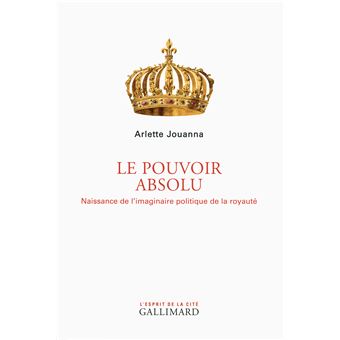
Arlette Jouanna, author of important books on the French monarchy (cf. Le Pouvoir absolu, above) and the Wars of Religion (Le devoir de révolte):

Comme vous le savez, elle était spécialiste de la noblesse et de la société aux XVIe et XVIIe siècles. Sa thèse d’Etat sur « l’idée de race » au XVIe siècle avait fait date et elle avait forgé le concept de « devoir de révolte » pour caractériser les engagements aristocratiques pendant les guerres de Religion. Plus récemment, elle avait publié une magnifique biographie de Montaigne.

Maurice Gresset:

Maurice Gresset nous a quittés le 22 janvier 2022, à l’âge de 93 ans. Il était professeur émérite d’histoire moderne de l’Université de Franche-Comté et membre de nombreuses associations. Il avait consacré sa thèse au “monde judiciaire à Besançon, de la conquête par Louis XIV à la Révolution française” (Paris, CTHS, 1980). Il avait notamment publié Une famille nombreuse au XVIIIe siècle. Le livre de raison d’Antoine-Alexandre Barbier, notaire et vigneron bisontin 1762-1776 (Toulouse, Privat, 1981) et L’introduction de la vénalité des offices en Franche-Comté, 1692-1704 (Paris,1989). Il a également contribué à ce que la Citadelle de Besançon conçue par Vauban soit classée au patrimoine de l’Unesco.

Earlier last week, the renowned specialist of medieval military history Philippe Contamine equally passed away. See obituary in yesterday's Le Monde.

(source: AHMUF

CFP: International Conference "The League of Nations: The First Global Peacekeeping Organization in the Changing World - Interdependencies and Reflexions" - 3-4 November 2022, Prague