Search

08 May 2015

BOOK: "La république apaisée. Aristide Briand et les leçons politiques de la laïcité (1902-1919)" by Christophe Bellon (Paris, March 2015)


Christophe Bellon

La république apaisée. Aristide Briand et les leçons politiques de la laïcité (1902-1919)

Vol. 1. Comprendre et agir - Vol. 2. Gouverner et choisir

Prix de thèse 2010 de l’Assemblée nationale
all information here

Paris, Editions du Cerf,  mars 2015, vol. 1: 408 p., ISBN:978-2-204-10064-9, 29€ / vol. 2: 492 p., ISBN:978-2-204-10444-9, 29€

À l’approche des fêtes de Noël 1905, après plusieurs décennies de débats passionnés, les républicains touchent au but. Le 9 décembre, le président de la République Émile Loubet promulgue la loi de séparation des Églises et de l’État.
C’est l’amorce d’une pacification entre deux France qui s’opposent violemment – la catholique et la républicaine: une véritable révolution, pour un pays en perpétuelle guerre religieuse. Sans pour autant marquer la fin d’un si vif conflit, la loi de 1905, production législative hors du commun, traduit un apaisement «institutionnel».
Au centre du dispositif, un homme, le rapporteur de la loi: Aristide Briand. Socialiste et réformiste, organisateur du mouvement jaurésien, il a mis la question laïque au coeur des débats du Parti, avant de la porter au Parlement, au cours de longues séances exaltantes, en commission et en séance publique. À partir de 1906, il la déclinera au gouvernement, comme ministre des Cultes.
Il tentera de la représenter, à son départ du mouvement socialiste, dans des majorités de «juste milieu», puis dans une force politique médiane. Chef du gouvernement, il parviendra à pacifier progressivement la vie politique, économique et sociale, lui assurant une forme de modération encore bien présente à la veille de la crise économique de 1929. Entre-temps, il faudra en passer par la gouvernance de guerre où l’Union sacrée, vaste rassemblement, s’enracine pour quelques années.
À chaque étape de son «chemin centriste», Aristide Briand l’indépendant aura su tirer les leçons politiques de la laïcité et promouvoir une République apaisée.

Author
Christophe Bellon est maître de conférences en histoire contemporaine à l’université catholique de Lille. Vice-doyen de faculté, il est l’auteur de nombreux travaux sur l’histoire politique et parlementaire du religieux. Il est membre correspondant du Centre d’histoire de Sciences Po Paris.

Contact

Marion Scheffels – 01 80 05 36 41 –marion.scheffels@editionsducerf.fr


COLLOQUIUM: "Orare aut laborare ? Fêtes de précepte et jours chômés du moyen âge au début du XXe siècle" (Bruxelles, May 29, 2015 - Lyon, October 16, 2015)


WHAT Orare aut laborare ? Fêtes de précepte et jours chômés du moyen âge au début du XXe siècle, Colloquium

WHEN May 29, 2015 - October 16, 2015

WHERE Université Saint-Louis, salle du conseil (4e étage),43 Bd du Jardin Botanique, Bruxelles/ Université Lumières Lyon 2, Lyon

all information here

Selon Alphonse Dupront, le temps et l’espace sont les deux catégories essentielles pour aborder les questions religieuses. Si nous avons désormais de nombreuses réflexions sur la géographie sacrée, voire le paysage sacré, le rapport au temps est peu étudié malgré quelques travaux récents.

Dès les premiers siècles, les chrétiens instaurèrent des fêtes en l’honneur du Christ, de la Vierge, des apôtres ou encore des saints. De nombreux conciles généraux ou provinciaux mirent en avant certaines d’entre elles, les imposèrent aux fidèles. Rapidement, leur nombre s’accrut. À côté des fêtes majeures célébrées par toute la chrétienté, des spécificités se firent jour qui privilégièrent notamment des saints régionaux. Les évêques jouèrent un rôle essentiel en imposant des calendriers à l’échelle de leur diocèse. Les fêtes d’obligation, le temps sacré, rythmaient ainsi la vie des fidèles sous l’Ancien Régime. Au nombre d’une trentaine ou d’une quarantaine par an dans la plupart des diocèses, elles ne constituaient pas seulement une réalité religieuse, mais aussi sociale, économique et humaine.

La terminologie et la typologie suscitent d’abord la réflexion. Fêtes de précepte, fêtes d’obligation, fêtes chômées, fêtes majeures, fêtes mineures, demi-fêtes, fêtes à garder, fêtes à dévotion etc. peuvent désigner des pratiques identiques, mais aussi des usages fort variables : obligation d’entendre la messe, interdiction de travailler la journée ou une partie de celle-ci, jeûne, etc.

L’évolution de ces fêtes constitue une autre réalité fondamentale. Quand les calendriers diocésains ont-ils été établis et se sont-ils stabilisés ? Peut-on remarquer l’ajout de nouvelles fêtes au fil du temps ? Mais aussi – et surtout – se pose la question des réductions de ces fêtes. A quelle époque intervinrent-elles ? Certaines régions figurent-elles à l’avant-garde ou d’autres demeurèrent-elles plus attachées aux traditions ?

07 May 2015

BOOK: "Philosophie du droit. Norme, validité et interprétation", edited by Christophe Béal (Paris, 2015)


Philosophie du droit. Norme, validité et interprétation, edited by Christophe Béal (Paris, 2015)


all information here

Manuels et traités de droit nous instruisent du droit positif et de l’ensemble des lois qui sont reconnues comme valides sur un territoire donné. Quelle idée du droit et de la norme juridique véhiculent-ils? La norme juridique peut-elle être pensée indépendamment de toute considération morale? Que fait exactement le juge lorsqu’il prononce le droit? Ces questions ne sauraient être réduites à la simple opposition entre le positivisme juridique et les théories du droit naturel. Les théories normativistes du droit, les multiples variantes du réalisme juridique ou la théorie du droit comme intégrité ont permis de renouveler profondément la manière de penser la normativité du droit. Ce volume présente au lecteur un ensemble de textes qui lui permettront d’en débattre et d’en juger.
Table of contents

Christophe Béal, Introduction générale, p. 7
Première partie. Faits et normes
Introduction, p. 39
John Austin, Délimitation du domaine de la théorie du droit, p. 49
Hans Kelsen, Théorie pure du droit, p. 79
Oliver W. Holmes, La passe étroite du droit, p. 99
Alf Ross, Du droit et de la justice, p. 133
Norberto Bobbio, Être et devoir-être dans la science du droit, p. 147
Deuxième partie. La thèse de la séparation du droit et de la morale
Introduction, p. 167
Gustav Radbruch, Injustice légale et droit supralégal, p. 175
Herbert L.A. Hart, Le positivisme et la séparation du droit et de la morale, p. 193
Lon L. Fuller, La moralité du droit, p. 229
Joseph Raz, Le positivisme juridique et les sources du droit, p. 245
Troisième partie. Droit et interprétation
Introduction, p. 273
William Blackstone, Commentaires sur les lois d’Angleterre, p. 281
Ronald Dworkin, La théorie du droit comme interprétation, p. 287
Richard A. Posner, Une conception pragmatique de la décision judiciaire, p. 313
Michel Troper, Une théorie réaliste de l’interprétation, p. 345
Bibliographie, p. 369
Index des notions, p. 379
Index des noms, p. 383
Table des matières, p. 385

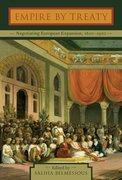
BOOK: Saliha BELMESSOUS (ed.), Empire by Treaty, negotiating European Expansion, 1600-1900 (Oxford/New York: Oxford UP, 2015), ISBN 978-0-19-939178-3, £ 47,99

(image source: OUP)
 
Saliha Belmessous (Univ of New South Wales) published the collective volume Empire by Treaty. Negotiating European Expansion, 1600-1900.

Abstract:
Most histories of European appropriation of indigenous territories have, until recently, focused on conquest and occupation, while relatively little attention has been paid to the history of treaty-making. Yet treaties were also a means of extending empire. To grasp the extent of European legal engagement with indigenous peoples, Empire by Treaty: Negotiating European Expansion, 1600-1900 looks at the history of treaty-making in European empires (Dutch, Spanish, Portuguese, French and British) from the early 17th to the late 19th century, that is, during both stages of European imperialism. While scholars have often dismissed treaties assuming that they would have been fraudulent or unequal, this book argues that there was more to the practice of treaty-making than mere commercial and political opportunism. Indeed, treaty-making was also promoted by Europeans as a more legitimate means of appropriating indigenous sovereignties and acquiring land than were conquest or occupation, and therefore as a way to reconcile expansion with moral and juridical legitimacy. As for indigenous peoples, they engaged in treaty-making as a way to further their interests even if, on the whole, they gained far less than the Europeans from those agreements and often less than they bargained for. The vexed history of treaty-making presents particular challenges for the great expectations placed in treaties for the resolution of conflicts over indigenous rights in post-colonial societies. These hopes are held by both indigenous peoples and representatives of the post-colonial state and yet, both must come to terms with the complex and troubled history of treaty-making over 400 years of empire. Empire by Treaty looks at treaty-making in Dutch Colonial Expansion, Spanish-Portuguese border in the Americas, Aboriginal Land in Canada, French Colonial West Africa, and British India.
Contents:
Acknowledgments
 List of maps and illustrations
 1. The Paradox of an Empire by Treaty
 Saliha Belmessous
 2. 'Love Alone Is Not Enough': Treaties in Seventeenth-Century Dutch Colonial Expansion
 Arthur Weststeijn
 3. To "Clear the King's and Indians' Title": Seventeenth-Century Origins of North American Land Cession Treaties
 Daniel Richter
 4. Struggling Over Indians: Territorial Conflict and Alliance-Making in the Heartland of South America (17th-18th Centuries)
 Tamar Herzog
 5. The Acquisition of Aboriginal Land in Canada: The Genealogy of an Ambivalent System (1600-1867)
 Alain Beaulieu
 6. A British Empire by Treaty in Eighteenth Century India
 Robert Travers
 7. Palavers and Treaty-Making in the British Acquisition of the Gold Coast Colony (West Africa)
 Rebecca Shumway
 8. The Tradition of Treaty-Making in Australian History
 Saliha Belmessous
 9. "A text for every agitator amongst the natives": Maori property, settler politics and the M?ori franchise in the 1850s
 Damen Ward
 10. The 'lessons of history': the ideal of treaty in settler colonial societies
 Paul Patton
 Contributors
 Index
 Author information:
Edited by Saliha Belmessous, senior research fellow, University of New South Wales

Saliha Belmessous is a senior research fellow at the University of New South Wales. She researches and writes about European colonial ideologies and the imperial experiences of indigenous peoples. She has held research fellowships in the United States and Australia. Her most recent publications include Assimilation and Empire: Uniformity in French and British Colonies, 1541-1954 (Oxford University Press, 2013); she is the editor of Native claims: Indigenous Law against Empire, 1500-1920 (Oxford University Press, 2012).

Contributors: 
Alain Beaulieu, professor in history, Université du Québec à Montréal

Saliha Belmessous, senior research fellow at the University of New South Wales.

Tamar Herzog, Monroe Gutman Professor of Latin American Affairs and Professor of Spanish and Portuguese History, Harvard University.

Paul Patton, Scientia Professor in philosophy, University of New South Wales.

Daniel Richter, Roy F. and Jeannette P. Nichols professor of American History, University of Pennsylvania.

Rebecca Shumway, faculty affiliate of the Center for Africanamerican Urban Studies and the Economy, Carnegie Mellon University

Robert Travers, associate professor of history at Cornell University.

Damen Ward, Senior Associate, Simpson Grierson, Wellington and an adjunct research associate in law at Victoria
University of Wellington.

Arthur Weststeijn, director of historical studies, Royal Netherlands Institute in Rome. 

More information on OUP's website.

BOOK: "Les sciences sociales et la corporation (1880-1945)", edited by Mélanie Plouviez


Les sciences sociales et la corporation (1880-1945), edited by Mélanie Plouviez, March 2015

all information here

Table of contents

Les sciences sociales et la corporation (1850-1945), dossier coordonné par Mélanie Plouviez
Mélanie Plouviez, Introduction, p. 3
I. La corporation dans la science sociale leplaysienne
Antoine Savoye, Corporations sans corporations : la conception de Le Play, p. 11
Laetitia Guerlain, La corporation vue par la science sociale leplaysienne : du rejet au modèle de société (1880-1939), p. 21
II. La corporation dans l’école durkheimienne
Mélanie Plouviez, Le projet durkheimien de réforme corporative : droit professionnel et protection des travailleurs, p. 57
Philippe Steiner, Mauss, les groupements professionnels et « l’atmosphère de don », p. 105
Claude Didry, Classe sociale contre groupement professionnel ? Le durkheimisme « scientifique » de Maurice Halbwachs, p. 123
III. Les juristes et les économistes face à la corporation
David Deroussin, L’idée corporative saisie par les jurisets : de la corporation au pluralisme juridique ?, p. 147
Alessio gagliardi, De la crise de l’État à l’État corporatif. Le corporatisme dans la réflexion des économistes et des juristes italiens, p. 187
IV. Les corporations entre politique et sciences sociales
Thomas Branthôme, Introduction à l’historiographie des corporations : une histoire polémique (1880-1945), p. 213
Alain Chatriot, Un débat politique incertain : le corporatisme dans la France des années 1930, p. 231
Jean-Pierre Le Crom, La défense du corporatisme intégral sous Vichy. Ses acteurs, leurs inspirations, leurs réalisations, p. 245
Note critique
Fabien Cardoni, Antoine Savoye, Compte rendu de : Alain Cottereau, Mokhtar Mohatar Marzok, Une famille andalouse. Ethnocomptabilité d’une économie invisible (Saint-Denis, Bouchêne, 2012), p. 263
Résumés, p. 269
Summaries, p. 275
Auteurs, p. 281

BOOK: "Le travail en prison. Mise en perspective d’une problématique contemporaine", dir. by R. Eckert et J.-M. Tuffery-Andrieu (Strasbourg, 2015)


Le travail en prison. 
Mise en perspective d’une problématique contemporaine, dir. by R. Eckert et J.-M. Tuffery-Andrieu (Strasbourg, 2015)

all information here
Le travail des détenus, hier et aujourd’hui. Le travail en prison est, depuis plusieurs années, au coeur de l’actualité juridique. Ce volume propose pour la première fois en France une synthèse sur les fondements juridiques et historiques du travail en prison et ses enjeux contemporains. 
Le travail carcéral est ici analysé dans une perspective pluridisciplinaire et comparée, française comme internationale, par des spécialistes d’histoire du droit, de droit contemporain ou encore de sociologie historique. 
Initialement envisagé comme un moyen d’amendement moral du condamné, le travail en prison devient progressivement un instrument d’administration et de réinsertion du travailleur incarcéré. Les études ici réunies apportent un éclairage nouveau sur la question – droit applicable au travailleur incarcéré, rôle dans la réinsertion des détenus – afin de mieux comprendre les enjeux actuels du travail en détention. 
L’ouvrage entend contribuer à la réflexion des juristes et aider au travail du juge et du législateur de demain. 
Table of contents

06 May 2015

BOOK: Mamadou HEBIÉ, Territorial Sovereignty by Treaty. A Study of Agreements Between Colonial Powers and Local Political Entities [Publications de l'Institut universitaire des Hautes Études Internationales - Genève] (Paris: PUF, 2015), ISBN 978-2-940503-61-2, 708 p. € 38

 (image source: lgdj.fr)

Madadou Hébié (Graduate Institute, Geneva) published Souveraineté territoriale par traité, a study on the agreements concluded between colonial powers and local political entities.
 
Abstract:
Sur plus de 700 pages finement travaillées, Mamadou Hébié décrit l'histoire des relations juridiques entre les puissances européennes et les entités politiques locales durant l'expansion coloniale. L'auteur a produit une contribution majeure à l'étude de l'établissement de la souveraineté territoriale, de l'histoire du droit international et du droit des traités. Si le sujet restait jusqu'alors obscur, les quelques travaux qui lui étaient consacrés laissaient transparaître des présupposés influencés par une conception ethnocentrique du droit et des relations internationales. Ce sont ces idées reçues sur le cadre juridique de la colonisation que ce livre amène à remettre en question.

Pour offrir ce voyage dans les coulisses de l'histoire, Mamadou Hébié a analysé des centaines de documents établis à partir du XVe siècle. Ce travail colossal dévoile l'importance des termes des accords conclus entre les représentants des puissances coloniales et les chefs locaux pour déterminer leurs effets juridiques et leur rôle dans le processus de l'expansion coloniale européenne. Évitant les jugements de valeur sur cette expansion, l'auteur démontre que les puissances coloniales reconnaissaient aux entités politiques locales la capacité de conclure des traités ainsi que leurs droits de souveraineté territoriale et de propriété. Ce faisant, il permet de sortir du slogan anticolonial facile et non étayé. En effet, on ne saurait parler de mauvaise foi des puissances coloniales, de non-respect de l'engagement pris, voire de la nullité ou de l'extinction des accords passés, sans avoir préalablement établi qu'il s'agissait d'accords régis par le droit international.

Préface de Marcelo G. Kohen.
Mamadou Hébié est lecturer au Geneva LL.M. in International Dispute Settlement et professeur invité à l'Université catholique de Lille. Titulaire du doctorat en droit international et du diplôme d'études avancées en relations internationales - spécialisation en droit international, de l'Institut de hautes études internationales et du développement, il est également diplômé de la Harvard Law School, de l'Académie de droit international de La Haye, de l'Institut international des droits de l'homme et de l'Académie de droit international humanitaire et de droits humains à Genève. Il a été conseiller de la République argentine dans l'affaire de l'ARA Libertad.

More information on the publisher's website.

CALL FOR ABSTRACTS: World Congress of Roman and Comparative Law, "Contracts, Goods and Trade Market" (Valparaiso, 23-24 Jul 2015); DEADLINE 15 JUN 2015

(image source: conference website)

We were informed of the call for abstracts for the upcoming "World Congress of Roman and Comparative Law" in Valparaiso (Chile).

Each participant will have 20 minutes to give his communication. All proposals should relate to the main subject of the congress: “Contracts,goods and trade market”. Presentations can be given in Spanish, English, French, Italian, German or Portuguese.

The  following  publication  of  the  works  presented  to  the  Congress  will  be  subject  to  a  blind  refereeing process and to the editorial norms of the Revista de Estudios Histórico-Jurídicos (www.derecho.ucv.cl). The deadline to send the full text of the communications that wish to be included in the publication will be notified in due time

Proposals are expected by 15 June 2015.

More information on the conference website.

CALL FOR ABSTRACTS: Law and Culture Conference (London, 10-11 Sep 2015); DEADLINE 30 JUN 2015

(image source: ukuniversitysearch.com)

We received a call for abstracts for the upcoming "Law and Culture" conference at St Mary's University (London).

Law and Culture Conference 2015: Change
10-11 September 2015, St Mary’s University, Twickenham, London

Law and culture are two significant forces in human life, both shaping and influencing the conduct of individuals, communities and societies, and the values they develop. The emergence of values and norms, of traditions and beliefs—of laws—is a chronological phenomenon, taking place through the evolution of history and the influential forces of the present. But these laws are not static: change is an on-going process: a restless development and dynamic interaction of legal, cultural, social, and human reality.

Beyond the multifaceted avenues of change that traverse the history of law and its relationship(s) with culture (changing laws, values and practices; the changing presence and visibility of law in mainstream society and culture; the changing presence of women and others in law; changes in the philosophical grounding of justice), there are also widespread changes afoot in the present of 2015. In Europe, for example, there is the possibility of enormous political change with general elections, with the ebb and flow of the corporate giant, and with the EU facing challenges that may result in its reconfiguration. Beyond politics, present life is also bringing fresh challenges for law and culture globally, such as: the increased use of technology in law and human life (including amongst other challenges the darknet, and the integration of our online and physical selves); the shifting authority of law’s cultural presence and its increasingly complex relationships with science, religion, and society; the challenges of globalisation and transnational crime; the blurring of the first, second and third world; the fluidity of values as our relationship with modernity becomes ever more strained.

The Law and Culture Conference 2015 will engage with this question of change: of how law and value have developed and changed in the cultures of the past; of how it might develop in the future; of the forces and changes acting and taking place in the cultures and societies around law today (locally, globally; nationally, transnationally); of how representations of law and justice in culture (television, film, literature, comics, newsmedia) might be evolving today, yesterday, tomorrow; of how law might respond to or encounter change or changing cultures, or challenges to its authority from other sources of value and justice; of how change might be effected within law, intentionally or otherwise, for good or for bad; of how law and culture could change one another, for better, for worse, or for something else…

These are but indicative examples of the on-going process of change, all of which require fresh perspectives to decipher and understand its significance for law, and for law’s place in contemporary culture. Such questioning also provides new opportunities to visualise and explore the frontiers and changing dynamics of law and culture. Submissions are thus sought from all areas of law and cultural legal studies, engaging in some way with this broad and open question of ‘change’.

Please submit (abstract 300 words plus 3 keywords) by email, no later than 30 June 2015

The organisers are happy to discuss potential ideas in advance of submission.

Organisers’ contact details:
•         judith.bourne@stmarys.ac.uk
•         thomas.giddens@stmarys.ac.uk
•         mark.mackarel@stmarys.ac.uk

05 May 2015

BOOK: "La justice en questions", by Gérard Guyon

Gérard Guyon, "La justice en questions",Recueil d’articles
 
all information here: 
http://www.lcdpu.fr
http://www.pulim.unilim.fr
  
L'originalité de cet ouvrage traitant de la justice et de son histoire, en Europe et particulièrement en France, jusqu'à l'époque contemporaine, tient à un fil conducteur qui ne sépare pas le droit pénal de la religion. Au point de le faire dépendre des dogmes et même des règles canoniques. S'appuyant sur des sources variées, littéraires et juridiques, il montre que jusqu'au xviiie siècle, la justice criminelle trouve ses raisons, ses moyens et son but dans une utopie religieuse chrétienne qui lui confère une autorité incontestable. La procédure s'inscrit dans une démarche probatoire où la Vérité prend la forme de l'aveu de la culpabilité aboutissant à la juste punition de la faute. Délégataires de leur souverain, les juges doivent avant tout rendre des comptes à Dieu qui confirmera ou infirmera leurs arrêts. Donnant ainsi sa signification ultime à l'éternité des peines. Ce qui inclut la peine de mort. Le temps de la justice pénale s'est inscrit, depuis l'aube de la civilisation, dans une sphère religieuse devenue l'objet même de l'histoire judiciaire en dépit de ses efforts pour s'en extraire définitivement.

Sommaire

1 Justice et miséricorde dans la Règle de Saint Benoît – le regard de l’historien du droit
2 Utopie religieuse et procès pénal : l’héritage historique
3 La justice pénale dans le théâtre religieux du xive siècle : les Miracles de Notre-Dame par personnage
4 La torture et les clercs. Notes sur une exception à la règle ‘irregularitas ex defectu lenitatis’
5 À propos du sens pénal de la conception anthropo­morphique de l’offense à Dieu dans le christianisme »,
6 La religiosité en question : vérité de la foi et procès pénal médiéval
7 La victime propitiatoire : question sur un héritage chrétien et sa valeur pénale
8 De la chasse et des clercs au Moyen Âge
9 Doctrines et pratiques répressives de la sexualité – autour de quelques arrêts du Parlement de Bordeaux au xvie siècle
10 L’information criminelle et la détention avant jugement du Moyen Âge au xviiie siècle
11 Proximité des procédures et proximité des peines dans la justice pénale de l’ancien droit
12 Saint Vincent de Paul et l’internement des mineurs au xviie siècle
13 Violence et droit, quelques leçons de l’histoire
14 L’utopie et l’imaginaire juridique
15 La torture et le droit
16 La Révolution Française : de l’utopie pénale à la démonstration totalitaire

L’auteur

Gérard Guyon, professeur émérite à l’Université Montesquieu de Bordeaux, invité dans des universités étrangères (Allemagne, Espagne, Italie), est historien des institutions et des idées politiques. Outre ses travaux sur le droit bordelais, il est l’auteur de nombreuses publications dans des livres et des revues savantes qui traitent principalement du rôle du christianisme dans les fondations du droit occidental.

Il a publié dans la même collection Le droit bordelais dans tous ses états. Les anciennes coutumes, Les juristes et la justice, Les institutions de l’Eglise locale. Recueil d’articles (CIAJ n° 31) ainsi que des articles dans Le pardon (CIAJ n° 3), La culpabilité (CIAJ n° 6), Procéder. Pas d’action pas de droit ou pas de droit pasd’action ? (CIAJ n° 13), La victime. I. Définitions et statut (CIAJ n° 19), L’offense. Du « torrent de boue » à l’offense au chef de l’Etat (CIAJ n° 26), La religiosité du droit (CIAJ n° 35).
430 pages ISBN : 978-2-84287-645-6 32 €


04 May 2015

NOTICE: "The Languages of Early Medieval Charters: Anglo-Saxon England and Eastern Francia, c.700–c.1100"


The Languages of Early Medieval Charters: Anglo-Saxon England and Eastern Francia, c.700–c.1100

all information here

Project team: 

'The Languages of Early Medieval Charters' is a project which began in late 2014 at the University of the Basque Country, in the Departamento de Historia Medieval, Moderna y de América, Vitoria-Gasteiz, Spain. It is funded by the Spanish Ministerio de Economía y Competitividad (HAR2014-51484-ERC) and the Universidad del País Vasco UPV/EHU.
Our research investigates the roles of language in the production and subsequent use of legal documents, or charters, in the early Middle Ages (c.700–c.1100). In particular, the project examines the relationship between Latin and the vernacular in these records. Charters from Anglo-Saxon England offer remarkable evidence for exploring this topic, as they contain Old English alongside the Latin. In comparison, charters from eastern Francia (an area roughly spanning the Rhineland, Switzerland and Bavaria) – which was non-Romance-speaking, like Anglo-Saxon England – were almost always written in Latin, never developing the bilingualism which characterises the Anglo-Saxon material. These linguistic features have largely been taken for granted. Taking our cue from recent work on sociolinguistics, historical linguistics, the interaction between oral and literary cultures, and the uses of the written word, we shall assess comparatively the appearance of vernacular language in Anglo-Saxon and Frankish charters in order to better understand the social, cultural and linguistic history of the early Middle Ages.

JOURNAL: PoLAR: Political and Legal Anthropology Review (May 2015, Volume 38, Issue 1)

VOLUME 38, ISSUE 1

John Conley and Justin B. Richland

"This is our final issue as co-editors. We will be succeeded in the summer by Heath Cabot and Will Garriott. As we leave, we want to emphasize how much we’ve enjoyed editing your journal. We want to express our gratitude to the many people who make PoLAR possible. A few words about the current issue: it features a Symposium organized by Melissa Demian, entitled ‘Internationalizing Custom and Localizing Law.’ As Demian writes in her Introduction, it is ‘an endeavor to re-evaluate and update what may at first blush appear to be a thoroughly old-fashioned or folkloristic set of ideas for anthropologists: the concept of custom, particularly as it is deployed in relation to the concept of law.’ As Demian explains in that Introduction, the articles explore the complexities and ironies suggested by the Symposium title."


POSITION: Two PhD / Post-doctoral Positions in the field of late medieval/early modern history, legal history or ecclesiastical history at Max Planck Institute (Frankfurt, July 1, 2015, or later)


WHAT Two PhD / Post-doctoral Positions in the field of late medieval/early modern history, legal history or ecclesiastical history, 3-year contracts, call for positions

WHEN starting July 1, 2015, or later 

WHERE Max Planck Institute for European Legal History, Frankfurt

all information here
deadline May 15 2015

Research project
A Collaborative Research Centre / CRC (‘Sonderforschungsbereich’ / ‘SFB’ in German) is an institution established at German universities for a period of up to twelve years that enables researchers to pursue an outstanding research programme, crossing the boundaries of disciplines, institutes and faculties. Financed by the Deutsche Forschungsgemeinschaft (DFG), it facilitates scientifically ambitious, complex, long-term research by concentrating and coordinating the resources available at a university.

The CRC 1095 ‘Discourses of Weakness and Resource Regimes’ at the Goethe University, Frankfurt am Main, employs a transepochal and comparative approach in order to deal with the question of how discourses of weakness had an impact on the use of resources. These discourses can be observed in the history of all cultures at all times. Changes in the use of both material and immaterial resources constitute a special and important aspect of processes of historical transformation which will be addressed by historians, historians of science, anthropologists, philosophers, sinologists and legal historians within the framework of the new CRC 1095.

CRC sub-project C 01 ‘Knowledge of the pragmatici. Presence and significance of pragmatic normative literature in Ibero-America in the late 16th and early 17th century’, led by Prof. Dr. Thomas Duve, reflects upon the significance of normative texts which addressed themselves primarily to practitioners – especially those who would nowadays be seen as part of moral theology or confessional literature. The respective texts were ‘weak’ insofar as they lacked theoretical complexity compared to erudite treatises; they were ‘strong’, however, in terms of pragmatic usefulness because they offered the reader adaptable bases of normative knowledge. There are some indications that these resources helped to establish, even minimally, conceptions of normative order in early modern empires such as the Spanish one. It is the objective of the sub-project to bring to light not only the practical significance but also the intellectual weight of a literary genre which has received little attention for a long time. Characteristic of this genre are condensation processes which might constitute a considerable achievement in abstraction.
Job description
In this context, the position holders are expected to research on one of the two following subjects: 

POSITION: Six Doctoral Students at Max Planck Institute (Frankfurt, October 1 2015)


WHAT Six doctoral students, call for positions

WHEN from October 1 2015 or as soon as possible thereafter 

WHERE Max Planck Institute for European Legal History, Frankfurt

all information here
deadline June 12 2015

for the following research fields in the department of Professor Stefan Vogenauer:
(1) Legal Transfer in the Common Law World;
(2) Legal History of the European Union
 

Your tasks
You will develop, co-ordinate and pursue a doctoral project in one of the two research fields. Your doctoral thesis will turn on
(1) the development of rules, principles, doctrines and institutions of English law outside England, for example in selected jurisdictions of the British Empire; or
(2) the legal history of selected areas of EU law, particularly in their interaction with the legal sys-tems of the member states.
You will publish your findings and actively participate in the research activities of the Institute under the guidance of Professor Vogenauer.
Your profile
You hold a first class degree in law, the humanities or the social sciences. You work independently, are fully proficient in the English language and willing to learn German if necessary.
Our offer

We offer an attractive and international work environment with an unparalleled research infrastructure and a good working atmosphere. Payment and social benefits are based on the German Civil Service Collective Agreement (TVÖD). Depending on your qualification, the annual salary before tax will amount to EUR 28,470 (EG13 band 1, 65%). The job is a full time position (currently 39 hours per week). The position is a fixed-term appointment for three years, with the possibility of renewal for a further year in exceptional circumstances.

The Max Planck Society is committed to increasing the number of individuals with severe disabilities in its workforce and therefore encourages applications from such persons.

The Max Planck Society seeks to increase the number of women in those areas where they are un-derrepresented and therefore explicitly encourages women to apply.

Application procedure
You will be asked to submit the following documents:
1. Personal Statement:
- Cover letter with reference to your research proposal and an explanation as to how your profile matches the selection criteria
- Names and addresses (postal and electronic) of two scholars who have agreed to pro-vide a reference for you
2. CV: 
- Detailed CV
- List of publications
3. Other Documents:
- Research proposal (up to five pages)
- Transcripts
- A sample of writing of some 20 pages length (seminar paper, journal article, book chap-ters etc)

Please provide your referees with all the documents that you submit for your application and ask them to send their references direct to jobs@rg.mpg.de by the closing date of 12 June 2015. References may only be submitted by email. They do not have to be signed as long as they are emailed from the official mail address of the referee. Strong applicants will be invited for an interview.
Contact
Informal enquiries as to the substance of the research fields may be directed to Professor Stefan Vogenauer (vogenauer@rg.mpg.de).

Questions as to the terms and conditions of employment may be directed to Ms Sabrina Penczynski (jobs@rg.mpg.de).

Your application must be submitted online via the followed link by the closing date of 12 June 2015:

POSITION: Five Postdoctoral Research Associates at Max Planck Institute (Frankfurt, October 1 2015)


WHAT Five Postdoctoral Research Associates, call for positions

WHEN from October 1 2015 or as soon as possible thereafter 

WHERE Max Planck Institute for European Legal History, Frankfurt

all information here
deadline June 12 2015

for the following research fields in the department of Professor Stefan Vogenauer:
(1) Legal Transfer in the Common Law World;
(2) Legal History of the European Union
 

Your tasks
You will develop, co-ordinate and pursue an independent project in one of the two research fields. Your research will turn on
(1) the development of rules, principles, doctrines and institutions of English law outside England, for example in selected jurisdictions of the British Empire; or
(2) the legal history of selected areas of EU law, particularly in their interaction with the legal sys-tems of the member states.
You will publish your findings and actively participate in the research activities of the Institute under the guidance of Professor Vogenauer.

Your profile
You hold a first class degree in law, the humanities or the social sciences and you produced an outstanding doctoral thesis or an equivalent portfolio of publications in a similar subject. Your CV shows the potential to produce outstanding research at an internationally advanced level. You work independently, are fully proficient in the English language and willing to learn German if necessary.
Our offer

SEMINAR: "Remarques sur les fondements d’une histoire normative de l’intériorité et de la subjectivité" (Paris, May 6 2015)


WHAT Remarques sur les fondements  d’une histoire normative de l’intériorité et de la subjectivité, Seminar Droit, conscience, subjectivité : approches casuistiques

WHEN May, 6 2015 h 11:00-13:00

WHERE Cenj- Centre d'Etudes des Normes Juridiques Jan Thomas, Ecole des Hautes Etudes en Sciences Sociales, salle 10, 105 bd. Raspail, Paris

Speakers

Arnaud FOSSIER, maître de conférences à l'Université de Bourgogne
Clément LENOBLE, chargé de recherche au CNRS
Paolo NAPOLI, directeur d'études à l'EHESS
Julien THERY, professeur à l'Université Paul-Valéry (Montpellier-III)

POSITION: Part Time Visiting Lecturer in Anthropology (Claremont, Fall 2015-2016)


WHAT Part Time Visiting Lecturer in Anthropology, Position

WHEN fall semester 2015, spring semester 2016

WHERE Scripps University, Claremont, California, USA

all information here
deadline May 18, 2015


Scripps College, a women’s liberal arts college with a strong interdisciplinary tradition, invites applications for a part-time position as Visiting Lecturer to teach Introduction to Sociocultural Anthropology during Fall Semester 2015 and two elective anthropology courses during Spring Semester 2016. Preference will be given to candidates with teaching experience and whose teaching foci complement the anthropology curricula at the Claremont Colleges. Ph.D. preferred, ABD considered. This position is contingent on approval.

Applicants should email a cover letter, CV, and the names/contact information for two referees to:

Lara Deeb, Chair
Department of Anthropology
Scripps College
Claremont, CA. 91711

Scripps College is one of seven members of The Claremont Colleges Consortium located 35 miles east of Los Angeles. In a continuing effort to build a diverse academic community and to provide equal educational and employment opportunities, Scripps College actively encourages applications from women and members of historically under-represented groups.

POSITION: One-year Lecturer in Gender, Race, and Identity (Reno,Nevada, fall 2015)


WHAT one-year Lecturer in Gender, Race, and Identity, position

WHEN fall 2015 (with the possibility of renewal for up to two additional years)

WHERE University of Nevada, Reno, 1664 N Virginia St, Reno, NV 89503, USA


The Gender, Race, and Identity (GRI) Program at the University of Nevada, Reno invites applications for a one-year lecturer position to begin Fall 2015 with the possibility of renewal for up to two additional years. The GRI program offers a major in Women’s Studies, minors in Women’s Studies, Ethnic Studies, Religious Studies, and Holocaust, Genocide, and Peace Studies, and a graduate certificate in Gender, Race and Identity Studies. Area of study and discipline are open, but the successful candidate will have a background in feminist approaches and teaching interests in intersections of gender, race, class, ethnicity, and/or sexuality. The position includes a teaching load of 4-4 and some service commitments. The successful candidate should expect to teach introductory and advanced undergraduate courses, such as introduction to women’s/gender studies and courses in feminist theory and methods. The lecturer will also have the opportunity to develop courses in an area of expertise. Ability to teach courses in Ethnic Studies or other GRI programs is highly desirable. Applicants must have completed the Ph.D. and be eligible to work in the United States prior to the start of appointment on July 1, 2015.


The University of Nevada, Reno, requires that applications be submitted athttps://www.unrsearch.com/postings/17565. To apply, complete the brief form and submit a letter of application that outlines teaching excellence, CV with reference contact information, and two sample syllabi. All applications must be submitted electronically no later than May 18, 2015. Additional materials such as letters of recommendation may be requested later.


AA/EEO Women and members of underrepresented groups are encouraged to apply. The University of Nevada is the state’s historic land-grant institution; it serves approximately 20,000 students. The university is ranked as a Tier 1 institution by “U.S. News and World Report” and offers an array of degree programs at all levels. Reno is located in the foothills of the Sierra Nevada, a 30-minute drive from Lake Tahoe. Reno/Tahoe is recognized as a world-class outdoor recreation area. Additional areas of interest in the proximity include: The Black Rock Desert, Sacramento, Yosemite National Park, Napa/Sonoma, the Bay Area, and San Francisco. University of Nevada homepage: http://www.unr.edu 

CFP: American Society for Legal History Student Research Colloquium (Washington, DC, October 28-29 2015)


WHAT American Society for Legal History Student Research Colloquium, Call for papers

WHEN October 28-29 2015

WHERE Washington, DC

all information here
deadline June 1, 2015


The American Society for Legal History (ASLH) will host a Student Research Colloquium (SRC) on Wednesday, October 28, and Thursday, October 29, 2015, immediately preceding the ASLH's annual meeting in Washington, DC.  The SRC will offer a small group of graduate and law students an opportunity to work intensively on in-progress dissertations and law review articles with distinguished ASLH-affiliated scholars. 

The target audience for the SRC includes early post-coursework graduate students and law students interested in legal history.  Each participating student will pre-circulate a twenty-page, double-spaced paper to the entire group.  These papers will provide the foundation for discussion at the colloquium.  Stipends will either partially or completely cover the travel, hotel, and registration costs of attending the annual meeting.  Students working in all chronological and geographical fields, including non-U.S. history, are encouraged to apply.  Students who have not received any formal training in legal history, but whose projects engage legal-historical themes, also are encouraged to apply, as are students who have not previously participated in the Society's activities.  A student may be on the annual program and participate in the SRC in the same year.  

To apply to the ASLH's Student Research Colloquium, please submit: 

a cover letter;
a CV;
a letter of recommendation from a faculty mentor/advisor;
a two-page, single-spaced "research statement," describing an in-progress dissertation or law review article.

The application deadline is June 1, 2015.  Organizers will notify all applicants of their decisions by July 15, 2015.  Please direct questions and applications to John Wertheimer at the following e-mail address:  srcproposals@aslh.net.

CPF: "NGO-graphies” – the Second NGOs and Nonprofits Conference (Denver, November 17-18 2015)


WHAT NGO-graphies” – the Second NGOs and Nonprofits Conference, Call for Proposals

WHEN November 17-18 2015

WHERE Metropolitan State University of Denver, Colorado

all information here
deadline May, 15 2015

As non-governmental organizations (NGOs) take on roles and responsibilities that were traditionally in the hands of national governments, power has become increasingly denationalized and embedded in new configurations. While the scales of these mediations, service provisions, and representations have typically been categorized as local-regional-national-international, networks of NGOs now connect organizations at the grassroots directly to large-scale, transnational systems. The term “NGO-graphy” (Sampson and Hemment 2001) calls for a critical ethnographic approach to understanding non-governmental organizations and nonprofits. It also suggests a topographic image of NGO networks that both interact with and create human landscapes.

The purpose of this second NGOs and Nonprofits conference is to engage one another in thinking broadly about the patterns of NGO practices as they point to the role of coordination within networks and the factors that direct global flows of resources and knowledge. Together, we will examine how these networks are constituted through the personal interactions, cultural practices, and shifting discourses that give them meaning. Considering the power relations that shape and create NGO-graphies also allows us to problematize the ever-present methodological question of how researchers and practitioners can and should interact with NGOs, which become sources of information about local communities, points of entry, sources of income, and fieldsites themselves. We invite proposals for panels from anthropologists, related interdisciplinary scholars, and practitioners on topics including but not limited to the following questions:

01 May 2015

ARTICLE: "Black City and White Country. Immigration and Identity in the History of British Decolonization", by Benedikt Stuchtey


Black City and White Country. Immigration and Identity in the History of British Decolonization, by Benedikt Stuchtey

Black City and White Country. Immigration and Identity in the History of British Decolonization" is the title of a new publication by Benedikt Stuchtey. The article has been published in the e-journal "Global Europe - Basel Papers on Europe in a Global Perspective".
In his article, the author looks at the question of integrative and disintegrative elements of imperial rule in multiethnic societies and identifies lines of continuity between the imperial past and post-imperial realities: What influence did immigration have on the construction of self-image in Britain after the Second World War, and what historical continuities existed, particularly with respect to ethnic policies?
Benedikt Stuchtey holds the Chair of Modern History at the University of Marburg. His special field of interest is the history of colonialism and imperialism from the late eighteenth to the late twentieth centuries. In 2012/13, he held a Visiting Professorship at the University of Basel.
"Global Europe – Basel Papers on Europe in a Global Perspective" is an academic e-journal. It provides insights into the excellent research of graduates, as well as other young and senior scientists who analyze the global implications of Europe and the European Union. The journal is published in four issues per year by the Institute for European Global Studies at the University of Basel. Readers can subscribe to it by sending an e-mail to europa@unibas.ch. In addition, the publication is available on the website https://europa.unibas.ch/forschung/basler-schriften/ .